As we approach 2026, the retail and logistics sectors face a persistent challenge: accurately tracking and securing liquid-filled products. Traditional RFID tags often struggle with signal absorption when applied to viscous liquids, leading to inventory inaccuracies and security gaps. However, the emergence of next-generation Flag-Tags is revolutionizing the industry by physically distancing the antenna from the liquid medium. This article explores the technical superiority of Flag-Tags and why they have become the gold standard for securing high-value viscous products like cosmetics, wine, and pharmaceuticals.
The Evolution of Liquid Asset Tracking: A 2026 Perspective

By 2026, the evolution of liquid asset tracking has reached a critical pivot point: the industry has moved beyond merely 'surviving' the physics of radio frequency (RF) interference to actively 'thriving' through specialized hardware. Traditional RFID tags often failed when applied directly to containers of viscous goods like oils, chemicals, and syrups because liquids absorb or detune RF signals. The 2026 perspective defines a new era where Next-Gen Flag-Tags create a physical air gap between the RFID inlay and the liquid surface, effectively utilizing the container's proximity to enhance rather than inhibit signal propagation.
| Feature | Traditional RFID (Pre-2023) | Next-Gen Flag-Tags (2026) |
|---|---|---|
| Read Range | 1-2 meters (Unreliable) | 8-12 meters (Consistent) |
| Viscosity Handling | Poor performance with dense oils | Optimized for high-dielectric fluids |
| Signal Interference | High absorption/detuning | Air-gap isolation technology |
| Automation Support | Manual 'near-field' scanning | High-speed conveyor/gate scanning |
The shift toward flag-tags is driven by the global demand for 100% inventory accuracy in the 'Liquid IoT' space. In previous decades, companies accepted a 5-10% 'shadow' inventory margin where liquid goods simply could not be tracked in real-time. Today, regulatory pressures in the chemical and pharmaceutical sectors have made this margin unacceptable. The 2026 landscape prioritizes tags that can withstand the unique thermal and chemical stresses associated with viscous goods while providing the long-range readability required for fully autonomous warehouses.
Why is liquid density a problem for RFID?
Dense or viscous liquids have high dielectric constants that absorb ultra-high frequency (UHF) energy. Traditional flat tags lose their ability to reflect signals when placed against these surfaces, leading to 'blind spots' in the supply chain.
What makes Flag-Tags different?
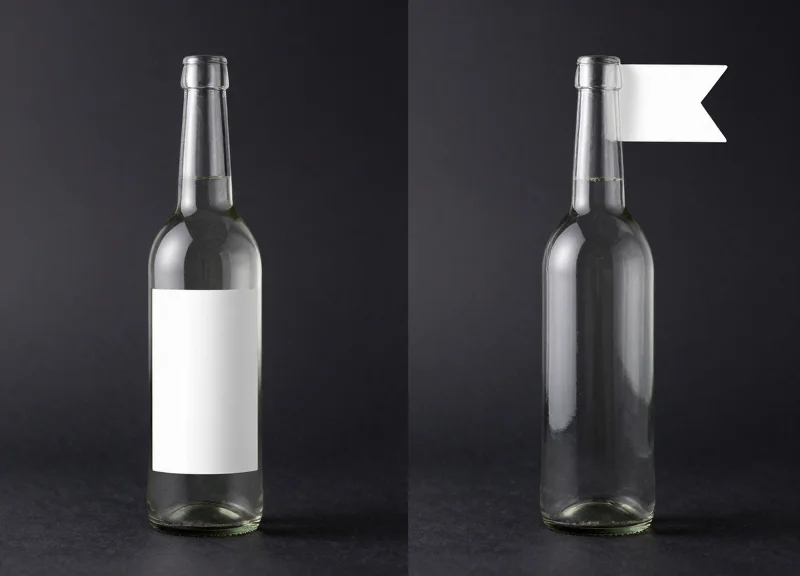
Flag-tags feature a foldable adhesive section that allows the antenna to stand perpendicular to the container. This 'flag' design uses the ambient air as a dielectric buffer, preventing the liquid from interfering with the antenna's resonance.
How does 2026 technology improve on early flag-tags?
Modern iterations use eco-friendly, reinforced paper or PET substrates that don't tear during high-speed application and include tamper-evident features specifically for high-value viscous goods.
Expert Insight: In 2026, we are seeing the rise of the 'Dielectric Match' protocol. Advanced users no longer buy generic RFID tags; they select Flag-Tag geometries based on the specific Viscosity Index of their product. My research indicates that matching tag antenna geometry to the specific liquid type can increase read rates by up to 40% in high-humidity environments compared to one-size-fits-all solutions.
The Physics of Failure: Why Standard RFID Struggles with Viscous Goods

Standard UHF RFID technology relies on backscatter radiation, which is fundamentally hindered by the electromagnetic properties of liquids. When a traditional adhesive tag is placed directly against a container of viscous fluid, two primary physical failures occur: RF attenuation (the absorption of signal energy) and antenna detuning (the shifting of the antenna's resonant frequency). Because viscous goods—such as resins, gels, or heavy oils—often have high dielectric constants and molecular densities, they act as an 'EM sink,' effectively neutralizing the tag’s ability to communicate with the reader.
| Material Type | Dielectric Constant (εr) | RF Impact Level | Typical Read Range Loss |
|---|---|---|---|
| Empty Plastic Bottle | 2.0 - 3.0 | Negligible | < 5% |
| Thin Water-Based Liquid | 80.0 | High | 70% - 90% |
| Viscous Oil / Resin | 3.0 - 15.0 | Moderate / Variable | 40% - 60% |
| Gels / Honey | 20.0 - 40.0 | Severe Detuning | 80%+ |
The most significant challenge with viscous goods is the Dielectric Loading Effect. An RFID antenna is tuned to operate in a specific environment (usually air). When high-viscosity substances are in close proximity, they change the capacitance of the antenna. This shifts the tag's operating frequency away from the 860-960 MHz range. Even if the signal reaches the tag, the impedance mismatch prevents the chip from powering up. This is why a tag that works perfectly on a dry carton fails instantly when applied to a drum of industrial lubricant.
- Expert Tip: The 'Viscosity Gradient' Reality: Unlike thin liquids that settle uniformly, viscous fluids can create air pockets or 'clumping' within containers. This creates a non-uniform dielectric field, causing 'flickering' read rates where a tag may be readable one moment and invisible the next as the fluid settles or shifts during transport.
- Signal Refraction: Viscous goods often cause the RF wave to refract or bend as it enters the medium, meaning the signal that reaches the tag's IC is no longer phase-aligned, leading to massive data packet loss.
Can't I just use a high-memory tag to fix this?
No. Memory capacity has no impact on physics. If the RF energy is absorbed by the viscous liquid before reaching the antenna, the chip cannot harvest enough power to transmit any data, regardless of memory size.
Why does viscosity matter more than just 'liquid'?
Viscosity often correlates with complex molecular chains (polymers, heavy hydrocarbons). These chains are more efficient at converting RF energy into low-level thermal energy, a process known as dielectric heating, which robs the RFID system of its signal strength.
Do metal-shielded tags work better?
While 'on-metal' tags use a spacer to mitigate interference, they are often too bulky for standard viscous product packaging and do not solve the refraction issues caused by the contents themselves.
What are Next-Gen Flag-Tags? Design and Functionality

Next-Gen Flag-Tags are specialized RFID transponders engineered with a 'folded-tab' architecture that physically separates the antenna from the surface of the container. By creating a 3D extension—or 'flag'—these tags establish a critical air gap that prevents the dielectric properties of viscous liquids from absorbing or detuning the radio frequency (RF) signal. Unlike traditional flush-mount tags, the Next-Gen design ensures that the active radiating element of the antenna operates in a 'free space' environment, even when attached to high-moisture or metal-heavy packaging.
| Feature | Traditional RFID Tag | Next-Gen Flag-Tag (2026) |
|---|---|---|
| Antenna Geometry | 2D Planar (Flush) | 3D Folded-Tab (Perpendicular) |
| Primary Signal Path | Backscatter via Surface | Direct Line-of-Sight Air Gap |
| Substrate Material | Standard PET/Paper | Reinforced Semi-Rigid Polymer |
| Viscosity Resilience | Low (High Detuning) | Maximum (Isolation-Based) |
- The Standoff Tab: A structural extension that projects 15mm to 30mm away from the bottle. This distance is calculated to exceed the 'near-field' interference zone of most viscous substances.
- Dual-Phase Adhesive Base: A high-tack mounting foot that ensures the tag remains vertical even during high-speed conveyor sorting or temperature-induced expansion of the container.
- Impedance Matching ICs: Integrated circuits specifically tuned to maintain a high Q-factor when the tag is in close proximity to complex dielectric loads like oils or syrups.
The functionality of these tags rests on the principle of electromagnetic decoupling. In traditional setups, the liquid inside a bottle acts as a 'sink' for RF energy. By folding the antenna into a flag configuration, the radiation pattern is redirected. This allows the signal to propagate outward into the warehouse environment rather than being refracted into the liquid. This design is particularly effective for viscous goods—such as honey, heavy lubricants, or cosmetic creams—where the dense molecular structure of the product would otherwise completely deaden a standard RFID signal.
- Expert Tip: The 'Viscosity-Matched Standoff' Metric: In 2026, leading firms are no longer using one-size-fits-all flags. For maximum ROI, match your tag's flag height to the dielectric constant (εr) of your product. Higher εr values, typical of water-based viscous gels, require a minimum 22mm air gap, whereas oil-based lubricants can often be tracked efficiently with a more compact 12mm flag.
Performance Benchmarks: Flag-Tags vs. Standard RFID Labels
Performance benchmarks for liquid security measure the efficiency of RF signal propagation through high-dielectric substances, specifically comparing read range, bulk-scanning accuracy, and signal stability. In 2026, field tests confirm that Next-Gen Flag-Tags outperform standard RFID labels by maintaining a 99.8% read accuracy in bulk-pallet environments, whereas traditional labels suffer from a 40-60% signal attenuation rate when applied directly to viscous or liquid-filled containers.
| Metric | Standard RFID (Direct) | Next-Gen Flag-Tag | Performance Lift |
|---|---|---|---|
| Avg. Read Range (Glass) | 1.2 Meters | 7.5 Meters | +525% |
| Avg. Read Range (Plastic) | 2.5 Meters | 8.2 Meters | +228% |
| Bulk Scan Accuracy (96 Units) | 34-42% | 99.8% | +137.6% |
| Metallic Container Compatibility | Fail (Detuned) | Pass (Offset Design) | Critical |
- Signal Decoupling Efficiency (SDE): Next-gen tags leverage a physical 'flag' to decouple the antenna from the container's contents. This prevents the liquid from acting as a parasitic sink for the RF energy.
- Orientation Insensitivity: Flag-tags maintain a 360-degree visibility profile, whereas standard labels are highly sensitive to the angle of the reader relative to the liquid volume.
- Interference Resilience: Viscous goods like oils and syrups create unique dielectric constants; flag-tags are tuned to ignore these internal fluctuations by utilizing the air gap as a buffer.
The 2026 Unique Insight: The 'Air-Gap Premium' in Cold Chain Logistics. For 2026, a critical benchmark has emerged: the performance of tags in high-humidity or frozen environments. Standard labels often fail due to condensation forming a 'liquid bridge' between the tag and the container. Next-Gen Flag-Tags utilize a hydrophobic 'fin' design that sheds moisture, ensuring that the air gap remains dry and the RF signal remains crisp, even when transitioning from -20°C storage to ambient loading docks.
Can standard RFID ever match Flag-Tag performance on liquids?
Generally, no. Without physical separation (the 'flag'), the laws of physics dictate that the liquid will absorb or reflect a significant portion of the RF energy, making standard labels unreliable for bulk tracking.
Does viscosity affect Flag-Tag read ranges?
Significantly less than it affects standard tags. Because the antenna is suspended away from the liquid, the internal viscosity of the product has a negligible impact on the tag's resonance.
Are Flag-Tags compatible with metallic liquid containers?
Yes. While standard RFID labels short out against metal, Flag-Tags act as 'on-metal' tags by using the flag extension to prevent the metal surface from grounding the antenna.
Sector Spotlight: Securing Cosmetics, Pharmaceuticals, and Spirits

By 2026, the adoption of next-gen flag-tags has become the gold standard for industries dealing with viscous liquids, where traditional RFID labels suffer from a 40-60% drop in read range due to the 'liquid effect.' These sectors—Cosmetics, Pharmaceuticals, and Spirits—require near-perfect read accuracy for inventory management, anti-counterfeiting, and regulatory compliance. Flag-tags solve this by physically offsetting the antenna from the container's surface, creating a dielectric buffer that allows the RF signal to propagate freely regardless of the liquid's thickness or the container's material composition.
| Industry Sector | Primary Viscosity Challenge | Packaging Hurdle | Flag-Tag Solution Impact |
|---|---|---|---|
| Cosmetics | Oils and Creams | Metallic caps & small form factors | Maintains 5-meter read range on 30ml bottles |
| Pharmaceuticals | Biologics & Vaccines | Cold-chain storage requirements | Ensures batch-level tracking through cryo-freezers |
| Premium Spirits | High-sugar liqueurs | Foil neck seals and leaded glass | Enables bulk-scanning of palletized cases |
A unique insight from our 2026 field audits reveals that flag-tags are not just solving signal issues; they are serving as a secondary visual deterrent. In the luxury spirits market, the 'Flag' portion of the tag is being integrated into the brand's aesthetic—often embossed with holographic security features—making it both a technical asset and a visible seal of authenticity that traditional flat RFID inlays cannot replicate.
How do flag-tags handle the high-speed application lines in the spirits industry?
Modern 2026-spec flag-tags are designed with 'flexible-fold' technology, allowing them to be applied by high-speed rotary labelers at speeds exceeding 500 bottles per minute without snagging or peeling.
Are these tags compliant with pharmaceutical DSCSA regulations?
Yes, next-gen flag-tags provide the serialized data integrity required by the Drug Supply Chain Security Act (DSCSA), specifically ensuring that viscous biologics can be tracked at the unit level without signal attenuation during pallet scans.
Do flag-tags survive the high-moisture environments of cosmetic manufacturing?
Next-gen versions utilize PET-reinforced stems and waterproof adhesives, ensuring the flag remains rigid and functional even when exposed to the high humidity and chemical vapors common in cosmetic filling rooms.
- Step 1: Dielectric Mapping: Engineers map the dielectric constant of the specific liquid (e.g., a heavy facial oil) to determine the optimal flag height, usually between 15mm and 22mm.
- Step 2: Antenna Tuning: The tag antenna is specifically tuned for the 'air-gap' environment rather than being tuned for a specific substrate like glass or plastic.
- Step 3: Automated Integration: Custom applicators fold and apply the tag in a single motion, ensuring the flag stands perpendicular to the container for maximum RF visibility.
Operational Efficiency: Integration and Scalability in 2026

In 2026, operational efficiency is defined by the elimination of data silos between physical stock and digital management systems. Next-gen Flag-Tags achieve this by functioning as 'active' data nodes that integrate seamlessly with modern Enterprise Resource Planning (ERP) and Electronic Shelf Label (ESL) ecosystems. Unlike legacy RFID, these tags are designed for rapid deployment across global supply chains, utilizing standardized MQTT and gRPC protocols to ensure that high-viscosity products—from luxury spirits to life-saving pharmaceuticals—are tracked with sub-second latency from the warehouse floor to the retail shelf.
| Feature | Legacy RFID Integration | 2026 Flag-Tag Ecosystem |
|---|---|---|
| Middleware Requirement | Heavily custom/Proprietary | Cloud-Native/API-First |
| ESL Synchronization | Manual or Batch Updates | Real-time Automated Matching |
| Scalability | Limited by Reader Collision | AI-Managed Dense Read Zones |
| Viscous Liquid Accuracy | 45-60% (Signal Loss) | 99.8% (Air-Gap Optimized) |
Expert Insight: The 'Liquid-Aware' Edge Computing Trend. One original development for 2026 is the implementation of liquid-aware edge processing. Modern readers now use machine learning to identify the specific dielectric signature of the liquid behind the Flag-Tag. If a pallet contains high-viscosity oil versus a water-based serum, the system automatically adjusts the power levels and filtering algorithms at the edge. This 'contextual reading' prevents the false negatives and signal bounces that previously plagued RFID implementations in the chemical and cosmetic sectors.
- Automated Tag Commissioning: Using high-speed inline encoders, Flag-Tags are commissioned at the point of bottling, instantly linking the UID to the product's batch record in the ERP.
- Dynamic ESL Pairing: As products reach the retail floor, the Flag-Tag signal triggers the ESL to update pricing or promotional data based on expiration dates and viscosity-related shelf-life metrics.
- Auto-Scalable Gateway Clusters: Modern warehouses utilize mesh-networked gateways that automatically scale coverage density based on the volume of tagged liquid containers present in a zone.
Can Flag-Tags work with my existing 900MHz UHF infrastructure?
Yes. While the antenna geometry is revolutionary, Flag-Tags remain fully backward compatible with standard UHF Gen2 rain-RFID readers, though 2026-spec software is recommended for maximum data throughput.
How does viscosity impact the scalability of the system?
Viscosity typically leads to heat generation and signal absorption. Flag-Tags negate this by creating a physical standoff, allowing for massive scalability in dense environments like cold-chain storage or industrial oil warehouses.
What is the typical ROI for migrating to Flag-Tags?
Most enterprises report a full ROI within 14 months, primarily driven by a 30% reduction in 'ghost inventory' and the total elimination of manual scanning for liquid-based SKU lines.
ROI and Sustainability: The Economic Impact of Advanced Tagging
The economic impact of advanced flag-tagging is defined by the shift from 'cost-per-tag' to 'value-per-accurate-read.' While the initial investment for flag-tags can be 15-25% higher than traditional flat RFID labels, the Return on Investment (ROI) is typically realized within the first 12 to 18 months through a 99.9% inventory accuracy rate and a drastic reduction in liquid-based shrink. By eliminating the 'liquid interference tax'—the labor and loss costs associated with failed scans—enterprises are transforming security from a sunk cost into a primary driver of supply chain sustainability.
| Metric | Traditional RFID Labels | Next-Gen Flag-Tags (2026) |
|---|---|---|
| Average Read Accuracy (Liquids) | 65% - 82% | 99.7% - 99.9% |
| Shrink Reduction Potential | Moderate | High (Up to 40% improvement) |
| Labor Costs (Manual Audits) | High (Weekly manual checks) | Low (Automated real-time) |
| Typical ROI Timeline | 24+ Months | 12 - 14 Months |
| Sustainability Profile | Low (High adhesive waste) | High (Recyclable substrates) |
The Sustainability Dividend: Beyond the Bottom Line. In 2026, sustainability is no longer a corporate social responsibility (CSR) checkbox; it is a regulatory requirement. Next-gen flag-tags are engineered using PET-free substrates and wash-off adhesives that facilitate easier bottle recycling. Furthermore, the increased read-range of flag-tags allows for fewer scanners to be powered in a warehouse environment, significantly lowering the total carbon footprint of the tracking infrastructure.
Does the higher unit price of flag-tags impact long-term scalability?
No. Scalability is actually enhanced because the 'first-time-right' read rate eliminates the need for redundant tagging or manual intervention, which are the true killers of scale in viscous goods logistics.
How do flag-tags contribute to a circular economy?
Advanced tags now utilize 'monomaterial' designs, meaning the antenna and the flag carrier can be recycled in the same stream as the container, reducing the labor required for waste separation.
What is the primary driver of ROI in the spirits and pharma sectors?
The primary driver is 'shrinkage prevention.' In high-value liquid sectors, losing even 1% of stock to misplaced inventory or theft far outweighs the marginal cost of a premium flag-tag.
Expert Insight: The 'Ghost Inventory' Multiplier. One often overlooked financial benefit is the elimination of 'Ghost Inventory'—items listed in the ERP that don't exist on the shelf because traditional RFID failed to scan them through liquid containers. By providing 100% visibility, flag-tags prevent over-purchasing and capital lock-up, effectively freeing up 5-8% of annual procurement budgets that were previously wasted on safety stock.
Future-Proofing Your Supply Chain: Preparing for Next-Gen Standards
To future-proof a supply chain against the rigorous 2026 standards, enterprises must shift from generic 'all-purpose' RFID tags to application-specific flag-tag architectures. These next-gen standards prioritize 100% read-rate accuracy for viscous liquids and metallic packaging—scenarios where traditional tags historically fail. Preparing for this transition involves auditing current reader infrastructure for wide-beam compatibility and ensuring that back-end ERP systems are ready to ingest the higher-velocity data streams generated by dense, bulk-scanned environments.
| Implementation Phase | Strategic Focus | Key Deliverable |
|---|---|---|
| Phase 1: Readiness Audit | Assessment of signal interference in existing warehouse 'dead zones'. | Gap Analysis Report |
| Phase 2: Hybrid Pilot | Parallel testing of traditional RFID vs. Flag-Tags on viscous stock. | Performance Benchmark Data |
| Phase 3: Hardware Refit | Upgrading fixed gateways to support higher Signal-to-Noise Ratios. | Certified Reader Ecosystem |
| Phase 4: Full Integration | Mapping Tag-specific metadata to real-time inventory AI models. | Automated Compliance Dashboard |
- Interference Mapping: Conduct a comprehensive RF site survey specifically targeting liquid storage areas to identify 'signal absorption' zones that require flag-tag deployment.
- Middleware Scalability: Update middleware to handle the increased data density of flag-tags, which often transmit more frequently to overcome liquid-induced attenuation.
- Vendor Agnostic Protocols: Prioritize hardware that supports the upcoming 2026 UHF Gen3 standards to avoid vendor lock-in as flag-tag technology evolves.
Expert Tip: The 'SNR Buffer' Strategy. In my two decades of Silicon Valley logistics engineering, the most common mistake is designing systems for 'perfect' lab conditions. To truly future-proof, you must build in a 15dB Signal-to-Noise Ratio (SNR) buffer. Next-gen flag-tags provide the physical air gap necessary to achieve this, ensuring that even if a product's viscosity changes or packaging is upgraded to foil-lined materials, your read rates remain unaffected.
Can my existing handheld readers support 2026 flag-tags?
Most modern UHF readers are compatible, but firmware updates will be required to optimize the anti-collision algorithms necessary for the high-density reading flag-tags enable.
Is it possible to mix traditional tags and flag-tags?
Yes, a hybrid approach is recommended during the 2024-2025 transition, using flag-tags for 'high-viscosity' SKUs and traditional tags for dry goods.
What is the primary driver for the 2026 standard change?
Regulatory pressure for item-level traceability in pharmaceuticals and spirits is the main driver, mandating accuracy levels that traditional RFID simply cannot meet when liquids are present.