
In the high-stakes world of premium stylist brands, where professional-grade products carry significant price tags, internal shrinkage represents a silent profit killer. While external shoplifting is a known risk, many salon owners are surprised to learn that internal leakage—ranging from unaccounted professional use to staff pilferage—often accounts for a larger portion of lost revenue. This article explores how modern Electronic Article Surveillance (EAS) technology, when implemented strategically, serves as more than just a deterrent; it is a critical tool for operational transparency and financial health, capable of reducing internal losses by as much as 40%.
Understanding the Impact of Internal Shrinkage on Salon Margins
Internal shrinkage in a premium salon context refers to the loss of inventory—typically high-end professional hair care and styling products—due to employee theft, undocumented 'back-bar' usage, or administrative errors. Unlike external shoplifting, internal shrinkage is a 'leak' from within that directly erodes net profit margins. For premium stylist brands where retail can account for up to 30% of total revenue, even a 2% shrinkage rate can effectively wipe out 10-15% of a salon's annual net profit, making it a critical financial metric that demands proactive technological intervention.
| Product Category | Typical Margin | Impact of 1 Unit Lost | Revenue Needed to Recoup |
|---|---|---|---|
| Mass Market Haircare | 20-30% | Minimal | $45 - $60 |
| Premium Stylist Brands | 45-55% | Moderate | $120 - $180 |
| Luxury Professional Tools | 30-40% | Severe | $600 - $900 |
Traditional inventory management relies on periodic physical audits—often performed monthly or quarterly. However, this 'lag-time' approach is no longer sufficient for high-velocity premium brands. By the time a discrepancy is discovered during a manual count, the trail has gone cold. This creates a culture of unaccountability where 'inventory slippage' is viewed as an inevitable cost of doing business rather than a preventable financial loss. Without real-time visibility provided by EAS (Electronic Article Surveillance) systems, salon owners are essentially flying blind, unable to distinguish between genuine product usage and systemic internal theft.
What is the primary cause of internal shrinkage in salons?
While administrative errors play a role, the majority of internal shrinkage stems from 'grazing'—where staff take products for personal use or off-book sales—and the undocumented use of retail-sized bottles for back-bar services without proper SKU deduction.
How does shrinkage specifically affect salon EBITDA?
Because retail products have fixed costs, every dollar of shrinkage comes directly out of the net profit (EBITDA). To recover the loss of a $50 professional treatment, a salon must generate roughly $500 in additional service revenue to maintain the same profit floor.
Why are premium brands more vulnerable to internal loss?
Premium brands carry higher street value and are easier to liquidate on secondary marketplaces or social media platforms, making them more attractive targets for internal diversion compared to standard salon supplies.
A unique perspective often overlooked by salon consultants is the 'Margin Compression Trap.' As inflation drives up the cost of professional supplies, salon owners often hesitate to raise service prices for fear of client churn. This makes the retail margin more precious than ever. In this environment, internal shrinkage isn't just a line item; it is a 'Hidden Tax' on your most talented stylists. When inventory goes missing, it reduces the capital available for salon upgrades, staff education, and performance bonuses, ultimately hurting the brand's ability to retain top-tier talent.
The Psychology of Deterrence: Why EAS Works in Professional Environments

Electronic Article Surveillance (EAS) works in professional salon environments by leveraging Deterrence Theory, which suggests that the perceived certainty of being caught is a more powerful deterrent than the severity of the punishment. In high-end stylist brands, EAS systems function as a 'psychological speed bump.' By introducing a visible, automated monitoring layer, salons shift the workplace psychology from an opportunity-rich environment to one where the risk of detection is immediate, objective, and non-negotiable. This removes the mental 'gray areas' that often lead to internal shrinkage among otherwise honest employees who might succumb to temporary temptation.
| Feature | Trust-Based Environment | EAS-Enabled Accountability |
|---|---|---|
| Staff Mindset | Subjective: 'No one will notice a bottle gone.' | Objective: 'The system logs every movement.' |
| Detection Speed | Weeks or months (during manual audits). | Immediate (at the point of exit/movement). |
| Conflict Risk | High: Based on personal suspicion. | Low: Based on neutral technology alerts. |
| Inventory Control | Reactive and error-prone. | Proactive and data-driven. |
In a premium salon, the presence of EAS pedestals or concealed overhead sensors serves as a constant, silent reminder of the brand's commitment to asset protection. This is particularly effective against 'procedural drift,' where staff or contractors begin to treat high-value retail products as communal supplies. The psychology is simple: when the 'Path of Least Resistance' to theft is blocked by a reliable electronic gatekeeper, the cognitive load required to bypass the system becomes a significant barrier to entry for internal shrinkage.
Does the presence of EAS lower staff morale?
On the contrary, when framed as a tool to protect the salon's profitability and ensure bonuses are met, it creates a sense of professional standards. It removes the 'cloud of suspicion' that hangs over a team when inventory goes missing without a clear culprit.
How does EAS impact external contractors or brand educators?
Contractors often operate with more autonomy than employees. EAS provides a standardized boundary that applies to everyone entering and leaving the floor, ensuring that professional relationships remain untainted by inventory discrepancies.
Is the deterrent effect permanent?
Yes, provided the system is maintained. Behavioral psychology shows that consistent reinforcement of boundaries leads to long-term cultural shifts where accountability becomes a core value of the salon staff.
The Shield Effect: A Unique Perspective on Internal Protection. One often overlooked psychological benefit of EAS is what we call the 'Shield Effect.' In a premium environment, top-performing stylists are high-value assets who often feel insulted by manual bag checks or invasive questioning. EAS acts as a professional shield for these employees; it provides an objective 'all-clear' that protects their integrity. By automating the verification process, you are not just watching for thieves—you are actively certifying the honesty of your best people, thereby fostering a culture of mutual respect rather than one of surveillance.
Choosing the Right EAS Technology: RF vs. AM Systems for Beauty Brands
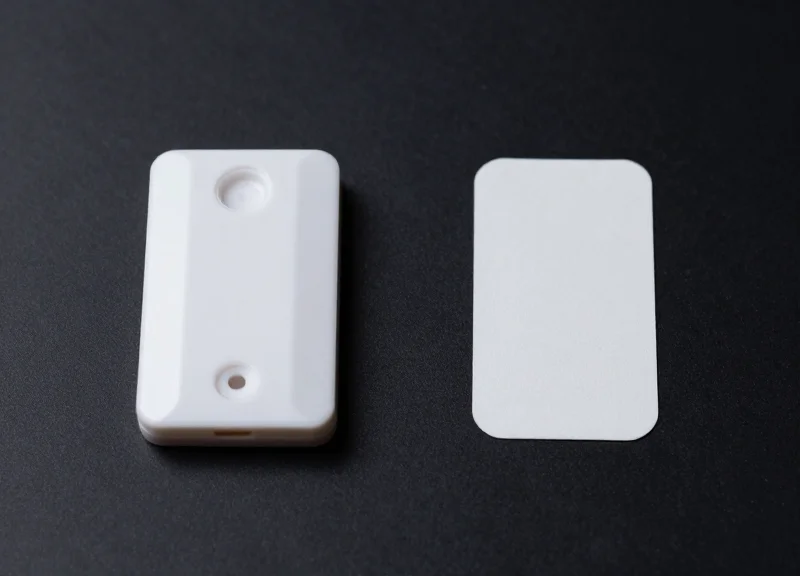
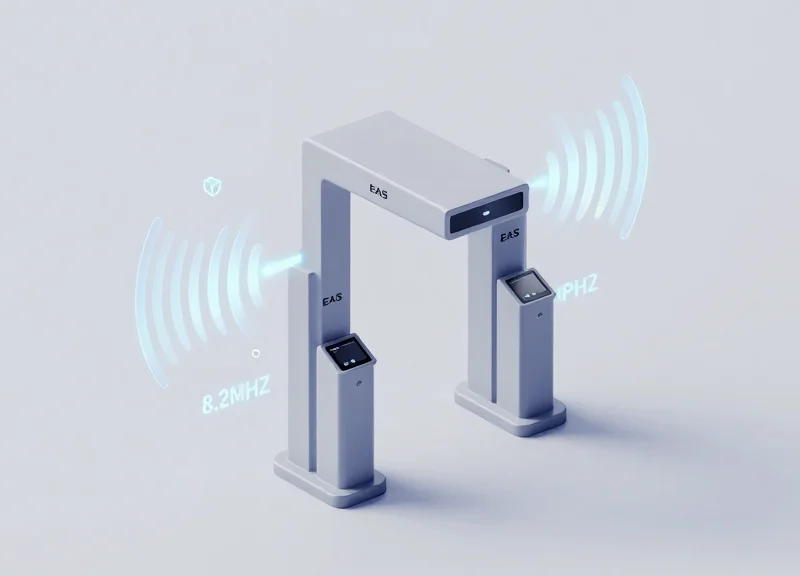
For premium salon brands, the choice between Radio Frequency (RF) and Acousto-Magnetic (AM) technology is not merely a budgetary one; it is a technical decision dictated by the physical properties of beauty inventory. While RF systems are the industry standard for high-volume retail due to lower tag costs, AM systems operate at a lower frequency (58 kHz) that provides superior penetration through liquids and metallic packaging—two constants in the professional hair care environment. To achieve a 40% reduction in internal shrinkage, a salon must deploy a system that remains stable even when tags are placed on foil-embossed boxes or high-viscosity liquids.
| Feature | Radio Frequency (RF) | Acousto-Magnetic (AM) |
|---|---|---|
| Operating Frequency | 8.2 MHz | 58 kHz |
| Liquid Performance | Poor (Signal absorbed by liquids) | Excellent (Penetrates dense liquids) |
| Metallic Packaging | High interference/Shielding | High resistance to shielding |
| Tag Discretion | Flat, paper-thin stickers | Small, 3D plastic strips |
| Ideal Use Case | Dry goods, towels, brushes | Liquid products, foils, tools |
Expert Insight: The 'Meniscus Interference' Factor. In my experience auditing high-end salons, I have found that RF systems often fail to detect internal theft of partially used professional 'backbar' bottles. This is due to the 'Meniscus Effect,' where the movement of liquid inside a bottle creates a shifting dielectric constant that detunes standard RF labels. AM technology is virtually immune to this shift, making it the only viable choice for salons protecting expensive, partially-consumed chemical inventory.
Can I hide EAS tags inside the product packaging?
Yes. For premium brands, maintaining aesthetic integrity is vital. AM 'DR' labels are small enough to be hidden inside box flaps or at the base of bottles, ensuring the security measure is invisible to the client but detectable by the system.
Does EAS interfere with salon Wi-Fi or point-of-sale systems?
Modern digital EAS controllers use swept-frequency technology to avoid interference. However, AM systems are generally more robust in electronically 'noisy' environments where high-wattage hair dryers and styling tools are constantly cycling on and off.
Which system is better for preventing 'internal' shrinkage specifically?
AM is superior for internal shrinkage because its tags are harder to 'shield' with aluminum foil or body shielding, common tactics used by dishonest staff who understand the limitations of basic RF technology.
Ultimately, for a salon focused on protecting high-margin items like professional-grade serums, foil-wrapped extensions, and luxury tools, the investment in AM technology pays for itself through a drastically lower false-alarm rate and higher detection sensitivity across a diverse product range.
Integrating EAS Tags with Premium Product Packaging
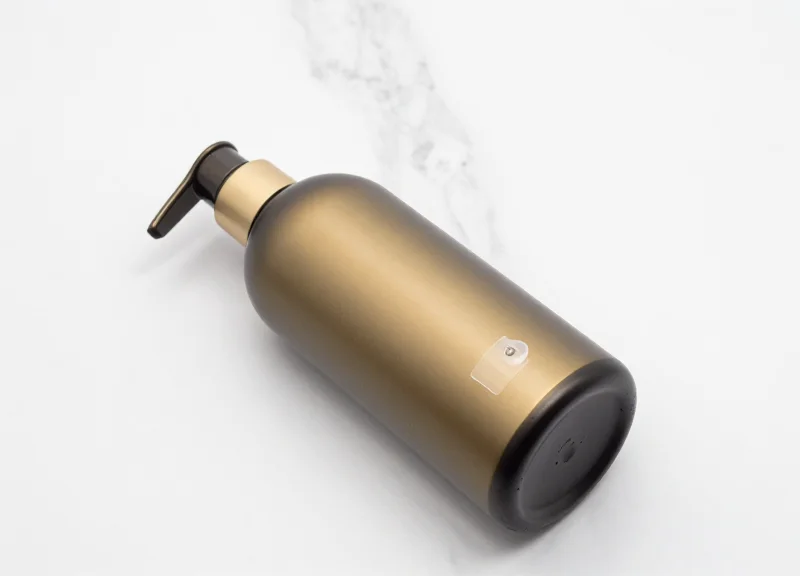
Integrating EAS tags with premium product packaging involves the strategic application of ultra-thin Radio Frequency (RF) or Acousto-Magnetic (AM) sensors in a manner that preserves the brand's visual identity while ensuring 100% detection rates. For premium stylist brands, the goal is 'invisible security'—utilizing source-tagging or covert placement techniques that allow high-value inventory like professional-grade shears and luxury treatments to be protected without the aesthetic 'clutter' of traditional retail security measures.
| Packaging Format | Recommended EAS Tag | Best Placement Practice |
|---|---|---|
| Glass/Plastic Bottles | Ultra-Thin DR Labels | Vertical placement opposite the primary brand logo. |
| Cardboard Boxes | Circuit-Embedded Tags | Inserted between the box liner and outer shell during assembly. |
| Metal/Foil Tubes | Ferrite-Shielded AM Tags | Required to prevent signal interference from metallic packaging. |
| Small Tools (Shears) | Micro-Hard Tags | Attached to the lanyard loop or finger rest using clear nylon ties. |
To achieve a 40% reduction in internal shrinkage, the integration process must be standardized across all high-margin inventory. When staff members see that security is baked into the product's presentation rather than being a visible afterthought, the psychological deterrent is significantly amplified.
- Surface De-energizing and Preparation: Ensure that the packaging surface is free of oils or silicone residues, common in salon environments, to prevent tag peeling or 'flagging' which signals vulnerability.
- Strategic Orientation for Maximum Sweep: Align tags vertically on bottles. This ensures that even when a product is held or concealed in a bag, the sensor maximizes its 'cross-section' with the EAS pedestal gates.
- The 'Hidden in Plain Sight' Method: Apply security labels directly over existing barcodes or under the 'Directions for Use' flap. This makes the tag virtually indistinguishable from the original packaging.
Expert Tip: The 'Shadow Labeling' Strategy. One of the most effective ways to combat internal theft is 'Shadow Labeling.' This involves using a custom-printed EAS label that mimics a secondary regulatory or 'Authorized Stylist Only' sticker. By making the security element look like a functional part of the brand’s professional certification, you reduce the likelihood of staff attempting to tamper with or peel the tag, as doing so would visibly damage the product's perceived authenticity.
Will EAS tags damage the premium finish of my packaging?
No, if you use pH-neutral adhesives designed for the luxury goods industry. These ensure the label stays secure but can be removed by the end consumer after purchase without leaving a gummy residue or tearing the box.
Can I use EAS on products containing metal or foil?
Yes, but you must use Acousto-Magnetic (AM) technology. Unlike RF tags, which are neutralized by metal interference, AM tags operate at a frequency that can penetrate metallic foils often found on high-end hair color tubes and foil-stamped boxes.
Should I tell my staff where the tags are hidden?
Transparency is key for deterrence. While the tags should be hidden from customers, informing staff that 'every premium unit is digitally serialized and tracked via internal EAS' reinforces the culture of accountability.
Training and Policy: The Human Element of Loss Prevention

To achieve a 40% reduction in internal shrinkage, Electronic Article Surveillance (EAS) must be treated as a tool for operational support rather than a surveillance mechanism for staff. The human element of loss prevention involves aligning employee behavior with automated systems through clear, transparent policies and comprehensive training modules. When premium stylist brands integrate EAS into their standard operating procedures (SOPs), they shift the focus from 'catching' loss to 'preventing' discrepancies, which protects both the salon's inventory and the stylists' professional integrity.
- Onboarding and Cultural Alignment: Introduce EAS during the initial hire orientation. Frame the technology as a way to ensure product availability for clients, rather than a lack of trust in the team.
- Standardized Tagging Workflows: Define exactly who is responsible for tagging incoming shipments. Centralizing this task to a specific lead or inventory manager ensures consistency and reduces missed items.
- Alarm Response Protocol: Train staff on a 'non-confrontational' response to system triggers. In premium environments, the response should always be service-oriented to maintain the luxury experience.
- Regular Inventory Spot-Checks: Use EAS data to inform weekly micro-audits. This creates a feedback loop where staff see the impact of the technology on real-time stock levels.
| Policy Component | Operational Impact | Staff Benefit |
|---|---|---|
| The 'Backbar-as-Retail' Rule | Tracks usage of high-value professional products. | Ensures tools are always in stock for services. |
| Zero-Tolerance Tag Removal | Eliminates ambiguity regarding tampered products. | Protects honest stylists from false accusations. |
| Shrinkage Bonus Program | Ties inventory accuracy to quarterly performance incentives. | Provides a financial motive to maintain security. |
Expert Insight: The 'Shadow Inventory Rule'. Most premium salons fail because they only tag retail products, leaving the 'backbar' vulnerable. By applying EAS tags to professional-use-only inventory, you eliminate the largest source of internal shrinkage: the unauthorized 'borrowing' of high-end chemical treatments and styling products for side-hustle services.
Does EAS technology make stylists feel untrusted?
Only if implemented without communication. When presented as a system to ensure the salon stays profitable and can afford high-end tools and education, stylists generally view it as a professional standard.
How do we handle false alarms caused by employee belongings?
Establish a policy where staff belongings are kept in lockers outside the protected zone or utilize a 'check-in' process for personal products that might trigger the sensors.
Should stylists be involved in the tagging process?
Yes. Involvement creates ownership. When stylists understand the cost of the products they handle daily, they become the first line of defense against both internal and external loss.
Data-Driven Results: How EAS Enables Precise Inventory Monitoring

EAS enables precise inventory monitoring by synchronizing physical security alerts with digital transaction logs, creating a verifiable audit trail for every high-value item in a salon. By linking Acousto-Magnetic (AM) or Radio Frequency (RF) pedestal alarms directly to Point-of-Sale (POS) metadata, management can differentiate between accidental tag-clearing errors and deliberate internal shrinkage, achieving a level of transparency that manual counts cannot match. This digital bridge allows premium brands to move from reactive 'loss discovery' to proactive 'loss prevention.'
| Metric | Manual Audit | EAS-Integrated Monitoring |
|---|---|---|
| Detection Speed | Weeks/Months | Real-time |
| Data Granularity | Bulk Total | Individual Item Level |
| Labor Cost | High (After-hours) | Zero (Automated) |
| Shrinkage Source | Unknown | Pattern-Identified |
- Timestamp Correlation: Aligning the internal clock of the EAS controller with the POS server to ensure millisecond precision during alarm events.
- Staff ID Mapping: Overlaying employee login data with alarm logs to identify frequency patterns during specific stylist shifts.
- SKU-Level Tagging: Moving from generic protection to item-specific identification using RFID-enabled EAS tags for granular stock movement data.
Unique Expert Insight: The 'Shift-Transition Spike'. Data-driven EAS analysis consistently reveals that a significant portion of internal shrinkage in premium salons occurs during the 15-minute window between shift changes. By analyzing alarm logs specifically during these 'handover' periods, owners can identify where policy enforcement is lax or where staff members are exploiting the temporary lack of floor supervision to remove high-margin retail products. This insight allows for targeted management presence rather than broad, morale-damaging surveillance.
Can EAS integration detect if an item is moved but not stolen?
Yes, Directional Sensing technology in modern pedestals can distinguish between a product approaching the door and one actually exiting the premises, reducing false positives and improving data accuracy.
Does this require expensive software upgrades?
Most enterprise-grade EAS systems come with API capabilities that allow them to push data to existing business intelligence (BI) tools or advanced POS systems without a total infrastructure overhaul.
Maintaining Brand Aesthetics while Ensuring Maximum Security
Maintaining brand aesthetics while ensuring maximum security is achieved by integrating Electronic Article Surveillance (EAS) technology that complements, rather than clashes with, a premium salon’s interior design. High-end stylist brands can achieve this through the use of clear acrylic pedestals, under-floor loop antennas, or customized hardware that aligns with the salon's architectural palette, ensuring that the 40% reduction in shrinkage does not come at the cost of the client’s luxury experience.
| EAS Hardware Type | Aesthetic Impact | Security Efficacy | Best Use Case |
|---|---|---|---|
| Slimline Acrylic Pedestals | Low (Transparent design) | High (Visible deterrent) | Modern, glass-fronted luxury salons |
| Underfloor/Mat Antennas | Zero (Invisible) | Moderate (Requires specific tag orientation) | Open-concept boutiques with minimalist entryways |
| Concealed Door Frame Systems | Minimal (Blends with architecture) | High (Broad detection zone) | Historical buildings or custom-built doorways |
| RFID/RF Smart Shelving | Zero (Embedded in displays) | Superior (Real-time tracking) | High-value 'Hero Product' display zones |
A common mistake in salon loss prevention is opting for bulky, 'big-box retail' antennas that signal a lack of trust to premium clients. For top-tier stylist brands, the goal is 'invisible friction.' This means utilizing micro-labels that fit discreetly under the base of a product or behind branding, and choosing gate systems that look like decorative elements rather than security checkpoints. My expert tip: Use 'Brand-Matched Skins' for your EAS towers. By wrapping pedestals in the same textures or colors as your salon’s interior—such as brushed gold, marble, or matte black—the hardware transitions from a security eyesore to a cohesive design element.
Do security pedestals negatively impact the luxury customer experience?
No, if implemented correctly. Studies show that customers in high-end environments view discreet security as a sign of product value and brand prestige. Using clear acrylic or concealed systems maintains the 'boutique' feel while silently protecting assets.
Can I hide EAS tags inside the product packaging?
Yes. For premium brands, tags can be 'source-tagged' inside the box during manufacturing or placed behind labels during shelf-stocking. This protects the product's visual identity while ensuring the EAS system can still detect unauthorized removal.
What is the best way to secure glass-walled salons?
For salons with extensive glass frontage, underfloor loop systems are ideal. They eliminate the need for vertical pedestals entirely, allowing the architecture to remain unobstructed while creating an invisible security curtain at the exit.
Beyond the hardware, the placement of the 'Deactivation Zone' is crucial for aesthetics. By integrating the deactivation pad into the underside of a marble or wood POS counter, the process of 'unlocking' the product becomes a seamless part of the checkout ritual. This prevents the cluttered look of wires and plastic pads on top of the desk, keeping the focus on the stylist-client relationship and the high-value transaction.
The Path to 40%: A Step-by-Step Implementation Framework

To achieve a 40% reduction in internal shrinkage, premium salons must move beyond basic hardware installation to a structured 5-phase implementation framework. This methodology, termed the 'Precision Loss Prevention' (PLP) cycle, focuses on identifying high-velocity leak points, calibrating Electronic Article Surveillance (EAS) sensitivity to high-moisture beauty environments, and establishing a 'Trust but Verify' culture among stylists and support staff.
- Phase 1: The Inventory Leakage Audit: Conduct a 30-day baseline inventory scan using RFID or high-frequency barcode tracking to identify exactly which premium SKU categories (e.g., bond-builders, specialty oils) are disappearing. This pinpointing allows for targeted tagging rather than inefficient 'blanket' security.
- Phase 2: Infrastructure Calibration: Select and install Acousto-Magnetic (AM) pedestals or concealed floor loops. Unlike RF systems, AM systems are less prone to interference from the metallic foils and liquid contents common in professional hair care products, ensuring fewer false alarms.
- Phase 3: Discreet Tagging Integration: Apply specialized 'Source Tagging' methods. For premium brands, tags should be placed under labels or inside box flaps during the stocking process to maintain the luxury aesthetic while ensuring every unit is protected before it reaches the retail shelf.
- Phase 4: Behavioral Alignment & Policy Launch: Introduce new Standard Operating Procedures (SOPs) where staff are responsible for 'deactivating' tags at the POS. This creates a psychological barrier to internal theft, as the alarm system acts as an impartial auditor of every transaction.
- Phase 5: The Closed-Loop Analysis: Review weekly 'Alarm Logs' against POS transaction data. If an alarm sounds without a corresponding sale, it triggers an immediate investigation, closing the window of opportunity for 'back-door' shrinkage.
| Implementation Phase | Timeline | Target Shrinkage Reduction |
|---|---|---|
| Audit & Baseline | Week 1-2 | 0% (Data Gathering) |
| Hardware Calibration | Week 3 | 5-10% (Deterrence) |
| Tagging & SOP Integration | Week 4-6 | 15-25% (Operational Control) |
| Full Data Optimization | Week 8+ | 40%+ (Systemic Change) |
Expert Tip: Implement 'Phantom Tagging.' Periodically place active EAS tags inside empty tester bottles or low-value items and track if they trigger the system. This 'stress tests' the vigilance of your front-desk team and ensures the hardware is functioning optimally without relying on an actual theft event to prove its worth.
Does EAS specifically stop internal employee theft?
Yes. Internal shrinkage often occurs through 'sweethearting' or pocketing products. By making every product 'live' until deactivated at the register, employees know that any unauthorized removal will trigger a public alert, significantly raising the risk of detection.
Will the system interfere with salon electronics?
Modern AM systems are designed to operate on specific frequencies that do not interfere with high-end styling tools, hair processors, or salon management software, provided they are calibrated during the Phase 2 installation.
ROI Analysis: Calculating the Financial Benefits of EAS Investment
Return on Investment (ROI) for Electronic Article Surveillance (EAS) in premium salons is the net financial gain derived from reduced shrinkage and increased operational efficiency, divided by the total cost of system implementation. For high-end stylist brands, a successful ROI calculation doesn't just look at the cost of a stolen bottle; it accounts for the 'Service-to-Sales Recovery Ratio'—the amount of service revenue required to offset a single lost inventory item. When internal shrinkage drops by 40%, the direct impact on the bottom line often results in system payback within 6 to 12 months.
| Financial Metric | Pre-EAS (Baseline) | Post-EAS (Projected) | Net Impact |
|---|---|---|---|
| Annual Shrinkage % | 5% - 8% of Revenue | 2% - 3% of Revenue | +40-60% Savings |
| Inventory Audit Time | 12 Hours/Month | 4 Hours/Month | 8 Hours Reclaimed |
| Product Margin Erosion | High | Low/Stable | Increased Gross Profit |
| Staff Accountability | Anecdotal | Data-Driven | Cultural Shift |
To accurately calculate the financial benefits, salon owners must look beyond the hardware costs. The true ROI includes 'recovered productivity.' When stylists are no longer preoccupied with monitoring inventory or performing manual daily counts to identify missing professional-grade color or styling products, they can focus on high-ticket services and client retention.
- Identify Total Cost of Ownership (TCO): Include the initial hardware (antennas, tags, detachers), installation fees, and the cost of consumable labels for the first year.
- Calculate Annual Shrinkage Loss: Multiply the wholesale cost of missing items by the frequency of loss. For premium brands, this often exceeds $10,000 annually per location.
- Factor in the 'Recovery Margin': Apply the unique insight that every $1 lost in product requires roughly $5 in new service revenue to recover the profit, assuming a 20% net margin.
- Quantify Labor Savings: Assign a dollar value to the hours saved during inventory audits and stock reconciliation made possible by EAS-integrated reporting.
Does EAS increase the cost of goods sold (COGS)?
While there is a per-item label cost, it is typically negligible (cents per item) compared to the retail value of premium products, effectively lowering overall COGS by preventing total loss.
What is the typical 'Break-Even' point?
Most premium salons reach the break-even point on their EAS investment within 9 months, depending on the volume of high-value retail items carried.
How does EAS affect staff morale and ROI?
By removing the 'gray area' of inventory management, EAS reduces friction between management and staff, leading to higher retention—a significant indirect ROI factor.
Expert Tip: The 5x Revenue Rule. In the premium salon sector, professional products have high margins but even higher replacement costs when considering the lost opportunity. An original perspective we utilize in ROI modeling is that a stolen $50 retail product doesn't just cost the salon $25 (wholesale); it costs the salon the $125 in service revenue needed to generate $25 in profit to buy the replacement. Reducing shrinkage by 40% via EAS isn't just saving pennies; it's protecting thousands of dollars in service-hour equivalents.