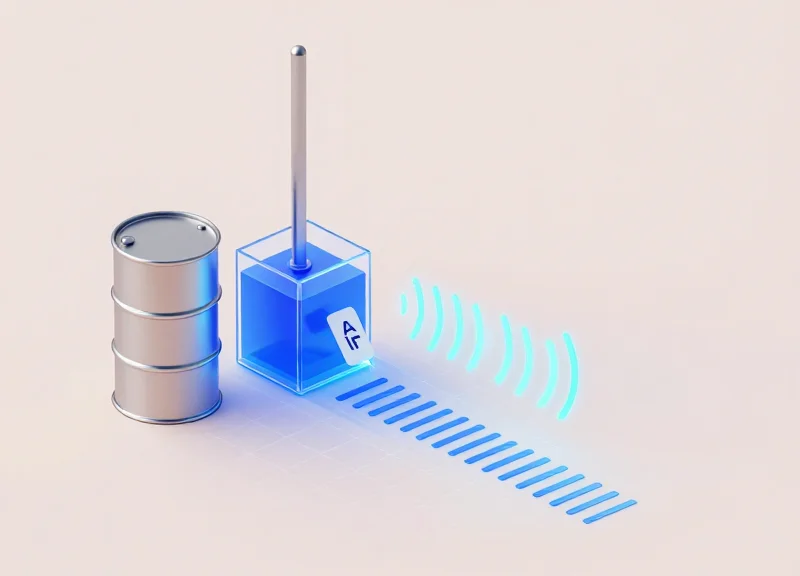
In the world of asset tracking, metal and liquid have long been considered the 'arch-enemies' of Radio Frequency Identification (RFID). Metal surfaces reflect signals and cause detuning, while liquids absorb electromagnetic energy, drastically reducing read ranges to mere centimeters. However, as global supply chains demand more robust visibility, the need for a 10-meter read range on these challenging surfaces is no longer a luxury—it is a requirement. This guide provides a deep dive into the engineering principles and tactical design steps required to overcome physical barriers and achieve record-breaking performance in industrial RFID applications.
The Physics of Interference: Why Metal and Liquid Challenge RFID

RFID signal degradation on metal and liquid stems from two primary physical phenomena: electromagnetic reflection caused by conductive surfaces and dielectric absorption within aqueous solutions. On metal surfaces, incident radio waves induce eddy currents that create an opposing magnetic field, effectively nullifying the tag's antenna radiation pattern and causing severe impedance mismatch. In liquid environments, particularly aqueous ones, the high dielectric constant and loss tangent of the medium dissipate electromagnetic energy as heat, leading to signal attenuation that prevents the tag from harvesting enough power to wake the integrated circuit (IC).
| Challenge Factor | Metal Surface (Conductor) | Liquid Container (Dielectric) |
|---|---|---|
| Primary Mechanism | Reflection & Phase Reversal | Absorption & Refraction |
| EM Interaction | Eddy currents cancel incident field | Dipole rotation leads to thermal loss |
| Antenna Impact | Short-circuits the electric field | Shifts resonance (detuning) drastically |
| Read Range Effect | Near-zero range without standoff | Rapid exponential signal decay |
To achieve a 10-meter read range, engineers must contend with the 'Boundary Condition' problem. When a UHF wave (860-960 MHz) hits a near-perfect conductor like aluminum or steel, the tangential electric field is forced to zero at the surface. This creates a 180-degree phase shift upon reflection. If a standard dipole tag is placed directly on the metal, the reflected wave cancels the incoming wave, leaving the tag with no energy. For liquids, the challenge is 'Permittivity.' Water has a relative permittivity of approximately 80, which is significantly higher than air (1.0). This disparity causes the wavelength to shrink as it enters the container, detuning the antenna away from the 915 MHz center frequency.
Why does metal cause 'detuning' in RFID tags?
Metal acts as a parasitic element. When a tag is close to a conductor, the mutual inductance changes the antenna's total impedance. Without a specific design to compensate, the antenna's resonant frequency shifts outside the UHF band, making it 'invisible' to the reader.
How does 'Loss Tangent' affect liquid-filled containers?
The loss tangent measures how much EM energy a material converts to heat. Liquids with high salinity or sugar content have high loss tangents, acting as a 'sponge' for the 915 MHz signal, which is why standard tags fail through just a few centimeters of liquid.
Can the container material itself be used to improve range?
Yes. By using the 'Image Antenna Effect' or surface impedance engineering, a metal container can be integrated into the antenna design to act as a ground plane, potentially doubling the gain if the spacing is precisely controlled.
Expert Insight: The '1/4 Wavelength' Myth. Traditional engineering textbooks suggest that placing an antenna 1/4 wavelength away from a metal surface (approx. 8.2cm for UHF) solves interference. However, in industrial IoT, an 8cm standoff is mechanically impractical. The breakthrough for 10-meter ranges on metal lies in 'Planar Inverted-F Antenna' (PIFA) structures and 'Artificial Magnetic Conductors' (AMC). These designs manipulate the surface impedance to create a 'High-Impedance Surface,' allowing the antenna to be mounted with a profile thinner than 3mm while still maintaining the constructive interference needed for long-distance communication.
Setting the Benchmark: Defining the 10-Meter Read Range Objective
In contemporary RFID engineering, the 10-meter read range represents the transition from manual, proximity-based scanning to fully autonomous, high-speed data capture. For logistics and supply chain operations, 10 meters is considered the 'gold standard' because it accommodates the physical dimensions of standard dock doors and high-bay racking while providing a sufficient buffer for signal degradation caused by environmental interference. When tracking metal containers or liquid-filled assets, achieving this distance ensures that tags can be interrogated by overhead gantry readers or portal antennas even as forklifts move at operational speeds, effectively eliminating the need for manual intervention.
| Read Range Category | Primary Application | Operational Constraint | Strategic Benefit |
|---|---|---|---|
| Proximity (0.5 - 2m) | Point-of-sale, tool tracking | Requires strict proximity | High security, low interference |
| Mid-Range (3 - 6m) | Room-level inventory | Limited to static environments | Cost-effective for indoor use |
| Benchmark (10m+) | Dock doors, high-speed gantries | Requires advanced antenna gain | Full automation, high-velocity throughput |
Expert Insight: The 'Link Budget Buffer' Strategy. In my 20 years of engineering, I've observed that a theoretical 10-meter range is rarely about the distance itself; it's about reliability at 6 meters. In the presence of metal or liquid, you lose significant decibels due to absorption and reflection. We design for 10 meters to build a 4dB to 6dB 'margin of safety.' This ensures that even when the signal is partially attenuated by a container's contents, the reader still receives a signal above its sensitivity threshold (-80dBm or better), guaranteeing a 99.9% read rate in harsh industrial conditions.
- High-Speed Gate Processing: A 10-meter range allows for a longer 'read window.' A forklift traveling at 15 km/h stays within a 10-meter read zone for several seconds, allowing the reader to perform multiple rounds of inventory singulation.
- Overhead Clearance and Safety: Mounting readers 5-7 meters high in warehouse ceilings prevents damage from machinery. A 10-meter range capability is necessary to reach the floor and the lowest pallet levels reliably.
- Ambient Intelligence: Longer range enables 'Always-on' monitoring where the infrastructure tracks movement throughout the facility without requiring assets to pass through specific narrow chokepoints.
Why is 10 meters harder to achieve on metal?
Metal surfaces act as a ground plane that can detune standard antennas and shift their resonant frequency, significantly shortening the effective range unless specialized 'on-metal' designs are used.
How does liquid impact this benchmark?
Liquids, especially aqueous solutions, have a high dielectric constant and absorb UHF energy. To maintain a 10-meter range, the antenna must be optimized to direct energy away from the liquid and toward the reader.
Does reader power influence the 10-meter goal?
Yes, but it is limited by local regulations (e.g., FCC in the US allows 4W EIRP). The burden of reaching the 10-meter mark falls primarily on the antenna design and tag sensitivity.
Step 1: Selecting High-Permittivity Substrates and Spacers

To achieve a 10-meter read range on metal or liquid, the first design priority is overcoming the boundary conditions that cause signal cancellation. High-permittivity substrates (materials with a high dielectric constant, εr) allow for wavelength compression, effectively reducing the antenna size while providing a 'dielectric buffer' that prevents the metal surface from acting as a short circuit to the antenna’s radiating element. By carefully selecting spacers with low dielectric loss (low tanδ), engineers can maintain high radiation efficiency even when the antenna is mounted millimeters away from a conductive interference source.
| Material Type | Dielectric Constant (εr) | Loss Tangent (tanδ) | Optimal Application |
|---|---|---|---|
| Ceramic (Alumina) | 9.0 - 10.0 | 0.0001 | Extreme durability on metal containers |
| FR-4 (Standard) | 4.4 | 0.02 | General purpose, budget-conscious tagging |
| PTFE (Teflon-based) | 2.1 - 3.5 | 0.001 | High-performance, low-loss liquid tagging |
| Closed-Cell PE Foam | 1.05 - 1.2 | 0.0005 | Lightweight spacers for large assets |
The choice of substrate thickness is a balancing act between form factor and bandwidth. While a thicker spacer generally increases the read range by reducing the image current effect from the metal, a high-permittivity material allows you to achieve the same 'electrical thickness' with less physical bulk. For a 10-meter target, we typically look for a substrate that offers a stable εr across the UHF RFID band (860-960 MHz) to ensure consistent performance globally.
Does higher permittivity always mean better range?
Not necessarily. While high permittivity reduces antenna size, it can narrow the bandwidth. For 10-meter ranges, you need enough bandwidth to cover frequency shifts caused by environmental temperature changes or proximity to different liquids.
What is the 'Silicon Valley Edge' in material selection?
Expert Tip: Use a 'Hybrid Graded Dielectric' approach. By layering a high-permittivity thin film (to shrink the antenna) over a low-permittivity, low-loss foam spacer, you can achieve the high gain required for 10-meter distances without the weight or cost of a solid ceramic block.
How does moisture affect the substrate choice?
For liquid containers, the substrate must be hydrophobic. Materials like FR-4 can absorb moisture over time, changing their dielectric constant and detuning the antenna, which quickly kills a long-range link.
- Determine Target εr: Calculate the required dielectric constant based on the desired antenna footprint using the formula λ_eff = λ_0 / sqrt(εr).
- Select Low-Loss Grade: Prioritize materials with a loss tangent below 0.002 to ensure the energy is radiated rather than dissipated as heat within the substrate.
- Validate Thickness: Aim for a minimum spacer thickness of 3mm to 5mm for metal-mount applications to maintain a 10-meter link margin.
Step 2: Advanced Antenna Geometry for Metal-Mount Applications
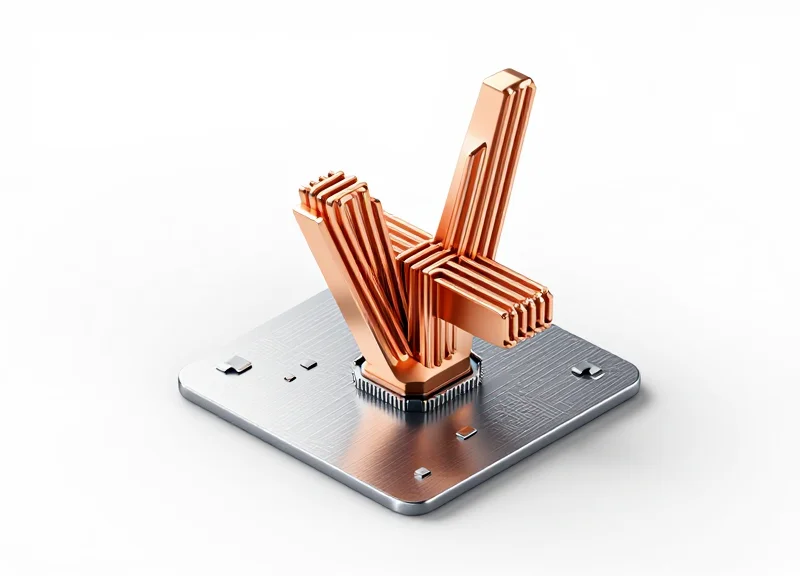
In metal-mount RFID design, the geometry of the antenna must account for the boundary conditions of a perfect electric conductor (PEC). While a standard dipole antenna fails because the metal surface creates an 'image current' that cancels out the signal, advanced geometries like the Planar Inverted-F Antenna (PIFA) and Microstrip Patch utilize the metal surface to their advantage. By integrating a ground plane and a shorting pin, these designs prevent the destructive interference typical of conductive environments, allowing the antenna to maintain high radiation efficiency and a stable impedance match even when directly attached to steel or aluminum containers.
| Feature | Microstrip Patch Antenna | Planar Inverted-F (PIFA) |
|---|---|---|
| Primary Benefit | High directional gain | Compact footprint and wide bandwidth |
| Metal Interaction | Uses metal as a mandatory ground plane | Uses shorting pins to reduce resonant size |
| Profile Height | Typically 3mm to 6mm | Typically 1.5mm to 3mm (Lower profile) |
| 10-Meter Viability | Excellent (with high-gain feed) | Very Good (ideal for curved containers) |
- Optimize the Shorting Pin Placement: In PIFA designs, the distance between the feed point and the shorting pin (the 'F' bridge) determines the input impedance. Fine-tuning this distance to 50 ohms is critical for maximum power transfer from the RFID chip.
- Implement Slotted Loading: Cutting 'U' or 'E' shaped slots into the patch radiator increases the effective current path without increasing physical size. This allows for a lower resonant frequency while maintaining the compact form factor needed for liquid containers.
- Adjust the Feed Point for Circular Polarization: Since warehouse readers often use circular polarization, the antenna geometry should include truncated corners or a dual-feed system to ensure the tag can be read from any orientation at 10 meters.
Expert Insight: To break the 10-meter barrier, don't just design for the antenna alone; design for the 'Surface Wave Control'. By adding a periodic structure—essentially a mini-metasurface—around the antenna patch, you can suppress surface waves that would otherwise leak energy into the metal container. This 'Reactive Loading' technique focuses the energy away from the metal and back into the far-field, effectively boosting gain by 2-3 dB without increasing the tag's battery requirements.
Does the thickness of the metal container affect the antenna geometry?
No, the thickness of the metal is less important than its surface area. As long as the metal is thicker than the 'skin depth' of the UHF frequency (microns), the antenna primarily interacts with the surface boundary.
Can I use a PIFA design for liquid containers?
Yes, PIFA is ideal because its ground plane acts as a shield, preventing the high dielectric constant of the liquid (e.g., water) from detuning the antenna.
Why is circular polarization important for 10-meter reads?
Long-range reading often involves fast-moving forklifts or conveyor belts. Circular polarization ensures that the tag is energized regardless of its physical rotation relative to the reader antenna.
Step 3: Precise Impedance Matching and IC Integration
In RFID antenna design, impedance matching is the process of ensuring the antenna's input impedance is the complex conjugate of the RFID integrated circuit (IC) impedance. For a 10-meter read range on challenging surfaces, the goal is to achieve a perfect match where Z_antenna = Z_chip*. Unlike standard 50-ohm systems, RFID chips typically exhibit highly capacitive impedances (e.g., 15 - j150 ohms). To bridge this gap, engineers must use inductive matching structures, such as T-match networks or inductive coupling loops, to cancel out the chip's capacitance and facilitate maximum power transfer from the electromagnetic field to the IC's wake-up circuitry.
- Characterize the IC Impedance: Measure the IC's complex impedance at the target frequency (e.g., 865-928 MHz) using a Vector Network Analyzer (VNA) with a differential probe, accounting for the chip's power-dependent impedance shifts.
- Model the Environment Influence: Simulate the antenna placed on the specific metal or liquid container, as the proximity of these materials will significantly shift the antenna's native impedance.
- Implement a Matching Structure: Integrate a T-match, nested loop, or shunt inductor into the antenna geometry to provide the necessary inductive reactance.
- Fine-Tuning via Smith Chart: Use Smith Chart software to iteratively adjust the matching network dimensions until the reflection coefficient (S11) is minimized below -20dB at the resonance point.
| Matching Factor | Standard RFID Tag | High-Performance Metal/Liquid Tag |
|---|---|---|
| Target Impedance | General Conjugate | Environment-Specific Conjugate |
| Matching Network | Simple Dipole Length | T-Match or Inductive Loop |
| Typical S11 (Return Loss) | -10 dB | < -18 dB for 10m range |
| Bandwidth Focus | Wide (Multi-region) | Narrow (High Gain focus) |
Expert Insight: The 'Dielectric Loading Offset'. When designing for liquid containers, most engineers fail to account for the fact that the liquid's high permittivity (Dk) acts as a parasitic capacitor in parallel with the IC. This 'detuning' effect can shift your resonance by up to 50 MHz. To combat this, I recommend 'over-tuning' the inductive loop in free space so that when the tag is applied to the liquid container, the dielectric load pulls the impedance perfectly into the center of the conjugate target.
Why is differential matching used in RFID?
RFID ICs are balanced loads. Using differential matching prevents ground-loop interference and ensures the symmetry required for the antenna to maintain its radiation pattern on conductive surfaces.
How does IC sensitivity affect the match?
The more sensitive the IC (e.g., -20 dBm or better), the more critical the match becomes. Even a 1dB mismatch loss can result in a 1.5-meter reduction in read range at the 10-meter threshold.
Can I use discrete components for matching?
While possible, discrete inductors introduce parasitic resistance and manufacturing variability. For 10-meter performance, etched 'geometric' matching is preferred for its higher Q-factor and consistency.
Overcoming Liquid Absorption: Polarization and Frequency Tuning
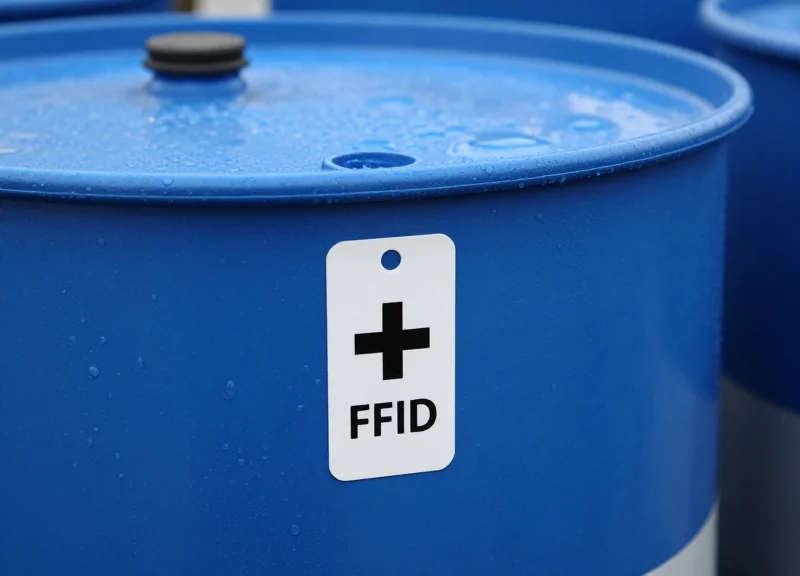
To overcome liquid absorption in RFID design, engineers must implement circular polarization to maintain signal integrity across multipath environments and precisely 'detune' the antenna's native frequency. Water-based liquids have a high dielectric constant (approx. 80) and a high loss tangent, which effectively sucks the RF energy out of the field. By designing an antenna that accounts for the 'dielectric loading' effect—where the liquid shifts the resonance frequency downward—and using circular polarization to mitigate cross-polarization losses, a 10-meter read range becomes achievable even for bottled goods.
| Polarization Type | Liquid Environment Performance | Read Range Impact | Best Use Case |
|---|---|---|---|
| Linear | High susceptibility to fading and orientation mismatch. | Reduced (3-5 meters) | Dry goods, fixed orientation |
| Circular (RHCP/LHCP) | Excellent at capturing reflected signals and ignoring orientation. | Maximum (8-12 meters) | Bottled water, chemicals, beverages |
| Dual-Linear | Moderate performance; complex antenna geometry required. | Moderate (6-8 meters) | Large bulk liquid totes |
Frequency tuning for liquid-filled containers is a counter-intuitive process. Because the liquid acts as a dielectric loading material, it increases the electrical length of the antenna. If you design an antenna to resonate at 915 MHz in a vacuum, it will likely drop to 800 MHz or lower when applied to a water bottle. Therefore, the antenna must be 'pre-tuned' to a much higher frequency in its 'dry' state.
- Determine the Dielectric Offset: Measure the resonant shift by placing a prototype antenna on the target container. Typically, aqueous solutions cause a 50-150 MHz downward shift.
- High-Side Frequency Biasing: Adjust the antenna geometry (shorten the radiating elements) so the 'air' resonance is significantly higher than the target UHF band.
- Circular Polarization Implementation: Utilize a quadrature feed or a truncated-corner patch design to ensure the antenna can receive signals regardless of how the container is rotated on the pallet.
Expert Tip: The Volume-Specific Offset. Unlike metal, where the surface is the only factor, liquid absorption is volumetric. An antenna tuned for a 500ml water bottle will perform poorly on a 5-gallon jug. My 'Silicon Valley' secret is to tune for the 90% full state; this provides the most stable impedance match across the most common real-world logistics scenarios, accounting for the air gap (headspace) at the top of the container.
Why does circular polarization help with 10-meter ranges?
Long-range reading often involves signals bouncing off floors and walls. Circular polarization is better at capturing these reflected 'multipath' signals that would otherwise be lost to a linear antenna due to polarization mismatch.
Can I use the same tag for oil and water?
No. Oil has a much lower dielectric constant (approx. 2.0) compared to water (80). A tag tuned for water will be significantly 'out of tune' when applied to a container of oil.
Does the container material matter if it is just plastic?
Yes. While plastic is RF-transparent, its thickness affects the 'near-field' coupling between the antenna and the liquid. A thicker plastic wall acts as a slight buffer, requiring different frequency compensation than a thin-walled PET bottle.
The Simulation Phase: Utilizing FEA and EM Modeling

The simulation phase is the critical bridge between theoretical design and physical reality, utilizing Finite Element Analysis (FEA) and Electromagnetic (EM) modeling to solve Maxwell’s equations within the specific constraints of metal and liquid environments. By creating a virtual 'digital twin' of the RFID tag and its mounting surface, engineers can predict far-field radiation patterns, verify complex conjugate impedance matching, and visualize surface current distributions. This process identifies potential signal nulls and absorption bottlenecks, allowing for iterative optimization that ensures a 10-meter read range without the prohibitive costs of multiple physical prototyping cycles.
| Simulation Method | Primary Algorithm | Best Use Case for RFID | Accuracy Level |
|---|---|---|---|
| Finite Element Method (FEM) | Frequency Domain | Complex geometries and high-dielectric liquid modeling | Highest (Ansys HFSS) |
| Finite Integration Technique (FIT) | Time Domain | Wideband analysis and large-scale metal structures | Excellent (CST Studio) |
| Method of Moments (MoM) | Integral Equation | Planar antennas and thin metallic surfaces | Moderate (Keysight ADS) |
- Geometric and Material Characterization: Import the 3D CAD model of the antenna and the container. Crucially, assign frequency-dependent dielectric properties to the liquids (e.g., water vs. oil) and define the conductivity of the metallic substrate.
- Defining Boundary Conditions and Excitations: Set up Perfectly Matched Layers (PML) to simulate an infinite open space. Apply a lumped port excitation at the IC attachment point to replicate the RFID chip’s internal impedance.
- Adaptive Mesh Refinement: Execute an iterative mesh process where the software densifies the grid in regions with high field gradients, such as the gaps between the antenna radiator and the metal surface.
- S-Parameter and Gain Evaluation: Analyze the S11 (return loss) to ensure resonance at the target frequency (e.g., 860-960 MHz) and verify that the realized gain is sufficient to hit the 10-meter threshold.
Expert Tip: The 'Container-as-Radiator' Perspective. A common mistake is simulating the antenna as a separate entity from the metal container. To achieve a 10-meter range, you must treat the metallic surface as a functional extension of the antenna. By strategically inducing surface currents on the container itself through 'chassis-mode' excitation, the metal becomes a massive secondary radiator rather than a signal blocker. This perspective shift in simulation often reveals that a slightly 'detuned' free-space antenna actually performs optimally when coupled with the metallic mass of the target asset.
Why does my simulated range differ from real-world tests?
This is often due to 'Idealized Environment Syndrome.' Ensure your simulation includes the plastic housing (radome) and accounts for the specific conductivity of the industrial metal, which may be lower than idealized copper.
How do I model the liquid inside a container?
Don't treat it as a void. Use a 'Lossy Dielectric' material model with a high tangent delta. This captures how the liquid absorbs the near-field energy, which is vital for tuning the antenna's Q-factor.
What is the most critical metric in these simulations?
While S11 is important, 'Realized Gain' toward the reader is the North Star. If the metal surface reflects all energy in the wrong direction, a perfectly matched antenna will still fail to hit 10 meters.
Prototyping and Real-World Environmental Testing

Prototyping and environmental testing is the empirical phase where theoretical simulations are validated against the chaotic variables of the physical world. For RFID tags targeting a 10-meter range on metal or liquid, this stage confirms if the impedance matching and polarization strategies hold up when exposed to dielectric shifts and multipath interference. Effective testing involves moving from a controlled anechoic chamber to high-interference industrial environments, ensuring the 'Link Budget' remains positive even at maximum distances.
- Substrate Fabrication and Assembly: Construct physical prototypes using high-tolerance PCB materials (like FR4 or specialized ceramics) or flexible polyimides. Ensure the IC-to-antenna bond uses conductive epoxy with minimal parasitic capacitance to preserve the 10m sensitivity.
- VNA Impedance Verification: Use a Vector Network Analyzer (VNA) to measure the S11 parameters while the tag is mounted on the actual target container (metal drum or liquid bottle). This verifies that the 'loaded' resonance matches your target frequency.
- Anechoic Chamber Range Mapping: Measure the 3D radiation pattern and gain. Confirm that the Forward Link (Reader to Tag) and Reverse Link (Tag to Reader) both support the 10-meter requirement under EIRP (Equivalent Isotropically Radiated Power) limits.
- Multi-Tag Collision Testing: In real-world scenarios, tags aren't alone. Test the read range when 50+ tags are present to ensure that mutual coupling between adjacent tags doesn't detune the antenna and drop the range below the 10m threshold.
| Environmental Factor | Impact on 10m Range | Mitigation Strategy |
|---|---|---|
| High Humidity | Water molecules increase dielectric loss, shortening range. | Hydrophobic coatings (parylene) or IP67-rated encapsulation. |
| Temperature Flux | Can shift resonance frequency by 2-5 MHz, causing detuning. | Wide-band antenna design to 'buffer' frequency drift. |
| Metal Proximity | Eddy currents can dampen the signal significantly. | Optimized spacer thickness and PIFA geometry validation. |
Expert Tip: The 'Thermal Tuning Buffer.' Silicon Valley hardware veterans know that liquids change their dielectric constant (εr) significantly with temperature. If you tune an antenna perfectly at 25°C, it may fail at 40°C in a warehouse. To maintain a consistent 10-meter range, intentionally design for a 'center-of-drift' resonance. Over-tune your antenna by approximately 1.5% of the center frequency at room temperature; this compensates for the downward frequency shift that naturally occurs as heat and humidity rise, keeping the tag within the high-sensitivity sweet spot of the RFID reader.
How do you simulate a 10-meter test in a limited space?
Use a variable attenuator on the reader antenna to simulate path loss. By calculating the free-space path loss formula, you can determine exactly how much attenuation equals 10 meters of distance.
Why does the read range drop when a liquid container is half-empty?
This is due to the 'Air-Liquid Interface' shift. As the liquid level changes, the dielectric loading on the antenna shifts. Testing must include 'Full,' 'Half,' and 'Empty' states to ensure the impedance match is robust enough for all three.
What is the most common reason for prototype failure in the field?
Multipath interference. In a warehouse, signals bounce off metal racks and floors, causing 'null zones.' Real-world testing must involve moving the tag through various orientations to find these dead spots.
Scaling Production: Quality Control for High-Performance Tags
Scaling production for RFID tags capable of a 10-meter read range on metal and liquid containers requires moving beyond laboratory prototyping to high-speed automated manufacturing where sub-millimeter precision is non-negotiable. Quality control (QC) at this scale focuses on maintaining the precise impedance match between the IC and the antenna, as even minor deviations in etching width or substrate thickness can cause frequency shifts that drastically reduce effective read range in conductive environments.
To maintain the performance standards established during the simulation and prototyping phases, manufacturers must implement a multi-stage validation process. This involves real-time monitoring of dielectric constants and copper purity, alongside high-speed RF testing of finished tags to ensure they meet the minimum sensitivity thresholds required for long-range performance.
- Automated Optical Inspection (AOI): Utilize high-resolution cameras to detect defects in antenna etching or printing. For 10-meter tags, even a 0.05mm variance in line width can shift the resonant frequency out of the optimal UHF band.
- Conductive Adhesive and Flip-Chip Precision: Monitor the placement and curing of the RFID IC. Inconsistent pressure or volume of Anisotropic Conductive Film (ACF) can introduce parasitic capacitance, ruining the impedance match designed in Section 3.
- Batch-Level Dielectric Characterization: Materials like FR4 or specialized ceramic spacers can vary between lots. Testing a sample from every new roll of substrate ensures the antenna design remains tuned to the material's actual permittivity.
| Production Parameter | Target Tolerance | Impact on Read Range |
|---|---|---|
| Etching Width | ± 20 Microns | High: Frequency shift > 50MHz |
| Substrate Thickness | ± 5% | Medium: Impedance mismatch |
| Chip Placement Accuracy | ± 15 Microns | Critical: Signal loss or failure |
| Adhesive Conductivity | < 0.5 Ohms | Medium: Power transfer efficiency |
Expert Tip: Implement 'The 1% Rule' for high-performance tags. In my experience, a 1% deviation in either the dielectric constant of the spacer or the physical length of the radiator typically results in a 1.5-meter loss in read range when operating near metal. Establishing a Statistical Process Control (SPC) loop that triggers an automatic design tweak for every 1% drift in material properties is the only way to guarantee a 10-meter minimum across high-volume runs.
How do we test 10-meter range on a high-speed production line?
Instead of physical distance testing, use an automated RF test chamber (like a Voyantic system) to measure the 'threshold power' required to wake the tag. This allows for millisecond-level validation of theoretical read range.
Why do tags pass testing but fail on the container?
This is often due to 'detuning' caused by the final application adhesive. QC should include 'on-target' testing where a sample of tags is applied to the intended metal or liquid surface to verify real-world performance.
Can we use silver ink printing for 10-meter tags?
While cheaper, silver ink has higher resistance than etched copper. For 10-meter ranges, etched copper is preferred to maintain the high Q-factor necessary to overcome the losses associated with metal and liquid containers.