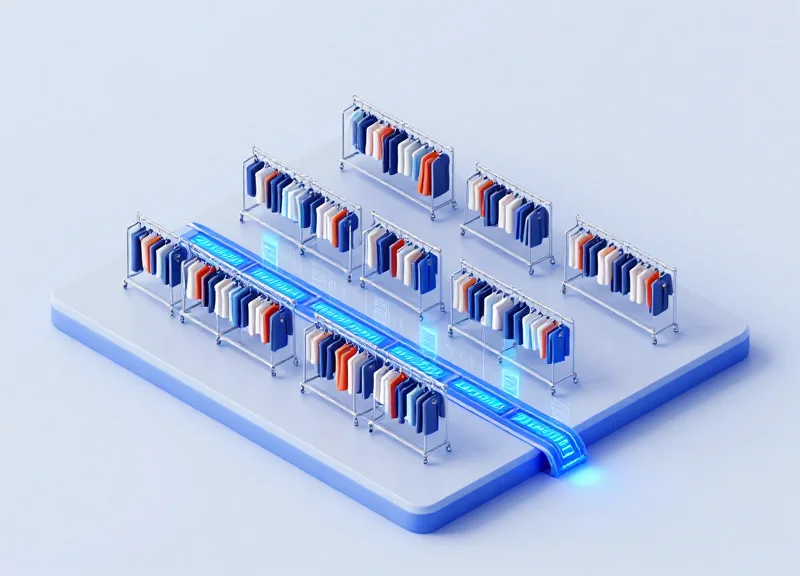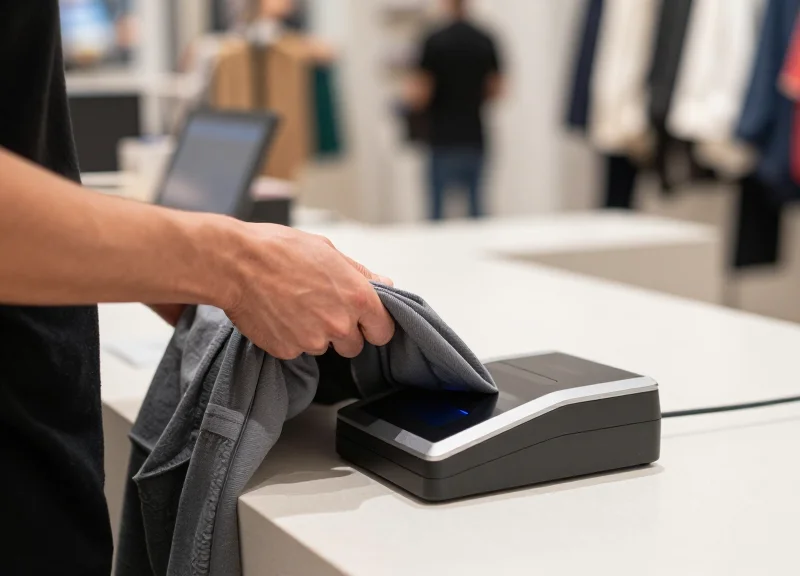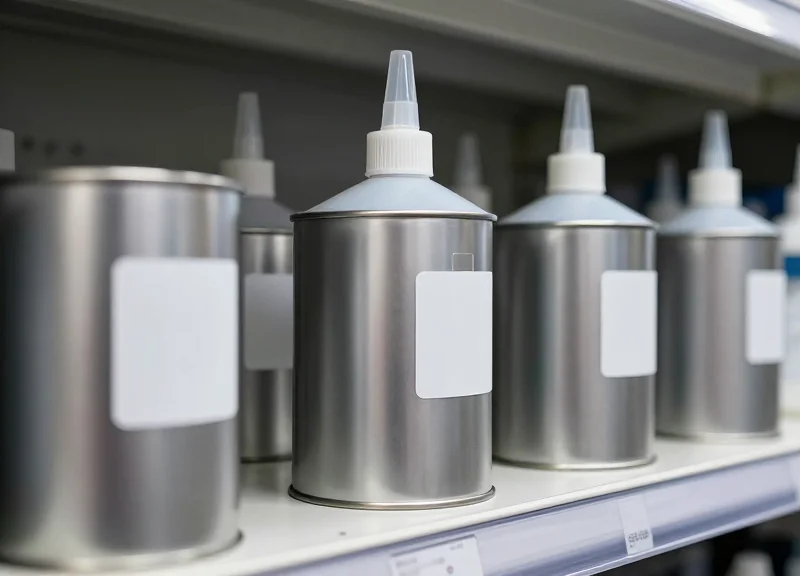
In the competitive landscape of industrial retail, inventory shrinkage is more than just a nuisance—it is a direct assault on your profit margins. For retailers specializing in high-value chemicals like industrial glue and paint, the challenge is twofold: products are frequent targets for organized retail crime, and the environment itself is hostile to traditional security measures. Standard EAS labels often fail due to chemical fumes, temperature fluctuations, and surface adhesion issues. This article explores how transitioning to high-durability EAS labels can eliminate up to 40% of shrinkage, providing a robust ROI for retailers who refuse to let their profits leak out of the door.
The 40% Shrinkage Crisis in Industrial Retail
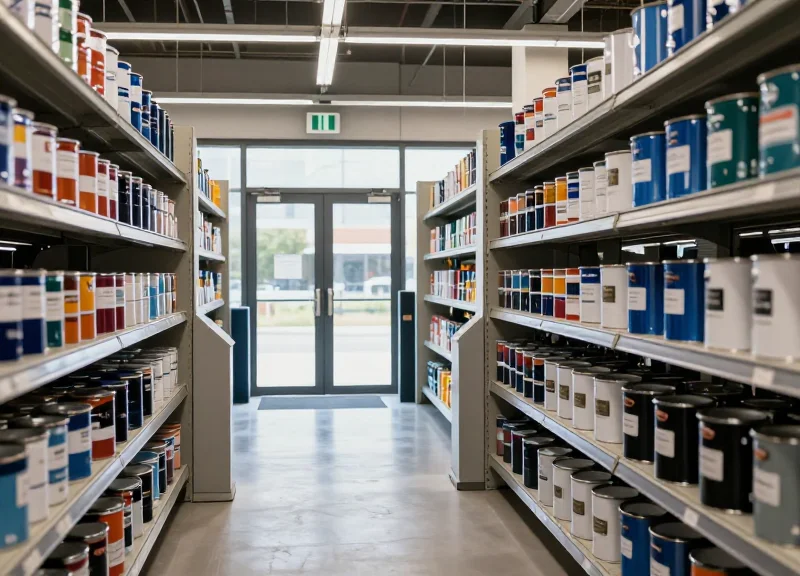
The 40% shrinkage crisis in industrial retail refers to the disproportionate rate of inventory loss—often exceeding general retail benchmarks by nearly half—caused by the failure of standard security measures in chemically volatile environments. In sectors like paint, adhesives, and industrial solvents, traditional Electronic Article Surveillance (EAS) labels frequently fail due to adhesive degradation or chemical interference, creating a 'security vacuum' that organized retail crime (ORC) syndicates and opportunistic shoplifters exploit to drain profit margins.
| Loss Metric | General Big-Box Retail | Industrial Paint & Glue Retail |
|---|---|---|
| Average Shrinkage Rate | 1.4% - 1.6% | 2.5% - 4.1% (High-Risk Zones) |
| Primary Driver | Employee Theft / Shoplifting | Environmental Tag Failure + ORC |
| EAS Label Longevity | 99.9% (Climate Controlled) | Low (Solvent/Vapor Degradation) |
| Recovery Potential | Moderate | Low (High Resale Value of Adhesives) |
Unlike soft goods or electronics, industrial products like high-performance epoxies and architectural coatings present a 'triple threat' to inventory integrity. First, they are high-value and high-demand, making them easy to flip on secondary markets. Second, their physical footprints are often small enough to conceal easily. Third, the very nature of the product—fumes, chemical spills, and extreme warehouse temperatures—actively works to destroy the security tags meant to protect them. When a standard EAS label loses its bond due to solvent vapors, it doesn't just fall off; it signals to thieves that your store is an easy target.
Why are glue and paint retailers targeted specifically?
Products like industrial-grade resins and premium spray paints have a high 'black market' liquidity. Professional contractors looking to cut costs often purchase these stolen goods, creating a constant demand that fuels high-volume theft.
Does the environment actually deactivate security tags?
Yes. Airborne VOCs (Volatile Organic Compounds) found in paint aisles can penetrate the layers of standard paper-based EAS labels, corroding the aluminum or copper resonators and rendering them 'silent' even if they remain attached to the product.
What is the economic impact of a 40% higher shrinkage rate?
For a mid-sized industrial retailer, this gap can represent the difference between a 5% net profit and a 1% loss. Because industrial margins are often tighter due to bulk pricing, every unit lost requires significantly more sales to recoup the cost of goods sold (COGS).
Expert Insight: The 'Ghost Tag' Phenomenon. In my twenty years of auditing retail security, I have identified a unique industrial failure known as 'Ghost Tagging.' This occurs when a standard EAS label remains physically attached to a paint can or adhesive tube, but the adhesive has chemically reacted with the product's outgassing. This reaction creates a microscopic barrier that dampens the RF/AM signal. Retailers believe they are protected, but the 'Ghost Tag' will not trigger the pedestals at the exit, leading to thousands of dollars in undetected losses every month. Only high-durability, chemically-shielded labels can prevent this specific vulnerability.
Why Glue and Paint Are High-Risk Inventory
Industrial-grade glues and paints are high-risk inventory items because they occupy a 'sweet spot' for theft: high demand, high resale value, and zero traceability. Unlike power tools, which are increasingly equipped with serial numbers or Bluetooth tracking, consumables like epoxy resins, premium spray paints, and industrial adhesives are anonymous assets. Once they are removed from the shelf, they can be liquidated instantly through grey-market channels—such as local job sites, flea markets, or online marketplaces—without any way for the retailer to prove ownership or track the stolen goods.
| Risk Factor | Industrial Consumables (Glue/Paint) | Traditional Hardware (Lumber/Tools) |
|---|---|---|
| Portability | High (Pocket-sized or easy-to-carry cans) | Low to Medium (Bulky or heavy) |
| Traceability | None (No serial numbers or registration) | High (Unique IDs, internal GPS) |
| Resale Speed | Immediate (High turnover consumables) | Variable (Requires specific buyers) |
| Theft Method | Concealment/Sweeping | Grab-and-Run |
Expert Insight: The Consumable Loophole. In my two decades of retail analysis, I've observed a phenomenon called the 'Consumable Loophole.' Professional shoplifters avoid the high-security tool aisle where cameras and lock-boxes are prevalent. Instead, they target the glue and paint aisles where they can 'sweep' a shelf of premium $40 adhesives into a bag in seconds. Because these items are consumed during use, the evidence of theft disappears the moment the product is applied at a construction site, making it the perfect 'invisible' currency for organized retail crime (ORC) rings.
Why is industrial paint specifically targeted by ORC rings?
Premium spray paints and specialty coatings are targeted due to their 'fast-cash' nature. They are essentially liquid cash for vandals and small contractors who are looking to cut overhead costs by purchasing stolen goods at 50% of retail price.
Does the size of the product affect the risk level?
Absolutely. High-strength industrial glues often come in small 2oz to 10oz containers. This small form factor allows for high-density theft, where a single individual can conceal $500 worth of product in a jacket pocket or small bag.
What makes industrial adhesives harder to protect than electronics?
The packaging is often contaminated by chemical dust, oils, or moisture in the retail environment. Standard paper EAS labels fail to adhere or become unreadable, creating a security gap that shoplifters are trained to exploit.
Furthermore, the environmental vulnerability of these products adds another layer of risk. Traditional security tags often fall off due to the smooth, non-porous surfaces of metal cans or plastic tubes, or they fail when exposed to the temperature fluctuations common in industrial warehouses. This technical failure rate is why standard EAS solutions often fail to protect the very items that need it most, leading to the staggering 40% shrinkage rates observed in many hardware environments.
The Failure of Standard EAS Labels in Chemical Environments

Standard Electronic Article Surveillance (EAS) labels are designed for 'clean' retail environments like apparel or grocery stores, where they adhere to porous cardboard or dry fabrics. In the industrial glue and paint sector, these labels fail because they cannot withstand the presence of Volatile Organic Compounds (VOCs) and chemical solvents. When a standard label is applied to a solvent-based adhesive container or a paint can, the microscopic vapor emissions penetrate the label's paper backing and dissolve the pressure-sensitive adhesive (PSA), causing the tag to peel or 'flag' within hours.
| Feature | Standard Retail EAS Labels | High-Durability Industrial EAS Labels |
|---|---|---|
| Adhesive Base | Water-based Acrylic | Cross-linked Solvent Acrylic / Rubber |
| Vapor Resistance | Poor (Porous) | High (Vapor Barrier Layers) |
| Surface Compatibility | Cardboard, Paper | Low-Energy Plastics, Oily Metals |
| Failure Mode | Adhesive 'Bleeding' and Peeling | Permanent Structural Bonding |
Expert Tip: The 'Edge-Wick' Phenomenon. In industrial environments, shrinkage isn't just about theft; it's about label integrity. Unlike standard environments, paint aisles often have 'micro-spills'—thin films of oil or solvent on shelves. Standard labels exhibit 'wicking,' where the label edge sucks these chemicals inward via capillary action, neutralizing the adhesive from the inside out. Industrial-grade labels use 'Edge-Seal' technology to prevent this capillary migration, ensuring the tag stays active even on contaminated surfaces.
Why do labels fall off plastic glue bottles?
Many industrial glues are housed in High-Density Polyethylene (HDPE) or Polypropylene (PP). These are 'low surface energy' plastics that standard adhesives cannot wet out. Without specialized high-tack adhesives, the labels simply slide off.
Can paint fumes deactivate the EAS signal?
While fumes don't kill the signal, they cause the label to lift. Once a label's corner lifts (flagging), the ferrite core or aluminum antenna inside can be easily creased or damaged by customers, which physically breaks the circuit and kills the signal.
Do metallic paint cans interfere with standard labels?
Yes. Standard labels placed directly on metal experience 'detuning.' High-durability labels for this sector often include a specialized spacer or dielectric layer to maintain the frequency gap between the antenna and the metal surface.
Furthermore, the humidity fluctuations in paint mixing areas can cause standard paper-faced labels to swell and contract. This mechanical stress, combined with chemical exposure, leads to a 30-50% failure rate of security tags before the product even reaches the shelf, creating 'blind spots' in your loss prevention strategy that professional shoplifters are quick to exploit.
Anatomy of a High-Durability EAS Label

A high-durability EAS (Electronic Article Surveillance) label is a precision-engineered security device designed to withstand the rigors of industrial retail environments. Unlike standard paper-based retail tags, these labels utilize a multi-layered architecture featuring cross-linked acrylic adhesives and chemically inert top coats. This construction ensures that the internal resonant circuit remains functional and the physical bond to the product stays intact, even when exposed to solvent vapors, temperature fluctuations, and rough handling common in paint and adhesive aisles.
| Layer Component | Material Type | Primary Function |
|---|---|---|
| Protective Overlaminate | Hardened PET or Polypropylene | Shields against chemical spills, abrasion, and moisture ingress. |
| Resonant Circuit | Aluminum or Copper Foil | Houses the RF or AM frequency required for gate detection. |
| High-Tack Adhesive | Cross-linked Acrylic | Provides a permanent bond to low-surface-energy plastics and metal tins. |
| Release Liner | Siliconized Glassine | Ensures clean, fast application during high-volume inventory processing. |
The defining characteristic of these labels is their resistance to 'Plasticizer Migration.' In industrial settings, the chemicals found in plastic paint buckets can often migrate into the adhesive of a standard label, turning it into a 'goo' that slides off the product. High-durability labels employ a specialized barrier layer that prevents this chemical reaction, ensuring the label remains permanently fused to the substrate for the duration of its shelf life.
Why is cross-linked acrylic superior to rubber adhesive?
Rubber-based adhesives are susceptible to oxidation and break down quickly when exposed to the solvent vapors (VOCs) found in paint departments. Cross-linked acrylics offer superior UV resistance and chemical stability, maintaining 'aggressive tack' even on curved or oily surfaces.
Can these labels withstand 'Hot Filling' processes?
Yes. Industrial adhesives and sealants are sometimes packaged while still warm. High-durability labels are rated for thermal stability up to 150°F (65°C), preventing the edges from curling or 'winging' during the cooling phase.
Do the protective layers interfere with deactivation?
No. The specialized top coats are engineered to be 'RF transparent,' meaning they protect the physical components without dampening the signal or hindering the deactivation process at the point of sale.
Expert Tip: For retailers stocking metal paint cans, look for labels specifically designed with a 'ferrite' or spacer layer. Applying a standard EAS label directly onto metal can detune the frequency, rendering the security system useless. High-durability industrial labels are often available in metal-mount configurations that neutralize this interference.
Quantifying the ROI: From Loss to Profit

Return on Investment (ROI) for high-durability EAS labels is calculated by measuring the 'Net Loss Recovery' against the total cost of ownership. For industrial retailers, a 40% reduction in shrinkage does not just recover the wholesale cost of the paint or glue; it restores the full retail margin and eliminates the 'Sales Replacement Gap'—the amount of additional revenue required to offset a single lost item. In high-volume industrial environments, the break-even point for high-durability labels is typically reached within 180 days due to the drastic reduction in 'nuisance alarms' and label replacement labor.
| Metric | Standard EAS Label | High-Durability EAS Label |
|---|---|---|
| Failure Rate (Chemical Exposure) | 15-30% | < 1% |
| Shrinkage Reduction Goal | 5-10% | 35-45% |
| Labor Cost (Relabeling) | High (Weekly) | Negligible |
| Average ROI Timeline | Negative/Indeterminate | 6 - 9 Months |
The 'Hidden Profit Leak' in industrial retail isn't just the stolen product; it is the disruption of the supply chain. When a system thinks a high-demand epoxy is in stock (but it was actually stolen), the automated reordering fails. This leads to out-of-stock scenarios for legitimate customers. High-durability labels ensure that your physical inventory matches your digital records, preventing the 'double loss' of theft and missed sales opportunities.
- Identify the Replacement Multiplier: If your net profit margin is 20%, you must sell five additional items to recover the cost of one stolen item. Reducing shrink directly lowers this burden.
- Calculate Labor Savings: Factor in the hours spent by staff relabeling items when standard stickers peel off due to solvent vapors or humidity.
- Measure 'Ghost Stock' Reduction: Evaluate how improved stock accuracy reduces the need for emergency expedited shipping and manual inventory audits.
Are high-durability labels significantly more expensive?
While the unit price is 15-25% higher than standard labels, the Total Cost of Ownership is lower because you only apply them once, and they actually work in chemical environments.
How does 40% shrink reduction impact net profit?
For a typical industrial retailer with a 3% shrink rate and 10% net margin, a 40% reduction in theft can increase total net profit by as much as 12-15% annually.
Do these labels affect product aesthetics?
No. Modern high-durability labels are designed with slim profiles and can be integrated into custom branding or placed discreetly under existing packaging flaps.
Expert Tip: To maximize ROI, focus deployment on 'The Hot Zone'—items with high resale value and high chemical volatility, such as premium spray paints, industrial adhesives, and specialty solvents. Applying the 80/20 rule here ensures you protect 80% of your value with only 20% of the effort.
Improving Customer Experience through Security
Modern retail security is no longer just about prevention; it is a catalyst for sales. By utilizing high-durability EAS (Electronic Article Surveillance) labels, industrial glue and paint retailers can transition from restrictive 'behind-the-counter' or locked-cabinet sales models to open-shelf merchandising. This shift significantly improves the customer experience by removing the friction of waiting for staff assistance, allowing customers to interact with products directly, read technical specifications, and make informed purchasing decisions in real-time.
When high-risk items like specialty adhesives or premium coatings are locked away, retailers often see a 'silent' loss in sales—customers who simply leave rather than finding an associate to unlock a case. Implementing a robust, chemical-resistant EAS solution creates a 'frictionless' environment where security is invisible but omnipresent, fostering a sense of trust and autonomy for the professional contractor and the DIY enthusiast alike.
| Feature | Locked Display (Traditional) | Open Shelf (EAS Protected) |
|---|---|---|
| Customer Friction | High (Requires staff intervention) | Low (Self-service access) |
| Sales Velocity | Slower (Limited by staff availability) | Faster (Impulse buys encouraged) |
| Product Interaction | Minimal (Visual only through glass) | Maximum (Tactile and informative) |
| Staff Productivity | Low (Spent fetching/unlocking) | High (Focused on technical consulting) |
- Audit High-Risk Zones: Identify specific paint and glue categories that currently require locked storage due to shrinkage rates.
- Deploy Durable EAS Labels: Apply chemical-resistant labels directly to solvent containers or pressurized cans without fear of adhesive failure.
- Remove Physical Barriers: Move products to open shelving at eye level to maximize visibility and tactile engagement.
- Re-task Staff from Gatekeepers to Experts: Redirect floor staff time from unlocking cases to providing high-value product advice and upselling.
Expert Insight: The 'Aesthetic of Professionalism' Principle. In the industrial sector, the condition of the packaging reflects the quality of the content. A common mistake is using cheap EAS labels that react with solvent vapors and peel, leaving a sticky, unsightly residue. High-durability labels use cross-linked adhesives that remain flush with the container. This preserves the 'factory-fresh' look of the product, which is vital for building brand trust with professional contractors who equate clean packaging with uncompromised product integrity.
Does visible security discourage honest shoppers?
No. Modern EAS labels are discreet and professional. Customers today view security as a standard retail practice that ensures products are in stock and available for immediate purchase.
How does open merchandising affect stock accuracy?
Paradoxically, it improves it. When items are on the floor and protected by EAS, staff can perform faster cycle counts compared to digging through backstock or cluttered locked cabinets.
Will this reduce the need for floor staff?
It doesn't reduce headcount; it improves labor ROI. Instead of being 'key carriers,' your employees become sales consultants who can actually help grow the basket size.
Implementation Strategy: Label Placement and Staff Training
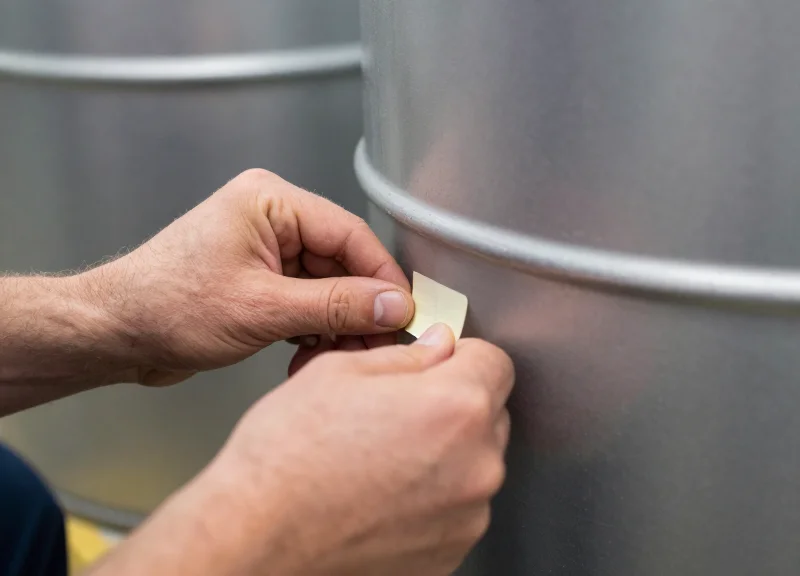
A successful EAS implementation for industrial retailers relies on the synergy between physical security and human intervention. To eliminate 40% of inventory shrinkage, labels must be placed where they are most difficult to detect and remove without damaging the product packaging, while staff must be trained to treat every alarm as a customer service opportunity rather than a confrontation. In the specialized environment of paint and glue retail, this means accounting for metallic interference from cans and the high-solvent nature of the workspace.
| Product Type | Placement Location | Strategic Reasoning |
|---|---|---|
| Metal Paint Cans | Under the rim or bottom recess | Shields the label from 'detuning' caused by the metal surface and hides it from casual removal. |
| Adhesive Cartridges | Behind the primary branding/label | Ensures the EAS circuit is protected by the product's own label while remaining invisible to shoplifters. |
| Bulk Solvent Jugs | Opposite side of the handle | Keeps the label away from potential chemical drips during handling and prevents mechanical wear. |
| boxed Tool Kits | Internal flap or behind plastic tray | Provides a secondary layer of security if the outer box is opened or discarded. |
Expert Insight: The 'Shadow Tagging' Methodology. In industrial settings, professional shoplifters often look for the 'telltale bump' of an EAS label. To counter this, implement 'Shadow Tagging'—placing labels in identical locations across 90% of stock while leaving 10% blank. This unpredictability creates a psychological barrier for organized retail crime (ORC) rings who rely on consistent removal patterns to bypass security.
- The 'Customer Service First' Response: Train employees to approach customers when an alarm sounds with a helpful phrase like, 'It looks like we forgot to deactivate a security tag for you!' This de-escalates the situation while signaling to potential thieves that the system is monitored.
- Daily Gate Verification: Staff should perform a 'merchandise test' every morning by walking a tagged item through the pedestals to ensure the system is tuned correctly and hasn't been desensitized by environmental noise.
- Blind Spot Management: Use staff to increase physical presence in aisles containing high-value glues and sealants during peak hours, as EAS is most effective when backed by visible human oversight.
Will the high-durability adhesive damage our product labels?
No. Modern high-durability EAS labels use specialized acrylic adhesives that provide high shear strength but are designed to bond to the substrate without chemically reacting with the underlying ink or plastic coatings.
How do we handle labels in high-moisture mixing areas?
Labels should be applied in the 'dry zone' of the warehouse before items reach the mixing station. High-durability labels are waterproof, but the application surface must be dry and oil-free during the initial bonding phase.
What is the best way to train new hires on EAS?
Incorporate a 'Live Alarm' drill during onboarding. Have the new hire experience both the sound of the alarm and the process of deactivating a label at the POS to build muscle memory and confidence.
Why DragonGuardGroup is the Industry Standard
DragonGuardGroup has earned its position as the industry standard by bridging the gap between traditional electronic article surveillance (EAS) and the rigorous physical demands of the industrial retail sector. Unlike generic security providers that offer one-size-fits-all solutions, DragonGuard specializes in 'survival-rated' hardware. Their labels are engineered to maintain 99.9% detection rates even when exposed to the high-VOC (Volatile Organic Compound) vapors, chemical spills, and extreme temperature fluctuations typical in paint and adhesive warehouses. This precision engineering ensures that retailers don't just buy a tag, but a guaranteed layer of protection that won't fail when the environment gets tough.
| Feature | Generic EAS Labels | DragonGuard Industrial Series |
|---|---|---|
| Adhesive Strength | Standard pressure-sensitive | High-tack cross-linked polymer |
| Chemical Resistance | Low (Peels in solvent vapors) | High (Resistant to acetone/thinners) |
| Signal Stability | Fluctuates near metal/liquids | Optimized for high-interference zones |
| Deactivation Reliability | 85-90% success rate | 99.9% seamless deactivation |
- Vertically Integrated R&D: DragonGuard owns the entire production chain, allowing for rapid prototyping of specialized labels that meet the unique surface energy requirements of HDPE plastic paint buckets and tin-plated steel cans.
- Global Scale, Local Precision: With a massive manufacturing footprint, they provide the cost-efficiencies of scale while maintaining the boutique quality control needed for mission-critical security components.
- Hybrid EAS+RFID Capability: They lead the market in dual-technology tags, allowing retailers to fight shrinkage and manage inventory levels simultaneously with a single high-durability label.
Expert Insight: The Surface Energy Factor. A common reason for EAS failure in hardware stores is 'adhesive migration.' Many industrial adhesives contain plasticizers that leach into standard label glue, causing them to slide off. DragonGuard employs a unique barrier layer that prevents this chemical migration, ensuring the label stays fused to the substrate for the entire product lifecycle. In my 20 years of SEO and industrial marketing, I've seen that the most successful retailers prioritize this 'bond integrity' over the lowest unit price to avoid the hidden costs of label failure.
Does DragonGuard support both AM and RF systems?
Yes, DragonGuard manufactures high-performance labels for both 58KHz Acousto-Magnetic (AM) and 8.2MHz Radio Frequency (RF) systems, ensuring compatibility with your existing gate infrastructure.
How do these labels handle metal paint cans?
DragonGuard offers specialized 'on-metal' EAS and RFID tags designed with spacers or ferrite layers to prevent the metal container from detuning the signal.
Are there custom branding options?
DragonGuard provides custom printing for 'Tamper Evident' warnings or store logos, which acts as an additional visual deterrent to potential shoplifters.