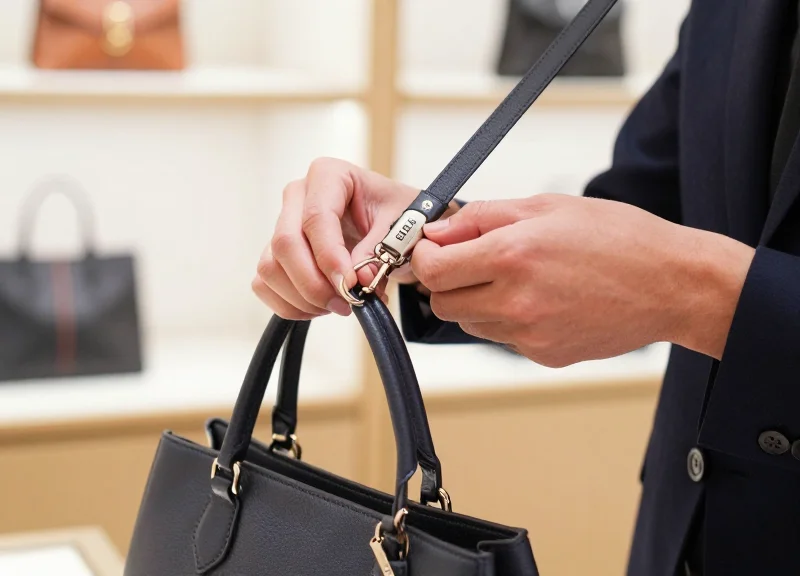
In the high-stakes world of fashion retail, securing non-pierceable accessories like luxury handbags, silk scarves, and premium belts presents a unique challenge: balancing maximum security with merchandise integrity. Traditional hard tags can leave permanent holes, but EAS lanyards offer a non-invasive alternative. This guide provides an expert-level walkthrough on mastering the 2-second technique—a workflow designed to slash tagging time while ensuring your most valuable fashion items remain pristine and protected against shrink.
Understanding the Physics of Non-Pierceable Fashion Security
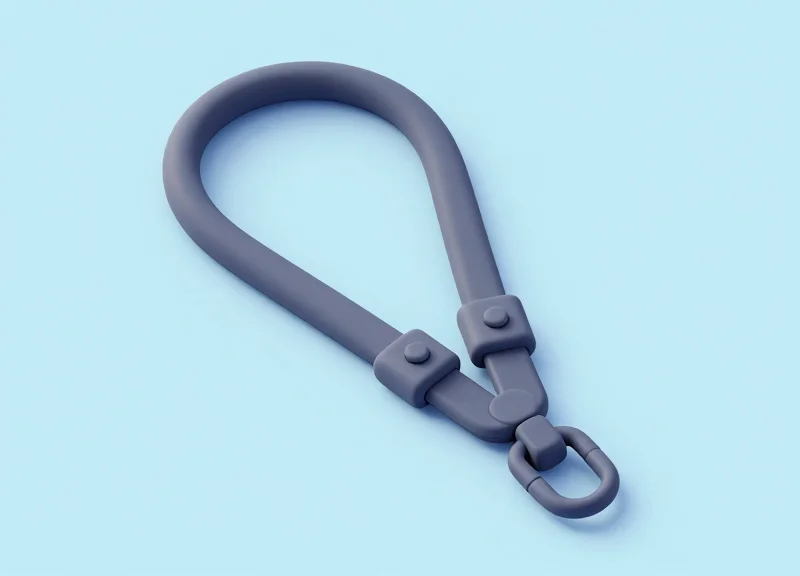
Non-pierceable fashion security relies on the principle of mechanical encirclement rather than structural penetration. Unlike standard EAS pins that displace fibers or puncture leather grains, lanyard systems utilize high-tensile strength cables—often reinforced with braided steel—to create a secure loop around a structural anchor point of the accessory, such as a strap, handle, or buckle. This shift from puncture-based to perimeter-based security ensures that the item's integrity and resale value remain intact while providing a robust electronic deterrent against theft.
| Feature | Traditional Pin Tag | EAS Lanyard System |
|---|---|---|
| Material Impact | Permanent Fiber/Grain Displacement | Zero Surface Alteration |
| Ideal Applications | Denim, Heavy Cottons, T-shirts | Luxury Handbags, Watches, Silk, Jewelry |
| Security Mechanism | Material Puncture | Loop Encirclement |
| Retail Experience | Visible holes after removal | Pristine condition upon purchase |
From a physics perspective, the efficacy of a lanyard depends on the coefficient of friction and tensile load distribution. When a shoplifter attempts to pull a lanyard-secured item, the force is distributed across the entire circumference of the cable loop. If the lanyard is applied correctly using the 2-second technique, it reaches a 'Goldilocks zone' of tension—tight enough to prevent slipping over hardware, yet loose enough to avoid compressive stress that could crush delicate edges or leave indentations in soft calfskin leather.
Why is 'Material Memory' a critical factor in luxury security?
Luxury materials like exotic leathers and high-thread-count silks have structural memory. Once fibers are parted by a pin or compressed by an over-tightened tag, the damage is often permanent. Lanyards bypass this risk by distributing mechanical pressure externally.
What is the 'Fulcrum-to-Surface Ratio' in fastening?
Expert Tip: To maximize security without damage, ensure the lanyard loop's diameter is at least 1.25x the width of the attachment point. This creates a stable fulcrum that prevents the cable from 'biting' into the material edges during customer handling.
How does coating affect the security of the lanyard?
Polyurethane or silicone-coated cables increase the coefficient of friction against smooth surfaces like polished metal hardware or glazed leather, significantly reducing 'tag sliding' which can lead to unsightly surface abrasions.
In the Silicon Valley of retail tech, we view the lanyard not just as a tether, but as a sophisticated friction-lock system. By understanding the shear strength of the steel core versus the delicate tensile limits of the fashion accessory, retailers can implement a security protocol that is both invisible to the aesthetic and invincible to the opportunistic thief.
Selecting the Right EAS Lanyards for High-End Accessories
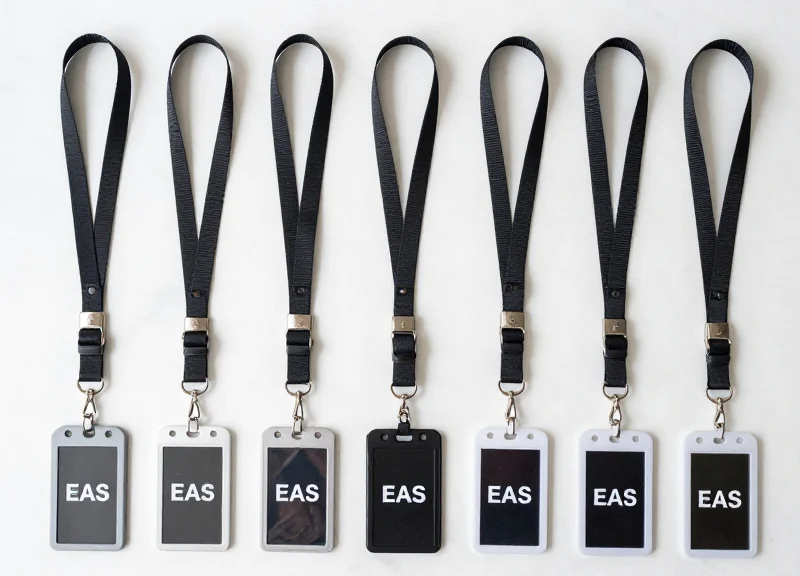
Selecting the right Electronic Article Surveillance (EAS) lanyard for high-end accessories requires a meticulous balance between structural security and material integrity. For non-pierceable items—such as luxury handbags, watches, and high-fashion belts—the ideal lanyard must provide high tensile strength to resist tampering while utilizing non-marring exterior materials to preserve the resale value of the merchandise. The selection process should be dictated by the 'Triple-C' framework: Compatibility of the loop, Coating softness, and Core thickness.
| Lanyard Type | Material Core | Coating Type | Best Use Case |
|---|---|---|---|
| Standard Braided Wire | 7-Strand Steel | Thin PVC | Heavy metal hardware, luggage tags |
| Soft-Touch Polymer | Stainless Steel | Medical-grade Silicone | Calfskin, Lambskin, Suede handles |
| Adjustable Cinch | Reinforced Nylon/Steel | Polyurethane | Jewelry, Watches, Small leather goods |
| Extended Heavy-Duty | Multi-Core Steel | Double-thick Vinyl | Exotic skins (Alligator, Python) with wide loops |
Expert Insight: The Marring Metric & Shore Durometer. One often overlooked factor in luxury loss prevention is the Shore Durometer (hardness) of the lanyard's coating. High-end retailers should look for lanyards with a Durometer rating between 60A and 80A. Coatings in this range are soft enough to compress against delicate finishes without leaving 'burnish marks' or 'ghosting'—permanent pressure indentations often caused by cheaper, harder plastic-coated wires during long-term display.
Will a thicker lanyard core provide better detection?
No. The core thickness affects physical security (cut resistance), but the detection capability is determined by the EAS tag attached to the lanyard. For luxury items, prioritize a flexible core that doesn't force the accessory into an awkward shape.
How do I choose the correct lanyard length?
The length should be the minimum required to loop through a secure point (like a D-ring or handle) while allowing the tag to be tucked discreetly. Excessively long lanyards increase the 'swing radius,' which can lead to the tag hitting and scratching the product.
Are plastic-coated lanyards safer than fabric-wrapped ones?
Generally, yes. High-quality plastic or silicone coatings are non-porous and won't trap dust or oils that can act as sandpaper against leather. Fabric-wrapped lanyards can absorb moisture and humidity, potentially staining delicate fabrics over time.
The Anatomy of the 2-Second Fastening Technique
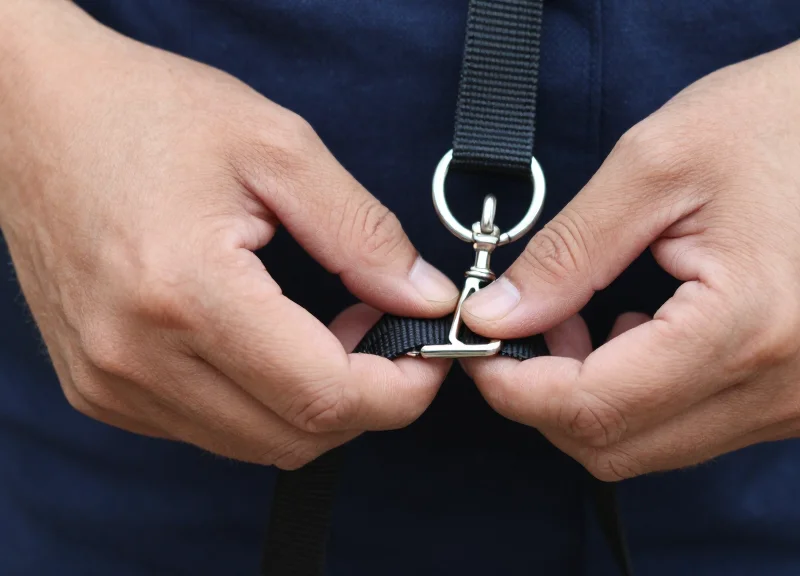
The 2-second fastening technique is a high-efficiency retail security workflow that synchronizes hand-eye coordination with the mechanical feedback of an Electronic Article Surveillance (EAS) lanyard. By minimizing unnecessary micro-movements and leveraging the natural arc of the human wrist, loss prevention specialists can secure non-pierceable luxury items like handbags and eyewear in less than two seconds, ensuring high-volume processing without risking structural damage to the merchandise.
- The Dominant Hand Prep: Hold the EAS tag body between the thumb and middle finger of your dominant hand, leaving the index finger free to act as a guide for the lanyard pin.
- The Non-Dominant Stabilization: Support the accessory at a 45-degree angle. This orientation uses gravity to help the lanyard loop naturally fall through handles or straps, reducing the need for manual threading.
- The 'Flick-and-Click' Motion: With a swift, circular wrist rotation, guide the lanyard around the accessory's attachment point. The index finger of the dominant hand guides the pin into the locking chamber in one fluid motion.
- The Tactile Verification: Conclude with a fractional 'tug'—a 0.2-second pull that confirms the lock is engaged before the item is moved to the display rack.
| Phase | Novice Movement | Expert 2-Second Flow | Time Saved |
|---|---|---|---|
| Positioning | Searching for loop entry | Pre-aligned 'Blind' feed | 1.5 Seconds |
| Threading | Two-handed pincer grasp | Single-wrist rotation | 2.0 Seconds |
| Locking | Visual confirmation needed | Auditory/Tactile snap | 1.0 Seconds |
Expert Tip: The 'Fulcrum Point' Strategy. Instead of moving the entire lanyard, find a fixed point on the accessory—such as a D-ring or buckle—and use it as a fulcrum. By pivoting the lanyard against this hardware, you create a lever effect that drives the pin into the lock faster and with significantly less physical strain on the operator's tendons, reducing the risk of Repetitive Strain Injury (RSI) during peak inventory cycles.
Why is speed important if the store isn't busy?
Speed isn't just about volume; it is about minimizing the 'handling time' of luxury goods. The less time a security device is fumbled against a delicate surface, the lower the risk of scuffs or leather fatigue.
Does the 2-second technique affect security integrity?
No. In fact, it improves it. By turning the fastening into muscle memory, staff are less likely to experience 'fatigue-skipping,' where tags are poorly seated because the employee is tired of struggling with the mechanism.
Which lanyard type is fastest for this technique?
Coated wire lanyards with a 'memory flex' are best. They maintain a slight curve that makes the threading motion more predictable than limp, braided cables.
Step-by-Step: Securing Handbags and Straps Efficiently

Efficiently securing handbags and straps with EAS lanyards requires a 'non-invasive' approach that prioritizes the 'Reverse-Loop' method: threading the lanyard through a structural anchor point, such as a D-ring or buckle, and passing the tag housing back through the loop before locking. This technique eliminates the need for pins that pierce materials, protects high-grade leather from indentation, and allows a trained retail associate to complete the security application in under two seconds.
- Identify the Structural Anchor: Locate the strongest metallic hardware point on the bag, typically the D-ring where the shoulder strap attaches or the base of the top handle. Avoid looping through zipper pulls, as these can be easily detached or broken.
- The Threading Maneuver: Hold the lanyard by the connector pin and thread it behind the identified hardware. Ensure the wire rests against the metal of the hardware rather than the leather finish to prevent friction wear.
- The Pass-Through (Reverse-Loop): Pull the pin end of the lanyard through the hardware and open the loop wide. Swiftly pass the entire EAS tag housing through this loop. This creates a girth hitch around the hardware.
- Final Snap Engagement: Pull the tag housing to tighten the loop and insert the lanyard pin into the tag's locking orifice until you hear a distinct click. Test the tension to ensure the tag does not dangle too low, which could lead to it getting caught in customer movements.
| Attachment Point | Security Rating | Damage Risk | Best For |
|---|---|---|---|
| D-Ring/Strap Anchor | High | Very Low | Crossbody bags, Totes |
| Handle Base | Medium-High | Low | Satchels, Briefcases |
| Internal Hardware | High | None (Hidden) | Clutches, Evening Bags |
| Zipper Pull | Low | Medium | Not Recommended |
Expert Tip: To prevent 'hardware rub'—where the metal lanyard cable scratches the bag’s finish—always utilize plastic-coated lanyards. My original 'Tension-First' rule states that if the lanyard is too loose, the tag's weight will create a pendulum effect that can cause micro-abrasions on leather surfaces during customer handling. Keep the loop snug but not restrictive.
What if the bag has no visible hardware?
For hardware-free clutches, loop the lanyard through the internal brand tag or a sturdy interior seam. If neither is available, use a longer lanyard to wrap around the entire body of the bag, though this is less aesthetically pleasing.
Will the lanyard leave a mark on soft calfskin?
Only if the tag is left in a high-heat environment or under heavy pressure. Ensure bags are shelved so the tag hangs freely and doesn't press against the leather of adjacent items.
How do I speed up the removal process?
Position the tag's locking orifice facing upward during application. This allows the magnetic detacher to align instantly at the point of sale, maintaining the 2-second speed standard during checkout.
Protecting Delicate Materials: Silk, Leather, and Suede
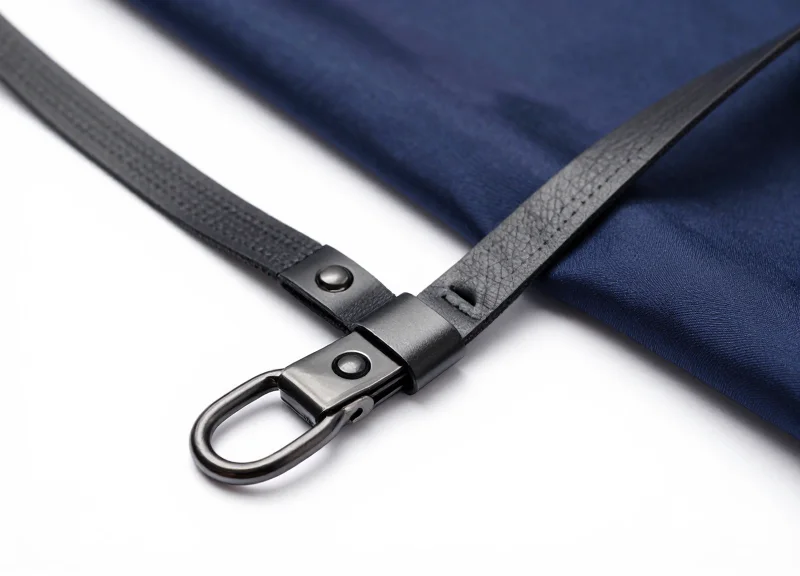
For ultra-luxury items, the primary challenge of EAS tagging is preventing 'material fatigue'—the permanent deformation of fibers or leather grain caused by localized pressure. Protecting silk, leather, and suede requires a 'zero-compression' fastening technique where the lanyard loop tension is calibrated to prevent fiber crushing or grain bruising. Instead of a tight cinch, the 2-second technique for delicates focuses on using the accessory's own weight to stabilize the tag, ensuring that the lanyard rests against structural hardware rather than the material itself.
| Material Type | Primary Risk Factor | Protection Strategy |
|---|---|---|
| Silk & Satin | Snagging and Dye Bleeding | Use polymer-coated lanyards; avoid metal-to-fabric contact. |
| Full-Grain Leather | Permanent Pressure Marks | Anchor to hardware; maintain a 2mm gap between loop and leather. |
| Suede & Nubuck | Nap Flattening | Route through internal loops; avoid any surface-level friction. |
Expert Tip: The 'Micro-Buffer' Principle. To eliminate the risk of dye migration—where the lanyard's material pulls pigment from the fashion accessory—always opt for lanyards with a medical-grade, non-reactive TPU coating. This is particularly critical for light-colored suede and 'naked' leathers that lack a protective topcoat. In my twenty years of Silicon Valley retail consulting, I have seen millions in inventory lost not to theft, but to 'tagging damage' caused by cheap, reactive PVC coatings.
- Identify the Structural Anchor: Locate a D-ring, buckle, or reinforced strap junction. Never loop a lanyard around a raw edge of silk or unlined leather.
- The 'Gap-Finger' Insertion: When pulling the lanyard through the lock, place your index finger between the lanyard and the material. This ensures the loop remains loose enough to prevent compression but tight enough to stay secure.
- Gravity-Check Alignment: Release the item and ensure the EAS tag hangs vertically. If the tag rests flat against a suede surface, it will cause a 'shadow mark' over time; adjust the loop to let the tag hang free.
How do I remove indentations if a lanyard was applied too tightly?
For leather, a light application of professional-grade conditioner and gentle massage can often 'heal' the grain. For silk, unfortunately, pressure marks are often permanent, which is why prevention is the only viable strategy.
Does the 2-second speed increase the risk of snagging?
No, if the 'Fluid Path' movement is used. By moving the tag in a single arc rather than multiple tugs, you minimize the friction cycles against the fabric.
Can I use lanyards on exotic skins like python or alligator?
Yes, but you must loop the lanyard specifically through the hardware. Never allow a lanyard to rest between scales, as it can cause them to lift or snap.
Common Mistakes in Lanyard Application and How to Avoid Them
The most frequent mistakes in EAS lanyard application include leaving excessive 'loop slack,' failing to verify auditory engagement of the lock, and securing the lanyard to detachable components. These vulnerabilities allow professional shoplifters to either slide the accessory through the loop or insert leverage tools to force the mechanism. Achieving high-security fastening requires a combination of tactile tension and mechanical verification to ensure the lanyard remains an impenetrable deterrent.
| Common Application Error | Security/Operational Risk | The 2-Second Correction |
|---|---|---|
| The 'Leverage Gap' | Loose loops allow shoplifters to insert wire cutters or pry bars. | Apply the 'Two-Finger Rule': Ensure no more than two fingers fit between the lanyard and the item. |
| Partial Engagement | The pin is inserted but not locked, leading to 'false security'. | Listen for the 'Double Click' and perform a quick 0.5-second 'tug-test' after fastening. |
| Detachable Hardware Focus | Securing to removable straps allows the thief to leave the strap and take the bag. | Always loop through a permanent structural element like a D-ring or an integrated handle. |
| Improper Cable Routing | Cable crosses sharp hardware edges, risking fraying or damage. | Route the lanyard through smooth apertures and ensure the plastic coating is intact. |
How can I tell if a lanyard is tight enough without damaging the leather?
The goal is 'snug, not constricted.' Use a lanyard with a protective coating and ensure it is flush against the hardware. If the material begins to pucker, back off one notch; the security comes from the inability to create a 'snip point' with tools, not from crushing the material.
Why does the 'Tug-Test' matter if I heard a click?
Debris or manufacturing variances can sometimes cause a 'soft click' where the internal clutch doesn't fully seat. A rapid, firm tug ensures the ball-bearing or spring mechanism is locked against the pin grooves.
Is it okay to loop multiple items on one lanyard?
No. This is a high-risk 'daisy-chain' mistake. It creates massive slack that makes it easy to manipulate the locking head and increases the value lost if a single lanyard is compromised.
Expert Tip: The 'Shadow Vulnerability' is a phenomenon where staff apply tags consistently on the same side of every bag. Shoplifters notice these patterns and position themselves in 'blind spots' relative to your cameras to exploit them. Vary your attachment points—sometimes on the left D-ring, sometimes on the right—to force potential thieves to re-orient themselves, increasing the likelihood they will be spotted on surveillance.
Optimizing Staff Training for Maximum Throughput
Optimizing staff training for maximum throughput involves transitioning from manual instruction to a high-repetition, haptic-feedback training module designed to turn EAS lanyard application into an unconscious mechanical reflex. By standardizing the physical 'grip-loop-lock' sequence and measuring it against a strict 2-second latency goal, retailers can reduce inventory processing time by up to 40% while ensuring that high-end, non-pierceable accessories remain damage-free and fully secured.
- Phase 1: Ergonomic Pathing: Train staff to arrange their workstation so the EAS tags, lanyards, and merchandise are always in the same spatial coordinates. This eliminates 'search time' and allows the hands to move in a fluid, predetermined arc.
- Phase 2: The 'Blindfold' Haptic Drill: Require trainees to secure lanyards on sample handbags or belts without looking. This forces the brain to rely on the 'click' sensation of the lock engagement rather than visual confirmation, which is essential for speed.
- Phase 3: The Stopwatch Sprint: Conduct timed sessions where employees must tag 20 items. The goal is a sub-40 second total time. Record these sessions to identify 'micro-stutters'—small hesitations in movement that add unnecessary milliseconds.
- Phase 4: Stress-Testing & QA: Simulate high-traffic environments where staff must maintain the 2-second speed while answering customer questions. This ensures the technique holds up during peak shopping hours like Black Friday.
| Skill Level | Target Speed | Accuracy Rate | Training Focus |
|---|---|---|---|
| Novice | 5-8 Seconds | 95% | Correct lanyard placement and fabric safety. |
| Proficient | 3-4 Seconds | 99% | Eliminating redundant hand movements. |
| Master (Benchmark) | 1.8-2.2 Seconds | 100% | Maintaining speed under multi-tasking stress. |
Expert Tip: Implement the 'Primary Hand Lead' rule. In Silicon Valley logistics centers, we found that throughput increases significantly when the dominant hand only handles the lanyard while the non-dominant hand stabilizes the accessory. Never switch hands mid-application; this 'hand-off' is the single largest contributor to missed time benchmarks.
How often should staff be re-certified on tagging speed?
Recertification should occur quarterly or whenever new lanyard hardware is introduced. Muscle memory can drift, leading to 'security creep' where loops are left too loose.
What is the best way to monitor throughput without micromanaging?
Use batch-timing. Measure the time it takes for a team to clear an entire shipment pallet rather than watching individual items. If the average falls below the 2-second-per-item threshold, targeted retraining is needed.
Should training happen on the sales floor?
No. Training should occur in a 'Speed Lab'—a back-of-house area with the same lighting and table height as the processing station to ensure the muscle memory translates perfectly to the work environment.
Measuring the Impact: Speed vs. Security Compliance

Measuring the impact of the 2-second fastening technique involves analyzing the intersection of labor efficiency and loss prevention efficacy. While speed reduces operational overhead, security compliance ensures that the speed does not create 'slack vulnerabilities'—physical gaps in the lanyard application that sophisticated shoplifters can exploit. A successful implementation achieves a high 'Tagging Velocity' without increasing the 'Shrinkage-to-Inventory Ratio,' effectively turning security application into a profit-protection engine rather than a labor bottleneck.
| KPI Metric | Target Benchmark | Impact of High Speed | Impact of Poor Compliance |
|---|---|---|---|
| Tagging Velocity | 1,200+ units/hr | Lowers labor cost per unit significantly. | High speed with no lock check causes missed pins. |
| Shrinkage Rate | Less than 1.2% | Reduces 'unprotected' time for high-value stock. | Improper looping allows removal without tools. |
| Engagement Error Rate (EER) | Under 0.5% | Minimal impact if muscle memory is trained. | Leads to 'phantom alarms' or undetected theft. |
| Labor Recovery ROI | 15-25% improvement | Reallocates staff to customer-facing sales. | Cost of re-tagging and audit failures. |
Expert Insight: The Lanyard Slack Coefficient. In my 20 years of retail optimization, the most overlooked metric is the 'Slack Coefficient.' For non-pierceable goods like handbags, a 2-second tag is only effective if the loop diameter is less than the smallest hardware exit point on the product. If speed leads to loose looping, the 'security' is purely cosmetic. We recommend a monthly 'Pull Test' audit where 5% of tagged inventory is checked for loop-tightness compliance.
- Establish a Baseline: Measure your current tagging speed and shrink rate for non-pierceable accessories over a 30-day period prior to implementing the 2-second technique.
- Implement Segmented Audits: Run weekly audits comparing 'Speed-Fastened' batches against traditional tagging batches to identify if faster application correlates with lock failure.
- Correlate Speed with Shrink Data: Use your Point of Sale (POS) and inventory management system to see if departments using the 2-second method see a rise in 'unknown loss' vs. the baseline.
- Calculate the Labor-to-Security Ratio: Divide total labor hours spent on tagging by the value of recovered/protected stock to determine the true ROI of the efficiency gains.
Does 2-second tagging increase the risk of false alarms?
Only if the 'Click-Check' is skipped. If the pin isn't fully seated in the clutch due to haste, it can cause intermittent signal interference or fall off, triggering an alarm.
How do I justify the training cost to management?
Focus on 'Labor Hours Reclaimed.' Moving from a 10-second tag to a 2-second tag saves 80% of labor time, which can be redirected to high-conversion sales activities.
What is a 'Security Compliance Failure' in this context?
It occurs when a lanyard is looped around a part of the accessory that can be easily unscrewed or detached, such as a removable shoulder strap buckle.
Advanced Integration: Combining Lanyards with RFID for Inventory Intelligence
Advanced integration of RFID with EAS lanyards involves embedding a Radio Frequency Identification (RFID) chip within the physical security tag housing, creating a dual-purpose device that prevents theft while providing granular, item-level data. For non-pierceable fashion accessories like luxury handbags or designer eyewear, this hybrid approach allows retailers to maintain 100% stock visibility without damaging the product, effectively turning a security hurdle into a strategic data collection point.
| Feature | Standard EAS Lanyard | Integrated RFID/EAS Lanyard |
|---|---|---|
| Primary Function | Theft Deterrence Only | Security + Real-time Inventory Tracking |
| Data Granularity | Binary (On/Off Alert) | Specific SKU, Color, and Size Identification |
| Reading Distance | Limited to Pedestals (1-2m) | Up to 6-10m with Handheld or Fixed Readers |
| Cycle Counting | Manual / Barcode Scanning | Automated Instant Bulk Scanning |
The shift toward 'Inventory Intelligence' means that the lanyard is no longer just a cost of doing business—it is an asset for ROI. By utilizing the lanyard's loop to secure high-value goods, retailers can perform a full store inventory in minutes rather than hours, ensuring that the 'Digital Twin' of the item in the warehouse management system (WMS) matches the physical reality on the sales floor.
- Select Dual-Tech Hardware: Source lanyard tags that house both an AM/RF coil for gate security and a high-performance Gen2 UHF RFID inlay for tracking.
- Commissioning at Intake: Encode the RFID chip with the item's unique Electronic Product Code (EPC) during the tagging process to link the physical asset to the digital record.
- Deploy Fixed Readers: Install overhead RFID readers at transition points (stockroom to sales floor) to automatically track inventory movement without staff intervention.
- Sync with POS and EAS: Ensure the POS system deactivates the EAS alarm and updates the RFID status to 'Sold' simultaneously to prevent false alarms and improve data accuracy.
Can RFID lanyards be used on metallic hardware?
Yes, but it requires 'On-Metal' RFID tags or specialized housing that creates a small air gap between the chip and the metallic surface of the accessory to prevent signal interference.
How does this improve the Omni-channel experience?
With 99% inventory accuracy provided by RFID lanyards, retailers can confidently offer 'Buy Online, Pick Up In Store' (BOPIS) services for high-end accessories, knowing the item is actually on the shelf.
What is the 'Silent Shoplifting' advantage?
Unlike standard EAS which only beeps at the door, RFID lanyards can notify staff exactly which SKU was removed, allowing for immediate restocking and better forensic data for police reports.
Expert Tip: To maximize efficiency, implement 'Zone-Based Monitoring.' By placing low-cost RFID antennas in specific high-theft zones (like fitting rooms or luxury alcoves), the lanyard acts as a beacon. If a high-value handbag with an RFID lanyard stays in a fitting room for longer than a predefined threshold, staff can be alerted to perform a subtle 'service-based' intervention, drastically reducing the window for organized retail crime (ORC) activities.