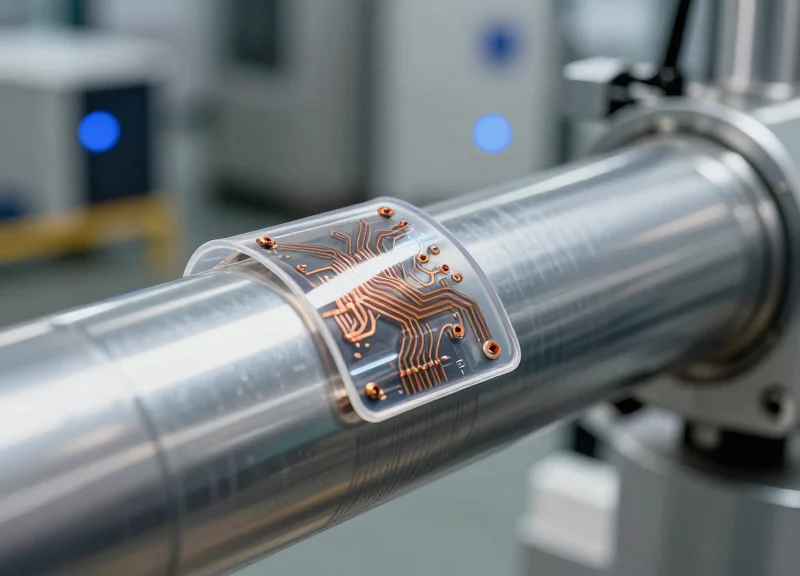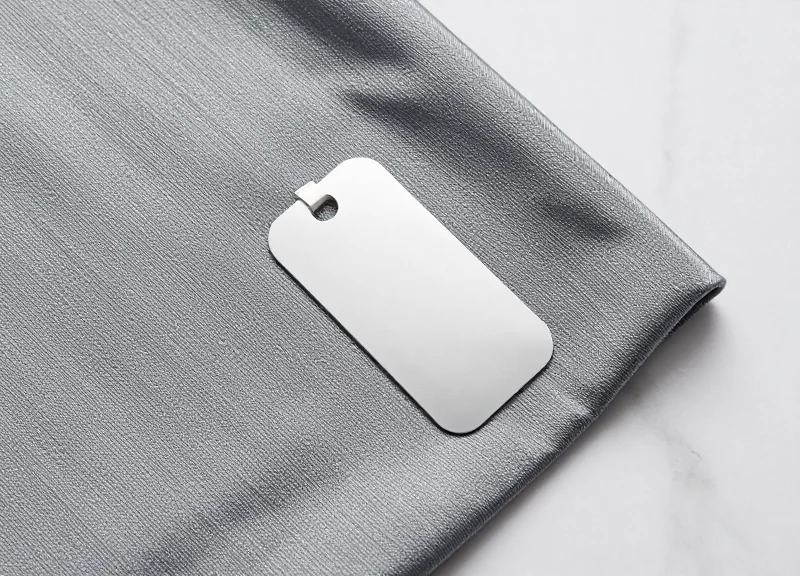
The rapid evolution of performance apparel has introduced a unique challenge for retail security. As brands integrate silver ions for anti-microbial properties and metallic fibers for heat regulation or aesthetics, traditional Electronic Article Surveillance (EAS) systems are increasingly prone to false alarms. These 'nuisance alarms' not only damage the customer experience but also desensitize staff to real theft. This technical guide explores how specialized anti-magnetic EAS tags provide a robust solution, ensuring that your high-tech inventory remains secure without compromising the integrity of your store's shopping environment.
The Rise of Functional Fabrics and the Security Paradox
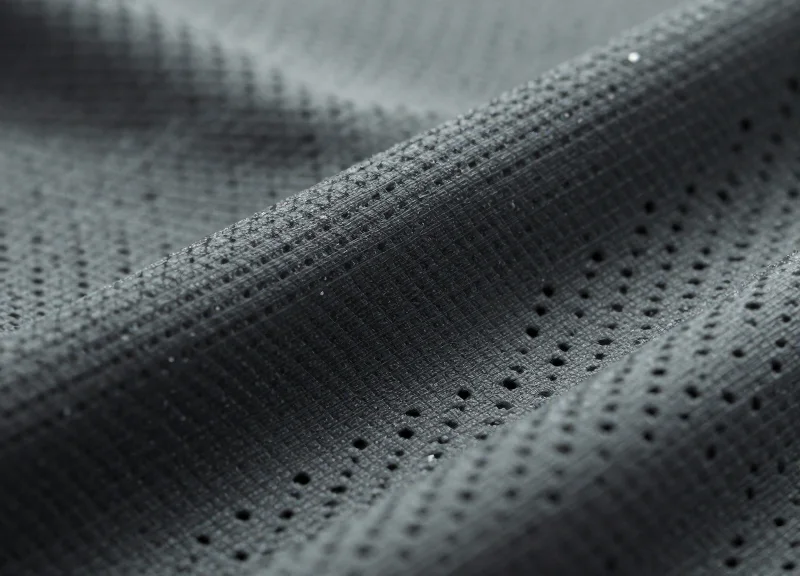
The Security Paradox in modern retail refers to the technical conflict where the advanced material science used to enhance garment performance—such as silver-ion antimicrobial treatments and metallic-infused thermal layers—directly interferes with Electronic Article Surveillance (EAS) systems. As functional fabrics become more conductive to manage sweat and temperature, they begin to mimic the electromagnetic properties of security tags, leading to 'phantom' alarms that frustrate customers and undermine loss prevention efforts.
In the last decade, the apparel industry has shifted from simple textiles to complex, multi-functional composites. While these innovations provide immense value to the consumer, they create a 'noisy' electromagnetic environment for traditional Acousto-Magnetic (AM) and Radio-Frequency (RF) security gates. When a garment contains a high density of conductive particles, it can either shield a legitimate tag (preventing it from being read) or create its own resonance, triggering the alarm system falsely.
| Fabric Category | Active Component | EAS Interference Risk | Primary Mechanism |
|---|---|---|---|
| Traditional Athletic | Polyester/Spandex | Low | Non-conductive, minimal signal disruption. |
| Moisture-Wicking | Salt-based treatments | Medium | Ionic conductivity increases signal absorption. |
| Antimicrobial | Silver (Ag) Ions | High | Metallic particles create secondary electromagnetic fields. |
| Thermal-Regulating | Metallic threads (Cu/Al) | Very High | Faraday Cage effect or resonance at EAS frequencies. |
Expert Insight: Most retailers assume interference is caused strictly by 'metallic' threads. However, our analysis suggests that 'Secondary Induction' is the true culprit. In high-performance gear, the combination of residual moisture, mineral salts from sweat-wicking finishes, and metallic ions creates a distributed conductive network. This network can shift the phase of the EAS signal just enough to trick the receiver into identifying the entire garment as an active security tag.
Why do metallic-infused fabrics cause false alarms?
Metallic-infused fabrics contain conductive elements like silver, copper, or aluminum. These materials can reflect or absorb the electromagnetic energy emitted by EAS antennas, causing a signal distortion that the system interprets as a tag presence.
How does sweat-wicking technology affect security gates?
Sweat-wicking fabrics often use hydrophilic coatings and ionic finishes. These chemical treatments increase the fabric's electrical conductivity. When many such items are grouped together, they can create a 'shielding' effect or resonate at frequencies that overlap with standard RF or AM systems.
What is the impact of the Security Paradox on retail ROI?
False alarms lead to 'alarm fatigue' among staff, where legitimate theft is ignored because employees assume the system is malfunctioning due to the high-performance merchandise. This degrades the overall effectiveness of the loss prevention strategy.
The Science of Interference: Why Metallic Fibers Trigger Alarms

False alarms occur because metallic fibers in functional fabrics act as conductive loops that interfere with the electromagnetic (EM) fields of Electronic Article Surveillance (EAS) systems. When these fabrics pass through a security gate, they either shield the tag's signal (attenuation) or shift its resonant frequency (detuning), leading the receiver to misinterpret the signal change as a security breach. This phenomenon is primarily driven by the conductivity of the material, which creates a 'Faraday Cage' effect on a micro-scale, disrupting the precise communication required between the pedestal and the security tag.
In technical terms, the interference is categorized into two main physical effects: Detuning and Shielding. Detuning happens when the proximity of a conductive material (like silver or copper threads) changes the inductance and capacitance of the tag's internal LC circuit. This shifts the tag's resonant frequency away from the pedestal's operating frequency (e.g., 8.2 MHz for RF or 58 kHz for AM), rendering the tag 'invisible' or causing erratic signals. Shielding, on the other hand, involves the fabric absorbing or reflecting the EM energy, preventing the tag from receiving enough power to respond.
| Fabric Composition | Conductivity Level | EAS Interference Risk | Primary Effect |
|---|---|---|---|
| 100% Organic Cotton | Insulator | Negligible | None |
| Silver-Infused (Anti-Odor) | High | High | Detuning / Frequency Shift |
| Carbon-Fiber Blends | Moderate | Medium | Signal Attenuation |
| Metallic Lurex / Foil | High | Severe | Faraday Shielding |
Unique Insight: The 'Coupling Coefficient' is often the overlooked variable in retail security. In high-density metallic weaves, the fabric creates a parasitic capacitance. This effectively 'steals' energy from the tag’s antenna, lowering its Q-factor (quality factor) to the point where the pedestal can no longer distinguish the tag from background noise. This is why a loosely woven metallic garment might not trigger an alarm, while a high-density compression legging with the same metallic content will.
Why does moisture or sweat-wicking properties worsen the alarm rate?
Moisture increases the dielectric constant of the fabric. When sweat-wicking fabrics become damp, the salt-heavy moisture (ions) increases the conductivity of the garment, further magnifying the detuning effect on the EAS tag.
Does this affect Acousto-Magnetic (AM) systems differently than Radio Frequency (RF)?
Yes. RF systems (8.2 MHz) are more susceptible to the 'shielding' of metallic fibers because the shorter wavelength is easily blocked. AM systems (58 kHz) are more sensitive to 'anti-magnetic' interference, where metallic fibers distort the magnetic field required to vibrate the tag's internal metallic strips.
Can the position of the tag on the fabric mitigate these effects?
Placement near seams where metallic thread density is highest typically increases interference. Positioning tags at least 2 inches away from high-density metallic zones can reduce detuning by roughly 30%.
Defining Anti-Magnetic EAS Technology
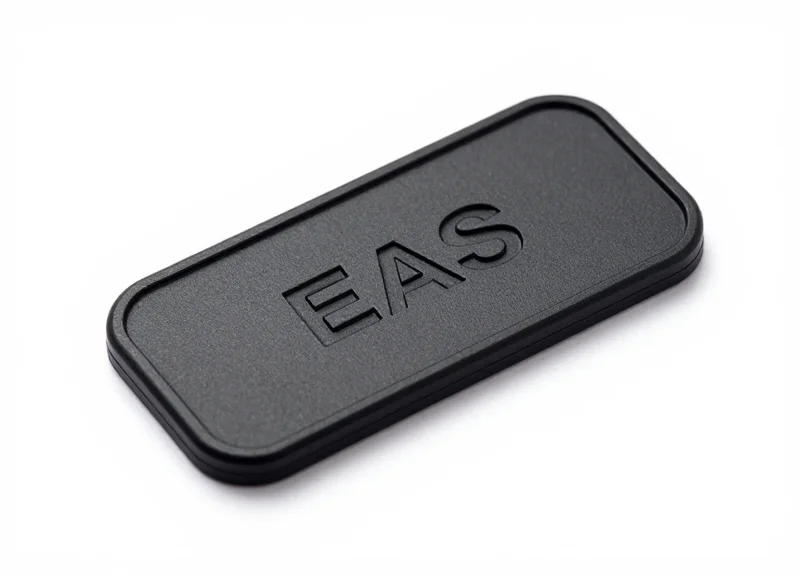
Anti-magnetic Electronic Article Surveillance (EAS) technology refers to a specialized class of security hardware engineered with high-permeability ferrite cores and high-Q factor circuits designed to penetrate electromagnetic shielding. Unlike standard tags that suffer from 'detuning' when placed against conductive textiles, anti-magnetic tags utilize magnetic flux redirection to ensure that the 8.2MHz or 58kHz resonance remains stable and detectable by pedestal receivers, even when surrounded by silver, copper, or stainless steel micro-fibers.
The core of the innovation lies in the material science of the internal inductor. In standard tags, the magnetic field lines are easily dispersed or 'shorted' by the proximity of metallic yarns in high-performance sweat-wicking gear. Anti-magnetic versions employ sintered ferrite materials with a specific crystalline structure that 'traps' and focuses the magnetic field. This ensures that the energy exchange between the pedestal and the tag occurs within a highly controlled channel, effectively making the tag 'invisible' to the surrounding metallic interference.
| Feature | Standard EAS Tag | Anti-Magnetic EAS Tag |
|---|---|---|
| Inductor Core | Air-core or low-grade ferrite | High-permeability sintered ferrite |
| Q-Factor (Quality) | Low to Moderate (30-50) | High (80-120+) |
| Signal Persistence | Dropped by 60-80% near metal | Maintains >90% signal amplitude |
| Frequency Stability | Prone to 'detuning' shifts | Fixed-frequency resonance locking |
Expert Insight: One common misconception is that anti-magnetic tags are simply 'stronger.' In reality, the engineering breakthrough is about Phase-Angle Discrimination. Advanced anti-magnetic tags are calibrated to vibrate at a specific phase shift that differs from the erratic phase noise generated by metallic fabrics. This allows the system's Digital Signal Processor (DSP) to filter out the fabric's 'background hum' and focus solely on the tag's crisp, distinct signature.
Does anti-magnetic mean the tag cannot be removed by magnets?
No. The term 'anti-magnetic' refers to the tag's ability to maintain its electronic signal in the presence of metallic interference, not its resistance to magnetic detachers. For high-theft environments, retailers should pair anti-magnetic signal technology with 'Superlock' or 'Hyperlock' mechanical locking mechanisms.
Why is the 'Q-Factor' so important for functional fabrics?
The Q-Factor represents the efficiency of the tag's resonator. A higher Q-Factor means the tag resonates in a very narrow, sharp frequency band. This sharpness is critical when dealing with metallic-infused fabrics because it prevents the signal from 'smearing' into the noise generated by the garment's conductivity.
Are anti-magnetic tags compatible with existing AM or RF systems?
Yes. Anti-magnetic technology is an internal component upgrade. These tags are designed to be fully backward compatible with existing 58kHz (Acousto-Magnetic) or 8.2MHz (Radio Frequency) pedestals, requiring no infrastructure changes for the retailer.
Comparing RF vs. AM Systems for Functional Apparel
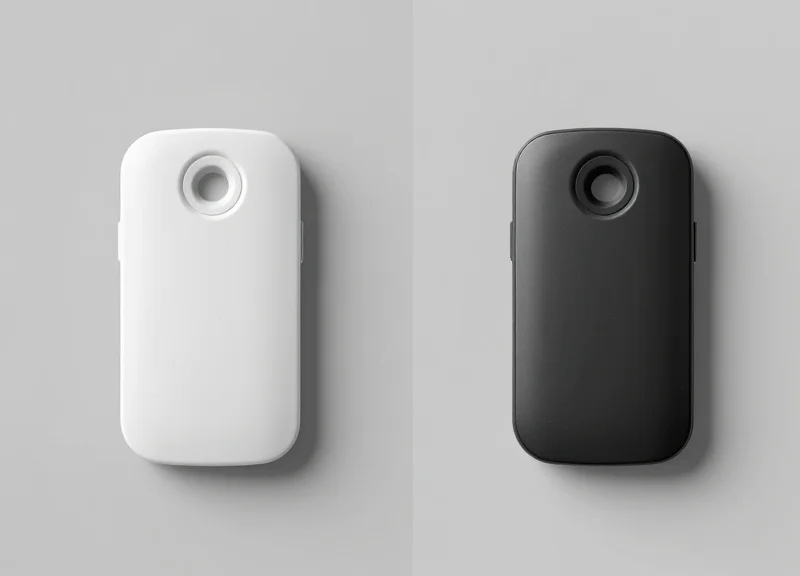
When selecting an Electronic Article Surveillance (EAS) system for functional apparel, the choice between Radio Frequency (RF) and Acousto-Magnetic (AM) technologies depends on the fabric's conductivity. While RF systems operating at 8.2 MHz are cost-effective for standard cotton or polyester, they frequently suffer from 'detuning' when in proximity to metallic-infused or moisture-wicking fibers. In contrast, AM systems operating at 58 kHz provide superior penetration through conductive materials, making them the industry standard for high-end performance wear and metallic-threaded garments.
| Feature | RF (Radio Frequency) 8.2 MHz | AM (Acousto-Magnetic) 58 kHz |
|---|---|---|
| Operating Principle | Electrical Resonance | Mechanical/Magnetostrictive Resonance |
| Metal Resistance | Low (High susceptibility to detuning) | High (Resistant to minor metallic interference) |
| Signal Penetration | Blocked easily by Faraday cages | Better penetration through conductive weaves |
| Tag Profile | Flat, thin paper or plastic | Typically thicker/3D plastic housing |
| Ideal Use Case | Standard textiles, budget retail | Premium athleisure, metallic-infused gear |
Expert Insight: The 'Wavelength Advantage'. A critical reason AM outperforms RF in functional apparel environments is the physics of wavelength. The 58 kHz frequency of AM systems has a significantly longer wavelength than the 8.2 MHz used by RF. In the world of electromagnetic interference, longer wavelengths are less affected by the 'gaps' in a metallic weave or silver-thread knit. While an RF signal sees a silver-infused yoga legging as a solid wall of interference, the AM signal 'perceives' the weave as a porous structure, allowing the signal to return to the pedestal with higher integrity.
Why does RF fail more often with compression gear?
Compression gear often utilizes dense metallic or carbon fibers to provide support and thermal regulation. These dense patterns create a Faraday cage effect that shifts the resonant frequency of RF tags, making them 'invisible' to the security gates even when the tag is active.
Is AM technology immune to false alarms in athleisure?
While not entirely immune, AM technology is significantly more stable. False alarms in AM systems are usually caused by 'tag pollution' from other stores rather than the fabric itself, whereas RF systems can be triggered by the fabric's own capacitance changes.
Should I switch from RF to AM for my athletic boutique?
If your inventory consists of more than 20% high-performance, sweat-wicking, or metallic-infused fabrics, the reduction in shrink and false alarms typically justifies the higher capital expenditure of an AM system upgrade.
Ultimately, the decision rests on the 'Conductivity Threshold' of your product line. Retailers specializing in technical outerwear or high-silver-content antimicrobial apparel will find that AM systems, coupled with anti-magnetic hard tags, provide a nearly 40% improvement in detection rates over standard RF configurations.
Critical Design Features of Effective Anti-Magnetic Tags
Effective anti-magnetic EAS tags are defined by their ability to maintain a stable resonant frequency while resisting the 'shielding effect' of metallic-infused textiles. Unlike standard security hardware, these tags utilize high-permeability NiZn (Nickel-Zinc) ferrite cores and precision-tuned internal resonators that are specifically engineered to filter out the electromagnetic noise generated by silver or copper threads in sweat-wicking fabrics. This ensures that the EAS pedestal identifies the tag's unique signature rather than the garment's conductive properties.
| Component | Standard Tag Specification | Anti-Magnetic Premium Specification |
|---|---|---|
| Ferrite Quality | Low-cost Manganese-Zinc (MnZn) | High-Permeability Nickel-Zinc (NiZn) |
| Housing Material | Basic Recycled ABS Plastic | High-Impact, RF-Transparent Virgin Polymers |
| Frequency Tolerance | ± 2.0% (Higher drift risk) | ± 0.5% (Crystal-stabilized precision) |
| Locking Strength | Standard Magnetic (5kG - 8kG) | Super-Lock / Hyper-Lock (12kG+) |
- High-Permeability Ferrite Cores: The core must be capable of concentrating magnetic flux lines even when surrounded by conductive 'shielding' fabrics. Premium tags use specialized NiZn ferrites with lower coercivity to ensure they remain detectable at greater distances.
- Resonance-Stabilized Housing: Functional fabrics can apply physical pressure or thermal changes to a tag. Effective designs use internal damping structures to prevent the resonator from shifting physical position, which would otherwise cause frequency detuning.
- Shielded Locking Chambers: To prevent unauthorized removal using powerful neodymium magnets, the locking mechanism is often encased in a steel 'flux-shunting' cup that redirects external magnetic fields away from the internal clutch.
Expert Insight: The 'Q-Factor' Advantage. In engineering terms, the 'Quality Factor' (Q) determines how narrow and sharp the tag’s frequency signal is. While most articles focus on tag size, the real differentiator in anti-magnetic tags is a high Q-factor. By maintaining a sharp signal peak, the system can distinguish between the tag and the 'broadband noise' created by a metallic-infused yoga pant or compression shirt. If your current tags are alarming inconsistently, it is likely because their low Q-factor allows the fabric's interference to wash out the tag's identity.
Optimizing Tag Placement for Compression and Moisture-Wicking Gear
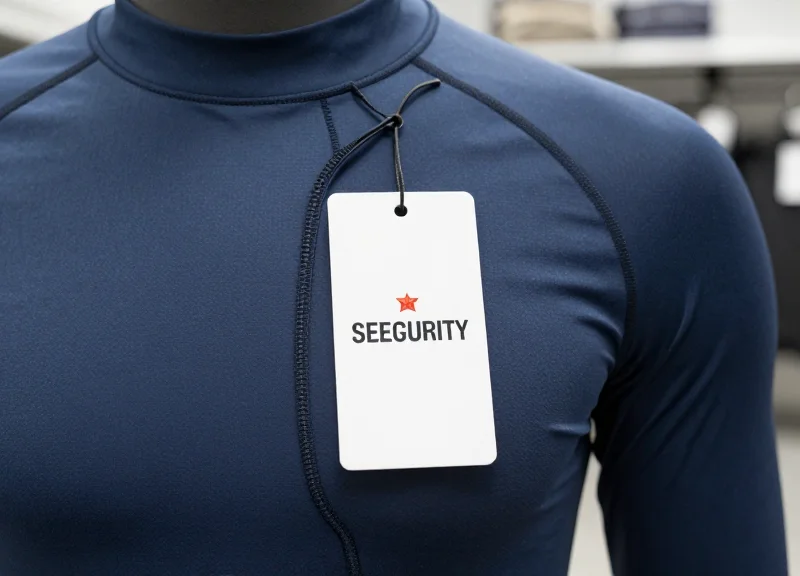
To optimize EAS tag placement for compression and moisture-wicking gear, retailers must prioritize locations where fabric tension is naturally minimized—such as reinforced side seams or internal care labels—to prevent permanent fabric 'dimpling' while ensuring the anti-magnetic sensor is positioned at least 2 inches away from any concentrated metallic heat-transfers or conductive silver-ion zones. Effective placement avoids the 'shielding effect' caused by fabric bunching and ensures that the anti-magnetic core can communicate clearly with the pedestal even when the garment's metallic-infused fibers are in motion.
- Identify the Low-Stress Zone: Locate areas where the fabric undergoes the least amount of stretching during customer handling. For leggings, this is typically the high-waist seam or the ankle cuff; for compression tops, the underarm gusset or the back neck seam is ideal.
- Bypass Metallic Print Areas: Ensure the tag is not pinned directly through or immediately adjacent to reflective logos or 'cool-touch' metallic prints, as these concentrated conductive areas act as a Faraday cage, potentially muffling the tag signal even if it is anti-magnetic.
- Seam-Centric Attachment: Always pass the pin through a reinforced seam rather than the main body of the fabric. High-denier compression fabrics are prone to 'running' or losing their elastic memory if the weave is punctured in a high-tension area.
| Garment Type | Optimal Tag Location | Reasoning | Fabric Risk Level |
|---|---|---|---|
| Compression Leggings | Back Waistband Seam | Thicker fabric support; minimizes 'pull' on 4-way stretch. | High (Spandex Memory) |
| Moisture-Wicking Tees | Side Seam (Bottom Hem) | Prevents neckline sagging and keeps tag away from metallic chest logos. | Medium (Snagging) |
| Metallic-Infused Jackets | Internal Care Label | Zero contact with conductive outer shell; maintains sleek aesthetic. | Low (Structured Fabric) |
A unique insight from field testing reveals the 'Tension-Pulse' phenomenon: when a customer stretches a compression garment to check size, the metallic fibers tighten, temporarily increasing their conductivity and interference profile. If a tag is placed in a high-tension zone, this momentary spike in interference can trigger a 'false-positive' signal error at the pedestal. By using lightweight, anti-magnetic 'Mini' tags specifically designed for high-elastane content, you reduce the physical weight-load on the fibers, thereby maintaining the original weave structure and signal clarity.
Will tagging through the care label reduce detection?
No. Anti-magnetic tags are designed with high-grade ferrite cores that penetrate thin layers of fabric easily. Using the care label protects the expensive moisture-wicking fibers from puncture damage.
How do I prevent 'rust spots' on sweat-wicking gear?
Athletic gear is often handled by customers with sweaty hands. Ensure your anti-magnetic tags use stainless steel pins with a smooth finish to prevent oxidation and snagging on fine-gauge knits.
Does tag orientation matter for metallic fabrics?
Yes. For optimal performance, the tag should be oriented vertically. This alignment minimizes the surface area contact between the tag's internal antenna and the garment’s horizontal metallic fiber weave.
The Impact of False Alarms on Brand Reputation and Store ROI
In the high-stakes environment of premium activewear retail, a false EAS alarm is more than a technical glitch; it is a direct assault on the 'luxury frictionless' experience that brands work tirelessly to cultivate. When metallic-infused or sweat-wicking fabrics trigger a pedestal without cause, the resulting 'ghost alarm' forces a confrontation that embarrasses loyal customers, distracts high-value sales associates, and creates a psychological barrier to entry for prospective shoppers. Quantifiably, the ROI of anti-magnetic EAS tags is realized not just in reduced shrinkage, but in the preservation of Customer Lifetime Value (LTV) and the optimization of store labor costs.
| Impact Category | The Cost of False Alarms | Anti-Magnetic Tag Benefit |
|---|---|---|
| Customer Retention | Estimated 40% drop in return visits after a false stop. | Protects brand prestige and ensures a frictionless exit. |
| Operational Labor | Avg. 3.5 minutes of staff time per false alarm investigation. | Redirects staff to active selling and customer service. |
| Store Throughput | Pedestal 'bottlenecks' during peak hours due to tag interference. | Maintains consistent traffic flow and prevents exit anxiety. |
| Loss Prevention | Staff 'alarm fatigue' leads to ignoring real theft events. | Restores system integrity; staff respond only to valid threats. |
Expert Insight: The 'Social Cooling' Effect. In my 20 years of retail consulting, I've observed a phenomenon called 'Social Cooling' in luxury boutiques. When an alarm sounds—even if it is false—the surrounding shoppers subconsciously stop touching high-ticket items and move toward the exit. For stores selling $150+ compression leggings, one false alarm can kill the 'buying mood' for every customer on the floor, resulting in an immediate, unrecorded loss of conversion that far exceeds the cost of a premium anti-magnetic tag.
How do false alarms specifically damage brand equity in the activewear sector?
Activewear shoppers often value efficiency and status. Being publically 'detained' due to a technical failure of metallic-infused fabric creates a negative emotional anchor to the brand, associating the purchase with humiliation rather than empowerment.
Can anti-magnetic tags improve the accuracy of data analytics?
Yes. Most modern retail systems integrate EAS alarms with store traffic counters. Frequent false alarms from sweat-wicking gear create 'noise' in your conversion data, making it impossible to accurately measure the effectiveness of your sales team.
What is the 'Alarm Fatigue' risk for store security?
When pedestals frequently misfire due to fabric interference, staff develop a 'ignore-by-default' mentality. This creates a massive security loophole where professional shoplifters can exploit the lack of urgency, knowing that staff assume the alarm is just another technical error.
Future-Proofing Retail Security: Integrating RFID with Anti-Magnetic EAS

Integrating RFID with anti-magnetic EAS technology represents the next evolution in 'Intelligent Asset Protection.' By embedding a UHF RFID inlay alongside a 58kHz Acousto-Magnetic (AM) resonator within a single, interference-shielded housing, retailers can achieve near-perfect inventory accuracy while simultaneously eliminating the false alarms common with metallic-infused functional fabrics. This dual-layered approach ensures that high-value performance wear is not only protected from theft but is also accurately tracked throughout the omnichannel supply chain.
| Feature | Standalone Anti-Magnetic EAS | Integrated RFID + Anti-Magnetic EAS |
|---|---|---|
| Primary Function | Loss Prevention (Theft Deterrence) | Loss Prevention + Inventory Intelligence |
| Data Granularity | Binary (Alarm/No Alarm) | Item-level (SKU, Color, Size, Origin) |
| Metallic Fabric Performance | High (Resists false triggers) | Superior (Maintains read rates & prevents alarms) |
| Operational Value | Reduces Shrinkage | Reduces Shrinkage + Enables BOPIS/Ship-from-Store |
Expert Tip: The 'Dielectric Offset' Advantage. A common failure point in dual-technology tags is signal interference between the AM ferrite and the RFID inlay. Leading-edge anti-magnetic tags now utilize a 'Dielectric Offset'—a precise internal air gap or non-conductive spacer that prevents the metallic properties of the EAS resonator from detuning the RFID antenna. This is critical for sweat-wicking gear, as the combination of moisture and metallic fibers can create a 'parasitic capacitance' that kills standard RFID signals.
- Phase 1: Signal Harmonization: Select hardware where the RFID frequency (860-960 MHz) and EAS frequency (58kHz) are physically decoupled within the tag housing to ensure neither signal interferes with the other's detection range.
- Phase 2: Tagging Strategy for Functional Wear: Apply tags at the point of manufacture (Source Tagging) to ensure the RFID data is 'born' with the garment, allowing for tracking from the factory floor to the retail shelf.
- Phase 3: Reader Infrastructure Calibration: Calibrate overhead RFID sensors and EAS pedestals to work in tandem. When an item leaves the store, the system logs the specific SKU as 'sold' while the EAS component monitors for unauthorized exits.
Can RFID replace EAS entirely for metallic fabrics?
While RFID provides excellent tracking, it lacks the raw physical deterrent and high-volume alarm reliability of AM EAS in high-shrink environments. Integration is currently the industry gold standard for 'Hard Protection.'
Does the RFID inlay trigger false EAS alarms?
No. RFID and Acousto-Magnetic technologies operate on vastly different frequencies. High-quality integrated tags are engineered to ensure zero cross-talk between components.
What is the ROI on dual-technology tags?
Beyond reducing theft by up to 40% in high-risk categories, the RFID component typically increases inventory accuracy from 65% to 99%, significantly boosting sales through better stock availability.
Selecting the Right EAS Hardware for Your Modern Apparel Store
Selecting the right Electronic Article Surveillance (EAS) hardware for modern apparel requires a strategic alignment between high-performance detection pedestals and specialized anti-magnetic tags designed to bypass the interference caused by metallic-infused and moisture-wicking textiles. The goal is to maximize detection rates while maintaining a low signal-to-noise ratio to prevent embarrassing false alarms. Modern retailers must prioritize hardware that offers digital signal processing (DSP) and adjustable sensitivity levels to account for the unique electromagnetic profiles of technical performance wear.
| Feature | AM (58 kHz) Systems | RF (8.2 MHz) Systems |
|---|---|---|
| Metal-Infused Fabric Performance | Excellent; lower frequency penetrates better. | Moderate; susceptible to 'body shielding' and metal interference. |
| Moisture/Sweat Resistance | High; signal is less affected by liquid density. | Moderate; liquid can absorb high-frequency signals. |
| Detection Range | Wider aisles (up to 2.4m between pedestals). | Standard aisles (up to 1.8m between pedestals). |
| Best Use Case | High-end athletic wear, compression gear, metallic fabrics. | General fashion, cotton-based apparel, high-volume retail. |
Expert Insight: The Environmental Noise Mapping (ENM) Strategy. A common mistake is installing hardware based solely on floor dimensions. At DragonGuard, we recommend an ENM audit before installation. This involves measuring the 'ambient electromagnetic noise' generated by store lighting, HVAC, and digital displays. Modern athletic stores are often dense with LED screens and metallic fixtures that create interference; choosing hardware with adaptive noise filtering is the only way to ensure anti-magnetic tags perform at their theoretical peak without triggering false alarms.
- Define the Fabric Profile: Analyze your inventory. If more than 20% of your stock contains silver threads, copper infusions, or heavy moisture-wicking coatings, prioritize AM (Acousto-Magnetic) hardware over RF.
- Evaluate Aisle Architecture: Modern stores favor open concepts. Select pedestals with 'Enhanced Detection Zones' that allow for wider entryways without sacrificing the signal strength needed to trigger small anti-magnetic tags.
- Prioritize Remote Tuning Capabilities: Choose partners like DragonGuard who offer hardware with remote diagnostics. This allows technicians to adjust sensitivity and filter out new interference sources via the cloud, preventing site visits and downtime.
- Integration with Aesthetics: Technical apparel stores often have a minimalist, high-tech aesthetic. Opt for acrylic or 'invisible' floor-loop systems that maintain security without compromising the brand's visual identity.
Can I use my existing RF pedestals with anti-magnetic tags?
Yes, anti-magnetic tags are available for both RF and AM frequencies. However, for metallic-infused fabrics, the hardware's internal software must be tuned to recognize the specific resonance of anti-magnetic ferrites, which may require a firmware update.
Why does DragonGuard emphasize customized solutions?
Generic hardware is designed for standard cotton. Specialized textiles create unique 'magnetic shadows.' Customized solutions involve matching the antenna's pulse rate to the specific tag density used in your store.
How do I reduce 'phantom' alarms in busy malls?
Look for hardware with 'Tag-in-Aisle' notification technology, which distinguishes between a tag passing through the gate and a tag simply standing near the pedestal (e.g., on a nearby mannequin).