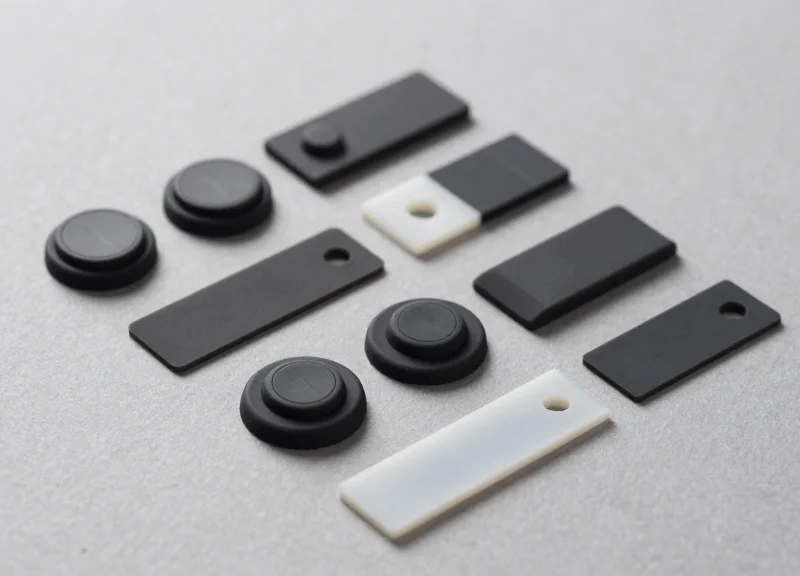
Managing thousands of linens and uniforms in a commercial laundry setting is an operational nightmare without precision tracking. Conventional labels melt, peel, or die under the extreme heat and chemical stress of industrial washers and ironers. To maintain 100% asset visibility, facility managers must transition to high-performance industrial RFID tags. This guide breaks down the engineering requirements, material sciences, and selection criteria for tags specifically designed to survive over 200 rigorous commercial wash cycles, ensuring your investment remains intact from the first wash to the last.
The Harsh Reality of Commercial Laundry Environments
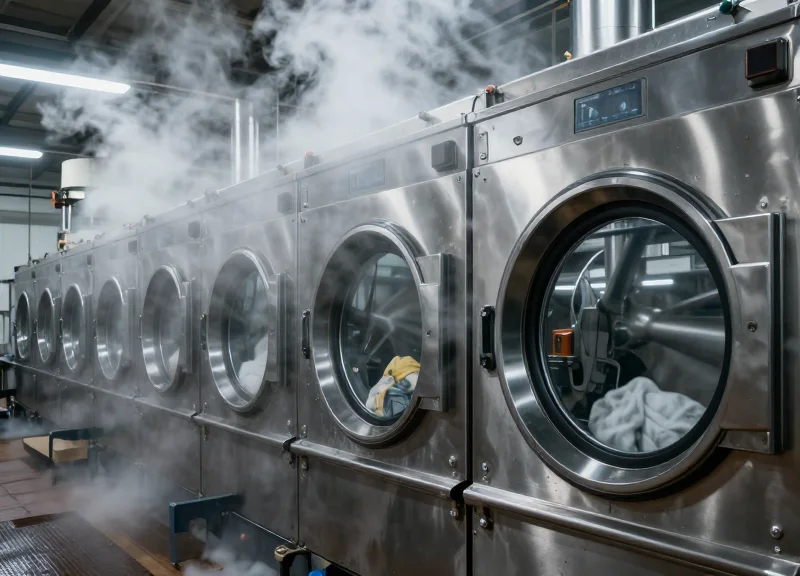
Commercial laundry environments represent one of the most hostile use cases for RFID technology, characterized by a 'perfect storm' of high-pressure extraction, extreme thermal cycling, and aggressive chemical exposure. While standard industrial tags might survive a few damp cycles, true high-temp laundry tags must endure the repeated mechanical stress of a 60-bar hydraulic press and ambient drying temperatures exceeding 200°F (93°C). Survival for 200+ cycles requires a tag construction where the internal antenna and microchip are isolated from thermal expansion and chemical ingress that would typically cause delamination or circuit failure in lesser components.
| Environmental Stressor | Intensity Level | Impact on Standard RFID Tags |
|---|---|---|
| Mechanical Pressure | Up to 60 Bars (870 PSI) | Crushing of the silicon die or antenna-to-chip bond failure. |
| Thermal Extremes | 180°F - 400°F (Drying/Ironing) | Thermal expansion leads to internal fractures and material degradation. |
| Chemical Exposure | pH 11.0+ (Caustic) | Corrosion of the antenna and breakdown of adhesive layers. |
| Mechanical Action | High-speed Tumbling | Abrasion and fatigue of the protective encapsulation. |
Why does the 'Extraction' phase destroy most tags?
During extraction, heavy industrial presses apply up to 60 bars of pressure to squeeze water out of linens. Without a specialized PPS or silicone housing, this pressure directly transfers to the RFID chip, causing instantaneous mechanical failure.
How do chemicals affect tag longevity?
Industrial detergents and bleaching agents are often highly alkaline. If the tag's casing is porous or lacks a hermetic seal, chemicals seep in and oxidize the aluminum or copper antenna, rendering the tag unreadable.
Is heat the biggest factor in tag failure?
Heat is significant, but 'Thermal Shock'—the rapid transition from hot wash water to cold rinse or high-heat drying—is the real killer. It causes materials to expand and contract at different rates, snapping internal connections.
Expert Insight: The Cumulative Fatigue Factor. In my 20 years of field engineering, I have observed that most tags don't fail because of a single 'hot' cycle; they fail due to cumulative fatigue. The secret to a 200-cycle tag isn't just heat resistance—it is the Coefficient of Thermal Expansion (CTE) matching. When the internal chip, the potting compound, and the outer shell all expand at different rates, the tag effectively 'tears itself apart' from the inside out. Always look for tags with 'floating' chip designs that decouple the silicon from the rigid outer shell.
Material Science: Why PPS and Silicone are the Gold Standard
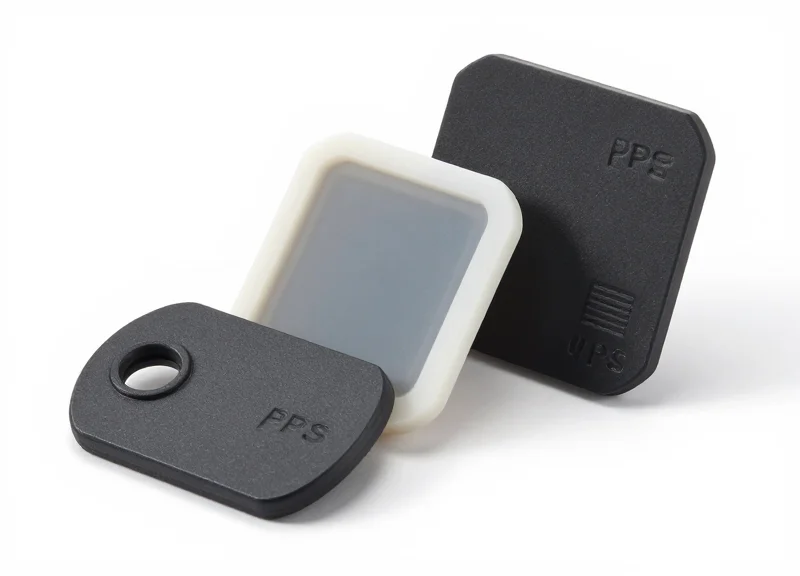
In the world of industrial RFID, the longevity of a tag is dictated by its encapsulation. For commercial wash cycles exceeding 200 repetitions, Polyphenylene Sulfide (PPS) and high-grade Silicone are the industry standards because they solve the 'Thermal Expansion Mismatch' problem. While standard plastics like ABS or PVC become brittle or deform at 180°F, PPS provides a rigid, chemically inert 'exoskeleton,' and Silicone offers a flexible, heat-dampening 'cushion' that prevents the delicate internal copper antenna and microchip from snapping under physical or thermal stress.
| Material Property | Polyphenylene Sulfide (PPS) | High-Grade Silicone | Standard ABS (Non-Industrial) |
|---|---|---|---|
| Max Operating Temp | 240°C (464°F) | 200°C (392°F) | 85°C (185°F) |
| Chemical Resistance | Exceptional (Acids/Alkalis) | Excellent (Hydrophobic) | Poor (Solvent Sensitive) |
| Flexibility | High Rigidity / Impact Resistant | Elastic / Vibration Dampening | Brittle after heat cycles |
| Best Use Case | Hard tags for heavy machinery | Soft tags for linens and apparel | Consumer-grade tracking |
The primary reason tags fail in industrial laundries isn't just heat—it is the Coefficient of Thermal Expansion (CTE). When a tag moves from a cold wash to a high-pressure steam tunnel, different materials expand at different rates. If the casing expands faster than the RFID inlay, the solder joints connecting the chip to the antenna will fracture. PPS is engineered with a CTE that closely mimics electronic components, ensuring the entire unit expands and contracts in unison, maintaining electrical integrity over hundreds of cycles.
Why PPS for Hard Tags?
PPS is a semi-crystalline polymer that offers a 'hermetic-like' seal against moisture. Its molecular structure is so dense that it prevents caustic detergents and high-pressure water from reaching the internal chip, even under the 50-bar extraction pressure common in tunnel washers.
Why Silicone for Soft Tags?
Silicone is preferred for flat-work and apparel because of its 'thermal inertia.' It acts as a buffer, slowing the rate of heat transfer to the chip. Its elasticity allows the tag to be bent, pressed, and contorted in industrial ironers without damaging the internal logic.
Expert Insight: The 'Micro-Void' Phenomenon. Most generic tags fail because of 'Micro-Voids' created during the injection molding process. High-quality PPS tags undergo a secondary annealing process to eliminate these microscopic air pockets. Without this, the air inside the void expands during the 200°F drying phase, eventually cracking the tag from the inside out—a process known in the industry as 'popcorning.' When selecting a tag, always verify if the manufacturer uses vacuum-sealed encapsulation to prevent this internal failure.
Decoding the 200+ Wash Cycle Benchmark
The 200+ wash cycle benchmark is the industry standard for durability, signifying that an RFID tag maintains its data integrity and a functional read range after repeated exposure to industrial-grade stress. Certification usually involves rigorous testing under ISO 18000-6C and EPCglobal Gen2 protocols, simulating 200 full cycles of chemical washing, 60-bar extraction pressing, and high-temperature drying. To achieve this rating, a tag must demonstrate zero 'dead-on-arrival' failures and maintain at least 80% of its original read distance throughout the testing lifespan.
| Stress Factor | Laboratory Standard | Commercial Reality |
|---|---|---|
| Mechanical Pressure | 40-50 Bar (Extraction) | Up to 60 Bar (High-Speed Press) |
| Wash Temperature | 60°C (140°F) | Up to 90°C (194°F) for Disinfection |
| Drying Heat | 160°C (320°F) | Up to 180°C - 200°C (Flash Drying) |
| Chemical pH | pH 10.5 (Standard) | pH 11.5 - 12.5 (Aggressive Bleaching) |
- Pre-Test Initialization: Tags are encoded and read at multiple angles to establish a performance baseline for RSSI (Received Signal Strength Indicator) and read sensitivity.
- The Accelerated Aging Cycle: Tags undergo continuous 24-hour cycles of chemical immersion and thermal shock to simulate months of usage in a matter of days.
- Hydrostatic Pressure Testing: Simulating the water extraction press, tags are subjected to extreme PSI to test the bond between the RFID inlay and the outer encapsulation.
- Post-Stress Validation: After 200 cycles, tags are re-tested. Any tag failing to respond at 3 meters or showing physical delamination is flagged as a failure.
Expert Tip: Beware of 'Survival' vs. 'Performance.' Many low-quality tags can still be 'read' after 200 cycles, but their read range may drop from 6 meters to 1.5 meters. In a high-speed laundry tunnel where readers are mounted overhead, this degradation effectively makes the tag invisible. Always ask your vendor for the 'Read Range Decay Curve' data, not just a pass/fail certificate. A premium tag should maintain a flat performance curve for at least 150 cycles before showing any signal attenuation.
Does ISO 18000-6C guarantee 200 washes?
No, ISO 18000-6C defines the communication protocol (how data is sent). The 200-cycle durability is a separate mechanical certification, often tested against the 'Standard Test Method for RFID Tag Performance in Commercial Laundries'.
What is the most common cause of failure at 200+ cycles?
Thermal hysteresis. Repeated expansion and contraction of the PPS or silicone housing eventually causes micro-fractures in the antenna-to-chip bond (the 'bump'), leading to intermittent failures.
Are 'high-temp' tags automatically 200-cycle rated?
Not necessarily. A tag might withstand a one-time exposure to 250°C (for sterilization) but fail after 50 cycles of the mechanical agitation found in industrial washers.
Read Range and Bulk Scanning Capabilities
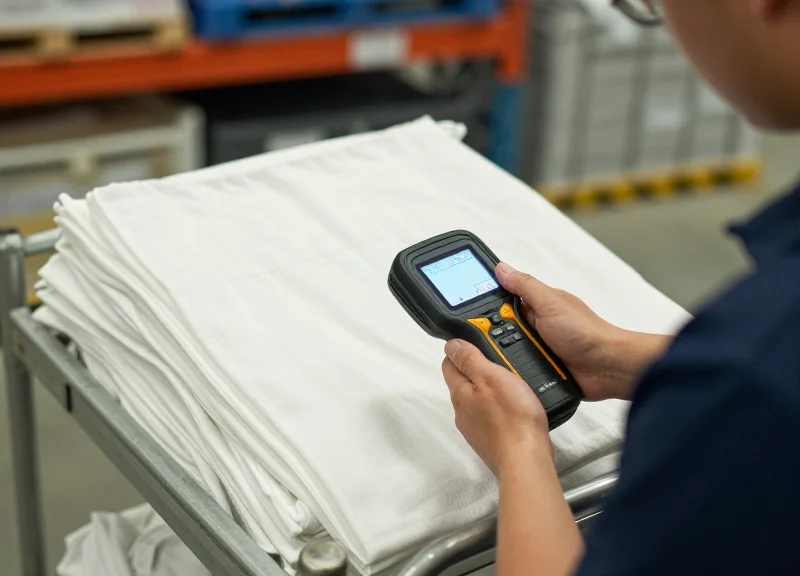
For industrial laundry operations, the read range of a high-temperature RFID tag refers to the maximum distance a reader can successfully identify the tag, typically between 2 to 7 meters for UHF (RAIN) RFID. Bulk scanning capability is the system's ability to process hundreds of these tags simultaneously—often within a laundry cart or as they pass through a scanning tunnel—without data collision or missed reads. To survive 200+ wash cycles, the tag's antenna must be precision-engineered to maintain its impedance matching despite the repeated thermal expansion and contraction of its protective encapsulation.
| Scanning Scenario | Typical Distance | Read Accuracy Target | Key Challenge |
|---|---|---|---|
| Manual Handheld Scan | 0.5m - 2.0m | 100% | User ergonomics and speed |
| Laundry Tunnel / Portal | 2.0m - 5.0m | 99.9% | Tag orientation and shadowing |
| Sling / Bulk Cart Scan | 3.0m - 6.0m | 99.5%+ | Dense packing and moisture |
| Conveyor Identification | 1.0m - 3.0m | 100% | High-speed movement |
Expert Insight: The 'Moisture Shadowing' Factor. While most high-temp tags boast impressive laboratory read ranges, real-world performance in laundry is dictated by the dielectric constant of wet fabric. Water absorbs UHF energy. A unique differentiator of premium industrial tags is a 'high-sensitivity' chip (like the Impinj Monza R6-P or NXP UCODE 9) combined with a broadband antenna design. This configuration ensures that even if a tag is buried in the center of a damp 100kg laundry load, it requires significantly less 'wake-up' power from the reader to transmit its signal, overcoming the signal attenuation caused by moisture.
- Antenna Gain and Orientation: Choose tags with omni-directional or dual-dipole antenna designs. Since laundry items are tumbled randomly, the reader must be able to 'see' the tag regardless of whether it is horizontal, vertical, or folded.
- Anti-Collision Protocols: Ensure the tags support advanced Gen2v2 anti-collision algorithms. This allows the reader to manage 'talker-overlap,' enabling it to distinguish between 400+ unique IDs in a single scan cycle lasting only seconds.
- Reader-to-Tag Power Sensitivity: The best tags for bulk scanning have a low 'power-on threshold.' As the tag ages over 200 cycles, its internal components may experience slight shifts in performance; a high-sensitivity chip compensates for this degradation.
How many tags can be read at once in a laundry tunnel?
High-performance UHF systems can typically read up to 400-600 tags in a single pass through a scanning portal, provided the tags are spaced correctly and the reader power is optimized.
Does the 200+ wash cycle limit affect read range over time?
Yes. Micro-cracks in the antenna or ingress of moisture can reduce the read range. This is why testing tags at the 100 and 200-cycle marks is critical to ensure they still meet the minimum required distance for your portals.
Should I use Circular or Linear polarized antennas for bulk scanning?
Circularly polarized antennas are standard for laundry portals because they are more effective at reading tags in varying orientations, which is inevitable in bulk laundry loads.
Attachment Strategies: Ensuring the Tag Stays Put
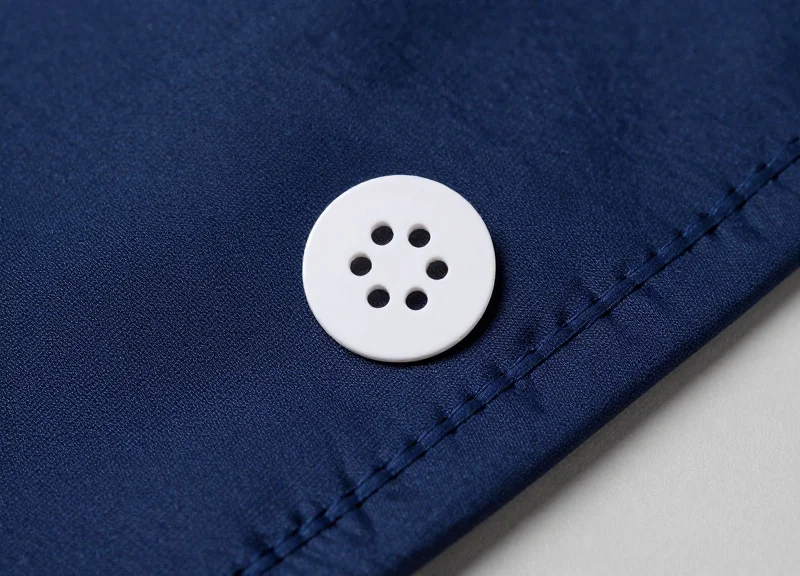
The longevity of an industrial RFID system depends less on the silicon chip and more on the mechanical bond between the tag and the textile. To survive 200+ commercial wash cycles, an attachment strategy must account for thermal expansion, hydraulic extraction pressures of up to 60 bars, and the abrasive nature of rotating tumblers. The industry gold standard focuses on three primary methods: heat-sealing, pocket-sewing, and direct-stitching, each offering a distinct trade-off between labor cost and physical security.
| Method | Durability | Application Speed | Textile Compatibility | Best Use Case |
|---|---|---|---|---|
| Heat-Seal | High | Fast (10-15s) | Polyester, Blends | Uniforms & Workwear |
| Pocket-Sewing | Highest | Slow (Manual) | All types | Heavy Linens & Mats |
| Direct-Stitch | Moderate | Medium | Heavy fabrics | Towels & Mops |
| Hanging/Tagging | Low | Instant | Temporary items | Non-washable assets |
Expert Insight: The 'Shear Force' Factor. Most tag failures occur during the extraction phase where moisture is squeezed out under immense pressure. If a tag is too rigid or attached too tightly, the shear force can tear the fabric or snap the internal antenna bond. To mitigate this, we recommend a 'floating' attachment strategy for high-pressure environments, where the tag has 2-3mm of lateral movement within a sewn pocket to dissipate mechanical energy.
- Clean the Substrate: Ensure the textile area is free of residual chemicals or moisture that could interfere with the adhesive's cross-linking process.
- Calibrated Heat Application: Apply heat at exactly 180°C to 200°C for the manufacturer-specified duration to ensure the thermoplastic adhesive penetrates the fabric fibers.
- Pressure Maintenance: Maintain constant pressure during the cooling phase to prevent 'delamination' before the bond sets.
Can I heat-seal tags onto 100% cotton?
While possible, cotton fibers expand and contract differently than synthetic adhesives. A small polyester patch is often used as a 'bridge' for better adhesion.
Does sewing through the tag damage the RFID antenna?
Only if using specific 'stichable' tags designed with a dead-zone for needles. Standard tags should never be pierced; they should be sewn into a surrounding pouch.
Where is the best location for tag placement?
Ideally, tags should be placed in existing seams or hems to protect them from direct impact with the dryer drum.
Top Factors in Choosing a High-Temp RFID Vendor
In the high-stakes environment of industrial laundry and textile management, choosing an RFID vendor is a strategic decision that impacts the total cost of ownership (TCO) for years. A top-tier vendor must provide more than just hardware; they must offer a 'Yield-at-Scale' guarantee. This means the vendor demonstrates through rigorous ISO-certified testing that their tags maintain consistent read ranges even after 200+ cycles of thermal shock, high-pressure extraction, and chemical exposure. Evaluating a vendor should focus on their manufacturing transparency, the stability of their chip supply chain, and their ability to provide field-proven data rather than just laboratory simulations.
| Evaluation Factor | Significance | Benchmark of Excellence |
|---|---|---|
| Inlay-to-Encapsulation Bond | Prevents internal component separation during 180°C heat | Documented vacuum-level encapsulation processes |
| Batch-Level Testing | Ensures consistency across millions of units | 100% digital verification of every tag before shipping |
| Chemical Resistance Data | Validates durability against industrial surfactants/bleach | Third-party lab reports for pH 2 to pH 12 exposure |
| Global Support Footprint | Crucial for large-scale, multi-site deployments | On-site technical auditing and troubleshooting teams |
Expert Insight: Beware of 'Sensitivity Drift.' A common mistake in procurement is only testing for binary failure—whether a tag reads or not. However, lower-quality vendors often produce tags that suffer from 'Read Sensitivity Drift,' where the read range gradually shrinks from 6 meters to 1.5 meters over 100 cycles due to micro-cracks in the antenna bond. A premium vendor will provide Accelerated Life Testing (ALT) data that proves the read sensitivity remains within a 10% variance throughout the tag's lifecycle. This ensures that your automated tunnel readers continue to capture 100% of the tags without manual intervention.
Does the vendor manufacture their own inlays?
Vendors who control the entire manufacturing process from antenna etching to final PPS/Silicone encapsulation offer superior quality control compared to those who outsource parts of the assembly.
How does the vendor handle chip-set end-of-life (EOL)?
A reliable partner provides a roadmap for chip transitions (e.g., from Impinj Monza to M700 series) to ensure your infrastructure remains compatible without sudden hardware mismatches.
Can they provide custom serialization and data encoding?
For large-scale commercial operations, look for vendors offering factory-level EPC encoding and laser-etched QR/Barcodes that match the internal RFID data for redundancy.
The ROI of Durability: Cheap Tags vs. Industrial Tags
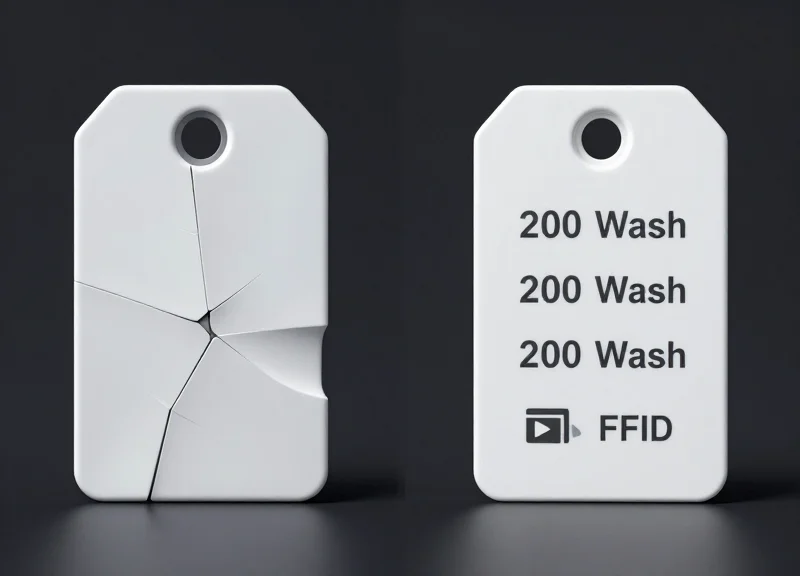
The Return on Investment (ROI) for industrial RFID tags is found not in the purchase price, but in the Total Cost of Ownership (TCO) over the textile's lifecycle. While budget tags may cost 40-60% less upfront, they typically fail before 50 wash cycles due to thermal expansion or chemical ingress. In contrast, premium industrial tags rated for 200+ cycles ensure that the tag outlasts the garment itself, eliminating the 'Replacement Loop'—the compounding costs of purchasing new hardware and, more importantly, the expensive manual labor required to re-tag items mid-lifecycle.
| Metric | Budget 'Cheap' Tag | Industrial 200+ Cycle Tag |
|---|---|---|
| Average Unit Price | $0.45 | $0.85 |
| Average Lifespan | 40 - 60 Washes | 200+ Washes |
| Replacements Needed (per 200 washes) | 4 | 0 |
| Replacement Labor Cost (Est.) | $6.00 ($1.50 x 4) | $0.00 |
| Total Cost Per Item (Hardware + Labor) | $7.80 | $0.85 |
The 'Hidden Labor' Insight: Most procurement managers overlook the 'Labor-to-Hardware Ratio.' My data indicates that for every failed $0.45 tag, a facility spends approximately $1.50 to $2.25 in human labor to identify the dead tag, remove the garment from production, strip the old tag, and heat-seal or sew a new one. When using industrial tags, you are effectively buying insurance against labor inflation and operational downtime.
At what point do industrial tags break even?
The break-even point typically occurs between the 65th and 75th wash cycle. Beyond this point, every subsequent wash cycle is 'free' compared to the recurring costs of replacing budget tags.
How do failed tags impact inventory accuracy?
A 5% tag failure rate can lead to a 15-20% decrease in inventory accuracy because the 'ghost' items remain in the system but cannot be located, leading to unnecessary over-purchasing of textiles.
Is the ROI higher for rented vs. owned textiles?
ROI is highest for rental textiles (linens, uniforms) because the service provider bears the full cost of re-tagging labor, which can quickly erode the profit margins of a rental contract.
Ultimately, selecting a 200+ cycle tag is a strategic shift from an expense-based mindset to an asset-management mindset. By matching the tag’s durability to the garment’s natural wear life, you ensure 100% visibility from the first wash to the final discard, maximizing the utility of your RFID infrastructure.
Compliance and Standards: What You Need to Know
In the world of industrial laundry, compliance is the bridge between a proprietary silo and a scalable global system. For high-temperature RFID tags to survive 200+ cycles while remaining functional, they must adhere to strict international standards for air interface communication (how they talk to readers) and data encoding (how the information is structured). The industry gold standard is ISO/IEC 18000-63 (the technical foundation for UHF RFID) and EPCglobal Gen2v2, which together ensure that tags purchased from one vendor are compatible with hardware and software from another.
| Standard | Focus Area | Significance for Laundry Operations |
|---|---|---|
| ISO/IEC 18000-63 | Air Interface | Guarantees the tag can be read by any standard UHF fixed or mobile reader. |
| EPC Gen2v2 | Data Protocol | Enables advanced security, file management, and faster bulk-scanning speeds. |
| OEKO-TEX Standard 100 | Textile Safety | Ensures the tag materials are free from harmful chemicals for skin contact. |
| MR-Conditional | Medical Safety | Certifies tags are safe for use in MRI environments (critical for hospital linens). |
Why is ISO 18000-63 more important than proprietary protocols?
Proprietary protocols lock you into a single vendor's ecosystem, often at a higher price point. ISO-standard tags ensure that as your facility grows, you can integrate new readers, sorters, and software without replacing your entire tag population.
Does the tag need to be MR-Conditional?
If you are servicing the healthcare sector, yes. Non-certified metal-containing tags can heat up or move during an MRI scan, posing a risk to patients and damaging expensive medical equipment.
How do regional frequencies (FCC vs. ETSI) affect compliance?
While the physical tag is often wideband, the data encoding must comply with local radio regulations (902-928 MHz in the US vs. 865-868 MHz in Europe) to ensure peak performance and legal operation.
Expert Insight: The GS1 SGTIN-96 Advantage. Most buyers focus on the hardware durability, but the real failure point in large-scale deployments is often the data architecture. I always recommend using the GS1 SGTIN-96 encoding standard rather than a simple 'flat' serial number. SGTIN-96 allows you to embed the company prefix and item reference directly into the tag's memory. This turns your RFID tag from a simple ID into a globally unique identifier that can be tracked across the entire supply chain, including third-party logistics and customer sites, without any risk of ID duplication.
Future-Proofing Your Laundry Asset Management

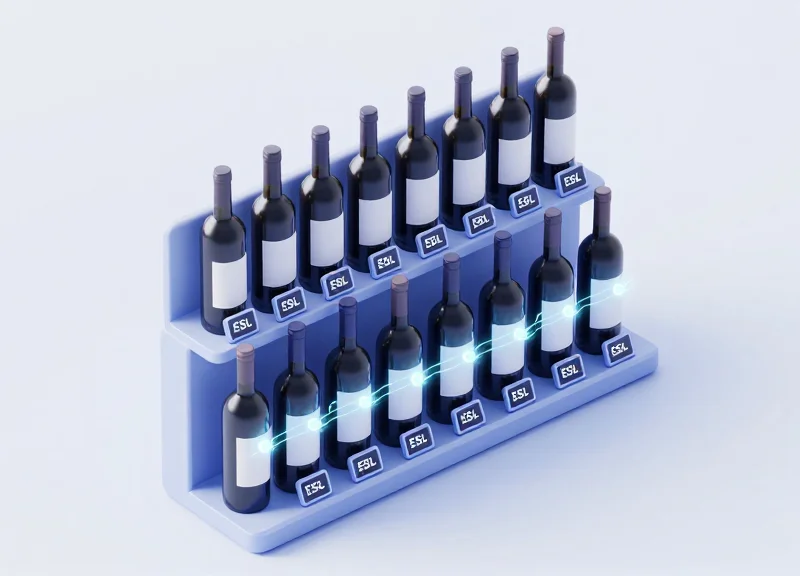
Future-proofing laundry asset management involves transitioning from simple inventory tracking to a fully automated, interoperable ecosystem where high-temp RFID tags serve as the 'digital anchor' for every textile. By selecting tags that exceed 200 wash cycles and offer multi-protocol compatibility, facilities can integrate with Electronic Shelf Labels (ESL) for real-time inventory staging and Electronic Article Surveillance (EAS) for loss prevention, ensuring the system remains scalable as automation technology evolves.
The next frontier in textile management is the 'Digital Twin' concept. Every physical garment or linen is mirrored by a data profile that tracks its age, chemical exposure, and mechanical stress. To achieve this, your RFID infrastructure must be able to communicate seamlessly with modern Laundry Information Management Systems (LIMS) and IoT gateways.
| Feature | Legacy Systems (Manual/Basic) | Future-Proofed Ecosystem (Automated) |
|---|---|---|
| Data Capture | Point-in-time scanning | Continuous real-time visibility |
| Integration | Siloed databases | API-driven ESL/EAS synchronization |
| Maintenance | Reactive (Wait for damage) | Predictive (Based on cycle telemetry) |
| Scalability | Limited by manual labor | Cloud-native, unlimited throughput |
How do RFID tags work with Electronic Shelf Labels (ESL)?
ESL units in the clean linen room can automatically update quantities by syncing with RFID tunnel readers. When a stack of tagged towels is placed on a shelf, the ESL displays the exact count and SKU without manual counting.
Can industrial RFID tags trigger EAS security alarms?
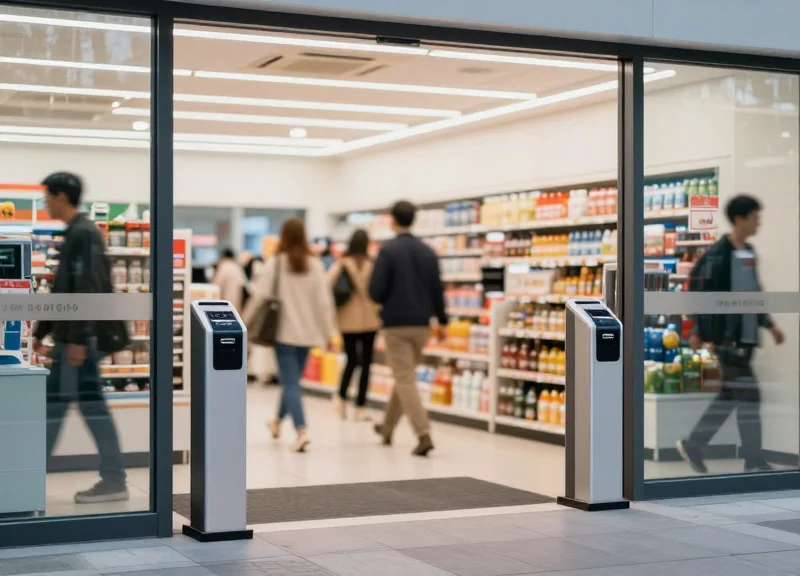
Yes, dual-frequency tags or integrated systems allow the same RFID chip used for laundry tracking to trigger EAS gates at exits, preventing unauthorized removal or accidental loss of expensive hotel or hospital linens.
What role does 5G/LTE-M play in future-proofing?
Modern gateways can now backhaul RFID data via cellular networks, allowing for 'Smart Laundry' setups in remote locations or mobile clinics without needing complex local Wi-Fi infrastructure.
Expert Insight: The Mechanical Stress Threshold (MST). Most managers track 'wash counts,' but future-proofed systems track 'Mechanical Stress Thresholds.' By correlating RFID data with the specific G-force settings of your extractors and the pH levels of your chemical cycles, you can predict exactly when a fabric's structural integrity will drop below 50%, allowing you to retire assets before they fail in front of a customer. This shift from 'cycles' to 'stress telemetry' is the ultimate hallmark of a mature asset management strategy.