As global supply chains approach 2026, the shift from basic tracking to deep environmental intelligence is accelerating. In industries ranging from pharmaceuticals to high-end electronics, simply knowing 'where' a product is no longer suffices; stakeholders must know 'how' it was handled. RFID sensor tags have evolved into sophisticated data loggers capable of monitoring temperature and humidity with surgical precision. This guide provides a strategic framework for decision-makers to navigate the complex landscape of sensor technology, ensuring your infrastructure is future-proofed for the next generation of logistics requirements.
The Evolution of Environmental Monitoring: Looking Toward 2026

Environmental monitoring has evolved from manual logging to a digital-first, autonomous discipline where RFID sensor tags now provide real-time, high-precision data on humidity and temperature without the need for active power sources. Looking toward 2026, the industry is shifting away from simple 'Identification' (Who is this?) toward 'Situational Intelligence' (What is its condition?), driven by the convergence of UHF Gen2v2 protocols, energy harvesting, and edge computing. This allows for seamless, granular tracking of perishable goods and sensitive assets across global supply chains with zero human intervention.
| Era | Primary Function | Sensor Integration | Data Delivery Model |
|---|---|---|---|
| 2016-2020 | Basic Asset ID | None (External Dataloggers) | Manual Batch Scanning |
| 2021-2024 | Track & Trace | First-Gen Active Sensors | Cloud-Synced Portals |
| 2025-2026+ | Autonomous Condition Auditing | Battery-Free Passive Sensors | Real-time Edge Analysis & Ambient IoT |
The defining characteristic of the 2026 landscape is the emergence of 'Ambient IoT.' Unlike previous iterations where RFID required high-powered handheld readers, the next generation of sensor tags will leverage energy harvesting from surrounding radio frequency (RF) signals, including 5G/6G and Wi-Fi. This eliminates the 'battery bottleneck'—the single largest cost and environmental barrier to large-scale humidity and temperature monitoring in the past decade.
Expert Insight: By 2026, the value of an RFID sensor tag will not be in the data it collects, but in its 'Data Integrity' score. We are moving toward a 'Zero-Trust' logistics model where cryptographic signatures on-chip verify that temperature and humidity readings have not been tampered with or smoothed out by software, a critical requirement for high-stakes pharmaceutical and aerospace compliance.
Why is battery-free sensing the standard for 2026?
Sustainability mandates and the cost of hazardous waste disposal have made active battery tags less viable for high-volume items. Passive tags now offer similar range and precision without the chemical footprint.
How does 2026 sensor precision differ from earlier models?
Modern CMOS fabrication allows for +/- 0.1°C temperature accuracy and +/- 2% relative humidity accuracy on a chip the size of a grain of salt, enabling precision that was previously only possible with bulky laboratory equipment.
What role does AI play in 2026 RFID monitoring?
AI is moving from the cloud to the reader. Local 'Edge' AI models analyze sensor data streams to predict shelf-life decay (Dynamic Expiration) in real-time, rather than just alerting when a threshold is crossed.
Defining Precision: Understanding Sensor Accuracy Requirements
In the context of 2026 environmental monitoring, precision is defined as the degree of reproducibility between measurements, while accuracy represents how closely the RFID tag’s data aligns with an absolute reference standard. For high-stakes industries like pharmaceuticals and semiconductor manufacturing, selecting a sensor requires looking beyond basic ±0.5°C specs to evaluate the Total Error Band (TEB), which accounts for all possible errors including calibration uncertainty, temperature effects, and long-term drift. Achieving true precision involves a combination of high-resolution digital converters and NIST-traceable calibration that ensures data integrity for audit-heavy regulatory environments.
| Industry Application | Required Temp Accuracy | Required Humidity Accuracy | Typical Compliance Standard |
|---|---|---|---|
| Biologics & Vaccines | ±0.1°C to ±0.3°C | ±2% RH | WHO PQS / FDA 21 CFR Part 11 |
| Semiconductor Cleanrooms | ±0.2°C | ±1.5% RH | ISO 14644-1 |
| Perishable Food Logistics | ±0.5°C | ±5% RH | FSMA / HACCP |
| Industrial Chemical Storage | ±1.0°C | ±3% RH | GHS / OSHA Safety Standards |
Expert Insight: The 2026 Shift to Predictive Drift Modeling. Traditionally, users have relied on fixed recalibration intervals (e.g., every 12 months). However, by 2026, the industry is moving toward 'Active Drift Compensation.' Leading RFID tags now utilize on-chip machine learning to analyze the sensor's exposure history—such as prolonged high-humidity events—to predict and calculate drift in real-time. This allows for 'Smart Recalibration' alerts, ensuring accuracy remains within the 'Safe Zone' without the downtime of unnecessary scheduled maintenance.
What is NIST Traceability and why is it mandatory for 2026?
NIST traceability means the sensor's calibration has an unbroken chain of comparisons to the National Institute of Standards and Technology. In 2026, this is the legal baseline for liability protection in the cold chain; if a sensor isn't traceable, its data is often inadmissible during a regulatory audit or insurance claim.
Does higher resolution guarantee better accuracy?
No. Resolution is the smallest change a sensor can detect (e.g., 0.01°C), while accuracy is how correct that detection is. A sensor with 0.01°C resolution but ±1.0°C accuracy provides 'false precision,' giving you a highly detailed but ultimately incorrect number.
How does sensor aging affect long-term precision?
All sensors 'age' or drift over time due to chemical changes in the sensing element. High-quality 2026 RFID tags use glass-encapsulated thermistors or specialized polymers to limit drift to less than 0.05°C per year, significantly extending the tag's lifecycle.
- Identify Regulatory Floors: Start by determining the strictest regulation governing your product (e.g., GDP for pharma) to set your minimum accuracy requirements.
- Calculate the Operating Margin: Subtract the sensor's maximum error (Total Error Band) from your product's safety threshold to find your true 'allowable' window for environmental fluctuations.
- Verify Calibration Documentation: Ensure the vendor provides a digital, blockchain-secured, or paper-based calibration certificate that matches the unique ID of the RFID tag.
Active vs. Passive RFID: Choosing the Right Power Architecture
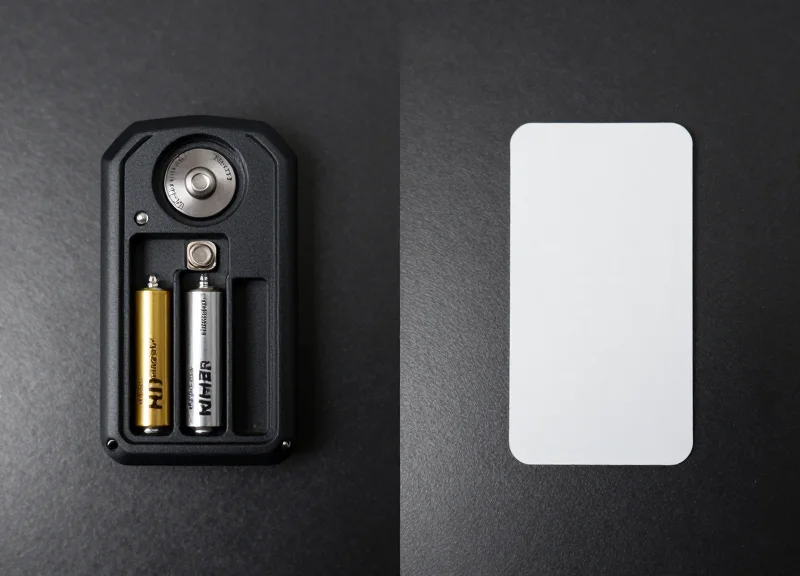
In the 2026 landscape of environmental sensing, the choice between active and passive RFID architectures is primarily dictated by the frequency of data logging and the required communication range. Active RFID tags, powered by internal batteries, autonomously broadcast sensor data over long distances (up to 100+ meters), making them ideal for real-time alerting. Conversely, passive RFID relies on the energy of the reader to function, which simplifies the form factor but limits the range and historical data storage. For most precision temperature and humidity applications, Battery-Assisted Passive (BAP) technology has emerged as the industry standard, combining the cost-efficiency of passive communication with the reliable internal clock and sensing capabilities of an active system.
| Feature | Passive RFID | Battery-Assisted Passive (BAP) | Active RFID |
|---|---|---|---|
| Power Source | Reader Field (Energy Harvesting) | Internal Battery for Sensing Only | Internal Battery for All Ops |
| Communication Range | 1 - 10 Meters | 10 - 50 Meters | 100+ Meters |
| Logging Capability | Real-time only (usually) | Continuous logging to memory | Continuous logging + real-time |
| Average Unit Cost (2026) | <$1.50 (High Volume) | $5.00 - $15.00 | >$25.00 |
| Lifecycle | Virtually Infinite | 3 - 7 Years (Battery dependent) | 2 - 5 Years |
While fully active tags provide the most robust data stream, the market is shifting toward 'Hybrid BAP' solutions for 2026. These tags use high-efficiency energy harvesting to supplement the internal battery, significantly extending the logging lifespan of humidity sensors in fluctuating environments. This is particularly critical for cold chain logistics where the tag must remain dormant during transit but wake up to log data points every few minutes without reader intervention.
- Active RFID Pros: Best for large-scale warehouse monitoring and environments requiring instant alerts for humidity spikes.
- Active RFID Cons: Higher cost per unit and environmental waste concerns regarding battery disposal at scale.
- Passive RFID Pros: Lowest cost and smallest footprint; ideal for item-level tracking where environment is stable.
- Passive RFID Cons: Cannot log data when outside the reader's field, making it unsuitable for transit-long logging.
Expert Insight: for 2026: The 'Zero-Power' Logging Breakthrough. A unique development entering the market in 2026 is the use of non-volatile ferroelectric RAM (FRAM) in passive tags. This allows some specialized passive tags to retain sensor-state changes even without a constant power source, effectively bridging the gap between passive cost and active data integrity without needing a traditional lithium battery.
Can passive RFID tags monitor humidity without a reader nearby?
Generally, no. Standard passive tags require the reader's RF field to power the sensor and log data. However, new BAP tags can log data autonomously and then transmit the stored log once a reader is present.
Which architecture is best for NIST-traceable applications?
BAP and Active tags are preferred because their internal power source ensures a consistent sampling rate, which is a prerequisite for most NIST-traceable calibration logs.
How does battery life impact 2026 sensor ROI?
In 2026, many sensors utilize 'Printable Batteries,' which lower initial costs but offer shorter lifespans. For multi-year monitoring, traditional active tags still provide the highest ROI despite higher upfront costs.
Data Logging Capacity: Memory and Storage Strategies
In the context of 2026 supply chain standards, data logging capacity is the internal memory threshold—typically measured in kilobits (Kb) or total data points—that a sensor tag can record before it must offload data to a reader. For humidity and temperature monitoring, this capacity determines the granularity of your 'environmental map.' If a tag runs out of memory mid-transit, you face 'data blackouts,' which can lead to rejected shipments in highly regulated sectors like pharmaceuticals or perishable food logistics. Modern strategies involve balancing the sampling interval (how often a reading is taken) against the total transit time to ensure the memory buffer remains uncompromised.
| Use Case | Typical Duration | Logging Interval | Required Capacity (Data Points) |
|---|---|---|---|
| Last-Mile Cold Chain | 4-12 Hours | 1 Minute | 240 - 720 |
| Transcontinental Freight | 7-14 Days | 15 Minutes | 672 - 1,344 |
| International Maritime | 30-45 Days | 60 Minutes | 720 - 1,080 |
| High-Value Bio-Pharma | 72 Hours | 10 Seconds | 25,920 |
- Determine the Mission Profile: Identify the total elapsed time the tag will be away from an RFID gateway to set your maximum logging duration.
- Select Sampling Granularity: Choose an interval that captures critical fluctuations (e.g., door openings) without over-saturating memory.
- Configure Overflow Logic: Decide between 'Stop-When-Full' (to preserve early data) or 'FIFO' (First-In-First-Out) to prioritize the most recent data.
- Define Bit-Depth for Resolution: Determine if you need 8-bit (standard) or 16-bit (high-precision) storage per data point, as this doubles memory consumption.
Expert Tip: For 2026, we are seeing a shift toward 'Exception-Only Logging.' Rather than recording a linear stream of data, advanced RFID sensors use a 'Delta-Storage' strategy. In this mode, the tag only logs a timestamp and value when the temperature or humidity deviates by more than a pre-set threshold (e.g., ±0.5°C). This can extend the effective memory capacity by 5x to 10x for stable environments, allowing for incredibly granular data during excursions while saving space during normal conditions.
Does memory size affect battery life?
Yes, more frequent writes to internal EEPROM or FRAM memory consume more power. Optimizing your logging interval is key to extending the tag's operational life.
What is the benefit of FRAM over EEPROM?
Ferroelectric RAM (FRAM) allows for faster write speeds and significantly higher write-cycle endurance, making it superior for high-frequency logging applications.
Can data be compressed on the tag?
By 2026, many high-end tags support basic compression algorithms that pack 12-bit sensor data into smaller bit-fields to maximize storage efficiency.
Sampling Intervals and Battery Longevity
In the world of 2026 RFID sensor technology, battery longevity is almost entirely a function of the 'Duty Cycle'—the ratio of time the tag spends in an active sensing state versus a low-power sleep state. While high-frequency sampling provides a high-resolution granular map of environmental conditions, it exponentially increases power draw; for example, moving from a 15-minute sampling interval to a 1-minute interval typically reduces the total operational life of a tag by 80% or more. For precision humidity and temperature logging, the 'Best' interval is the longest possible period that still complies with regulatory safety margins (such as GDP for pharmaceuticals or FSMA for food safety).
| Sampling Interval | Estimated Lifespan (Standard Li-Poly) | Data Granularity Level | Typical Use Case |
|---|---|---|---|
| 30 Seconds | 3 - 4 Months | Ultra-High | High-Volatility Chemical Stability Testing |
| 5 Minutes | 12 - 18 Months | High | Strict Cold Chain (Biologics/Vaccines) |
| 15 Minutes | 3 - 4 Years | Medium | Standard Pharmaceutical Global Transit |
| 60 Minutes | 5+ Years | Low | Non-Perishable Ambient Asset Monitoring |
Expert Insight: The Shift Toward Dynamic Adaptive Sampling. A key differentiator for 2026-spec tags is the move away from fixed intervals toward 'Event-Driven' or 'Threshold-Based' sampling. Modern firmware now allows tags to stay in a deep-sleep 60-minute cycle while conditions are stable, but automatically 'wake up' to 1-minute sampling if a pre-defined temperature or humidity threshold is breached. This preserves battery life for the majority of the journey while providing forensic-level detail during critical excursions.
Does cold temperature affect battery life differently than sampling intervals?
Yes. While sampling frequency is a logical drain, chemical kinetics mean that operating at -20 degrees Celsius can reduce effective battery capacity by 20-40% regardless of the interval settings. Always calculate your longevity based on your 'worst-case' thermal environment.
Is the power drain higher for humidity sensing than temperature sensing?
Generally, yes. Modern capacitive humidity sensors often require a longer 'settling time' and higher current for the analog-to-digital conversion compared to simple thermistors, making high-frequency humidity logging more taxing on the battery.
How does 2026 RFID transmission frequency affect longevity?
The actual logging of data to internal memory uses negligible power. The massive drain occurs during 'RF bursts'—when the tag transmits logged data to a reader. Reducing the frequency of wireless uploads is as important as optimizing the sampling interval.
The 2026 Decision Matrix: A Strategic Selection Framework
The 2026 RFID Decision Matrix is a multi-variant evaluation system designed to mitigate the risks of 'spec-overkill' or 'data-insufficiency' in industrial environmental monitoring. By 2026, the selection process has shifted from simply choosing a frequency to balancing the 'Cost per Data Point' (CPDP) against the total lifecycle sustainability of the tag. This framework prioritizes the intersection of sensor accuracy, read range, and power architecture to ensure your data remains actionable and compliant with evolving ESG (Environmental, Social, and Governance) reporting standards.
| Tag Category | Primary Use Case | Est. Cost (USD) | Precision Index | Max Range | Durability Rating |
|---|---|---|---|---|---|
| High-Memory Passive | Retail/Short-Range Storage | Low ($1.50 - $5.00) | +/- 1.0C | < 10 Meters | High (No Battery) |
| BAP (Battery-Assisted) | Cold Chain Logistics | Medium ($15 - $50) | +/- 0.1C | Up to 100 Meters | Medium (3-5 Year Life) |
| Active (Hybrid RFID/BLE) | High-Value Medical Assets | High ($60 - $200) | +/- 0.05C | Up to 500 Meters | High (Ruggedized) |
Expert Insight: In 2026, we are seeing a 'Sustainability Premium' emerge. Procurement teams are increasingly favoring BAP (Battery-Assisted Passive) tags over fully active sensors. This is because BAP tags offer the high-resolution logging required for pharmaceutical compliance while remaining significantly easier to recycle under new circular economy mandates, as they contain fewer complex electronic components than full active-beacon counterparts.
- Identify your Precision Floor: Determine the minimum legal or safety accuracy required for your specific commodity (e.g., +/- 0.5C for biologics).
- Map the Environment: Assess RF interference and physical barriers; passive tags will fail in high-liquid or high-metal environments without specialized shielding.
- Calculate Data Velocity: Define how often you need a timestamp; high-frequency logging (every 60 seconds) necessitates BAP or Active power to prevent capacitor drain.
- Run the Total Cost of Ownership (TCO): Include the cost of gateways, handheld readers, and potential environmental disposal fees for batteries.
Is passive RFID enough for 2026 cold chain compliance?
Generally no. While passive tags are cheaper, they lack the continuous logging capabilities (recording data when a reader is absent) required by modern FSMA 204 and global pharma regulations.
How does tag durability affect ROI?
Tags with IP68 or higher ratings may have a 30% higher upfront cost but reduce replacement rates by 60% in high-moisture environments like greenhouse monitoring.
Can these tags integrate with existing ERP systems?
Yes, modern 2026-era tags utilize standardized EPC Gen2V2 protocols or BLE GATT profiles for seamless cloud integration.
Form Factors and Durability in Extreme Environments

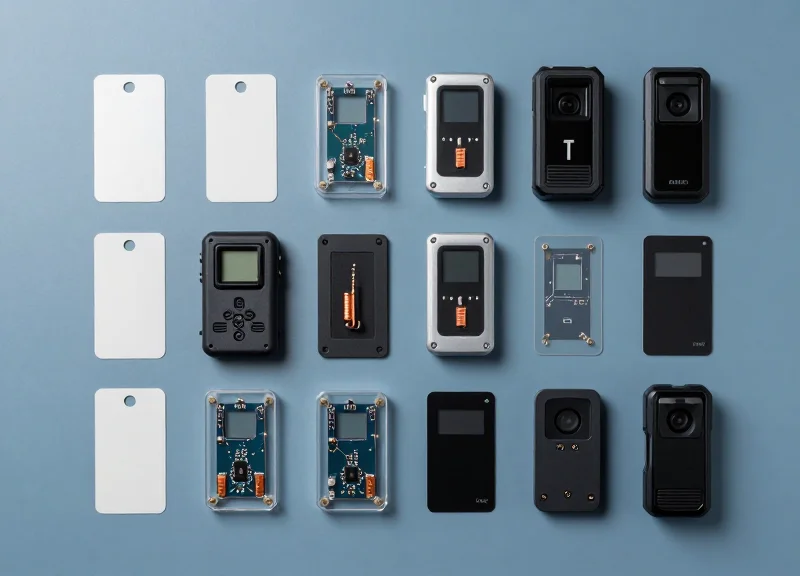
In 2026, durability for RFID sensor tags is defined by the enclosure's ability to maintain a hermetic seal while facilitating accurate environmental sensing. For high-precision humidity and temperature logging, the form factor must balance ruggedization—often requiring IP68 or IP69K ratings—with the need for the sensor element to interact with the ambient environment. The most advanced tags now utilize semi-permeable membranes that allow water vapor and heat to reach the internal sensor while blocking liquid water, dust, and corrosive contaminants that could degrade the silicon or battery.
| Environment | IP Rating | Recommended Housing | Ideal Application |
|---|---|---|---|
| Deep Freeze / Cryogenic | IP68 | Teflon / Low-temp Epoxy | Vaccine Cold Chain (-80°C) |
| Industrial Wash-down | IP69K | Stainless Steel / PP | Food Processing & Sterilization |
| High Humidity / Coastal | IP67 | Anti-corrosive Polymers | Maritime Logistics |
| Chemical Exposure | IP68 | PEEK / PPS Plastics | Pharma Labs / Petrochemical |
One often overlooked aspect of tag durability is mechanical stress during installation. In 2026, we see a shift toward 'Conformable Sensors'—tags that are flexible enough to be adhered to curved surfaces like biological vials or industrial piping without compromising the integrity of the antenna-to-chip bond. This prevents micro-fractures that typically lead to tag failure in high-vibration environments.
What is the difference between IP68 and IP69K for sensors?
IP68 protects against long-term immersion in water, while IP69K is specifically designed to withstand high-pressure, high-temperature steam cleaning, making it essential for food and beverage safety compliance.
Can standard RFID tags survive autoclave sterilization?
No, standard tags fail due to heat and pressure. Specialized 'Autoclave-ready' tags use PPS (Polyphenylene Sulfide) or specialized ceramic housings to survive the 121°C steam cycles required in medical environments.
How does housing material affect humidity readings?
Housings that are too thick or lack a breathable membrane can create a 'micro-climate' inside the tag, causing humidity readings to lag significantly behind the actual ambient conditions.
Expert Insight: Beware of 'Thermal Inertia Lag.' In high-precision logging, a heavy-duty resin-filled tag has a high thermal mass, which acts as a heat sink. This causes a temporal delay between a rapid ambient temperature change and the internal sensor's reaction. For environments with rapid thermal cycling, we recommend specifying 'Low-Mass' vented enclosures that utilize hydrophobic PTFE membranes to ensure the sensor responds to temperature swings in real-time.
Integration: Linking RFID Sensors with ESL and Cloud Platforms

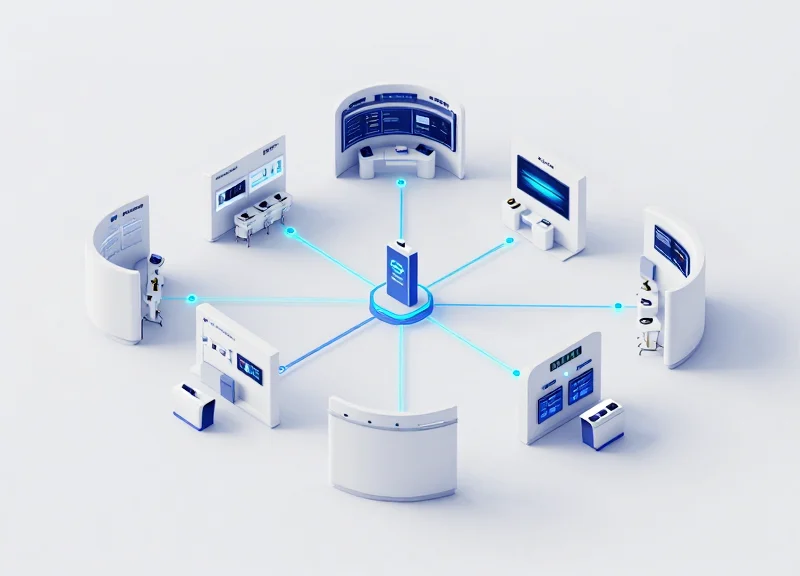
Integrating RFID sensors with Electronic Shelf Labels (ESL) and cloud platforms involves creating a synchronized data pipeline where environmental telemetry—such as humidity and temperature—is captured by tags, processed by IoT gateways, and visualized simultaneously on retail shelves and enterprise dashboards. In 2026, the gold standard for this integration is the 'Edge-to-Cloud' bridge, which allows sensor data to trigger automated price adjustments or spoilage alerts on ESLs via local sub-GHz or BLE networks while pushing granular historical logs to the cloud for regulatory compliance and AI-driven predictive analytics.
- Data Harvesting at the Edge: Fixed or handheld RFID readers interrogate sensor tags. In modern setups, ESL access points often double as RFID readers, capturing environmental data during routine shelf heartbeats.
- Middleware Normalization: Raw hex data from the sensor is converted into human-readable formats (Celsius/Percentage) and filtered to prevent redundant cloud uploads, reducing bandwidth costs.
- ESL Direct-Triggering: If a temperature threshold is breached, the local server sends an immediate command to the corresponding ESL to display a 'Warning' or 'Check Quality' graphic.
- Cloud Ingestion & Storage: Aggregated data is pushed via MQTT or HTTPS protocols to platforms like AWS IoT Core or Azure IoT Hub for long-term storage and cross-facility benchmarking.
| Integration Model | Communication Path | Best Use Case | Latency |
|---|---|---|---|
| Native ESL Bridge | Sensor > ESL AP > ESL Cloud | Retail grocery and pharmacy | Low (< 5 seconds) |
| Enterprise Middleware | Sensor > Dedicated Reader > ERP | Large scale warehouse/logistics | Medium (10-30 seconds) |
| Direct-to-Cloud (Cellular) | Active Tag > 5G/LTE > Cloud | International transit/Cold chain | Variable (Network dependent) |
The Expert Insight: The 'Invisible Hand' of Automated Markdown. A unique strategy emerging for 2026 is the 'Dynamic Freshness' algorithm. By linking RFID humidity/temperature sensors directly to the ESL pricing engine, retailers can automatically apply incremental discounts as a product nears its safety threshold. This reduces waste by up to 30% by incentivizing the purchase of items that have experienced slight thermal fluctuations, but are still perfectly safe, without requiring manual staff intervention.
Can RFID sensors work with any ESL brand?
Most top-tier ESL providers now support open APIs or have partnered with RFID tag manufacturers, but proprietary protocols still exist. Ensure your ESL gateway supports the same frequency (usually 902-928 MHz or 2.4 GHz) as your sensors.
What is the biggest challenge in cloud integration?
Data volume management is the primary hurdle. High-frequency sampling can lead to 'Data Fatigue.' Implementing edge-computing logic to only upload significant changes or 'out-of-bound' events is critical.
Do I need a separate gateway for sensors and ESLs?
By 2026, converged gateways are the industry standard. These hybrid devices manage both ESL image updates and RFID sensor data collection, significantly reducing hardware overhead.
Global Standards and Compliance (ISO/IEC)
For 2026, global compliance in RFID sensor technology is defined by the convergence of radio-frequency air interface protocols and standardized sensor data structures. Choosing tags that adhere to ISO/IEC 18000-63 (for UHF) or ISO/IEC 14443/15693 (for HF/NFC) ensures your hardware is recognized by standard readers globally. Beyond the physical layer, the ISO/IEC 24753 standard is the critical 'glue' that defines how environmental data—such as humidity and temperature—is formatted, stored, and transmitted, allowing heterogeneous sensor fleets to talk to a unified cloud backend without custom middleware for every tag model.
| Standard | Primary Application | Relevance to 2026 Sensors |
|---|---|---|
| ISO/IEC 18000-63 | UHF Air Interface | Mandatory for long-range logistics; ensures tag readability across different continents and reader brands. |
| ISO/IEC 24753 | Sensor Protocol | Standardizes the application programming interface (API) for sensory functions; vital for uniform data logging. |
| GS1 EPC Gen2v2 | Supply Chain Data | Adds security features like 'Untraceable' and 'Authenticated' to prevent sensor data spoofing in transit. |
| ISO/IEC 29167 | Crypto-Security | Critical for pharmaceutical cold chains; provides the encryption framework for sensor data privacy. |
Expert Insight: The 2026 'Data Trust' Shift. In my two decades of Silicon Valley engineering, the biggest mistake I see is companies focusing only on the radio frequency. By 2026, the industry is moving toward 'Authenticated Telemetry.' This means compliance isn't just about signal; it's about the ISO/IEC 29167 security suite. If your sensors do not support hardware-level encryption, your environmental logs may be legally inadmissible in highly regulated sectors like vaccine transport or semiconductor fabrication.
Does an ISO-compliant tag work in both Europe and the USA?
While ISO/IEC 18000-63 provides a global protocol, you must still ensure the tag hardware supports 'Global Frequency' tuning to accommodate the regulatory differences between ETSI (Europe) and FCC (Americas) spectrum allocations.
Why is ISO/IEC 24753 specifically mentioned for logging?
This standard defines how the tag reports sensor events. Without it, your software might interpret a temperature value from a Brand A tag differently than a Brand B tag, leading to massive data integrity errors in your decision matrix.
How does compliance impact the cost of sensor tags?
Certified tags typically carry a 5-15% premium due to rigorous testing. However, this is offset by avoiding the 'vendor lock-in' that occurs with proprietary, non-compliant logging protocols.
To future-proof your 2026 deployment, prioritize tags that list GS1 EPC Gen2v2 and ISO/IEC 24753 compliance on their data sheets. This combination ensures that as you scale from local pilot programs to global distribution, your environmental data remains consistent, secure, and fully auditable by international regulatory bodies.