In the rapidly evolving landscape of 2026, financial institutions and government agencies face unprecedented pressure to maintain real-time visibility over their physical assets. Traditional manual auditing is no longer viable against the backdrop of strict regulatory requirements and the need for operational efficiency. Selecting the right RFID (Radio Frequency Identification) asset management system is not just about tracking hardware; it is about building an immutable audit trail and securing sensitive data. This guide explores the critical factors for selecting a solution that meets the highest compliance standards while future-proofing your infrastructure.
The Evolution of RFID Asset Management in 2026

In 2026, RFID asset management has evolved from a passive scanning utility into a proactive 'Asset Intelligence' ecosystem. This shift is characterized by the convergence of ultra-high frequency (UHF) RAIN RFID, Edge AI processing, and real-time sensor fusion, allowing financial and government entities to maintain autonomous, 100% accurate audit trails without manual intervention. Unlike previous iterations that focused on 'where' an item was, the 2026 standard focuses on the 'state and security' of the asset in real-time.
| Feature | Legacy RFID (Pre-2022) | Modern Asset Intelligence (2026) |
|---|---|---|
| Data Capture | Manual 'Point-and-Shoot' Scanning | Autonomous, Continuous Room-Level Monitoring |
| Audit Readiness | Periodic/Batch Processing | Always-On, Real-Time Compliance |
| Data Context | Location Only | Location, Temperature, Tamper Status, & Utilization |
| System Integration | Siloed Spreadsheets/ERP | API-First, Multi-Cloud AI Synchronization |
The driving force behind this evolution is the rising demand for 'Zero-Trust Visibility.' In the financial and government sectors, simply knowing a laptop or a server is in a building is no longer sufficient for regulatory compliance. Modern systems now utilize energy-harvesting sensors that require no batteries, allowing for the cost-effective tagging of every single high-value asset. These tags interact with a network of intelligent 'Edge' readers that process data locally, ensuring that sensitive data never leaves the facility while providing instant alerts if an asset moves outside its authorized zone.
Does 2026 RFID technology require line-of-sight?
No. Modern RAIN RFID and Ambient IoT tags used in 2026 operate through walls, inside crates, and behind cabinet doors, enabling bulk scanning of thousands of items per second without physical visibility.
How does AI improve RFID accuracy in 2026?
AI algorithms now filter out 'ghost reads' and signal interference, using machine learning to predict asset movement patterns and ensure that 99.9% data accuracy is maintained even in high-metal or liquid environments.
Is the transition to 2026 systems cost-prohibitive?
While initial infrastructure costs exist, the ROI is typically realized within 12 months due to the total elimination of manual inventory hours and the prevention of high-penalty compliance failures.
Expert Insight: The 'Invisible Audit' is the new gold standard. In 2026, the most successful organizations have moved away from 'Inventory Days.' Instead, they utilize a decentralized ledger (DLT) where the RFID system automatically signs off on asset presence every hour. This creates a cryptographically secure audit trail that satisfies even the most stringent government oversight requirements without a single human ever touching a barcode scanner.
Navigating Financial and Government Compliance Standards

In 2026, navigating financial and government compliance standards requires a transition from manual checklists to automated, real-time validation. Navigating standards such as SOX, FISMA, and GDPR involves deploying RFID asset management systems that create a 'Digital Chain of Custody.' These systems must provide immutable logs of asset location, ownership, and movement to satisfy stringent internal controls and data privacy requirements. By integrating RFID data directly into Enterprise Resource Planning (ERP) systems, organizations can achieve a 'Continuous Audit' state, effectively eliminating the risk of human error in financial reporting and security posture.
| Regulation | Focus Area | RFID Compliance Benefit |
|---|---|---|
| SOX (Section 404) | Financial Reporting & Internal Controls | Automated reconciliation of physical assets with the balance sheet, reducing valuation errors. |
| FISMA / NIST SP 800-53 | Federal Information Security | Real-time tracking of hardware containing sensitive data to prevent unauthorized removal. |
| GDPR / CCPA | Data Privacy & Asset Disposal | Proof of secure decommissioning and destruction of data-bearing assets through serialized tracking. |
| GASB 87 / IFRS 16 | Lease Accounting | Precise tracking of leased equipment locations and usage periods for accurate financial disclosure. |
The 2026 compliance landscape has shifted the burden of proof from 'what we think we have' to 'what the data proves we have.' For government contractors and financial institutions, the gap between physical inventory and digital records is no longer just an operational nuisance—it is a legal liability. RFID systems today use encrypted tags and blockchain-integrated middleware to ensure that the record of an asset's journey from procurement to disposal cannot be tampered with, satisfying the most rigorous federal oversight requirements.
How does RFID specifically satisfy SOX Section 404 requirements?
SOX 404 requires documented internal controls for financial reporting. RFID provides a timestamped, automated log of every asset's physical presence, ensuring that the 'Equipment and Property' line item on financial statements is backed by verifiable, real-time data rather than once-a-year manual counts.
Can RFID help with FISMA’s continuous monitoring requirements?
Yes. FISMA requires agencies to monitor the security state of their information systems. RFID enables 'Geofencing'—triggering immediate alerts if a server or laptop moves outside a secure zone, providing the continuous physical security monitoring required by NIST standards.
How do we manage GDPR when assets contain personal data?
RFID ensures that data-bearing assets are tracked through their entire lifecycle. When an asset is retired, the RFID system provides a certificate of destruction link, proving the physical hardware (and the data on it) was handled according to privacy regulations.
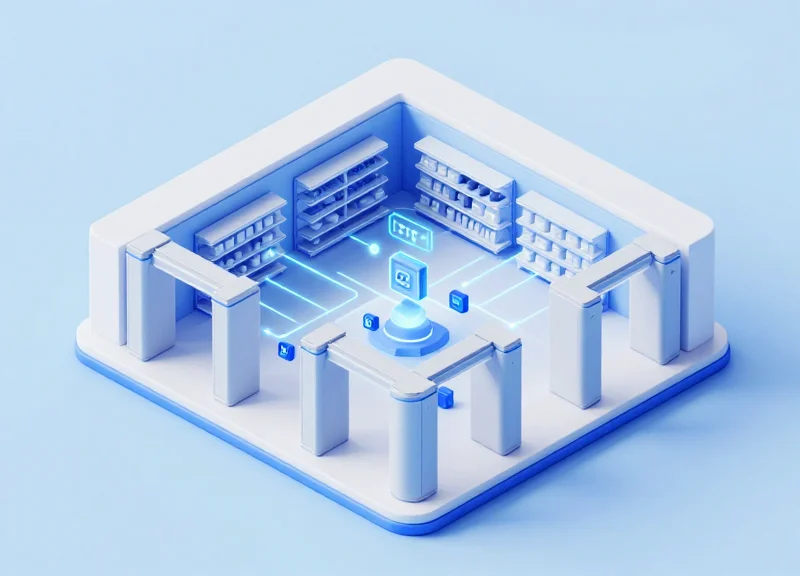
The 2026 Expert Insight: The 'Live Reconciliation' Strategy. Traditionally, compliance was a 'point-in-time' event—a stressful week of auditing every year. My Silicon Valley experience has shown that the most successful firms in 2026 have moved to 'Live Reconciliation.' By utilizing overhead RFID readers in doorways and storage rooms, the system identifies discrepancies between the inventory database and physical reality in milliseconds. If an asset moves without authorization, the compliance flag is raised immediately, not six months later during a walkthrough.
Key Performance Metrics: Accuracy, Range, and Read Rates
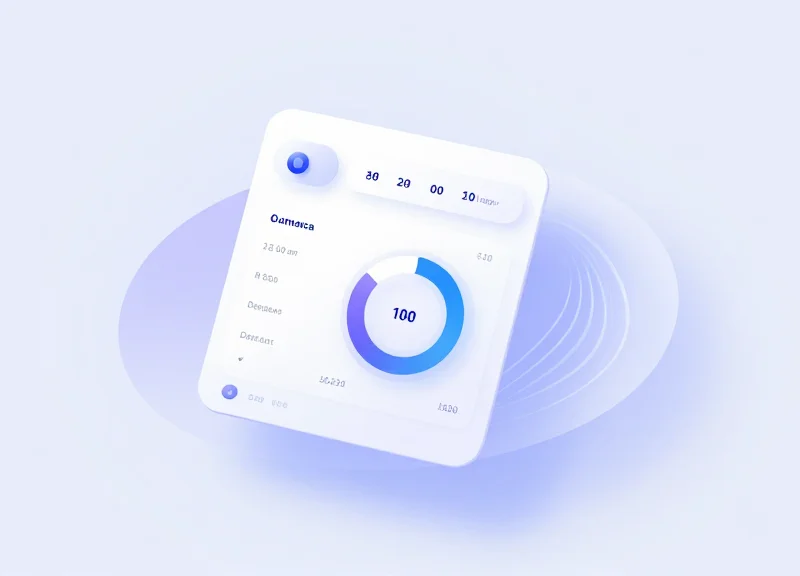
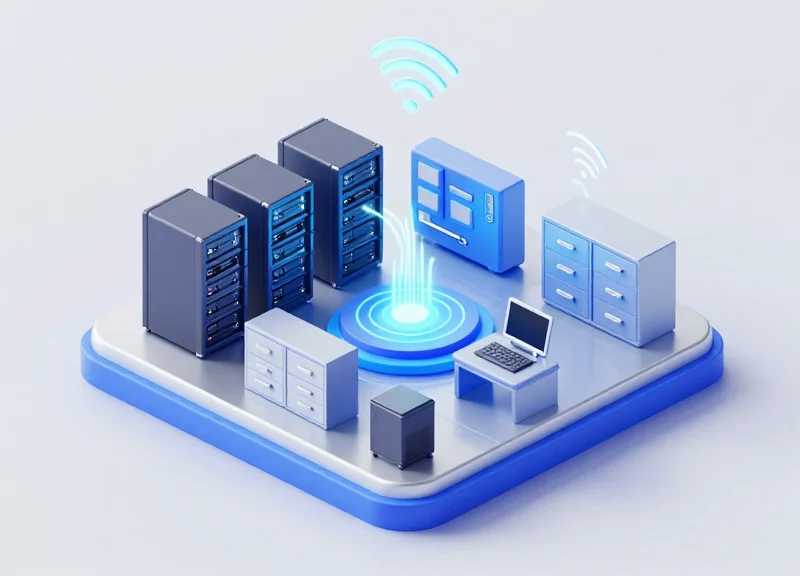
In 2026, the benchmark for RFID performance has shifted from 'reliable enough' to 'audit-defensible.' For financial institutions and government agencies, the primary performance metrics—accuracy, range, and read rates—must be evaluated within the context of high-density interference environments, such as server rooms and shielded record archives. A system that fails to achieve a 99.9% read accuracy in a metal-heavy data center is no longer a tool; it is a compliance liability. Understanding these metrics ensures that your asset management strategy can withstand the scrutiny of a modern SOX or FISMA audit.
| Metric | Target Benchmark (2026) | Impact on Compliance |
|---|---|---|
| Inventory Accuracy | 99.9%+ | Directly affects financial reporting and loss prevention audits. |
| Read Range (Passive) | 5 to 12 Meters | Determines the efficiency of 'gate-check' and portal monitoring. |
| Read Rate | 1,000+ Tags/Second | Essential for rapid inventory of high-density data center racks. |
| Signal Penetration | Non-Line-of-Sight (NLOS) | Required for assets stored inside lead-lined or fireproof cabinets. |
Expert Insight: The 'Density Drift' Phenomenon. In 2026, we are seeing the emergence of 'Density Drift'—where high concentrations of metal and liquid-cooled servers cause RF multipath interference that degrades accuracy by up to 15%. To counter this, top-tier systems now utilize Adaptive Waveform Analysis, a technology that dynamically adjusts the reader's signal to bypass localized interference. When evaluating vendors, ask specifically how their firmware handles reflected signals in high-density environments, as generic systems will struggle to distinguish between a real tag and a 'ghost' reflection.
- Accuracy: The Zero-Error Threshold: Accuracy refers to the system's ability to identify 100% of tagged items within a zone without false positives. For government record rooms, this means the difference between a successful audit and a security breach notification.
- Range: Balancing Reach and Privacy: While longer range (up to 100m with Active RFID) is useful for yard management, indoor compliance often requires 'controlled range' (3-5m) to ensure readers do not accidentally pick up tags from adjacent rooms, which could lead to inaccurate asset location data.
- Read Rates: The Throughput Factor: The read rate defines how many tags a reader can process simultaneously. In a data center relocation scenario, a high read rate allows for the instant verification of hundreds of servers as they pass through a transition portal.
How does metal interference affect RFID accuracy in 2026?
Metal reflects RF energy, creating 'blind spots' or 'dead zones.' Modern systems use circular polarization and anti-collision algorithms to ensure tags remain visible even when mounted directly on metal chassis or within high-density racks.
Is range more important than read rate for government archives?
Typically, accuracy and read rate are more critical for archives. High read rates allow for 'sweeping' a shelf in seconds, while high range can cause the reader to pick up unrelated assets from the floor above or below, causing data pollution.
What is the acceptable margin of error for financial asset audits?
Under current 2026 guidelines, most auditors expect a margin of error of less than 0.1%. Any discrepancy larger than this triggers a manual reconciliation process, significantly increasing operational costs.
Hardware Selection: Choosing Tags and Readers for Durability
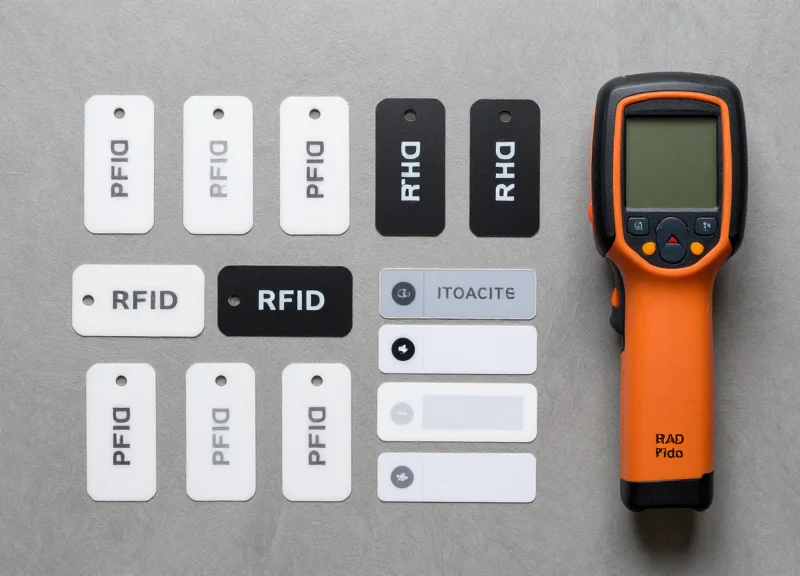
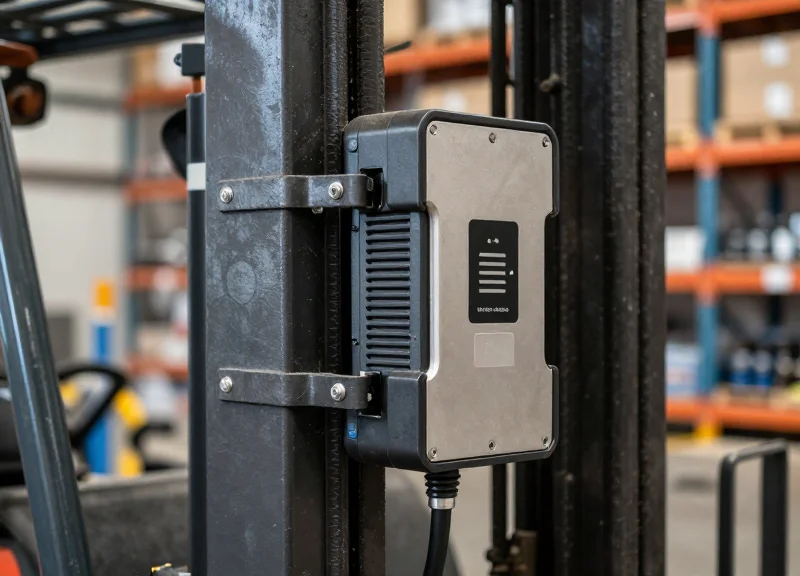
Hardware selection for RFID asset management in 2026 transcends basic tracking, focusing on 'Hardened RF Integrity'—the ability of tags and readers to maintain 99.99% read accuracy within high-interference environments like data centers and secure government vaults. For compliance-driven organizations, durability entails selecting Ingress Protection (IP) rated readers and specialized on-metal tags that counteract the Faraday cage effect inherent in financial server racks and heavy industrial machinery. Choosing the right hardware is a prerequisite for auditability, ensuring that every asset remains visible throughout its entire lifecycle regardless of physical stressors.
| Tag Type | Best Use Case | Durability Rating | Key Advantage |
|---|---|---|---|
| Ceramic On-Metal | Server Chassis & IT Assets | High Temp / Chemical Resistant | Maintains range on metal surfaces |
| Flexible On-Metal | Curved Assets / Laptops | Impact Resistant | Low profile and versatile |
| Tamper-Evident RFID | Classified Documents / Evidence | Fragile Antenna Design | Alerts system if tag is removed |
| IP68 Rugged Hard Tag | Outdoor & Industrial Equipment | Waterproof / UV Stable | 20-year lifespan in harsh conditions |
A critical 2026 industry insight: Transition from 'Static Tracking' to 'Environmental Intelligence.' Modern high-end RFID tags now incorporate passive sensors that detect moisture or temperature spikes without requiring a battery. For financial institutions managing massive data centers, deploying these 'Sensor-on-Tag' solutions provides a dual-layer of value: asset location for SOX compliance and real-time health monitoring to prevent hardware failure due to cooling issues. This 'Total Lifecycle Cost of Failure' (TLCF) perspective is what separates elite asset management strategies from basic inventory counts.
- Evaluate RF Interference (RFI): Conduct a site survey to identify metal density and liquid presence, which absorb or reflect RF signals, necessitating the use of specialized tag spacers or high-sensitivity antennas.
- Select Reader Architecture: Choose fixed readers with PoE+ for 24/7 autonomous monitoring of egress points, or handheld scanners for ad-hoc auditing and deep-search locating.
- Verify Security Protocols: Ensure readers support WPA3-Enterprise and have hardware-based encryption modules (like TPM) to prevent unauthorized access to the asset data stream.
Why can’t I use standard labels on metal assets?
Standard RFID labels are detuned when placed on metal, causing the signal to bounce or be absorbed. On-metal tags use a dielectric spacer to ensure the antenna functions correctly in high-interference environments.
How many years should a passive RFID tag last?
In a controlled indoor environment, a high-quality passive tag is designed to last 10 to 20 years, effectively outlasting the lifecycle of the asset itself.
What is the importance of an IP67 rating for readers?
An IP67 rating ensures the reader is completely dust-tight and can withstand immersion in water, which is vital for government storage facilities or non-climate-controlled warehouses.
Software Integration: Bridging RFID with ERP and ITSM
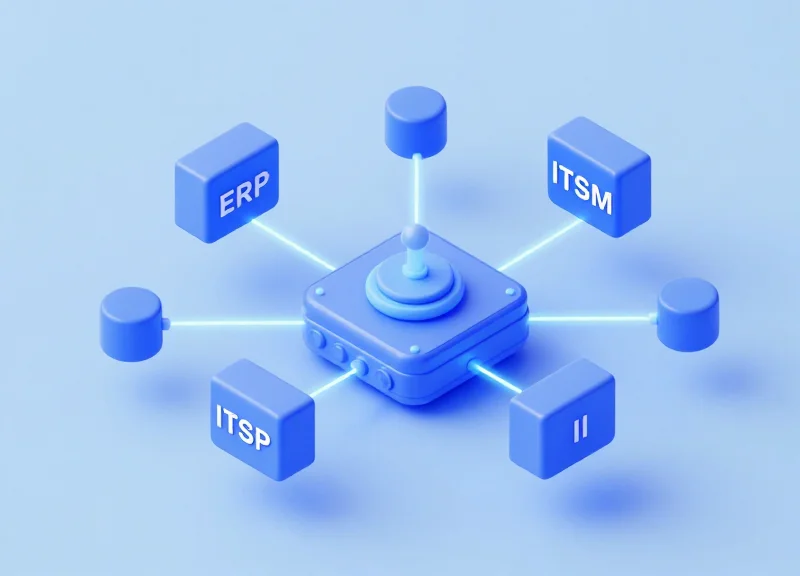
In 2026, RFID integration is the automated synchronization of physical asset location and status data with Enterprise Resource Planning (ERP) and IT Service Management (ITSM) systems through secure, low-latency APIs. By bridging the gap between the physical world and digital records, organizations achieve a 'Live Ledger'—a state where the financial record of an asset in systems like SAP or Oracle and the operational status in ServiceNow are updated instantly without human intervention. This connectivity is the foundation of modern compliance, turning raw radio waves into audit-ready business intelligence.
Expert Insight: In high-compliance environments, the biggest failure point is 'Data Swamping.' A single RFID reader can generate thousands of pings per minute. The most advanced 2026 systems utilize Edge Intelligence Middleware to filter this noise, only sending 'State Change' events (e.g., 'Asset Moved,' 'Asset Tampered,' or 'Audit Verified') to your ERP. This prevents system bloat and ensures your ITSM remains a performant tool rather than a cluttered database.
| Integration Target | Primary Data Flow | Key Compliance Benefit |
|---|---|---|
| ERP (SAP, Oracle) | Asset Depreciation & Valuation | SOX / Financial Accuracy |
| ITSM (ServiceNow, Jira) | Incident & Change Management | NIST / Cybersecurity Hygiene |
| Cloud Storage (AWS, Azure) | Long-term Immutable Audit Logs | GDPR / FISMA Data Retention |
- API Handshake & Authentication: Utilize OAuth 2.0 or mTLS to establish a secure connection between the RFID middleware and your enterprise stack, ensuring data integrity during transit.
- Field Mapping & Normalization: Align the unique Electronic Product Code (EPC) from the RFID tag with the existing Asset ID or Serial Number fields in your ERP/ITSM databases.
- Logic Trigger Configuration: Define business rules, such as triggering a 'security incident' ticket in ITSM if a restricted asset passes through a specific egress reader without authorization.
- Automated Reconciliation: Schedule periodic 'Ghost Asset' scans where the system compares the physical RFID inventory against the digital database to flag discrepancies for immediate investigation.
{ "event_type": "ASSET_MOVE", "asset_id": "US-GOV-992834", "previous_zone": "Secure_Storage_A", "current_zone": "Loading_Dock_4", "timestamp": "2026-10-12T14:30:05Z", "authorized_by": "System_Auto_Check" }Will RFID integration slow down our existing ERP performance?
No, if implemented with a middleware layer. Modern middleware processes the raw tag reads at the edge and only sends compact JSON summaries to the ERP, minimizing bandwidth and processing overhead.
Can we integrate with legacy government software?
Yes, while REST APIs are preferred, many 2026 RFID solutions offer legacy connectors or CSV-drop protocols to ensure compatibility with older on-premise government systems.
How does integration improve audit speed?
Integration allows for 'Continuous Auditing.' Instead of a yearly manual count, the system provides a real-time compliance dashboard that can be exported as an audit-ready report in seconds.
Security and Data Integrity in Asset Tracking

In 2026, security and data integrity in RFID asset tracking have evolved beyond simple password protection to a comprehensive Zero Trust framework. This involves securing the communication link between the RFID tag and reader, protecting the data in transit across the network, and ensuring the immutability of records within the cloud or on-premise database. For organizations handling sensitive government or financial assets, security is not just a feature—it is a mandatory compliance layer that prevents 'shadow assets' and unauthorized data exfiltration.
| Security Feature | Standard Commercial Grade | Financial/Government Grade (2026) |
|---|---|---|
| Encryption | None or Basic Password | AES-128/256 End-to-End Encryption |
| Authentication | Single-side (Reader only) | Mutual Cryptographic Authentication |
| Tag Cloning Protection | Vulnerable to Replay Attacks | Secure Element (SE) Chips with DNA-Digital ID |
| Data Integrity | Simple Checksums | Blockchain-backed Audit Trails / Distributed Ledger |
Expert Insight: The Rise of 'Asset Provenance' Monitoring. A unique trend for 2026 is the shift from tracking 'location' to tracking 'provenance.' Modern systems now use AI-driven anomaly detection to identify 'Ghost Tags'—cloned signals that appear in two places at once. If your RFID system cannot differentiate between a legitimate hardware signal and a software-emulated replay attack, your compliance audit will fail. We recommend implementing 'Signal Fingerprinting,' which analyzes the unique physical RF characteristics of a tag to ensure it hasn't been cloned.
Can RFID tags be cloned by malicious actors?
While basic EPC Gen2 tags are susceptible to cloning, government-grade systems utilize Gen2V2 or ISO/IEC 29167 standards which incorporate cryptographic suites. These tags use non-repeating keys for every read cycle, making intercepted data useless for replay attacks.
How is data protected in the cloud for high-security sectors?
Systems must utilize FedRAMP-authorized or SOC2 Type II cloud environments. Data integrity is maintained through 'at-rest' encryption and Hardware Security Modules (HSMs) that manage the cryptographic keys, ensuring that even if a database is breached, the asset location history remains encrypted.
What is the 'Kill' command and when is it used?
The 'Kill' command is a permanent security feature that renders a tag unreadable. In high-compliance environments, this is used during asset decommissioning or disposal to ensure that sensitive asset identifiers do not leave the facility in a readable state.
To maintain integrity, the RFID middleware must act as a 'secure gateway,' filtering out noise and verifying the digital signature of every inbound packet. For financial institutions specifically, integrating these security protocols with existing Identity and Access Management (IAM) systems ensures that only authorized personnel can view or modify asset status, creating a clear, non-repudiable audit trail for regulators.
Cost-Benefit Analysis and ROI for Large-Scale Deployment
A successful RFID ROI calculation for large-scale enterprise deployments hinges on three primary levers: the drastic reduction in manual labor hours, the elimination of 'ghost assets' that inflate tax and insurance liabilities, and the mitigation of regulatory non-compliance fines. In the 2026 landscape of financial and government sectors, organizations typically realize a full return on investment (ROI) within 12 to 18 months by transitioning from manual barcode processes to automated, high-density RFID tracking, which can reduce inventory cycle times by over 90%.
| Metric | Manual/Barcode Process | Automated RFID System | Impact Analysis |
|---|---|---|---|
| Inventory Cycle Time | 400+ Hours (Quarterly) | 12 Hours (Weekly) | 97% Labor Savings |
| Data Accuracy | 65% - 75% (Human Error) | 99.5% - 99.9% | Reduced Audit Risk |
| Audit Prep Duration | 3-4 Weeks | Real-time / 1 Day | Instant Compliance |
| Asset Loss Rate | 3% - 5% Annually | < 0.5% Annually | Capital Expenditure Savings |
To accurately forecast the financial impact, organizations must look beyond hardware costs and evaluate the Total Cost of Ownership (TCO) against operational efficiency gains. The following steps provide a framework for a rigorous cost-benefit analysis.
- Baseline Labor Assessment: Calculate the current man-hours spent on physical audits, asset tagging, and manual data entry across all facilities.
- Quantify Ghost Asset Costs: Identify the financial burden of paying insurance premiums, software licenses, and property taxes on assets that are no longer in the building but remain on the books.
- Estimate Compliance Risk Mitigation: Factor in the potential cost of fines or lost government funding resulting from failed audits or inaccurate inventory reporting.
- Model Infrastructure Longevity: Include the cost of tags, readers, and middleware integration, amortized over a five-year lifecycle.
Expert Insight: The 'Shadow Inventory Tax'. Many organizations overlook the fact that manual tracking often leads to a 10-15% over-provisioning of assets. Because procurement teams cannot 'see' existing idle inventory, they buy more. RFID provides 'Active Visibility,' allowing departments to redistribute existing assets rather than purchasing new ones, often saving millions in unnecessary CAPEX within the first two years.
What is the typical upfront cost for a large-scale deployment?
For a facility with 10,000 assets, upfront costs including tags, mobile readers, and software integration typically range from $50,000 to $150,000, depending on environmental complexity.
How does RFID affect insurance premiums?
Many enterprise insurers offer reduced premiums or more favorable terms to organizations that can demonstrate 99%+ asset accuracy and real-time location tracking.
Can RFID software reduce software licensing costs?
Yes. By accurately tracking the physical location and status of servers and workstations, IT teams can decommission unused hardware and cancel associated software subscriptions.
Implementation Strategy: From Pilot Programs to Global Rollout
A successful RFID asset management deployment in 2026 is not a single 'flip-the-switch' event but a modular, three-tier framework designed to mitigate risk and ensure data integrity. By starting with a high-friction Pilot Program, organizations can validate hardware performance in challenging environments—such as server rooms or high-security vaults—before scaling to a Global Rollout. This approach allows IT and compliance teams to refine middleware logic, resolve integration bottlenecks with ERP systems, and establish a repeatable deployment template that satisfies both internal operational needs and external regulatory audits.
- Phase 1: The 'Stress-Test' Pilot: Select a single high-value location with significant RF interference. The goal is to prove 99.9% read accuracy under worst-case scenarios, ensuring that metal shielding or liquid-filled containers do not impede asset visibility.
- Phase 2: Data & ERP Harmonization: Once hardware reliability is proven, focus on the bidirectional flow of data. Ensure that RFID scans trigger automated updates in your IT Service Management (ITSM) platform and financial ledgers without manual intervention.
- Phase 3: Regional Expansion: Deploy to 2-3 additional sites with varying geographic or regulatory requirements. Use this phase to document 'local exceptions' and refine the centralized dashboard for cross-border visibility.
- Phase 4: Full Global Production: Launch the system across all remaining sites. At this stage, the focus shifts from technical validation to user training and establishing a permanent Continuous Compliance Monitoring (CCM) protocol.
| Deployment Phase | Primary Objective | Key Compliance Metric |
|---|---|---|
| Pilot (POC) | Technical Feasibility | Signal Accuracy & Interference Margin |
| Regional Scale | Process Optimization | Audit Trail Timestamp Consistency |
| Global Rollout | Enterprise Integration | Cross-Jurisdictional Data Privacy (GDPR/SOC2) |
Expert Insight: In my two decades of Silicon Valley deployments, the biggest failure point isn't the technology—it's 'Shadow Asset Leakage.' This occurs when new assets are purchased during the rollout phase but are not tagged because the old procurement process hasn't been fully retired. To avoid this, you must implement a 'Tag-at-Dock' policy: no asset enters the building without a pre-registered RFID tag, regardless of whether that specific site has been 'fully migrated' to the new system yet. This ensures 100% lifecycle coverage from day one.
How long should a pilot program typically last?
For financial and government sectors, a 30-to-60 day pilot is ideal. This allows for at least two 'inventory cycles' to test the system against both static storage and active asset movement.
What is the most common reason for global rollout delays?
Inconsistent network infrastructure at remote sites. Ensure your RFID middleware supports 'store-and-forward' capabilities so that data is saved locally if a connection to the central cloud is lost.
How do we handle legacy assets during the rollout?
Use a 'Day-Forward' strategy for hardware and a 'Retroactive-Sweep' for existing inventory. Tag all new arrivals immediately, and schedule dedicated teams to tag legacy items in blocks during off-peak hours.
Predicting the Future: AI and Real-Time Asset Intelligence
By 2026, the standard for asset management has shifted from 'Where is my asset?' to 'What is the status of my asset?' AI-driven Real-Time Asset Intelligence (RTAI) represents this leap, combining RFID sensor data with machine learning algorithms to move beyond simple location tracking. For financial and government entities, this means systems that don't just record audits but autonomously predict when a device is at risk of falling out of compliance or requires physical maintenance based on its usage patterns and environment.
| Feature | Legacy RFID (Pre-2024) | Intelligent RFID (2026+) |
|---|---|---|
| Data Processing | Cloud-reliant / Batch | Edge Computing / Real-Time |
| Decision Making | Human-led analysis | Autonomous AI-triggered alerts |
| Maintenance | Reactive / Scheduled | Predictive (Prescriptive) |
| Compliance | Manual Audit Logs | Continuous Self-Auditing |
A pivotal driver in this evolution is Edge Computing. In 2026, RFID readers are no longer just pass-through devices; they are high-powered compute nodes. By processing asset data at the 'edge'—directly at the point of detection—organizations can trigger instant security protocols, such as locking down a facility if a high-security server blade is detected near an unauthorized exit, without waiting for cloud-to-server latency.
Unique Expert Insight: The Rise of 'Asset Self-Governance.' In my two decades of Silicon Valley experience, the biggest bottleneck has always been the 'Human-in-the-Loop' requirement for audits. In 2026, we are seeing the emergence of Natural Language Asset Querying. A Chief Compliance Officer can now ask an AI agent, 'Which department has the highest risk of hardware loss this quarter?' and receive a report generated by cross-referencing real-time RFID movement with historical loss-prevention patterns, effectively making the assets govern themselves.
How does AI improve RFID data accuracy in 2026?
AI algorithms now filter 'signal noise' and multipath interference in high-density metal environments, ensuring that reflections are not misread as actual asset locations, a common flaw in older systems.
Can AI-driven RFID systems help with ESG reporting?
Yes. By tracking the exact lifecycle and power-state of assets, AI can calculate the precise carbon footprint and depreciation of hardware, automating Environmental, Social, and Governance (ESG) compliance for government mandates.
What is the security risk of integrating AI with asset management?
The primary risk is 'data poisoning.' 2026 systems mitigate this by using blockchain-verified tag IDs and encrypted edge-processing to ensure the AI is learning from authenticated data points only.