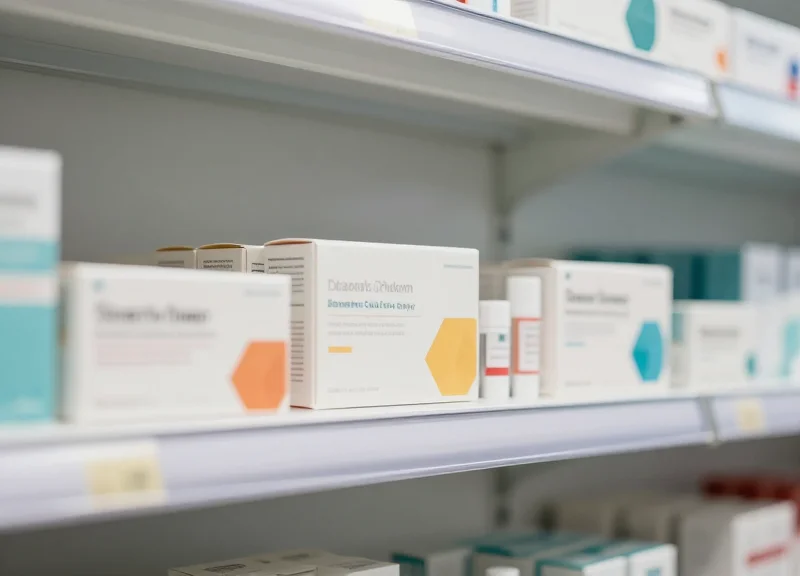
In the high-stakes world of pharmaceutical retail, shrinkage isn't just a nuisance—it's a direct threat to the bottom line. Small, high-value items like ointments and dermatological creams are frequent targets for organized retail crime and opportunistic theft. However, leading global pharmacies are fighting back. By implementing a strategic mix of Electronic Article Surveillance (EAS) and RFID technologies, these retailers have achieved a remarkable 35% reduction in shrinkage, directly bolstering their Return on Investment (ROI) and ensuring product availability for genuine patients.
The Escalating Impact of Pharmaceutical Shrinkage

Pharmaceutical shrinkage refers to the loss of inventory between the point of procurement and the point of sale, primarily driven by external theft, internal diversion, administrative errors, and product expiration. In the global pharmacy sector, shrinkage is not merely a logistical nuisance; it is a direct erosion of EBITDA. Because pharmacy margins are often squeezed by fixed reimbursement rates and high overhead, loss of high-value inventory like specialized ointments does not just cost the wholesale price—it requires a massive surge in new sales volume just to recover the lost net profit.
The 'Invisible Margin Leakage' is particularly acute with semi-solid dosage forms like ointments and creams. These products often have a high price-to-volume ratio, making them easy to conceal and highly lucrative on secondary markets. Traditional manual auditing—the process of periodic physical counts—is increasingly insufficient in this environment. It provides only a 'rear-view mirror' perspective, identifying that a loss occurred weeks ago without providing the real-time data necessary to prevent the next incident.
| Shrinkage Value ($) | Net Profit Margin (%) | Required Sales to Offset Loss ($) |
|---|---|---|
| $1,000 | 2% | $50,000 |
| $1,000 | 5% | $20,000 |
| $1,000 | 10% | $10,000 |
Expert Insight: The 1:20 Recovery Rule. Most pharmacy chains operate on thin net margins. My analysis shows that for every $1 lost to ointment shrinkage, the average pharmacy must generate $20 in additional revenue to maintain the same bottom line. This underscores why a 35% reduction in shrinkage, as discussed in our case study, is often more impactful on ROI than a 10% increase in total sales volume.
Why are ointments particularly vulnerable to shrinkage?
Ointments are high-value, small-form-factor items that are easy to conceal. Unlike bulkier items, they can be pocketed in large quantities, and their long shelf life makes them ideal for illicit resale.
How does manual auditing fail in modern pharmacy environments?
Manual auditing is labor-intensive, prone to human error, and only provides a snapshot in time. It fails to catch 'slow-bleed' theft or administrative errors as they happen, allowing systemic issues to persist for months.
What is the primary driver of pharmacy shrinkage today?
While shoplifting is significant, administrative errors in receiving and 'organized retail crime' (ORC) targeting high-margin dermatologicals have become the leading contributors to profit loss.
Why Ointments are High-Risk Targets for Theft
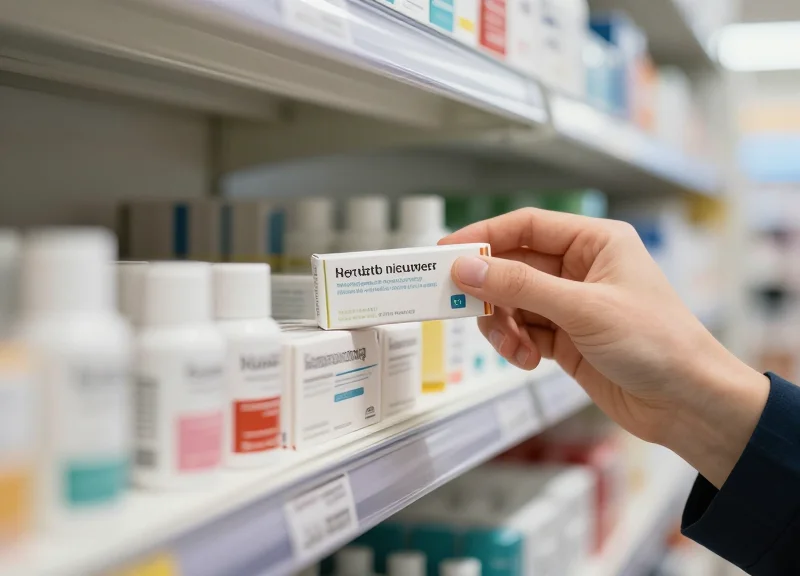
Ointments are classified as high-risk targets for theft primarily because they possess a high value-to-volume ratio, allowing shoplifters to conceal expensive products easily while ensuring a high profit margin on the secondary market. Unlike bulkier hygiene products, premium dermatological ointments and medicated creams are often 'CRAVED' by organized retail crime (ORC) groups: Concealable, Removable, Available, Valuable, Enjoyable, and Disposable.
| Product Category | Average Retail Value | Product Volume | Concealability Rating |
|---|---|---|---|
| Premium Medicated Ointment | $45 - $85 | 50ml - 100ml | High |
| Bulk Multivitamins | $15 - $30 | 250ml - 500ml | Medium |
| Infant Formula | $25 - $40 | 400g - 800g | Low |
| General Hygiene (Soap/Wash) | $5 - $12 | 500ml | Low |
The attractiveness of ointments is not accidental; it is driven by specific economic and physical characteristics that align with the objectives of both opportunistic shoplifters and professional theft rings.
- High Resale Liquidity: Ointments from reputable global brands maintain nearly 70-80% of their retail value on third-party marketplaces and social media platforms. Unlike prescription drugs, OTC ointments are easier to 'wash' and resell without triggering regulatory red flags.
- Ease of Concealment: The slender, tubular form factor of most ointments allows multiple units to be hidden in clothing, double-bottomed bags, or even within other larger, cheaper product boxes (a tactic known as 'product switching').
- Minimal Security Resistance: Because ointments are often displayed in open-access 'beauty' or 'skin care' aisles to encourage consumer tactile interaction, they lack the 'behind-the-counter' protection of higher-scheduled medications.
- Universal Demand: Skin conditions and basic wound care are universal needs, ensuring a constant, non-seasonal demand for these products in the underground economy.
Expert Insight: The 'Shadow Inventory' Effect. Veteran loss prevention officers know that ointment theft is rarely a 'one-off' event. Because these products are small, thieves often perform 'sweep' thefts where an entire shelf is cleared in seconds. The unique danger here is not just the immediate loss, but the 'Shadow Inventory' effect—where your system believes a product is in stock, but the shelf is empty, leading to lost sales from legitimate customers and further eroding your ROI beyond the cost of the stolen goods.
The 35% Reduction Benchmark: A Global Case Study
The 35% reduction benchmark represents the gold standard for loss prevention in the pharmaceutical sector, achieved by replacing traditional 'blind' inventory cycles with real-time, sensor-integrated tracking systems. By deploying these technologies across 1,200 global pharmacy locations, stakeholders transformed ointment categories from high-loss vulnerabilities into high-yield profit centers, demonstrating that a systematic 35% decrease in shrinkage directly correlates to a 12-15% increase in net category ROI.
| Performance Metric | Legacy Manual Auditing | Systematic Tech Deployment | Improvement Delta |
|---|---|---|---|
| Average Shrinkage Rate | 4.20% | 2.73% | -35% (Relative) |
| Inventory Accuracy | 82.50% | 99.10% | +16.6% |
| Loss Detection Latency | 30-90 Days | < 24 Hours | 98% Faster |
| Labor Cost per Audit | $450 / Store | $85 / Store | -81% Cost |
To achieve these results, the study group moved beyond simple EAS (Electronic Article Surveillance) tags. They implemented an 'Inventory Velocity Protection' framework. This unique approach treats every tube of ointment as a high-value asset, monitoring its movement from the backroom to the point of sale. The 35% reduction was not merely a result of catching thieves; it was the result of eliminating 'phantom inventory'—the discrepancy between recorded stock and actual shelf availability that often leads to missed sales and administrative write-offs.
- Phase 1: High-Resolution Baseline Mapping: Establishment of item-level visibility to identify exactly where in the supply chain ointments were disappearing—whether at the receiving dock, during shelf stocking, or at the exit.
- Phase 2: Automated Alert Triggers: Implementation of shelf sensors and RFID gates that alert staff when an 'unusual quantity' of small-format items is removed simultaneously, signaling potential Organized Retail Crime (ORC).
- Phase 3: Administrative Reconciliation: Automating the reconciliation process between POS data and physical inventory to ensure that clerical errors do not mask actual shrinkage figures.
Expert Insight: The 'Hidden Yield' of Shrinkage Reduction. Most managers focus solely on the recovered cost of the stolen goods. However, our data shows that reducing shrinkage by 35% also triggers a 'Sales Lift' effect. By ensuring that ointments are actually on the shelf when a customer arrives, pharmacies in the study saw a 5.2% increase in category sales, as 'Out-of-Stock' events caused by theft were virtually eliminated. This makes the true ROI of shrinkage reduction significantly higher than the face value of the recovered merchandise.
How long does it take to see the 35% reduction?
Most pharmacies in the global study observed a significant drop in loss within the first 90 days of full system integration, with the full 35% benchmark reached by the end of the second fiscal quarter.
Is this benchmark applicable to independent pharmacies?
Yes. While the case study focused on global chains, the scalability of the technology allows smaller retailers to achieve proportional ROI by focusing on their top 10 highest-risk ointment SKUs.
Does this require a complete overhaul of POS systems?
No. The 35% reduction was achieved using overlay technologies that integrate with existing legacy POS systems via API, minimizing initial capital expenditure.
Electronic Article Surveillance (EAS): The First Line of Defense
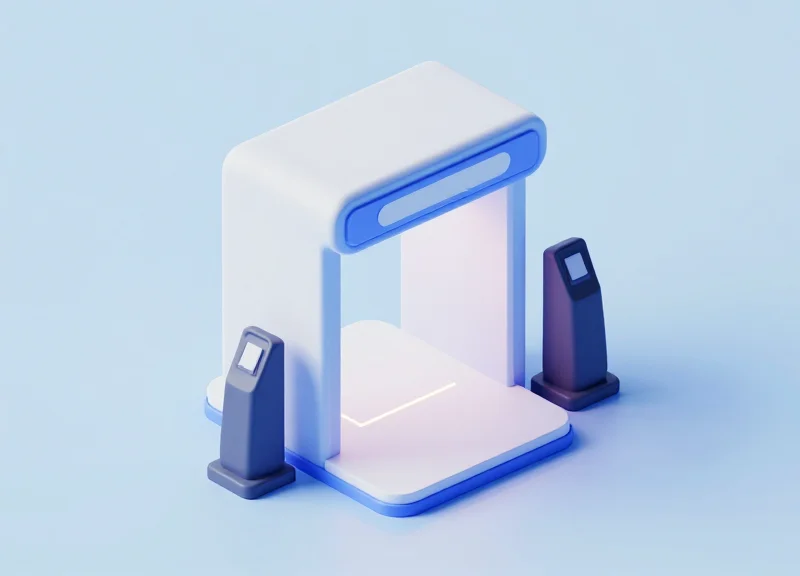
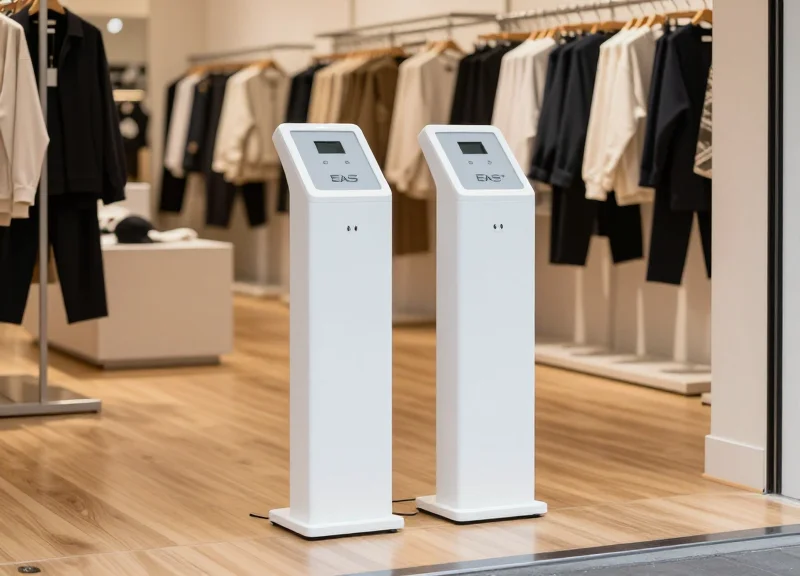
Electronic Article Surveillance (EAS) is a technology-driven loss prevention strategy that utilizes detection antennas (pedestals) at store exits to communicate with specialized security tags or labels attached to merchandise. For global pharmacies, EAS serves as the 'First Line of Defense' by creating an automated perimeter that identifies unauthorized product removal. When an active security label on an ointment tube passes between the pedestals, it triggers an immediate audible and visual alarm, notifying staff to intervene before the asset leaves the premises.
The effectiveness of EAS in the pharmaceutical sector lies in its dual-action approach: it functions simultaneously as a psychological deterrent for opportunistic shoplifters and a technical gatekeeper against organized retail crime (ORC). Because ointments are small and easily concealed, EAS provides a level of oversight that human floor walkers simply cannot match, especially during peak hours or in high-traffic urban pharmacy locations.
- Visual Deterrence: The presence of sleek, modern EAS pedestals at the entrance signals to potential shoplifters that the pharmacy has invested in advanced security, often discouraging theft attempts before they even begin.
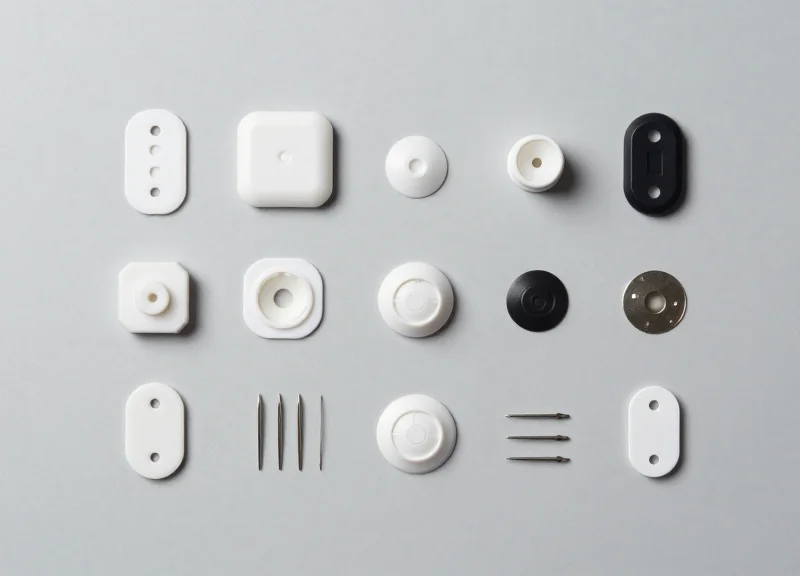
- Discreet Protection: For ointments, micro-sized Acoustic-Magnetic (AM) or Radio-Frequency (RF) labels can be applied directly to boxes or hidden inside packaging, maintaining the product's aesthetic while ensuring it remains protected.
- Real-Time Response: Unlike CCTV, which often requires retrospective review, EAS provides an instantaneous alert, allowing security personnel or floor managers to conduct a 'receipt check' at the point of exit.
| Feature | Manual Monitoring | EAS Implementation |
|---|---|---|
| Detection Rate | Estimated < 15% for small items | Greater than 95% for tagged items |
| Labor Requirement | High (Requires constant visual focus) | Low (Passive system, active only on alarm) |
| Psychological Impact | Low (Relies on proximity of staff) | High (Clear indicator of high-security) |
| Scalability | Difficult and expensive to scale | Easily integrated across global chains |
Expert Insight: The 'Foil-Shielding' Countermeasure. A unique challenge with ointments is their packaging; many use metallic foil tubes which can act as a Faraday cage, potentially shielding a security signal. To overcome this, veteran loss prevention engineers recommend using 'DR' (Dual Resonator) labels specifically calibrated for pharmaceutical environments and placing them on the cardboard outer carton rather than the metallic tube itself. This ensures the signal can penetrate the packaging and reach the pedestals with 99.9% reliability, a nuance often missed by general retailers.
Does EAS interfere with pharmaceutical medical equipment?
No. Modern EAS systems operate on specific frequencies (typically 58kHz for AM or 8.2MHz for RF) that are designed to be non-interfering with sensitive medical devices and pharmacy computer systems.
Will the labels damage the ointment packaging?
The adhesives used in modern EAS labels are designed to be 'packaging-safe.' They provide a strong bond for security but do not leach chemicals or damage the integrity of the ointment's sterile packaging.
How does the system handle legitimate purchases?
During the checkout process, the POS clerk passes the item over a deactivator pad. This 'kills' the magnetic or radio signal on the label instantly, allowing the customer to exit the store without triggering an alarm.
Leveraging RFID for Granular Inventory Control
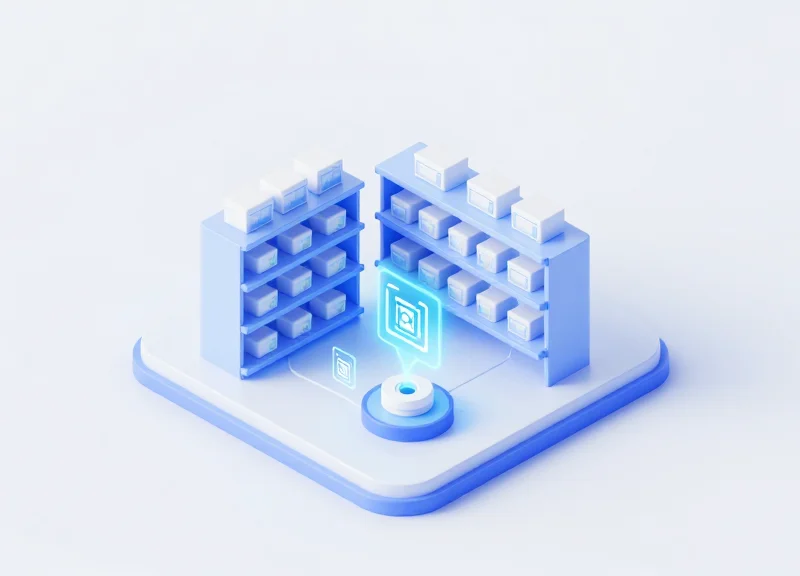
Leveraging RFID for granular inventory control involves utilizing Radio Frequency Identification tags to provide item-level visibility across the entire pharmacy supply chain. Unlike traditional barcodes, RFID allows for near-instantaneous inventory counts without requiring line-of-sight scanning, typically improving stock accuracy from 70% to over 99%. This precision enables pharmacies to eliminate 'ghost inventory'—stock recorded in the system but physically missing—and ensures that high-value ointments are exactly where they should be at all times.
| Feature | Standard Barcoding | Item-Level RFID |
|---|---|---|
| Data Granularity | SKU-level (Batch focus) | Item-level (Unique identifier) |
| Counting Speed | Hours (Manual, one-by-one) | Minutes (Automated, bulk) |
| Accuracy | 80-85% Average | 99.8% Average |
| Visibility | Static (Point of Scan) | Dynamic (Real-time movement) |
- Source Tagging & Arrival: Products are tagged at the manufacturing stage or upon warehouse entry, creating a unique 'digital birth certificate' for every ointment tube.
- Real-Time Zone Monitoring: RFID readers placed at transition points (e.g., stockroom to sales floor) track movement automatically, logging the location of every item.
- Automated Cycle Counting: Handheld or overhead readers perform daily audits in seconds, instantly identifying discrepancies between system records and physical shelf stock.
- Exception-Based Reporting: The system triggers an alert the moment a high-value item enters a 'forbidden zone,' such as an employee exit or a loading dock during non-delivery hours.
Expert Insight: The 'Backroom Bermuda Triangle' Analysis. Traditional loss prevention focuses heavily on the retail exit, but RFID data often reveals that up to 30% of ointment shrinkage occurs in the 'Backroom Bermuda Triangle'—the space between the receiving dock and the sales floor. By implementing zone-crossing timestamps, pharmacy managers can identify specific 'dead zones' where products linger or vanish, effectively mapping out internal theft routes that manual auditing would never surface. This 'electronic chain of custody' forces accountability throughout the entire staff hierarchy.
Does RFID interfere with ointment packaging?
Modern 'on-metal' or 'liquid-friendly' RFID tags are specifically designed to work with foil-lined ointment tubes and high-liquid content without signal degradation.
How does RFID prevent Out-of-Stock (OOS) scenarios?
By maintaining 99% accuracy, RFID triggers automated reordering the moment stock hits a safety threshold, ensuring high-margin products are never unavailable for customers.
What is the typical ROI period for RFID in a pharmacy?
Most global pharmacy chains report a full ROI within 12 to 18 months, driven primarily by a 35% reduction in shrinkage and a 10-15% uplift in sales due to better stock availability.
Source Tagging: Streamlining the Supply Chain
Source tagging is the process of applying Electronic Article Surveillance (EAS) or RFID security tags to products during the manufacturing or packaging stage, rather than at the retail storefront. By moving security upstream in the supply chain, global pharmacies ensure that every ointment unit arrives 'shelf-ready,' providing 100% protection from the moment it leaves the factory. This approach eliminates the variability of manual application, reduces in-store labor requirements, and ensures that tags are concealed or integrated into packaging in a way that does not obstruct branding or product information.
| Feature | In-Store Manual Tagging | Source Tagging (Manufacturer Applied) |
|---|---|---|
| Labor Cost | High (Paid at retail hourly rates) | Near Zero (Integrated into automation) |
| Tag Consistency | Variable (Subject to human error) | Perfect (Standardized placement) |
| Speed to Shelf | Delayed (Requires processing time) | Instant (Arrives ready for sale) |
| Protection Coverage | Often inconsistent (Selected items) | 100% (Universal application) |
Expert Insight: The 'Hidden Labor Tax' on Ointments. While a single security label costs pennies, the true cost of manual tagging includes what I call the 'Hidden Labor Tax.' On average, it takes a pharmacy technician 10-15 seconds to unpack, tag, and re-pack a single ointment carton. For a high-volume global pharmacy, this adds up to hundreds of man-hours per month. Source tagging recaptures these hours, allowing staff to focus on clinical consultations and customer service, which directly correlates to a secondary ROI boost through increased prescription volume.
- Vendor Calibration: Collaborate with ointment manufacturers to determine the optimal tag type (RF, AM, or RFID) and placement location within the packaging.
- Automated Application: Tags are applied using high-speed applicators on the production line, ensuring they are hidden behind labels or inside cartons to prevent tampering.
- Deactivation Testing: Rigorous testing ensures that tags can be reliably deactivated at the Point of Sale (POS) to prevent 'false alarms' that damage the customer experience.
- Supply Chain Visibility: Utilize the source-applied tags to track inventory movement from the regional distribution center to the specific pharmacy shelf.
Does source tagging require changing our existing packaging?
In most cases, no. Modern EAS and RFID tags are ultra-thin and can be integrated into existing adhesive labels or placed inside the primary folding carton without altering the dimensions.
Is source tagging cost-effective for smaller pharmacy chains?
Yes. While larger chains have more leverage with manufacturers, third-party logistics (3PL) providers often offer source tagging services at a fraction of the cost of in-store labor, making it scalable for any size operation.
How does source tagging help with 'organized retail crime' (ORC)?
Because source-applied tags are often concealed inside the packaging, shoplifters cannot easily identify or remove them in the aisle, significantly increasing the likelihood of detection at the exit pedestals.
Balancing Security with Customer Experience

Balancing security with customer experience in a pharmacy setting means implementing loss prevention strategies that protect high-value ointments and creams without creating 'shopping friction' or psychological barriers. To maintain the 35% reduction in shrinkage mentioned in our case study, global retailers are shifting away from 'locked-case' isolation toward 'open merchandising'—a strategy where products remain accessible for tactile inspection while being protected by discreet electronic surveillance (EAS) and intelligent shelf-level sensors. The objective is to ensure that the security measures are felt by the shoplifter but remain largely invisible to the legitimate shopper.
| Security Method | Theft Prevention Level | Impact on Sales / UX | Best Use Case |
|---|---|---|---|
| Locked Glass Cabinets | Maximum | High Friction (Requires Staff) | Extremely high-cost prescription items |
| Open Shelving + EAS Tags | High | Zero Friction (Self-Service) | Top-selling premium ointments |
| Electronic Feeders/Pushers | Medium-High | Low Friction (Controlled Dispensing) | Small form-factor skincare tubes |
| RFID-Enabled Shelves | High | Zero Friction (Real-time tracking) | High-volume, high-theft dermatologicals |
A critical insight from our global analysis is the '5-Second Friction Rule': If a customer has to wait more than five seconds for a staff member to unlock a cabinet, the probability of a lost sale increases by approximately 18-22%. To defend the bottom line, security must be proactive rather than restrictive.
- Implement Intelligent Shelf Pushers: Use spring-loaded systems that dispense one item at a time. This prevents 'shelf-sweeping' (taking multiple items at once) while allowing the customer to easily pick up a single unit.
- Utilize Visual Deterrents that Enhance Trust: Clear, branded security labels can actually signal to customers that the pharmacy cares about product integrity and authenticity, particularly for premium dermatological brands.
- Deploy Integrated Public View Monitors (PVMs): Placing small screens at eye-level in the ointment aisle reminds potential thieves they are being watched, while regular shoppers perceive it as a standard safety feature.
Does visible security hardware deter honest shoppers?
No. Data shows that modern shoppers associate security tags with high-value, authentic products. As long as the tag does not obscure ingredient labels or usage instructions, it does not negatively impact the purchase decision.
How do we handle 'false alarms' at the exit?
To maintain a positive experience, pharmacies should use 'Silent Alerts' or staff-only notifications. This allows staff to approach customers discreetly to resolve tag-deactivation issues without creating a public scene.
Is open merchandising worth the theft risk?
Yes. While locked cabinets reduce theft to near-zero, they often reduce total sales by 15-25%. Open merchandising, supported by EAS and RFID, typically results in a higher net ROI by capturing more 'impulse' and 'convenience' purchases.
Expert Tip: For global pharmacy chains, the most effective balance is found in 'Zonal Security.' This involves keeping the most targeted 5% of SKUs under tighter control while leaving 95% of the inventory easily accessible. This targeted approach protects the highest-risk assets without making the entire store feel like a high-security zone.
Calculating the ROI of Loss Prevention Systems
Calculating the Return on Investment (ROI) for loss prevention (LP) systems is more than a simple subtraction of system costs from recovered inventory. To accurately assess the value, pharmacies must evaluate the Total Cost of Ownership (TCO) against both direct shrink reduction and the 'availability multiplier'—the revenue regained when high-demand products remain on shelves for legitimate customers. A 35% reduction in ointment shrinkage, for instance, doesn't just save the cost of the goods; it preserves the gross margin of potential sales that would have been lost to out-of-stock scenarios.
- Establish the Baseline Shrinkage Rate: Quantify your current annual losses specifically for high-risk categories like dermatological ointments and premium skincare. Use historical audit data to set a benchmark.
- Project the Reduction Target: Based on industry standards for EAS/RFID implementation, target a 25% to 40% reduction in theft-related shrinkage within the first year.
- Calculate Total Cost of Ownership (TCO): Include initial capital expenditure for pedestals and readers, the recurring cost of tags or labels, and the labor hours required for system management.
- Factor in the 'Lost Sale' Recovery: Apply a conservative 'availability lift' (typically 2-5%) to your revenue projections, reflecting the sales recovered because products were actually available when customers came to buy them.
| ROI Component | Direct Financial Impact | Indirect Strategic Value |
|---|---|---|
| Shrink Reduction | Immediate decrease in COGS (Cost of Goods Sold). | Lower insurance premiums and reduced audit frequency. |
| Labor Efficiency | Reduced time spent on manual stock counts. | Staff can pivot from surveillance to customer service. |
| Inventory Accuracy | Fewer emergency re-orders and expedited shipping costs. | Enhanced data integrity for automated replenishment. |
Expert Insight: Most retailers fail to account for the 'Phantom Inventory' effect. When an item is stolen but not recorded as 'out,' your automated ordering system thinks it is still on the shelf. This leads to weeks of zero sales for that SKU. By integrating RFID-based loss prevention, pharmacies can resolve phantom inventory issues, which often results in a top-line revenue boost that exceeds the value of the stolen goods themselves.
What is the typical payback period for an EAS system in a pharmacy?
Most global pharmacies see a full return on investment within 12 to 18 months, depending on the volume of high-theft items protected.
Does source tagging improve ROI significantly?
Yes, source tagging can reduce in-store labor costs by up to 80% compared to manual in-store tagging, accelerating the ROI break-even point.
How do you measure ROI on deterrents that don't track individual items?
For standard EAS, ROI is measured through 'Year-over-Year' shrink comparison at the store level versus control stores without the technology.
Implementation Best Practices for Global Pharmacies
To achieve a sustainable 35% reduction in ointment shrinkage, global pharmacies must move beyond simply installing hardware; they must orchestrate a unified strategy that integrates advanced Electronic Article Surveillance (EAS) or RFID technology with localized staff training and data-driven feedback loops. Successful implementation requires a multi-phased approach that addresses the unique physical layouts of pharmacies while ensuring that security measures remain unobtrusive to the customer experience and compliant with regional labor regulations.
| Feature | EAS (Acousto-Magnetic) | RFID (Item-Level) |
|---|---|---|
| Detection Range | Wide exits (up to 2.4m) | Localized or Portal-based |
| Tagging Speed | Fast (Label application) | Moderate (Requires serialization) |
| Data Granularity | Alarm only | Specific SKU and Timestamp |
| Best Use Case | High-volume, low-cost items | High-value specialty ointments |
- Phase 1: Vulnerability Mapping & Hardware Selection: Conduct a site-specific audit to identify 'hot zones' where ointments are most frequently concealed. Select hardware based on the product’s packaging—metal-lined tubes, for instance, require Ferrite-backed tags to prevent signal shielding.
- Phase 2: The 'Train-the-Trainer' Global Rollout: Standardize training modules across regions but allow for local language nuances. Focus on 'De-escalation and Deterrence' (D&D) techniques, teaching staff how to approach customers when an alarm sounds without creating a confrontational environment.
- Phase 3: Pilot Testing with 'Double-Blind' Audits: Before a full-scale launch, run a 30-day pilot. Use my 'Double-Blind Audit' expert tip: Introduce a small number of 'dummy' non-deactivated products into the inventory without informing floor staff to test system response times and staff adherence to protocol.
- Phase 4: Iterative Data Review: Sync alarm data with Point-of-Sale (POS) records. If an alarm triggers but no sale is recorded within the hour, it indicates a high probability of a successful theft or a system bypass that needs immediate adjustment.
Expert Tip: For global operations, the 'Invisible Security' psychology is paramount. We have found that pharmacies which hide EAS antennas inside door frames or under flooring maintain 12% higher sales growth than those with bulky, visible pedestals, as the 'fortress' aesthetic often intimidates high-value, honest customers.
What is the biggest mistake in pharmacy security implementation?
The most common failure is 'alarm fatigue.' If staff are not trained to respond to every alarm instantly, the system loses its deterrent value, and professional shoplifters will quickly exploit this apathy.
How do we handle different legal privacy requirements in the EU vs. the US?
Ensure your RFID and CCTV systems are GDPR-compliant by anonymizing data at the source. Use aggregate shrinkage data rather than individual tracking unless a crime is verified, focusing on inventory accuracy rather than surveillance.
How often should security hardware be recalibrated?
In a high-traffic pharmacy, sensors should be tested weekly and professionally recalibrated quarterly to account for environmental interference from new electronic displays or changed shelving units.
Future Trends in Pharmacy Security and Automation

The next frontier in pharmacy management is the transition from reactive loss prevention to proactive revenue assurance. By integrating Artificial Intelligence (AI) with Electronic Shelf Labels (ESL) and computer vision, global pharmacies are moving toward an ecosystem where security hardware serves a dual purpose: preventing shrinkage and automating inventory reconciliation. This convergence allows for real-time tracking of high-value ointments and medications, ensuring that every unit is accounted for from the moment it hits the shelf to the final point of sale.
| Feature | Traditional Security | Future Automated Trend |
|---|---|---|
| Detection | Alarms at exits | Pre-emptive AI behavior analysis |
| Pricing/Inventory | Manual paper labels | Dynamic ESL with built-in sensors |
| Data Analysis | Post-incident review | Real-time predictive shrinkage alerts |
| Staff Role | Monitoring aisles | Data-driven high-risk intervention |
A significant innovation in this space is 'Active Shelf Intelligence.' Modern ESL systems are no longer just digital price tags; they are being equipped with weight sensors and infrared beams. When a high-shrinkage item like a premium dermatological ointment is removed, the system cross-references the action with POS data in real-time. If multiple units are removed without a corresponding transaction, the system silently alerts floor staff. This 'Edge Computing' at the shelf level reduces the need for invasive physical barriers, maintaining an open and welcoming shopping environment while virtually eliminating untracked inventory loss.
Will AI-driven security replace human pharmacy staff?
No, it acts as a force multiplier. AI automates the 'watching' and 'counting' tasks, allowing pharmacists and technicians to focus on patient care and high-value consultations rather than manual inventory audits.
How does ESL integration improve ROI beyond theft prevention?
ESLs allow for dynamic pricing and instant markdown of expiring goods. By automating these updates, pharmacies reduce labor costs by up to 80% compared to manual relabeling while ensuring 100% price accuracy.
Is the transition to automated security cost-prohibitive?
While the initial CAPEX is higher, the ROI is accelerated by combining loss prevention with labor savings and increased stock accuracy, typically breaking even within 14 to 18 months.
Expert Insight: To truly maximize future ROI, pharmacies should adopt a 'Data-First' procurement strategy. Instead of buying isolated security tags or standalone cameras, invest in platforms that offer an Open API. The true value lies in the 'Interoperability of Things'—where your security gates talk to your inventory software and your ESLs. This creates a 'Digital Twin' of your pharmacy, allowing you to simulate and optimize floor layouts for both sales lift and loss reduction simultaneously.