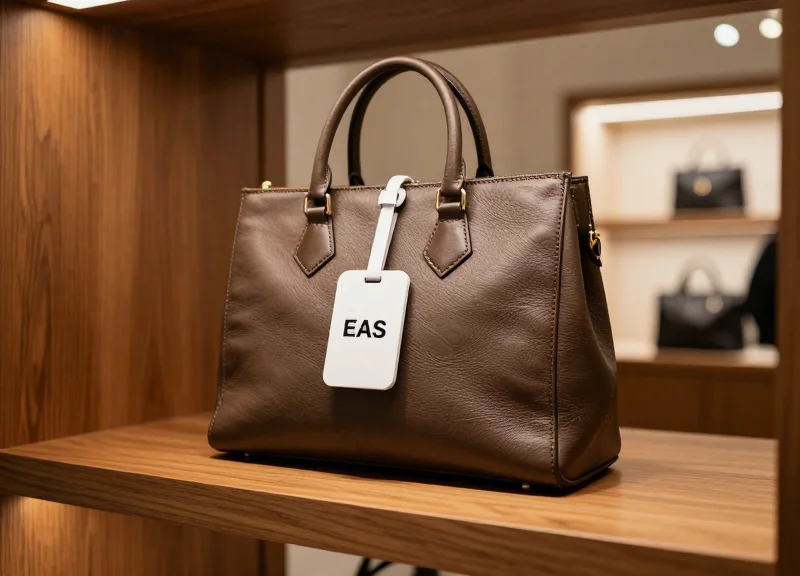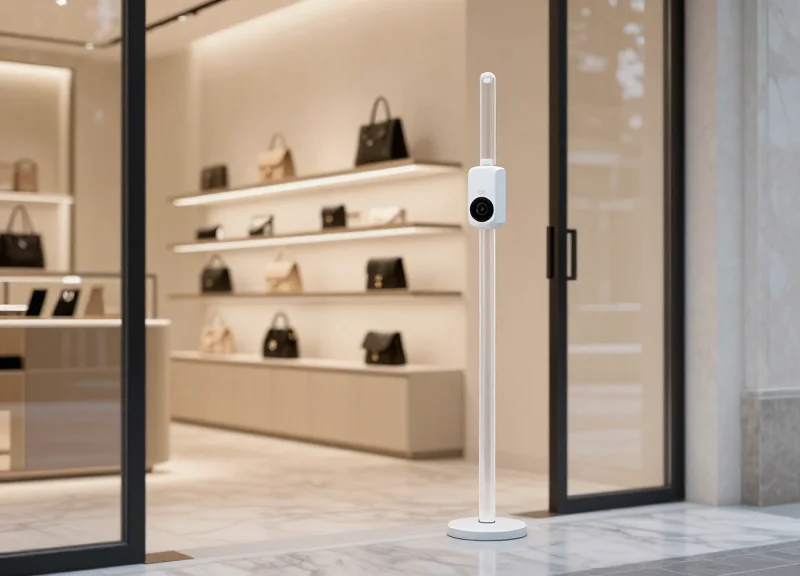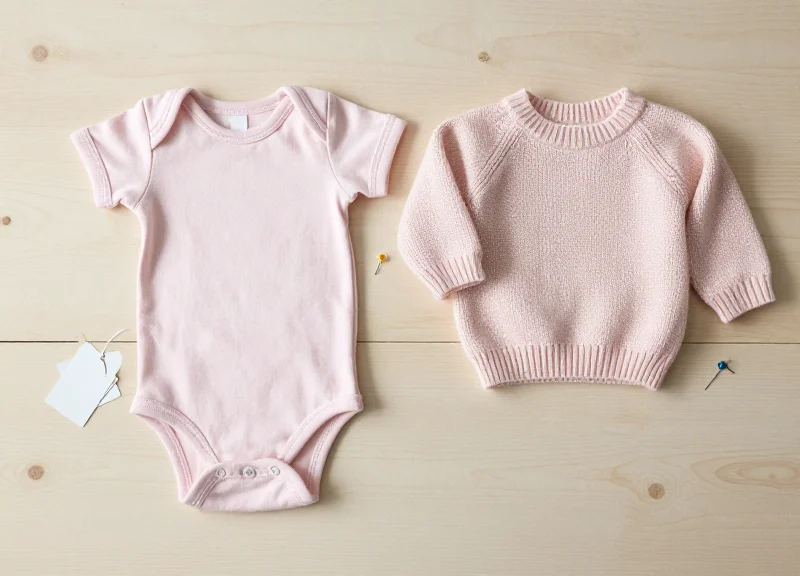
For high-end baby apparel retailers, the challenge is twofold: preventing inventory shrinkage while preserving the tactile integrity of ultra-soft, delicate fabrics. Standard security tags often leave permanent holes, snags, or rust marks, instantly devaluing premium organic cottons, silks, and cashmere. As retail loss prevention experts, we understand that the security solution must be as sophisticated as the product it protects. This guide explores professional strategies for implementing non-damaging pins and discreet tagging solutions that maintain your brand's luxury aesthetic while ensuring maximum security against theft.
The High Stakes of Protecting Premium Baby Fabrics

The high stakes of protecting premium baby fabrics stem from the unique vulnerability of luxury materials like organic Pima cotton, merino wool, and silk. Unlike standard adult apparel, high-end baby wear uses long-staple fibers and loose weaves to ensure breathability and softness against an infant's skin. Traditional heavy-duty Electronic Article Surveillance (EAS) pins are designed for denim or heavy blends; when applied to delicate baby garments, they create permanent punctures, fiber separation, and snags that turn high-value inventory into unsellable 'seconds' before it ever reaches a customer.
| Material Type | Common Vulnerability | Impact of Standard EAS Pins |
|---|---|---|
| Organic Pima Cotton | Ultra-fine long-staple fibers | Visible pinholes and 'runs' in the knit. |
| Cashmere & Merino | High-protein animal fibers | Fiber breakage and permanent indentations. |
| Silk & Satin Blends | High-sheen, low-friction weave | Catastrophic snagging and thread pulls. |
| Bamboo Viscose | High elasticity, low recovery | Stretching and garment distortion around the tag. |
Why is the financial impact of tagging damage so high?
In luxury retail, a single visible pinhole can render a $150 baby romper unsellable. While shoplifting (shrinkage) is a concern, 'internal shrinkage' caused by damage during the tagging process often results in a higher net loss for boutiques, as the cost of the damaged item is fully absorbed by the retailer.
How does tagging damage affect brand reputation?
Discerning parents purchasing premium apparel expect perfection. If a customer discovers a snag or hole caused by a security tag after purchase, it diminishes the perceived value of the brand and reduces the likelihood of repeat business, which is the lifeblood of boutique retail.
Expert Insight: The Damage-to-Theft Ratio (DTR). After two decades in Silicon Valley loss prevention, I’ve observed that high-end retailers often overlook the 'Damage-to-Theft Ratio.' If your security measures damage 5% of your inventory while only preventing a 2% theft rate, your loss prevention strategy is actually a loss accelerant. For premium baby apparel, the goal isn't just to stop theft, but to maintain the 'out-of-the-box' integrity of the textile.
Understanding the Anatomy of Non-Damaging Pins
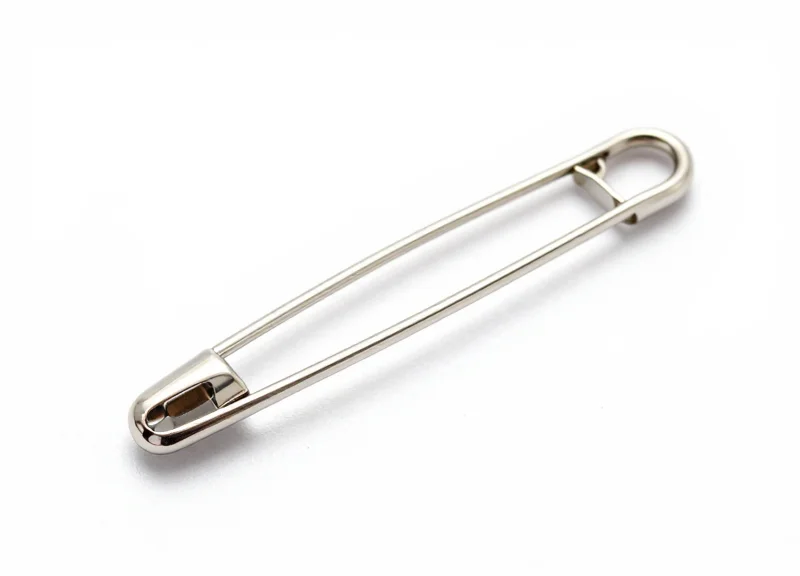
A non-damaging pin for premium baby apparel is a specialized security fastener engineered with an ultra-fine gauge—typically between 0.8mm and 1.2mm—and a high-polish finish. Unlike standard security pins that puncture and sever textile fibers, these precision-engineered tools utilize a 'displacement' mechanic, sliding between the delicate threads of high-count pima cotton, silk, or cashmere without causing permanent structural deformation or visible holes.
| Feature | Standard Security Pin | Fine-Gauge Precision Pin |
|---|---|---|
| Needle Diameter | 1.5mm - 2.0mm | 0.8mm - 1.2mm |
| Tip Geometry | Rough Chisel/Sharp | Conical Ball-Point |
| Shaft Coating | Nickel/Uncoated | High-Polish Chrome/Stainless |
| Fabric Impact | Fiber Tearing (Irreversible) | Fiber Displacement (Self-Healing) |
The core differentiator in non-damaging pins is the Surface Roughness Average (Ra). In premium baby wear, even a microscopic burr on a pin shaft can snag a single ply of yarn, leading to a 'pull' that ruins the garment's aesthetic. High-end pins undergo a multi-stage electro-polishing process to ensure the shaft is friction-neutral. This allows the pin to navigate the dense weave of a 600-thread-count romper without the friction-heat that often binds synthetic or organic fibers to the metal.
Expert Insight: The Taper-Ratio Metric. While most retailers focus on diameter, the most critical factor for delicate knits is the 'taper-ratio'—the length of the needle's transition from the point to the full-width shaft. A longer, more gradual taper (a 4:1 ratio) reduces the 'wedging force' exerted on the fabric, significantly lowering the risk of 'blown-out' holes in jersey-knit fabrics common in luxury infant lines.
Why does needle gauge matter more for baby clothes than adult fashion?
Infant apparel uses finer, shorter-staple fibers and lower-tension knits to maintain softness. A standard 1.5mm pin creates a hole that these soft fibers cannot 're-bridge,' leading to permanent damage.
Can I reuse fine-gauge pins indefinitely?
No. Because they are thinner, they are more susceptible to microscopic bending. Even a 1-degree bend increases the entry friction, which can eventually snag delicate fabrics. We recommend a tactile inspection every 20-30 cycles.
What is the best material for non-damaging pins?
304 or 316-grade stainless steel is the gold standard. It resists corrosion from humidity and skin oils, ensuring the shaft remains perfectly smooth over hundreds of uses.
Ink-Free Security: Safe Alternatives for Light-Colored Apparel
Ink-free security, often referred to as 'dry tagging,' utilizes Electronic Article Surveillance (EAS) or RFID technology without the inclusion of dye-filled vials. For premium baby apparel—which frequently features light palettes like ivory, cream, and pastel—this approach is the only way to eliminate the risk of ink leakage. Whether caused by professional shoplifter tampering or a manufacturing defect in the tag itself, an ink spill on delicate organic cotton or silk is often irreversible, leading to immediate inventory loss and potential chemical contamination of sensitive fabrics.
| Feature | Traditional Ink Tags | High-Deterrence Dry Tags |
|---|---|---|
| Damage Risk | High (Staining/Chemicals) | Negligible (Mechanical only) |
| Best Use Case | Low-cost denim/Streetwear | Luxury baby wear/Light colors |
| Technology | Benefit Denial (Dye) | Acousto-Magnetic (AM) or RF |
| Brand Perception | Aggressive/Industrial | Professional/High-end |
Transitioning to dry tagging doesn't mean sacrificing security. Modern AM (Acousto-Magnetic) and RF (Radio Frequency) tags provide the same level of gate-alarm triggers without the 'messy' threat. For retailers dealing in high-end children's boutiques, the visual deterrence comes from the presence of the hard tag shell itself, rather than the threat of a ruined garment. This shifts the focus from punishment to prevention, preserving the aesthetic integrity of the luxury shopping environment.
- Expert Tip: The 'Invisible' Protection Strategy: In the luxury sector, the most effective dry-tagging strategy is using clear-shelled EAS tags or RFID 'sew-in' labels. These provide the same 58kHz or 8.2MHz protection but are less visually jarring against soft baby fabrics, ensuring the customer focuses on the garment's quality rather than the security hardware.
- Why avoiding ink matters for 'Giftable' items: Baby clothes are frequently purchased as gifts. A garment that has even a faint chemical scent from a previous (cleaned) ink leak or a bulky ink tag attachment can diminish the premium unboxing experience that luxury brands strive to provide.
Are ink-free tags less effective at stopping professional shoplifters?
No. Modern EAS systems provide the same detection range and alarm reliability. Professional shoplifters are more deterred by the difficulty of removing a reinforced lock (like a SuperLock) than the presence of ink.
Can dry tags be used on high-thread-count organic cotton?
Absolutely, provided they are paired with the fine-gauge needles discussed in the previous section. The lack of ink makes them safer for the long-term storage of white fabrics which can yellow when exposed to certain dye vapors.
Do dry tags require different detachers?
Generally, no. Most dry tags are compatible with standard magnetic or mechanical detachers already used in retail environments, making the transition cost-effective.
Strategic Placement: Securing the Seam vs. the Surface
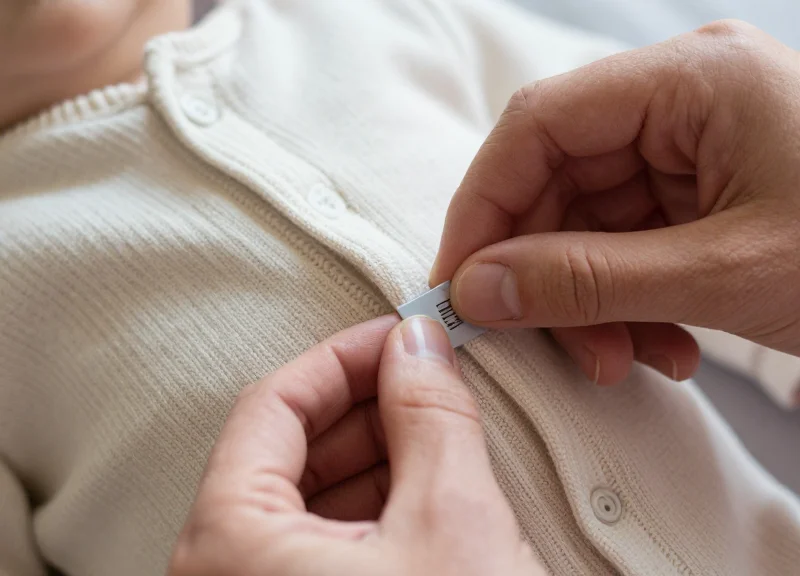
Strategic placement of security tags on premium baby apparel requires a 'seam-first' methodology, where pins are inserted exclusively into reinforced structural junctions rather than the primary fabric surface. This technique utilizes the extra layers of thread and fabric at the seam to distribute the physical weight of the EAS (Electronic Article Surveillance) tag. By avoiding the 'surface'—the expansive, single-layer areas of a garment—retailers can prevent 'fabric memory' and permanent puncture marks in high-thread-count textiles like pima cotton, silk, and fine cashmere.
| Feature | Seam Placement | Surface Placement |
|---|---|---|
| Load Distribution | High: Supported by multiple fabric layers | Low: Stress is concentrated on individual fibers |
| Visual Integrity | Invisible: Pin holes are hidden within the seam line | High Risk: Holes are visible on the garment face |
| Customer Experience | Optimal: Allows the shopper to feel the fabric texture | Poor: Tag obstructs the 'hand-feel' of the material |
| Structural Safety | Secure: Reinforced threads prevent tag 'pull-through' | Unsafe: Risk of snagging or 'ladders' in the knit |
One original expert insight for luxury baby wear is the concept of 'Tactile Zone Preservation.' In high-end retail, the emotional connection to a purchase often comes from the parent feeling the softness of the chest or shoulder area. By placing tags at the interior side-seam or the bottom hem, you keep the primary touch-points clear, allowing the quality of the fabric to sell itself without the physical interference of a heavy security device.
- Identify the Structural Anchor: Locate a double-stitched seam, such as a side seam or the junction of a sleeve and bodice, where the fabric is most dense.
- Align with the Grain: Insert the non-damaging pin parallel to the fabric's weave to avoid splitting fibers.
- Perform the Gravity Test: Hold the garment by the hanger to ensure the weight of the tag does not cause the fabric to sag or pull unevenly.
- Verify Concealment: Ensure the tag is discreetly placed so it does not distract from the garment's aesthetic appeal in the display.
Is it safe to tag through the brand or care label?
Yes, tagging through the care label is often the safest method for ultra-delicate items, provided the label is securely sewn into a seam and can support the tag's weight without tearing away.
Where should tags be placed on baby rompers?
The best location is usually the inner leg seam near the crotch. This area is reinforced for snaps and buttons, making it naturally more durable than the chest or back panels.
How do I prevent 'pinhole stretch' in bamboo fabrics?
Always use a fine-gauge, tapered needle and ensure the tag is not pinned too tightly against the fabric. A slight gap allows the fabric to move without being pinched.
Discreet RFID Integration for the Modern Boutique

Discreet RFID integration for modern boutiques involves embedding ultra-thin Radio Frequency Identification (RFID) inlays into garment labels or seams to enable 99.9% inventory accuracy without the use of bulky, plastic security hardware. For premium baby apparel, this technology allows retailers to track stock levels in real-time and prevent loss while ensuring the garment's aesthetic and hand-feel remain completely uncompromised for the consumer.
- Select the Right Inlay: Choose ultra-thin, flexible EPC Gen 2 RFID inlays specifically designed for apparel. These are slim enough to be sandwiched between layers of silk or organic cotton without creating a noticeable ridge.
- Choose an Integration Method: Decide between adhesive stickers applied to the reverse of the brand's hangtag or, for the most discreet option, 'source tagging' where the chip is sewn directly into the care label during manufacturing.
- Encode and Map: Link each unique RFID Electronic Product Code (EPC) to your boutique's Inventory Management System (IMS) to ensure that specific SKUs, such as 'Cashmere Romper - 0-3M - Cream', are tracked accurately.
- Audit the Unboxing Experience: Before a full rollout, perform a 'tactile audit' to ensure that the tag is not abrasive against a baby's sensitive skin and does not distract from the visual presentation of the gift box.
| Tag Type | Discretion Level | Ease of Implementation | Best Use Case |
|---|---|---|---|
| RFID Hangtag | Medium | High | Seasonal collections with high turnover. |
| Sewn-in Fabric Label | Very High | Medium | Signature luxury staples and heirloom pieces. |
| Adhesive 'Eco' Sticker | Low | Very High | Temporary sales or lower-margin accessories. |
Expert Insight: The 'Ghost Label' Strategy. In my twenty years of observing retail tech, the most successful boutiques utilize what I call the 'Ghost Label' strategy. Instead of adding a new security tag, work with your manufacturer to create a hollow care label. By sliding the RFID inlay inside the existing mandatory compliance labeling, you eliminate extra bulk and ensure that the security feature is literally invisible to the shopper, preserving the emotional connection to the product during the unboxing process.
Can RFID tags survive frequent laundering of baby clothes?
Most RFID inlays used in boutiques are 'passive' and designed for retail tracking, not consumer lifecycle tracking. While washable RFID tags exist for industrial laundry, standard retail tags are usually removed by the parent or should be placed on a removable hangtag if the garment is intended for frequent washing.
Will RFID tags interfere with store security gates?
Yes, when integrated with an overhead RFID reader or floor-based EAS system, these tags provide a seamless security alert. Unlike traditional hard tags, they do not require a detacher at the POS, allowing for a faster, 'concierge-style' checkout experience.
Is the RFID signal blocked by metallic gift wrapping?
Yes, some metallic-based foils or heavy silver tins can shield the signal (Faraday Cage effect). For premium gift-wrapping, we recommend high-quality paper-based ribbons and boxes to ensure the inventory can still be scanned through the packaging.
Lanyards and Adjustable Loops for Delicate Accessories

Lanyards and adjustable loops represent the premier 'zero-impact' security solution for high-end baby accessories where even the finest gauge pin could cause irreparable damage. These non-invasive tethers work by looping through existing structural openings—such as shoe eyelets, buttonholes, or the natural gaps in loose-knit blankets—to anchor an EAS hard tag to the item without ever penetrating the textile fibers. For premium retailers, this method preserves the structural integrity of delicate silks and hand-knitted wools while maintaining a high level of theft deterrence.
| Accessory Type | Attachment Method | Security Benefit | Fabric Preservation |
|---|---|---|---|
| Pre-walker Shoes | Eyelet Lanyard | Prevents tag removal via laces | Zero puncture marks on leather/satin |
| Knitted Headbands | Adjustable Soft Loop | Snug fit prevents slipping | Avoids snagging delicate knit loops |
| Cashmere Blankets | Edge-Wrap Lanyard | High visual deterrence | Distributes weight to prevent sagging |
| Silk Christening Gowns | Hanger-to-Garment Loop | Secures item to luxury hanger | Prevents pin-holes in high-sheen fabric |
Expert Insight: The Gravity-Stress Factor in Knitwear. When using lanyards on heavy premium knits, many retailers overlook 'mechanical stretching.' A standard hard tag hanging from a long lanyard can create a localized 'sag' point in the fabric over time. To counter this, we recommend using steel-core nylon-coated lanyards no longer than 3 inches. This minimizes the pendulum effect during customer handling and ensures the weight of the security tag is supported by the garment's internal structure rather than a single thread.
Can lanyards be easily cut by shoplifters?
Premium lanyards feature a multi-strand aircraft-grade steel cable core that is resistant to standard pocket scissors, requiring specialized wire cutters to bypass.
Do adjustable loops leave marks on soft leathers?
As long as the loop is nylon-coated or made of soft-touch plastic, they will not leave pressure indentations on baby shoes or leather accessories.
How do I choose the right lanyard length?
Shorter is generally better for baby apparel. A 2-inch to 4-inch lanyard provides enough flexibility for the customer to inspect the item without allowing enough slack for the tag to be hidden inside the garment.
- Identify a Natural Aperture: Find a buttonhole, a lace eyelet, or a weave gap in the accessory that can accommodate the lanyard loop.
- Thread the Lanyard: Pass the thin end of the lanyard through the aperture and then through the loop of the EAS hard tag.
- Lock the Pin-Gate: Insert the metal pin of the lanyard into the EAS tag clutch until it clicks, ensuring the connection is flush and secure.
The Training Factor: Staff Techniques for Safe Application
To implement non-damaging tagging successfully, retailers must establish a Standard Operating Procedure (SOP) that prioritizes fabric integrity over processing speed. Staff training should focus on the 'tactile feedback method,' where associates are taught to feel the resistance of the weave before fully depressing a security pin. By standardizing the placement of tags on reinforced seams and utilizing precision tools, boutiques can reduce accidental inventory damage by up to 95% while maintaining high levels of loss prevention.
- The Fiber Assessment: Before any tag is applied, staff must identify if the garment is a knit, weave, or specialty lace. For ultra-fine silks or loose knits, use only lanyards or 'feather-weight' magnetic tags.
- The 'Rotate and Slide' Technique: Never force a pin directly through a fiber. Associates should gently rotate the pin between their fingers while applying light pressure to find the natural gaps in the textile weave.
- Seam-Centric Placement: Always prioritize the intersection of two seams (such as the underarm or side-waist) where the added fabric density provides structural support for the weight of the security tag.
- Mandatory De-tagging Audit: The point-of-sale is the highest risk area for damage. Staff must be trained to use the detacher with the garment laying flat to avoid 'leveraging' the pin against the fabric during removal.
| Common Staff Error | Recommended Corrective Technique | Risk to Premium Apparel |
|---|---|---|
| Forcing pins through tight weaves | Rotational insertion to find fiber gaps | Permanent thread breakage/snags |
| Tagging the center of chest panels | Hidden side-seam or care-label tagging | Visible 'pin-hole' bruising on display |
| Pulling the tag to test security | Visual verification of the locking click | Fabric stretching and distortion |
Expert Tip: Implement a 'Micro-Audit' system where a floor manager inspects 5% of tagged inventory every Monday morning. This allows you to identify 'heavy-handed' tagging early. We have found that over-tightening the pin-to-clutch ratio is the leading cause of 'dimpling' in organic cotton; a 1mm gap between the tag and the fabric is actually safer for the garment's lifespan than a flush fit.
How do we maintain safety during high-volume seasonal rushes?
Designate a 'Lead Tagger' for each shift. Instead of everyone tagging, one person trained specifically in delicate handling manages the premium inventory while others focus on high-volume, durable goods.
What should a staff member do if they accidentally snag a garment?
Establish a 'no-fault' reporting policy. Encourage staff to immediately flag damaged items for repair or markdown rather than placing them on the floor where they damage the brand's premium reputation.
Should we use training videos or hands-on practice?
Hands-on practice is essential. Use 'tester' fabric scraps of similar material (Pima cotton, cashmere blends) to allow staff to feel the difference between a successful insertion and a forced one before touching live inventory.
Balancing Security Aesthetics with Luxury Brand Identity

Balancing security aesthetics with luxury brand identity is the practice of integrating loss prevention hardware into a high-end retail environment so that it serves as a 'silent guardian' rather than a visual distraction. In premium baby apparel, where soft pastels and organic textures dominate, this requires moving away from bulky, high-contrast plastic tags in favor of minimalist designs, tonal color matching, and matte finishes that complement the brand’s sophisticated visual language without sacrificing the psychological deterrence needed to prevent shrink.
| Aesthetic Element | Standard Retail Approach | Luxury Boutique Approach | Impact on Brand Perception |
|---|---|---|---|
| Color Palette | High-contrast (Black/White) | Tonal (Champagne, Pearl, Clear) | Maintains color story integrity |
| Form Factor | Large 'UFO' or square tags | Micro-pencil or slim-line | Reduces visual 'clutter' on small garments |
| Texture/Finish | Glossy, reflective plastic | Satin or soft-touch matte | Aligns with high-quality fabric feel |
| Branding | Manufacturer logos | Neutral or custom embossed | Reinforces exclusivity over utility |
- The Principle of 'Visual Weight': Select tags that have low visual weight. In luxury baby wear, a heavy black tag on a 100% cashmere onesie draws the eye away from the craftsmanship. Opt for micro-tags that weigh less than 5 grams to prevent fabric sagging and visual disruption.
- Chromatic Camouflage: Instead of standard grey, utilize semi-translucent or 'ghost' shells. These allow the color of the garment to partially bleed through the tag, making the security device appear as a natural extension of the clothing rather than an external attachment.
- Rounded Geometry: Avoid sharp angles. Luxury branding often leans on soft, rounded silhouettes. Security tags with organic, pebble-like shapes not only look more 'premium' but are also safer for customers handling delicate items near infants.
Expert Tip: The 'Shadow-Line' Placement Strategy. To truly disappear, the security tag should be placed along the 'shadow-line' of the display—usually the side most distal to the primary store lighting. By positioning the hardware where natural shadows fall, you reduce the specular highlight (the shiny reflection) off the plastic, making the tag 40% less noticeable to the casual observer while remaining fully functional for EAS gates.
Does discreet tagging reduce the theft-deterrent effect?
Not necessarily. Modern shoplifters are deterred by the presence of a system, not the size of the tag. A sleek, well-integrated tag suggests a sophisticated, high-tech security environment, which can be more intimidating than 'old-school' bulky hardware.
Should I customize security tags with my store logo?
For ultra-luxury brands, yes. Custom-molded tags in brand colors create a cohesive 'ecosystem.' If a customer sees a tag that matches the hangers and the shopping bags, the security measure feels like a curated brand choice rather than a lack of trust.
What is the best finish for high-end lighting?
Matte finishes are superior for luxury boutiques using track lighting or spotlights. Glossy tags create 'hot spots' of reflected light that distract from the garment's texture, whereas matte tags absorb light and blend into the background.
Future-Proofing Your Loss Prevention Strategy
Future-proofing your loss prevention (LP) strategy for premium baby apparel requires a shift from reactive security to proactive asset preservation, integrating high-frequency RFID with mechanical hardware that eliminates fabric perforation. This approach ensures that as theft tactics evolve, your security infrastructure remains invisible to the customer yet impenetrable to shoplifters, ultimately protecting both your margins and your brand’s tactile promise. By investing in modular, non-damaging systems now, retailers can avoid the recurring costs of inventory write-offs caused by antiquated, aggressive security pins.
| Metric | Standard Hard Tags | Premium Delicate-Wear Hardware |
|---|---|---|
| Initial Unit Cost | $0.15 - $0.30 | $0.45 - $0.85 |
| Fabric Damage Rate | 3% - 5% per cycle | < 0.1% per cycle |
| Detection Accuracy | Moderate (EAS Only) | High (EAS + RFID Hybrid) |
| Brand Perception | Obtrusive/Industrial | Discreet/Luxury |
To truly evaluate the ROI of specialized hardware, retailers must look at the 'Damage-Adjusted Loss Prevention' (DALP) metric. Traditional pins often 'save' an item from theft only to render it unsellable or discount-heavy due to visible pinholes in delicate pima cotton or silk blends. A future-proofed strategy accounts for the total lifecycle of the garment, recognizing that a $0.50 increase in tag cost can prevent a $60.00 loss in gross margin due to fabric fatigue.
- Conduct a Vulnerability Audit: Analyze your last 12 months of shrink data, specifically categorizing losses between 'external theft' and 'damaged-by-security' write-offs.
- Transition to Micro-Pin Technology: Replace standard 1.2mm pins with 0.8mm micro-pins or smooth-shaft lanyards to ensure hardware remains compatible with increasingly fine yarn counts.
- Implement Cloud-Based Inventory Tracking: Link your non-damaging RFID tags to a real-time analytics platform to identify theft 'hot zones' in the store without increasing physical security presence.
How often should I update my tagging hardware?
Retailers should conduct a hardware review every 24 months. As fabric technology evolves (e.g., eco-friendly bamboo or recycled synthetics), your pins must be tested against these new fiber densities to ensure they don't cause snags.
Is RFID enough to stop professional shoplifting?
RFID is excellent for inventory accuracy, but for high-theft premium baby wear, a hybrid approach—combining a physical non-damaging hard tag with an RFID chip—provides the best deterrent against organized retail crime (ORC).
Will future security tags be smaller?
Yes, the trend is moving toward 'frictionless' security where the sensor is embedded in the care label or the brand's heat-transfer logo, eliminating the need for pins entirely.