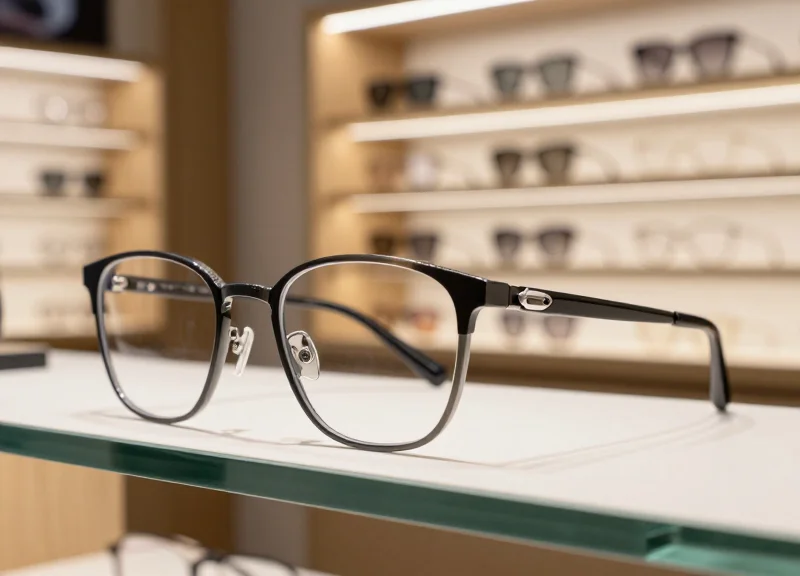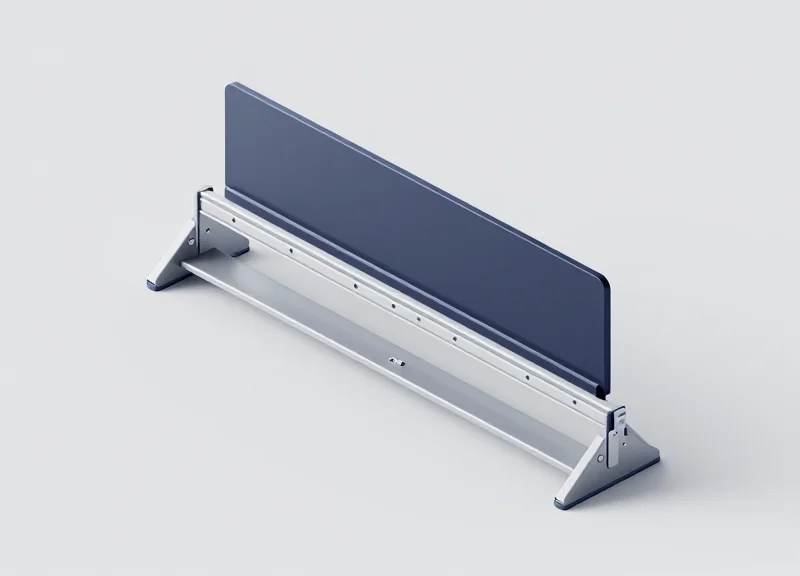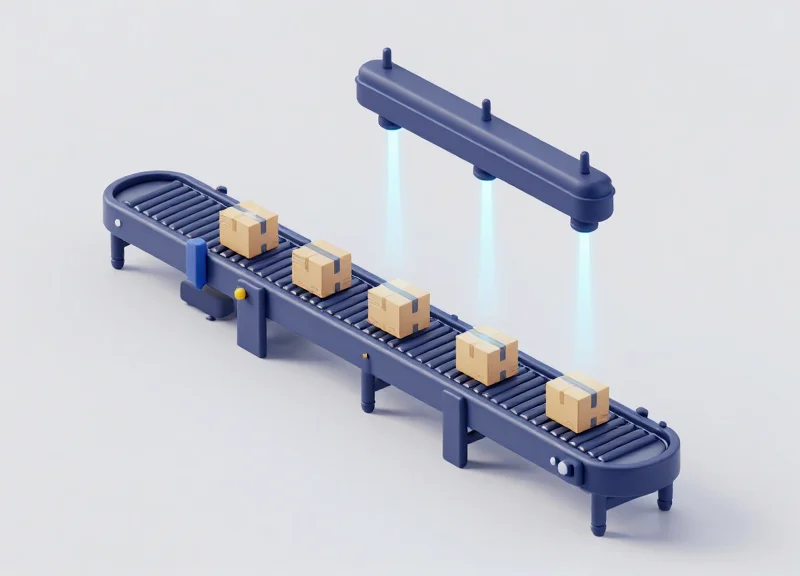
As we approach 2026, the definition of retail security is shifting from simple theft prevention to a comprehensive model of asset intelligence. For high-end boutiques, the challenge is uniquely complex: how to maintain an open, luxurious shopping environment while protecting high-value merchandise from increasingly organized retail crime. Traditional EAS systems provide protection but lack data, while pure RFID offers data but can be less reliable for real-time deterrence in high-traffic entryways. The solution lies in the Hybrid RFID+EAS system—a powerful fusion that delivers both invisible security and 99% inventory accuracy. This guide provides a strategic roadmap for boutique owners to choose a system that safeguards their brand's future.
The Evolution of Retail Security: Why 'Hybrid' is the 2026 Standard

In 2026, the retail security standard for high-end boutiques has moved beyond simple alarm gates; it is defined by Hybrid RFID+EAS systems that fuse loss prevention with real-time inventory intelligence. This dual-technology approach uses traditional Electronic Article Surveillance (EAS) to deter theft and Radio Frequency Identification (RFID) to provide 99.9% stock accuracy, allowing luxury brands to protect their margins while delivering a seamless, 'invisible' customer experience. The hybrid standard acknowledges that in the modern luxury market, a 'lost' item is not just a theft—it is a data failure that ripples through the entire omnichannel supply chain.
| Feature | Legacy EAS | Pure RFID | 2026 Hybrid Standard |
|---|---|---|---|
| Primary Function | Theft Deterrence | Inventory Tracking | Loss Prevention + Data Analytics |
| Inventory Accuracy | Low (Manual counts) | High (95%+) | Ultra-High (99.9% Real-time) |
| Theft Detection | Excellent (AM/RF) | Variable (Read range issues) | Superior (Dual-layer triggers) |
| Boutique Aesthetics | Bulky Pedestals | Hidden Antennas | Invisible/Designer Integrated |
The shift toward hybrid systems is driven by the collapse of the barrier between physical and digital retail. High-end boutiques in 2026 operate as mini-fulfillment centers for global online orders. If a luxury handbag is stolen and the inventory system isn't updated instantly (a capability only provided by RFID), the boutique risks selling a 'ghost item' to an online VIP client, resulting in a catastrophic brand experience. Hybrid systems solve this by alerting staff to the theft via EAS and identifying the specific serial number via RFID, instantly removing it from digital availability.
Why is standalone EAS insufficient for 2026?
Legacy EAS provides no data on what was stolen, leaving inventory logs inaccurate until the next manual cycle, which is unacceptable for modern omnichannel boutiques.
Is RFID-only security reliable?
Pure RFID can suffer from signal 'shielding' and 'dead zones' in environments with high metal or liquid content; EAS provides the necessary high-reliability fail-safe for high-value assets.
How does hybrid tech improve ROI?
By 2026, the ROI is realized through a 25% reduction in stock-outs and a massive decrease in 'shrink'—the combination of theft and administrative errors.
Expert Insight: The 'Invisible Shielding' Strategy. One original perspective for 2026 is that hybrid systems now serve as a psychological deterrent for 'sweethearting' (internal theft). By cross-referencing Point of Sale (POS) logs with RFID-tagged gate exits in real-time, managers can identify exactly which employee was on the floor when a high-value item left the store without a transaction. This creates a data-backed 'accountability loop' that traditional EAS simply cannot match, transforming security from a passive gatekeeper into an active business intelligence tool.
Understanding the Dual-Engine: How RFID and EAS Work Together

A hybrid RFID+EAS system combines the real-time deterrent of Electronic Article Surveillance (EAS) with the granular data tracking of Radio Frequency Identification (RFID) to transform a simple security alarm into an actionable business intelligence event. While EAS acts as the gatekeeper—triggering an immediate audible or visual alert when a tag passes through sensors—the RFID component identifies exactly which SKU, color, and size has triggered the alarm, bridging the gap between loss prevention and inventory accuracy.
Think of EAS as the 'muscle' and RFID as the 'brain' of your boutique's security infrastructure. In the high-end retail environment of 2026, simply knowing that something was stolen is no longer sufficient; luxury brands require the 'Digital Signature' of the event to manage global stock pools effectively and prevent the dreaded 'Ghost Inventory'—where a system believes an item is in stock for an omnichannel order when it has actually been shoplifted.
| Feature | EAS (Electronic Article Surveillance) | RFID (Radio Frequency Identification) | The Hybrid Synergy |
|---|---|---|---|
| Primary Function | Theft Deterrence / Alarming | Inventory Visibility / Identification | Intelligent Loss Prevention |
| Data Granularity | Binary (Alarm or No Alarm) | Unique Item ID (EPC Data) | Contextual Alarm (What + When) |
| Detection Range | Wide Gates (Acousto-Magnetic) | Directional (Can track movement) | 360-degree 'Bubble' Protection |
| Operational Value | Reduces Shrinkage | Inventory Accuracy (99%+) | Automated Restocking Alerts |
Expert Insight: The 'Actionable Shrink' Perspective. By 2026, the industry has shifted from passive detection to active recovery. A unique advantage of the hybrid 'Dual-Engine' is the ability to filter out 'False Positives' and 'Internal Movements.' For example, if a high-value handbag is moved from a display to a fitting room, a standalone EAS system provides no data. A hybrid system logs the location change, ensuring that the item isn't flagged as 'missing' during a cycle count, thereby reducing staff labor by up to 30%.
How does the 'Dual-Engine' prevent organized retail crime (ORC)?
Hybrid systems can detect 'Booster Bags' via EAS while simultaneously using RFID to identify if a bulk quantity of the same SKU is moving toward the exit, triggering a silent alert to security before the thief even reaches the door.
Can I use existing EAS tags with a new RFID system?
No, you typically need a 'Dual-Technology Tag.' These hard tags or labels contain both an AM/RF coil for the EAS gate and an inlay for RFID data. This reduces the 'clutter' of multiple tags on luxury garments.
Does the RFID component help with returns and authentication?
Absolutely. Because each RFID chip has a unique ID, the system can verify if a returned item was actually purchased at your boutique, effectively eliminating 'wardrobing' and return fraud.
Aesthetic Integration: Balancing Security Hardware with Boutique Design

Aesthetic integration in 2026 luxury retail is defined as the seamless blending of RFID+EAS security hardware into a store's architectural DNA to maintain brand prestige while ensuring 100% loss prevention coverage. For high-end boutiques, this means moving away from bulky plastic 'gates' toward 'Invisible Perimeters'—technologies such as concealed floor loops, overhead sensors, and ultra-clear acrylic pedestals that prioritize visual silence and an unencumbered customer journey.
| Hardware Type | Visual Impact | Best Architectural Match | Detection Range |
|---|---|---|---|
| Invisible Floor Loops | Zero (Concealed) | Minimalist, High-Concept, Marble/Stone floors | Standard (up to 2.0m width) |
| Designer Acrylic Pedestals | Low (Transparent) | Classic Luxury, Modern Chic | Extended (up to 2.4m width) |
| Overhead Ceiling Sensors | Near-Zero | Wide Open Entrances, Glass Storefronts | Variable (Height Dependent) |
| Integrated Doorway Frames | Medium (Structural) | Industrial Loft, Art Deco | High Stability |
A key industry insight for 2026 is the 'Visual Silence Mandate.' In the luxury sector, the presence of traditional security pedestals can trigger a subconscious 'theft-suspicion' response in high-net-worth individuals, which lowers dwell time. Leading designers now utilize the 'Phantom Gate' approach: by embedding RFID antennas within custom-built furniture or beneath premium flooring materials like Italian marble or sustainably sourced hardwoods, boutiques can create a digital security layer that is physically imperceptible to the shopper but provides real-time item-level tracking to staff.
Can RFID+EAS signals pass through metallic floor finishes?
Signal interference is a risk with metallic finishes. For boutiques using brass or steel floor inlays, we recommend 'Edge-Integrated' pedestals or overhead systems rather than sub-floor loops to prevent signal bouncing and false alarms.
Do acrylic pedestals scratch or yellow over time?
High-end 2026 systems use medical-grade, UV-stabilized polycarbonate that resists yellowing. Frequent cleaning with specialized anti-static microfibers is required to maintain the 'invisible' glass look in high-traffic areas.
Is an overhead system as effective as a pedestal?
Overhead systems are highly effective for RFID item tracking but may have slightly lower EAS detection rates for small items at floor level. A 'Hybrid Blend'—overhead RFID with a concealed floor EAS loop—is the gold standard for 2026 boutique security.
- Site Survey & Material Audit: Analyze floor thickness, ceiling height, and surrounding materials (metal/glass) to determine the best frequency propagation path.
- Hardware Customization: Select pedestals that can be powder-coated to match specific RAL color codes or wrapped in wood veneers to match store fixtures.
- Digital Calibration: Tune the RFID+EAS sensitivity to account for the physical shielding of the integration (e.g., increasing power for sub-floor installations).
The Inventory Edge: Leveraging RFID for 99% Stock Accuracy
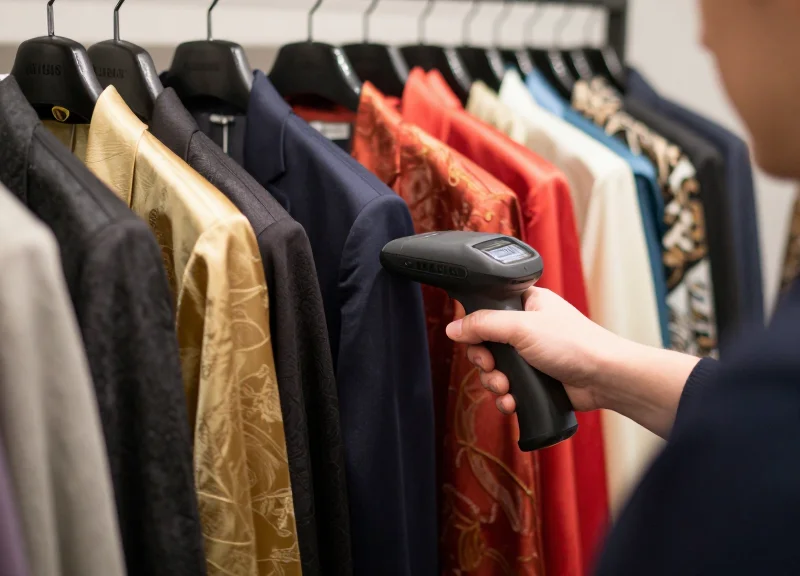
For high-end boutiques, inventory accuracy is the difference between a closed sale and a lost customer. A hybrid RFID+EAS system achieves 99% stock accuracy by assigning a serialized digital identity to every individual item, allowing for instantaneous, non-line-of-sight scanning of entire showrooms. Unlike traditional EAS systems that only 'alarm' on exit, the RFID component of a hybrid system provides a real-time 'heartbeat' of your stock levels, ensuring your digital ERP system perfectly mirrors your physical shelf reality.
| Metric | Manual/Barcode Inventory | Hybrid RFID+EAS System |
|---|---|---|
| Typical Accuracy | 65% - 75% | 98% - 99.9% |
| Counting Speed | 200 items/hour | 12,000+ items/hour |
| Out-of-Stock Rates | High (8-10%) | Low (< 1%) |
| Labor Requirement | High (Full staff/After hours) | Minimal (Single handheld/15 mins) |
Expert Insight: The 'Zombie Stock' Problem. In luxury retail, the most dangerous inventory is 'Zombie Stock'—items that are physically in the backroom but marked as sold or missing in the system, or vice-versa. Hybrid systems eliminate this by providing a 'Time-on-Floor' metric. By 2026, top-tier boutiques will use this data to trigger automated 'stale stock' alerts, prompting staff to rotate displays or offer personalized outreach to clients who showed interest in those specific serial numbers.
- Source Tagging Integration: Apply RFID-enabled EAS tags at the point of manufacture or during intake to ensure every item is tracked from the moment it enters the boutique's ecosystem.
- Automated Cycle Counting: Utilize handheld RFID readers to perform daily or weekly 'sweeps,' updating the inventory database in minutes without disrupting the luxury shopping experience.
- Omnichannel Synchronization: Link the hybrid system to your e-commerce platform to prevent selling 'phantom' items online that have already been purchased in-store.
Does RFID replace the need for traditional security gates?
No. In a hybrid setup, the EAS component provides the physical deterrent and immediate alarm, while RFID provides the data on exactly which item is leaving, creating a dual-layer of protection and intelligence.
How does 99% accuracy impact the bottom line?
High accuracy reduces 'safety stock' requirements, freeing up capital that would otherwise be tied up in overstock, and ensures high-value items are always available for VIP clients.
Can hybrid systems track items in dressing rooms?
Yes. Privacy-compliant RFID sensors can track which items are frequently taken to dressing rooms but not purchased, providing invaluable insights into fit or style issues.
Technical Compatibility: AM, RF, and UHF Frequency Synergies

In 2026, the technical synergy between AM, RF, and UHF frequencies represents the 'triple threat' of retail security. While Acousto-Magnetic (AM) and Radio Frequency (RF) provide the raw physical layer of protection (Electronic Article Surveillance), Ultra-High Frequency (UHF) RFID adds the data layer of unique item identification. True technical compatibility occurs when these frequencies are managed through a unified software controller that prevents 'signal collision' and 'spectral noise,' ensuring that your inventory tracking never interferes with your anti-theft gates.
| Frequency Type | Typical Band | Primary Function | Best Used For |
|---|---|---|---|
| AM (Acousto-Magnetic) | 58 kHz | High-performance detection | Wide entrances and metallic merchandise. |
| RF (Radio Frequency) | 8.2 MHz | Cost-effective deterrence | Soft goods and smaller boutique footprints. |
| UHF (RFID) | 860 - 960 MHz | Individual item identification | Real-time inventory and supply chain visibility. |
The most common technical hurdle for high-end boutiques is the 'metal interference' caused by designer handbags or luxury jewelry. While traditional RF systems struggle with metallic shields, AM systems at 58 kHz are far more resilient. However, by 2026, the gold standard is Adaptive Frequency Shifting (AFS). Modern hybrid pedestals now use AI at the edge to detect environmental noise and automatically adjust the sensing pulse. This ensures that the UHF RFID readers—which operate at much higher frequencies—do not suffer from 'ghost reads' caused by the low-frequency resonance of the EAS hardware.
- Audit the Environment: Measure the Electromagnetic Interference (EMI) in your boutique. Luxury malls often have high 'noise' from neighboring stores that can trigger false alarms.
- Choose the Core EAS Engine: Decide between AM (best for luxury/metal goods) or RF (best for paper-thin labels) based on your primary product line.
- Integrate the UHF Overlay: Ensure your RFID antennas are positioned to scan tags horizontally as they pass through the gate, preventing the 'dead zones' common in older vertical-only systems.
- Implement a Unified Controller: Use a single backend interface to manage both EAS alarms and RFID data to prevent conflicting signals.
Expert Insight for 2026: We are seeing the rise of 'Dual-Resonant Antennas.' Unlike previous years where you needed separate hardware for EAS and RFID, the newest 2026 pedestals use a single composite antenna array. This eliminates physical clutter and uses 'time-division multiplexing' to cycle between EAS detection and RFID polling in milliseconds, meaning they are never 'talking' at the same time.
Will my RFID tags set off my old EAS gates?
No. UHF RFID (900MHz) and EAS (58kHz or 8.2MHz) operate on completely different wavelengths. However, a hybrid tag contains components for both, so the EAS component will trigger the gate while the RFID chip provides the item data.
Can I use AM and RF in the same store?
It is highly discouraged. Running AM and RF systems in close proximity creates significant signal interference and will lead to frequent false alarms. Choose one EAS standard and stick to it.
What is 'Crosstalk' in 2026 systems?
Crosstalk occurs when two pedestals on the same frequency interfere with each other. Modern systems solve this using 'Digital Phase Locking,' where systems are synchronized via the cloud to pulse at slightly different intervals.
Scalability and Future-Proofing: Preparing for the 2026 Retail Landscape
In 2026, scalability in retail security is defined by the transition from static hardware to 'Software-Defined Security.' A future-proof RFID+EAS hybrid system is a modular ecosystem where the hardware acts as an intelligent sensor node, capable of integrating with Electronic Shelf Labeling (ESL), AI-driven heat mapping, and real-time inventory management through open APIs and cloud-native architectures.
For high-end boutiques, the risk isn't just theft; it's technological obsolescence. As you scale, your security system must evolve from a cost center (loss prevention) into a profit driver (business intelligence). Choosing a system with an 'API-first' philosophy ensures that when you deploy next-generation AI vision or dynamic pricing via ESL, your security gates won't become an isolated silo, but rather a primary data source for customer behavior and stock flow.
| Feature | Legacy Systems (Pre-2024) | 2026 Hybrid Systems |
|---|---|---|
| Connectivity | Standalone/Wired | IoT-Enabled / Wi-Fi 6 / PoE |
| Data Export | Proprietary / None | Open API / JSON Webhooks |
| ESL Integration | Incompatible | Co-existence via Sub-GHz bands |
| Maintenance | On-site technician | Remote Diagnostics / OTA Updates |
| Analytics | Basic Alarm Counts | AI Pathfinding & Sentiment Analysis |
Expert Tip: The Edge-Computing Advantage. Look for systems that perform 'Edge Intelligence'—processing data locally at the pedestal rather than sending raw streams to the cloud. This reduces latency and allows for 'Active Intervention.' For example, if a high-value item is removed from a display and remains in a 'blind spot' for more than 120 seconds, the system can trigger a discrete haptic alert to a sales associate’s smartwatch before the item even reaches the exit.
How does RFID+EAS integrate with Electronic Shelf Labeling (ESL)?
Modern hybrid systems operate on frequencies that do not interfere with the 2.4GHz or Sub-GHz bands used by ESL. Integration allows for 'Dynamic Security Settings,' where the alarm sensitivity can automatically increase if an ESL tag reflects a high-value price drop or limited-edition status.
Can these systems help with store layout optimization?
Yes. By utilizing the RFID sensors in your security gates to track item movement patterns, boutiques can generate AI heatmaps. This data reveals which products are being picked up but not purchased, helping you optimize merchandising strategies.
What is the importance of modular hardware?
Modular hardware allows you to swap or upgrade internal components—such as adding a 5G module or an AI vision camera—without replacing the entire aesthetic pedestal. This protects your initial CAPEX investment as technology evolves.
Cost-Benefit Analysis: ROI of Hybrid Systems for Luxury Brands

For high-end boutiques in 2026, the Return on Investment (ROI) for a hybrid RFID+EAS system typically reaches its break-even point within 12 to 18 months. While the initial capital expenditure (CapEx) is higher than traditional EAS systems, the hybrid model generates value by simultaneously slashing shrinkage rates by up to 50% and reducing the labor required for inventory audits by over 90%, transforming security from a cost center into a driver of operational efficiency.
| Financial Metric | Traditional EAS (AM/RF) | Hybrid RFID+EAS System |
|---|---|---|
| Initial Hardware Cost | Low to Moderate | High (Hardware + Software) |
| Annual Shrinkage Reduction | 15-25% | 45-60% |
| Inventory Labor (Monthly) | 80+ Hours | < 4 Hours |
| Stock Accuracy | 65-75% | 98-99.5% |
| ROI Timeline | 36+ Months | 12-18 Months |
- Shrinkage Containment and Item-Level Intelligence: Traditional systems tell you something left the store; hybrid systems tell you exactly what left. This allows luxury brands to identify specific high-risk SKUs and internal theft patterns, enabling targeted security measures that save thousands in lost inventory.
- Labor Cost Reallocation: In a luxury setting, staff should focus on clienteling, not counting boxes. Hybrid systems allow for 'cycle counting' in minutes rather than days, effectively recapturing hundreds of man-hours annually per location.
- Elimination of 'Phantom Stock' Revenue Loss: The most significant hidden ROI is the prevention of missed sales. If a system claims a $4,000 jacket is in stock but it cannot be found, the sale is lost. Hybrid systems ensure 99% accuracy, ensuring every available item is ready for purchase.
Expert Insight: In the luxury sector, the cost of 'out-of-stock' scenarios often exceeds the cost of theft. We have observed that boutiques implementing hybrid systems see a 3-5% uplift in gross sales simply because staff can locate every item in real-time, preventing high-intent customers from walking out empty-handed.
Is the cost of RFID tags prohibitive for luxury items?
No. While RFID tags cost more than standard hard tags, for items with price points above $200, the tag cost is negligible (often <0.1% of the item value) compared to the benefit of inventory precision.
Can hybrid systems reduce insurance premiums?
Many high-end insurers offer 'Security Implementation Discounts' for retailers using item-level tracking, as it demonstrates a superior level of risk management and loss prevention.
Does this system replace the need for security guards?
It doesn't replace them, but it makes them more effective. Guards can focus on suspicious behavior rather than monitoring false alarms, as hybrid systems significantly reduce 'tag pollution' and accidental triggers.
Installation Best Practices: Minimizing Disruption to the High-End Guest
In the world of luxury retail, the environment is as valuable as the inventory. A successful RFID+EAS hybrid system installation must be a 'Zero-Impact Deployment,' where the transition from legacy security to a modern digital ecosystem occurs without a single customer witnessing a technician, a ladder, or a loose cable. By leveraging pre-site digital mapping and off-site configuration, boutiques can achieve a 'Go-Live' status in a single overnight window, ensuring that the high-end guest experience remains pristine and uninterrupted.
- Digital Twin Pre-Mapping: Before any hardware arrives, use 3D LIDAR scanning or detailed floor plans to create a digital twin. This allows engineers to simulate RFID read-zones and EAS interference points (such as metal support beams) virtually, minimizing trial-and-error during the physical install.
- Off-Site Staging and 'Plug-and-Play' Configuration: All antennas, readers, and controllers should be IP-configured, firmware-updated, and stress-tested at the integrator's facility. When the equipment arrives at the boutique, it should require only mounting and power-up, reducing onsite technical labor by up to 60%.
- Stealth Night-Shift Execution: Deployment must occur during 'blackout hours' (typically 10 PM to 6 AM). Technicians should operate under a 'White Glove' protocol, utilizing HEPA-filtered vacuums for any drilling and ensuring that all marble or high-end finishes are protected with non-adhesive temporary floor coverings.
- Staff Immersion Training: Host a private, 30-minute 'Breakfast Briefing' for the sales team before the store opens. This ensures they are comfortable with new tagging procedures and alert-handling without the pressure of live shoppers.
| Feature | Standard Installation | Luxury White-Glove Deployment |
|---|---|---|
| Timing | Business Hours (Partial Closures) | 100% After-Hours / Overnights |
| Hardware Prep | On-site assembly and wiring | Pre-configured, pre-tested racks |
| Aesthetics | Surface-mounted conduits | Concealed wiring / Under-floor loops |
| Staff Impact | Training on-the-fly | Pre-opening simulation workshops |
| System Tuning | Live environment testing | Digital twin simulation & validation |
Expert Insight: The 'Shadow Phase' Strategy. One of the most common mistakes is activating an EAS alarm immediately after installation. Instead, implement a 48-hour 'Shadow Phase.' During this time, the RFID system tracks item movements and potential EAS triggers silently, logging data in the cloud without sounding an audible alarm. This allows technicians to fine-tune the sensitivity thresholds to account for environmental noise (like nearby elevators or neon signs) before the system ever impacts a real customer.
Will the installation damage our boutique’s custom interior?
No. Modern hybrid systems utilize concealed antennas (under-floor or in-ceiling) and require minimal structural modification. Our 'White Glove' protocol ensures all surfaces are protected and restored to original condition.
How much downtime should we expect?
Zero. By utilizing pre-configured hardware and overnight shifts, the store remains fully operational during standard business hours.
What happens if the system triggers a false alarm on day one?
By using the 'Shadow Phase' strategy and AI-driven signal filtering, we eliminate 99% of false triggers before the system is publicly armed.
Choosing the Right Partner: What to Look for in a Security Vendor
Choosing the right partner for a hybrid RFID+EAS system involves evaluating a vendor's ability to provide a unified ecosystem rather than just hardware components. In 2026, the ideal partner must offer more than theft prevention; they must demonstrate mastery in data synchronization between EAS security gates and RFID inventory management software. Look for a vendor that provides a dedicated 'Solutions Architect' rather than a standard sales representative, ensuring that the system is custom-fitted to your boutique’s unique architectural constraints and aesthetic requirements without sacrificing technical performance.
| Criteria | Legacy Vendor (Standard) | Strategic Partner (Premium) |
|---|---|---|
| Technical Support | Reactive: Call center tickets with 48-72hr response. | Proactive: 24/7 remote monitoring and sub-4hr on-site SLAs. |
| Customization | Off-the-shelf: Minimal hardware/software flexibility. | Bespoke: Custom finishes for pedestals and API-first software. |
| Longevity & R&D | Static: Slow to update firmware or integrate new tags. | Agile: Quarterly feature updates and 5-year hardware roadmaps. |
| Integration | Siloed: EAS and RFID operate as separate entities. | Unified: Single-dashboard analytics for security and stock. |
- Assess the 'Integration Depth': Ask for a live demonstration of how their EAS alarms correlate with specific RFID EPC data. If they cannot show you which specific item triggered an alarm in real-time, the system is not truly hybrid.
- Evaluate Global Support with Local Agility: For luxury brands with global footprints, ensure the vendor has local certified technicians. High-end retail cannot afford 'Out of Order' signs on security pedestals for more than a few hours.
- Review API and Software Openness: Avoid vendor lock-in. Ensure their software can export data seamlessly to your existing ERP or Warehouse Management Systems (WMS) via REST APIs.
Expert Tip: The 'Digital Twin' Requirement. In 2026, a truly elite vendor should offer a 'Digital Twin' of your store's RF environment. This allows them to simulate potential interference from new electronic displays or lighting fixtures virtually before you make any physical changes to the shop floor. This predictive modeling saves thousands in post-installation troubleshooting and ensures your luxury ambiance is never compromised by technical glitches.
How long should a typical hybrid system contract last?
Look for a 3-to-5-year partnership that includes regular hardware refreshes and software optimizations, as RFID technology evolves rapidly.
Do I need a vendor with specific luxury retail experience?
Yes. Luxury retail environments have different noise interference profiles and aesthetic demands compared to big-box retail; a vendor who understands 'invisible' security is essential.
What is the most overlooked vendor credential?
Cybersecurity certifications. Since hybrid systems are networked, your vendor must comply with SOC2 or ISO 27001 standards to protect your store's data.