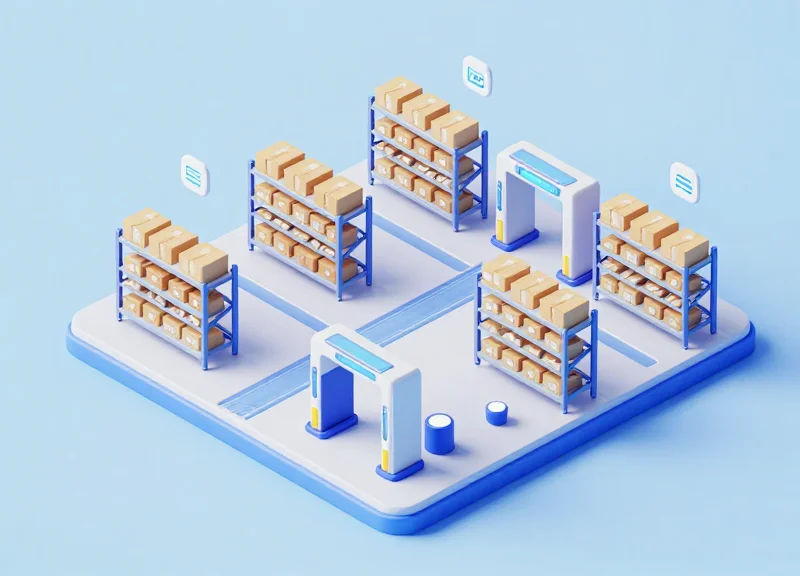
In the modern industrial landscape, flexible manufacturing has become the gold standard for meeting diverse consumer demands. However, the complexity of high-mix, low-volume production often creates invisible bottlenecks that hinder throughput. Traditional manual tracking is no longer sufficient to manage these dynamic workflows. This article examines how RFID-enabled Work-in-Progress (WIP) tracking provides the real-time visibility needed to eliminate delays and achieve a transformative 30% increase in operational efficiency.
The Complexity of Flexible Manufacturing and the Visibility Gap

Flexible manufacturing is the ability of a production system to rapidly adapt to changes in product type, mix, and volume. While this agility is essential for modern competitive markets, it creates a 'Visibility Gap'—a disconnect between the physical shop floor and digital management systems. This gap occurs when high-mix, low-volume production outpaces the ability of manual logs or legacy barcode systems to provide real-time location and status data for Work-in-Progress (WIP). Without granular data, manufacturers suffer from a 'Hidden Factory'—a parallel layer of undocumented work, manual searching, and redundant communication that can consume up to 25% of operational capacity.
| Feature | Traditional Mass Production | Flexible Manufacturing |
|---|---|---|
| Product Mix | Low (Standardized items) | High (Customized/Variable items) |
| Routing | Linear (Fixed sequence) | Non-Linear (Dynamic sequencing) |
| Changeover Frequency | Low/Infrequent | High/Frequent |
| Visibility Requirement | Station-to-station (Macro) | Asset-level/Real-time (Micro) |
What causes the Visibility Gap?
The gap is primarily caused by asynchronous data entry. When workers must stop production to manually scan barcodes or fill out paper logs, they often batch these tasks, meaning the ERP or MES system reflects where a part was an hour ago, not where it is now.
How does dynamic routing impact bottlenecks?
In flexible environments, a single part might skip a station or revisit one based on custom specs. Without automated tracking, managers cannot see 'phantom' queues forming until the bottleneck has already halted downstream production.
What are the financial costs of poor WIP visibility?
Hidden costs include bloated safety stock to cover tracking errors, increased expediting fees for 'lost' orders, and low Overall Equipment Effectiveness (OEE) due to machines sitting idle while waiting for the next WIP batch.
Expert Insight: In my two decades working with high-growth industrial firms, I have observed the 'Shadow WIP' phenomenon. This occurs when 10-15% of your inventory is physically present but digitally invisible because it has been diverted for rework or staged in an unofficial buffer zone. If your MES relies on manual scans, you aren't managing production; you are managing a historical record of production. Eliminating the visibility gap requires shifting from human-dependent 'checkpoints' to autonomous, ambient data collection.
Understanding RFID WIP Tracking Technology
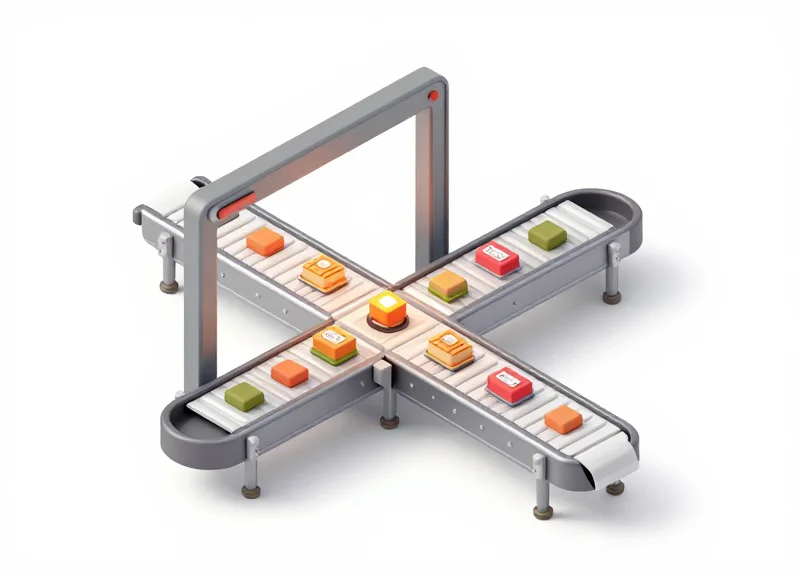
RFID (Radio Frequency Identification) Work-in-Progress (WIP) tracking is an automated identification system that uses electromagnetic fields to capture data from tags attached to components, tools, or carriers. Unlike traditional barcode systems that require a direct line-of-sight and manual intervention, RFID enables 'hands-free' data acquisition. As items move through the production cycle, fixed readers or handheld devices automatically log their entry and exit from various work cells, providing a continuous, real-time digital twin of the physical shop floor.
| Component | Primary Function | Role in Flexible Manufacturing |
|---|---|---|
| RFID Tags | Data Storage | Attached to unique parts or pallets to store IDs and production status. |
| Antennas | Signal Propagation | Emits radio waves to activate passive tags and receive data. |
| RFID Readers | Data Capture | Processes radio signals and communicates with the manufacturing execution system (MES). |
| Middleware | Data Filtering | Aggregates raw reads into actionable events, filtering out noise and duplicate entries. |
Expert Insight: The Decentralized Data Advantage. In high-mix, flexible manufacturing, the most significant technical advantage of RFID isn't just speed; it's the 'read/write' capability. Unlike a barcode, which is static, an RFID tag can have data written to it at each station. This allows the product to carry its own history and next-step instructions locally. In the event of a network outage, the production line doesn't stall because the hardware at the station can read the next processing step directly from the tag, effectively eliminating the 'central database bottleneck' that plagues connected factories.
Can RFID track items in high-metal or liquid environments?
Yes. While metal and liquid can interfere with radio waves, specialized 'on-metal' tags and tuned UHF frequencies are designed to provide 99.9% read accuracy in harsh industrial settings.
How does RFID improve data accuracy over manual entry?
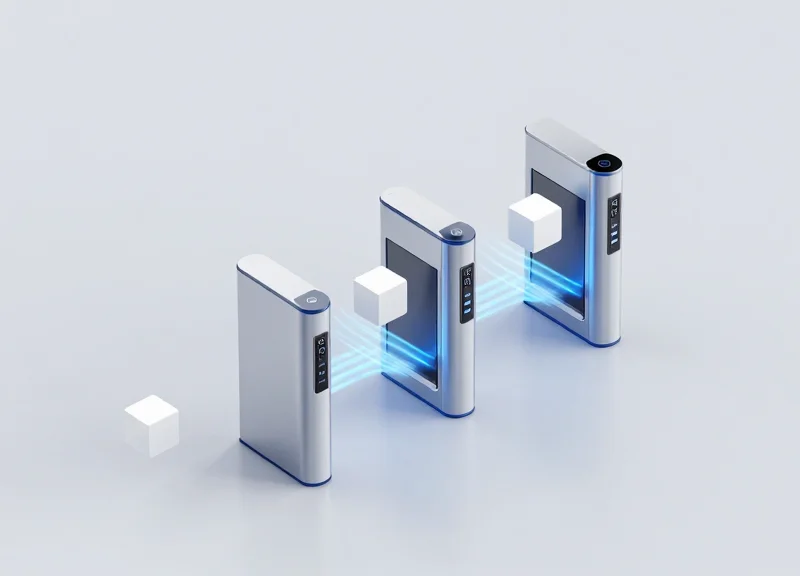
Manual barcode scanning or paper logs have an average error rate of 1-3%. RFID systems automate the process, removing human error and ensuring data is captured in milliseconds as items pass through 'portals'.
What is the typical range of RFID for WIP tracking?
In a factory setting, Passive UHF RFID typically offers a range of 3 to 10 meters, allowing for wide coverage of work zones without requiring workers to stop or position items specifically for a scan.
Identifying and Eliminating 3 Common Production Bottlenecks
Production bottlenecks in flexible manufacturing are systemic friction points—specifically manual data entry, misplaced inventory, and inefficient handovers—that restrict throughput and inflate lead times. By replacing manual reporting with automated RFID Work-in-Process (WIP) tracking, manufacturers can eliminate the 'Latency Tax,' ensuring that the physical flow of goods is mirrored in real-time digital systems for 100% operational synchronization.
| Bottleneck Type | Manual Manufacturing Impact | RFID Strategic Solution |
|---|---|---|
| Data Entry Errors | 15-20% inaccuracy in reporting; delayed data. | Automated, hands-free data capture at every station. |
| Lost/Ghost WIP | 10-30 mins per shift spent searching for parts. | Real-time zone tracking and instant item location. |
| Routing Friction | Static schedules lead to idle stations. | Dynamic routing based on real-time asset proximity. |
### 1. The 'Latency Tax' of Manual Data Entry In high-mix, flexible environments, the greatest bottleneck is often invisible: administrative latency. When operators must manually scan barcodes or fill out paper logs, they stop producing. More importantly, the data is often 'stale' by the time it reaches the ERP. RFID eliminates this by capturing movement at the speed of light. Expert Tip: In Silicon Valley manufacturing circles, we call this 'Zero-Touch Visibility'—if a human has to touch a keyboard to record progress, your process is already behind.
### 2. Ghost Inventory and Search-Time Wastage 'Ghost Inventory' refers to WIP that is physically on the floor but digitally 'lost' due to misplaced pallets or incorrect bin placement. In traditional setups, supervisors often spend 10% of their shift simply locating the next batch for a specific station. RFID provides a 'live map' of the floor. By eliminating the search-and-find cycle, you effectively reclaim hours of high-value labor and prevent 'expediting' costs that occur when items are re-manufactured because the original batch couldn't be found.
### 3. Inefficient Station Handovers and Routing Friction Flexible manufacturing requires parts to move through non-linear paths. Without RFID, a part might sit at a finished station for twenty minutes before a handler realizes it is ready for the next phase. RFID creates a proactive 'push' system: as soon as a part leaves an RFID-monitored zone, the next station is alerted and the logistics team is triggered for transport. This reduces the 'dwell time' between stations, which is often where 50% of production delays actually occur.
How do I identify which bottleneck is costing me the most?
Perform a 'Value Stream Map' but include a 'Data Latency' layer. Measure the time difference between when a part arrives at a station and when the ERP system actually acknowledges it. The larger the gap, the more RFID will save you.
Can RFID solve bottlenecks if my floor layout changes frequently?
Yes. Unlike fixed conveyors or wired sensors, RFID infrastructure is modular. You can move portals or add mobile readers to adapt to new production cells, making it the ideal solution for truly flexible manufacturing.
Does RFID replace the need for an MES?
No, RFID feeds the MES. Think of the MES as the brain and RFID as the nervous system, providing the instant, accurate sensory data the brain needs to make correct scheduling decisions.
The Mechanics of a 30% Efficiency Gain

A 30% efficiency gain in flexible manufacturing is achieved by the simultaneous reduction of 'buffer waste' and the optimization of Overall Equipment Effectiveness (OEE). By replacing manual tracking with RFID-driven Real-Time Location Systems (RTLS), facilities eliminate the 5-10 minute data-entry delays at every workstation, recapture lost labor hours previously spent on physical inventory searches, and enable automated machine triggering that minimizes idle time between disparate production batches.
| Efficiency Metric | Legacy/Manual Process | RFID-Enabled Process | Estimated Gain |
|---|---|---|---|
| Data Latency | 15-30 minutes (Batch updates) | Real-time (<1 second) | 95% Reduction |
| Search Time | 5-10% of shift (Finding WIP) | <1% of shift (Geofencing) | 90% Reduction |
| Changeover Speed | Manual tool/spec verification | Automated RFID verification | 20-25% Improvement |
| Cycle Time Accuracy | Estimated via manual logs | Timestamped at every gate | 100% Accuracy |
To understand the 30% cumulative gain, we must look at the OEE formula: Availability x Performance x Quality. RFID directly impacts Availability by ensuring that raw materials and sub-assemblies arrive at the next station exactly when needed, reducing 'starved' machine states. Performance is boosted as operators spend 100% of their time on value-added tasks rather than administrative scanning. Finally, Quality improves because RFID tags can carry build-history data, preventing a part from moving to the next stage if a previous test was skipped or failed.
Expert Insight: The 'Latent Latency' Factor. Most manufacturers underestimate the impact of 'Latent Latency'—the 2 to 3-minute window after a task is finished but before it is recorded in the ERP. In a facility with 50 stations and 5 daily changeovers per station, this invisible delay accounts for 750 minutes of 'ghost downtime' daily. RFID eliminates this entirely, instantly reclaiming nearly 12.5 hours of production capacity per day without hiring a single new staff member.
Does RFID tracking actually reduce labor costs?
Yes. While it rarely results in layoffs, it allows for 'labor reallocation.' By automating WIP tracking, the labor previously dedicated to expediting, manual counting, and data entry is shifted to higher-value production tasks, increasing output per head.
How does RFID improve Overall Equipment Effectiveness (OEE)?
RFID improves OEE by reducing the 'Availability' loss caused by minor stoppages and idling. Because the system knows exactly where every asset is, it can trigger automated alerts to material handlers before a station runs out of WIP, maintaining a continuous flow.
Is the 30% gain immediate?
Typically, facilities see a 10-15% jump in the first 30 days due to the elimination of 'lost' items. The full 30% gain is realized over 3-6 months as the accumulated data allows managers to refine line balancing and remove systemic bottlenecks.
Seamless Integration with MES and ERP Systems

Seamless integration is the process of creating a real-time digital handshake between the physical movements on the factory floor and the high-level logic of Manufacturing Execution Systems (MES) and Enterprise Resource Planning (ERP) platforms. In a flexible manufacturing environment, RFID acts as the 'digital nervous system,' feeding granular Work-in-Process (WIP) data into the 'enterprise brain' to eliminate the data latency that typically plagues manual reporting. This connectivity ensures that the digital twin of your production line is always a perfect reflection of reality, allowing for automated scheduling adjustments, precise inventory management, and instantaneous compliance logging.
| Feature | Manual/Siloed Systems | RFID-Integrated MES/ERP |
|---|---|---|
| Data Capture Speed | Delayed (Shift-end updates) | Real-time (Instantaneous) |
| Information Accuracy | Prone to human transcription errors | 99.9% automated accuracy |
| Operational Visibility | Retrospective (What happened?) | Predictive (What is happening?) |
| Inventory Precision | Safety stock buffers required | Lean, just-in-time optimization |
- Data Capture and Edge Filtering: RFID readers capture raw tag data at the source. Middleware then filters out 'noise' and redundant pings, ensuring only meaningful movement events are sent to the network.
- Middleware Translation: The filtered data is translated into standardized protocols (like OPC-UA or MQTT) that MES and ERP systems can consume without custom, fragile API coding.
- Bi-directional Synchronization: Information flows both ways; while the floor sends status updates, the ERP can send 'change orders' back to the RFID stations to re-route a specific unit based on new customer demands.
- Automated Logic Execution: The integrated system triggers automated workflows, such as ordering more components when a WIP tag passes a specific consumption threshold.
Expert Tip: To maximize ROI, focus on 'Event-Based Triggering.' Instead of just logging that a part is at Station A, configure your MES to automatically pull the specific CAD drawing or assembly instructions to the operator's screen the moment the RFID tag is detected. This eliminates search time and ensures that in a high-mix environment, the right instructions are always in front of the right person at the right time.
Does RFID integration require replacing my current ERP?
No. Modern RFID middleware acts as a bridge, utilizing standard APIs and webhooks to connect with legacy ERPs like SAP, Oracle, or Microsoft Dynamics without requiring a system overhaul.
How does integration handle high-speed production lines?
By utilizing 'edge computing'—processing data locally at the reader level before sending it to the ERP—integration can support lines moving at hundreds of feet per minute without creating a network bottleneck.
What is the impact on compliance and traceability?
Integration provides an immutable 'digital birth certificate' for every product, automatically linking raw material batches (from the ERP) to specific production steps (tracked by RFID) for 100% audit readiness.
Selecting the Right RFID Hardware for Industrial Environments
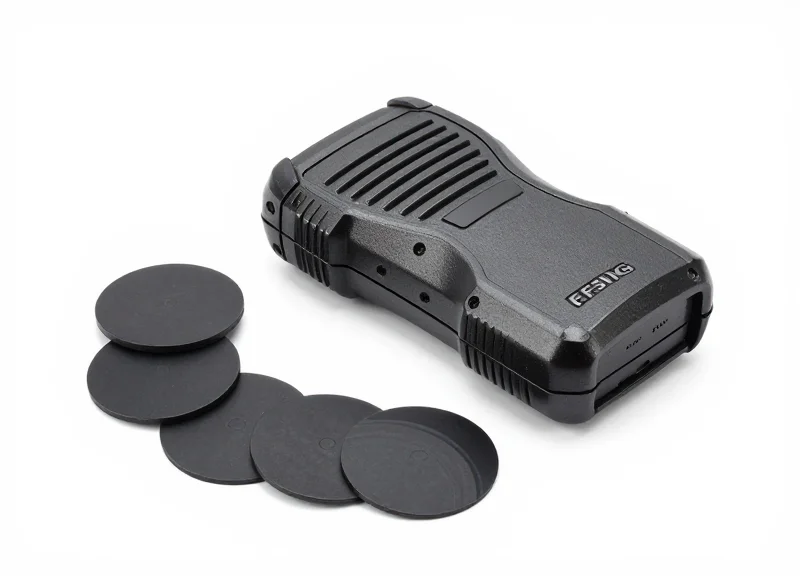
In industrial environments, hardware failure is the most common cause of ROI leakage. To achieve a 30% efficiency gain, your RFID infrastructure must be resilient enough to handle 'The Three Killers' of wireless data: metal reflection, liquid absorption, and extreme thermal cycling. Selecting hardware is not merely about frequency; it is about choosing components with the correct Ingress Protection (IP) ratings and specialized form factors that can survive the rigors of a flexible manufacturing floor without degradation.
| Hardware Category | Key Specification | Industrial Use Case |
|---|---|---|
| On-Metal Tags | Spacer/Shielded Backing | Tracking engine blocks or steel chassis. |
| High-Temp Tags | FR4 or Ceramic Housing | Work-in-progress inside paint curing ovens (200°C+). |
| Ruggedized Readers | IP67 / IP68 Rating | Wash-down environments or high-dust milling areas. |
| Circular Antennas | 360-degree Polarization | Capturing tags on items with unpredictable orientations. |
- Identify Environmental Stressors: Map your production line for 'RF-hostile' zones. If your WIP moves through chemical baths or CNC coolant spray, prioritize tags with PFA or epoxy encapsulation.
- Determine Mounting Constraints: Decide if tags will be embedded, adhesive-backed, or mechanically fastened. For flexible manufacturing, reusable bolt-on tags are often more cost-effective than single-use labels.
- Select Antenna Polarization: In flexible lines where items move at different heights or angles, circular polarized antennas are mandatory to ensure consistent reads regardless of tag orientation.
Expert Insight: Don't overlook the 'Faraday Cage' effect. In dense metallic environments, radio waves can bounce and create 'null zones' where tags become invisible. Using 'Diversity Antennas'—a setup where multiple antennas cover a single portal from different angles—is the secret to maintaining high-speed read rates in complex assembly cells where parts are constantly shifting.
What is the difference between IP65 and IP67 for RFID readers?
IP65 protects against dust and low-pressure water jets, while IP67 allows the device to be submerged in water up to 1 meter, making it essential for heavy wash-down environments.
Can RFID tags survive high-heat paint ovens?
Yes, specialized ceramic or thermoset tags are designed to withstand temperatures up to 250°C for multiple cycles, though read range may temporarily decrease while the tag is at peak temperature.
How do I deal with interference from other machines?
Industrial readers should support 'Dense Reader Mode' (DRM), which prevents multiple RFID readers from interfering with each other in tight manufacturing clusters.
Real-World Success: From Chaos to Synchronized Flow

Real-world success in RFID WIP tracking is defined by the transition from reactive firefighting to proactive, synchronized production flow. By replacing manual scanning and paper-based logs with automated RFID checkpoints, manufacturers typically see a 20-30% reduction in lead time variability and a 15% decrease in material waste. This transformation occurs because RFID provides 100% visibility into the 'dark zones' of the factory floor, ensuring that every sub-assembly is accounted for, correctly sequenced, and routed to the next workstation without human intervention.
| Industry Vertical | Pre-RFID Challenge | RFID Outcome | Key Metric Improvement |
|---|---|---|---|
| Automotive Tier 1 | High scrap due to incorrect component marriage | Automated verification at every assembly gate | 12% Reduction in Scrap Rates |
| Electronics OEM | Frequent 'lost' batches in high-mix environment | Real-time RTLS heatmaps of all WIP carriers | 22% Increase in Throughput |
| Industrial Equipment | Inaccurate ERP data causing stockouts | Direct MES integration with RFID tag triggers | 99.8% Inventory Accuracy |
Expert Insight: Beyond the obvious efficiency gains, the most significant 'hidden' benefit we see in Silicon Valley deployments is the elimination of 'Ghost WIP.' Most manufacturers over-manufacture sub-assemblies by 5% to 8% simply as a buffer against items they assume will be lost, damaged, or misrouted. RFID tracking provides the confidence to slash these buffers, instantly freeing up working capital that was previously tied up in unnecessary safety stock on the shop floor.
- The Audit Phase: Engineers map the 'Path of Most Resistance,' identifying exactly where manual data entry causes the longest dwell times.
- Tagging the Carrier: Instead of tagging every individual screw, high-durability RFID tags are attached to the bins, pallets, or 'smart totes' that move through the line.
- Automated Gateways: Fixed readers are installed at entry/exit points of each cell, creating a 'digital twin' of the production status in real-time.
- Closed-Loop Feedback: The MES uses RFID data to trigger alerts if a component enters the wrong station, stopping defects before they are baked into the product.
How long does it take to see a ROI from RFID WIP tracking?
Most mid-to-large scale manufacturers report a full return on investment within 8 to 14 months, primarily driven by reduced labor costs and lower scrap rates.
Can RFID track items through high-heat paint booths?
Yes. Specialized high-temperature RFID tags can withstand industrial painting and curing processes exceeding 200 degrees Celsius without losing data integrity.
Does RFID replace the existing MES or ERP?
No, it acts as the 'nervous system' for those platforms. RFID feeds high-fidelity, real-time data into your MES/ERP to make those systems significantly more accurate.
The Future of Lean Manufacturing with DragonGuardGroup
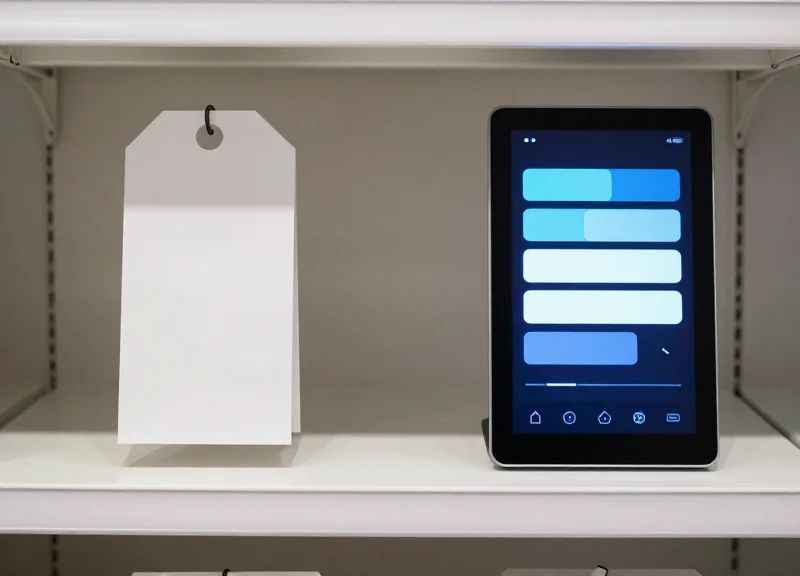
DragonGuardGroup transforms traditional lean manufacturing into an agile, data-first ecosystem by combining high-performance RFID Work-in-Process (WIP) tracking with Electronic Shelf Labels (ESL). This synergy facilitates a 'Living Lean' environment where real-time physical data from the shop floor automatically updates digital instructions, eliminating the lag time between identifying a bottleneck and executing corrective actions. By serving as the digital nervous system for flexible manufacturing, DragonGuardGroup enables a seamless transition from reactive management to predictive, self-correcting production flows.
As manufacturing moves toward mass customization, the complexity of managing 'Batch Size One' increases exponentially. Standardizing these processes requires more than just hardware; it requires a scalable architecture that can evolve with Industry 4.0 demands. DragonGuardGroup specializes in creating these future-proof frameworks, ensuring that today's WIP tracking investment becomes tomorrow's foundation for AI-driven optimization.
| Feature | Traditional Lean | DragonGuardGroup Integrated Ecosystem |
|---|---|---|
| Data Capture | Manual logs/stopwatches | Autonomous RFID event triggers |
| Worker Guidance | Printed SOPs/Travelers | Dynamic ESL digital instructions |
| Bottleneck Response | Reactive (after the shift) | Proactive (real-time alerts) |
| Changeover Speed | High (manual setup) | Instant (automated via software) |
How does DragonGuardGroup ensure hardware durability in harsh environments?
We utilize industrial-grade, ruggedized RFID tags specifically designed to resist high temperatures, chemical exposure, and metallic interference common in heavy manufacturing.
Can RFID WIP tracking be integrated with existing legacy ERP systems?
Yes, our middleware is designed for high interoperability, allowing for clean API integrations that bridge the gap between physical movement and digital record-keeping.
What makes the combination of RFID and ESL unique for lean initiatives?
While RFID tracks where the product is, ESLs tell the operator what to do based on that specific product's needs, creating a closed-loop system for dynamic workflows.
Expert Insight: The Concept of 'Instructional Fluidity'. Most manufacturers focus on tracking the part, but they forget the operator. In a truly flexible environment, the instructions must move as fast as the product. Our expert tip is to implement 'Instructional Fluidity'—using RFID triggers to instantly update ESL displays at a workstation based on the specific SKU detected. This eliminates the 'search and read' time that accounts for up to 15% of labor inefficiency in high-mix manufacturing environments.