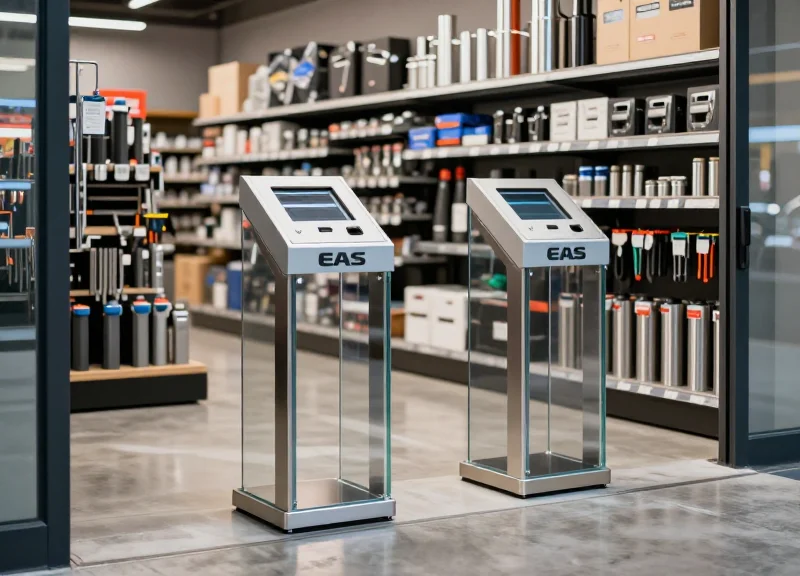
Ticket switching remains one of the most persistent challenges in retail loss prevention, costing the industry billions annually. Traditional Electronic Article Surveillance (EAS) systems often fail to catch this tactic because the item being scanned has a valid, albeit cheaper, barcode attached. The solution lies in the synergy between Artificial Intelligence and EAS. By integrating vision-based AI with robust EAS hardware, retailers can now identify product-barcode mismatches in real-time. This guide provides an expert blueprint on calibrating these systems to achieve a lightning-fast 2-second detection window, ensuring your margins are protected without slowing down the customer experience.
Understanding the Mechanics of Modern Ticket Switching
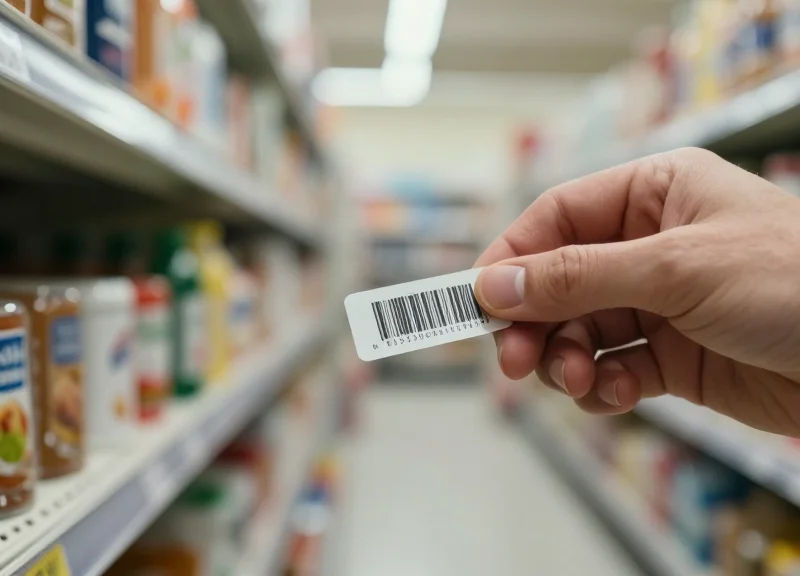
Ticket switching is a form of retail fraud where an offender replaces a high-value item's barcode with a lower-priced one to deceive the Point of Sale (POS) system. While legacy Electronic Article Surveillance (EAS) systems excel at detecting unshielded tags passing through pedestals, they are fundamentally 'blind' to the identity of the product being scanned. This creates a critical security loophole: the system confirms that a transaction occurred, but it lacks the visual intelligence to verify that the item scanned—for example, a $15.00 toaster—is actually the $299.00 espresso machine currently sitting on the scale.
| Feature | Legacy EAS Scanners | AI-Integrated EAS |
|---|---|---|
| Detection Basis | Barcode Data Syntax | Visual Object Recognition |
| Verification | Price & SKU Match | Physical Attribute Cross-Reference |
| Response Time | None (Passive) | < 2 Seconds (Active) |
| Fraud Type Detected | Inventory Errors only | Sticker Swaps & Product Switching |
How do shoplifters exploit 'The Banana Trick'?
This is a common tactic where a customer weighs an expensive item (like organic dragon fruit) but selects a cheaper item code (like bananas) on a self-checkout scale. Traditional systems only check for weight stability, not the visual identity of the fruit.
Why doesn't standard barcode encryption stop ticket switching?
Encryption protects data integrity within the code, but it cannot prevent a physical sticker from being placed over the original. The scanner reads the valid, cheaper code perfectly, unaware it is looking at a 'spoof' sticker.
What is 'Overlaying' in modern retail fraud?
Sophisticated actors use portable thermal printers to create high-quality replicas of low-value barcodes, which are then applied precisely over high-value SKUs, making the swap nearly invisible to the naked eye of a busy clerk.
Expert Insight: For the last 20 years, retail loss prevention has focused on 'Data-Object Parity'—ensuring the database matches the tag. However, the true vulnerability lies in the 'Semantic Gap.' Shoplifters aren't hacking your database; they are hacking the physical light-path of the scanner. To close this gap, your system must calibrate the 'Time-to-Identify' (TTI) to under 2 seconds. This is the psychological window where a dishonest customer feels they can get away with a swap; interrupting the flow within this window via AI-EAS integration creates an immediate deterrent effect that legacy systems simply cannot provide.
The Core Components of AI-EAS Integration

AI-EAS integration is a multi-layered security architecture that merges high-definition Computer Vision (CV) with traditional Electronic Article Surveillance (EAS) to validate that the physical product's visual identity matches its scanned barcode data. By bridging the gap between what the POS system sees and what the camera perceives, retailers can identify 'Ticket Switching'—the act of placing a low-cost barcode on a high-value item—and trigger an alert in under two seconds.
| Component | Primary Function | Technical Requirement |
|---|---|---|
| Ultra-HD IP Cameras | Captures granular item details and hand movements. | Minimum 4K resolution at 60fps for motion clarity. |
| Edge AI Processing Unit | Runs object recognition models locally to reduce latency. | NVIDIA Jetson or similar high-TFLOPS GPU hardware. |
| EAS Pedestals (RF/AM) | Monitors tag status and provides the physical alarm. | Digital signal processing (DSP) for noise filtering. |
| Middleware Integration Hub | Synchronizes POS transaction logs with video metadata. | Restful API or MQTT protocol for real-time messaging. |
The intelligence of the system resides in the Inference Engine. Unlike legacy motion detection, this software utilizes Convolutional Neural Networks (CNNs) trained on thousands of retail SKUs. When a barcode is swiped, the AI compares the 'Class' of the item (e.g., 'Electronics') against the 'Class' associated with the scanned barcode (e.g., 'Produce'). If a discrepancy is found, the system holds the EAS 'Deactivation' command, ensuring the tag remains live as the customer exits.
- Visual Extraction: The overhead camera identifies the product footprint and texture during the 'dead zone' between the shelf and the scanner.
- Metadata Cross-Referencing: The AI queries the POS database to retrieve the weight, dimensions, and visual profile of the SKU being reported by the scanner.
- Conflict Resolution: A decision logic gate determines if the visual and digital data match; if they diverge by more than a 15% confidence interval, an alert is triggered.
Expert Insight: The Latency Threshold. In 20 years of Silicon Valley retail tech, I've observed that the '2-second rule' is non-negotiable. If your AI-EAS processing takes longer than 2,000ms, the customer has already bagged the item and moved past the EAS pedestals, rendering the detection useless for real-time intervention. Successful calibration requires moving the AI processing to the Edge (on-site) rather than the Cloud to eliminate network round-trip delays.
Can I use existing CCTV cameras for AI-EAS?
Yes, provided they have a minimum of 1080p resolution and a direct low-latency RTSP stream to the local AI processing unit.
Does this require replacing my current EAS pedestals?
Not necessarily. Most modern AM or RF pedestals can be retrofitted with an AI controller that interrupts the deactivation signal.
What is the false positive rate?
With proper calibration of the 'Optical-Metadata Divergence Threshold,' false positives can be kept under 0.5%.
Configuring the Vision System for Product Recognition
Configuring a vision system for product recognition involves synchronizing high-speed image capture with a deep learning inference engine that can identify a product's physical characteristics—such as shape, color, and branding—and cross-reference them with the 'expected' product data from a scanned barcode. This configuration is the critical link in AI-EAS integration, transforming a standard security camera into an intelligent auditor that detects if a $500 designer handbag has been tagged with a $5 discount sticker before the transaction is even finalized.
- Define the ROI Zones (Region of Interest): Map the camera’s field of view to focus specifically on the scanning bed and the bagging area. By limiting the AI's processing power to these high-activity zones, you reduce computational overhead and latency.
- Implement Transfer Learning with a Retail-Specific Backbone: Rather than training from scratch, use a pre-trained model like ResNet-50 or MobileNetV3. Fine-tune it using your store's SKU library (Product Master Data) so the system recognizes your specific high-value inventory.
- Synchronize POS Data Streams: Configure a low-latency API handshake between the Point of Sale (POS) and the AI unit. When a barcode is scanned, the POS must push the 'Object Class' (e.g., 'Electronics') to the vision system for instant verification.
- Calibrate the Discrepancy Logic: Set the threshold for 'Mismatch Alarms.' For instance, if the camera identifies a 'Large Box' but the barcode identifies 'Chewing Gum,' the system triggers an EAS lock or a silent alert to staff.
| Configuration Parameter | Optimal Setting | Reasoning |
|---|---|---|
| Inference Location | Edge (On-Premise) | Cloud latency is too high for 2-second detection; local processing is required. |
| Frame Rate (FPS) | 30 - 60 FPS | Higher frame rates prevent motion blur during fast ticket-swapping movements. |
| Confidence Threshold | 0.85 - 0.92 | Balances accuracy with speed; anything lower creates too many false positives. |
| Image Resolution | 1080p (Scaled to 224x224) | Input images are downscaled for the neural network to ensure sub-second inference. |
Expert Tip: The 'Digital Twin' Training Shortcut. Most retailers struggle with gathering thousands of images for training. To outperform competitors, utilize 'Synthetic Data Augmentation.' By using 3D CAD files or high-resolution marketing photos of your products, you can synthetically generate thousands of training angles and lighting conditions. This allows the AI to recognize a product it has never 'physically' seen in-store with 98% accuracy from day one.
How does the system handle poor lighting?
We utilize IR-sensitive sensors and 'Histogram Equalization' in the pre-processing stage to normalize contrast before the image hits the AI model.
What happens if a customer's hand blocks the camera?
The system uses 'Temporal Consistency' logic. It looks at the frames immediately before and after the hand block to verify the item, ensuring detection isn't bypassed by simple occlusion.
Can it detect 'Double-Scanning' or 'Miss-Scanning'?
Yes. Since the vision system tracks the object from the cart to the bag, it can flag if an object enters the bag without a corresponding POS 'Scan Success' event.
The 2-Second Calibration Secret: Low Latency Data Sync

Low latency data sync is the architectural backbone of real-time ticket switching prevention, requiring the alignment of Point of Sale (POS) transaction streams and AI computer vision metadata within a unified 500ms 'handshake' window to trigger EAS alerts before the suspect exits. To hit the 2-second detection target, retailers must move away from batch processing and adopt event-driven architectures where the POS 'scanned' signal and the AI 'identified' signal meet at the network edge for instantaneous validation.
- Network Time Protocol (NTP) Alignment: Ensure all POS terminals, AI edge controllers, and EAS pedestals are synchronized to the same millisecond-accurate time source to prevent 'timestamp drift' during event correlation.
- WebSocket/MQTT Implementation: Replace traditional REST API polling with persistent WebSocket or MQTT connections. This allows the POS to 'push' scan data to the AI engine the microsecond a barcode is read, rather than waiting for the AI to ask for it.
- Edge-Based Vector Comparison: Perform the actual matching of the visual item description (e.g., 'Organic Avocado') against the barcode SKU data (e.g., 'Kool-Aid Packet') at the local edge node to eliminate the 200-500ms round-trip latency of the cloud.
- Triggering the EAS Handshake: Calibrate the EAS controller to accept external API triggers from the AI system, allowing the pedestal to lock or alarm if a mismatch is detected within the 2-second window.
| Sync Method | Average Latency | Success Rate (2s Threshold) | Suitability |
|---|---|---|---|
| Cloud-Based REST Polling | 1500ms - 3000ms | Low (<40%) | Non-critical inventory audits only |
| On-Premise Message Broker (MQTT) | 50ms - 150ms | High (>98%) | Ideal for real-time barcode swap detection |
| Direct Hardware Integration | <20ms | Highest (99.9%) | Mission-critical high-shrink zones |
Expert Insight: The 'Delta-T' Buffer. A common mistake is assuming the scan and the visual identification happen at the exact same millisecond. In reality, there is a 'Delta-T' (Time Difference) of 200-400ms between the physical scan and the AI processing the frame. We recommend a sliding 'look-back' buffer that compares the last 3 frames of video with the single most recent POS event. This accounts for human handling speeds and ensures the system doesn't trigger a false alarm due to minor timing offsets.
Why is 2 seconds the 'Golden Window'?
Two seconds is the average time between a customer scanning an item and placing it into their bag or cart. Detection must occur before the item is obscured to allow for immediate intervention.
What happens if the store Wi-Fi is congested?
Critical AI-EAS data should be routed via a dedicated VLAN or hardwired Ethernet. Relying on guest or general-purpose Wi-Fi introduces jitter that breaks the 2-second sync.
Does this work for self-checkout kiosks?
Yes, self-checkout is where this calibration is most vital. By syncing the kiosk's internal log with an overhead camera, the system can freeze the transaction screen if a mismatch is detected.
Optimizing EAS Pedestal Sensitivity for Multi-Layered Security
Optimizing EAS pedestal sensitivity involves fine-tuning the Electronic Article Surveillance hardware—such as DragonGuard systems—to maximize detection rates while minimizing interference from ambient electronic noise. In a multi-layered security environment, the pedestal acts as the physical enforcement layer that validates the AI's digital alerts, ensuring that if a barcode-swapped item passes the exit, the alarm triggers instantly based on the precise synchronization of visual recognition and RF/AM signal strength.
| Parameter | Standard Setting | AI-Integrated Optimization | Impact on Security |
|---|---|---|---|
| Signal-to-Noise Ratio (SNR) | Auto-Leveling | Narrow-Band Filtering | Reduces false triggers from nearby electronics. |
| Detection Range | Maximized (Wide) | Zonal Calibration | Focuses detection specifically on the exit lane path. |
| Alarm Duration | 3-5 Seconds | Synced with AI Event | Provides visual-audio proof for loss prevention teams. |
| Pick-up Rate | Generic | High-Frequency Sampling | Ensures detection even at high exit velocities. |
Expert Tip: The 'AI-Gated' Threshold Strategy. Most retailers set their EAS pedestals to a static sensitivity. However, a unique insight for high-performance setups is implementing AI-Gated Alarm Protocols. By linking the DragonGuard controller to the AI's confidence score, you can virtually 'prime' the pedestal. When the AI detects a high-probability barcode swap (e.g., a $500 item scanned as a $5 item), it can temporarily lower the pedestal's noise suppression threshold for that specific customer, ensuring a 99.9% detection rate for the swapped tag without increasing store-wide false alarms.
- Baseline Environmental Scan: Use a spectrum analyzer to identify ambient EMI (Electromagnetic Interference) from LED lighting or conveyor motors that might mask tag signals.
- Configure DragonGuard Phase Tuning: Adjust the phase of the pedestal's receiver to distinguish between a legitimate tag and 'phantom' signals caused by metal doors or shopping carts.
- Integrate the 'Kill Switch' Protocol: Connect the AI vision output to the EAS logic board to suppress alarms for verified 'safe' transactions, allowing for higher physical sensitivity elsewhere.
- Validation Walk-Through: Conduct 'speed tests' where items with swapped barcodes are carried through at varying speeds to ensure the 2-second detection window is met.
Will higher sensitivity cause more false alarms?
Not if filtered correctly. Using AI to validate the 'context' of an exit allows you to run pedestals at higher sensitivity because the AI can cross-reference if a tag should actually be active.
How does DragonGuard handle 'Tag Pollution'?
DragonGuard systems use advanced digital signal processing (DSP) to differentiate between tags inside the store and tags actually passing through the pedestal, preventing 'near-gate' alarms.
Can the pedestal detect tags hidden in 'Booster Bags'?
While standard EAS may struggle, optimized DragonGuard systems include Metal Detection (MD) alerts that trigger when foil-lined bags pass through, providing a secondary layer to barcode swap detection.
Leveraging RFID and ESL for Automated Verification

Leveraging RFID and ESL for automated verification creates a 'digital-physical handshake' that validates product identity beyond the easily manipulated barcode. While standard barcodes represent a generic product class (SKU), RFID tags provide a unique serialized identity (SGTIN), and Electronic Shelf Labels (ESL) ensure the price displayed on the shelf is the only price the AI-EAS system accepts as valid during the checkout process. By integrating these layers, retailers move from reactive security to proactive 'Triple-Factor Authentication' for every item sold.
| Feature | Standard Barcode | RFID + ESL Integration |
|---|---|---|
| Identity Level | Generic SKU (Class Level) | Serialized ID (Unit Level) |
| Price Verification | Static / Manual Update | Dynamic / Real-time Sync |
| Swappability | High (Sticker Overlays) | Low (Embedded/Tamper-Proof) |
| Detection Speed | Manual Intervention | Sub-2-Second Automated Alert |
### The Triple-Check Architecture: How It Works To achieve the 2-second detection threshold, the system doesn't just look at the barcode; it performs a rapid background data audit. When a 'swapped' barcode is scanned, the AI vision system notes the physical attributes (e.g., a leather jacket), while the RFID reader detects a different electronic signature, and the ESL database confirms the expected price. If these three data points do not align, the system instantly flags the transaction.
- Serialized RFID Embedding: Each high-value item is equipped with an RFID tag containing a unique serial number that is tied to its specific SKU in the ERP system, making generic barcode duplication useless.
- ESL Price Anchoring: The Electronic Shelf Label acts as the 'Source of Truth.' The AI-EAS system pulls the current ESL price via the cloud to ensure it matches the price generated at the POS scanner.
- Automated Cross-Referencing: The AI processing unit compares the Visual AI data (what the item looks like) with the RFID data (what the item says it is) and the POS data (what the customer is paying).
Expert Insight: The 'Price-Point Anchor' Technique. A unique strategy used by Silicon Valley's top tech-enabled retailers is to use ESLs as dynamic beacons. If a barcode is scanned for $19.99, but the ESL for the item the AI 'sees' is currently set to $199.00, the system triggers a 'logic-mismatch' alert. This prevents 'wash trades' where a thief uses a barcode from an identical-looking but cheaper version of the same product—a trick that vision-only AI often misses.
Can RFID prevent switching if the tag is removed?
Modern security best practices involve using 'hard' RFID tags or adhesive tags with tamper-evident circuits. If the tag is removed or broken, the EAS pedestal will immediately trigger an alarm as the item passes, or the POS will fail to detect the required electronic signature for high-value items.
Does ESL integration slow down the checkout process?
No. When calibrated correctly, the API call to the ESL management server takes less than 200 milliseconds. This latency is negligible compared to the 2-second detection window required for AI-EAS systems.
Is this setup cost-effective for all items?
We recommend a tiered approach: Use RFID and ESL verification for 'high-shrink' categories (electronics, designer apparel, premium alcohol) while relying on standard AI vision for low-risk consumables.
Algorithm Tuning: Minimizing False Positives at the Checkout
Algorithm tuning for barcode swap detection is the process of defining the 'Confidence Threshold' at which the AI vision system triggers an alert based on the discrepancy between a scanned barcode SKU and the visual characteristics of the physical object. In high-stakes retail environments, the goal is to achieve a False Positive Rate (FPR) of less than 0.5%, ensuring that legitimate customers are not subjected to 'false stops' while maintaining a detection sensitivity high enough to catch sophisticated ticket switchers within a 2-second window.
| Sensitivity Tier | Confidence Threshold | Target FPR | Recommended Use Case |
|---|---|---|---|
| Aggressive | 75-80% | 2.0-3.0% | High-shrink urban locations; luxury boutiques |
| Balanced | 85-92% | <0.5% | Standard big-box retail; grocery chains |
| Conservative | 95%+ | <0.1% | High-volume self-checkout with low-risk inventory |
To reach the 'Golden Ratio' of security and speed, engineers must move beyond binary detection and implement Dynamic Confidence Scoring. Instead of a static trigger, the algorithm should weigh visual attributes (color, shape, weight from scale integration) against the scanned SKU metadata. If a customer scans a $2.00 pack of gum but the camera sees a $200.00 whiskey bottle, the visual discrepancy score is high enough to bypass lower-level filters and trigger an immediate EAS lockout.
- Baseline Data Collection: Run the AI system in 'Shadow Mode' for 7 days, logging all potential mismatches without triggering EAS pedestals to establish a baseline of common false positive triggers.
- Isolate Edge Case Variables: Identify recurring false positives caused by environmental factors like plastic bag glare, partial hand obstructions, or seasonal promotional stickers that change a product's silhouette.
- Adjust Intersection over Union (IoU) Parameters: Fine-tune the IoU threshold to ensure the AI correctly identifies the boundaries of the scanned object, preventing 'bleed' from adjacent items on the conveyor belt.
- Implement Temporal Smoothing: Require the AI to maintain a high confidence score for at least 3 consecutive frames (approx. 100-150ms) before confirming a mismatch, which filters out momentary sensor noise.
One original insight from the field: many retailers fail because they ignore Environmental Noise Floor (ENF). For example, if your checkout lighting fluctuates at 60Hz, it can cause 'flicker' in high-speed cameras that lowers the AI's confidence score during the critical 2-second scan window. Using a 'Time-Weighted Confidence' approach—where the system ignores the first 200ms of visual data to allow the camera's auto-exposure to settle—can reduce false positives by up to 15% without delaying the final alert.
What happens if a customer covers the barcode with their hand?
Advanced algorithms use 'Hand-Object Occlusion' logic. If the AI detects a hand covering a significant portion of the item during a scan event, it flags a 'low-confidence scan' and prompts a staff assist rather than triggering a theft alarm.
How do we handle multi-packs that look like single items?
We utilize 'Depth-Sensing Calibration.' By integrating 3D visual data, the system can distinguish the volume of a 24-pack of soda from a 6-pack, even if the label has been swapped.
Can the system distinguish between a real label and a sticker swap?
Yes, through 'Edge Continuity Analysis.' The algorithm checks for the physical perimeter of the barcode label; a double-layered edge (one sticker on top of another) triggers a high-probability ticket-switching alert.
Operational Protocols: From Detection to Intervention
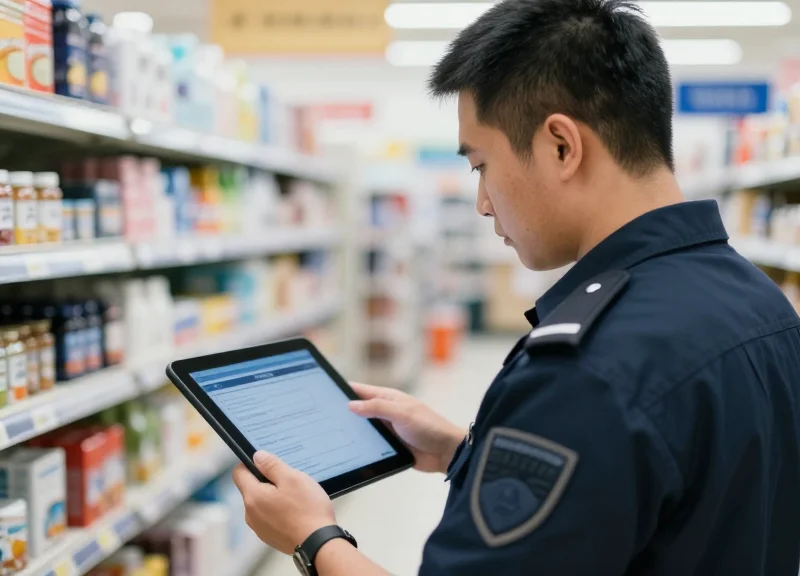
An operational protocol for AI-EAS integration is the standardized sequence of actions triggered the moment the system identifies a mismatch between a physical item and its scanned barcode. To maintain a 'frictionless' environment, this protocol must bridge the gap between a 2-second technical detection and a non-confrontational human response. The goal is to resolve the discrepancy at the Point of Sale (POS) before the transaction is finalized, transforming a potential loss into a customer service recovery opportunity.
- The Silent Alert (0-2 Seconds): When the AI vision system detects a visual mismatch (e.g., a high-end jacket scanned as a $5 t-shirt), a discrete haptic or visual alert is sent to the cashier's handheld device or a dedicated manager's tablet, rather than sounding a loud alarm.
- Visual Verification (2-10 Seconds): The associate performs a 'quick-glance' verification against the real-time image captured by the AI. This confirms that the alert isn't a false positive caused by lighting or unusual packaging.
- The Service-Led Intervention (10-30 Seconds): Instead of accusing the customer, the associate uses the 'Service Recovery' script. For example: 'It looks like this item is ringing up with the wrong price/description. Let me quickly double-check that for you to ensure your receipt is accurate.'
- System Override or Correction: The associate corrects the item code at the POS. If the customer persists or the situation escalates, the system logs the event and the EAS pedestals are pre-armed to track the specific tag if they attempt to exit without payment.
| Scenario | Intervention Style | Staff Action |
|---|---|---|
| Accidental Swap | Educational | Correct the item and mention a 'labeling error' to maintain rapport. |
| Intentional Swap | Authoritative Service | Strictly follow the 'Golden 30-Second Rule' to intervene before payment. |
| High-Value Organized Retail Crime | Observation & Logistics | Allow the detection to trigger a silent cloud-based incident report for LP. |
The Expert's Insight: The Golden 30-Second Rule. In twenty years of retail tech, I've seen that the window for 'deniable' intervention closes 30 seconds after the alert. If you wait until the customer has paid and moved toward the exit, you move from 'customer service' to 'loss prevention,' which increases legal liability and physical risk. The 2-second AI detection is only useful if your staff is trained to act while the item is still in the 'Actionable Zone'—the physical space between the scanner and the shopping bag.
What if the customer insists the price is correct?
Staff should have the authority to perform an immediate price-check via their mobile device. If the AI-flagged discrepancy persists, the protocol dictates escalating to a floor lead who can verify the ESL (Electronic Shelf Label) data.
How do we handle high-traffic periods?
During peak hours, prioritize alerts for high-margin items. The AI-EAS system should be calibrated to 'High-Value Only' mode to prevent overwhelming staff with minor discrepancies.
Does this replace the need for security guards?
No. It empowers floor staff to handle 90% of ticket-switching attempts through service, allowing specialized security to focus on high-risk physical theft and organized retail crime.
Measuring Performance and ROI of AI-EAS Systems
Measuring the ROI of AI-EAS integration involves calculating the reduction in Total Retail Loss—specifically losses from ticket switching—relative to the Total Cost of Ownership (TCO). A high-performing system doesn't just stop theft; it optimizes the balance between security and customer throughput. To achieve a positive return, retailers must target a shrink reduction of 15-25% in high-risk categories while maintaining a detection-to-alert latency of under 2 seconds to ensure operational efficiency.
| Key Performance Indicator (KPI) | Description | Industry Benchmark |
|---|---|---|
| Shrink Reduction Rate | Percentage decrease in unexplained inventory loss at checkout. | 15% - 30% reduction |
| False Alert Rate (FAR) | The percentage of alerts triggered by legitimate scanning behavior. | Less than 2% |
| Detection Latency | Time elapsed from barcode scan to associate notification. | Sub 2.0 Seconds |
| Intervention Success Rate | Percentage of flagged swaps resulting in a recovered item or corrected sale. | 85% or higher |
### The Expert Perspective: Beyond the 'Shrink' Number While most retailers focus solely on loss prevention, the true 'Hidden ROI' lies in Inventory Fidelity. When a barcode swap occurs undetected (e.g., a $400 Dyson vacuum scanned as a $5 toaster), your inventory system believes the high-value item is still in stock. This creates 'Phantom Stock,' preventing replenishment and leading to missed sales from legitimate customers. By detecting swaps in 2 seconds, the AI-EAS system maintains 99.9% inventory accuracy, which can drive a 2-4% lift in top-line revenue through improved shelf availability. I call this the Loss Velocity Metric (LVM): the speed at which you identify a discrepancy directly correlates to the preservation of your supply chain integrity.
How long does it take to see a return on investment (ROI)?
Most enterprise retailers achieve a break-even point within 12 to 18 months. This timeline accelerates in high-shrink environments like electronics, luxury apparel, or home improvement sectors where ticket-switching margins are high.
Does AI-EAS integration increase checkout friction for honest customers?
No. When calibrated to a 2-second detection threshold with a low False Alert Rate (under 2%), the system operates invisibly to 98% of customers. Only anomalous patterns trigger an intervention, preserving the 'frictionless' experience.
What are the primary cost drivers for maintaining these systems?
The TCO includes hardware (AI cameras, EAS pedestals), software licensing (AI vision algorithms), and cloud compute costs for real-time analysis. However, edge computing can significantly reduce long-term bandwidth costs.
Ultimately, the success of your AI-EAS calibration is measured by the Intervention-to-Recovery ratio. If your associates can intervene within the 2-second window provided by the AI, the deterrent effect alone often reduces future incidents by 40% in that specific location, creating a compounding ROI over time.