Managing surgical instrument kits is a critical challenge for modern hospitals where efficiency and patient safety are paramount. As we approach 2026, manual counting is no longer sufficient for high-volume operating theaters. Radio Frequency Identification (RFID) has emerged as the gold standard for real-time visibility, but selecting the right hardware—tags that can withstand extreme sterilization cycles while providing 100% read accuracy—remains a hurdle. This guide provides procurement officers and CSSD managers with a strategic roadmap to choosing the most durable and cost-effective RFID solutions tailored for the demanding medical environment.
The Evolution of Surgical Tracking: Why 2026 Demands RFID

By 2026, the transition from manual logs and legacy barcodes to Radio Frequency Identification (RFID) has become a non-negotiable standard for modern hospitals. Unlike barcodes, which require a direct line of sight and individual scanning, 2026-grade RFID solutions allow for the simultaneous detection of hundreds of surgical instruments inside a sealed tray or sterilization wrap. This evolution is driven by the urgent need to eliminate 'human error' in the Central Sterile Supply Department (CSSD) and ensure 100% compliance with Unique Device Identification (UDI) mandates, effectively turning surgical kits into smart assets that communicate their own sterilization and usage history.
| Feature | Manual Logs | Barcode Systems | 2026 RFID Solutions |
|---|---|---|---|
| Scanning Method | Handwritten entry | Single line-of-sight | Bulk/Batch (Non-line-of-sight) |
| Processing Time | High (15-20 mins/tray) | Moderate (5-8 mins/tray) | Instant (< 10 seconds/tray) |
| Data Accuracy | Low (High error rate) | Medium (Missed scans) | High (99.9% automated) |
| Sterilization Durability | N/A | Limited (Fading/Peeling) | Extreme (Autoclave-rated) |
The shift toward RFID is not merely a matter of convenience; it is a response to the 'Ghost Inventory' crisis—a phenomenon where hospitals lose up to 15% of their surgical instrumentation annually due to tracking gaps between the OR and the CSSD. In the 2026 landscape, procurement officers prioritize RFID to solve these specific operational bottlenecks.
Why is 2026 the tipping point for RFID adoption?
The convergence of lower tag costs, matured AI-driven analytics, and stricter hospital accreditation standards regarding 'Never Events' (like retained surgical items) has made RFID the baseline for surgical safety.
How does RFID improve CSSD workflow?
It enables 'Zero-Touch' cycle counting. Technicians can verify the contents of an entire surgical kit without opening the tray, maintaining sterility and reducing labor costs by up to 40%.
What role does UDI compliance play?
FDA and global mandates require granular tracking. RFID provides an automated digital trail that links every instrument to a specific patient and procedure, simplifying recalls and audits.
Expert Tip: One unique insight often overlooked by procurement teams is the 'Human Error Tax.' Manual tracking doesn't just cost time; it leads to 'tray incomplete' delays in the OR, which can cost a hospital upwards of $100 per minute. 2026 RFID solutions eliminate this tax by providing a real-time 'Digital Twin' of every surgical kit, ensuring the right tools are sterile and ready before the patient even enters the room.
Key Challenges in Surgical Instrument Management
Modern surgical instrument management is the systemic coordination of thousands of high-value assets across the Central Sterile Supply Department (CSSD) and the Operating Room; its primary challenges include high attrition rates, the clinical risk of incomplete surgical kits, and the logistical burden of maintaining a manual sterile chain of custody. Without automated tracking, hospitals face an average annual instrument loss rate of 10-15%, leading to millions in avoidable replacement costs and frequent delays in surgical throughput.
| Challenge Area | Manual/Barcode Limitation | Clinical/Financial Impact |
|---|---|---|
| Asset Attrition | Line-of-sight scanning is often skipped in fast-paced OR turnover. | High replacement costs and budget unpredictability. |
| Kit Integrity | Visual inspection of 100+ items per tray is prone to human error. | OR delays and increased anesthesia time for patients. |
| Regulatory Compliance | Paper-based logs are difficult to audit and prone to data gaps. | Increased risk during Joint Commission or FDA inspections. |
| Sterilization Cycles | Difficulty tracking the number of times a delicate tool has been autoclaved. | Premature tool failure or compromise of instrument integrity. |
Expert Insight: Beyond the obvious financial loss, the most corrosive challenge in 2026 is the 'Shadow Inventory Trap.' When surgeons and OR staff lose trust in the CSSD's ability to deliver complete kits on time, they begin 'hoarding' specific high-demand instruments in lockers or unauthorized sub-sterile areas. This creates an artificial shortage, forcing procurement to buy redundant inventory while the actual assets sit idle and untracked, invisible to the hospital's ERP system.
Why are incomplete surgical trays considered a 'never event' risk?
An incomplete tray discovered mid-surgery necessitates a 'runner' to find a replacement, extending the time a patient is under anesthesia and increasing the window for potential surgical site infections (SSIs).
How does instrument loss affect hospital margins in 2026?
With the rising cost of specialized robotic and laparoscopic tools, losing even 5% of a hospital's inventory can represent a mid-six-figure hit to the bottom line, directly competing with funds for staff and technology upgrades.
What is the primary barrier to maintaining a sterile chain of custody?
The primary barrier is 'fragmented data.' Traditional systems cannot track an instrument's journey from decontamination to the autoclave, then to storage, and finally to the patient, without constant, error-prone human intervention.
- Inventory Visibility Gap: Hospitals often lack a 'single pane of glass' view, meaning they know what they bought, but not where it is located at any given second.
- Processing Bottlenecks: Without real-time data, CSSD managers cannot optimize workflows, leading to 'peaks and valleys' in sterile supply that cause OR scheduling friction.
- Data Silos: Sterilization data often lives in a separate system from the patient's Electronic Health Record (EHR), making it difficult to link a specific tool to a specific patient outcome.
Technical Deep Dive: LF, HF, and UHF RFID for Medical Use

For hospital procurement in 2026, the selection of an RFID frequency is no longer a matter of 'one size fits all' but rather a strategic choice between Low Frequency (LF), High Frequency (HF), and Ultra-High Frequency (UHF) based on their physical interaction with surgical steel and saline. While LF and HF offer superior performance in the presence of liquids and metal due to their near-field magnetic coupling, UHF (specifically RAIN RFID) has become the 2026 industry standard for large-scale kit management because of its high-speed bulk reading capabilities and advancements in miniaturized on-metal tag design.
| Frequency Band | Range | Data Transfer | Interference (Metal/Liquid) | Primary Use Case |
|---|---|---|---|---|
| LF (125–134 kHz) | Short (< 10cm) | Slow | Excellent | Legacy individual tool tagging |
| HF/NFC (13.56 MHz) | Moderate (up to 30cm) | Medium | Good | Secure authentication & single-tool tracking |
| UHF (860–960 MHz) | Long (up to 10m+) | Fastest | Historical Challenge / Solved via On-Metal | Automated tray & kit inventory management |
The fundamental challenge with surgical instruments is their composition: stainless steel reflects RF energy, while saline and moisture absorb it. In previous years, this made UHF impractical for dense instrument trays. However, the 2026 generation of 'On-Metal' UHF tags utilizes ceramic substrates and specialized antenna spacers to create a 'stand-off' distance, actually using the metal instrument as an antenna extension to boost signal rather than kill it.
Why is UHF the preferred choice for 2026 procurement?
UHF allows for 'bulk reading,' meaning a CSSD technician can scan an entire tray of 50+ instruments in seconds without line-of-sight, which is impossible with LF or HF.
Can RFID tags survive the autoclave process?
Yes, current medical-grade tags are encapsulated in high-temperature polymers (like PEEK) or ceramics, rated for thousands of sterilization cycles at 134°C.
How does liquid affect read rates during surgery?
While liquids can attenuate signals, modern UHF systems use circular polarization in their antennas to maintain a stable read link even when instruments are coated in fluids.
Expert Insight for 2026: We are seeing a shift toward 'Hybrid Frequency' deployments. Procuring entities should look for systems that use UHF for high-speed logistics and inventory in the CSSD, but incorporate NFC (a subset of HF) for bedside verification. This allows surgical staff to use existing mobile devices for quick tool identification while maintaining the power of long-range UHF for departmental inventory audits. If your 2026 strategy doesn't account for on-metal UHF ceramic tags, you risk high failure rates in automated scan tunnels.
Critical Features of Autoclave-Stable RFID Tags
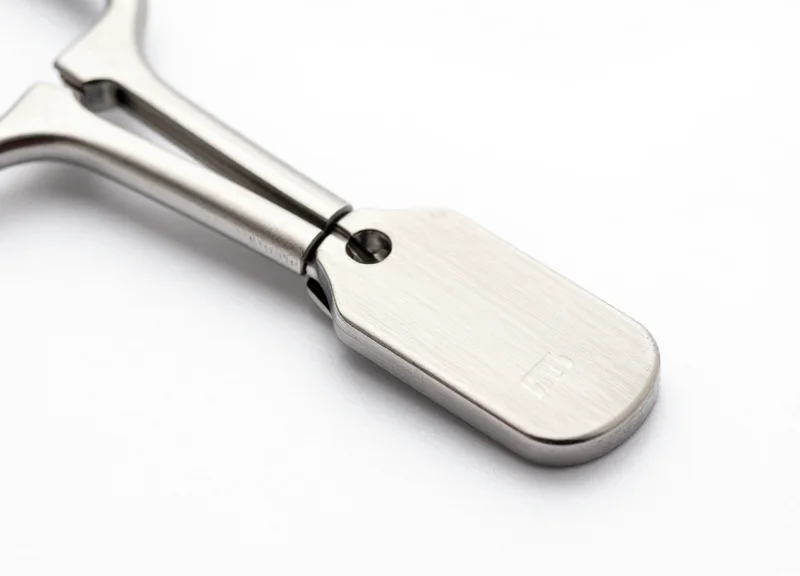
Autoclave-stable RFID tags are high-performance transponders specifically engineered to endure the harsh environment of steam sterilization, typically involving temperatures of 134°C (273°F) and pressures of 2 bars (30 psi). Unlike standard industrial tags, these medical-grade components utilize advanced encapsulation techniques—such as ceramic substrates or high-temperature thermoset resins—to protect the internal microchip and antenna from moisture ingress and thermal degradation over 500 to 2,000 sterilization cycles.
| Feature | Ceramic Encapsulated | PEEK/Thermoset Plastic | Standard FR4 (Not Recommended) |
|---|---|---|---|
| Max Temperature | Up to 220°C | Up to 180°C | Approx. 100°C |
| Pressure Resistance | Excellent | Very High | Moderate |
| Chemical Durability | Immune to most acids/alkalis | High Resistance | Low/Degrades over time |
| Typical Cycle Life | 1,000+ | 500-800 | Less than 10 |
- Coefficient of Thermal Expansion (CTE) Matching: The materials used for the tag housing and the internal bonding agent must expand and contract at the same rate as the silicon chip to prevent micro-fractures during rapid cooling.
- IP69K Ingress Protection: Tags must be hermetically sealed to prevent high-pressure steam from reaching the integrated circuit, which would cause immediate electronic failure.
- Biocompatibility (ISO 10993): Materials must be non-toxic and non-reactive, ensuring they do not leach chemicals into the sterile field or cause adverse reactions during surgery.
Expert Procurement Tip: In 2026, the most significant differentiator is 'Thermal Cycle Hysteresis.' Standard tags often show a 'drift' in read frequency after 50 cycles due to internal stress. Modern procurement should specify tags that maintain a frequency deviation of less than 1% over their entire rated lifespan. This ensures that a tray of 100 instruments can be read just as quickly after its 500th sterilization as it was on day one, preventing bottlenecks in the Central Sterile Supply Department (CSSD).
Regulatory Alignment: Integrating UDI and RFID
Regulatory alignment in 2026 requires moving beyond mere physical labeling to a digitized compliance framework where RFID acts as the primary data carrier for Unique Device Identification (UDI). While the FDA and EU MDR (Medical Device Regulation) mandate that devices carry a UDI in both human-readable and Machine Readable Medium (AIDC) formats, RFID fulfills the AIDC requirement with significantly higher efficiency than traditional 2D barcodes. By mapping the GS1-compliant Global Trade Item Number (GTIN) and Application Identifiers (AIs) directly into the RFID tag’s memory banks, hospitals can achieve 'at-a-distance' compliance without manual scanning during the frantic prep stages of a surgical procedure.
| Regulatory Requirement | Traditional Barcode (UDI) | RFID-Integrated UDI (2026 Standard) |
|---|---|---|
| AIDC Compliance | Line-of-sight required for every scan. | Bulk scanning of entire kits in seconds. |
| Data Synchronization | Static; requires manual database lookup. | Dynamic; can store last-sterilization date on-chip. |
| Audit Readiness | High risk of human error/missed scans. | Automated, time-stamped digital logs for every tray. |
| Durability | Laser marks can fade after 50+ cycles. | Encapsulated tags withstand 1,000+ autoclave cycles. |
A critical, often-overlooked technicality is the memory mapping of the RFID tag. To remain compliant, the RFID solution must adhere to the GS1 Tag Data Standard (TDS). This ensures that the Electronic Product Code (EPC) encoded on the tag is bit-for-bit compatible with the UDI stored in the FDA’s Global Unique Device Identification Database (GUDID). When procurement teams select a solution, they must verify that the software middleware can bi-directionally sync the RFID 'Digital Twin' with the hospital's Enterprise Resource Planning (ERP) system to maintain a valid chain of custody.
- Verify GS1 EPC Gen2 Compatibility: Ensure the hardware supports the standard communication protocol for medical devices to allow interoperability across different hospital departments.
- Map UDI Attributes to Tag Memory: The Device Identifier (DI) and Production Identifier (PI)—including lot numbers and expiration dates—should be encoded into the User Memory bank or the EPC bank.
- Implement 'Digital Twin' Logic: Create a cloud-based record for every physical tag that mirrors the GUDID entry, providing a real-time regulatory status for every instrument in circulation.
Expert Insight: for 2026: Do not view RFID as a replacement for the physical laser-etched UDI mark. Instead, treat RFID as the 'Active Compliance Layer.' While the laser mark provides a fail-safe for manual identification, the RFID tag provides the automated data integrity required for modern EMR integration. Leading hospitals are now using the RFID's 'User Memory' bank to store a counter of sterilization cycles, proactively flagging instruments for decommissioning before they exceed their validated lifecycle—a key requirement for EU MDR Annex I compliance.
Does RFID satisfy the FDA's UDI 'Direct Marking' requirement?
Yes, provided the RFID tag is permanently affixed to the device and the data it carries matches the UDI registered in GUDID. Most hospitals use RFID alongside a 2D matrix for redundancy.
What happens if an RFID tag fails during an audit?
Regulatory bodies require a backup identification method. This is why the best 2026 solutions integrate the RFID chip into a 'Hybrid Label' that also features a human-readable serial number.
Is the data on the RFID tag encrypted?
While UDI data is public, modern medical RFID tags use locked memory banks to prevent unauthorized modification of the device's identity, ensuring data integrity for ISO 13485 audits.
Integrating RFID with Hospital Information Systems (HIS)

Integrating RFID with Hospital Information Systems (HIS) is the process of establishing a seamless, bidirectional data pipeline between the physical RFID hardware—readers and tags—and the hospital's core software architecture, such as Electronic Health Records (EHR) and ERP systems. In 2026, this integration relies on standardized communication protocols like HL7 FHIR (Fast Healthcare Interoperability Resources) to ensure that the sterilization status, location, and history of every surgical kit are updated in real-time without manual data entry.
| Integration Protocol | Clinical Role | Key Benefit (2026 Standards) |
|---|---|---|
| HL7 FHIR v4/v5 | Inter-system communication | Universal compatibility across EHR platforms like Epic or Cerner. |
| RESTful APIs | Custom dashboard & App dev | Allows high-speed data retrieval for custom mobile surgeon alerts. |
| MQTT | IoT / Hardware Messaging | Low-latency communication for real-time kit tracking in hallways. |
| Direct Database Middleware | Legacy System Support | Reliable for older SQL-based inventory management tools. |
Expert Insight: Move Toward Event-Driven Architecture (EDA). Most procurement teams mistakenly look for 'scheduled synchronization' (polling). By 2026, the gold standard is an event-driven model where the RFID hardware pushes data to the HIS the millisecond a tag is read. This ensures that if a tray is contaminated or missing an instrument, the surgical team is notified via their mobile devices before the patient is on the table, not during the final count.
- Assessment of Middleware Compatibility: Ensure the RFID vendor provides a robust middleware layer that can translate raw EPC (Electronic Product Code) data into actionable medical records.
- Field Mapping & UDI Synchronization: Align RFID data fields with the FDA's Unique Device Identification (UDI) fields already stored in your HIS to maintain a single source of truth.
- Redundancy and Offline Buffer: The system must include an edge-computing buffer that stores read data if the hospital network fails, ensuring no sterilization cycle goes unrecorded.
- Security & Encryption Implementation: Apply AES-256 encryption for data in transit between the RFID readers and the hospital servers to protect sensitive patient-to-instrument associations.
Will integrating RFID slow down our EHR performance?
No. Modern middleware filters out 'duplicate reads' and only sends state-change updates to the EHR, minimizing the impact on system bandwidth.
Can RFID data be accessed by surgical staff on mobile devices?
Yes, provided the integration includes a web-based API or mobile-responsive middleware that links the kit ID to the daily OR schedule.
What happens if our hospital switches HIS vendors?
By choosing a FHIR-compliant RFID solution, you ensure that your hardware and data mapping remain compatible even if you migrate from one EHR to another.
Total Cost of Ownership (TCO) vs. Initial Investment
For hospital procurement teams in 2026, the 'sticker price' of RFID tags is a deceptive metric; a true Total Cost of Ownership (TCO) analysis reveals that initial capital expenditures (CapEx) typically represent only 30% of the five-year investment. While high-durability, autoclave-stable tags and fixed reader infrastructure require significant upfront funding, the operational savings—driven by a 90% reduction in manual tray counting time and the near-elimination of lost instrumentation—frequently result in a full Return on Investment (ROI) within 12 to 18 months. Evaluating TCO requires looking past the individual tag cost to the 'cost-per-use' over the instrument's lifecycle.
| Cost Category | Initial Investment (CapEx) | Long-Term Ownership (OpEx) |
|---|---|---|
| Hardware | Autoclave-stable tags, handhelds, and fixed portal readers. | Periodic tag replacement for retired instruments and reader maintenance. |
| Software | Integration with HIS/ERP and middleware licensing. | SaaS subscription fees, security patches, and cloud storage. |
| Labor | Staff training and initial kit tagging/mapping. | Dramatic reduction in manual inventory labor and tray assembly errors. |
| Asset Management | Initial procurement of RFID-enabled trays. | Lowered replacement costs due to reduced 'shrinkage' and better utilization. |
Expert Insight: The 'Hidden' OR Delay Cost. One original data point often overlooked by procurement is the cost of OR downtime. In 2026, a single minute of delayed surgery due to an incomplete or missing instrument tray costs an average of $62 to $100. By ensuring 100% kit accuracy before the patient enters the room, an RFID solution that prevents just two 15-minute delays per week can save a facility over $150,000 annually in recovered surgical capacity alone.
Is the tag price the most important procurement factor?
No. The durability and read-rate accuracy are far more critical. A cheap tag that fails after 50 autoclave cycles requires labor-intensive re-tagging, which costs 10x the original tag price in labor and disruption.
What are the common hidden costs in RFID implementation?
Hidden costs usually stem from network infrastructure upgrades (Wi-Fi/PoE for readers), middleware integration with existing hospital software, and the 'tagging backlog' where staff must manually associate thousands of legacy tools with new digital IDs.
How does RFID affect annual instrument replacement budgets?
Most hospitals see a 15-20% reduction in annual replacement spending because instruments are no longer accidentally discarded in laundry or waste streams, and 'hoarding' of kits by departments is eliminated through real-time visibility.
- Phase 1: Baseline Audit: Quantify current instrument loss rates and manual labor hours spent in the Sterile Processing Department (SPD).
- Phase 2: Pilot Scalability: Calculate the TCO for a single high-value department (e.g., Orthopedics) to validate the ROI model before a hospital-wide rollout.
- Phase 3: Lifecycle Integration: Transition from reactive purchasing to data-driven procurement, using RFID usage data to identify underutilized kits that can be decommissioned to save on maintenance.
Vendor Selection Criteria: What to Ask Your RFID Supplier
In the complex ecosystem of 2026 hospital procurement, selecting an RFID vendor is no longer just about buying hardware; it is about securing a long-term operational partnership. A qualified vendor must demonstrate more than just technical specifications; they must provide evidence of clinical workflow integration, rigorous 'stress-to-failure' testing data, and a clear roadmap for scalability within the Sterile Processing Department (SPD). The ideal supplier acts as a systems integrator that can guarantee 99.9% read accuracy in high-metal environments while maintaining compliance with evolving global UDI and cybersecurity standards.
| Vetting Category | Tier 1 Partner Requirement | Strategic Importance |
|---|---|---|
| Durability Validation | Verified 500+ autoclave cycle survivability | Prevents premature tag failure and high replacement costs. |
| Software Agnosticism | API-first architecture (RESTful/GraphQL) | Prevents vendor lock-in and ensures HIS/ERP interoperability. |
| Support SLA | 24/7 Clinical-grade technical support | Critical for avoiding surgical delays due to system downtime. |
| Implementation Speed | Full deployment in < 12 weeks | Minimizes disruption to hospital throughput and ROI timelines. |
Expert Insight: The CHEL Metric. In 2026, forward-thinking procurement teams are moving beyond simple 'autoclave-safe' labels. We recommend asking for the 'Cumulative Heat Exposure Limit' (CHEL). This metric tracks the total minutes of steam exposure a tag can withstand before the adhesive or internal antenna degrades. If a vendor cannot provide CHEL data, they haven't performed the longitudinal testing required for high-volume surgical environments.
- Request 'Stress-to-Failure' Lab Reports: Don't settle for marketing brochures. Ask for third-party lab results showing tag performance after exposure to enzymatic detergents, ultrasonic cleaners, and repeated sterilization cycles.
- Evaluate the Pilot Program Framework: A reputable vendor should offer a 30-day proof-of-concept (POC) using your actual surgical trays. This test should measure read rates specifically in 'worst-case' dense metal scenarios.
- Audit Cybersecurity and Cloud Compliance: With the rise in hospital ransomware, ensure the vendor meets SOC2 Type II, HIPAA, and GDPR standards for any data stored or transmitted through their cloud portals.
- Check the Hardware-Software Separation: Ask if their software can manage tags from other manufacturers. Flexibility is key to future-proofing your investment as new tag technologies emerge.
How do you handle 'Ghost Reads' or stray signals?
The vendor should explain their RSSI (Received Signal Strength Indicator) filtering and software logic that prevents the system from accidentally scanning trays in the hallway outside the operating room.
What is the total cost of ownership (TCO) over 5 years?
Demand a breakdown that includes tag replacement rates, software licensing, firmware updates, and on-site training costs.
Can your system operate offline if the hospital network goes down?
A resilient solution should have 'edge' capabilities, allowing for local data buffering and scanning even during a network outage.
Future Trends: AI-Enhanced Tracking and 2026 Market Forecasts

As we approach 2026, the surgical RFID landscape is shifting from simple 'dot-on-a-map' location tracking to AI-driven prescriptive intelligence. Modern hospital procurement teams are no longer just buying tags; they are investing in ecosystems where artificial intelligence analyzes RFID telemetry to predict instrument failures before they occur and optimizes tray composition based on real-world surgical usage patterns. This evolution represents a move toward the 'Autonomous Sterile Processing Department' (ASPD), where manual counting is replaced by instant, AI-verified digital audits.
| Metric | 2024 Benchmark | 2026 Forecast |
|---|---|---|
| RFID Adoption Rate (Global Tier-1 Hospitals) | 18% | 42% |
| Tray Assembly Error Rates | 3-5% | <0.5% (AI-Assisted) |
| Primary Data Source | Passive RFID Scanning | Sensor-Fused (RFID + Computer Vision) |
| Instrument Utilization Efficiency | 65% | 88% (Prescriptive Rotation) |
- Predictive Maintenance Algorithms: AI will monitor the 'sterilization stress' of individual instruments by tracking heat cycles via RFID, alerting technicians to replace instruments before they reach mechanical fatigue.
- Computer Vision Integration: 2026 will see the rise of hybrid stations that combine RFID for bulk identification and computer vision for visual inspection of instrument quality (e.g., checking for pitting or bio-burden).
- Zero-Touch Inventory Reordering: ERP systems will automatically trigger procurement orders based on real-time utilization data and predicted surgical volumes, eliminating manual stock-outs.
One unique insight often overlooked by procurement teams is the emergence of the 'Instrument Digital Twin.' In 2026, every high-value surgical asset will likely have a cloud-based digital twin that records every autoclave cycle, every sharpen, and every procedure. This allows hospitals to move away from arbitrary 'set-and-forget' maintenance schedules to a performance-based model that can extend the life of surgical kits by up to 30% while actually increasing patient safety.
Will AI-enhanced RFID require a complete hardware overhaul?
No. Most 2026 AI solutions are software-layer upgrades that utilize existing Gen2 UHF RFID readers. The investment shift will be toward software-as-a-service (SaaS) rather than new silicon.
How does AI handle RFID 'stray reads' in the operating room?
Advanced machine learning models now filter out 'noise' and stray signals by analyzing the signal strength (RSSI) and phase angle to confirm an instrument is actually in the sterile field.
Is the data generated by these systems secure?
Future-proof solutions are adopting Blockchain-lite ledgers to ensure that the sterilization and usage history of a surgical kit is immutable and audit-ready for regulatory bodies.