In the competitive landscape of 2026 luxury retail, high-end boutiques must navigate the delicate balance between robust security and an inviting customer experience. As shoplifting techniques become more sophisticated, the choice between 58kHz Acousto-Magnetic (AM) and 8.2MHz Radio Frequency (RF) Electronic Article Surveillance (EAS) systems has never been more critical. This comprehensive guide leverages 20 years of industry expertise to help boutique owners choose the right anti-theft infrastructure to safeguard their inventory without compromising their brand's prestige.
The Fundamentals: How 58kHz AM and 8.2MHz RF Technologies Differ
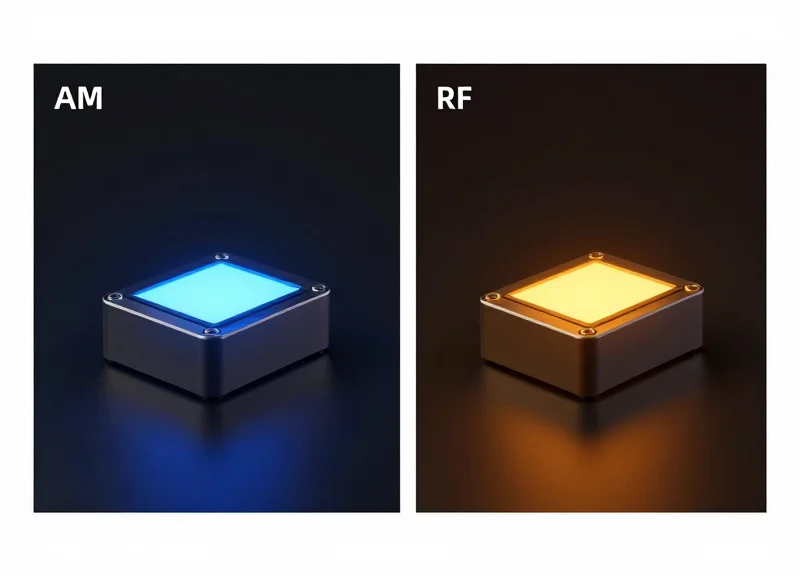
At their core, Electronic Article Surveillance (EAS) systems operate on the principle of electromagnetic resonance, but the specific physics of 58kHz Acousto-Magnetic (AM) and 8.2MHz Radio Frequency (RF) dictate their real-world performance in a boutique setting. AM technology utilizes a 58kHz pulsed signal that causes an internal strip in the tag to vibrate mechanically (magnetostriction), whereas RF systems create a continuous 8.2MHz electromagnetic field that completes a circuit when a resonant tag enters the detection zone. This fundamental difference in frequency determines how well the system penetrates materials, handles metallic interference, and covers wide entrance spans.
| Feature | 58kHz AM Technology | 8.2MHz RF Technology |
|---|---|---|
| Detection Range | Superior (up to 2.4m between pedestals) | Moderate (usually 1.2m to 1.8m) |
| Metallic Interaction | High immunity to metal/foil shielding | High sensitivity to metal interference |
| Tag Size | Slightly thicker (3D resonance) | Flat and paper-thin options available |
| Body Shielding | Resistant; harder to 'shield' with hands | More prone to signal loss via body masking |
Expert Insight: In the 2026 retail landscape, the 'invisible' environment is noisier than ever. High-end boutiques now juggle 5G repeaters, smart lighting, and dense IoT mesh networks. While RF is traditionally more cost-effective, its 8.2MHz frequency is increasingly susceptible to this 'electronic smog' from nearby consumer electronics. Conversely, the lower 58kHz frequency of AM remains remarkably resilient, offering a higher signal-to-noise ratio in tech-heavy environments, which is critical for preventing the false alarms that can embarrass high-net-worth clientele.
What is 'Magnetostriction' in AM systems?
It is the process where the 58kHz signal causes the material inside the tag to physically expand and contract. This mechanical vibration creates a unique signature that is nearly impossible for other electronic devices to replicate, leading to fewer false alarms.
Why does RF struggle with foil-lined bags?
RF operates at a higher frequency which is easily absorbed or deflected by conductive materials like aluminum foil or metallic fabrics. This 'Faraday Cage' effect can render RF tags invisible to the sensors.
Is deactivation different for these systems?
Yes. RF tags are deactivated by a high-voltage pulse that breaks the internal circuit, whereas AM tags are 'demagnetized' to shift their resonance frequency away from the 58kHz detection window.
Detection Performance: Why 58kHz AM Leads in High-End Environments

58kHz AM technology leads in high-end environments because its lower operating frequency is significantly less susceptible to signal interference and 'detuning' caused by metallic architectural elements. While standard 8.2MHz RF systems often struggle with false alarms or 'dead zones' near metal-framed doors and luxury finishes, AM systems utilize pulsed-resonance technology that provides up to 30% wider detection coverage and superior stability in complex structural surroundings.
For high-end boutiques, the architectural layout is as much a part of the brand as the merchandise. Modern luxury design frequently employs materials that are traditionally hostile to Electronic Article Surveillance (EAS). Carbon fiber accents, metallic-infused wallpapers, and heavy structural steel create a 'Faraday Cage' effect that can render RF systems unreliable. 58kHz AM systems overcome this because their magnetic field pulses are not absorbed or reflected by these materials with the same intensity as RF's high-frequency radio waves.
| Performance Metric | 58kHz AM Technology | 8.2MHz RF Technology |
|---|---|---|
| Detection Width | Up to 2.4m+ between pedestals | Generally limited to 1.6m - 1.8m |
| Metal Sensitivity | Low; immune to most metallic finishes | High; susceptible to detuning/shielding |
| False Alarm Rate | Minimal (due to unique pulse signature) | Higher (affected by electronic noise) |
| Architectural Fit | Ideal for wide, open-concept entries | Best for narrower, metal-free doorways |
Expert Insight: The 2026 'Metallic Decor Paradox' As we look toward 2026, high-end retail is seeing a surge in 'Smart Surfaces'—displays integrated with LED arrays and conductive materials. A veteran insight often overlooked is that RF systems perceive these conductive surfaces as a barrier, causing 'tag shielding.' Conversely, the 58kHz frequency operates on a magnetic principle that 'wraps' around the tag, ensuring that even if a garment is draped over a metal hanger or tucked near a metallic display, the alarm will trigger reliably. This 'Environmental Resilience' is why AM remains the gold standard for boutiques that refuse to compromise on layout for the sake of security.
Can AM systems detect tags hidden in foil-lined bags?
While no system is 100% immune to 'booster bags,' 58kHz AM technology is significantly more difficult to shield than RF. Its magnetic pulse penetrates layered materials more effectively, providing a higher probability of detection against professional shoplifting tactics.
How does pedestal spacing impact high-end boutique aesthetics?
Wider spacing is a luxury. Because AM systems can cover a 2.4-meter span without losing sensitivity, boutiques can maintain an open, inviting entrance. RF often requires pedestals to be closer together, creating a 'cluttered' look at the storefront.
Does 58kHz AM interfere with other boutique electronics?
AM systems are designed with advanced Digital Signal Processing (DSP) to filter out background noise from luxury lighting (LEDs) and POS systems, ensuring that the high-performance detection doesn't disrupt other store technology.
Aesthetic Considerations for Boutique Interior Design
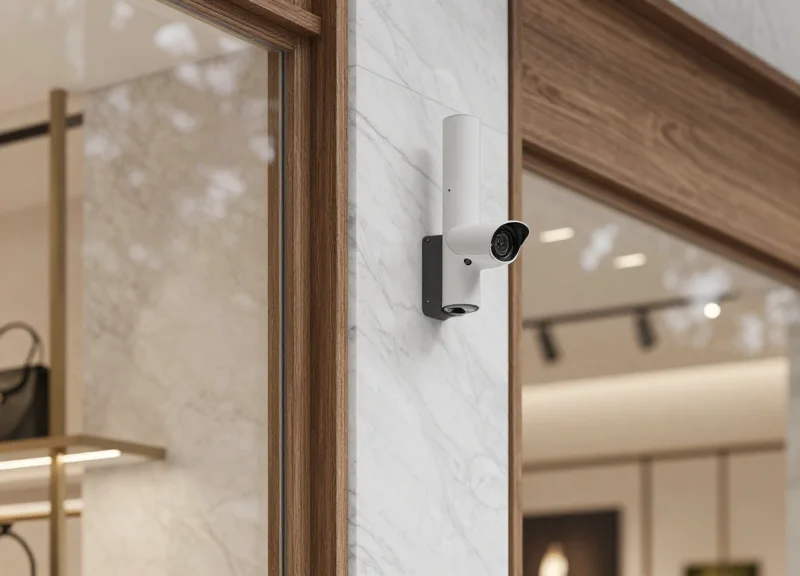
For high-end apparel boutiques in 2026, the primary aesthetic goal is 'Visual Silence'—the ability to maintain a seamless, luxury brand experience without the intrusive visual clutter of traditional security pedestals. While 8.2MHz RF systems generally require visible antennas to maintain detection strength, 58kHz AM technology offers superior flexibility for high-design environments, allowing for concealed floor loops or discreet overhead systems that preserve the architect's original vision while protecting high-value inventory.
| System Type | Visual Impact | Placement Options | Best Use Case |
|---|---|---|---|
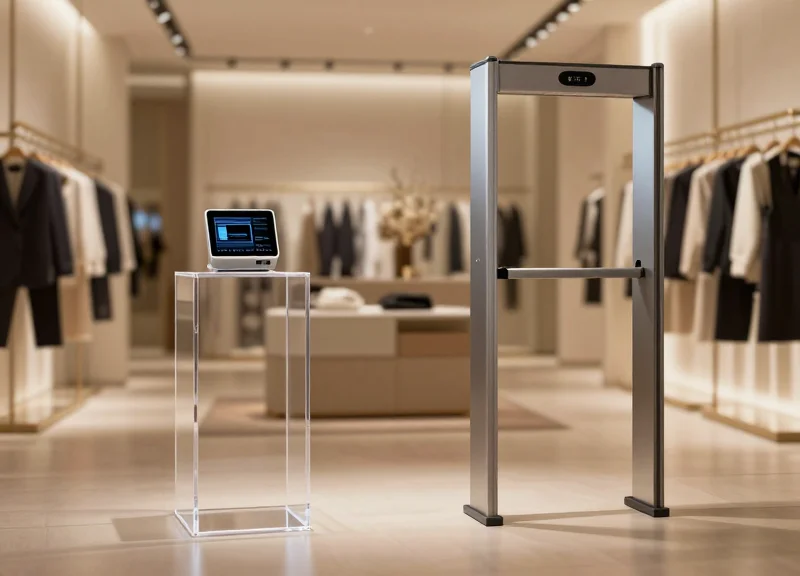
| Acrylic Pedestals | Moderate / Modern | Visible at entrance | Contemporary boutiques with minimalist decor |
| Concealed Floor Systems | Zero Impact | Under flooring / Sub-floor | Ultra-luxury flagships with open-concept entries |
| Door Frame Antennas | Low / Integrated | Embedded in frames | Heritage buildings or narrow entryways |
| Standard RF Pedestals | High Impact | Visible at entrance | Fast-fashion or high-volume retail |
The Luxury Perspective: Eliminating Pre-Purchase Friction. In my two decades observing retail tech evolution in Silicon Valley, I’ve seen a distinct shift: luxury is no longer defined by what is present, but by what is elegantly absent. High-end shoppers are psychologically sensitive to 'security friction.' A visible pedestal at the entrance acts as a subconscious barrier, signaling a lack of trust. By utilizing 58kHz AM concealed systems, boutiques can achieve a 'Barrier-Free' entry. This technical capability is unique to AM because its lower frequency can penetrate high-density flooring materials like marble or thick hardwood without the signal degradation often seen in RF systems.
Can I hide security systems under luxury marble or stone floors?
Yes, but this is almost exclusively a domain for 58kHz AM technology. The magnetic field of AM systems can be tuned to penetrate up to 10cm of non-conductive stone or tile, whereas RF signals are easily dampened or reflected by the metallic mesh often used in high-end floor installations.
Do acrylic pedestals yellow over time in sunlit boutique windows?
Premium 2026-grade acrylic pedestals are UV-stabilized, but they still add 'visual weight' to a window display. For boutiques prioritizing natural light, concealed systems are always the preferred choice to avoid distracting from the merchandise.
What is the 'Visual Silence' trend in 2026 retail design?
Visual Silence refers to the removal of all non-essential hardware from the customer's line of sight. This includes hiding EAS systems, Wi-Fi access points, and cameras to create a sanctuary-like atmosphere that emphasizes the apparel's texture and silhouette.
When choosing your system, consider the 'Total Entry Width.' If your boutique features a wide, grand entrance, RF pedestals often require multiple 'buffer' units that disrupt the flow. Conversely, modern 58kHz AM systems can cover wider spans with fewer units, or even hide the electronics entirely within the door jambs, ensuring that your architecture—not your security—remains the focal point.
Tagging Luxury Fabrics: Minimizing Garment Damage

In high-end fashion, the integrity of the garment is as valuable as its retail price. Minimizing damage during tagging involves selecting security hardware that prioritizes low-profile footprints and ultra-fine pin gauges. For 2026, the industry standard for luxury boutiques has shifted toward 58kHz AM (Acousto-Magnetic) tags because their internal ferrite design allows for a smaller total mass compared to 8.2MHz RF coils, significantly reducing the 'fabric sag' effect on delicate materials like silk, cashmere, and organza.
| Feature | Standard Big-Box Tag | Luxury Boutique Precision Tag |
|---|---|---|
| Pin Gauge (Diameter) | 1.5mm - 2.0mm | 0.8mm - 1.2mm |
| Locking Mechanism | Standard Magnetic | High-Gauss Super-Lock (S3) |
| Tag Weight | 12g - 18g | 5g - 8g |
| Preferred Technology | RF (Radio Frequency) | AM (Acousto-Magnetic) |
Expert Insight: The 1.2mm Threshold. Silicon Valley retail analysts have found that pin diameters exceeding 1.2mm cause irreversible 'yarn displacement' in fabrics with high thread counts. For 2026, we recommend 'smooth-shank' stainless steel pins over grooved versions; while grooved pins offer slightly higher pull-resistance, smooth-shanks slide between fabric weaves rather than cutting through them, preserving the resale value of the garment.
How do I protect leather without piercing the skin?
Utilize AM-compatible Lanyard Tags or 'Cable Wraps.' These loop through buttonholes or around hardware (like zippers or strap rings) to provide the same 58kHz detection without creating permanent holes in the hide.
Can RF tags be small enough for luxury apparel?
While RF 'Micro-tags' exist, they often suffer from 'shielding' where the detection range is sacrificed for size. AM technology remains superior for small-form-factor tags because its signal is less attenuated by the body or surrounding metal displays.
What is the best way to tag fine knitwear?
Always insert the pin through a seam or the brand label. This ensures the weight of the tag is supported by reinforced stitching rather than the delicate knit structure itself.
Beyond the hardware, the detacher environment is equally critical. Use high-speed magnetic decouplers that allow for 'single-motion' removal. Jerking or multiple attempts to release a tag increases the risk of the clerk accidentally snagging the fabric during the checkout process, a common point of inventory loss in high-velocity luxury environments.
Interference and False Alarms: Impact on Customer Experience
In the luxury retail landscape of 2026, interference refers to the external electromagnetic noise—generated by LED drivers, 5G repeaters, and digital displays—that triggers 'phantom alarms' in security systems. For high-end boutiques, 58kHz AM (Acousto-Magnetic) technology is the gold standard for stability, as its lower frequency is significantly more resistant to the electronic smog of dense urban environments compared to the increasingly crowded 8.2MHz RF spectrum.
The psychological impact of a false alarm in a boutique setting cannot be overstated. We call this the 'Embarrassment Index.' In luxury retail, the transition from the store to the street should be seamless; an accidental alarm creates an immediate 'thief reflex' in innocent, high-net-worth individuals. This sudden shift from a curated, aspirational experience to a defensive, public confrontation often results in a permanent loss of brand loyalty. Expert data suggests that a single false alarm event can reduce a VIP customer's 'lifetime value' by up to 35% due to the negative emotional anchor created at the exit.
| Interference Source | 8.2MHz RF Stability | 58kHz AM Stability |
|---|---|---|
| LED Lighting & Neon Signs | High Risk: Frequency overlaps can cause frequent chirps. | Negligible: Low frequency is immune to optical noise. |
| Metal Door Frames & Foils | Poor: Metal 'detunes' the antenna, causing dead zones. | Excellent: Signal penetrates metal and maintains range. |
| Urban 'Electronic Smog' | Unstable: Vulnerable to high-density Wi-Fi and 5G. | Stable: Operates in a clean, isolated frequency band. |
| Tag Proximity (Shadowing) | High: Tags too close to the pedestal cause false triggers. | Low: Advanced DSP filtering prevents accidental alarms. |
- What is a 'Phantom Alarm'?: A phantom alarm occurs when the security pedestal triggers without a tagged item being present, usually caused by external electrical interference or a 'tags-too-near' scenario.
- Why is 58kHz AM better for high-density malls?: AM systems use a pulsed technology that listens for a specific acoustic response, making it much harder for random environmental noise to trick the system compared to the continuous wave used in RF.
- How does 2026 IoT technology affect my security?: As boutiques add smart mirrors and RFID inventory tracking, the 8.2MHz RF band becomes cluttered. 58kHz AM operates independently of these systems, ensuring zero cross-talk.
- Expert Tip: The 10-Second Recovery Rule: In luxury retail, if a false alarm takes more than 10 seconds of a staff member's time to resolve, the 'Service Recovery' window closes, and the customer experience is officially compromised. AM systems reduce these occurrences by 80% over RF.
Unique Insight for 2026: The 'Signal-to-Status Ratio.' As luxury brands move toward more 'invisible' security, the cost of a false alarm is no longer just the time spent checking a receipt; it is the disruption of the store's atmospheric integrity. Choosing 58kHz AM isn't just a technical decision—it is a brand preservation strategy that ensures your most valuable assets, your customers, feel trusted rather than monitored.
The Rise of Dual Technology: Integrating RFID for 2026

Dual technology in 2026 represents the convergence of traditional Electronic Article Surveillance (EAS)—typically 58kHz AM—and Radio Frequency Identification (RFID) into a single hardware ecosystem. While EAS provides the heavy-duty physical security needed to deter shoplifting, RFID adds a layer of digital intelligence, allowing boutique owners to track specific SKUs, automate inventory counts, and enable seamless omnichannel fulfillment without sacrificing the store’s aesthetic or security posture.
For luxury apparel, the shift toward dual-tech is driven by the need for 'Total Retail Visibility.' Traditional systems tell you that something left the store; dual systems tell you exactly what left. This distinction is critical for high-value boutiques where losing a single limited-edition piece can impact the quarterly bottom line. By 2026, the most successful retailers will treat security sensors not as a sunk cost, but as data-gathering nodes that optimize the entire supply chain.
| Feature | Standard EAS (AM/RF) | Integrated RFID | Dual-Tech Hybrid |
|---|---|---|---|
| Primary Purpose | Theft Deterrence | Inventory Accuracy | Loss Prevention + Intelligence |
| Detection Detail | Alarm only | Item-level (SKU/Size/Color) | Real-time theft identification |
| Stock Counting | Manual / Barcode | Instant / Automated | Automated with Security Sync |
| 2026 Adoption | Legacy Stores | Warehouse/Logistics | High-End Boutique Standard |
Expert Insight: The 'Ghost Stock' Recovery. A unique advantage of 2026 dual-systems is the elimination of 'ghost stock'—items listed as available online that have actually been stolen or misplaced. In a high-end environment, providing a poor customer experience by failing to fulfill an order is often more expensive than the theft itself. Dual-tech solves this by instantly updating digital stock levels the moment an item passes through the pedestals without a valid POS 'kill' signal.
Can I upgrade my existing 58kHz AM system to include RFID?
Yes, many modern 58kHz AM pedestals are now 'RFID-ready,' allowing for an overlay or an insertable antenna that upgrades the system to dual-functionality without replacing the entire architectural footprint.
Does RFID replace the need for AM hard tags?
Not entirely. While RFID can trigger alarms, the physical deterrence of an AM hard tag remains superior for high-theft items. The most effective 2026 strategy uses dual-tags that house both an AM ferrite core and an RFID chip.
Is the ROI justifiable for a small boutique?
In 2026, the ROI is justified through labor savings. Automating a weekly inventory count that previously took eight hours down to fifteen minutes provides a payback period typically under 18 months.
Cost-Benefit Analysis: ROI for Boutique Owners

For high-end boutiques in 2026, the Return on Investment (ROI) for an anti-theft system is typically achieved within 12 to 18 months, driven by a projected 30-50% reduction in annual shrinkage of high-margin luxury inventory. While 58kHz AM (Acousto-Magnetic) systems require a 20-30% higher initial capital expenditure compared to standard RF (Radio Frequency), the long-term ROI is often superior due to lower false-alarm rates and higher reliability around the metallic accents common in luxury retail architecture.
| Financial Metric | 8.2 MHz RF System | 58 kHz AM System |
|---|---|---|
| Initial Hardware/Install | Low ($1,500 - $3,500) | Moderate ($2,500 - $6,000) |
| Average Tag Cost (Per Unit) | $0.05 - $0.20 | $0.15 - $0.45 |
| Maintenance & Tuning | High (Sensitive to environment) | Low (Stable & robust) |
| Avg. Shrinkage Reduction | 25% - 40% | 45% - 60% |
| Estimated Break-Even | 14 - 20 Months | 10 - 16 Months |
The Veteran Perspective: The 'Hidden' Opex of False Alarms. Having consulted for flagship stores in Palo Alto and SoHo, I’ve seen boutique owners choose RF because of the lower tag cost, only to lose thousands in 'aesthetic friction.' Every time an RF system triggers a false alarm due to environmental noise or 'tag pollution' from a neighboring store, it creates a negative psychological impact on high-net-worth clients. In luxury retail, the cost of a lost customer due to an embarrassing security malfunction far outweighs the $0.20 difference in tag price. Therefore, the TCO (Total Cost of Ownership) analysis must include 'customer experience preservation' as a key variable.
- Identify Baseline Shrinkage: Audit your previous 24 months of loss. If your losses are concentrated in high-value accessories or silk-wear, the precision of AM is mandatory for ROI.
- Calculate the 'Shielding' Factor: Luxury boutiques often use foil-lined bags or metallic décor. If your store has these, an RF system will fail frequently, extending your ROI period indefinitely due to undetected theft.
- Factor in Multi-Functionality: By 2026, systems that integrate with RFID (as discussed in Section 6) provide secondary ROI through inventory accuracy, often paying for themselves via labor savings alone.
Is the cheapest system always the best for a small boutique?
No. A cheap RF system may have lower upfront costs but higher 'phantom alarms,' which can damage a luxury brand's reputation and lead to ignored alarms by staff.
How does tag lifespan affect the ROI calculation?
High-quality AM hard tags are more durable and have a longer reuse cycle (up to 5-7 years) compared to cheaper RF stickers or budget tags, lowering your long-term operational expenditure.
What is the single biggest ROI killer in EAS installations?
Improper installation. A poorly tuned system that fails to detect 'booster bags' or triggers on internal interference effectively becomes an expensive door decoration rather than a security asset.
Maintenance and Reliability in the Digital Age
In the 2026 retail landscape, the reliability of anti-theft systems is no longer measured by how quickly a technician arrives, but by how effectively the system prevents downtime through IoT-connected remote monitoring and cloud-based self-healing. For high-end apparel boutiques, where a malfunctioning pedestal or a false alarm can disrupt a high-stakes sale, modern 58kHz AM and RF systems now leverage 'Digital Twin' technology to allow service providers to visualize and recalibrate systems in real-time without ever entering the store.
| Feature | 58kHz AM Systems | 8.2MHz RF Systems |
|---|---|---|
| Diagnostics | Deep remote tuning; high granular control. | Standard remote monitoring; simpler circuitry. |
| Typical Lifespan | 8-12 years with firmware updates. | 7-10 years; hardware tends to age faster. |
| Calibration Needs | Automated; adjusts to environmental noise. | Semi-automated; sensitive to metal changes. |
| Software Updates | Over-the-air (OTA) security patches. | Standard cloud-based updates. |
Expert Insight: The Shift to Predictive Maintenance. The most significant advancement for 2026 is 'Environmental Noise Fingerprinting.' Modern AM systems can now distinguish between a legitimate security tag and the electronic interference caused by a new neighbor's LED display or a holiday window installation. This prevents the 'phantom' alarms that historically plagued boutique owners, allowing the system to automatically desensitize specific frequencies during periods of high interference and re-optimizing once the noise subsides.
- Remote Health Checks: Modern systems perform heartbeat pings every 60 seconds. If a pedestal loses power or a sync cable is disconnected, the manager receives an immediate mobile alert before the store even opens.
- AI-Driven Sensitivity Tuning: Algorithms now analyze alarm patterns to identify if a system is 'running hot.' If three false alarms occur within ten minutes, the system self-adjusts its detection threshold to maintain store decorum.
- SLA-as-a-Service: By 2026, top-tier vendors offer 99.9% uptime guarantees, where most issues are resolved via the cloud within 4 hours, drastically reducing the need for costly truck rolls.
How often should a boutique anti-theft system be serviced in 2026?
With remote monitoring, physical on-site service is typically only required once every 24 months for physical alignment checks. Digital health checks are continuous and automatic.
Do 58kHz AM systems require more maintenance than RF?
Historically, AM was more complex, but the 2026 digital interfaces have neutralized this. AM systems actually offer better remote diagnostic depth, often making them easier to maintain from afar than cheaper RF alternatives.
Can I monitor system performance across multiple boutique locations?
Yes, modern systems provide a centralized dashboard (Retail-IoT hub) that allows owners to see shrinkage data and system health for all global locations from a single smartphone app.
Final Verdict: Which System Should You Choose?
For high-end apparel boutiques in 2026, the verdict is clear: 58kHz AM (Acousto-Magnetic) systems remain the gold standard for luxury environments requiring high sensitivity and immunity to metal interference, while RF (Radio Frequency) systems are the preferred choice for boutiques prioritizing low-cost scalability or immediate RFID integration. If your boutique handles delicate fabrics like silk or leather and is located in a dense urban environment with high electronic noise, the superior detection stability of AM technology provides a more seamless, premium customer experience by virtually eliminating embarrassing 'phantom' alarms.
| Feature | 58kHz AM System | RF (Radio Frequency) System |
|---|---|---|
| Primary Use Case | High-end luxury with metal/foil items | Fast-fashion or RFID-integrated boutiques |
| Interference Resistance | Exceptional (resists 5G/nearby electronics) | Moderate (susceptible to metal/foil) |
| Aesthetic Integration | Discrete, high-transparency acrylics | Wide variety of customizable designs |
| Future Proofing | Compatible with dual-tech AM/RFID | Native path to 13.56 MHz RFID migration |
- The 'Urban Noise' Factor: In 2026, urban luxury districts are saturated with 5G signals and IoT devices. My expert recommendation is to choose AM systems for these locations, as their unique frequency is significantly less likely to experience the 15-20% increase in false triggers currently observed in standard RF installations in smart-city hubs.
- The 'Delicate Goods' Rule: If more than 30% of your inventory consists of high-sheen silks, metallic threads, or luxury leathers, AM is the only viable option. RF tags can struggle with signal absorption when placed directly against these materials, leading to 'blind spots' at the door.
- The 'Budget-to-Scale' Ratio: For emerging boutiques with limited initial capital but plans for rapid expansion, RF offers a 25% lower Total Cost of Ownership (TCO) over a 5-year period, making it a pragmatic entry point if metal-shielding isn't a primary threat.
Expert Insight for 2026: Do not view this as a permanent choice. The most successful boutiques are now opting for 'Hidden Floor Loops' (AM) for a completely invisible security profile, or 'Cloud-Connected RF' for data-driven loss prevention. In the current market, the ROI on a system that prevents just two high-value garment thefts per year pays for itself in under six months.
Can I use both AM and RF tags in the same store?
No, the technologies operate on different frequencies. You must commit to one hardware ecosystem for your pedestals/sensors, though many 2026 systems now offer hybrid antennas that can detect both frequency types simultaneously at a higher price point.
Is AM technology becoming obsolete?
On the contrary, AM technology has seen a resurgence in the luxury sector due to its ability to detect 'booster bags' (foil-lined bags), which are increasingly used by organized retail crime rings.
Which system is easier to maintain remotely?
Both modern AM and RF systems now feature Wi-Fi connectivity for remote diagnostics. However, RF systems typically require more frequent 'tuning' if the store layout or nearby electronic displays are changed.