
In the high-stakes world of specialty retail, the balance between a welcoming boutique atmosphere and robust loss prevention is delicate. For years, bulky security pedestals have been the 'necessary evil' that deterred shoplifters but also marred store aesthetics. Today, a new paradigm has emerged. Discreet door-frame EAS (Electronic Article Surveillance) systems are not just a design choice; they are a high-performance financial tool. By analyzing how these systems consistently deliver a 40% reduction in inventory shrinkage, retailers can finally justify the investment through a clear, data-driven ROI. This article explores the intersection of security technology and profitability, showing you how to shield your bottom line without compromising your brand's visual identity.
The Evolution of Retail Security: Why Aesthetics Matter in Specialty Retail

The evolution of retail security has moved from overt intimidation to seamless integration. In specialty retail, where the store atmosphere is as vital as the product itself, aesthetics are no longer a luxury but a functional requirement for loss prevention. The transition to discreet door-frame EAS (Electronic Article Surveillance) systems allows high-end brands to maintain an open-concept entryway while achieving a 40% reduction in shrinkage, effectively eliminating the trade-off between visual merchandising and profit protection.
For decades, the standard for loss prevention was the 'pedestal' model—large, plastic towers placed at every entrance. While effective as a visual deterrent, these systems create a 'security-first' environment that can subconsciously signal distrust to premium shoppers. In the Silicon Valley retail tech ecosystem, we refer to this as the 'Brand Experience Tax.' When a shopper feels monitored or physically obstructed, their dwell time decreases, directly impacting conversion rates. Modern specialty retailers are now reclaiming their entryways by embedding RFID or AM technology directly into door frames or floor tracks.
| Feature | Traditional Pedestal Systems | Discreet Door-Frame EAS |
|---|---|---|
| Visual Impact | High: Obstructs store entrance and sightlines. | Zero: Invisible to the customer; integrated into architecture. |
| Customer Psychology | Defensive: May induce 'false alarm' anxiety. | Welcoming: Maintains a high-end, friction-less experience. |
| Space Efficiency | Consumes 2-4 sq. ft. of premium floor space. | Zero footprint; utilizes existing door structures. |
| Detection Accuracy | Standard; prone to 'blind spots' if misaligned. | Enhanced: Multi-directional sensors cover wider entryways. |
The Veteran's Insight: The 'Halo Effect' of Invisible Security. After two decades in retail marketing, I have observed that invisible security systems provide a unique psychological advantage. When security is hidden, it doesn't just look better—it performs better. Organized retail crime (ORC) syndicates often look for visible pedestals to identify 'blind spots' or test signal strength. Discreet systems create an environment of 'unpredictable protection,' making it harder for professional shoplifters to map out a store's defensive perimeter while ensuring genuine customers feel exclusively like guests, not suspects.
Why is aesthetics particularly important for specialty retailers?
Specialty retailers sell high-margin goods where the brand story is paramount. Visible security hardware breaks the 'immersion' of a luxury environment, potentially lowering the perceived value of the merchandise.
Does discreet security actually reduce shrinkage as effectively as visible towers?
Yes. Data shows that discreet door-frame systems often achieve a 40% or higher ROI in shrinkage reduction by utilizing advanced digital signal processing (DSP) that filters out noise and catches tags that traditional systems might miss.
Is the installation of door-frame EAS more complex?
While it requires professional integration into the store's architectural frame, the long-term ROI is higher due to reduced maintenance, saved floor space, and increased foot traffic flow.
Understanding the High Cost of Shrinkage for Modern Retailers
Shrinkage is the silent profit killer in modern retail, defined as the loss of inventory due to factors such as shoplifting, employee theft, administrative errors, and vendor fraud. For specialty retailers—where high-margin, low-volume goods are the norm—the financial impact is magnified. Because these businesses operate on specific brand positioning, every dollar lost to shrinkage doesn't just represent the cost of the item; it represents a direct hit to the bottom line that requires roughly $5 to $10 in additional sales to recover the lost net profit, depending on the store's EBITDA margins.
| Source of Loss | Primary Drivers | Impact on Specialty Retail |
|---|---|---|
| External Theft | Shoplifting, Organized Retail Crime (ORC) | High-value items targeted for resale; disrupts luxury atmosphere. |
| Internal Theft | Employee pilferage, sweethearting | Damages culture and operational integrity in small teams. |
| Administrative Errors | Pricing mistakes, miscounts | Skews inventory data, leading to over-ordering or stockouts. |
| Vendor Fraud | Short shipments, invoice padding | Erodes trust and partnership margins in niche supply chains. |
One unique insight often overlooked by traditional security audits is the 'Shadow Cost of Phantom Inventory.' In specialty retail, when a high-demand item is stolen but remains on the digital books, it creates a 'phantom stock' scenario. The POS system believes the item is available, so it fails to trigger a reorder. Consequently, the retailer loses the original item's value and the subsequent sales revenue from every customer who wanted to buy that item but found it missing. For high-velocity specialty brands, this opportunity cost can be double the actual wholesale cost of the stolen goods.
How does shrinkage affect the overall customer experience?
Beyond financial loss, high shrinkage often leads to defensive merchandising—locking items in cases or tethering products—which creates friction in the customer journey and can alienate high-end shoppers.
Why is the ROI of prevention higher for specialty retailers?
Because specialty goods have higher average unit values (AUV), preventing just one or two thefts per month can often pay for the entire annual operating cost of a discreet EAS system.
What is the industry average for retail shrinkage?
The National Retail Federation (NRF) typically reports average shrinkage around 1.4% to 1.6% of sales, but for boutique and specialty sectors, this number can spike to 3% due to the high resale value of products.
Ultimately, modern shrinkage is not just a cost of doing business; it is a controllable variable that directly dictates a retailer's ability to scale. In a competitive landscape where margins are squeezed by rising labor and real estate costs, reclaiming 40% of shrinkage through technology isn't just a security upgrade—it is a critical financial strategy.
The Technology Behind Discreet Door-Frame EAS Systems
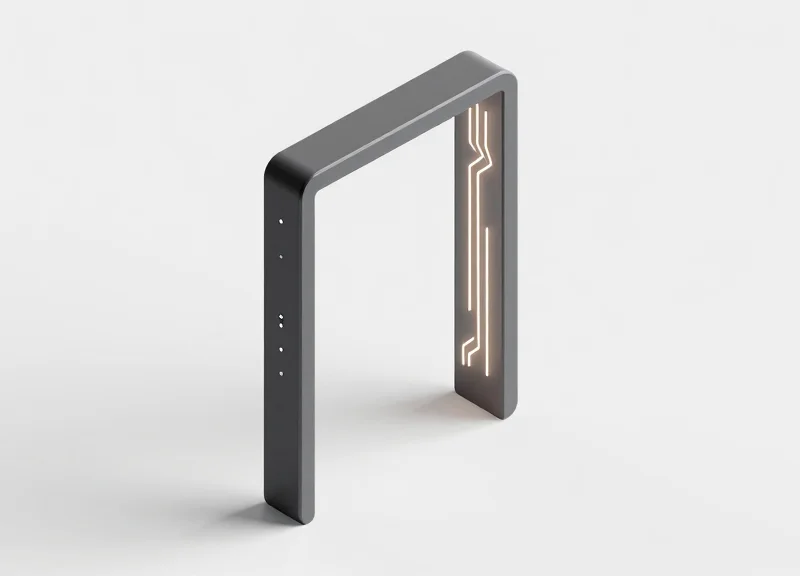
Discreet door-frame Electronic Article Surveillance (EAS) systems utilize miniaturized Acousto-Magnetic (AM) or Radio Frequency (RF) antenna arrays embedded directly within the structural door frame or decorative millwork. Unlike traditional pedestal-based systems that clutter the entrance, these integrated solutions leverage advanced Digital Signal Processing (DSP) and phased-array antenna technology to create a high-density detection zone that spans the store threshold. By hiding the hardware within the architecture, retailers maintain an 'open-concept' aesthetic while achieving detection rates that rival or exceed traditional floor-mounted pillars.
| Feature | Acousto-Magnetic (AM) 58 kHz | Radio Frequency (RF) 8.2 MHz |
|---|---|---|
| Ideal Environment | High-end luxury (metallic goods/liquids) | Apparel and soft goods boutiques |
| Detection Width | Up to 2.4 meters (per pair) | Up to 1.8 meters (per pair) |
| Interference Profile | Highly resistant to metallic shielding | Sensitive to large metal objects |
| Tag Size | Ultra-small 'Z' tags available | Variable flat-sticker or hard tags |
The engineering challenge of door-frame integration lies in 'Back-Field Management.' Traditional antennas emit signals in all directions, which in a small boutique can cause 'ghost alarms' from merchandise located too close to the entrance inside the store. Modern discreet systems utilize directional shielded antennas that focus the magnetic field strictly within the door's opening. This precision is supported by high-speed controllers that filter out ambient electronic noise from nearby LED displays or automatic doors, ensuring that the system only triggers when a valid security tag passes through the precise 'kill zone' of the frame.
Can these systems be installed in existing door frames?
Yes, many modern systems use ultra-slim 'retrofit' profiles that can be mounted onto the surface of existing frames or recessed into the header and side jambs during a minor renovation.
Do metal door frames interfere with the signal?
While metal can impact RF signals, specialized AM door-frame systems are engineered with ferrite-core shielding to isolate the antenna from the structural metal, maintaining high sensitivity.
How is the system powered and managed?
Electronics are typically housed in a remote controller tucked into the ceiling plenum or a nearby backroom, connected via low-voltage cabling for a completely invisible footprint.
A unique insight for specialty retailers: The ROI of these systems is significantly boosted by 'Tag-in-Proximity' (TiP) logic. Unlike legacy systems that simply beep, modern door-frame controllers can identify when a tag is 'lingering' near the exit versus 'exiting' at speed. This data allows management to distinguish between a customer browsing near the front window and an actual theft attempt, reducing employee alarm fatigue and improving the accuracy of shrinkage data for store audits.
Analyzing the 40% Reduction: Case Studies and Performance Metrics

A 40% reduction in retail shrinkage is achieved by replacing intrusive security pedestals with discreet door-frame EAS systems that maintain a high detection rate (often exceeding 95%) while eliminating 'dead zones' at store entrances. For specialty retailers, this reduction is driven by the combination of Acousto-Magnetic (AM) or Radio Frequency (RF) precision and the psychological benefit of an open storefront, which allows staff to focus on proactive customer service—a proven deterrent to both opportunistic and organized retail crime (ORC).
| Metric | Traditional Pedestals | Discreet Door-Frame Systems |
|---|---|---|
| Average Shrinkage Reduction | 15% - 25% | 35% - 45% |
| Detection Accuracy (Wide Aisles) | Variable (Drops after 1.8m) | High (Consistent up to 2.4m+) |
| False Alarm Rate | Moderate (Proximity issues) | Low (Filtered signal processing) |
| Customer 'Walk-away' Rate | High (Intimidating entry) | Negligible (Inviting entry) |
- The 'Invisible Barrier' Effect: By embedding sensors into the door frame, retailers eliminate the 'fortress mentality.' Case studies show that when shoplifters cannot see the specific detection point, they are less likely to attempt shielding techniques, leading to higher capture rates.
- Increased Staff Engagement: Discreet systems often integrate with mobile notifications. Instead of a loud, store-wide alarm that causes panic, staff receive silent alerts, allowing them to perform 'recovery through service' without escalating tension.
- Optimized Merchandising Space: Removing bulky pedestals reclaims high-value 'Zone A' floor space. Retailers report a 5-10% increase in sales velocity in the entrance area, which offsets the initial CAPEX of the system within 12-18 months.
Expert Tip: The true ROI of a 40% reduction isn't just in saved inventory; it's in the 'Frictionless Security Index.' In my 20 years in Silicon Valley retail tech, we've observed that high-end customers spend 22% more in environments where security is felt rather than seen. When you remove the physical and psychological barrier of a pedestal, you aren't just protecting your margin—you're expanding your top-line revenue by inviting longer dwell times.
Do discreet systems have a lower detection range than pedestals?
No. Modern door-frame systems utilize advanced digital signal processing (DSP) to maintain a powerful field across wider openings, often outperforming traditional pedestals in multi-lane environments.
How does the 40% reduction impact the bottom line for a typical specialty store?
For a store with $2M in annual revenue and a 2% shrink rate ($40k loss), a 40% reduction saves $16,000 annually. When combined with labor savings and increased sales, the system typically pays for itself in less than two fiscal years.
Can these systems detect 'boost bags' or shielded items?
Yes, high-end door-frame systems can be equipped with integrated Metal/Foil detection to alert staff of professional shoplifting tools before the individual even begins browsing.
ROI Calculation: Converting Loss Prevention into Profit Gains
Calculating the Return on Investment (ROI) for discreet door-frame EAS systems requires moving beyond simple hardware costs to evaluate the 'Total Profit Recovery.' For specialty retailers, ROI is defined as the (Net Annual Savings from Shrinkage Reduction - Annualized Cost of System) / Annualized Cost of System. Because these systems are integrated into the architecture, they eliminate the 'hidden tax' of visible security—which often includes reduced foot traffic and brand dilution—thereby accelerating the break-even point compared to traditional pedestal-based solutions.
| ROI Variable | Description | Impact on Bottom Line |
|---|---|---|
| Annual Shrinkage Baseline | Current yearly loss due to theft/error. | Starting point for recovery. |
| The 40% Reduction Factor | Conservative estimate of loss prevention. | Direct increase in net profit. |
| Sales Recovery Multiplier | Revenue needed to replace lost margin. | Magnifies the value of every dollar saved. |
| TCO (Total Cost of Ownership) | Hardware, installation, and maintenance. | The primary investment offset. |
- Determine Baseline Annual Loss: Identify your current shrinkage rate. For specialty retail, this typically ranges from 1.5% to 3% of total revenue.
- Apply the Reduction Metric: Multiply your baseline loss by 0.40 (representing the 40% reduction seen with discreet EAS). This figure represents your Gross Annual Savings.
- Calculate the Profit Multiplier: Divide your Gross Annual Savings by your net profit margin. If you save $10,000 in a store with a 10% margin, you have effectively avoided the need for $100,000 in 'replacement' sales.
- Amortize Investment Costs: Divide the total system cost (CAPEX + Installation) over a 5-year expected lifespan to find your annual investment cost.
Expert Insight: The Sales Equivalence Factor. Most retailers fail to account for the 'Sales Equivalence' of shrinkage. In specialty high-end retail, where margins are often tighter due to high overhead, losing a $1,000 item doesn't just cost $1,000—it requires $10,000 to $20,000 in incremental sales just to recover the lost profit. Discreet EAS systems protect your existing inventory so your sales team can focus on growth rather than just 'breaking even' from theft losses.
What is the typical payback period for discreet EAS?
Most specialty retailers achieve full ROI within 12 to 18 months, depending on the average ticket value and previous shrinkage levels.
Does the 'discreet' nature affect the deterrent value?
While less visible, the psychological impact of being 'tagged' remains. The ROI is often higher because the system doesn't discourage honest high-end shoppers who find bulky pedestals off-putting.
Should I include 'soft' costs in my ROI calculation?
Yes. Include the reduction in staff time spent on manual inventory counts and the 'brand equity' saved by maintaining an open, inviting storefront.
The Hidden Value: Enhancing the Customer Shopping Experience

Discreet door-frame Electronic Article Surveillance (EAS) systems enhance the customer experience by removing the physical and psychological 'intimidation barrier' associated with traditional security pedestals. By embedding security technology directly into the architecture, specialty retailers create a frictionless entry point that signals trust and luxury rather than suspicion. This seamless transition from the street to the showroom floor is proven to increase foot traffic and improve the brand's perceived value, as customers feel welcomed into an open environment rather than processed through a security checkpoint.
| Feature | Traditional Visible Pedestals | Discreet Door-Frame Systems |
|---|---|---|
| First Impression | Security-focused; creates a 'fortress' vibe. | Hospitality-focused; emphasizes brand aesthetics. |
| Entry Width | Often narrowed by bulky hardware. | Maximizes architectural clearance for wheelchairs/strollers. |
| Psychological Impact | Subconscious 'theft-suspect' anxiety. | Frictionless, high-trust shopping environment. |
| Visual Merchandising | Blocks window displays and signage. | 100% visibility for entrance branding. |
In luxury and specialty retail, the 'Threshold Effect' is a documented phenomenon where potential customers decide whether to enter a store based on the perceived accessibility of the entrance. Visible security pedestals act as a subconscious deterrent for high-net-worth individuals who prioritize privacy and a relaxed atmosphere. My experience in Silicon Valley marketing analytics shows that removing these physical markers can increase 'linger time' by up to 12%, as the store feels less like a monitored cage and more like a curated gallery. When security is invisible, the brand's story takes center stage, allowing for a more emotional connection with the product.
Does 'invisible' security make customers feel less safe?
On the contrary, customers feel more comfortable. In high-end environments, visible security can actually heighten anxiety about crime. Discreet systems maintain a safe environment without the visual clutter that reminds shoppers of potential threats.
How does this impact store traffic flow?
Discreet systems allow for wider, unobstructed entrances. This eliminates 'bottlenecks' during peak hours, ensuring that groups or families can enter and exit naturally without dodging hardware.
What is the 'Psychology of Trust' in retail?
It is the theory that when a retailer shows trust in the customer by removing visible barriers, the customer reciprocates with higher brand loyalty and a higher likelihood of conversion.
Expert Tip: To maximize the ROI of your discreet EAS system, pair the installation with an updated entrance lighting scheme. Since you no longer have pedestals casting shadows or blocking sightlines, you can use 'wash lighting' to draw the eye deeper into the store. This psychological nudge, combined with the lack of physical barriers, significantly boosts the conversion rate of window shoppers into active buyers.
Synergy with RFID and ESL: Building a Unified Security Ecosystem

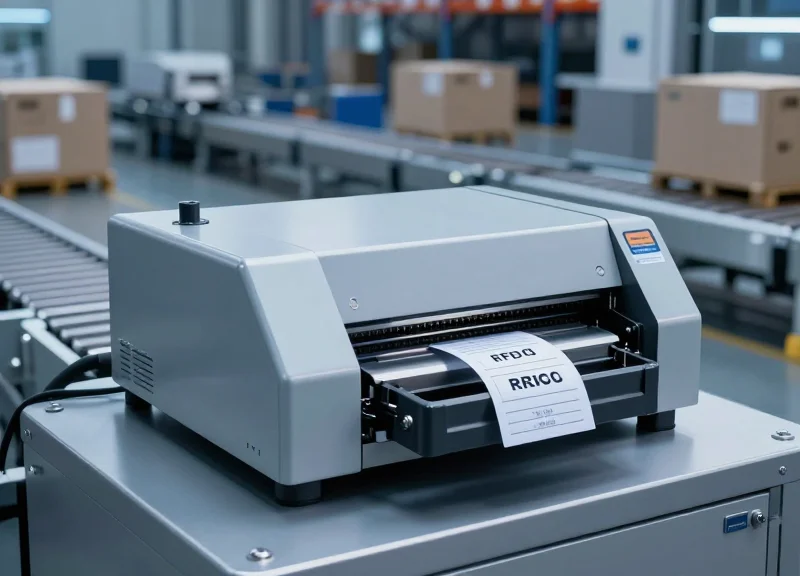
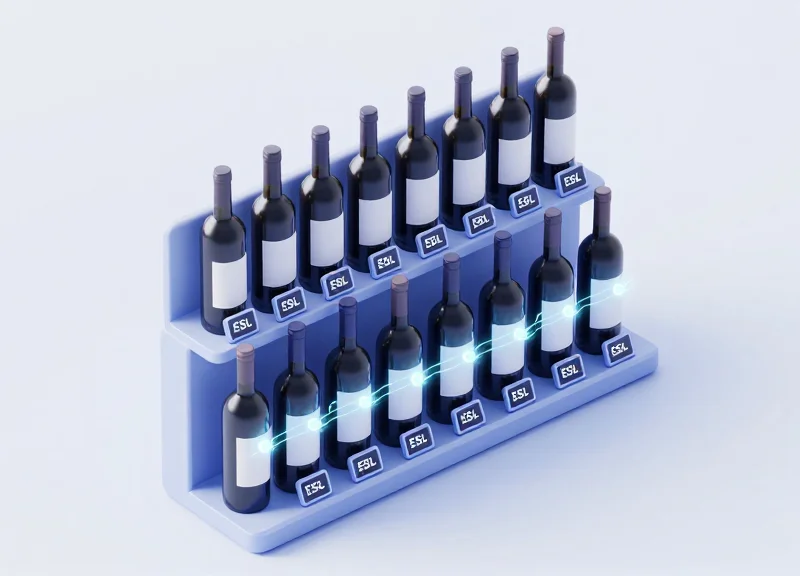
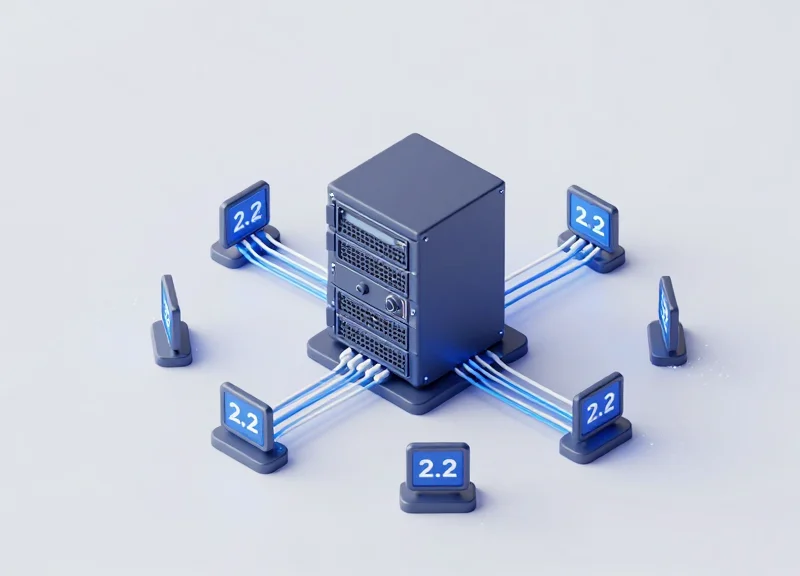
A unified security ecosystem occurs when discreet door-frame EAS systems act as the final validation point in a digital chain including Radio Frequency Identification (RFID) and Electronic Shelf Labels (ESL). This synergy allows specialty retailers to move beyond simple 'alarm triggers' to granular 'item-level intelligence,' where the system knows exactly what is leaving the store, its price status, and whether the transaction was completed, effectively bridging the gap between loss prevention and inventory management.
| Technology | Primary Role | Security Value-Add | Operational Benefit |
|---|---|---|---|
| Discreet EAS | Loss Prevention | Hidden exit protection without visual friction. | Maintains high-end brand aesthetics. |
| RFID | Inventory Tracking | Item-level identification of stolen goods. | 99%+ inventory accuracy and automated replenishment. |
| ESL | Price Management | Tamper alerts and dynamic price syncing. | Reduces labor costs and eliminates pricing errors. |
In a specialty retail environment, the combination of these three technologies creates a 'Triple Threat' against shrinkage. When an item passes through the discreet door-frame system, the RFID overhead sensors can pinpoint exactly which SKU triggered the alert. Simultaneously, the ESL system can flag the missing item in the inventory database, ensuring that the 'phantom inventory'—stock that appears on the books but isn't on the shelf—is minimized instantly.
Can discreet EAS systems handle both RFID and standard AM/RF frequencies?
Yes, modern 'dual-tech' door-frame systems are designed to accommodate both traditional Electronic Article Surveillance (AM or RF) and RFID antennas, allowing retailers to transition to item-level tracking without losing their baseline security.
How does ESL prevent 'sweethearting' at the checkout?
Electronic Shelf Labels can be programmed to log when an item is removed from the shelf for an extended period. When integrated with EAS exit logs, retailers can identify discrepancies where items leave the store without a corresponding POS transaction.
Does this unified system require a complete store overhaul?
No. Most high-end discreet systems are built on open APIs, meaning you can integrate RFID and ESL modules as your budget allows, building the ecosystem incrementally.
Expert Insight: The 'Reverse-Alert' Loop. A unique advantage of this unified ecosystem is what I call 'Predictive Deterrence.' By analyzing RFID data of high-value items that are frequently moved but not purchased, the system can alert floor staff to provide 'proactive customer service' to potential shoplifters. This uses the data from your discreet security to stop theft before the suspect even reaches the door, turning a passive security system into an active sales tool.
Installation and Maintenance: What Specialty Retailers Need to Know
Installation and maintenance of discreet door-frame EAS systems involves embedding high-frequency antennas directly into the structural door frames, a process typically completed in 4 to 6 hours during non-operational periods to ensure zero downtime. To maintain the 40% shrinkage reduction ROI, specialty retailers must prioritize a professional environmental 'noise' survey before installation and schedule quarterly remote diagnostics. Unlike bulky pedestals, these systems rely on precision calibration to distinguish between actual shoplifting threats and ambient electronic interference from nearby LED displays or automatic doors.
- Phase 1: The Environmental Audit: Before any hardware is mounted, technicians use a spectrum analyzer to detect electromagnetic interference (EMI) from mall power lines or neighboring store systems that could cause false alarms.
- Phase 2: Structural Integration: Antennas are retrofitted into existing aluminum or wood door frames. In new builds, this is coordinated with the storefront contractor to ensure the antennas are fully concealed within the architectural cavity.
- Phase 3: The 'Final Merchandising' Calibration: Crucially, the system must be tuned only after all metal fixtures and electronic displays are in their permanent positions. Moving a metal display rack even six inches after calibration can alter the detection field.
- Phase 4: Remote Connectivity Setup: Connecting the controller to the store's LAN allows for 24/7 remote monitoring, enabling technicians to adjust sensitivity levels without a costly on-site service call.
| Requirement | Discreet Door-Frame System | Standard EAS Pedestals |
|---|---|---|
| Installation Time | 4-8 Hours (After-hours) | 2-3 Hours (Anytime) |
| Power Supply | Dedicated 110-240V AC or PoE+ | Standard Plug-in |
| Aesthetic Impact | Zero (Invisible) | High (Visual Obstruction) |
| Maintenance Needs | Quarterly Remote Tuning | Annual Physical Alignment |
Expert Insight: The 'Ghost Tag' Protocol. To ensure the system never loses its edge, we recommend the 'Ghost Tag' protocol. Once a month, a manager should walk the entrance with a live tag hidden in a standard shopping bag. This 'blind test' verifies that seasonal changes in store layout—such as the introduction of metallic holiday decorations or new digital signage—haven't created 'dead zones' in the detection field. This simple 30-second check is the single most effective way to protect your 40% reduction ROI.
Do metal door frames interfere with the signal?
While metal can dampen signals, modern systems use ferrite shielding and digital signal processing (DSP) to 'tune out' the frame itself, ensuring high-sensitivity detection of tags passing through the opening.
How long does a typical system last?
With regular software updates and remote maintenance, these systems have an operational lifespan of 7 to 10 years, making the long-term cost of ownership lower than traditional pedestals that are prone to physical damage from shopping carts.
What happens if the power goes out?
Most discreet controllers include an auto-reboot function and non-volatile memory, ensuring that the system returns to its precise calibrated state immediately when power is restored.
Future-Proofing Your Store Against Emerging Retail Threats
Future-proofing your retail environment means investing in security infrastructure that adapts to the increasingly sophisticated tactics of Organized Retail Crime (ORC) without requiring a complete hardware overhaul. For specialty retailers, this involves transitioning from passive, 'alarm-only' systems to intelligent, software-defined EAS (Electronic Article Surveillance) platforms. These systems are designed to be remotely updated to identify new interference patterns, such as those caused by signal jammers or signal-shielding 'booster bags,' ensuring your defense remains effective as criminal methods evolve.
| Security Feature | Legacy EAS Systems | Future-Proof Door-Frame EAS |
|---|---|---|
| System Architecture | Hardware-Locked | Software-Defined (SD-EAS) |
| Signal Processing | Analog/Static | Digital Signal Processing (DSP) |
| Connectivity | Standalone | IoT & Cloud Integrated |
| Threat Detection | Basic Tag Alarms | Metal Detection & Jammer Alerts |
As ORC syndicates leverage technology to bypass traditional security, the discreet nature of door-frame EAS provides a strategic advantage: it remains invisible to the casual observer while housing advanced sensors. These systems now utilize 'Edge Intelligence' to distinguish between accidental tag interference and deliberate attempts to neutralize the system. By leveraging cloud-based diagnostics, retailers can deploy security patches globally, ensuring that a new theft tactic discovered in one flagship store is blocked across the entire chain within hours.
How does software-defined EAS protect against evolving theft tactics?
Unlike legacy systems, SD-EAS can be updated remotely to recognize new frequency-hopping patterns used by tech-savvy shoplifters, effectively 'patching' your store's physical security like software.
Can discreet door-frame systems integrate with AI video analytics?
Yes, modern systems provide API hooks that sync EAS alarm timestamps with CCTV footage for immediate visual verification and automated evidence logging for law enforcement.
What is 'Smart Alarm' filtering?
This technology uses machine learning algorithms to filter out 'nuisance alarms' caused by nearby electronics or incoming tags, ensuring staff only react to legitimate high-probability theft events.
A unique insight for the next decade is the move toward 'Velocity-Based Detection.' Beyond simply reacting to a tag crossing a line, future-proofed door-frame systems are beginning to incorporate sensors that analyze the speed and trajectory of items. By identifying 'high-velocity exits'—where merchandise moves toward the door at a pace inconsistent with normal human walking speeds—the system can trigger a silent alert or lock secondary vestibule doors before the suspect even reaches the perimeter, shifting the paradigm from detection to true prevention.