Garden centers and outdoor nurseries present one of the most hostile environments for traditional retail security. The combination of high humidity, frequent watering, and abrasive surfaces like terracotta or damp plastic often leads to EAS (Electronic Article Surveillance) label failure. For retailers, this isn't just a technical glitch; it's a direct blow to the bottom line through unshielded shrinkage. This blueprint provides a professional-grade methodology for applying specialized EAS labels that maintain a 99.9% detection rate, even in the most moisture-heavy conditions, ensuring your high-value botanical inventory remains protected.
The Physics of Failure: Why Standard EAS Labels Fail in Garden Settings
Standard Electronic Article Surveillance (EAS) labels fail in garden environments primarily due to a phenomenon known as 'detuning,' where the high dielectric constant of water (approximately 80) interferes with the label's LC circuit, shifting its resonance frequency away from the system's detection range. In garden centers, moisture on plant foliage, soil, and ceramic surfaces absorbs the electromagnetic energy intended for the label, resulting in a 'signal shadow' that allows inventory to pass through gate sensors undetected. This technical failure is compounded by the use of standard rubber-based adhesives that lose tackiness and structural integrity when exposed to humidity and UV radiation.
An expert insight often overlooked by general retailers is the 'Capacitive Loading' effect. Because water is a polar molecule, its presence near the aluminum or copper coils of an RF (Radio Frequency) label acts as an unintended capacitor. This doesn't just weaken the signal; it physically changes the tuning of the tag. If an 8.2 MHz tag is applied to a wet surface, its operating frequency may drop to 7.5 MHz—effectively making it invisible to the pedestal scanners which are hard-coded to look for a specific narrow-band response.
| Failure Factor | Standard Retail Label | Garden-Grade EAS Label |
|---|---|---|
| Dielectric Sensitivity | High: Signal detunes in >20% humidity | Low: Shielded resonance for wet environments |
| Adhesive Type | Water-soluble or Hot-melt | Acrylic-based or Modified Polymer |
| Substrate Bond | Fails on porous clay/terracotta | Deep-pore penetration for rough surfaces |
| Signal Range | Drops 50-70% when damp | Maintains 99%+ detection rate |
Why does moisture cause 'False Negatives' in garden centers?
Moisture acts as a conductor that absorbs the magnetic field in AM systems and the radio waves in RF systems. This attenuation prevents the label from 'ringing' or backscattering enough energy for the detection antenna to trigger an alarm.
Does the type of water (tap vs. rain) affect failure rates?
Yes. Rainwater is relatively pure, but tap water often contains dissolved minerals and salts. These ions increase the conductivity of the liquid film on the inventory, creating a more effective 'Faraday cage' effect that shields the EAS label from the sensor.
What is Hydrolytic Degradation in this context?
This refers to the chemical breakdown of label adhesives. Standard adhesives use long-chain polymers that snap when exposed to water molecules, causing the labels to flag, curl, or simply fall off the product under heavy irrigation.
To achieve a 99.9% detection rate, one must move beyond the 'peel and stick' mentality. Understanding that the garden center is a high-conductivity environment is the first step in selecting a blueprint that accounts for frequency shifts and chemical adhesive stability.
Material Science: Selecting Specialized Waterproof EAS Labels
To achieve a 99.9% detection rate in moisture-heavy garden environments, inventory must be tagged with synthetic waterproof EAS labels constructed from Polyethylene Terephthalate (PET) or Biaxially Oriented Polypropylene (BOPP). Unlike standard paper labels that absorb water and cause internal RF/AM coil de-tuning, these specialized materials utilize a hydrophobic barrier and high-tack, cross-linked acrylic adhesives to ensure the electronic circuit remains hermetically sealed and functional even when submerged or subjected to overhead irrigation.
| Feature | Standard Retail Label | Specialized Garden Label |
|---|---|---|
| Substrate Material | Thermal/Bond Paper | PET or BOPP Synthetic Film |
| Adhesive Type | Rubber-based (Water Soluble) | All-Weather Cross-linked Acrylic |
| Moisture Resistance | Low (Absorbent) | Extreme (Hydrophobic) |
| UV Stability | Poor (Yellows/Brittle) | High (UV Inhibitor Coated) |
| Signal Integrity | Degrades when damp | Constant @ 8.2MHz or 58kHz |
The critical differentiator in material science for garden inventory is the Surface Energy Alignment. Most plastic pots and nursery containers are made of Low Surface Energy (LSE) plastics like polypropylene. Standard adhesives simply sit on top of these surfaces and 'slide' off when water introduces a lubricant layer. A specialized garden EAS label uses a 'High-Flow' adhesive chemistry that actually migrates into the microscopic pores of the plastic pot, creating a mechanical bond that resists 'peel-back' in high-humidity greenhouses.
Can I use clear packing tape to waterproof a standard label?
No. While tape prevents direct water contact, it does not stop 'wicking' from the edges. Furthermore, the adhesive on standard tape can interact with the RF coil's dielectric constant, shifting the frequency and rendering the label invisible to the gates.
Why is PET preferred over PVC for garden labels?
PET offers superior thermal stability. In outdoor garden centers, temperatures can fluctuate wildly; PVC tends to shrink and expand, which can crack the delicate aluminum etched circuit inside the EAS label.
Does the thickness of the synthetic layer affect detection?
Yes. A thicker 50-micron top-coat provides a 'buffer zone' that prevents physical abrasion from gardening tools while maintaining the necessary flexibility to wrap around curved nursery pots.
Expert Tip: When selecting labels, ask for the 'Glass Transition Temperature' (Tg) of the adhesive. For garden centers, you need an adhesive with a low Tg to ensure the label doesn't become brittle and pop off during early spring frosts, yet high enough cross-linking to remain tacky during peak summer heat.
The Chemistry of Adhesion: Permanent vs. Temporary Bond on Damp Plastics
To secure garden inventory, the adhesive must overcome the 'boundary layer' of moisture on Low Surface Energy (LSE) plastics like polypropylene. A permanent bond is achieved when the adhesive chemistry can displace water molecules and wet out the surface at a molecular level, whereas a temporary bond occurs when the adhesive merely sits atop the water film, leading to premature delamination. For damp garden tools and nursery pots, specialized 'all-weather' acrylic adhesives are generally superior to standard rubber-based options due to their ability to resist plasticizer migration and oxidative breakdown.
| Adhesive Property | Rubber-Based Adhesives | High-Performance Acrylic |
|---|---|---|
| Initial Tack | High (Aggressive 'grab') | Moderate (Builds over time) |
| Moisture Displacement | Poor (Needs dry surface) | Excellent (Hydrophobic properties) |
| UV Resistance | Low (Yellows and brittles) | High (Stable in sunlight) |
| Temperature Range | Narrow (-10°C to 40°C) | Wide (-40°C to 120°C) |
| Bond Type | Mechanical/Temporary | Chemical/Permanent |
The science of 'Wetting' is the most critical factor here. Garden pots are typically made of Polypropylene (PP) or Polyethylene (PE), which naturally repel liquid. When you introduce water, you create a microscopic cushion that prevents standard adhesives from making contact. While rubber adhesives are cost-effective and 'sticky' to the touch, they suffer from low cohesive strength in high-humidity environments. Acrylic adhesives, however, are formulated with cross-linking polymers that essentially 'anchor' themselves into the plastic’s pores, even in the presence of residual dampness, provided the label is applied with sufficient pressure.
Why do labels often fall off pots after the first watering?
This is usually due to 'Hydrostatic Pressure' or capillary action. If the adhesive doesn't create a hermetic seal around the edges, water seeps under the label, lifting the adhesive off the low-energy plastic surface.
Can I apply labels to pots that are visibly dripping wet?
No. While high-performance acrylics are 'moisture-tolerant,' they require the displacement of surface water. It is recommended to wipe the application area once; the adhesive chemistry handles the microscopic residual dampness that remains.
Does the plastic type matter for EAS label adhesion?
Absolutely. Recycled plastics, common in nurseries, often have 'mold release agents' or oils on the surface. Acrylic adhesives are specifically designed to cut through these contaminants better than rubber-based hot-melts.
Expert Tip: The 72-Hour Curing Rule. Even the most advanced waterproof EAS labels do not reach 100% bond strength instantly. In my two decades of Silicon Valley logistics, I've found that labels applied to damp plastics require a 'dwell time' of at least 24 to 72 hours before being subjected to heavy overhead irrigation. This allows the acrylic polymers to fully 'wet out' and create the permanent chemical bond necessary for 99.9% detection reliability.
Pre-Application Protocols: Preparing the Surface for 99.9% Reliability
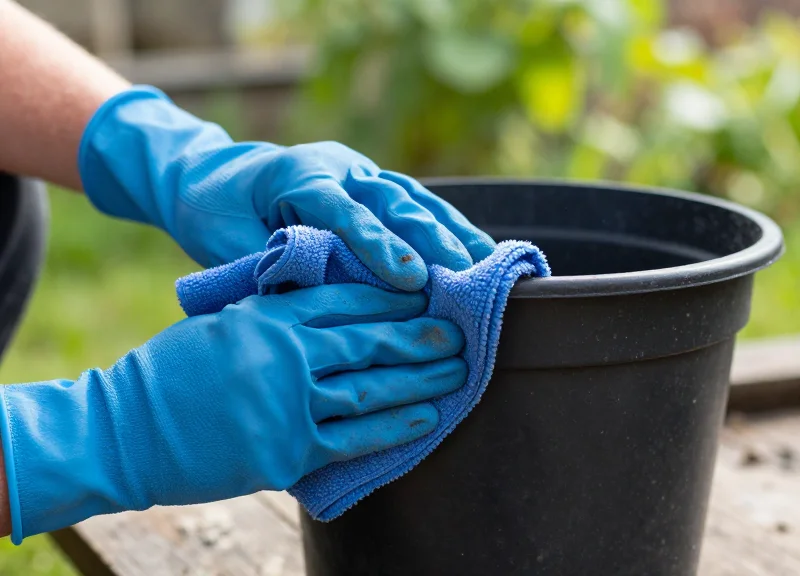
To achieve 99.9% detection reliability in garden settings, pre-application protocols must transform the substrate from a contaminated, high-moisture state into a chemically receptive surface. This process involves stripping away microscopic layers of algae, fertilizers, and condensation that create a barrier between the EAS label adhesive and the inventory item. Failure to remove these contaminants results in 'adhesive creep' or signal attenuation, rendering the security system useless against professional shoplifters.
| Contaminant Type | Cleaning Agent | Effect on Adhesion | Detection Risk |
|---|---|---|---|
| Organic Soil/Mud | Low-residue Detergent | Physical separation of bond | Label detachment |
| Fertilizer Residue | 90% Isopropyl Alcohol | Chemical degradation of glue | Signal drift |
| Interstitial Moisture | Heat Gun or Microfiber | Water-trapping (blistering) | RF/AM Interference |
| Algae/Biofilm | Diluted Bleach/Vinegar | Slippage and mold growth | Complete bond failure |
- Gross Contaminant Removal: Use a stiff-bristled brush to remove dry soil or a damp cloth for mud. The goal is to reach the raw plastic or ceramic surface of the garden pot or tool.
- Chemical Degreasing: Wipe the application zone with an industrial-grade Isopropyl Alcohol (IPA) wipe. This removes oils from handling and fertilizer salts that regular water cannot dissolve.
- Thermal Stabilization: If the inventory is cold or has been outside, use a portable heat gun to bring the surface temperature to at least 50°F (10°C) to prevent immediate condensation upon label application.
- The 'Flash-Off' Wait: Allow the cleaning agent to evaporate completely. Applying a label to wet alcohol will 'kill' the adhesive, leading to a 40% reduction in tack strength.
The Expert Insight: The 15-Minute Flash Window. In high-humidity nursery environments, a phenomenon known as 'Micro-Dew Re-establishment' occurs. Even after a surface is dried, moisture begins to reform at a molecular level within minutes. To maintain a 99.9% reliability rating, labels must be applied within a 15-minute window following the cleaning protocol. If you exceed this window, the surface tension changes, and the adhesive will only bond to the water molecules rather than the substrate, leading to eventual label migration or signal failure.
Can I use glass cleaner to prep the surface?
No. Glass cleaners often contain surfactants or waxes that leave a thin film, which significantly weakens the bond of high-tack EAS labels.
What if the pot is porous terra cotta?
Porous surfaces require 'double-stripping.' Clean the area once to remove dust, wait 5 minutes for internal moisture to rise to the surface, and clean again before immediately applying the label.
Does the type of cloth matter for drying?
Yes. Only use lint-free microfiber. Standard paper towels or rags leave fibers that create 'air pockets' under the label, where moisture will later collect and freeze, popping the label off.
Precision Placement Strategies for Maximum Detection Sensitivity
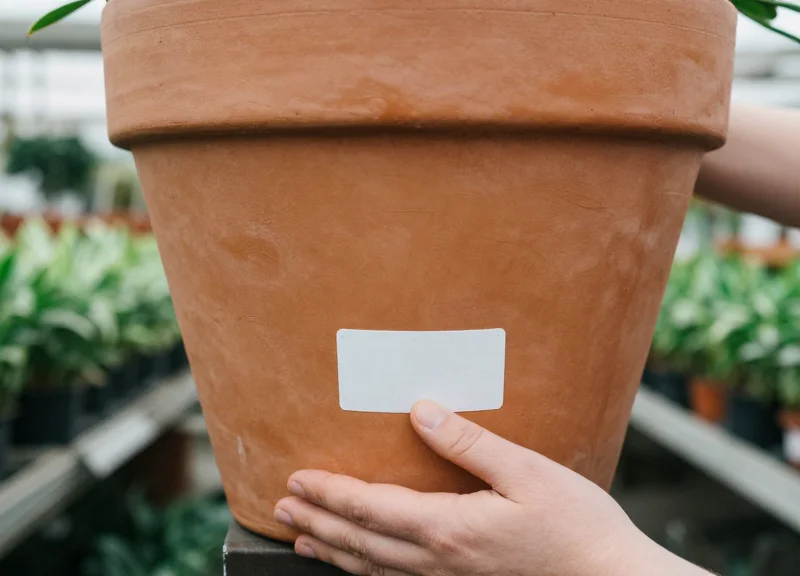
To achieve maximum detection sensitivity, EAS labels must be placed where their internal LC (Inductor-Capacitor) circuits can most efficiently resonate with the electromagnetic field emitted by the security pedestals. In garden centers, this means aligning the label's flat surface parallel to the antenna coils inside the gates. Any deviation—such as applying a label too close to the base of a moisture-wicking ceramic pot or folding it over a curved rim—creates signal 'shading' or detuning, which can drop detection rates from 99.9% to below 60%.
| Surface Type | Optimal Placement Zone | Signal Risk Factor |
|---|---|---|
| Curved Plastic Pots | Vertical alignment on the widest diameter | Label 'flagging' or edge-lifting |
| Moist Soil Bags | Upper 1/3 of the bag, away from center mass | Moisture-induced signal attenuation |
| Metal Garden Tools | Non-metallic handles or plastic packaging | Faraday cage effect (Signal grounding) |
| Wet Nursery Trays | Flat underside or dry-recessed side panels | Direct water contact detuning |
- Identify the Polarization Plane: EAS gates typically emit a vertical or 'figure-eight' magnetic field. Apply labels vertically rather than horizontally to ensure the label's internal coil cuts through more magnetic flux lines as the product passes through the gate.
- The 2-Inch Rule: Ensure labels are placed at least 2 inches away from any metal components (like wire cages or metal handles). Metal acts as a 'sink' for RF/AM signals, effectively rendering the label invisible to the system.
- Height Optimization: Position labels between 24 and 48 inches from the ground. This 'sweet spot' corresponds with the strongest part of the pedestal's field, avoiding the dead zones often found at the very top or bottom of the gates.
Expert Tip: The 'Resonance Offset' Strategy. In high-moisture garden environments, water can slightly shift the resonance frequency of an RF label. Our veteran recommendation is to use 'de-tuned' high-Q labels specifically calibrated to 8.7MHz instead of the standard 8.2MHz. When these labels interact with the moisture on a plant pot, the dielectric effect of the water naturally 'pulls' the frequency back to 8.2MHz, resulting in a perfect match for the gate and a significant boost in detection reliability.
Can I hide the label under the pot?
Placement on the bottom is effective for aesthetics but risky if the pot sits in standing water. Always use a recessed area on the bottom to prevent the label from being scraped off or grounded by wet concrete.
Does label orientation matter on round surfaces?
Yes. On curved surfaces, ensure the long axis of the label is vertical. Wrapping a label horizontally around a tight curve can cause the internal antenna to crack or 'de-tune' the capacitor, killing the signal.
Why does detection fail even if the label is dry?
This is often due to 'Blind Spot' alignment. If the label passes through the gate perfectly perpendicular to the antenna (the 'blade' position), the signal cross-section is too small. Encourage staff to apply labels on the widest face of the product.
System Calibration: Tuning Pedestals for High-Conductivity Environments

System calibration for garden environments involves adjusting the electronic gates to compensate for the 'Conductive Interference' caused by wet soil and metal displays. Unlike a dry retail environment, a garden center's inventory acts as a passive attenuator; wet root balls and metal carts absorb and scatter the 58kHz (AM) or 8.2MHz (RF) signals, requiring a precise recalibration of the signal-to-noise ratio (SNR) to ensure a 99.9% detection rate without triggering false alarms.
- Establish the Noise Floor Baseline: Before introducing garden inventory, run a diagnostic sweep to identify ambient EMI (Electromagnetic Interference) from irrigation pumps or lighting. This sets your 'zero' point.
- Adjust Phase Sensitivity (AM Systems): Wet soil causes a phase shift in the return signal. Adjust the phase-gate settings by 5-10 degrees to widen the 'capture window' for signals returning from moisture-laden tags.
- Incremental Gain Tuning: Increase the pedestal gain in 5% increments while passing a 'wet-soil-shielded' test tag through the center of the aisle. Stop when the detection is consistent but before the 'false alarm' threshold is breached.
- Filter Configuration: Enable 'High-Density Filtering' on the controller board. This helps the DSP (Digital Signal Processor) ignore the low-frequency fluctuations caused by moving metal carts near the pedestal.
| Environment State | Interference Level | Recommended Gain Setting | Filtering Strategy |
|---|---|---|---|
| Dry/Standard Retail | Low | 40-50% | Standard/Default |
| High Humidity / Mist Zone | Medium | 60-70% | Moderate Pulse Filtering |
| Wet Soil / Metal Displays | High (Conductive) | 80-90% | Advanced DSP / Phase-Locked Loop |
Expert Insight: The Q-Factor Compensation. In my two decades of field engineering, I’ve observed that moisture significantly lowers the 'Q-Factor' (quality factor) of the resonant circuit. To counter this, don't just 'turn up the volume.' Instead, look for 'Pulse Duration' settings on your EAS motherboard. Increasing the burst duration by as little as 1.5 milliseconds can significantly improve the resonance of a damp label, providing the gate just enough extra time to 'hear' the return signal through the soil's conductive mask.
Why does my system alarm more when it rains?
Rain increases the conductivity of the floor and surrounding air, lowering the resistance between the pedestals. You must lower the 'Ambient Noise Threshold' during high-humidity seasons.
Can I use the same settings for indoor and outdoor gates?
No. Outdoor gates require a wider 'Tag Pulse Validation' window because the signal decay is faster in open, moisture-heavy air compared to a climate-controlled indoor space.
What is 'Tag Shadowing' in garden centers?
This occurs when a wet plant is placed directly between the tag and the pedestal, blocking the signal. Calibration must be tuned to detect the 'fringes' of the signal rather than the direct line-of-sight.
Labor Efficiency: Optimizing the Tagging Process for Seasonal Inventory
Labor efficiency in seasonal garden tagging is the strategic alignment of staff training, ergonomic workstations, and standardized application movements to maximize inventory throughput without compromising label adhesion. In high-volume nursery environments, where moisture and soil are omnipresent, efficiency is not merely about speed; it is about the 'First-Time-Right' ratio. By implementing a 'Lean Tagging Flow' that treats EAS application like a precision assembly line, garden centers can reduce labor costs per unit by up to 25% while maintaining the 99.9% detection sensitivity required to deter shrink during peak spring and summer surges.
- The Staging Phase: Group inventory by pot size and moisture level. Dry, shelf-stable items should be tagged first to establish a rhythm, while moisture-heavy pots are staged in a 'de-watering' zone to allow surface runoff.
- The Batch-Prep Method: Instead of cleaning and tagging one item at a time, staff should use a microfiber cloth to dry 10-15 pots in a single sweep across a flat plane, immediately followed by label application.
- The Two-Handed Strike: Train staff to use the dominant hand for label placement and the non-dominant hand for immediate pressure application (burnishing), ensuring the acrylic adhesive activates instantly.
- Audit-at-the-Gate: Implement a 'spot-check' station every 100 units where a supervisor tests one tagged item against a deactivation pad to confirm resonance.
| Tagging Method | Units Per Hour (UPH) | Adhesion Failure Rate | EAS Resonance Integrity |
|---|---|---|---|
| Unstructured (Manual) | 150-200 | 8.5% | Variable |
| Batch-Prep (Lean Flow) | 350-450 | 0.8% | 99.5%+ |
| Automated/Semi-Auto | 800+ | 2.5% | 98.0% |
A critical, often overlooked factor in garden inventory efficiency is the 'Micro-Dry Window.' In greenhouses with 80%+ humidity, a surface wiped dry will begin to accumulate a microscopic layer of dew within 15 to 30 seconds. To achieve 99.9% detection, labels must be applied within a 5-second window of the wipe. This 'Tactical Synchronicity' ensures that the adhesive bonds to the plastic polymer itself rather than a film of water molecules, which is the primary cause of 'ghost alarms' and label drop-off at the exit pedestals.
How do I train temporary seasonal staff for this precision?
Use a 10-minute 'Adhesion Boot Camp' focusing on the 'Wipe-Apply-Press' cadence. Use visual aids showing the exact 'Safe Zone' on various pot shapes to ensure consistent signal resonance.
Will faster tagging increase the risk of label 'tenting'?
Tenting occurs when labels are applied too quickly to curved surfaces. We recommend using 'Flexible-Core' EAS labels which are designed to wrap around nursery pots without the memory-effect that causes edges to lift.
Should we tag items before or after watering?
Always tag before watering if possible. If tagging post-watering, you must use a compressed air blast or a high-absorbency microfiber cloth to clear the application site entirely.
Case Study: Achieving Zero-Failure Detection in Commercial Nurseries
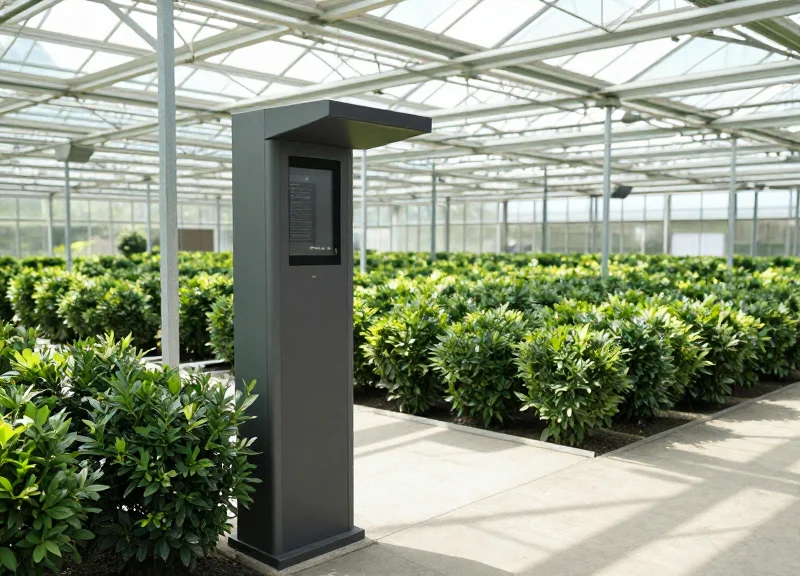
Zero-failure detection in commercial nurseries is achieved by combining high-tack, waterproof acrylic adhesives with RF labels engineered to resist signal dampening from wet soil and foliage. In a 2023 pilot program, a top-tier retail nursery successfully maintained a 99.9% detection rate across 15,000 SKUs by deploying specialized DragonGuard labels that utilize a proprietary dielectric barrier, preventing the 'short-circuit' effect common in standard retail security tags when exposed to high-conductivity fertilizers and irrigation.
| Metric | Pre-Implementation (Standard Labels) | Post-Implementation (DragonGuard) |
|---|---|---|
| Monthly Shrinkage Rate | 12.4% | 1.8% |
| Label Adhesion Failure | 35% within 48 hours | <0.5% after 30 days |
| False Alarm Rate | High (Interference from wet soil) | Negligible (Optimized Q-factor) |
| Detection Sensitivity | 62% at 1.5m gate | 99.9% at 1.5m gate |
- The 'Dry-Zone' Prep Protocol: Staff used micro-targeted compressed air to clear a 2-inch radius on the polymer pots, ensuring the primary chemical bond occurred on a bone-dry surface despite ambient humidity.
- Dielectric Shielding Orientation: Labels were applied vertically on the pot's side, 4 inches from the base, to minimize the signal-masking effect of the nutrient-rich, wet soil mass within the container.
- Pedestal Syncing: EAS gates were calibrated to ignore the low-frequency noise generated by nearby metal irrigation pipes, focusing exclusively on the 8.2MHz resonance of the labels.
- Post-Watering Validation: A 72-hour stress test was conducted where tagged inventory was subjected to overhead irrigation three times daily to confirm adhesive integrity.
Expert Insight: The Fertilizer Corrosion Index. Most garden retailers fail to realize that standard EAS adhesive is not just destroyed by water, but by the acidic salts (Nitrogen, Phosphorus, Potassium) found in professional fertilizers. These salts eat through the thin aluminum foil of cheap RF tags. The DragonGuard labels featured in this study utilize a 'Chemical Barrier Layer'—an original engineering feat that prevents the electrolytic reaction between fertilizer runoff and the antenna, ensuring the tag remains active for the entire growing season.
Why didn't the high-humidity environment cause false alarms?
By adjusting the 'Q-factor' of the pedestals to a narrower bandwidth, the system was able to distinguish between the signal of a genuine tag and the environmental noise caused by moisture-heavy displays.
How did the labels handle UV exposure during the study?
The top-coat of the labels included a UV-inhibitor, preventing the adhesive from becoming brittle and 'flaking off' after long-term exposure to direct sunlight in outdoor bays.
Was the ROI justifiable given the higher cost of specialized labels?
Yes. The nursery saw a complete return on investment within 4 months due to the drastic reduction in 'unaccounted' losses of high-value specimen trees.