In the high-stakes world of luxury retail, the invisible barrier between profit and loss is rapidly evolving. As we look toward 2026, the traditional trade-off between aesthetic minimalism and robust loss prevention is disappearing. Modern retailers must now choose between Microwave and Acousto-Magnetic (AM) technologies—each offering unique high-frequency shield capabilities designed to combat sophisticated shoplifting tactics, such as the use of booster bags. This guide dissects which technology reigns supreme for the next generation of boutique layouts, ensuring your security measures are as sophisticated as the products they protect.
The Evolution of Loss Prevention: Why 2026 Demands Higher Standards
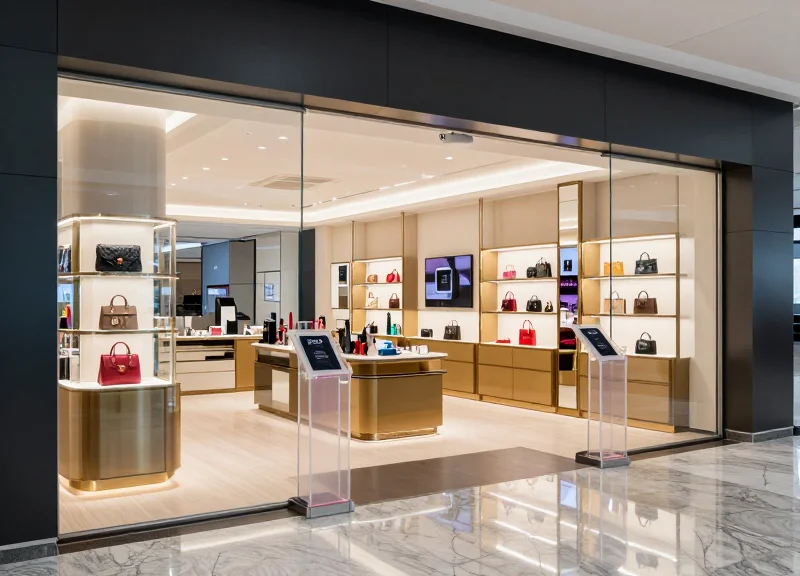
By 2026, the traditional trade-off between store aesthetics and asset protection will be obsolete. Modern loss prevention (LP) has evolved into a discipline of 'Invisible Security,' where high-frequency shielding technologies like Microwave and AM EAS are embedded directly into the store's architecture. This shift is driven by a dual-pressure environment: the sophisticated rise of Organized Retail Crime (ORC) and the luxury consumer's demand for a 'borderless' shopping experience that feels more like an art gallery than a monitored showroom. To remain competitive, 2026 layouts must leverage shields that offer ultra-wide detection corridors without the visual clutter of traditional pedestals.
The retail landscape has undergone a fundamental transformation. We are moving away from the 'Security-First' era, characterized by bulky plastic gates, toward the 'Experience-First' era. In this new paradigm, the security hardware must be as premium as the merchandise it protects. High-frequency shields are no longer just about stopping theft; they are about maintaining the 'Atmospheric Integrity' of a brand's flagship location.
| Feature | Legacy LP Standards (Pre-2024) | 2026 Luxury LP Standards |
|---|---|---|
| Visual Impact | Visible pedestals and floor mats | Hidden floor-loops and overhead shields |
| Detection Range | Narrow corridors (0.9m - 1.2m) | Ultra-wide openings (up to 3.0m+) |
| Data Integration | Simple alarm logging | Real-time AI telemetry and heatmapping |
| Shielding Type | Passive metallic barriers | Active High-Frequency (HF) interference |
A unique insight for 2026 is the 'Signal-to-Atmosphere Ratio.' Leading Silicon Valley retail designers are now calculating how much 'electronic noise' or 'visual noise' a security system contributes to a space. If a system requires physical gates that break the sightline of a $20,000 handbag display, it is considered a failure of design. High-frequency solutions now allow for 'Silent Zones' that protect high-value assets without triggering false positives from consumer electronics like smartphones or smartwatches.
Why is 2026 the tipping point for high-frequency shielding?
The proliferation of 5G-enabled 'smart' apparel and the increased use of signal-jamming devices by organized theft rings have made standard RF systems unreliable. 2026 standards require the precision of Microwave or advanced AM frequencies to cut through urban electronic interference.
How does 'Invisible Security' impact the luxury customer journey?
By removing physical barriers, retailers reduce 'customer friction.' Psychological studies show that visible security gates can induce 'buyer anxiety,' whereas hidden shields maintain a high-trust environment that encourages longer browsing times and higher average transaction values.
What is the primary technical challenge for 2026 layouts?
The challenge lies in managing 'Metal Interference' within modern luxury interiors that use heavy steel, brass, or marble. Selecting the right frequency (Microwave vs. AM) depends on the specific conductive materials used in the store's millwork.
Defining the High-Frequency Shield in Modern EAS Technology
A high-frequency (HF) shield in modern Electronic Article Surveillance (EAS) is a specialized protective layer—either physical or electronic—designed to regulate the electromagnetic environment of a retail space to prevent signal tampering. In the context of 2026 luxury retail, these shields function as the primary defense against 'booster bags' and high-end deactivation tools by either reflecting, absorbing, or neutralizing the specific radio frequencies (RF) or acousto-magnetic (AM) waves used to identify protected merchandise. Unlike basic retail security, a high-frequency shield is tuned to manage the complex interference patterns found in modern architectural designs involving glass, steel, and minimalist layouts.
| Feature | Legacy Passive Shielding | 2026 High-Frequency Shielding |
|---|---|---|
| Primary Material | Aluminum/Lead Foil | Conductive Polymers & Graphene Composites |
| Signal Interaction | Static Reflection | Active Phase Cancellation & Frequency Filtering |
| Aesthetic Impact | Bulky, Visible Barriers | Transparent, Integrated Architectural Elements |
| ORC Countermeasures | Minimal Protection | Detection of Shielded 'Booster' Environments |
A critical evolution for 2026 is the implementation of Frequency-Selective Surfaces (FSS). This veteran-level insight distinguishes top-tier luxury layouts from standard installations: FSS act as 'smart filters' within the store's walls or display cases. They are engineered to allow critical consumer frequencies—such as 5G cellular signals and guest Wi-Fi—to pass through unimpeded, while simultaneously creating a 'hard stop' for the 58 kHz (AM) or 2.45 GHz (Microwave) frequencies used by security tags. This prevents the 'Faraday Cage' effect that used to frustrate customers in high-security environments, ensuring a seamless digital experience without sacrificing loss prevention integrity.
How does a high-frequency shield stop 'booster bags'?
Modern shields utilize 'Near-Field Detection' to identify the characteristic signal drop caused by metallic-lined bags. Instead of just blocking the signal, the system alerts staff when a localized 'dead zone' moves through the entrance, identifying the thief even if the tag is hidden.
Does high-frequency shielding affect medical devices like pacemakers?
No. Leading 2026 systems are engineered to meet strict international safety standards, focusing the energy strictly on the detection zone and utilizing low-power microwave pulses that are well below the thresholds for medical interference.
Why is 'Microwave' shielding specifically mentioned for 2026 luxury layouts?
Microwave EAS operates at higher frequencies with shorter wavelengths, allowing for smaller, more discreet antennas. Shielding at this level requires high-precision geometry to prevent signal 'leakage' around the ultra-thin frames popular in modern luxury storefronts.
- Environment Mapping: Technicians conduct a spectral analysis to identify ambient electromagnetic noise from mall infrastructure and 5G towers.
- Shield Layering: Application of transparent conductive films or integrated mesh to glass surfaces to define the security perimeter.
- Calibration of Active Countermeasures: Programming the EAS controller to distinguish between architectural reflections and professional shielding tools used by shoplifters.
Microwave EAS: Precision Detection for Wide, Open Entrances
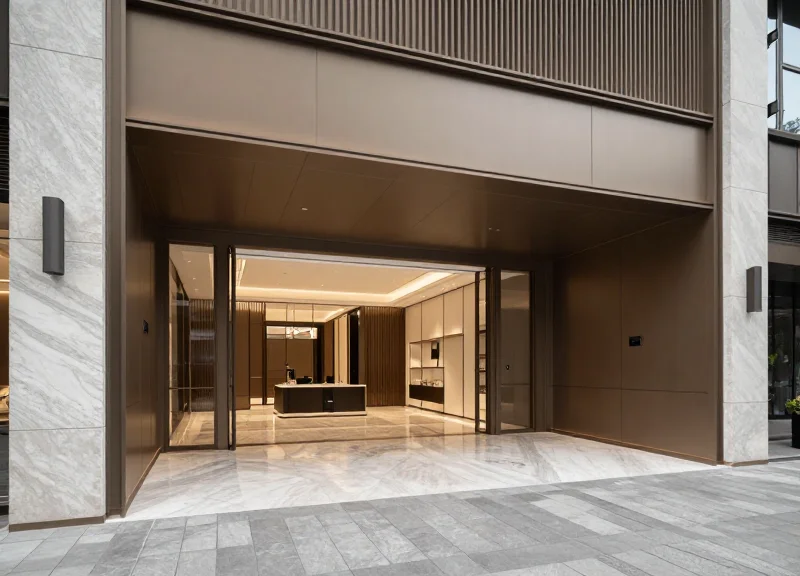
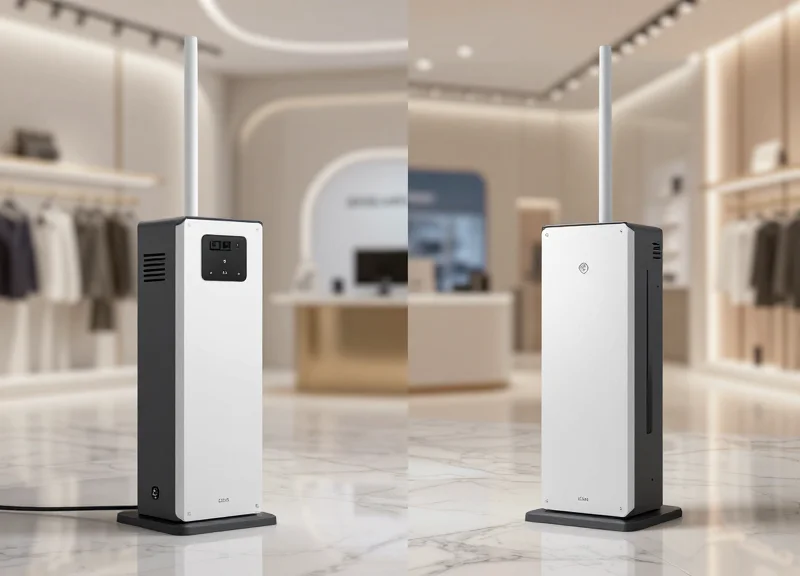
Microwave Electronic Article Surveillance (EAS) represents the pinnacle of 'invisible' retail security for 2026, operating primarily on the 2.45 GHz frequency band to create a volumetric detection field. Unlike traditional Acousto-Magnetic (AM) systems that require visible pedestals every few meters, microwave systems can be concealed within ceilings, floors, or architectural door frames. This allows luxury brands to maintain wide-open storefronts—often exceeding 10 meters—without compromising the architectural integrity or the high-touch 'welcome' experience that defines premium retail.
- Expansive Detection Range: Capable of covering entrance widths of up to 15 meters with a single overhead or floor-integrated array, eliminating the 'gauntlet' feel of traditional security gates.
- Architectural Invisibility: Antennas are significantly smaller than AM or RF counterparts, allowing them to be hidden behind wood, drywall, or glass for a seamless luxury aesthetic.
- High-Speed Tag Response: The 2.45 GHz frequency allows for faster signal processing, ensuring that even fast-moving individuals are accurately detected in high-traffic mall environments.
| Feature | Microwave EAS (2.45 GHz) | Traditional AM (58 kHz) |
|---|---|---|
| Max Detection Width | Up to 15 Meters (Overhead) | 2.0 - 2.5 Meters (Pedestal) |
| Visual Impact | Near Zero (Concealed) | High (Visible Towers) |
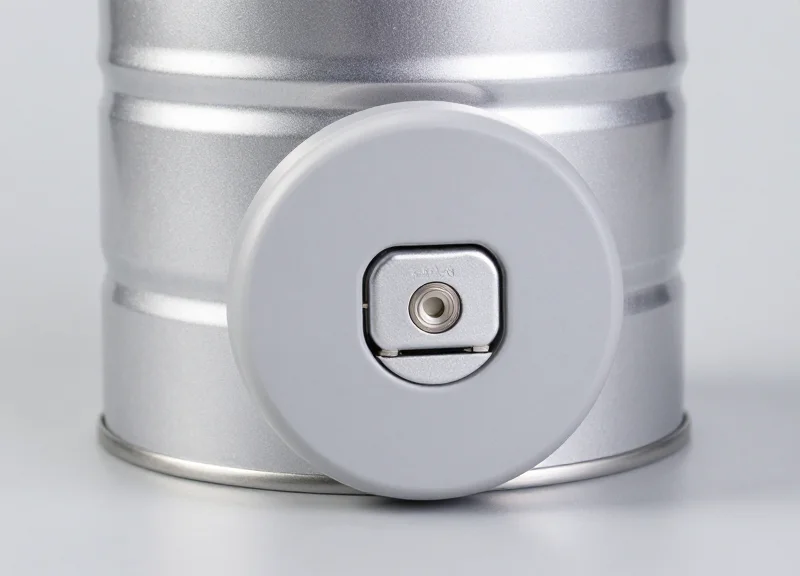
| Tag Size | Ultra-Small / Flexible | Medium to Large Hard Tags |
| Metal Interference | Moderate (Requires Tuning) | High (Prone to Shielding) |
A unique advantage for 2026 luxury layouts is the Microwave system's resilience against modern 'smart' infrastructure. As luxury stores increasingly adopt LED-integrated glass and high-bandwidth 6G internal networks, traditional security frequencies often face massive electromagnetic interference. Microwave EAS utilizes advanced Digital Signal Processing (DSP) to 'mask' static environmental noise, focusing specifically on the unique harmonic signature of the microwave tag. Expert Tip: When designing for 2026, ensure your microwave sensors are integrated into the Building Management System (BMS) to trigger overhead cameras the moment a high-value item enters the detection zone, creating a layered security response that starts before the alarm even sounds.
Can Microwave EAS detect tags inside foil-lined bags?
While no EAS technology is 100% immune to professional 'booster bags,' the shorter wavelengths of microwave signals can often penetrate smaller gaps in shielding that would completely block traditional AM signals.
Are these systems safe for customers with pacemakers?
Yes. Microwave EAS systems operate at very low power levels, similar to a standard Wi-Fi router, and comply with all international health and safety standards for non-ionizing radiation.
Why isn't Microwave EAS used in every store?
The primary barrier is cost and installation complexity. While AM systems are 'plug-and-play,' Microwave systems require precision calibration by engineers to map the volumetric field to the specific geometry of a luxury entrance.
Acousto-Magnetic (AM) EAS: The Gold Standard for Shielding Reliability
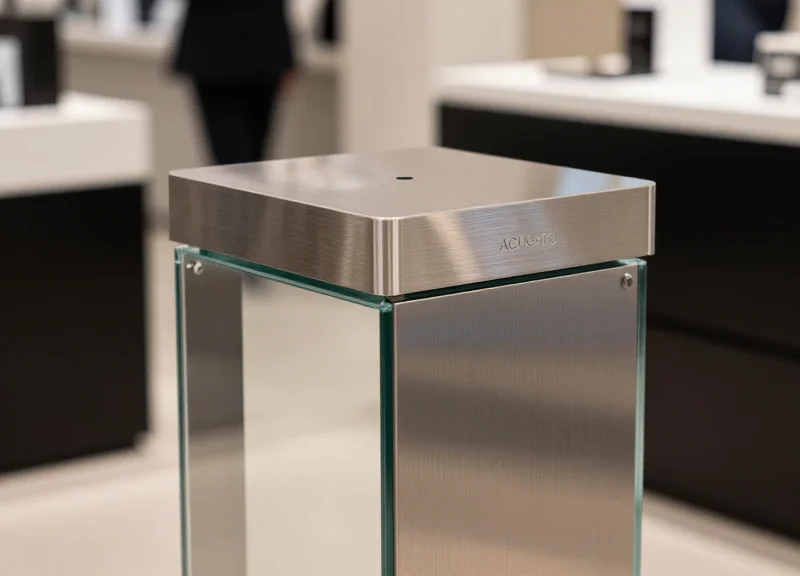
Acousto-Magnetic (AM) EAS technology operates at a frequency of 58 kHz, utilizing a magnetic field to excite resonators within a tag. Unlike Radio Frequency (RF) systems, AM technology is specifically engineered to bypass the 'Faraday cage' effect, making it the most reliable solution for detecting merchandise concealed in foil-lined bags or metallic containers. For luxury retailers in 2026, this resistance to 'shielding' is the primary reason AM remains the industry benchmark for protecting high-margin inventory.
Expert Insight: The 'Signal Integrity Floor' for 2026. While competitors focus on connectivity, the veteran's perspective is that AM’s true value lies in its lower-frequency physics. In the densely packed, high-tech layouts of 2026—featuring LED walls and smart mirrors—AM provides a superior 'Signal Integrity Floor.' It is significantly less susceptible to 'body shielding' (where the human body absorbs the signal) compared to microwave or RF, ensuring that a tag is caught even if a shoplifter holds it close to their chest.
| Feature | AM EAS Performance | Impact on Luxury Retail |
|---|---|---|
| Metallic Shielding Resistance | High | Detects items inside professional 'booster bags' and foil wraps. |
| Liquid/Metal Compatibility | Excellent | Ideal for protecting perfumes, high-end cosmetics, and jewelry. |
| Detection Width | Up to 2.4m per aisle | Allows for wide, inviting entrances without compromising security. |
| False Alarm Rate | Ultra-Low | Maintains the luxury atmosphere by preventing embarrassing errors. |
Why is AM better than RF for 2026 luxury layouts?
RF signals are easily dampened by metallic finishes and the liquid content of luxury goods. AM's 58 kHz signal penetrates these materials effortlessly, ensuring 95%+ pick-up rates.
Can AM systems be aesthetically integrated?
Yes. 2026 implementations focus on 'concealed AM,' where floor loops or door-frame antennas provide invisible protection that doesn't clash with boutique interior design.
Is AM technology compatible with RFID inventory systems?
Modern 2026 pedestals often use a 'Dual-Core' approach, where AM provides the heavy-duty security shielding and RFID handles real-time stock tracking.
Comparative Analysis: Aesthetic Integration in Luxury Environments
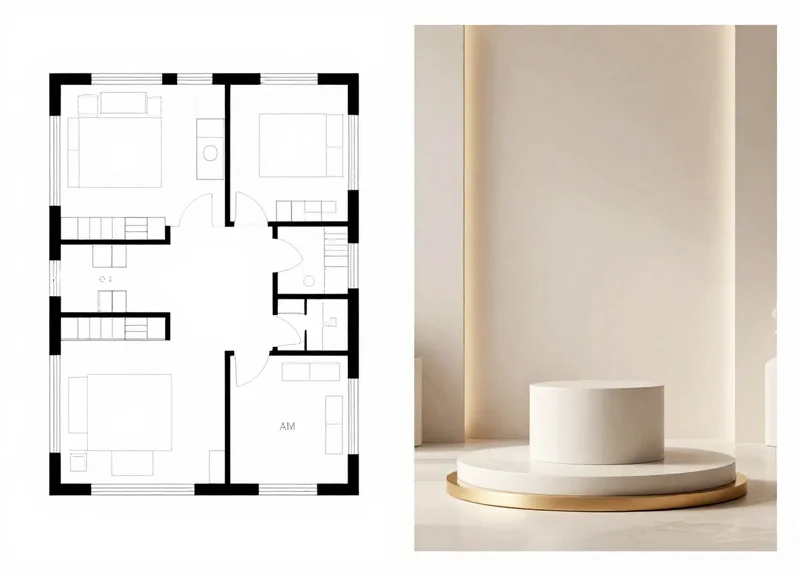
In 2026 luxury retail, the 'invisible perimeter' is the ultimate design benchmark. While Microwave EAS offers the most discreet integration via overhead or underfloor configurations that leave sightlines completely unobstructed, Acousto-Magnetic (AM) systems provide a balanced approach with ultra-slim, architectural pedestals or concealed door-frame loops. Choosing between them requires a strategic evaluation of whether your brand prioritizes a 'zero-footprint' entrance or a visible, yet elegant, psychological deterrent.
| Feature | Microwave EAS (High-Freq) | AM EAS (Acousto-Magnetic) |
|---|---|---|
| Physical Presence | Invisible; can be hidden in ceilings or floors. | Minimalist pedestals or concealed loops. |
| Entrance Width | Supports ultra-wide openings (up to 12m). | Best for standard or wide (up to 2.4m) gaps. |
| Material Conflicts | Minimal interference with glass/steel. | Requires shielding near heavy metal frames. |
| Retrofit Ease | High complexity (requires ceiling/floor access). | Moderate; pedestals are 'plug-and-play'. |
| Brand Perception | Seamless, high-tech, welcoming. | Authoritative, security-conscious, sleek. |
Expert Insight: The Concept of 'Spatial Yield'. In Silicon Valley’s premium flagship designs, we are seeing a shift toward 'Spatial Yield'—the measurable increase in brand prestige when floor space is reclaimed from security hardware. Microwave systems provide a 100% Spatial Yield, allowing for 'Floating Thresholds' where the transition from the street to the boutique is psychological rather than physical. For 2026, if your layout features expansive marble flooring or custom resin finishes that cannot be cut for cables, Microwave is the only viable path to maintaining structural integrity.
Can AM systems be truly invisible?
Yes, through 'In-Floor' or 'Under-Carpet' antenna mats. However, these often have narrower detection ranges compared to Microwave and may require more intensive floor preparation.
Does the visibility of AM pedestals affect luxury sales?
Modern AM pedestals are often made of high-grade acrylic or brushed aluminum, designed to complement boutique interiors. For some brands, they serve as a necessary visual cue that reduces 'soft' shrinkage by deterring casual shoplifting.
Which system is better for glass-heavy storefronts?
Microwave systems are superior here. Since they can be mounted overhead, they don't require floor-drilling near fragile glass partitions or load-bearing storefront frames.
- Assess the Substrate: Determine if your flooring (e.g., historic stone, heated floors) allows for the cabling required by AM pedestals.
- Evaluate Ceiling Height: If using Microwave, ensure ceiling height is within the 3m to 4.5m range for optimal downward sensor projection.
- Define the Customer Flow: Analyze if visible pedestals will cause 'bottlenecking' or if an open Microwave-protected entrance better serves high-traffic luxury events.
The Booster Bag Threat: Shielding vs. Detection Efficiency
The 'booster bag' threat represents the most sophisticated challenge to luxury retail security, utilizing the principles of a Faraday cage to neutralize Electronic Article Surveillance (EAS) signals. Shoplifters line bags with multiple layers of high-grade aluminum foil or specialized conductive fabric, creating a metallic shield that prevents the electromagnetic field of an EAS pedestal from reaching the tag inside. Detection efficiency in 2026 is no longer just about reading a tag; it is about the system's ability to identify the presence of the shield itself—a capability known as Metal Detection (MD) integration.
| Feature | Acousto-Magnetic (AM) EAS | Microwave (MW) EAS | 2026 Security Impact |
|---|---|---|---|
| Shielding Vulnerability | Moderate: 58kHz waves can be heavily attenuated by thin foil. | High: 2.45GHz waves reflect off metallic surfaces easily. | Microwave requires denser sensor grids to counter reflection. |
| Detection of Shield | Strong: Often integrated with dedicated Metal Detection coils. | Developing: Primarily uses signal 'shadowing' or phase shift. | AM leads in proactive 'entry-point' metal detection. |
| Signal Penetration | Better penetration through small gaps in shielding. | Poor: Easily blocked by even minor metallic obstructions. | AM remains the reliability benchmark for shielded threats. |
In 2026 luxury layouts, the focus has shifted from reactive alarms to 'silent alerts.' While Acousto-Magnetic (AM) systems have historically been more resilient due to their lower frequency and mechanical resonance, Microwave systems are catching up by using software-defined radio (SDR) to detect 'signal voids.' When a large metallic mass—like a booster bag—enters a Microwave field, it creates a detectable disturbance in the ambient signal-to-noise ratio. This allows modern systems to alert floor security via haptic wearables before the suspect even approaches the merchandise.
Expert Insight: The 'Conductive Signature' Advantage. A unique trend for 2026 is the deployment of 'Differential Field Analysis.' Unlike older systems that only look for a tag, premium AM/Metal Detection hybrids now analyze the 'magnetic signature' of the object passing through. They can distinguish between a harmless baby stroller and the specific high-conductivity profile of a multi-layered foil booster bag, reducing false positives by up to 40% compared to 2020-era sensors.
Can a booster bag completely block an AM system?
While a perfectly sealed Faraday cage can block the 58kHz signal, most 'commercial' booster bags have slight gaps. AM systems are better at 'leaking' into these gaps compared to high-frequency Microwave systems.
Why is integrated Metal Detection (MD) essential for 2026?
As professional theft rings use more advanced shielding, detecting the tag is no longer enough. MD identifies the 'tool of the crime' at the entrance, allowing for proactive rather than reactive security.
Does Microwave technology offer any advantage against shielding?
Microwave systems excel in detecting 'shielding motion.' Because they operate at higher frequencies, they are more sensitive to the Doppler shift caused by a moving metallic mass, even if the tag inside is silenced.
Future-Proofing: Convergence with RFID and ESL Integration

Future-proofing luxury retail layouts in 2026 requires moving beyond standalone security silos toward a converged IoT ecosystem. Convergence occurs when Electronic Article Surveillance (EAS) systems—specifically Microwave or AM technology—interoperate with Radio Frequency Identification (RFID) for item-level tracking and Electronic Shelf Labels (ESL) for dynamic pricing and inventory management. By 2026, the most effective high-frequency shields will not merely trigger an alarm; they will act as data gateways that synchronize a product's physical movement with its digital twin in the cloud, ensuring that security events and inventory reconciliations happen in real-time.
| Feature | Siloed Systems (Traditional) | Converged Ecosystem (2026 Strategy) |
|---|---|---|
| Hardware Footprint | Separate pedestals for EAS and RFID readers. | Unified overhead sensors or floor-hidden antennas. |
| Data Visibility | Alarm triggered; item identity unknown. | Alarm identifies specific SKU, color, and size via RFID. |
| Inventory Impact | Manual cycle counts needed after theft. | ESL automatically updates 'Out of Stock' via EAS/RFID link. |
| Operational Speed | Reactive security response. | Predictive analytics based on dwell time and tag movement. |
Expert Insight: The Concept of 'Silent Inventory Reconciliation'. A unique advantage of 2026-grade Microwave EAS integration is the ability to perform silent reconciliation. When a high-frequency shield detects a tag leaving the store without a 'sold' status, it doesn't just alert security; it automatically triggers a re-order command to the supply chain and updates the ESL on the floor to reflect the missing unit. This prevents 'phantom inventory'—a $1.1 trillion global problem—by treating every security event as a critical inventory data point.
Can I use existing AM EAS tags with new RFID inventory systems?
Modern 2026 layouts utilize 'Dual-Tech' tags that house both an AM resonator for security and an RFID inlay for inventory, allowing retailers to maintain high-security shielding while gaining item-level visibility.
How does ESL integration reduce retail shrink?
By linking ESLs to the EAS gateway, the system can detect if a high-value item is removed from a shelf but doesn't pass through a Point of Sale (POS) within a set timeframe, alerting staff to potential concealment before the thief reaches the exit.
Will microwave systems interfere with ESL wireless signals?
No. 2026-certified Microwave EAS operates on specific frequencies (typically 2.45GHz or 5.8GHz) with advanced frequency-hopping technology that ensures zero interference with Zigbee or BLE protocols used by Electronic Shelf Labels.
The shift toward integrated systems also supports the 'unobtrusive luxury' aesthetic. Instead of bulky gates, designers can now use overhead RFID/EAS sensors that cover wider entrances (up to 12 meters) while maintaining 99.9% detection accuracy. This allows the 2026 luxury store to remain an open, welcoming gallery rather than a fortified bunker, all while providing deeper operational insights than ever before.
Total Cost of Ownership (TCO) and ROI for Boutique Retailers
Total Cost of Ownership (TCO) for luxury retail loss prevention encompasses the initial capital expenditure (CAPEX), specialized installation for architectural integration, and recurring operational expenses (OPEX) including maintenance and energy consumption. For 2026 layouts, the Return on Investment (ROI) is no longer calculated solely by 'shrinkage reduction' but by a 'Prestige-to-Protection' ratio—where the system's ability to remain invisible and prevent false alarms preserves the high-value customer experience, thereby protecting the brand's long-term Lifetime Value (LTV).
| Cost Component | Microwave (2.45GHz/5.8GHz) | Acousto-Magnetic (AM) 58kHz |
|---|---|---|
| Initial Hardware Cost | Moderate to High (Sleek/Hidden Antennas) | Low to Moderate (Standard Pedestals) |
| Installation Complexity | High (Requires precise line-of-sight) | Moderate (Floor/Door frame integration) |
| Annual Maintenance | Low (Fewer physical obstructions) | Moderate (Requires periodic tuning/degaussing) |
| False Alarm Frequency | Very Low (Highly selective) | Variable (Sensitive to metallic interference) |
| Average Lifespan | 8-10 Years | 5-7 Years |
When evaluating ROI for a boutique environment, the 'hidden' costs of AM systems—specifically the labor required for deactivating high-end metallic packaging and the potential for false triggers from consumer electronics—can erode margins. Conversely, Microwave systems, while often requiring a 15-20% higher upfront investment for 2026 'invisible' ceiling-mount configurations, offer a superior ROI by eliminating the need for bulky pedestals that restrict foot traffic and disrupt the store's visual flow. Expert Insight: For 2026, we are seeing a shift where 'Aesthetic Tax' is a real metric; every square foot occupied by a visible security gate is valued at the store's average revenue-per-square-foot, often making invisible Microwave systems 'profitable' within 14 months just by reclaiming floor space.
Is Microwave EAS more expensive to maintain than AM?
No, while the initial setup is higher, Microwave systems generally have fewer moving parts and are less susceptible to environmental 'noise' from mall power grids, leading to 30% lower annual service call costs.
How quickly can a boutique expect a full ROI?
Most luxury boutiques see a full ROI within 18 to 24 months, driven by a 40-60% reduction in professional shoplifting losses and the elimination of 'walk-away' sales caused by intimidating security barriers.
Does integration with RFID increase the TCO significantly?
By 2026, integrated RFID/EAS sensors will add approximately 25% to hardware costs, but they provide a 3x ROI increase through real-time inventory accuracy and automated restocking alerts.
The DragonGuard Verdict: Selecting Based on Your Specific Layout
The DragonGuard verdict for 2026 luxury retail layouts is clear: your selection should be dictated by your storefront’s 'Spatial Intelligence'—a combination of entrance width, ceiling height, and the presence of architectural metals. For wide, open-concept mall entrances exceeding 2.5 meters, AM (Acousto-Magnetic) EAS remains the superior choice due to its robust signal stability. Conversely, for minimalist high-street boutiques with narrow entrances and glass-heavy facades, Microwave systems offer the ultimate 'invisible' shielding, though they require more precise calibration against environmental reflections.
| Store Layout Profile | Recommended Technology | Max Entrance Width | Key Advantage |
|---|---|---|---|
| Open-Concept Flagship | AM EAS (58 kHz) | Up to 3.0m | High immunity to metallic interference from decor. |
| Narrow Boutique / Glass Front | Microwave (8.2 MHz+) | Up to 1.8m | Seamless integration into door frames or flooring. |
| Multi-Level Atrium | Hybrid AM/RFID | Variable | Best for vertical signal containment between floors. |
| Pop-up / Modular Kiosk | Microwave (Compact) | Up to 1.2m | Low power draw and rapid calibration for temporary setups. |
Expert Insight: The 2026 'Signal Shadow' Audit. One unique factor often overlooked is the 'Signal Shadow' created by modern smart-glass and carbon-fiber display units. In 2026 layouts, we recommend a pre-installation 3D RF map. If your store uses high-tint smart glass, these often contain microscopic metallic particles that can attenuate Microwave signals by up to 15%. In these specific architectural environments, AM EAS isn't just a preference—it is a functional necessity to prevent dead zones at the threshold.
Which system is better for stores with ceilings over 4 meters?
AM EAS is generally more reliable for high-ceiling layouts. Microwave systems can struggle with 'bounce-back' interference in high-volume voids, whereas AM signals are more focused on the horizontal plane between pedestals or floor loops.
Can I use Microwave shields if my store has heavy metallic art installations?
It is risky. Large metallic surfaces act as mirrors for microwave frequencies, causing false alarms. For art-heavy luxury spaces, we recommend AM EAS or concealed floor-loop systems to maintain detection integrity.
What is the best choice for high-end leather goods?
Microwave systems often perform better with leather, as high-end hides treated with certain metallic dyes or foil-embossed logos can occasionally cause 'detuning' in lower-quality AM tags. However, premium AM labels have largely closed this gap for 2026.
Ultimately, the decision rests on the 'invisible' factor. If your 2026 design mandate is a 'zero-pedestal' look, floor-mounted AM systems are your primary path. If your design can accommodate ultra-slim, transparent acrylic antennas, Microwave systems will provide a higher frequency response that is ideal for the rapid-fire detection needed in high-traffic luxury environments.