As we approach 2026, the retail landscape is undergoing a digital revolution led by RFID and ESL technologies. However, despite the hype surrounding inventory-tracking innovations, the fundamental need for robust physical security remains unchanged. 58kHz Acousto-Magnetic (AM) systems continue to be the primary shield for retailers globally. This article explores why this proven technology is not just surviving but thriving alongside smart retail solutions, providing a level of reliability and physical deterrence that newer technologies struggle to match in high-shrink environments.
The Resilient Legacy of 58kHz AM Technology
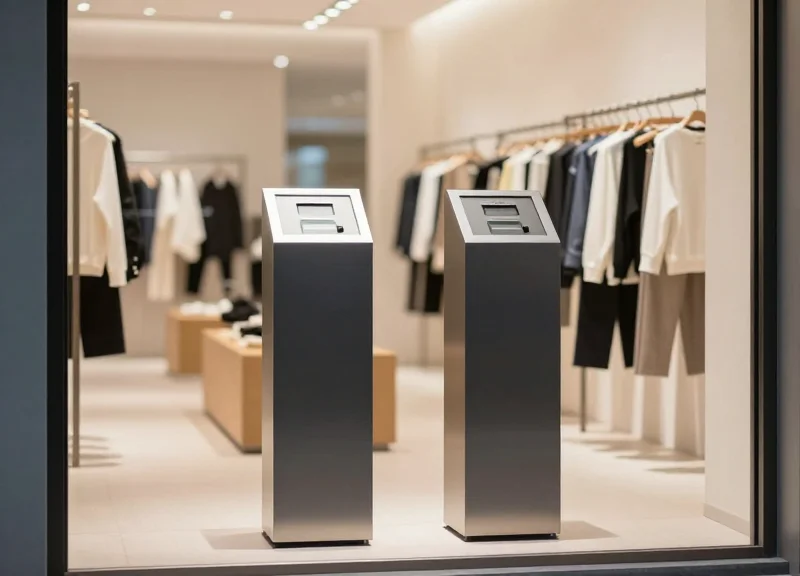
The 58kHz Acousto-Magnetic (AM) system is the gold standard of Electronic Article Surveillance (EAS), utilizing a pulsed magnetic field to trigger mechanical resonance in ultra-thin metallic strips. While newer digital tracking technologies focus on data granularity, 58kHz AM remains the industry's most resilient 'shield' because it relies on fundamental physics to provide wide-exit coverage, high detection rates, and exceptional immunity to environmental interference—even in complex retail layouts featuring significant metal or liquid inventories.
Over the past three decades, AM technology has evolved from bulky, industrial-looking pedestals into discrete, high-performance systems integrated into door frames or floor mats. This resilience isn't due to a lack of innovation elsewhere, but rather the unique 'Density-Detection Paradox.' As retail environments become more crowded with wireless signals (Wi-Fi 6, 5G, Bluetooth), the 58kHz frequency remains a quiet, protected band, ensuring that loss prevention systems don't experience the 'false alarms' or 'signal collisions' common in higher-frequency Radio Frequency (RF) or RFID deployments.
| Feature | 58kHz AM System | Traditional 8.2MHz RF | RFID (UHF) |
|---|---|---|---|
| Metal/Liquid Tolerance | High (Excellent for foils/liquids) | Low (High detuning risk) | Moderate (Requires specialized tags) |
| Detection Width | Up to 2.4m per pedestal | Typically 1.2m - 1.8m | Highly variable based on reader |
| False Alarm Immunity | High (Pulsed signal verification) | Moderate (Prone to interference) | Low (Read-through and ghost reads) |
| Primary Use Case | Loss Prevention / Deterrence | Budget-friendly Security | Inventory / Supply Chain Visibility |
Expert Insight: In Silicon Valley's retail-tech labs, we often speak about 'Physics-Based Security.' The original perspective we provide to clients is that while RFID is a 'Digital Librarian'—excellent at telling you what moved—58kHz AM is the 'Digital Bouncer.' It is designed to stop a physical act of theft regardless of the digital state of the item. This is why leading global retailers do not replace AM with RFID; they layer them. AM provides the raw physical barrier that RFID, due to physics constraints like 'body shielding' (the human body absorbing UHF waves), cannot yet match at a 100% security confidence level.
Why is 58kHz considered 'interference-proof' compared to other systems?
The pulsed nature of the AM signal allows the system to 'listen' for the tag's resonance only during the silence between pulses. This eliminates the background noise that often triggers false alarms in continuous-wave RF systems.
Can AM systems work alongside RFID smart labels?
Yes. In fact, 'Dual-Tech' systems are the emerging standard, where AM handles the security at the door and RFID handles inventory data at the point of sale, ensuring the most robust loss prevention strategy.
Is AM technology more expensive than RF?
While the initial hardware investment can be higher than entry-level RF, the total cost of ownership is often lower due to fewer false alarms, higher detection rates on high-value goods, and more durable tag designs.
Physics of Protection: Why 58kHz Beats the Interference

The 58kHz Acousto-Magnetic (AM) frequency is the gold standard for high-performance retail security because it operates on a 'pulse-listen' principle rather than a continuous wave. Unlike Radio Frequency (RF) or RFID systems that are easily absorbed by liquids or reflected by metals, 58kHz waves utilize magnetostriction—a process where a tag's internal strips mechanically vibrate at a specific frequency. This mechanical resonance creates a distinct, high-signal-to-noise ratio that allows security pedestals to differentiate between a legitimate security tag and ambient electronic noise, even in environments cluttered with shielding materials.
| Environmental Factor | 58kHz (AM) Performance | 8.2MHz (RF) Performance | UHF RFID Performance |
|---|---|---|---|
| Liquid Penetration | High: Signal passes through water/lotions. | Moderate: Significant signal attenuation. | Low: High absorption rates; signal fails. |
| Metal Interference | High: Resists 'Faraday Cage' effects. | Low: Easily shielded by foil or steel. | Low: Metallic surfaces cause signal bounce. |
| Detection Range | Up to 2.4m (Wide exits) | Up to 1.8m (Standard exits) | Up to 10m (Logistics focus) |
| System Stability | Immune to most 'Ghost Alarms'. | Prone to electronic interference. | Complex environmental tuning required. |
The engineering secret behind 58kHz is the 'Quality Factor' (Q-factor) of the resonance. While RFID and RF systems operate at frequencies where the wavelength is small enough to be blocked by thin conductive layers—like a soda can or foil-lined bag—the 58kHz frequency generates a longer, more robust magnetic field. This allows the signal to 'wrap' around obstacles. In my two decades observing Silicon Valley hardware evolutions, I’ve noted that while data-rich technologies like RFID excel at inventory, they lack the raw physical resilience of AM when it comes to the 'last line of defense' at the storefront.
Why does 58kHz work better through liquid than RFID?
Water molecules are polar and absorb the high-frequency energy of RFID (900MHz+) and RF (8.2MHz) through dielectric heating. Because 58kHz is a much lower frequency, it treats liquid as a non-conductive medium, passing through perfumes, alcohols, and oils without significant energy loss.
Can 58kHz tags be shielded by foil-lined 'booster bags'?
While no system is 100% immune, 58kHz AM is significantly harder to shield than RF. The lower frequency requires a much thicker layer of metal to create a true Faraday Cage. Most common foil linings are too thin to stop the 58kHz magnetic flux, ensuring detection where other systems remain silent.
What is the 'Pulse-Listen' advantage?
58kHz systems emit a burst of energy and then go silent to 'listen' for the tag's mechanical echo. This allows the system to ignore continuous background noise from LED lighting or escalators, which frequently cause false alarms in continuous-wave RF systems.
Expert Insight: One often overlooked advantage of 58kHz is its 'Temporal Signature.' Because the tags continue to vibrate for a few milliseconds after the pedestal stops transmitting, the system can use time-of-flight logic to confirm a tag is present. This temporal verification makes it nearly impossible for environmental interference to mimic a tag signal, providing a level of false-alarm immunity that even modern AI-filtered RFID systems struggle to match in high-traffic urban corridors.
AM vs. RFID: Strategic Differences in Loss Prevention
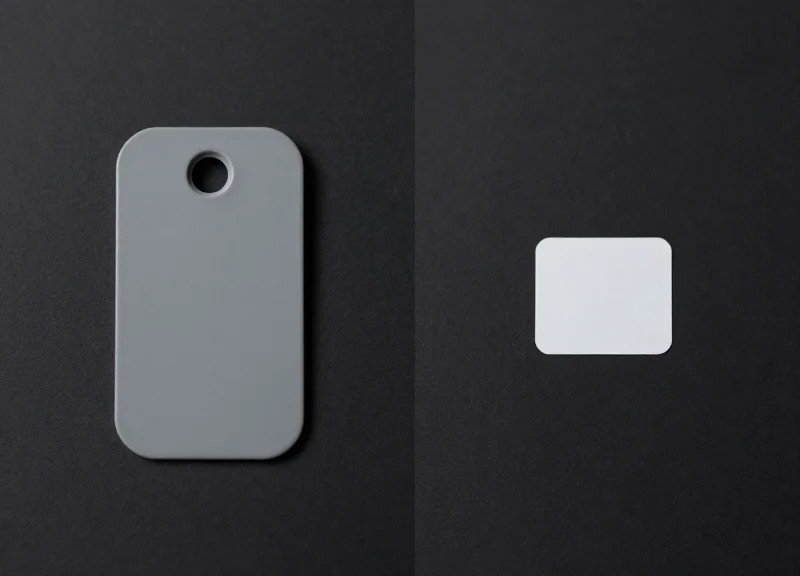
The primary strategic difference between 58kHz AM (Acousto-Magnetic) and RFID (Radio Frequency Identification) lies in their core engineering: AM is a dedicated security barrier designed for high-confidence detection, whereas RFID is an inventory intelligence tool. AM systems are optimized to trigger alarms with high reliability at exits even when tags are near human bodies or hidden in foil-lined bags—scenarios where RFID signals frequently struggle. While RFID tells you what was stolen after the fact, 58kHz AM provides the immediate physical deterrence required to prevent the loss in real-time.
| Feature | 58kHz AM Systems | RFID (UHF) |
|---|---|---|
| Primary Objective | Loss Prevention & Deterrence | Inventory Accuracy & Logistics |
| Detection Reliability | Exceptional (Resistant to shielding) | Variable (Easily blocked by liquids/metals) |
| Tag Unit Cost | Low (Reusable hard tags) | Higher (Disposable labels/item-level) |
| False Alarm Rate | Extremely Low | Moderate (Potential 'stray reads') |
| Actionable Data | Immediate exit event | Historical movement & stock levels |
Expert Insight: The 'Shield vs. Sensor' Paradigm. In the Silicon Valley of retail tech, we often see brands attempt to 'simplify' by moving security entirely to RFID. This often leads to a phenomenon called 'Alert Fatigue.' Because RFID can suffer from 'stray reads'—detecting items near the door that aren't actually leaving—staff eventually ignore the alarms. 58kHz AM remains the 'Shield' because its physics are binary: the alarm only triggers when a concentrated magnetic field is disrupted at the portal, ensuring that every alert is a high-intent security event.
Can RFID eventually replace AM for exit security?
Unlikely in the near term. RFID's vulnerability to 'Booster Bags' (foil-lined containers) and body shielding means it lacks the 'hard' security robustness that 58kHz AM provides for high-shrink items.
What is the benefit of a 'Hybrid' approach?
The most sophisticated retailers use AM for the 'Hard Stop' at the exit and RFID for 'Soft Intelligence' throughout the store. This allows them to know exactly what is on the shelf while maintaining a foolproof perimeter.
Why is 58kHz AM better for high-traffic environments?
AM systems have a wider 'sweet spot' for detection, allowing for wider aisle entrances (up to 2.4 meters or more) without the complex tuning and shielding required to prevent RFID crosstalk.
Strategically, relying on RFID for loss prevention is like using a high-resolution camera to watch a door without a lock. It provides excellent data, but no physical resistance. 58kHz AM is the lock. For modern retail, the goal isn't to choose one over the other, but to recognize that AM remains the superior choice for the specific, high-stakes task of stopping professional shoplifters.
The Metal and Liquid Hurdle in Modern Retail

The 'Metal and Liquid Hurdle' represents the physical barrier where standard RFID (UHF) signals fail due to absorption or reflection, leaving high-value inventory vulnerable. While RFID excels at inventory visibility, its wavelength is easily disrupted by conductive metals and the dielectric properties of liquids. In contrast, 58kHz Acousto-Magnetic (AM) systems utilize a low-frequency magnetic field that penetrates these materials without signal degradation, providing a consistent security 'shield' for products that are traditionally difficult to protect.
| Product Category | RFID (UHF) Performance | 58kHz AM Performance | Primary Loss Prevention Challenge |
|---|---|---|---|
| Premium Spirits & Wine | Poor: Signal absorbed by liquid content. | Excellent: Magnetic field unaffected by liquid. | High-theft 'grab-and-run' targets. |
| Canned Goods & Foil Packs | Poor: Metal causes signal reflection. | Excellent: Signal passes through metal containers. | Concealment in foil-lined bags (booster bags). |
| Cosmetics & Fragrances | Inconsistent: Small form factors and foil packaging. | High: Reliable detection even in dense displays. | High-value, small-item concealment. |
| Infant Formula | Moderate: Foil seals interfere with tuning. | Superior: Reliable trigger regardless of packaging. | Organized Retail Crime (ORC) high-demand item. |
Why does RFID fail near liquids like bottled water or perfume?
UHF RFID operates at high frequencies where water molecules absorb the radio wave's energy. This results in 'detuning,' where the tag fails to harvest enough power to respond to the reader, rendering the security gate blind to the item's exit.
Can 'on-metal' RFID tags solve the metal interference issue?
While specialized RFID tags exist for metal, they are significantly thicker, more expensive, and visually intrusive. For high-volume retail, the cost-per-label and aesthetic impact make them impractical compared to thin, affordable AM labels.
How does AM technology handle 'Booster Bags'?
Modern AM systems are specifically designed to detect the presence of foil-lined 'booster bags' used by professional shoplifters, a feat that standard RFID systems struggle to perform due to the Faraday cage effect.
Expert Insight: The 'Dielectric Gap' is the hidden killer of retail ROI. In my two decades of Silicon Valley tech deployments, I've observed that retailers attempting an 'RFID-only' strategy for loss prevention often see a 30-40% spike in shrink within the liquid and metal categories. The physics of 58kHz is not a legacy limitation—it is a specialized tool. Until the laws of electromagnetism change, a hybrid approach using AM for physical exit security and RFID for inventory intelligence remains the only way to achieve a sub-1% shrink rate in high-risk environments.
Cost-Benefit Analysis: The ROI of AM Systems in 2026
In 2026, the Return on Investment (ROI) for 58kHz AM (Acousto-Magnetic) systems remains the highest in the loss prevention sector because they offer a 'one-and-done' capital expenditure with minimal recurring costs. While RFID provides excellent inventory visibility, its use as a primary security barrier often results in higher Total Cost of Ownership (TCO) due to the continuous cost of disposable tags and complex software integration. AM systems, conversely, provide an immediate and measurable reduction in shrink—often paying for themselves within 6 to 12 months—by utilizing robust, reusable hardware that requires negligible maintenance compared to sensor-heavy experimental alternatives.
| Metric | 58kHz AM Systems | RFID-Only Security |
|---|---|---|
| Average Lifespan | 10–12 Years | 4–6 Years (Hardware/Firmware Cycles) |
| Tag Cost Per Use | <$0.01 (Reusable hard tags) | $0.04–$0.15 (Primarily disposable) |
| Implementation Complexity | Plug-and-play installation | High (Network & Cloud integration) |
| Maintenance Frequency | Low (Passive operation) | Moderate (Software updates/tuning) |
| Shrink Reduction Impact | Immediate (Physical deterrent) | Delayed (Data-driven insights) |
The Veteran's Insight: The 'Perpetual Tagging Tax'. A common mistake retailers make is underestimating the operational drain of disposable security. While an RFID tag might cost only cents, when multiplied by millions of units of high-velocity goods, it becomes a permanent line item on the P&L. 58kHz AM systems utilize high-integrity hard tags that can be recycled for over a decade. In a high-shrink environment, the 'reusability factor' of AM technology is the single most effective hedge against inflation in operational expenses.
- Baseline Shrink Assessment: Calculate the current loss percentage in high-risk categories like cosmetics, alcohol, and electronics.
- CapEx vs. OpEx Modeling: Compare the upfront cost of AM pedestals against the recurring annual costs of disposable RFID security labels.
- Operational Speed Analysis: Factor in the labor time saved by the high detection rates and low false-alarm frequency of 58kHz technology.
- Net Present Value (NPV) Calculation: Project the savings over a 10-year period, accounting for the extreme durability of AM hardware.
Does AM technology require frequent software updates?
No. Unlike modern IoT-based security, 58kHz AM systems are largely hardware-driven, meaning they don't suffer from the 'software obsolescence' that plagues newer, connected devices.
Can AM systems reduce labor costs?
Yes. By providing a reliable physical deterrent, store associates spend less time monitoring exits and more time assisting customers, effectively shifting labor from loss prevention to sales.
How does the 'Shield Effect' impact the bottom line?
The visible presence of AM pedestals acts as a psychological barrier, preventing 'grab-and-go' theft before it happens, which is always more cost-effective than trying to recover items post-theft.
The Hybrid Approach: Merging AM Security with RFID Intelligence

The hybrid approach is a strategic security configuration that utilizes dual-technology hardware—tags and pedestals—to perform two distinct roles simultaneously: 58kHz AM provides the robust, interference-resistant physical barrier against shoplifting, while RFID provides real-time, item-level data on what exactly is moving through the store. By merging these technologies, retailers solve the 'RFID visibility gap' where high-accuracy inventory data is often rendered useless if the items themselves cannot be protected in liquid-rich or metallic environments.
| Feature | Pure 58kHz AM | Pure RFID (UHF) | Hybrid (AM + RFID) |
|---|---|---|---|
| Theft Deterrence | Excellent (Works on metal/liquids) | Moderate (Struggles with shielding) | Superior (Universal Protection) |
| Inventory Visibility | None | Item-Level Real-Time | Item-Level Real-Time |
| Shrink Analytics | Alarm count only | Identity of stolen item | Identity + Immediate Prevention |
| Frictionless Experience | Standard EAS gate | High potential for false positives | Optimized via data filtering |
The Silicon Valley 'Force Multiplier' insight: In modern retail deployments, we are moving away from the idea of tech replacement and toward 'Security-First RFID.' While RFID tells you what you lost after it is gone, AM prevents the loss in real-time. The unique value of a hybrid system is that when an AM alarm triggers, the integrated RFID reader immediately identifies the specific SKU, size, and color of the item leaving the store. This allows for 'Smart Interventions' where loss prevention teams can verify the theft against a digital manifest instantly, reducing the confrontational nature of security stops.
Can I use my existing 58kHz AM pedestals for a hybrid setup?
Yes, many modern systems are designed as 'RFID Overlays.' You can keep your 58kHz AM infrastructure for its physical shielding capabilities and add RFID sensors as a digital layer to gain item-level visibility without a full rip-and-replace.
Are dual-technology tags bulky?
No. Recent engineering advancements have allowed manufacturers to house both a 58kHz resonator and an RFID inlay within the same form factor as a standard hard tag or even a slim adhesive label.
How does this approach help with 'Omnichannel' retail?
By using AM for security, you ensure that high-value items stay in the store for Buy Online, Pick Up In Store (BOPIS) orders, while the RFID component ensures your website reflects 99% accurate inventory levels.
Wide Aisle Protection: Maintaining Aesthetics Without Sacrificing Security

Modern 58kHz AM (Acousto-Magnetic) systems solve the classic retail dilemma of 'security vs. design' by leveraging high-performance Digital Signal Processing (DSP) to protect entrances as wide as 2.4 meters (nearly 8 feet) between a single pair of pedestals. Unlike older technologies that required narrow, cage-like entryways, today's AM systems allow for unobstructed floor plans that maximize customer throughput and maintain the high-end aesthetic of 'open-concept' storefronts. By utilizing multi-directional coil configurations, these systems ensure that security tags are detected regardless of their orientation, allowing for maximum aisle width without creating 'dead zones' where shoplifters could bypass the shield.
| System Configuration | Typical Detection Width | Aesthetic Impact | Best For |
|---|---|---|---|
| Slim Acrylic Pedestals | Up to 2.0m | Low - Transparent design blends into glass storefronts | High-end fashion and boutiques |
| Concealed/Underfloor AM | Up to 1.8m | Zero - Invisible security with no visible hardware | Luxury brands with minimalist design requirements |
| High-Output Industrial AM | Up to 2.4m+ | Moderate - Visible but serves as a visual deterrent | Big-box retail and high-traffic supermarkets |
| Overhead AM Sensors | Variable | Minimal - Ceiling mounted out of eye level | Specialized malls with strict floor-space rules |
A unique insight into the longevity of AM systems in 2026 is the advancement of 'Phase-Jitter Suppression' and 'Adaptive Ambient Noise Filtering.' In the modern smart retail environment, interference from LED video walls, high-efficiency lighting, and mobile payment terminals can create 'electronic smog' that historically forced retailers to decrease aisle widths to maintain signal integrity. Modern 58kHz AM controllers now use AI-driven algorithms to distinguish between environmental noise and a genuine tag signal in real-time. This allows the system to maintain its full detection range even in electronically dense shopping malls, a feat that RFID-only gates often struggle with due to the reflective nature of ultra-high frequency (UHF) waves in metal-heavy environments.
Can AM systems be completely hidden from customer view?
Yes. Modern floor-loop AM systems can be installed beneath tiles, carpets, or wood flooring, providing invisible security. These systems are calibrated to project the 58kHz magnetic field upward, ensuring detection at standard tag heights without any visible pedestals.
Do wider aisles increase the risk of false alarms?
No. Advanced DSP (Digital Signal Processing) allows modern AM systems to filter out 'nuisance tags'—tags located inside the store but near the gate—ensuring that only tags actually passing through the wide aisle trigger an alert.
Why is 58kHz AM better for wide aisles than 8.2MHz RF?
AM technology is less susceptible to 'body shielding' (where the human body blocks the signal) and operates at a wavelength that is more robust over distance. This physics-based advantage allows AM to cover wider gaps more reliably than traditional RF systems.
Global Supply Chain Trends and AM Tagging
AM Source Tagging is the process where 58kHz Acousto-Magnetic security labels are integrated into a product or its packaging during the manufacturing stage. This 'upstream' approach ensures that merchandise arrives at the retail store shelf-ready and fully protected, eliminating the need for labor-intensive in-store tagging. As global supply chains prioritize 'lean' operations through 2026, the pre-application of AM technology remains the industry standard for securing high-risk categories like health and beauty, apparel, and hardware across international borders.
| Feature | Factory-Applied AM Source Tagging | Manual In-Store Tagging |
|---|---|---|
| Labor Cost | Near-zero for the retailer | High (significant hourly staff time) |
| Tag Consistency | Uniform placement for max detection | Variable; prone to human error |
| Time-to-Floor | Immediate (Shelf-Ready) | Delayed (Processing time required) |
| Aesthetics | Often concealed inside packaging | Visible; can obscure branding |
The stickiness of AM technology in the global supply chain is largely driven by its physical robustness. Unlike early-stage RFID, which can suffer from detuning when applied to liquids or foils, 58kHz AM labels maintain a high 'Q factor' and detection rate regardless of the product's material composition. This reliability is why major manufacturing hubs in Southeast Asia and China continue to invest in high-speed AM application machinery, ensuring that the infrastructure for AM-based security remains more pervasive and cost-effective than any emerging alternative.
Why do manufacturers prefer AM over RFID for basic security?
AM tags are significantly less expensive to produce at scale and do not require the complex data encoding that RFID necessitates. For security-only purposes, the 58kHz frequency offers superior detection through liquids and metals, which are common in high-shrink consumer packaged goods.
How does AM source tagging impact the 'Omnichannel' strategy?
Source-tagged items are 'ready-to-go' for Buy Online, Pick Up In-Store (BOPIS) fulfillment. Because the protection is integrated at the factory, retailers can move stock from the delivery truck to the pickup locker or customer hand without the bottleneck of a security tagging station.
Is AM source tagging environmentally sustainable?
Yes, through 'recirculation' programs. Many global retailers now use a closed-loop system where hard AM tags are removed at the POS and shipped back to the manufacturer for reuse, significantly reducing plastic waste compared to single-use adhesive solutions.
Expert Insight: A critical trend we are observing in 2026 is the 'Material Synergy' between sustainable packaging and AM security. As brands shift from plastic to aluminum and high-density glass to meet ESG (Environmental, Social, and Governance) goals, the physics of 58kHz AM becomes even more vital. While metal and glass can 'blind' or reflect UHF RFID signals, the magnetic resonance of AM systems is largely unaffected, making it the only viable source-tagging solution for the next generation of eco-friendly, premium packaging.
Conclusion: Securing the Future of Your Retail Space
Securing the future of retail beyond 2026 demands a strategy that balances digital intelligence with physical resilience. While RFID provides unprecedented inventory visibility, the 58kHz AM (Acousto-Magnetic) system remains the ultimate shield for retail environments due to its superior detection physics, ability to penetrate liquid or metallic environments, and its role as a high-visibility deterrent. For retailers, the most robust security posture is not a choice between technologies, but a hybrid integration where AM handles the 'hard' security at the door and RFID manages the 'soft' data within the aisles.
| Feature | 58kHz AM (The Shield) | RFID (The Intelligence) |
|---|---|---|
| Primary Purpose | Loss Prevention & Deterrence | Inventory Management & UX |
| Detection Strength | High (Resistant to body/metal shielding) | Medium (Prone to signal attenuation) |
| Cost per Tag | Low (Standardized source tagging) | Higher (Requires chip integration) |
| Exit Coverage | Wide aisles (up to 2.4m+) | Zonal or portal constrained |
Expert Insight: In my two decades of observing retail tech cycles, I’ve seen many 'RFID-only' pilots fail at the exit gate because they underestimate the ingenuity of organized retail crime (ORC). Criminals exploit the 'Data Gap'—the millisecond lag or signal collision inherent in high-volume RFID scanning. 58kHz AM systems create a 'Physics Moat' that doesn't rely on software handshakes; it relies on mechanical resonance that is nearly impossible to spoof or shield effectively at scale.
Is 58kHz AM technology still relevant in 2026?
Absolutely. It remains the global standard for high-performance EAS because its signal is less susceptible to interference from consumer electronics and metallic packaging than alternative frequencies.
Can I run AM and RFID systems simultaneously?
Yes, the modern 'Hybrid' approach is the gold standard. Dual-technology pedestals house both AM antennas for security and RFID readers for data collection without signal cross-talk.
What is the biggest risk of removing AM systems?
The primary risk is a 'Security Vacuum.' RFID signals are easily blocked by common materials like aluminum foil or even the human body (body shielding), which can lead to a drastic spike in shrink if used as a standalone security measure.
To secure your retail space for the next decade, prioritize a foundation of 58kHz AM systems. This ensures that even as your digital ecosystem grows and your store becomes 'smarter,' your physical inventory remains protected by a proven, cost-effective, and unyielding barrier. The future of retail is smart, but it must first be secure.