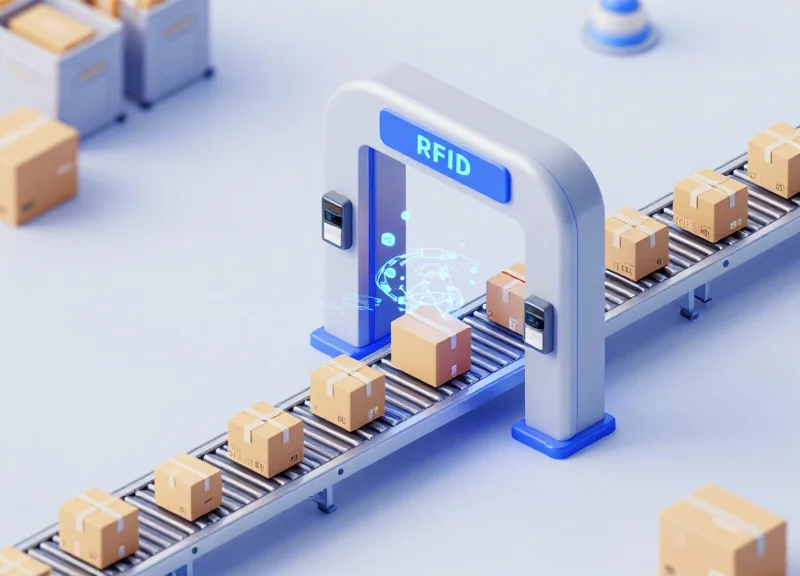

In the high-stakes world of corporate governance, manual asset tracking is no longer just inefficient—it's a liability. Traditional barcode systems and spreadsheets are prone to human error, often resulting in discrepancies that trigger audit failures and financial penalties. RFID (Radio Frequency Identification) technology is revolutionizing this landscape by enabling touchless, real-time data capture. By leveraging these advanced systems, organizations can achieve near-perfect inventory accuracy. This guide explores how DragonGuardGroup’s RFID solutions empower businesses to maintain ironclad audit compliance while drastically optimizing operational efficiency.
The Evolution of Asset Management: From Barcodes to RFID
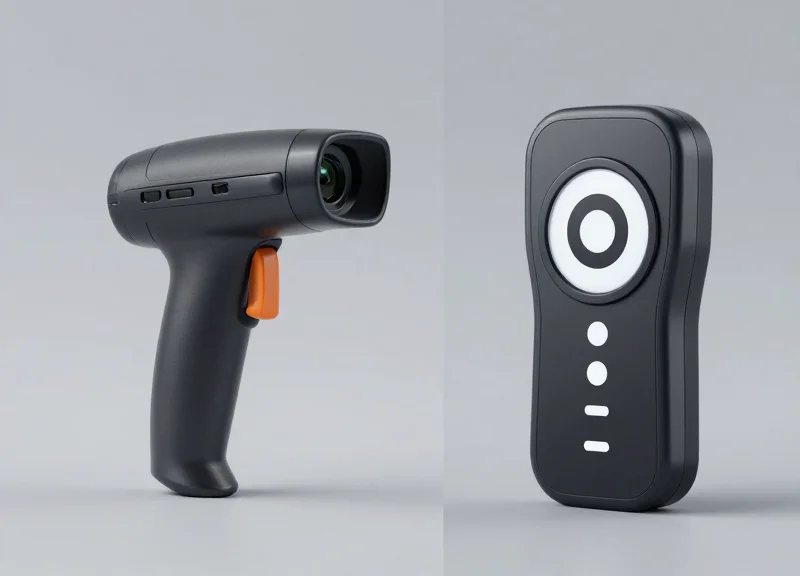
The evolution of corporate asset management represents a fundamental shift from manual, 'Line-of-Sight' (LoS) data entry to autonomous, radio-frequency data capture. While barcodes revolutionized inventory in the 1970s by replacing handwritten ledgers, they require a one-to-one physical interaction between the scanner and the tag. In contrast, RFID (Radio Frequency Identification) allows for the simultaneous, non-visual identification of hundreds of assets at once. For modern enterprises, this transition is the difference between a 75% accuracy rate—fraught with 'ghost assets'—and the 99.9% precision required for ironclad financial audit compliance.
| Feature | Barcode Systems | RFID Systems |
|---|---|---|
| Read Requirement | Line-of-Sight (Direct Scan) | Proximity-based (No Line-of-Sight) |
| Scanning Speed | 1 item per 3-5 seconds | Up to 1,000 items per second |
| Human Error Risk | High (Missed or double scans) | Near-Zero (Automated triggers) |
| Data Capacity | Static (Read-only) | Dynamic (Read/Write capabilities) |
| Durability | Low (Scratches prevent reading) | High (Tags can be embedded or ruggedized) |
A unique insight often overlooked by Silicon Valley CTOs is the 'Compliance Decay' phenomenon. In barcode-based systems, inventory data begins to degrade the moment a physical audit concludes because items are moved, retired, or stolen without a manual update to the ledger. RFID solves this by enabling 'Continuous Compliance'—gateways and handheld readers can update the central database in real-time as assets pass through zones, ensuring the digital twin of your corporate inventory stays synchronized with the physical reality 24/7/365.
Why is Line-of-Sight (LoS) the biggest bottleneck in auditing?
LoS requires employees to find, orient, and scan every individual tag. In a server room or a warehouse, this labor-intensive process leads to fatigue and 'skipping,' which is the primary cause of audit discrepancies.
Does RFID eliminate the need for manual reconciliation?
Yes. Because RFID readers can scan assets through boxes, inside cabinets, or across rooms, the reconciliation process becomes a matter of walking through a space rather than touching every item, reducing audit time by up to 90%.
What is the 'Shadow Asset Gap'?
This is my proprietary term for the 15-20% of assets that typically go missing in barcode systems over a 3-year cycle. RFID bridges this gap by providing an automated 'proof of life' for every tagged item regularly.
Why Manual Inventory Fails Modern Audit Compliance Standards
Manual inventory management fails modern audit standards because it relies on periodic, human-led verification that is inherently reactive and prone to significant error. In a high-stakes regulatory environment (such as SOX or GASB compliance), the 10% to 25% discrepancy rate typical of manual spreadsheets creates 'material weaknesses' in financial reporting. Because manual logs provide only a snapshot in time, they cannot account for the daily movement of assets, leading to 'ghost assets' that inflate tax liabilities and 'zombie assets' that represent unmanaged security risks.
| Audit Requirement | Manual Inventory Limitation | Compliance Risk |
|---|---|---|
| Existence & Ownership | Human oversight leads to missed or misidentified items. | Overstated balance sheets (Ghost Assets). |
| Completeness | Assets acquired but not tagged/logged manually. | Understated liabilities and security gaps. |
| Accuracy & Valuation | Delayed updates to asset condition or location. | Incorrect depreciation and tax calculations. |
| Audit Trail | Paper-based or manual CSV edits lack immutability. | Inability to prove chain of custody to auditors. |
Expert Tip: One overlooked factor in audit failure is 'Data Decay.' In most corporate environments, inventory accuracy degrades by approximately 2% to 3% every month that a physical audit is not performed. For a company conducting annual manual audits, the data used for the 11 months of the year is statistically unreliable for modern risk management.
What are the financial implications of Ghost Assets?
Ghost assets are items on the general ledger that cannot be physically found. They cause companies to pay unnecessary insurance premiums and personal property taxes on equipment that no longer provides value.
Why is the error rate so high in manual barcode scanning?
Manual scanning requires line-of-sight and physical proximity. Fatigue leads to workers skipping hard-to-reach items or 'bulk-editing' logs without verification, which compromises the integrity of the entire audit.
How does manual tracking impact cybersecurity compliance?
Unaccounted hardware (Zombie Assets) often contains sensitive data. If an asset isn't in the manual registry, it isn't being patched or monitored, creating a blind spot for SOC2 or HIPAA compliance.
Furthermore, the labor cost of remediation—fixing the errors discovered during an audit—often exceeds the cost of the inventory process itself. When auditors find discrepancies, the 'fire drill' that ensues pulls high-value employees away from their primary roles to perform emergency reconciliations, creating a hidden operational tax on the organization.
The Mechanics of Precision: How RFID Reaches 99.9% Accuracy

RFID achieves 99.9% accuracy in corporate asset management by utilizing high-frequency radio waves to identify assets without the need for line-of-sight contact. Unlike manual barcode scanning, which is prone to human oversight and physical obstructions, RFID systems leverage automated 'handshakes' between passive tags and fixed or mobile readers. This precision is sustained by three technical pillars: superior tag sensitivity, sophisticated anti-collision algorithms that permit simultaneous reading of hundreds of items, and intelligent middleware that filters environmental noise to ensure only valid asset data enters the system of record.
- Signal Propagation and Tag Backscatter: The reader emits an electromagnetic field that wakes up the passive tag. The tag then modulates this energy to reflect a unique ID back to the reader. This process happens in milliseconds, allowing for instant identification.
- Anti-Collision Protocol Processing: In dense environments like server rooms, readers use 'Aloha' or 'Binary Tree' algorithms to isolate individual tag signals, preventing signal overlap and ensuring no single asset is missed during a bulk scan.
- Middleware Logic and Data Cleansing: The raw data is processed by middleware which uses RSSI (Received Signal Strength Indicator) thresholds to determine if an asset is actually present or if the reader just caught a 'stray' signal from a neighboring room.
| Feature | Technical Specification | Impact on Accuracy |
|---|---|---|
| Frequency Range | UHF (860-960 MHz) | Enables long-range reads (up to 12m) for high-ceiling warehouses. |
| Read Rate | 700+ tags per second | Eliminates human error during high-volume inventory cycles. |
| Encoding | EPC Gen2v2 | Provides cryptographic security and prevents duplicate asset records. |
Expert Insight: The 'Shadowing' Solution. A common misconception is that RFID is hindered by metal and liquid. In high-stakes corporate environments, we achieve 99.9% accuracy by using 'on-metal' tags with integrated spacers. These tags leverage the metal surface as an antenna extension rather than a shield. Furthermore, implementing 'Circular Polarization' in reader antennas allows the system to capture tags regardless of their physical orientation—a critical factor in reaching that final 0.9% of accuracy that generic systems often miss.
Does environmental interference reduce accuracy?
While physical barriers can affect signal, modern systems use frequency hopping and adjustable power levels to penetrate or circumvent interference, maintaining high fidelity in complex office layouts.
How does RFID handle 'Ghost Reads'?
Middleware uses logic-based filtering. If a tag is read only once at a very low signal strength, the system identifies it as a 'stray' read and excludes it from the audit report to prevent false positives.
Critical Features of an Enterprise-Grade RFID System
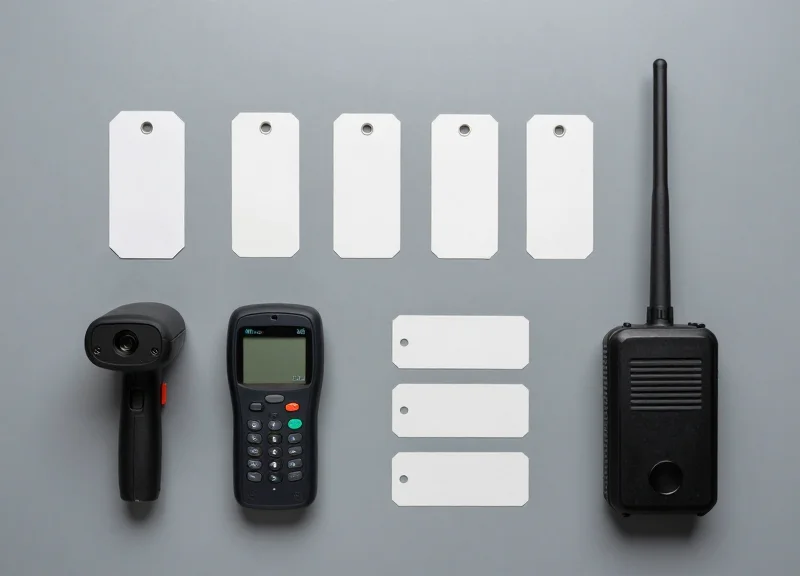
An enterprise-grade RFID system is defined by its ability to maintain 99.9% data accuracy while operating at scale across complex corporate environments. Unlike basic tracking solutions, a professional RFID framework consists of three pillars: high-performance specialized tags, multi-protocol readers, and a centralized software engine. This ecosystem must be capable of processing thousands of unique IDs simultaneously, filtering out 'noise' or stray signals, and synchronizing that data with Financial or ERP systems of record to satisfy stringent internal and external audit requirements.
| Feature Category | Critical Requirement | Impact on Audit Compliance |
|---|---|---|
| Tag Performance | Material-agnostic sensitivity (on-metal/liquid) | Eliminates 'hidden' assets during physical counts |
| Reader Capability | 700+ tags per second read rate | Reduces human error in high-density areas |
| Software Layer | Automated reconciliation & API integration | Provides an immutable digital audit trail |
| Security | AES-128 bit encryption & locked memory | Prevents unauthorized data tampering |
- High-Performance RFID Tags: Enterprise systems utilize specialized tags designed for the environment they inhabit. This includes 'On-Metal' tags that prevent signal interference from IT racks and machinery, as well as ruggedized tags that withstand data center cooling or industrial cleaning.
- Intelligent Fixed and Mobile Interrogators: Readers must support 'Dense Reader Mode' to prevent interference between devices. Mobile readers should offer long-range scanning (up to 20+ meters) to allow auditors to inventory high-bay shelving without specialized lifting equipment.
- Cloud-Native Asset Management Software: The 'brain' of the system must offer real-time dashboarding, exception reporting (identifying what is missing), and seamless bi-directional integration with platforms like SAP, Oracle, or ServiceNow.
Expert Insight: The Power of RSSI Filtering. A common pitfall in RFID implementation is 'bleeding'—where a reader picks up tags in the next room through a thin wall. Enterprise-grade systems use Received Signal Strength Indicator (RSSI) filtering and sophisticated middleware logic to 'locate' an asset only when its signal strength exceeds a specific threshold or matches a known zone pattern. This algorithmic approach is what separates a simple scan from a 99.9% accurate inventory count, as it prevents ghost assets from being incorrectly verified.
Can RFID tags be used on laptop and server hardware?
Yes. Enterprise-grade systems use ultra-thin, low-profile on-metal tags specifically designed for IT assets. These do not interfere with the device's internal components or wireless connectivity.
Do I need to replace my existing ERP?
No. A professional RFID solution acts as a data bridge, feeding high-fidelity location data into your existing ERP via robust APIs, enhancing your current system rather than replacing it.
How does the system handle 'blind spots'?
By combining fixed 'portal' readers at exit/entry points with periodic mobile handheld audits, enterprises create a 'check and balance' system that ensures no asset remains unrecorded for long.
Step-by-Step Guide: Implementing RFID for Audit-Ready Financials

Implementing RFID for audit-ready financials is the process of replacing manual verification with automated data capture to ensure the physical existence of assets perfectly mirrors the General Ledger (GL) in real-time. By systematically linking unique RFID identifiers to financial records, organizations can eliminate the 'audit gap' caused by ghost assets and unrecorded transfers, achieving a continuous state of compliance rather than a once-a-year scramble.
- Phase 1: Baseline Reconciliation: Before applying a single tag, perform a 'clean room' audit of your Fixed Asset Register (FAR). Identify and write off assets that physically no longer exist to prevent carrying over legacy inaccuracies into the new digital system.
- Phase 2: Environment and Tag Mapping: Conduct a site survey to identify RF interference zones (heavy metal or liquid areas). Select specialized tags, such as On-Metal tags for IT hardware or tamper-evident tags for high-value lab equipment, ensuring 100% read rates in every facility.
- Phase 3: Middleware and ERP Integration: Configure the RFID middleware to translate raw tag data into business events. Establish a secure API handshake with your ERP (e.g., SAP, Oracle, or Microsoft Dynamics) to automate the updating of asset location and status codes.
- Phase 4: Pilot Deployment and Stress Testing: Roll out RFID readers and tags in a controlled environment. Test 'edge cases,' such as bulk asset transfers or assets moving through loading docks, to validate that the system captures movements without human intervention.
- Phase 5: Full-Scale Serialization and Training: Apply tags across the enterprise and train staff on mobile reader usage. Establish a 'New Asset Onboarding' protocol where assets are tagged and synced at the point of receipt before they enter the general population.
| Implementation Step | Financial Benefit | Audit Impact |
|---|---|---|
| Serialization | Verified Capitalization | Proof of Existence |
| ERP Integration | Accurate Depreciation | Valuation Integrity |
| Zonal Tracking | Loss Prevention | Custodial Accountability |
| Automated Reporting | Lower Administrative Costs | Reduced Materiality Risk |
Expert Insight: The 'Shadow Inventory' Delta. A critical, often overlooked step is the automated 'Delta Report' generated during the first 90 days. Instead of just looking for what is missing, look for what the RFID system finds that is not in your books. These 'found assets' often represent unrecorded capital expenditures or misclassified expenses that can significantly impact tax liabilities and insurance premiums if left unaddressed.
How long does a typical enterprise RFID rollout take?
Depending on asset volume and geographic spread, a standard rollout takes 3 to 6 months. This includes site surveys, ERP integration, and the physical tagging of existing inventory.
Will RFID interfere with existing Wi-Fi or medical equipment?
No. Modern Gen2 RFID systems operate on specific UHF bands (860-960 MHz) that are designed to coexist with Wi-Fi and sensitive electronic equipment without causing interference.
What is the typical ROI for audit-focused RFID?
Most enterprises see a full ROI within 12 to 18 months, primarily driven by the elimination of manual labor during audits and the recovery of tax overpayments on ghost assets.
Mitigating Risk: Addressing Ghost Assets and Depreciation Errors
RFID systems mitigate financial risk by automating the reconciliation of the Fixed Asset Register (FAR), effectively identifying 'ghost assets'—items that remain on the accounting books but are no longer physically present or operational. In typical manual environments, ghost assets can account for 15% to 30% of a company's total inventory. By utilizing RFID's 99.9% accuracy, organizations can ensure that depreciation calculations, property tax filings, and insurance premiums are based on the actual physical reality of their asset landscape, preventing significant financial leakage.
| Risk Factor | Manual System Impact | RFID-Enabled Result |
|---|---|---|
| Ghost Assets | Inflated tax liability and insurance premiums on missing items. | Automated retirement of assets from books via real-time scans. |
| Depreciation Accuracy | Errors in timing leading to restated earnings or audit flags. | Precision schedules linked to verified asset deployment dates. |
| Capital Expenditures | Unnecessary 'double-buying' of assets already in stock. | Full visibility into existing surplus across all locations. |
| Audit Deficiencies | Costly 'catch-up' inventories and internal control failures. | Continuous compliance with a permanent digital audit trail. |
The financial implications of ghost assets extend beyond simple accounting errors; they represent a persistent drain on corporate capital. When an asset is lost or stolen but remains on the books, the company continues to pay for its existence through personal property taxes and insurance coverage. Conversely, 'zombie assets'—items that are physically present but missing from the books—pose a different risk, primarily through the loss of depreciation-related tax shields. RFID creates a closed-loop system where the physical and digital states are perpetually synchronized.
- Automated Asset Retirement: When a handheld or fixed RFID reader fails to detect a tagged item during multiple scheduled cycles, the system flags the item for investigation or automatic retirement, triggering a notification to the finance department.
- Real-Time Location Mapping: RFID allows for 'zonal tracking,' ensuring that assets are assigned to the correct cost center. This prevents depreciation errors that occur when assets are moved between departments with different budget structures.
- Streamlined Property Tax Audits: During tax season, the RFID system generates a timestamped report of every physical asset on-site, providing undeniable proof of inventory to external auditors and tax authorities.
Expert Tip: To maximize ROI, use RFID data to identify 'under-utilized assets' that are technically present but have not moved or been accessed for 180 days. This allows for proactive asset reallocation or early disposal, optimizing the balance sheet before the fiscal year-end rather than reacting to a failed audit.
How do ghost assets affect Sarbanes-Oxley (SOX) compliance?
SOX Section 404 requires rigorous internal controls over financial reporting. Ghost assets represent a failure in these controls; RFID provides the automated, verifiable evidence needed to satisfy auditors that asset valuations are accurate.
Can RFID help recover overpaid insurance premiums?
Yes. By providing historical RFID scan data that proves an asset was disposed of or lost months prior, companies can often negotiate credits or adjustments on their insurance renewals.
What is the typical timeframe for seeing financial risk reduction?
Most enterprises see a significant reduction in ghost assets within the first 90 days of a full-site RFID tag deployment and initial reconciliation scan.
Real-World ROI: Financial Gains Beyond Compliance

The return on investment (ROI) for RFID in corporate asset management extends far beyond avoiding audit penalties; it fundamentally reconfigures the balance sheet by reducing manual labor requirements by up to 90% and curbing asset shrinkage by nearly 30%. While compliance ensures the numbers are correct, the true financial gain lies in Asset Velocity—the ability to identify, locate, and redeploy capital equipment with zero friction. This efficiency ensures that the initial investment in RFID infrastructure is typically recouped within 12 to 18 months through operational leanings, tax optimization, and the elimination of redundant procurement.
| Financial Metric | Manual/Barcode Inventory | RFID-Enabled Inventory | Economic Impact |
|---|---|---|---|
| Audit Labor Cost | $25,000 - $50,000 / year | $1,500 - $3,000 / year | 90%+ reduction in OpEx |
| Asset Shrinkage/Loss | 3% - 5% annually | Less than 0.5% annually | Significant CapEx preservation |
| Procurement Accuracy | 60% (Estimated need) | 99.9% (Actual need) | Prevents 'Double Buying' |
| Tax & Insurance | Overpaid on 'Ghost Assets' | Paid on verified assets only | 5-10% savings on premiums/taxes |
One of the most overlooked financial benefits is the elimination of 'Dead Money.' In a typical enterprise environment, roughly 15% of mobile assets (laptops, lab equipment, AV gear) sit idle because they cannot be located in real-time. RFID converts this 'Dead Money' back into active capital by providing a real-time 'internal marketplace' for asset sharing across departments, effectively stalling the need for new equipment purchases.
How does RFID affect the depreciation schedule?
By providing a precise 'first-seen' and 'last-seen' timestamp, RFID allows finance teams to retire assets the moment they leave the facility or reach end-of-life. This prevents the common error of depreciating non-existent assets, which can lead to inflated book values and tax overpayments.
What is the impact on insurance premiums?
Insurers often provide lower premiums to organizations that can prove a 99%+ asset accuracy rate. This 'validated risk' profile demonstrates superior internal controls, often resulting in a 5-15% reduction in annual property insurance costs.
Does RFID reduce the cost of IT support?
Yes. IT teams spend roughly 20% of their time 'hunting' for hardware. RFID reduces this search time to seconds, allowing high-value engineers to focus on technical tasks rather than manual inventory searches.
Expert Tip: To maximize ROI, look beyond the tags. The real value is found in the Integration Layer. By syncing RFID data directly into your ERP (like SAP or Oracle), you automate the entire asset lifecycle from 'Procure-to-Pay' to 'Retire-to-Dispose,' removing the high cost of human intervention at every stage.
The Synergy of EAS, ESL, and RFID in Asset Protection

The synergy of Electronic Article Surveillance (EAS), Electronic Shelf Labels (ESL), and Radio Frequency Identification (RFID) represents the pinnacle of modern asset protection, transforming static inventory into a dynamic, self-reporting ecosystem. While RFID provides the granular 'who, what, and where' of an asset, EAS acts as the immediate 'gatekeeper' against unauthorized removal, and ESL serves as the 'visual interface' for real-time status updates. By integrating these three technologies, enterprises move beyond simple tracking to a proactive security posture that virtually eliminates shrinkage and ensures 100% audit readiness through a multi-layered defense-in-depth strategy.
| Technology | Primary Function | Audit/Compliance Role | Security Value |
|---|---|---|---|
| RFID | Unique Identification | High-speed serialized data capture | Real-time location and movement history |
| EAS | Loss Prevention | Validates authorized exit/removal | Immediate deterrent and alarm trigger |
| ESL | Dynamic Information | Visual verification of audit status | Tamper-evident status and ownership display |
One original expert insight often overlooked is the 'Visual Audit Bridge' created by ESLs. By linking ESLs to your RFID middleware, you can display an asset's 'Last Audit Date' or 'Compliance Status' directly on the storage rack. This allows internal auditors to perform a 'passive walk-through' audit; a simple glance at the digital shelf labels confirms if the RFID system has successfully checked in all items in that zone, effectively turning your physical environment into a live dashboard. This eliminates the need for manual cross-referencing between handheld readers and ERP spreadsheets.
How does integrating EAS with RFID improve security response?
Standard EAS detects a tag, but RFID-integrated EAS identifies exactly which asset is passing the sensor. This allows security personnel to receive an instant notification detailing the specific serial number and department of the departing item, rather than a generic alarm.
Can ESLs help in managing asset maintenance compliance?
Yes. ESLs can automatically update to show when an asset is due for calibration or safety inspection based on RFID usage data. This ensures that only compliant, safe equipment is used, which is a critical component of regulatory audits.
Does this triple-layer approach increase infrastructure complexity?
While it requires more hardware, modern platforms like DragonGuardGroup's integrated solutions use unified middleware. This means all three technologies share a single data pipeline, simplifying the backend for IT departments and reducing the total cost of ownership through shared network resources.
Ultimately, the combination of these technologies addresses the three pillars of corporate governance: visibility, accountability, and protection. When an asset is moved, the RFID system updates the ledger; if it is moved without authorization, the EAS system alerts security; and the ESL displays the current status to any staff member in the vicinity. This holistic loop ensures that your balance sheet is always a perfect reflection of your physical inventory.
Future-Proofing Your Enterprise: RFID and the IoT Ecosystem
Future-proofing an enterprise involves evolving RFID from a simple tracking tool into the 'sensory layer' of a comprehensive Internet of Things (IoT) strategy. While traditional systems provide a point-in-time snapshot, an IoT-integrated RFID ecosystem creates a continuous, real-time data pipeline that feeds directly into ERP and AI platforms. This connectivity allows corporate assets to become 'smart objects' that contribute to a dynamic digital twin of the organization, ensuring that audit compliance is not just a periodic event, but a constant, automated state of operational readiness.
| Feature | Legacy RFID Approach | IoT-Integrated RFID Ecosystem |
|---|---|---|
| Data Velocity | Periodic batch updates via manual handheld scans. | Real-time data streaming via fixed gateways and edge computing. |
| Integration Scope | Siloed asset management software. | Deep integration with AI, BI tools, and smart building systems. |
| Audit Preparedness | Reactive; requires weeks of preparation. | Proactive; continuous 'self-auditing' infrastructure. |
| Strategic Value | Inventory accuracy and loss prevention. | Predictive maintenance, utilization analytics, and automated procurement. |
The real power of this ecosystem lies in its ability to fuel Artificial Intelligence. When RFID-generated location data is combined with IoT sensors—such as temperature, humidity, or vibration—enterprises can move beyond simple compliance into predictive asset management. For example, AI can analyze asset movement patterns to predict when specialized equipment will require maintenance or if it is being underutilized in a specific department. My unique expert insight for Silicon Valley tech leaders: The next frontier is 'Autonomous Auditing Nodes' where the infrastructure itself performs 24/7 validation without human intervention, effectively reducing the 'cost per audit' to near zero while maintaining 99.9% accuracy.
How does RFID interact with other IoT sensors?
RFID provides the unique identity of the asset, while other IoT sensors (like BLE or Zigbee) provide the context, such as environmental conditions or exact movement vectors, creating a comprehensive data profile.
Is an IoT-integrated RFID system difficult to scale?
No, by using cloud-native architectures and standardized protocols like MQTT or HTTP APIs, enterprises can scale from a single data center to global offices without re-architecting their core database.
What role does AI play in this ecosystem?
AI processes the massive 'data lake' created by RFID reads to identify anomalies, predict asset lifecycle end-of-life, and optimize tax depreciation schedules automatically.