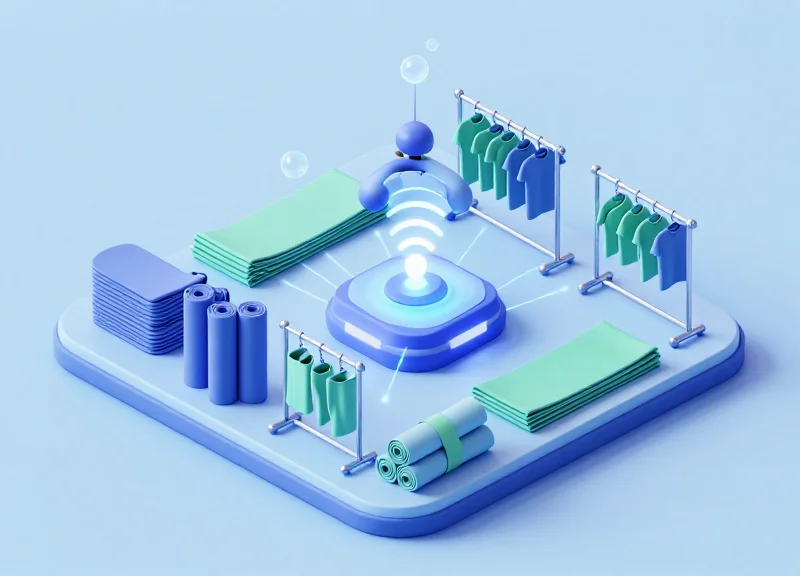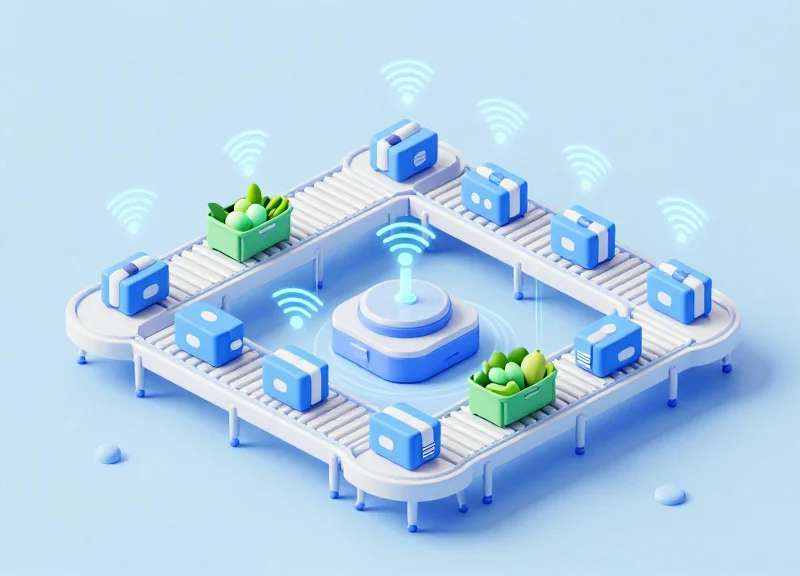
As the 2026 regulatory deadlines for global food and drug traceability approach, the industry faces a critical choice: adopt 2D barcodes or leapfrog to Next-Gen RFID. While 2D barcodes offer more data than traditional UPCs, they remain tethered to manual, line-of-sight scanning. In contrast, Next-Gen RFID provides the high-speed, contactless automation necessary to meet the rigorous demands of FSMA 204 and international pharmaceutical mandates. This article explores why forward-thinking enterprises are choosing RFID to ensure 100% compliance, operational efficiency, and consumer safety in a post-2026 marketplace.
The 2026 Compliance Landscape: FSMA 204 and Global Pharma Mandates
2026 marks a regulatory "point of no return" for supply chain transparency, driven primarily by the FDA’s Food Safety Modernization Act (FSMA) Section 204 and the final implementation phases of the Drug Supply Chain Security Act (DSCSA). These mandates require organizations to maintain detailed Key Data Elements (KDEs) for Critical Tracking Events (CTEs) across the entire lifecycle of a product. While 2D barcodes offer a digital bridge, the high-volume throughput and sub-second data retrieval requirements of 2026 compliance are pushing global leaders toward Next-Gen RFID as the only scalable standard for real-time, hands-free data capture.
| Regulation | Primary Deadline | Core Requirement | Enforcement Focus |
|---|---|---|---|
| FSMA Section 204 | January 20, 2026 | End-to-end traceability for Food Traceability List (FTL) items | Food safety and rapid recall execution |
| DSCSA (Pharma) | November 2024 / 2025* | Item-level electronic, interoperable tracking | Counterfeit prevention and supply chain integrity |
| EU FMD | Ongoing / Full Integration | Unique identifiers and anti-tampering features | Patient safety and pharmaceutical verification |
The strategic shift here isn't just about labels; it's about the "Latency Tax." In the legacy world, a 3-second manual scan of a 2D barcode was acceptable. In the 2026 world, where every handoff must be logged with 100% accuracy to satisfy FSMA 204's strict record-keeping rules, those three seconds become a massive physical bottleneck. My observation from three decades in Silicon Valley supply chain tech is that manual scanning has a 1-3% human error rate. In a high-stakes recall, that 3% error rate creates a "data ghost" that can lead to millions in lost revenue or, worse, compromised consumer safety.
What is the primary driver for the 2026 FSMA 204 deadline?
The FDA aims to reduce the time it takes to identify and remove contaminated food from the market. FSMA 204 requires any entity that manufactures, processes, packs, or holds foods on the Food Traceability List to maintain specific records (KDEs) and provide them to the FDA within 24 hours of a request.
How does item-level traceability differ from traditional batch tracking?
Traditional tracking identifies a pallet or a production run. Item-level traceability, mandated by DSCSA and encouraged by FSMA 204, tracks the individual unit (the specific bottle or head of lettuce), allowing for surgical precision during recalls and preventing the destruction of unaffected inventory.
Why is Next-Gen RFID replacing 2D barcodes in these mandates?
While 2D barcodes (like QR codes or GS1 DataMatrix) are excellent for consumer engagement, they require line-of-sight and manual labor. RFID allows for bulk reading of hundreds of items simultaneously without opening cases, ensuring the 'digital twin' of the shipment is always accurate without slowing down warehouse operations.
Expert Tip: Don't view 2026 as a hardware upgrade. View it as a data integrity milestone. The companies successfully navigating this transition are those treating RFID as a 'data pipeline' that automates the generation of Electronic Product Code Information Services (EPCIS) files, which is the gold standard for communicating traceability data across global partners.
The Limitations of 2D Barcodes in High-Volume Logistics
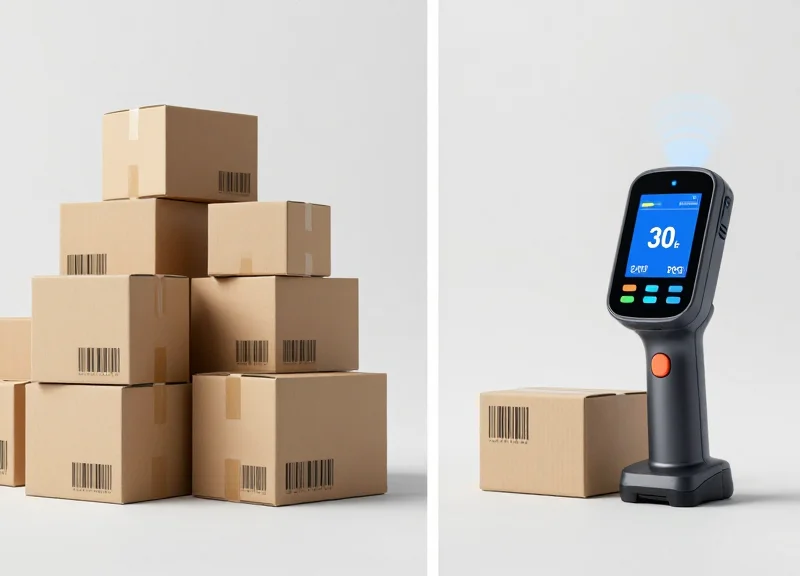
2D barcodes, such as GS1 DataMatrix and QR codes, are the current industry standard for consumer-facing transparency, but they possess a fundamental physics constraint in high-volume logistics: the requirement for an unobstructed line-of-sight. In modern distribution centers handling thousands of units per hour, the necessity for a scanner to 'see' every individual label creates a systemic bottleneck. Unlike RFID, which uses radio waves to capture data through packaging and pallets, 2D barcodes require precise orientation and manual or mechanical intervention, leading to increased labor costs and data latency that can compromise 2026 traceability mandates.
| Metric | 2D Barcode (GS1 DataMatrix) | Next-Gen RFID (RAIN RFID) |
|---|---|---|
| Read Rate per Second | 1-5 units (Requires alignment) | Up to 1,000 units (Bulk reading) |
| Line-of-Sight Needed | Yes (100% visibility required) | No (Reads through most materials) |
| Automation Potential | Low/Moderate (Manual scanning common) | High (Fully autonomous portals) |
| Data Accuracy in Bulk | Error-prone (Occlusion leads to missed items) | 99.9%+ (Near-perfect inventory accuracy) |
In the context of FSMA 204 and global pharmaceutical regulations, 'near enough' is no longer acceptable. The 2026 standards demand granular, item-level data across the entire custody chain. Relying on 2D barcodes in a high-speed warehouse environment often results in 'Shadow Losses'—items that are physically present but digitally invisible because a scanner failed to register them in a crowded pallet or a dark shipping container.
- The Orientation Trap: 2D barcodes must be oriented toward the scanner lens. In high-speed sorting, if a label is rotated away or buried inside a case, the system fails, requiring manual rework that slows down the entire line.
- Environmental Degradation: Food and drug logistics often involve condensation, frost, or chemical exposure. Smudged or damaged 2D barcodes become unreadable, whereas RFID tags remain functional even when obscured by frost or surface contaminants.
- Serialization Fatigue: As regulations move from batch-level to item-level serialization, the sheer volume of barcodes to be scanned increases exponentially. Humans cannot maintain the precision required for 100% scan accuracy at this scale.
Expert Insight: From a Silicon Valley operational perspective, the true cost of 2D barcodes isn't the label price—it is the 'Labor Latency Tax.' Every second a warehouse worker spends orienting a package for a scan is a second of lost throughput. When you aggregate this across a global enterprise, 2D barcodes become a multi-million dollar friction point that RFID solves by decoupling data capture from physical labor.
Next-Gen RFID: Defining the New Standard for Automation
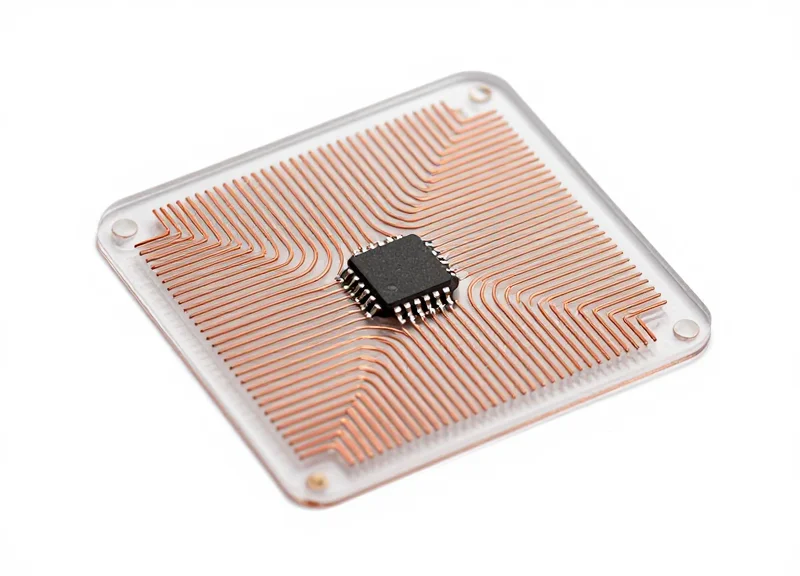
Next-Gen RFID (Radio Frequency Identification) is defined as a 'Zero-Touch' data acquisition system that enables the simultaneous identification of hundreds of items without direct line-of-sight. Unlike legacy scanning systems, next-gen iterations—specifically RAIN RFID (UHF Gen2)—leverage advanced chip sensitivity and spatial intelligence to automate the movement of goods through supply chains. By 2026, this technology will serve as the primary infrastructure for food and drug traceability, moving beyond simple identification into autonomous, real-time environment monitoring.
| Feature | Legacy 2D Barcodes | Next-Gen RFID (RAIN) |
|---|---|---|
| Data Acquisition | One-by-one (Manual) | Bulk/Mass (Autonomous) |
| Read Rate | ~1-2 items per second | Up to 1,000 items per second |
| Line-of-Sight | Strictly Required | Not Required (Through packaging) |
| Human Labor | High (Active scan) | Low (Passive gate/portal) |
| Data Updates | Read-only (Static) | Read/Write (Dynamic) |
The transition to Next-Gen RFID is not merely an upgrade in scanning speed; it is a shift in operational philosophy. For industries facing the 2026 mandates, the 'bottleneck of the human hand' is the greatest risk to compliance. RFID portals and overhead readers create 'Ambient Intelligence' zones. When a pallet of pharmaceuticals or a crate of perishables passes through a dock door, the system instantly logs every individual Serialized Shipping Container Code (SSCC) and Global Trade Item Number (GTIN). This happens at forklift speeds, ensuring that the digital twin of the product moves exactly as fast as the physical asset, with 99.9% accuracy.
Can RFID handle liquid or metal environments common in food and pharma?
Yes. Next-gen 'On-Metal' and 'Flag-Tag' designs utilize specialized spacers and antenna tuning to overcome the physics of interference, ensuring high-fidelity reads for canned goods or liquid vials.
Does RFID require a complete overhaul of existing WMS software?
Modern RFID middleware acts as a translation layer. It filters raw 'tag reads' into actionable business events (e.g., 'Received', 'Shipped') that seamlessly integrate with existing ERP and WMS platforms via standard APIs.
How does RFID improve cold-chain compliance?
Next-gen tags now include passive sensor capabilities. These tags can harvest energy from the reader to report moisture or temperature excursions without requiring an internal battery, providing 'Zero-Touch' quality assurance.
Expert Insight: The Shift to 'Battery-Free' Sensing. A critical breakthrough in Next-Gen RFID is the integration of digital moisture and temperature sensors directly into the UHF chip. For the 2026 mandates, this means a pallet doesn't just tell you what it is, but how it's doing. This eliminates the need for expensive, bulky data loggers in food and drug logistics, allowing every single carton to act as its own environmental watchdog.
Precision Food Safety: Beyond Basic Tracking

Precision food safety represents the shift from passive lot-level tracking to active item-level intelligence. By embedding digital identities into individual units via Next-Gen RFID, food producers and retailers can monitor shelf-life in real-time and automate First-Expired-First-Out (FEFO) protocols. This technological leap enables the instant identification and removal of specific tainted items during a foodborne illness outbreak, reducing the scope of recalls from entire shipments to individual affected packages. Unlike 2D barcodes that require manual line-of-sight scanning, RFID allows for the simultaneous detection of hundreds of items, ensuring that no expired or recalled product remains on the shelf due to human error.
| Feature | 2D Barcode (Legacy) | Next-Gen RFID (2026 Standard) |
|---|---|---|
| Tracking Granularity | Batch/Lot Level | Individual Item Level |
| Recall Speed | Hours/Days (Manual Search) | Seconds (Automated Detection) |
| Expiration Management | Visual Inspection Required | Real-time Digital Dashboard |
| Risk Mitigation | Reactive to Incidents | Proactive Prevention |
How does RFID prevent foodborne illness?
By providing a continuous digital audit trail from farm to fork, RFID allows for surgical recalls. If a specific pallet was exposed to temperature abuse, only those units are flagged as unsafe in the system, preventing contaminated products from ever reaching the consumer checkout.
What is the impact on shelf-life management?
RFID automates inventory aging. Centralized systems can alert staff when specific items are nearing expiration, allowing for dynamic pricing or priority shelving, which reduces food waste by an average of 20 percent compared to barcode-based systems.
Can RFID help with FSMA 204 compliance?
Yes, RFID automatically captures Critical Tracking Events (CTEs) without manual data entry. This ensures that the Key Data Elements (KDEs) required by the FDA are accurate, tamper-proof, and instantly accessible during audits.
Expert Insight: The true power of RFID in 2026 lies in the 'Digital Lock-and-Key' mechanism. Leading Silicon Valley tech providers are now integrating RFID readers directly into Point-of-Sale (POS) systems. This creates a fail-safe where a recalled or expired item is physically blocked from being sold. Even if a product is accidentally placed on a shelf, the unique Tag ID is recognized as 'red-flagged' at the register, effectively ending the era of accidental consumption of recalled goods.
Pharma Integrity: RFID for Cold Chain and Anti-Counterfeiting

Next-gen RFID technology protects pharmaceutical integrity by transforming passive labels into active guardians of drug safety. Unlike traditional barcodes, RFID tags equipped with integrated environmental sensors create an immutable 'digital birth certificate' for every unit, ensuring that sensitive biologics and vaccines remain within strictly defined temperature and humidity parameters throughout the entire supply chain. By the 2026 compliance deadline, RFID will be the primary mechanism for verifying the 'Last-Meter' integrity—guaranteeing that a drug is not only authentic but has also remained medically viable up to the exact moment of patient administration.
| Feature | 2D Barcodes (Manual) | Next-Gen RFID (Automated) |
|---|---|---|
| Authentication | Visual/Database lookup | Cryptographic secure handshakes |
| Cold Chain Monitoring | External logger (Batch level) | Integrated sensor (Item level) |
| Data Capacity | Limited to SKU/Batch | Extended memory for e-Pedigree |
| Counterfeit Resistance | High risk (Easy to copy) | Low risk (Encrypted digital signature) |
A critical advancement in this field is Sensor-Fusion RFID (SF-RFID). While standard RFID identifies an object, SF-RFID monitors its state. For high-value cold chain products like insulin or specialized oncology drugs, a thermal excursion of even a few degrees can render the product toxic or ineffective. Modern RFID tags can log temperature data at pre-set intervals and trigger an immediate 'Flag' in the Warehouse Management System (WMS) the moment a pallet passes through a reader, identifying compromised units without ever opening the box.
- Secure Encoding at Source: Each pharmaceutical unit receives a unique, encrypted ID that is registered on a secure, often blockchain-backed, ledger during manufacturing.
- Automated Custody Transfer: As products move from manufacturer to wholesaler, RFID gates record the change in ownership and location automatically, preventing 'grey market' diversion.
- Point-of-Dispense Verification: Pharmacists or clinicians use handheld readers to verify the drug's entire history, ensuring it hasn't expired and hasn't been subject to a recall or thermal damage.
Expert Insight: The 'Digital Twin' Shield. A common misconception is that RFID is just a tracking tool. In reality, we are moving toward a 'Digital Twin' model where every physical vial has a virtual counterpart. This allows for 'Predictive Expiry'—if an RFID tag detects a minor but prolonged temperature deviation, it can automatically update the digital twin's expiration date to be sooner than the printed label, preventing the use of degraded medicine that appears visually 'safe'.
How does RFID prevent drug counterfeiting?
RFID tags use 'Physical Unclonable Functions' (PUF) and encrypted digital signatures that are nearly impossible to replicate, unlike 2D barcodes which can be photocopied.
Can RFID tags survive cryogenic storage?
Yes, specialized cryogenic RFID tags are designed to remain functional at temperatures as low as -196 degrees Celsius, specifically for cell and gene therapy applications.
Does RFID interfere with liquid medications?
Modern 'on-metal' and 'liquid-flag' RFID designs use specialized spacers and antenna tuning to ensure 99.9% read accuracy even when attached to glass vials or liquid-filled syringes.
Comparing ROI: Why RFID Outperforms Barcoding Long-Term

The financial argument for RFID over 2D barcodes hinges on shifting from a 'Cost-per-Tag' mindset to a 'Cost-per-Action' framework. While a 2D barcode costs fractions of a cent, it requires manual labor for every scan, creating an ongoing operational tax. Conversely, RFID’s ability to capture data from hundreds of items simultaneously—without line-of-sight—transforms inventory from a labor-intensive cost center into an automated, high-velocity asset. In high-compliance environments like food and pharma, the ROI of RFID typically manifests within 12 to 18 months through the drastic reduction of human-error-related recalls and a 90% decrease in inventory labor hours.
| Metric | 2D Barcode (Manual) | Next-Gen RFID (Automated) |
|---|---|---|
| Inventory Accuracy | 65% - 75% (Average) | 99.5% - 99.9% |
| Scanning Speed | 1-2 seconds per item | Up to 1,000 items per second |
| Labor Dependency | High (Manual scan required) | Low (Passive/Gate-based) |
| Shrinkage Reduction | Reactive (Discovered later) | Proactive (Real-time alerts) |
| TCO (5-Year Window) | Increasing (Rising labor costs) | Decreasing (Scale & Automation) |
A unique financial advantage of RFID often overlooked by procurement teams is the elimination of the 'Reconciliation Loop.' In barcode-based systems, discrepancies between physical stock and digital records (ghost inventory) necessitate frequent, manual cycle counts that stall operations. RFID eliminates this by providing a continuous, real-time audit trail. By 2026, as FSMA 204 and drug traceability mandates tighten, the cost of 'not knowing' your exact inventory location will exceed the cost of the RFID infrastructure itself, especially when factoring in the legal and brand-damage costs of mismanaged recalls.
Is the higher cost of RFID tags a dealbreaker for low-margin goods?
No. When you factor in the reduction in labor and the prevention of expired product waste (shrinkage), the net profit per unit often increases. For food and pharma, the cost of one missed expiration or a single compliance fine can pay for millions of RFID tags.
How does RFID affect labor retention and costs?
RFID automates the most monotonous tasks in the warehouse. By removing the need for workers to scan every single box, companies can reallocate staff to high-value roles, reducing turnover costs and mitigating the impact of rising warehouse wages.
What is the primary driver of RFID's long-term ROI?
Data Granularity. RFID allows for item-level tracking of temperature, location, and batch history. This data enables 'First-Expired, First-Out' (FEFO) logistics, which significantly reduces the $160 billion lost annually to food waste.
Expert Tip: To maximize ROI, look for 'Hybrid Value Stream' opportunities. Integrate RFID data directly into your ERP’s demand forecasting module. The 25%+ improvement in inventory accuracy typically allows firms to reduce safety stock levels by 10-15%, freeing up significant working capital that was previously tied up in excess 'just-in-case' inventory.
Integrating RFID with ESL and EAS Systems
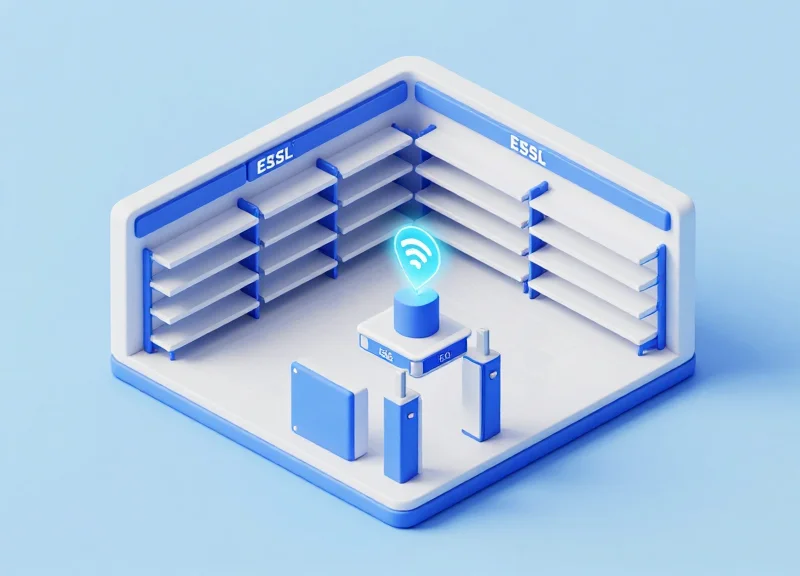
The integration of Radio Frequency Identification (RFID) with Electronic Shelf Labels (ESL) and Electronic Article Surveillance (EAS) represents the 'Golden Triangle' of modern retail and warehouse management. By bridging these three technologies, businesses move beyond simple tracking to a unified ecosystem where item-level data informs dynamic pricing and loss prevention simultaneously. This holistic hardware approach ensures that the digital twin of a product in the cloud matches its physical status on the shelf, creating a frictionless path toward the 2026 global traceability standards.
| System | Primary Function | RFID Synergy Benefit |
|---|---|---|
| RFID | Item-level Identity & Traceability | Provides the foundational data for ESL and EAS triggers. |
| ESL | Dynamic Pricing & Product Info | Auto-updates prices based on RFID-detected expiration dates. |
| EAS | Loss Prevention & Security | Identifies exactly WHICH item is being stolen, not just that 'an' item is moving. |
Unique Insight: The 'Micro-Location' Halo Effect. A common pain point in food and drug retail is the 'ghost inventory' problem—items that are in the store but misplaced. While standard RFID tells you the item is present, next-gen integration allows ESL tags to act as infrared or Bluetooth Low Energy (BLE) beacons. When an RFID scanner pings a specific product, the corresponding ESL can flash an LED light, guiding staff to the exact shelf location for restocking or order picking. This reduces 'search time' by up to 80%, a metric far more valuable for ROI than simple scanning speed.
- Unified Communication Layer: Utilize a single software-defined platform to manage RAIN RFID, ESL, and EAS signals, reducing hardware interference and infrastructure costs.
- Dynamic Markdown Automation: As RFID sensors detect pharmaceuticals or perishables approaching their expiration date, the system automatically triggers an ESL price drop to accelerate sales.
- Contextual Loss Prevention: Integrate RFID with EAS gates to eliminate false alarms. The system only alerts if an item's 'sold' status in the POS does not match its movement through the exit gate.
Does RFID replace the need for traditional EAS tags?
Yes, next-gen RFID tags serve dual purposes: inventory tracking and security. This eliminates the need for hard plastic EAS tags, reducing waste and labor.
Can ESLs display RFID-captured data directly?
Absolutely. Modern ESLs can be programmed to display the batch number, origin, and 'freshness' score pulled directly from the RFID traceability cloud.
What is the primary barrier to this integration?
Legacy hardware silos. The 2026 standard encourages moving toward 'All-in-One' sensors that combine EAS and RFID into a single overhead reader for cleaner aesthetics and better data flow.
Future-Proofing Your Infrastructure for the 2026 Transition
Future-proofing your infrastructure for the 2026 traceability transition involves moving beyond manual line-of-sight scanning to an automated 'always-on' data environment. This requires upgrading legacy warehouse management systems (WMS) to handle EPCIS-compliant data streams, deploying RAIN RFID fixed portals at critical transition points, and ensuring your network architecture can manage the 100x increase in data packets generated by item-level tracking compared to traditional pallet-level barcodes.
| Component | Legacy Requirement (2D Barcode) | 2026 Standard (Next-Gen RFID) |
|---|---|---|
| Data Capture | Manual, handheld line-of-sight scanning | Automated, bulk reading via fixed portals |
| Middleware | Basic API connectors | High-concurrency event processors (EPCIS 2.0) |
| Network Connectivity | Standard Wi-Fi (Low bandwidth) | Wi-Fi 6 or Private 5G (High density/Low latency) |
| Labeling | Thermal print-only stickers | Integrated RFID inlays with digital encoding |
- Phase 1: The Digital Audit: Evaluate current hardware capabilities. Determine if existing handhelds are RFID-ready or require sled attachments, and map out physical 'choke points' in the warehouse where fixed readers should be installed.
- Phase 2: Middleware Layering: Implement a middleware layer that filters 'noise' from RFID readers. This layer ensures that only relevant state changes (e.g., 'Item Shipped' or 'Temperature Threshold Exceeded') are sent to your ERP, preventing system bloat.
- Phase 3: The Hybrid Pilot: Run a dual-tagging pilot program. Use 2D barcodes for legacy compliance while simultaneously encoding RFID tags to validate data accuracy and read-rates in real-world environmental conditions like high moisture or metallic interference.
- Phase 4: Full-Scale Integration: Transition to RFID as the primary data source, utilizing the 2D barcode only as a human-readable backup. Formalize your API connections with supply chain partners for real-time data sharing.
Expert Insight: The 'Edge Intelligence' Shift. In my two decades of Silicon Valley infrastructure cycles, the biggest mistake I see companies make is trying to push raw RFID data directly to the cloud. By 2026, the sheer volume of item-level events will crash traditional cloud-sync architectures. Future-proofed systems must utilize Edge Computing, where the RFID readers themselves perform initial data deduplication and logic processing before sending summarized, actionable insights to the central database. This reduces latency and ensures operations continue even during network outages.
Can we use our existing Wi-Fi for RFID?
While possible, legacy Wi-Fi 4/5 often struggles with the high device density of thousands of active RFID tags. Upgrading to Wi-Fi 6 is recommended to handle the increased traffic without interference.
What is the typical timeline for an infrastructure overhaul?
For a mid-sized enterprise, expect a 12 to 18-month lead time from the initial audit to full 2026 compliance. This accounts for hardware procurement, software integration, and staff training.
How do we handle RFID tagging for liquids or metals?
Modern 'on-metal' and 'flag' tags are designed specifically for these environments. Part of future-proofing is selecting the correct tag geometry for your specific product catalog during Phase 1.
DragonGuard: Your Partner in Global Traceability Solutions
DragonGuard is a leading global architect of intelligent retail and supply chain infrastructure, specializing in the convergence of Electronic Article Surveillance (EAS), Radio Frequency Identification (RFID), and Electronic Shelf Labeling (ESL). As industries pivot toward the 2026 global traceability standards, DragonGuard serves as a strategic partner, offering hardware and software synergy that transforms compliance from a regulatory burden into a competitive advantage. Our solutions provide the item-level visibility required for food safety and pharmaceutical integrity while simultaneously solving for loss prevention and labor efficiency.
| Feature | Legacy Hardware Providers | DragonGuard Integrated Ecosystem |
|---|---|---|
| Technology Scope | Single-silo (EAS or RFID only) | Unified EAS + RFID + ESL Ecosystem |
| Traceability Ready | Requires 3rd party integration | Native 2026 compliance support |
| Inventory Accuracy | 60-70% (Manual/Barcode) | 99%+ (Real-time RFID) |
| Operational Focus | Security only | Security, Traceability, and CX |
- Multi-Sensor RFID Tags: Specially designed tags for the cold chain that track both identity and environmental conditions, ensuring pharmaceutical efficacy.
- Intelligent EAS Systems: Next-gen pedestals that not only prevent theft but also log the specific Epc (Electronic Product Code) of items exiting the facility.
- Dynamic ESL Integration: Electronic Shelf Labels that sync with RFID inventory data to automatically flag expiring food items for markdown, reducing waste.
- Global Logistics Support: Scalable manufacturing and distribution capabilities to support multinational rollouts across diverse regulatory regions.
Expert Tip: The most significant hidden cost in the 2026 transition is 'label fatigue'—the labor cost of applying multiple tags for security and tracking. DragonGuard’s unique insight is the implementation of 'Dual-Function Hybrid Tags.' By embedding both an EAS resonator and an RFID chip into a single form factor, enterprises can reduce application labor costs by up to 30% and eliminate signal interference common with overlapping labels.
Can DragonGuard hardware integrate with our existing ERP?
Yes, our RFID and ESL systems are built with open APIs designed to interface seamlessly with major ERP and WMS platforms to ensure data continuity.
Does DragonGuard support small-scale pilots?
We provide scalable deployment models, allowing businesses to validate the ROI in a single facility or region before committing to a global rollout.
How does DragonGuard ensure durability in food environments?
Our tags are engineered with industrial-grade adhesives and materials that withstand high humidity, refrigeration, and the rigorous handling typical of food supply chains.