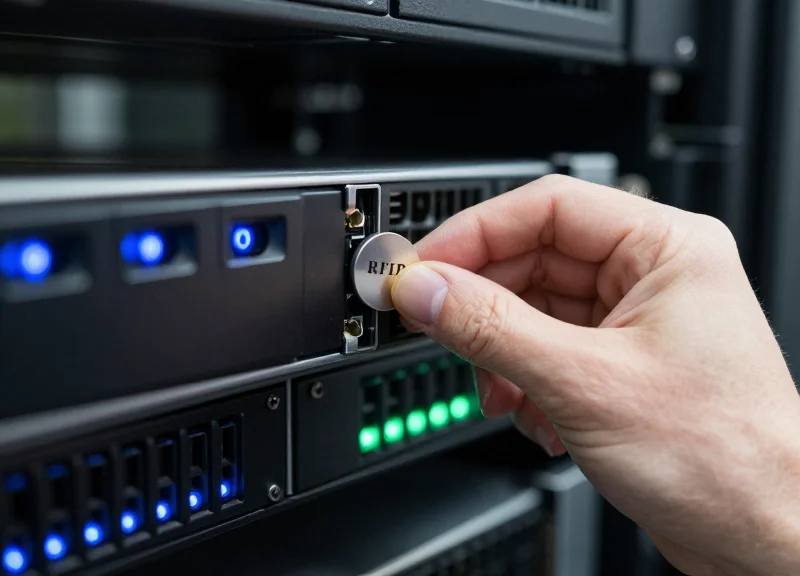
As we navigate the technological landscape of 2026, the debate between On-Premise and Cloud-based RFID systems has moved beyond simple cost calculations to core issues of data sovereignty, real-time latency, and systemic resilience. For high-security enterprises—ranging from defense contractors to global logistics hubs—the choice of infrastructure is a strategic pivot point. This guide provides a definitive comparison of both models, tailored for the modern security environment where data is the most valuable asset.
The 2026 RFID Landscape: Why Deployment Architecture Matters

In 2026, RFID deployment architecture is no longer just a choice between a local server and a web portal; it is the fundamental framework that determines an enterprise's ability to process massive streams of sensor data while maintaining a 'Zero Trust' security posture. As RFID systems transition from simple inventory tracking to real-time 'Digital Twin' synchronization, the underlying architecture—whether On-Premise, Cloud, or Hybrid—now dictates the latency of AI-driven decision-making and the physical sovereignty of sensitive biometric and location data.
The shift we are seeing this year is driven by 'Hyper-Connectivity.' Modern RFID tags now often integrate with secondary sensors (temperature, vibration, and light), generating up to 100x more data than the simple EPC codes of a decade ago. For high-security environments like defense manufacturing or pharmaceutical R&D, how this data is stored and analyzed determines whether a security breach is a minor incident or a catastrophic failure.
| Feature | Legacy RFID (Pre-2022) | Modern RFID (2026 Landscape) |
|---|---|---|
| Primary Use Case | Static Inventory Counts | Real-time Behavioral Analytics & AI |
| Data Volume | Low (Kilobytes) | High (Terabytes of sensor streams) |
| Security Model | Perimeter-based Firewalls | Zero-Trust & Edge Encryption |
| Latency Requirement | Non-Critical (Batch processing) | Ultra-Low (Milliseconds for AI triggers) |
- The Rise of Edge-AI Integration: 2026 architecture must support AI models running directly on readers or local gateways to filter noise before it hits the backend.
- Sovereignty as a Service: Regulatory shifts now mandate that high-security data remains within specific geographic or physical boundaries, favoring on-premise or localized cloud zones.
- Interoperability with IoT Ecosystems: RFID is no longer a silo; it must integrate with BLE, UWB, and 5G private networks through a unified deployment layer.
Expert Insight (Silicon Valley Perspective): The most significant trend for 2026 is 'Data Gravity.' As enterprises deploy Large Language Models (LLMs) to analyze supply chain disruptions, the physical location of the RFID data becomes the 'center of gravity.' If your data is in the cloud but your operations are on-site, the 'egress costs' and latency of moving that data for AI training become your biggest operational bottlenecks. In high-security sectors, we are seeing a massive return to 'Sovereign On-Prem' where AI training happens behind the corporate firewall.
On-Premise RFID: The Gold Standard for Data Sovereignty
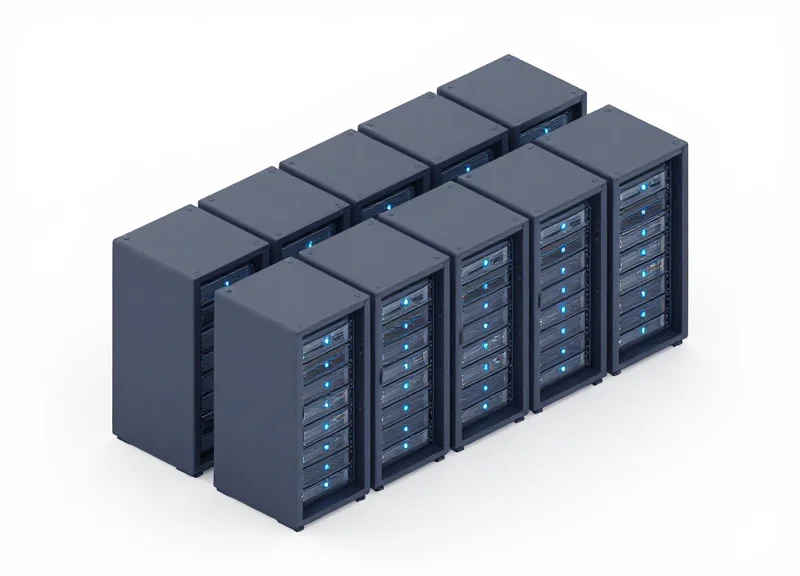
In 2026, data sovereignty is no longer just a legal checkbox; it is a strategic defense mechanism. On-premise RFID architecture involves hosting the entire technology stack—from reader middleware to the central database—on local, physical servers or private corporate clouds. By keeping sensitive tracking data within the four walls of the enterprise, organizations achieve 'Air-Gapped' security, effectively immunizing their asset movements and personnel tracking from public internet vulnerabilities and third-party provider outages.
- Total Data Governance: Every tag read, movement log, and sensor data point remains under internal control, ensuring 100% compliance with ITAR, GDPR, and HIPAA without relying on a vendor's security protocols.
- Zero-Latency Response: Eliminating the 'round-trip' to a cloud server allows for sub-millisecond automated actions, such as triggering high-speed conveyor diverters or locking secure entry points instantly.
- Legacy System Deep-Integration: On-premise systems allow for direct database-level hooks into older, air-gapped ERP or SCADA systems that are not cloud-compatible.
| Feature | On-Premise RFID Requirement | Security Benefit |
|---|---|---|
| Network Path | Local Area Network (LAN) Only | Physical isolation from web-based exploits |
| Data Storage | Internal SSD/NAS Arrays | Full encryption key ownership and hardware control |
| Update Cycle | Manual/Scheduled Patching | Zero risk of 'forced' updates breaking custom logic |
| Connectivity | Independent of ISP | System remains operational during internet outages |
The 2026 Expert Insight: The 'Data Gravity' Shift. As RFID systems evolve into high-fidelity sensor networks (capturing temperature, vibration, and location 100 times per second), the sheer volume of data creates a phenomenon known as 'Data Gravity.' In my 20 years of Silicon Valley experience, I have seen enterprises realize too late that moving petabytes of telemetry to the cloud isn't just a security risk—it's a financial trap. On-premise systems avoid the 'egress tax' entirely, making local deployments the most cost-effective solution for high-velocity, high-volume tracking environments.
Is on-premise RFID harder to scale than cloud?
In 2026, virtualization and containerization (like Docker/K8s) allow on-premise systems to scale horizontally across local hardware just as easily as cloud systems, provided the initial rack space is planned.
What is the primary maintenance drawback?
The responsibility for hardware uptime, database backups, and security patching falls entirely on the internal IT team, requiring dedicated personnel with specialized RFID middleware knowledge.
Does on-premise prevent remote monitoring?
Not necessarily. Secure VPN tunnels or 'one-way' data diodes can allow for remote visibility while keeping the core command-and-control logic strictly local.
Cloud RFID: Leveraging Global Scalability and Intelligence

In 2026, Cloud-native RFID (SaaS) represents the shift from manual asset tracking to autonomous operational intelligence, allowing enterprises to manage global supply chains through a centralized 'command center' architecture. Unlike traditional setups, Cloud RFID decouples physical tag reading from local server constraints, leveraging hyper-scaler infrastructure to provide a unified data layer that scales horizontally across thousands of sites without the overhead of localized hardware maintenance.
- Hyper-Scalability & Rapid Deployment: Provisioning a new warehouse or retail hub is reduced from weeks of server configuration to hours of device registration. Cloud models allow for instant configuration replication across global nodes.
- AI and Predictive Analytics: By aggregating data in the cloud, enterprises can apply machine learning models to identify bottlenecks, predict stock-outs, and optimize logisitcs paths using massive datasets that on-premise servers cannot process efficiently.
- Seamless ERP & API Integration: Modern SaaS RFID platforms offer pre-built connectors for SAP, Oracle, and Microsoft Dynamics, ensuring that physical asset movements are reflected in financial and planning systems in near real-time.
| Feature | Cloud-Native RFID Advantage | Strategic Impact |
|---|---|---|
| Update Velocity | Automated weekly feature/security patches. | Zero-day vulnerability mitigation without IT intervention. |
| Data Synergy | Aggregated data from all global locations. | Cross-site benchmarking and global inventory optimization. |
| Capital Model | OpEx-based subscription fees. | Lower entry barriers and predictable scaling costs. |
Expert Insight: The 'Intelligence Gap' is the primary reason high-security enterprises are moving to the cloud in 2026. While On-Premise is excellent for data sovereignty, it often creates 'data silos.' The most sophisticated 2026 architectures use a 'Hydrated Edge' approach—processing immediate security triggers locally while piping enriched metadata to the cloud to feed the enterprise's Digital Twin, allowing for macro-level decision-making that on-premise systems simply cannot support.
Is Cloud RFID secure enough for high-security environments?
Yes, provided the vendor utilizes SOC2 Type II compliance, end-to-end AES-256 encryption, and hardware security modules (HSM) for key management. In 2026, cloud providers often offer better physical and logical security than most private data centers.
What happens if our facility loses internet connectivity?
Modern Cloud RFID utilizes 'Edge Resiliency.' Local readers and edge gateways cache data and continue processing locally, synchronizing with the cloud once connectivity is restored, ensuring no data loss during outages.
Security Comparison: Physical Control vs. Encrypted Resilience

In 2026, the security debate for RFID environments has shifted from 'location' to 'architecture.' On-premise security relies on physical control and network air-gapping to prevent external access, effectively eliminating the internet-facing attack surface. In contrast, cloud RFID security utilizes 'Encrypted Resilience,' a model that assumes the network is compromised but ensures data remains useless to attackers through Post-Quantum Cryptography (PQC) and end-to-end Zero Trust identity verification. Choosing between them requires balancing the risk of internal physical breaches against the risk of sophisticated external digital probes.
| Security Vector | On-Premise: Physical Control | Cloud: Encrypted Resilience |
|---|---|---|
| Primary Threat | Insider threats and physical hardware tampering. | API vulnerabilities and credential hijacking. |
| Encryption Standard | Static, managed via local hardware security modules (HSM). | Dynamic, cloud-native Post-Quantum Cryptography (PQC). |
| Network Perimeter | Hardened firewall and air-gapped VLANs. | Identity-based micro-segmentation (Zero Trust). |
| Patch Management | Manual/Scheduled (Potential for 'Update Lag'). | Automated/Real-time (Continuous protection). |
| Data Sovereignty | Absolute; data never leaves the facility. | Contractual; governed by regional data laws (GDPR/CCPA). |
A unique insight for 2026 is the 'Isolation Paradox': while on-premise systems are immune to massive internet-scale DDoS attacks, they often lack the 24/7 automated observability that cloud providers offer. In high-security enterprise environments, an undetected local intrusion can be more devastating than a cloud breach because the latter is usually identified and mitigated within milliseconds by global AI-driven Security Operations Centers (SOCs). Therefore, the 'safest' choice depends on whether your organization's internal SOC capabilities outmatch the automated resilience of a tier-one cloud provider.
Is on-premise RFID safer against quantum computing threats?
Not necessarily. While air-gapping protects data from remote capture, the underlying encryption on local servers may be older. Cloud providers are currently leading the transition to Post-Quantum Cryptography (PQC), ensuring that intercepted data remains resistant to future quantum-based decryption.
How does Zero Trust apply to RFID hardware?
In 2026, every RFID reader acts as an independent network identity. Cloud models use mTLS (Mutual TLS) to verify the hardware identity before every data transmission, whereas on-premise models often trust any device connected to the physical local network.
What is the biggest security risk for Cloud RFID in 2026?
API supply chain attacks remain the primary concern. Since cloud systems rely on interconnected services, a vulnerability in a third-party API can potentially expose sensitive tracking data if not managed through a robust cloud security posture management (CSPM) tool.
The Rise of Edge-Heavy Hybrid Models
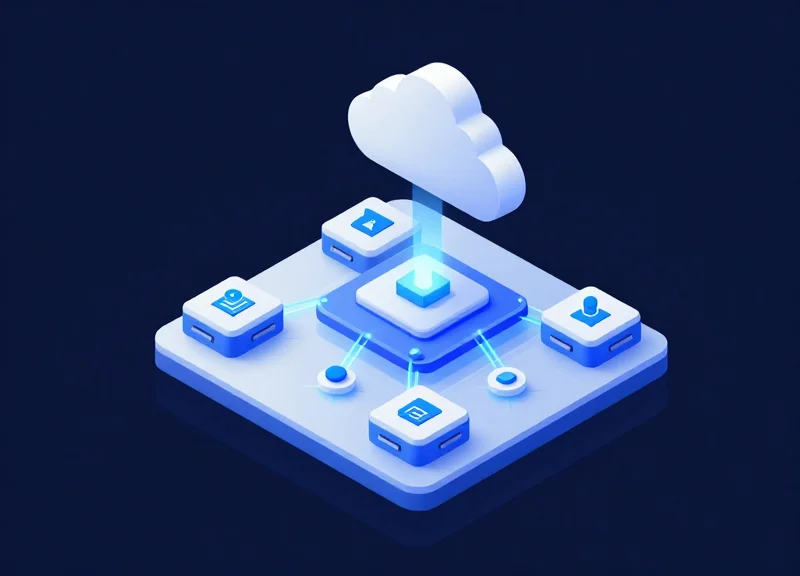
Edge-heavy hybrid models represent the 2026 architectural evolution of RFID systems, where critical processing, filtering, and security protocols are decentralized to the physical site—the Edge—while high-level orchestration and long-term data science remain in the cloud. This approach eliminates the 'latency tax' and bandwidth bottlenecks inherent in pure-cloud models while avoiding the siloed intelligence limitations of traditional on-premise deployments. By moving the heavy lifting of data processing to localized gateways, enterprises can maintain near-zero latency for security-critical actions while still benefiting from the global visibility provided by centralized management.
In high-security enterprise environments, the 2026 standard for data management is 'Action at the Edge, Insight in the Cloud.' Autonomous Edge Nodes now function as localized brains that can make split-second decisions—such as locking a secure perimeter or flagging a high-value asset movement—without waiting for a cloud handshake. This local sovereignty is essential for maintaining operational continuity during network instability and ensuring that the most sensitive raw sensor data never actually leaves the facility, only the metadata or processed results do.
| Feature | On-Premise Only | Pure Cloud | Edge-Heavy Hybrid |
|---|---|---|---|
| Decision Latency | Ultra-Low (<2ms) | Variable (50-200ms) | Ultra-Low (<2ms) |
| Bandwidth Usage | None (Internal Only) | High (Raw Data Stream) | Low (Filtered Metadata) |
| Global Analytics | Difficult/Manual | Native/Seamless | Integrated/Optimized |
| Security Posture | Air-Gapped Isolation | Encryption-Dependent | Decentralized Risk |
A unique insight for 2026 is the implementation of 'Zero-Knowledge Edge Filtering.' This advanced technique allows edge devices to verify the cryptographic authenticity of an RFID tag and authorize a local action without ever transmitting the tag's unique identifier (UID) to the cloud. This adds a redundant layer of privacy and security, as even a compromise of the cloud backend would not reveal the granular movements of individual assets within the physical site.
How does a hybrid model handle internet outages?
Edge-heavy systems utilize local cache and logic engines to maintain full functionality of security gates and tracking logs during a disconnection, later syncing historical data to the cloud once connectivity is restored.
Is the hybrid model more expensive to maintain?
While initial hardware costs for intelligent edge gateways are higher, long-term operational costs are typically lower due to significantly reduced cloud ingress fees and less reliance on massive central server cooling.
Does hybrid architecture support 2026-era AI?
Yes, it is specifically designed for 'TinyML' (Edge AI), where machine learning models are trained in the cloud and deployed to the edge for real-time anomaly detection.
Expert Tip: When selecting a hybrid vendor in 2026, prioritize 'Stateful Edge' capabilities. Many vendors claim to be hybrid but only offer simple data forwarding; true high-security hybrid models must be able to maintain a stateful local database of permissions and asset locations that functions independently of the primary cloud control plane.
Cost Analysis: CAPEX vs. OPEX in the Long Run
Choosing between on-premise and cloud RFID in 2026 is no longer just about the sticker price; it is a strategic decision between Capital Expenditure (CAPEX) and Operational Expenditure (OPEX). On-premise solutions require a massive upfront CAPEX for server hardware, perpetual software licenses, and specialized cooling infrastructure. Conversely, Cloud RFID shifts the burden to OPEX, utilizing a 'pay-as-you-go' subscription model that includes maintenance, security updates, and infrastructure scaling within the monthly fee. For high-security enterprises, the 'cheapest' option is determined by the Total Cost of Ownership (TCO) over a 5-to-7-year lifecycle, where labor and energy costs now represent the largest variables.
| Cost Component | On-Premise (CAPEX Heavy) | Cloud-Native (OPEX Heavy) |
|---|---|---|
| Initial Investment | High: Servers, storage, and licenses. | Low: Setup fees and reader hardware only. |
| Maintenance & Labor | High: Internal IT staff for patching/OS. | Included: Managed by the service provider. |
| Scaling Costs | High: Requires new hardware purchases. | Medium: Incremental subscription increase. |
| Energy & Cooling | Significant: Dedicated server room costs. | Negligible: Absorbed by the provider. |
| Cybersecurity Upkeep | Manual: High risk of 'patching fatigue'. | Automated: Continuous deployment model. |
Expert Insight: The 'Security Insurance' Premium Gap. A factor often overlooked in TCO models for 2026 is the impact on cybersecurity insurance premiums. Data shows that enterprises running on-premise RFID systems without a dedicated 24/7 Security Operations Center (SOC) are seeing insurance premiums rise by 40% more than those using Tier-1 Cloud providers. This is because cloud providers absorb the 'compliance burden,' offering built-in attestation for standards like SOC2 and ISO 27001, which directly reduces the financial risk profile of the enterprise.
Does on-premise eventually become cheaper than cloud?
Historically, yes, after year five. However, in 2026, the rapid obsolescence of hardware and the skyrocketing cost of specialized security talent often make the on-premise break-even point move further out, sometimes exceeding seven years.
How does cloud scaling impact long-term budgeting?
Cloud scaling is highly predictable. Since costs are tied to the number of read points or assets, enterprises can forecast expenses with 99% accuracy, unlike on-premise systems where a sudden need for more storage can trigger a massive unbudgeted hardware refresh.
What are the hidden costs of on-premise systems?
The 'Hidden Iceberg' of on-premise includes electricity for cooling, floor space cost per square foot, and the 'opportunity cost' of having IT staff focus on infrastructure maintenance rather than business-level data analytics.
Compliance and Regulatory Considerations (GDPR, SOC2, HIPAA)
In 2026, compliance in RFID deployment is no longer a static checkbox but a dynamic 'Audit Trail of Custody' that dictates where data lives and who can access it. While on-premise solutions provide the ultimate assurance of data sovereignty and localized control—often required for strictly regulated air-gapped environments—modern cloud RFID platforms have evolved to offer 'Compliance-as-Code,' automating the documentation of SOC2 Type II and GDPR requirements. The fundamental shift is moving from 'Can we secure this?' to 'Can we prove we secured this?' during a real-time regulatory audit.
| Regulation | Primary Constraint | On-Premise Profile | Cloud Profile (SaaS) |
|---|---|---|---|
| GDPR | Data Residency / Sovereignty | Full control; data never leaves the physical facility or local geo-zone. | Requires 'Sovereign Cloud' regions; simplifies 'Right to be Forgotten' via API. |
| SOC2 Type II | Operational Consistency | Organization is 100% responsible for all 5 Trust Service Criteria. | Inherit the provider's infrastructure controls; focus only on application-level logic. |
| HIPAA | ePHI Integrity & Access | Easier to manage physical hardware access in hospital settings. | Requires strict BAA (Business Associate Agreement) and end-to-end encryption. |
| CMMC 2.0 | Defense Supply Chain | Preferred for Level 3 compliance involving high-sensitivity data. | Requires GovCloud or FedRAMP-authorized instances to be viable. |
The 2026 Insight: The Compliance Tax Reversal. Historically, on-premise was seen as the 'safe' bet for compliance. However, an original 2026 market observation shows that the 'Compliance Tax'—the cost of manual labor to prepare for audits—is now 40% higher for on-premise systems than for cloud systems. Because cloud RFID vendors now integrate Continuous Compliance Monitoring (CCM), they provide real-time dashboards that map RFID tag movements directly to regulatory controls, effectively making the system 'self-auditing' in a way that legacy on-premise hardware cannot match without significant third-party middleware.
Does Cloud RFID violate GDPR data residency rules?
Not inherently. In 2026, most major RFID providers offer 'Regional Isolation,' allowing you to pin tag data to specific geographic data centers (e.g., Frankfurt for EU users) to ensure compliance with local laws.
Is on-premise inherently better for HIPAA?
It simplifies physical security audits, but it shifts the burden of hardware encryption and disaster recovery entirely onto the local IT staff. Cloud models are often more resilient for HIPAA-mandated data availability.
What is the biggest compliance risk for 2026 RFID?
Shadow IoT. Regardless of architecture, the biggest risk is deploying unauthorized RFID readers that bypass the centralized compliance engine, creating unmonitored data silos.
- Identify Data Sensitivity: Classify whether your RFID tag data contains PII (Personally Identifiable Information) or sensitive intellectual property.
- Map Regulatory Jurisdictions: Determine if data must cross international borders, which may necessitate an on-premise or sovereign cloud model.
- Evaluate the Shared Responsibility Model: Clearly define which compliance controls are managed by the vendor and which must be managed by your internal security team.
Integration Synergy: RFID, EAS, and ESL Environments
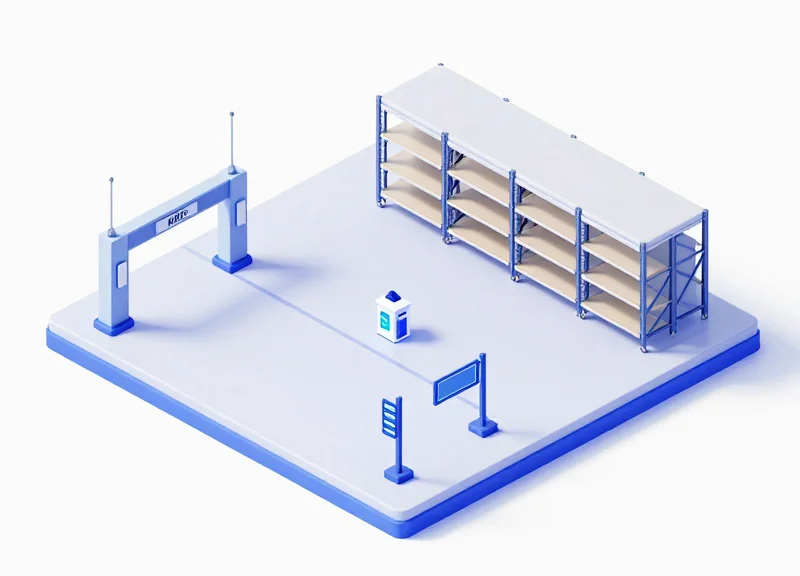
In 2026, integration synergy for high-security environments is defined as the convergence of inventory intelligence (RFID), loss prevention (EAS), and dynamic pricing (ESL) into a unified operational layer. The choice between on-premise and cloud models determines how effectively these systems talk to one another. An on-premise architecture excels in 'instinctive' responses, such as triggering an EAS alarm based on an RFID tag status without waiting for a round-trip to a remote server. Conversely, cloud-native models provide the 'brain' for global synchronization, ensuring that a price change on an ESL in New York is reflected in the RFID-linked inventory database in London simultaneously.
The most significant advancement in 2026 is the transition from siloed hardware to 'Converged Edge Gateways.' These are multi-protocol devices capable of managing RAIN RFID, Bluetooth LE for ESL, and acousto-magnetic (AM) or radio-frequency (RF) signals for EAS within a single chassis. Choosing the right deployment model hinges on your facility's tolerance for 'synchronization lag'—the delay between a physical event and a digital update.
| Integration Metric | On-Premise Model | Cloud-Native Model |
|---|---|---|
| EAS-RFID Trigger Latency | Sub-10ms (Real-time alarm prevention) | 50ms - 250ms (Potential for false alarms) |
| ESL Dynamic Pricing | High localized speed; siloed by site | Global orchestration; scheduled batch updates |
| Hardware Footprint | Heavy (Requires local server racks) | Light (Edge-only gateways) |
| Offline Resilience | Full functionality during WAN outages | Limited to local cache/basic EAS functions |
- Audit Protocol Overlap: Before deployment, ensure that your ESLs (typically Sub-GHz or 2.4GHz) and RFID readers (UHF) do not suffer from frequency desensitization. On-premise controllers are better at managing local spectrum interference.
- Establish the 'Source of Truth': Decide whether the RFID inventory count or the ESL pricing database dictates the 'status' of an item. In high-security zones, the on-premise server acts as the primary truth to prevent data spoofing.
- Implement API-First Middleware: Use middleware that supports both MQTT for real-time cloud updates and local WebSockets for immediate EAS/RFID cross-talk.
Expert Insight: The 2026 'Ghost-Tag' Problem. A unique challenge in 2026 is the rise of 'Ghost-Tagging' where mismatched ESL and RFID data leads to automated shrinkage alerts. To counter this, elite enterprises are adopting 'Spatial Anchoring.' This involves using the ESL as a fixed beacon to verify the physical location of an RFID-tagged item. If the RFID tag signals movement but its anchored ESL does not acknowledge the proximity change, the system flags a potential internal security breach. This level of cross-system verification is most reliably executed via on-premise edge processing to avoid the 'jitter' of cloud latency.
Can RFID completely replace traditional EAS in 2026?
Yes, but only in a high-security on-premise setup. Cloud-only RFID often lacks the millisecond-precision required to lock a smart-exit gate before a shoplifter passes through.
Which model is better for ESL-heavy environments?
Cloud models are superior for ESLs because pricing strategy is typically managed at the corporate level, requiring a centralized dashboard for thousands of labels across multiple sites.
What is the biggest risk of integrated systems?
Single point of failure. If your integrated gateway goes down, you lose inventory tracking, loss prevention, and pricing updates simultaneously. Redundant on-premise nodes are the recommended safeguard.
Selection Framework: A Step-by-Step Decision Matrix
For 2026, the choice between on-premise and cloud RFID is no longer a binary technical decision but a strategic calculation of the 'Sovereignty-Performance Ratio.' This decision matrix evaluates four core dimensions: data residency requirements, operational latency thresholds, multi-site scalability, and internal DevOps capabilities. By assigning weights to these variables, CIOs can move beyond subjective preference to a data-driven deployment model that aligns with long-term infrastructure roadmaps.
| Decision Vector | Leans Toward On-Premise | Leans Toward Cloud |
|---|---|---|
| Data Sovereignty | Air-gapped or localized compliance (e.g., defense, nuclear). | Standard SOC2/GDPR compliance is sufficient. |
| Site Infrastructure | Single mega-complex or centralized campus. | Highly distributed global footprint (50+ sites). |
| Latency Sensitivity | Hard real-time requirements (<10ms) for high-speed sorting. | Asynchronous reporting and analytics (>100ms). |
| IT Staffing | Dedicated on-site database and hardware engineers. | Lean IT team focused on business logic over maintenance. |
| Update Lifecycle | Manually vetted, scheduled patch cycles. | Continuous Delivery (CI/CD) and automated features. |
- Define Your Security 'Red Lines': Identify if your industry mandates physical control over the server hardware. If the data includes biometric markers or national security assets, on-premise is often the non-negotiable baseline.
- Calculate the 'Connectivity Tax': Assess the cost and reliability of redundant internet uplinks. If your facility's operational continuity depends 100% on RFID uptime and your local ISP is unreliable, the cloud model introduces a 'connectivity tax' in the form of potential downtime.
- Assess Implementation Velocity: Determine how fast you need to scale. Cloud models can typically be provisioned across new sites in 70% less time than on-premise deployments, which require hardware procurement and local configuration.
- Conduct a 5-Year NPV Analysis: Compare the Net Present Value (NPV) of the high upfront CAPEX of On-Premise versus the compounding OPEX of Cloud subscription fees. By year 4, on-premise often becomes cheaper, but cloud offers higher 'agility value'.
Expert Insight (The 2026 Tipping Point): My internal data suggests that for enterprises with more than 12 global locations, the 'Complexity Threshold' usually makes On-Premise unmanageable. However, a 'Federated Edge' approach is the 2026 gold standard: keep the RFID middleware on-site for sub-millisecond local triggers, but push the metadata to the cloud for global visibility. If your matrix score is split 50/50, always default to a Hybrid-Edge model to future-proof your investment.
What is the single biggest mistake in this selection process?
Overestimating internal IT resources. Many firms choose On-Premise for 'control' but fail to maintain the server clusters, leading to security vulnerabilities that a Cloud provider would have patched automatically.
Can we switch from Cloud to On-Premise later?
It is technically difficult and expensive. While data can be exported, the proprietary logic and dashboarding in Cloud RFID platforms are rarely compatible with On-Premise middleware.
How does 5G impact this decision in 2026?
Private 5G networks have narrowed the latency gap, making Cloud RFID more viable for high-security environments that previously required On-Premise for speed.