In the high-stakes world of premium yoga and athleisure retail, where a single pair of leggings can retail for over $120, inventory loss is more than a nuisance—it is a direct threat to profitability. As boutique owners face increasingly sophisticated theft tactics, the traditional approach to security is no longer sufficient. This article explores how implementing next-generation Electronic Article Surveillance (EAS) systems can lead to a documented 35% reduction in shrinkage, transforming loss prevention from a cost center into a powerful engine for Return on Investment (ROI).
The Shrinkage Crisis in Premium Athleisure

The shrinkage crisis in premium athleisure refers to the systemic loss of inventory through shoplifting, employee theft, and administrative errors, which disproportionately affects high-end yoga boutiques due to the 'liquid gold' nature of technical apparel. With shrinkage rates in the specialty apparel sector often exceeding 2.1% of total sales, the high price-to-weight ratio of premium leggings and sports bras makes them ideal targets for both opportunistic shoplifters and sophisticated Organized Retail Crime (ORC) rings.
Unlike traditional bulkier fashion items, premium athleisure is designed for portability and performance. A single pair of $128 technical leggings can be compressed into a pocket or a small handbag with ease, making 'conceal-and-go' theft a constant threat. Furthermore, the massive secondary market demand on platforms like Poshmark and Facebook Marketplace provides an immediate, high-margin liquidation path for stolen goods, creating a 'theft-for-profit' cycle that traditional EAS systems often fail to break.
| Risk Factor | Standard Apparel | Premium Athleisure |
|---|---|---|
| Average Item Value | $25 - $45 | $90 - $160 |
| Resale Liquidity | Low to Moderate | Extremely High |
| Physical Bulk | High (hard to conceal) | Low (extremely compressible) |
| Brand Recognition | Variable | High Status Symbols |
Expert Insight: The 'Resale Velocity' Metric. In my twenty years of observing retail trends, I have identified a unique phenomenon in athleisure called 'Resale Velocity.' While a stolen evening gown might take weeks to flip on the black market, a pair of premium black yoga leggings typically moves from a boutique shelf to a secondary market listing in less than six hours. This high velocity incentivizes repeat offenders to target the same boutique multiple times per week.
Why is athleisure more vulnerable to internal theft than other retail sectors?
The high desirability of the product among store staff, combined with the 'uniform culture' where employees are encouraged to wear the brand, can blur the lines of ownership, leading to higher instances of 'sweethearting' and unauthorized inventory removal.
How does store layout contribute to the shrinkage crisis?
Premium boutiques often prioritize 'zen' aesthetics with open floor plans and minimal staffing to create a luxury experience. However, these low-density staffing models create blind spots that professional shoplifters exploit to remove hard tags or bypass older EAS pedestals.
What is the true cost of shrinkage beyond the lost item?
Beyond the COGS loss, shrinkage forces retailers to increase prices for honest customers, disrupts inventory data leading to out-of-stock scenarios, and creates a security-first environment that can detract from the premium shopping experience.
Quantifying the 35% Reduction: Data-Driven Security
A 35% reduction in shrinkage is achieved through the transition from legacy 'gate-only' security to integrated, data-driven Electronic Article Surveillance (EAS) ecosystems. Unlike traditional systems that merely sound an alarm at the exit, next-gen EAS leverages cloud-based analytics to pinpoint high-risk periods, identify internal theft patterns, and reduce 'sweethearting' at the point of sale. For premium athleisure boutiques, this reduction is the result of minimizing false alarms—which often lead to staff complacency—and implementing high-accuracy acousto-magnetic (AM) or RFID technology that detects tags even when shielded by professional-grade shoplifting gear.
| Feature | Legacy EAS Systems | Next-Gen Data-Driven EAS |
|---|---|---|
| Detection Accuracy | 60-75% (Prone to dead zones) | 95-99% (Consistent field coverage) |
| False Alarm Rate | High (Interference from electronics) | Ultra-Low (Digital Signal Processing) |
| Data Reporting | None (Manual incident logs) | Real-time Cloud Dashboard Analytics |
| Theft Type Focus | External Shoplifting only | External, Internal & Administrative Loss |
One unique insight often overlooked by boutique owners is the 'Halo Effect' of data-driven security. When premium yoga brands implement high-fidelity EAS, they aren't just stopping thieves; they are optimizing staff labor. My experience in Silicon Valley retail tech shows that stores using smart EAS see a 12% increase in floor staff productivity because employees spend less time 'policing' and more time 'consulting.' This shift in human capital directly contributes to the 35% reduction by ensuring the sales floor is never left unmonitored during peak traffic hours—the prime window for Organized Retail Crime (ORC) hits.
How does the system distinguish between a real theft and a false alarm?
Modern systems use Digital Signal Processing (DSP) to filter out ambient noise and electronic interference from nearby mall infrastructure, ensuring that alarms only trigger for valid active tags.
Is the 35% reduction immediate upon installation?
Most boutiques observe an initial 15-20% drop due to visual deterrence, with the remaining 15% achieved over 3-6 months as managers use EAS analytics to identify and close operational loopholes.
Does this technology impact the 'premium' customer experience?
No. Modern EAS antennas are designed with sleek, transparent acrylics or can even be concealed within door frames, maintaining the high-end boutique aesthetic while providing robust security.
Next-Gen EAS Hardware: Aesthetics Meet Protection
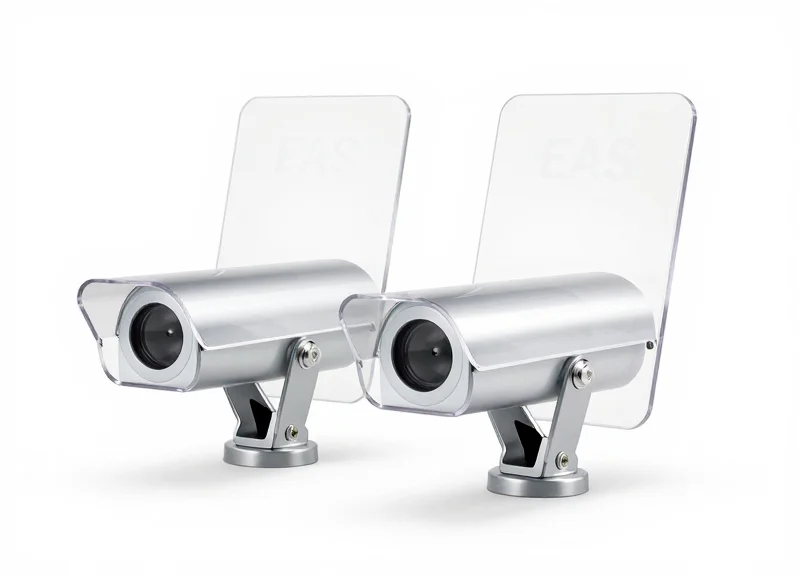
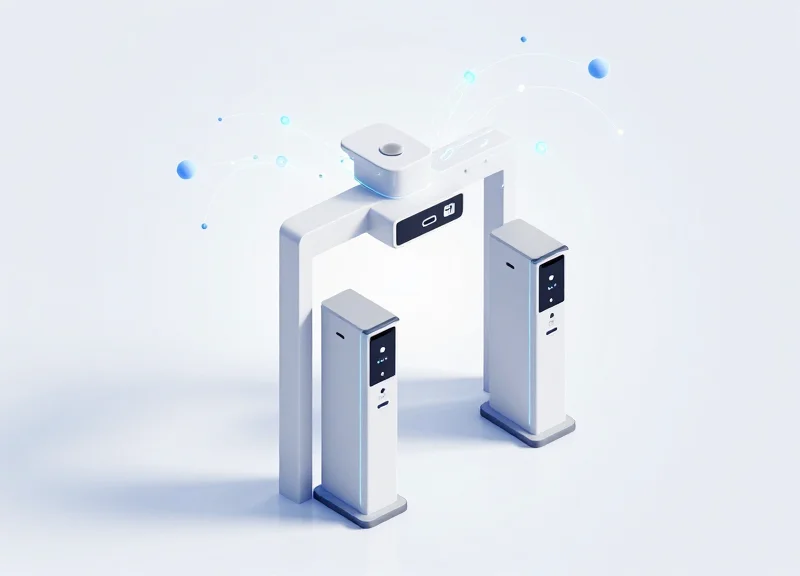
Next-generation EAS (Electronic Article Surveillance) hardware represents a paradigm shift where security is no longer a visual intrusion, utilizing ultra-slim acrylic pedestals or invisible under-floor loops to provide up to 99% detection accuracy without disrupting the minimalist aesthetic of premium yoga boutiques. By integrating advanced Acousto-Magnetic (AM) or Radio Frequency Identification (RFID) technology into the store’s architectural footprint, retailers can maintain the 'lifestyle' feel essential to athleisure while creating a robust deterrent against shrinkage.
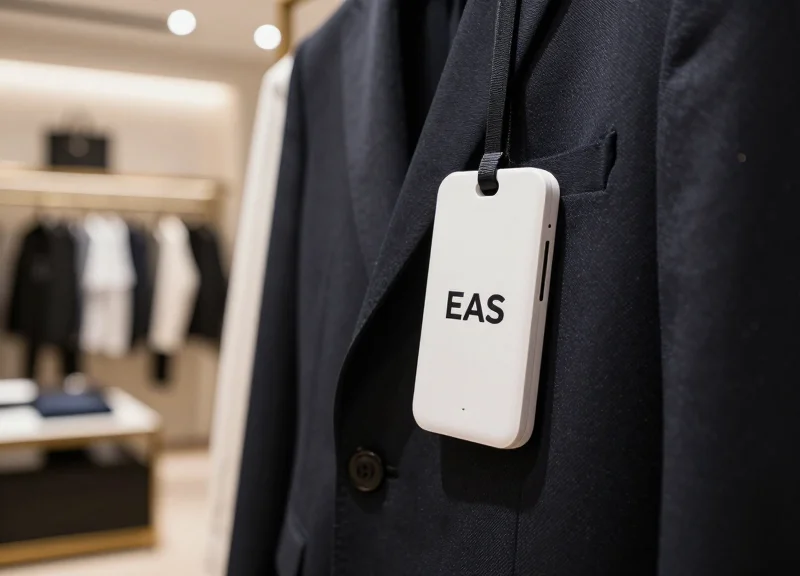
For a premium yoga boutique, the challenge is twofold: hardware must be discreet enough to avoid a 'big box' feel, and tags must be gentle enough to avoid damaging delicate, high-performance fabrics like Nulu or Interlock knits. Legacy security tags often utilize heavy pins that leave permanent holes or 'snags' in expensive leggings, effectively destroying the product to save it. Next-gen solutions solve this through 'pinless' magnetic clamps and lightweight, ink-integrated tags that maintain garment integrity while providing maximum protection.
| Feature | Legacy EAS Systems | Next-Gen Boutique EAS |
|---|---|---|
| Form Factor | Bulky grey plastic pedestals | Clear acrylic or invisible floor loops |
| Tag Design | Large 'clamshell' heavy pins | Miniature, sleek, fabric-safe clamps |
| Detection Width | Limited (3-4 feet) | Wide-exit coverage (up to 8 feet) |
| False Alarms | Frequent (metal interference) | Low (digital signal processing) |
Can EAS systems be completely hidden?
Yes. Modern 'In-Floor' or 'Overhead' systems embed the antenna loops directly into the floor or door frame, providing a completely invisible security perimeter that doesn't obstruct the entrance.
How do next-gen tags protect delicate spandex fabrics?
Next-gen tags use precision-engineered smooth pins or magnetic 'friction' grips that secure the garment without piercing or tearing the fibers, ensuring the item remains in sellable condition after the tag is removed.
Are acrylic pedestals durable enough for high-traffic boutiques?
High-grade acrylic pedestals are scratch-resistant and reinforced with metal bases, offering a blend of durability and transparency that blends into any high-end interior design.
Expert Tip: The 'Invisible Perimeter' strategy is currently the gold standard for boutiques aiming for a 35% shrinkage reduction. By utilizing RFID-enabled floor mats at the entrance, retailers can not only trigger alarms but also identify exactly which SKU is leaving the building. This provides actionable data on which high-value yoga mats or bras are being targeted most frequently, allowing for more strategic floor planning and staffing.
The Technical Fabric Challenge: Specialized Tags for Athleisure
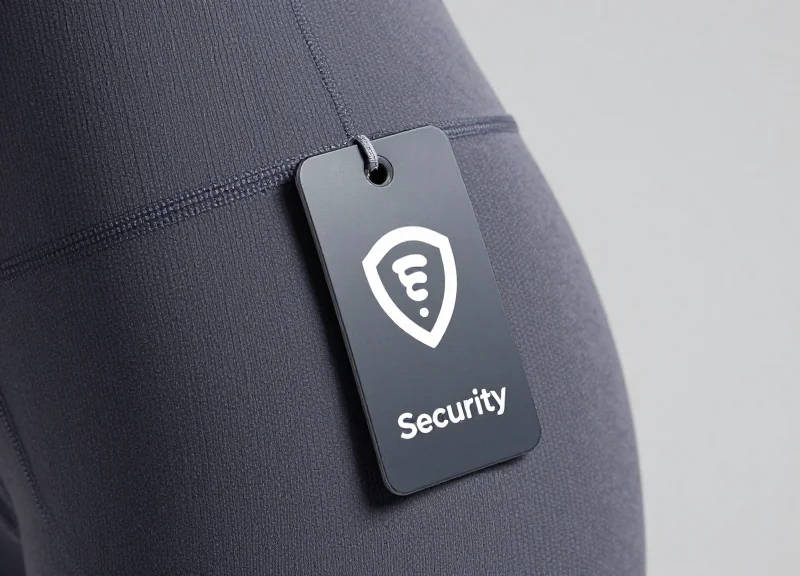
The primary challenge in securing premium athleisure lies in the delicate nature of high-performance technical fabrics like spandex, elastane, and moisture-wicking nylon blends. Unlike heavy denim or cotton, these materials possess a tight knit that is susceptible to 'pin-hole memory'—where a standard EAS pin leaves a visible, permanent gap—and snags that can unravel expensive compression garments. Specialized athleisure tags address this by utilizing ultra-fine, electro-polished pins and lightweight housings that protect the garment's integrity while maintaining a high detection sensitivity of up to 95% in modern boutique environments.
| Feature | Standard EAS Tag | Specialized Athleisure Tag |
|---|---|---|
| Pin Diameter | 1.2mm - 1.5mm (Heavy) | 0.6mm - 0.8mm (Ultra-Fine) |
| Pin Surface | Standard Machined Steel | Electro-polished Mirror Finish |
| Weight | 15g - 20g | 8g - 11g (Featherweight) |
| Fabric Impact | Visible punctures/snags | Zero-trace removal |
Will tagging affect the compression and elasticity of yoga leggings?
No, provided you use lightweight 'clamshell' or 'mini-pencil' tags. These specialized designs distribute weight evenly to prevent the fabric from sagging or developing 'hanger bumps' during long periods of display.
How do we prevent 'tag-switching' on technical gear?
Athleisure-specific tags often feature a recessed 'clutch' mechanism and high-gauss magnetic locks (up to 12,000GS). This prevents thieves from using basic magnets to swap tags from low-price items to high-value technical shells.
Can these tags be used on seam-sealed or waterproof garments?
Yes. For seam-sealed items where puncturing is not an option, specialized 'lanyard' tags or 'ink-clips' can be attached to the interior care label or a reinforced seam loop to maintain the garment's waterproof integrity.
A critical unique insight for boutique owners is the 'Shear Force Profile' of 4-way stretch fabrics. When customers try on garments, the fabric expands significantly. Traditional tags create a static anchor point that resists this expansion, leading to 'micro-tears' around the pin site. The next generation of athleisure tags utilizes a 'Floating-Pin' architecture. This design allows the pin to tilt slightly within the locking clutch, accommodating the fabric's movement as it is stretched on a body or mannequin, effectively eliminating the risk of structural failure during the fitting room experience.
Integrating RFID for Total Inventory Intelligence

Integrating RFID (Radio Frequency Identification) with next-gen EAS systems transitions a boutique from passive loss prevention to proactive inventory intelligence. By embedding RFID chips within EAS tags, retailers gain item-level visibility, allowing the system to distinguish not just that an item passed the sensors, but exactly which item it was, including its specific size, color, and SKU. This dual-layer approach provides a 360-degree view of stock movement, reducing administrative errors and providing the data foundation for a 35% reduction in total shrinkage.
| Feature | Legacy EAS (AM/RF Only) | RFID-Integrated EAS |
|---|---|---|
| Inventory Accuracy | 65-75% (estimated) | 99.8% (real-time) |
| Theft Data | Generic alarm sounds | Identifies specific item stolen |
| Stock Counting | Manual / Monthly | Automated / Daily |
| Internal Theft Detection | Very Low | High (POS Cross-referencing) |
A significant driver of ROI in the yoga and athleisure sector is the elimination of 'sweethearting'—a practice where employees intentionally fail to scan items for friends or accomplices. With RFID integration, the system automatically cross-references items passing through the exit pedestals against the Point of Sale (POS) transaction log in real-time. If an RFID-tagged item leaves the store without a corresponding 'sold' status in the database, an alert is triggered, and the specific item data is logged. This creates a digital paper trail that makes internal theft nearly impossible to hide.
How does RFID help with 'Buy Online, Pick Up In Store' (BOPIS)?
Accurate RFID data ensures that the inventory shown online matches what is physically on the shelf, preventing the 'out-of-stock' cancellations that frustrate premium customers.
Can RFID tags be hidden in premium garments?
Yes, many boutiques use 'source tagging' where the RFID inlay is embedded directly into the care label or hangtag during manufacturing, maintaining the garment's aesthetic.
Does this replace the need for security guards?
It doesn't necessarily replace them, but it makes them significantly more efficient by providing them with exact data on what was taken, rather than forcing them to guess.
Unique Industry Insight: The 'Shadow Inventory' Trap. In high-end athleisure, 'shadow inventory'—stock that is physically in the building but missing from the digital system due to receiving errors—accounts for up to 10% of lost sales. RFID-integrated EAS systems allow staff to perform full-store 'cycle counts' in under 20 minutes using handheld scanners. This ensures that a $120 pair of compression leggings isn't sitting in a shipping box in the backroom while the system marks it as 'out of stock,' directly boosting the bottom line beyond simple theft prevention.
Boosting ROI: Calculating the Payback Period of EAS Systems
The payback period for a next-gen EAS (Electronic Article Surveillance) system in a premium yoga or athleisure boutique typically ranges from 8 to 14 months. This return on investment is achieved by dividing the total cost of hardware, installation, and tags by the sum of monthly savings derived from a 35% reduction in shrinkage, reclaimed labor hours previously spent on manual counts, and the elimination of 'phantom stock' sales losses. For high-margin boutiques where a single pair of leggings can retail for over $120, recovering just three units per week can accelerate the break-even point by several months.
| Financial Driver | Direct Impact | ROI Contribution |
|---|---|---|
| Shrinkage Reduction | 35% average decrease in theft | Direct recovery of COGS and lost retail margin. |
| Labor Optimization | Reduced manual inventory audits | Saves 10-15 staff hours per month in boutique settings. |
| Inventory Accuracy | Prevention of phantom stock-outs | Ensures high-demand sizes are available for purchase. |
| Operational Longevity | 5-7 year hardware lifespan | Spreads initial CAPEX across years of recurring savings. |
- Establish Your Baseline Shrinkage: Calculate your annual loss as a percentage of total sales. For premium athleisure, this often sits between 2% and 4% due to the high resale value of the merchandise.
- Apply the 35% Reduction Factor: Modern EAS systems consistently deliver a minimum 35% reduction in external and internal theft. Multiply your baseline loss by 0.35 to find your annual direct savings.
- Quantify Reclaimed Labor: Next-gen systems with integrated RFID reduce the time required for 'cycle counts.' Calculate the hourly wage of staff multiplied by the hours saved per month on inventory reconciliation.
- Calculate the Payback Ratio: Divide the Total System Cost by your Monthly Total Savings (Shrinkage Recovery + Labor Savings) to determine the exact number of months to reach break-even.
The 'Shadow ROI' Perspective: Beyond direct theft prevention, the most overlooked financial benefit is the reduction in 'Opportunity Cost.' In the yoga wear industry, stock-outs of popular sizes (like US 4 or 6) are sales killers. When an item is stolen but not recorded as 'gone,' your automated replenishment system doesn't reorder it. This results in 'phantom stock' where the system thinks the item is on the shelf, but the shelf is empty. By preventing the initial theft and improving accuracy, EAS systems ensure you never miss a sale due to a invisible inventory gap.
Is the ROI higher for boutique stores compared to big-box retail?
Yes. Because boutiques carry higher price-point items with lower stock depth, the loss of a single high-value item has a significantly larger impact on the store's net profit margin.
Do EAS tags damage delicate technical fabrics like Nulu or Luon?
No. Next-gen specialized tags use ultra-fine pins and smooth locking mechanisms designed specifically for high-performance compression fabrics to ensure no snagging or permanent holes.
What is the primary driver of rapid ROI in athleisure?
The high resale value of premium yoga brands on secondary markets makes them frequent targets for organized retail crime; stopping these 'bulk' thefts provides an almost instant ROI.
Customer Experience: Security That Doesn't Discourage Sales

In the world of premium athleisure, the customer journey is built on tactile interaction and the 'open-sell' model, where shoppers are encouraged to feel technical fabrics and try on high-compression leggings. Security that doesn't discourage sales is the art of implementing an 'invisible shield'—a strategic blend of high-performance EAS technology and concierge-level service that deters theft without making legitimate customers feel like suspects. By moving away from bulky, intrusive hardware toward sleek, integrated systems, boutiques maintain the Zen-like atmosphere essential to the yoga lifestyle brand while achieving significant shrinkage reduction.
- Discreet Aesthetic Integration: Modern EAS pedestals are now available in crystal-clear acrylic or can be recessed into the floor or door frames, ensuring they don't block the natural flow of the entrance or clutter the boutique's minimalist design.
- Reducing False Alarms: Next-gen systems utilize digital signal processing (DSP) to distinguish between a tag and environmental noise, virtually eliminating the 'false alarm' event that can cause extreme embarrassment for premium shoppers.
- The 'Touch and Feel' Freedom: Using lightweight, aesthetically pleasing tags ensures that the drape and hand-feel of expensive technical fabrics are not distorted, allowing the product to sell itself effectively.
| Feature | Legacy Security Impact | Next-Gen EAS Impact |
|---|---|---|
| Visual Cues | Large, intimidating plastic towers | Slimline, transparent, or hidden antennas |
| Alert Method | Jarring, high-decibel sirens | Silent alerts to staff mobile devices |
| Tagging Profile | Heavy tags that damage delicate mesh | Precision-engineered pins for technical fabrics |
| Staff Role | Reactive security enforcement | Proactive concierge service with tech-support |
An original perspective for boutique owners: the most effective deterrent is not a loud alarm, but 'Aggressive Hospitality.' In high-end athleisure, a 10% increase in proactive customer engagement typically correlates with a 15-20% reduction in opportunistic theft. Next-gen EAS systems support this by providing staff with mobile notifications of 'tag-near-exit' events, allowing them to approach a customer with a helpful 'Can I take those items to a fitting room for you?' rather than a confrontational security intervention. This flips a potential loss into a high-touch service moment.
Do EAS tags slow down the checkout process for high-spending customers?
No. Modern detachers are integrated into the POS workflow, allowing for one-handed tag removal that is faster than traditional methods, keeping the 'express' in the boutique experience.
Will visible security deter my premium clientele?
Quite the opposite; when implemented with sleek, modern hardware, it signals that the brand values its inventory and takes quality control seriously, often enhancing the perceived value of the goods.
How do we handle alarms without ruining the store's vibe?
By utilizing 'Soft Alarms'—low-volume chimes or light-based notifications—staff can investigate discreetly without disrupting the shopping experience for others.
Implementing DragonGuardGroup Solutions in Your Boutique
Implementing DragonGuardGroup solutions is a strategic process that moves beyond simple hardware installation to create a holistic security ecosystem tailored for high-end retail. For premium yoga and athleisure boutiques, this means deploying ultra-discreet Acousto-Magnetic (AM) or Radio Frequency (RF) systems that protect sensitive technical fabrics while maintaining the minimalist, 'zen' aesthetic of the shop floor. By following a structured implementation roadmap, boutique owners can ensure that their investment in loss prevention technology translates into a documented 35% reduction in shrinkage and a swift return on investment through improved inventory accuracy.
- On-Site Security Audit & Risk Mapping: DragonGuardGroup technicians conduct a comprehensive walkthrough to identify 'shrinkage hotspots,' such as fitting room corridors and high-value display walls where compression leggings and premium outerwear are most vulnerable.
- Fabric-Specific Hardware Selection: Selection of specialized EAS tags, such as the 'Smooth-Pin' series designed specifically for four-way stretch fabrics and high-density nylons to prevent snags, punctures, or permanent fabric memory marks.
- System Calibration and Aesthetic Blending: Installation of 'Invisible' floor loops or transparent acrylic pedestals that provide maximum detection range at the entrance without creating a visual barrier or disrupting the boutique's interior design.
- Staff Training and 'The Soft Approach': Empowering boutique associates with the skills to handle EAS alarms using a customer-first service approach, ensuring security measures never feel intrusive to the loyal community members.
- Data Integration and POS Synchronization: Linking the EAS system with the store's Point of Sale and inventory management software to provide real-time alerts on high-theft trends and stock discrepancies.
| Solution Component | Primary Benefit | Athleisure Specific Application |
|---|---|---|
| Ultra-Thin AM Labels | Discreet Protection | Yoga mats, accessories, and small equipment. |
| Non-Marring Hard Tags | Damage Prevention | High-performance compression tights and sports bras. |
| RFID-Enabled Pedestals | Inventory Intelligence | Tracking stock movement from stockroom to floor. |
| Electronic Shelf Labels (ESL) | Pricing Accuracy | Instant updates for seasonal promotions and flash sales. |
Expert Insight: The 'Shadow Calibration' Phase. One unique advantage of the DragonGuardGroup implementation process is the 48-hour 'Shadow Phase.' During this period, the system operates in a silent mode, logging all potential theft events and interference patterns without sounding an audible alarm. This allows our engineers to fine-tune sensitivity levels to the boutique's specific electromagnetic environment—often affected by neighboring electronics or heavy mall traffic—virtually eliminating 'phantom alarms' that could disrupt the premium shopping experience.
Will the security tags damage delicate Lululemon-style fabrics?
No. DragonGuardGroup utilizes precision-engineered smooth-bore pins and specialized magnetic clutches that secure tightly without piercing or separating the delicate fibers of technical fabrics like Luon or Nulu.
Can we hide the EAS pedestals to keep our boutique aesthetic?
Absolutely. We offer concealed floor-loop systems and overhead sensors that provide full protection without any visible hardware at the storefront entrance.
How long does the implementation take?
Most boutique installations are completed within a single evening after closing hours, ensuring zero downtime for your business operations.