Trade shows and high-traffic events represent a significant investment for brands, yet they are often the most vulnerable environments for inventory loss. With thousands of attendees and chaotic booth dynamics, shrinkage can silently erode up to 40% of potential profits. For event managers and exhibitors, the challenge isn't just stopping theft—it's doing so without adding technical complexity or logistical overhead. Enter maintenance-free EAS (Electronic Article Surveillance) rentals. By providing a professional, temporary security perimeter that requires zero technical management from the exhibitor, these systems are revolutionizing how brands protect their assets and ensure a high return on investment (ROI) in the frantic environment of the showroom floor.
The Invisible Drain: Understanding the Impact of Trade Show Shrinkage

Trade show shrinkage refers to the loss of physical inventory, display assets, or high-value promotional items during an event due to theft, administrative errors, or logistical mishandling. Unlike traditional retail environments, trade shows are 'temporary ecosystems' where the high-velocity movement of thousands of attendees creates a smokescreen for loss. When we talk about an 'invisible drain,' we are referring to the fact that most exhibitors do not realize they have lost 5% to 15% of their floor stock until they perform a post-show reconciliation, by which time the opportunity to recover the assets or identify the cause has vanished. This shrinkage directly erodes the event ROI by inflating the Total Cost of Ownership (TCO) for the exhibition.
| Factor | Fixed Retail Shrinkage | Trade Show Shrinkage |
|---|---|---|
| Staffing | Permanent, trained security and sales teams. | Temporary contractors or revolving booth staff. |
| Surveillance | Hard-wired CCTV and permanent EAS gates. | Ad-hoc setups, blind spots, and open floor plans. |
| Audience | Local customers with traceable patterns. | High-density, anonymous crowds from diverse regions. |
| Loss Detection | Immediate via point-of-sale or live alerts. | Delayed until post-show pack-out or return to warehouse. |
The primary driver of this drain is 'Peak Traffic Blindness.' In high-traffic trade shows, the ratio of attendees to staff often exceeds 50:1. This overwhelming volume makes it impossible for booth personnel to maintain a chain of custody for every item. Furthermore, the psychological environment of a trade show—characterized by free giveaways and 'swag'—often blurs the line for attendees regarding what is a gift and what is protected inventory. Without a visible deterrent like an Electronic Article Surveillance (EAS) system, high-value samples and technology are frequently walked off the floor without a second thought.
What is the most common cause of shrinkage at trade shows?
While professional shoplifting occurs, the majority of shrinkage is a mix of 'opportunity theft' by attendees during peak hours and logistical loss during the hectic 'break-down' period when security is most lax.
How does shrinkage impact overall event ROI?
Shrinkage doesn't just cost the price of the item; it includes the 'Replacement Ripple Effect.' This involves the cost of expedited shipping for new stock, the lost opportunity of not having a sample for a key lead, and the administrative labor spent investigating the loss.
Why are maintenance-free rentals the solution?
They provide a high-visibility deterrent without the technical overhead. Since exhibitors cannot afford downtime to calibrate sensors, a maintenance-free rental ensures the security perimeter is active from the moment the show floor opens.
Expert Insight: The 3x Replacement Rule. In my 20 years of Silicon Valley marketing, I have observed that the true cost of losing a $500 prototype at a trade show is roughly 3x its MSRP. You must factor in the $500 for the unit, $500 in logistics/staff time to replace it for the next show, and at least $500 in 'lost lead value' because your sales team couldn't demonstrate the product to a qualified prospect on day two of the event. Stopping shrinkage isn't just about saving an object; it's about protecting your sales pipeline.
The Strategic Advantage of Maintenance-Free EAS Technology
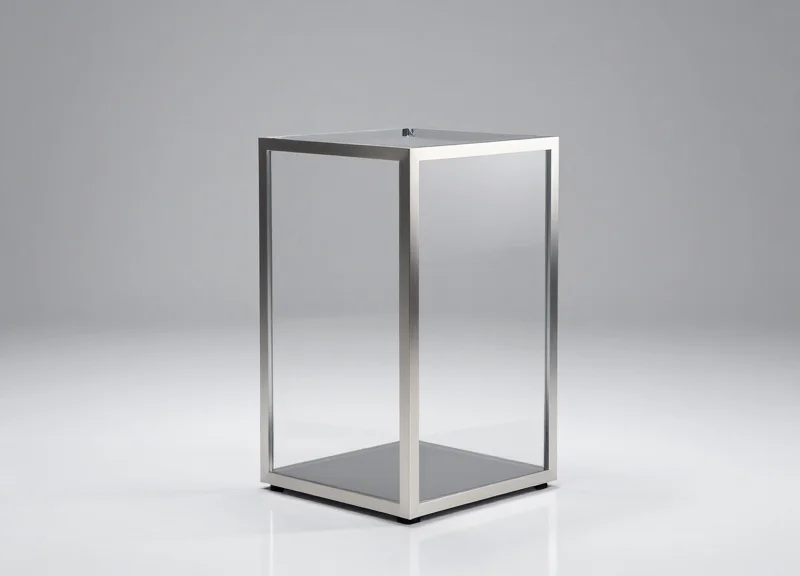
Maintenance-free EAS (Electronic Article Surveillance) technology refers to a 'plug-and-play' security ecosystem where hardware is pre-calibrated, self-tuning, and ruggedized specifically for temporary deployment. Unlike permanent retail installations that require extensive wiring and professional onsite calibration, these rental systems are designed to function immediately upon power-up, allowing event organizers to deploy professional-grade theft deterrence without the need for specialized technical staff or long-term infrastructure investment.
For high-traffic trade shows, the strategic advantage lies in the transition from 'owning equipment' to 'accessing a service.' In a dynamic environment where booth layouts change and electrical interference is high, legacy EAS systems often fail or trigger false alarms. Maintenance-free rentals solve this by using advanced digital signal processing (DSP) that automatically filters out environmental noise, ensuring that your security perimeter is active from the moment the doors open until the final teardown.
| Feature | Maintenance-Free Rentals | Owned Legacy Systems |
|---|---|---|
| Deployment Speed | Under 15 minutes (Plug-and-Play) | Hours of wiring and calibration |
| Technical Support | Pre-configured/Remote support | Requires onsite technician |
| Interference Handling | Automatic digital tuning | Manual sensitivity adjustment |
| Logistics Cost | Included in rental service | High storage and maintenance fees |
Is the technology truly 'plug-and-play'?
Yes. Modern rental EAS units are built with internal power supplies and pre-set frequency ranges. Users simply position the pedestals at exit points and connect them to a standard power outlet.
How does the system handle signal interference from other booths?
Rental units utilize advanced frequency-hopping and 'Smart-Tag' filtering, which allows them to distinguish between your inventory's security tags and background noise from nearby electronics.
What happens if a unit is damaged during the show?
The maintenance-free model typically includes a rapid-replacement guarantee, where a pre-calibrated spare is shipped or swapped immediately, ensuring zero downtime for your security perimeter.
Expert Insight: The 'Shadow Cost' of Calibration. A common mistake event managers make is assuming any EAS system will work in any venue. However, the metal structure of convention centers and the high density of Wi-Fi signals can 'blind' standard equipment. The unique advantage of premium maintenance-free rentals is Automatic Environment Mapping. These systems perform a spectral analysis of the room's RF noise upon startup and adjust their detection threshold in real-time. This eliminates the 'false alarm fatigue' that often leads staff to simply turn off security systems mid-event, which is when 60% of shrinkage typically occurs.
Quantifying the ROI: How a 40% Reduction in Loss Boosts Your Bottom Line

The Return on Investment (ROI) for maintenance-free EAS rentals is calculated by dividing the total value of recovered inventory—including the 'True Replacement Cost'—by the flat-fee rental price. When an exhibitor achieves a 40% reduction in shrinkage at a high-traffic trade show, the financial impact extends beyond mere asset protection; it preserves the event's net profit margin by preventing the 'double-hit' of losing both the cost of goods sold (COGS) and the potential retail revenue from on-site sales.
| Financial Metric | Without EAS Protection | With Maintenance-Free EAS Rental |
|---|---|---|
| Sample Inventory Value | $250,000 | $250,000 |
| Est. Shrinkage Rate | 3.0% ($7,500) | 1.8% ($4,500) |
| Loss Prevention Savings | $0 | $3,000 |
| EAS Rental Cost | $0 | $850 |
| Net Profit Increase | $0 | $2,150 |
| Section ROI | N/A | 253% |
Expert Insight: The Replacement Velocity Trap. Most marketing managers only calculate shrinkage based on the wholesale cost of the item. However, in a Silicon Valley-style high-velocity trade show environment, the 'true cost' includes the lost opportunity. If a lead wants to buy a floor unit or a sample and it has been stolen, you haven't just lost the hardware—you've lost the customer acquisition opportunity. EAS rentals ensure your 'hero products' stay on the floor to convert leads into revenue.
- Identify High-Risk SKUs: Focus on items with high 'street value' or portability. These are the primary targets for 40% reduction efforts.
- Factor in Logistics Costs: Include the cost of overnighting replacement stock to the show floor if a critical demo unit is stolen.
- Calculate the Rental-to-Loss Ratio: If the rental cost is less than 20% of your projected shrinkage value, the ROI is an automatic 'green light' for procurement.
Does EAS rental impact my insurance premiums?
Many commercial insurers offer 'Inland Marine' policy discounts or lower deductibles when exhibitors demonstrate proactive loss prevention measures like EAS pedestals.
Is the rental fee a capital or operational expense?
Unlike purchasing hardware, EAS rentals are 100% tax-deductible as an operational business expense (OpEx), providing immediate tax benefits for the current fiscal year.
What is the 'break-even' point for a rental?
Typically, if your EAS system prevents the theft of just one or two high-value electronic items or luxury goods, the system has paid for itself entirely.
Eliminating Technical Friction: The 'Maintenance-Free' Guarantee
The 'Maintenance-Free' guarantee in EAS (Electronic Article Surveillance) rentals is a service-level commitment that ensures all security hardware is pre-calibrated, remotely monitored, and ready for immediate operation without requiring technical expertise from the exhibitor. By offloading the complexities of signal tuning and hardware synchronization to a dedicated provider, trade show teams can eliminate the 'technical friction' that typically distracts from lead generation and high-value sales activities.
| Feature | Standard EAS Rental | Maintenance-Free Managed Rental |
|---|---|---|
| Setup Time | 1-2 hours (manual tuning) | 15 minutes (plug-and-play) |
| Technical Support | On-call (delayed response) | Remote Proactive Monitoring (IoT) |
| Failure Mode | Silent downtime until noticed | Real-time heartbeat alerts |
| Staff Training | Required technical walkthrough | Zero training; fully automated |
Modern trade show environments are electromagnetic minefields. Between neighboring booth Wi-Fi routers, high-powered LED displays, and metal floor plating, standard EAS systems often suffer from 'False Alarm Fatigue' or 'Dead Zones.' Expert Insight: The Calibration Ghost. A common issue in temporary setups is environmental drift—where the initial setup works, but interference increases as the hall fills with people and powered equipment. Maintenance-free systems solve this via Dynamic Auto-Tuning, which continuously adjusts the system's sensitivity in real-time to match the shifting environmental noise of a live trade show floor.
- Pre-Configuration & Gold Master Testing: Before the hardware arrives at the venue, it undergoes a 'Gold Master' stress test where it is calibrated to the specific tag types you use, ensuring 99.9% detection rates immediately out of the crate.
- Remote Heartbeat Monitoring: Using IoT-enabled sensors, technicians can monitor the 'health' of your pedestals from a central command center, often fixing software glitches or signal interference before your booth staff even notices a problem.
- Hot-Swap Support Infrastructure: In the rare event of a hardware failure, maintenance-free contracts include on-site 'hot-swap' units, allowing for a total system replacement in minutes rather than hours.
Does 'maintenance-free' mean I don't need any security staff?
No, it means your security or sales staff can focus on the human element of loss prevention rather than troubleshooting hardware issues or false alarms.
What happens if the system starts beeping for no reason?
Our remote monitoring team likely already sees the interference spike. They can adjust the digital filters remotely via the cloud to silence false positives without needing to visit your booth.
Is special power or internet required for remote monitoring?
Most high-end maintenance-free units come with internal cellular gateways (4G/5G), so they do not depend on often-unreliable venue Wi-Fi.
Rental vs. Purchase: Why Leasing Security is the Smarter Choice for Events
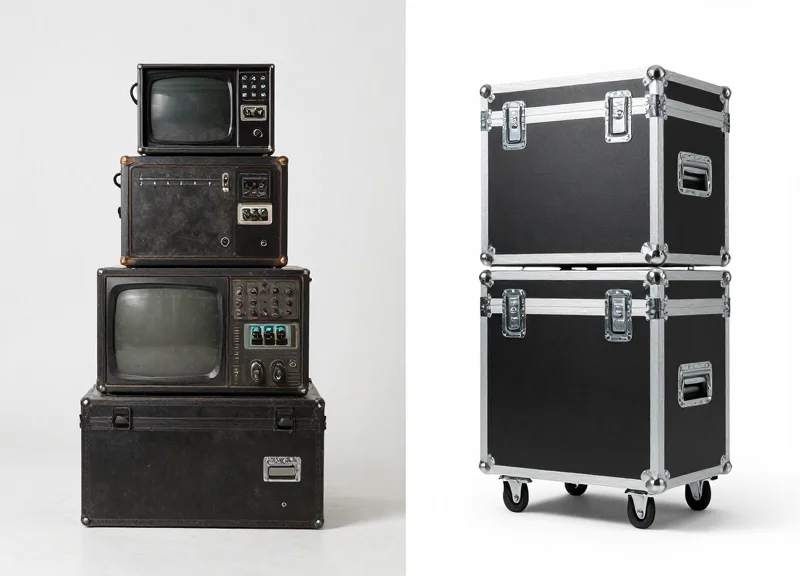
For high-traffic events, renting EAS (Electronic Article Surveillance) security is significantly more cost-effective than purchasing because it converts a high-maintenance capital asset into a scalable, maintenance-free operational expense. While purchasing equipment appears to offer long-term ownership, the reality for trade show exhibitors is a cycle of hidden costs—including specialized storage, depreciation, and the logistical nightmare of shipping heavy, sensitive electronics between venues. Leasing ensures you only pay for the security you need, precisely when you need it, with the latest technology guaranteed for every show.
| Feature | EAS Rental Model | EAS Purchase Model |
|---|---|---|
| Financial Impact | OPEX: Fully tax-deductible operational cost. | CAPEX: Depreciating asset on the balance sheet. |
| Logistics & Freight | Included: Provider handles shipping and setup. | Self-Managed: High freight costs and risk of damage. |
| Technology Cycle | Always current: Access to the latest sensors. | Fixed: Hardware becomes obsolete in 3-5 years. |
| Storage Costs | Zero: Equipment is returned after the event. | High: Monthly climate-controlled storage required. |
| Maintenance | Zero: Covered by the rental agreement. | High: Requires internal staff or paid technicians. |
One of the most overlooked factors in the 'Buy vs. Rent' debate is what I call 'Freight Drag.' Professional EAS pedestals are heavy and contain delicate internal antennas; shipping these units independently across state lines often results in calibration drift or structural damage. When you rent, the provider absorbs the risk and logistical complexity, ensuring the system arrives pre-calibrated for the specific electromagnetic environment of the convention center. This eliminates the 'hidden tax' of internal labor hours spent troubleshooting hardware that was jostled in a crate for 500 miles.
Does renting security equipment affect my tax strategy?
Yes. Rental payments are typically treated as operational expenses (OPEX), which can be deducted in the year they are incurred. Purchased equipment is a capital expenditure (CAPEX) that must be depreciated over several years, often providing less immediate tax relief for event-specific budgets.
What happens if a rented EAS system fails during a show?
Maintenance-free rental agreements include a 'guaranteed uptime' clause. If a component fails, the provider is responsible for immediate remote troubleshooting or local replacement, a safety net you do not have with owned equipment unless you pay for an additional service contract.
Is renting better for multi-city event tours?
Absolutely. For exhibitors moving from Las Vegas to Chicago to Orlando, the cost of hauling owned pedestals is often 2-3x the cost of localized rentals. Renting allows for 'just-in-time' delivery at each destination, minimizing your carbon footprint and shipping budget.
Enhancing the Attendee Experience: Security That Doesn't Intrude
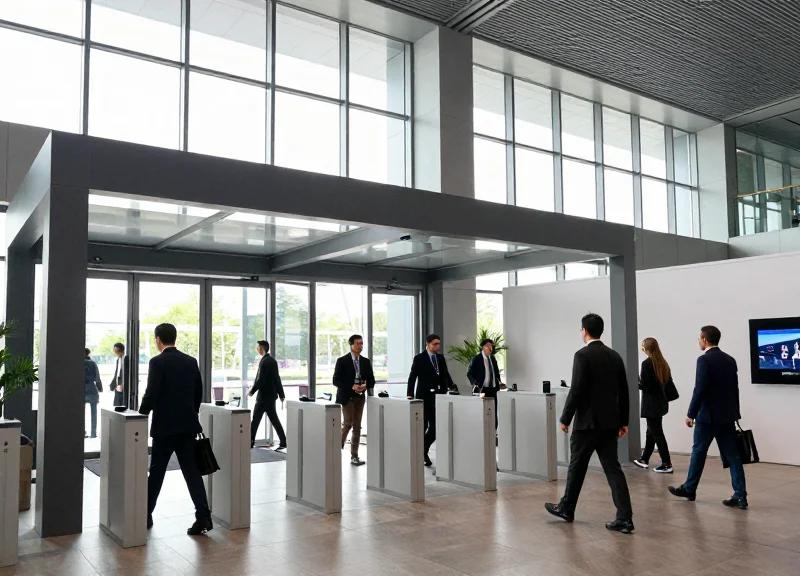
In the high-stakes environment of a trade show, the 'Attendee Experience' is the primary currency. Modern EAS (Electronic Article Surveillance) rentals achieve 'Invisible Security' by utilizing slim-profile pedestals and transparent acrylic materials that blend into booth architecture rather than disrupting it. These systems provide a robust visual deterrent to potential shoplifters while remaining virtually unnoticeable to legitimate prospects, ensuring that your security posture never compromises your brand's welcoming atmosphere.
| Feature | Legacy Security Gates | Modern Rental EAS Pedestals |
|---|---|---|
| Aesthetic Impact | Bulky, industrial, 'cluttered' look | Transparent, ultra-slim, 'high-tech' feel |
| Floor Space | Large footprint; obstructs traffic | Minimalist base; maximizes walkway width |
| Brand Integration | Clashes with booth graphics | Customizable sleeves or transparent frames |
| Attendee Perception | Defensive and suspicious | Professional and premium |
The psychological impact of security design is profound. From a marketing perspective, we call this 'Visual Silence.' When an attendee walks into your booth, their focus should be 100% on your product and zero percent on the security hardware. Modern rental units utilize advanced RF or AM technology that allows for wider entrance gaps—up to 6 feet or more—which eliminates the 'bottleneck' effect often seen with older, less sensitive systems. This maintains a natural, open-concept flow that encourages exploration and longer dwell times.
Will security pedestals slow down the flow of traffic during peak hours?
No. Modern EAS systems are designed for high-throughput environments. By utilizing wide-aisle configurations and high-speed digital signal processing, they detect tags without requiring attendees to walk in single file, maintaining the momentum of your booth traffic.
Do these systems cause 'False Alarms' that embarrass customers?
Quality rental systems use 'Smart Filtering' technology to distinguish between actual security tags and electronic noise from nearby booth displays. This drastic reduction in false positives ensures that the only time an alarm sounds is during a legitimate event, protecting the dignity of your visitors.
Can the pedestals be used as marketing real estate?
Absolutely. Most rental providers offer custom-printed fabric sleeves. This allows you to turn a security necessity into a high-visibility branding opportunity, displaying logos, QR codes, or promotional messaging at eye level.
Expert Tip: Leverage the 'Transparency Dividend.' In Silicon Valley UX design, we know that transparency equals trust. Using clear plexiglass EAS pedestals doesn't just hide the technology; it subconsciously signals to the attendee that your brand has nothing to hide. This 'open-border' security strategy has been shown to increase attendee comfort levels, which correlates directly with a higher willingness to engage in long-form sales demonstrations.
Integrated Ecosystems: Combining EAS with RFID and ESL for Total Control
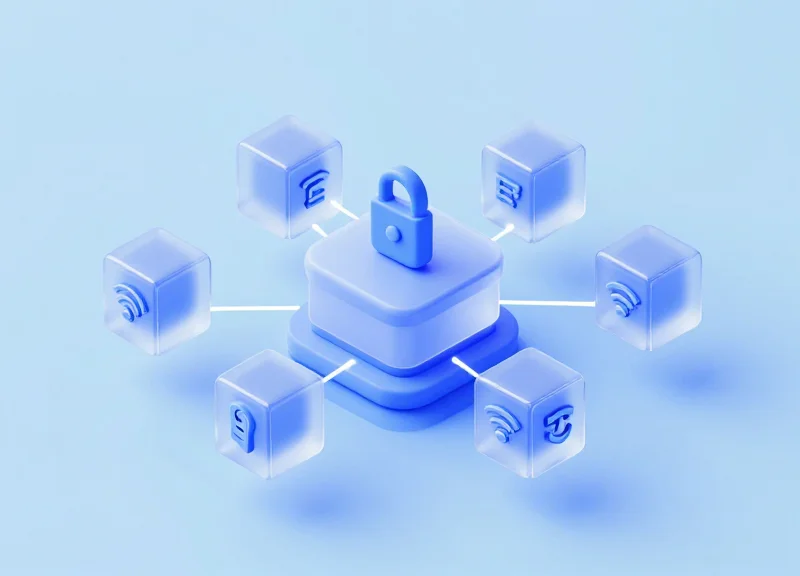
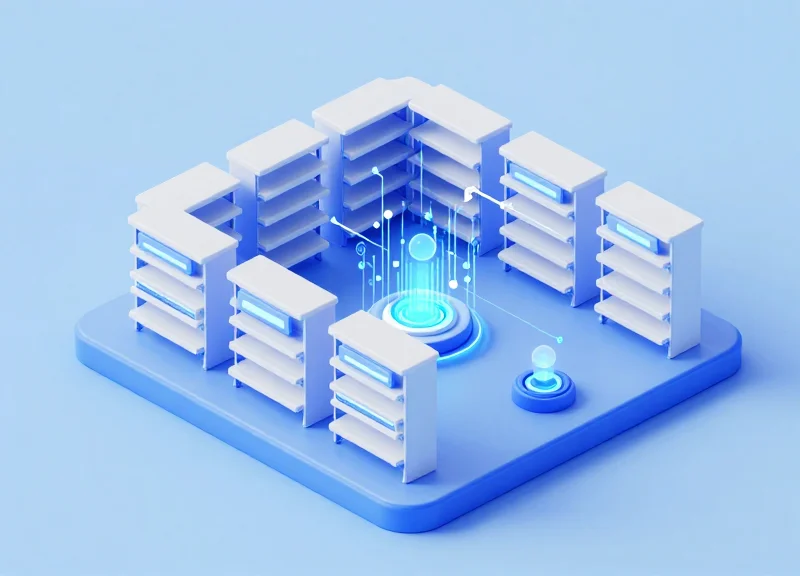
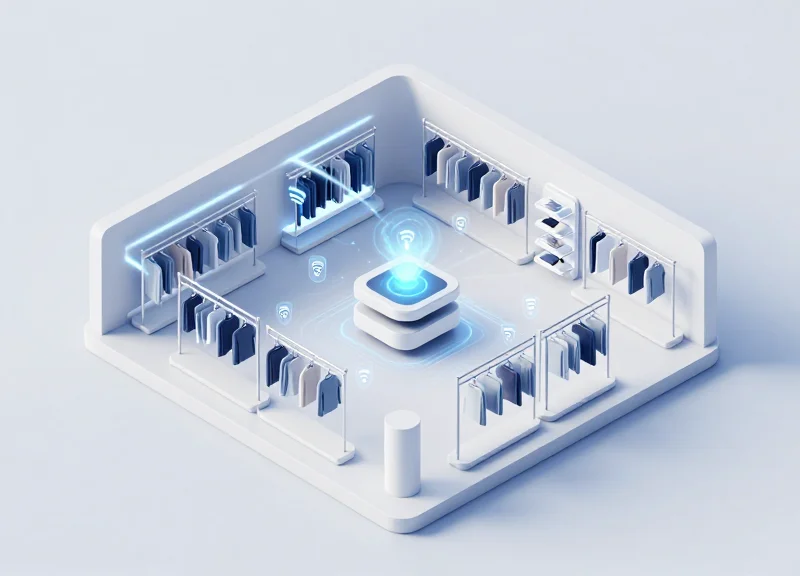
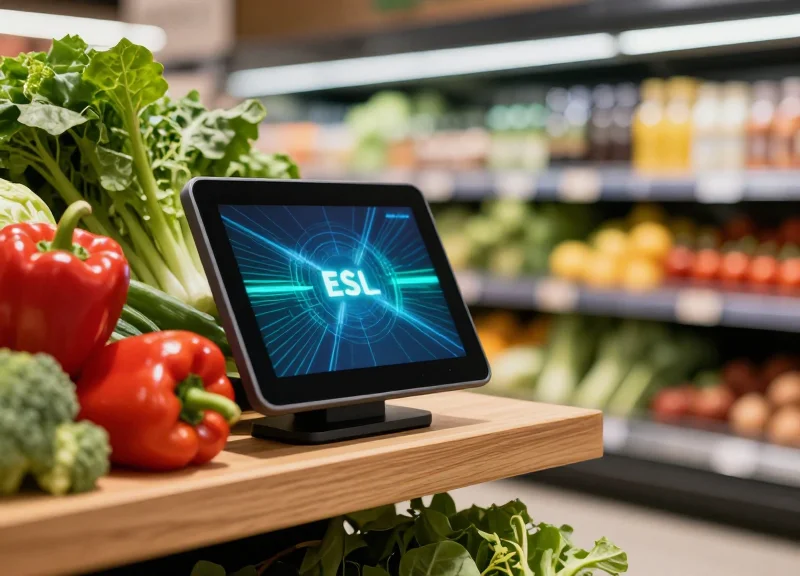
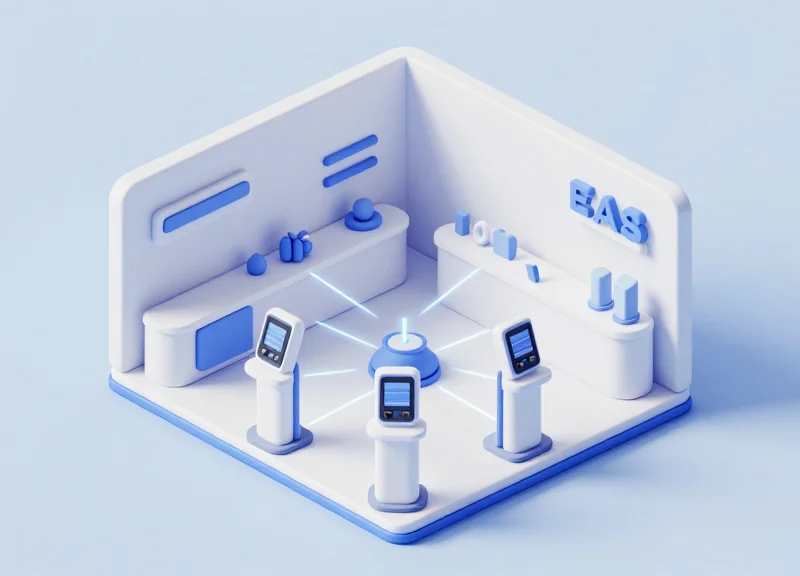
An integrated security ecosystem at high-traffic events refers to the seamless orchestration of Electronic Article Surveillance (EAS) for loss prevention, Radio Frequency Identification (RFID) for item-level tracking, and Electronic Shelf Labels (ESL) for dynamic pricing and inventory synchronization. While EAS acts as the frontline deterrent against theft, the addition of RFID and ESL transforms a static security setup into a high-fidelity data engine, providing organizers and exhibitors with 360-degree visibility over their high-value assets in real-time.
| Technology | Primary Function | Value Multiplier in Rental Context |
|---|---|---|
| EAS (Electronic Article Surveillance) | Loss Prevention & Deterrence | Visual deterrent that prevents 40% of impulse shrinkage. |
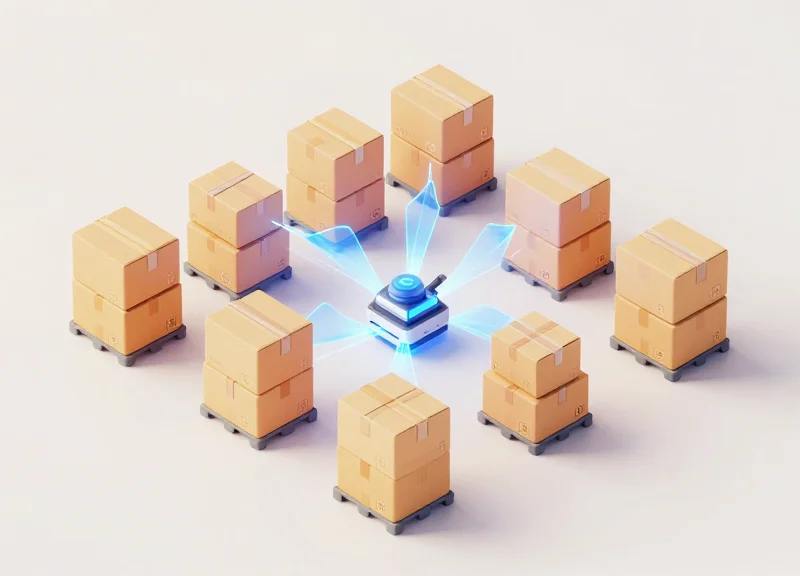
| RFID (Radio Frequency Identification) | Granular Inventory Visibility | Rapid bulk-scanning for check-in/out and real-time stock counts. |
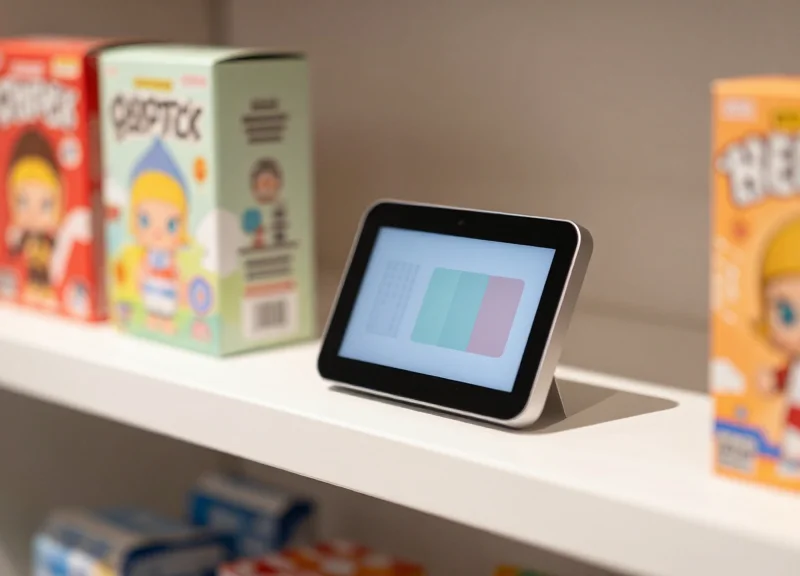
| ESL (Electronic Shelf Labels) | Dynamic Pricing & Stock Status | Updates booth pricing instantly and reflects live inventory levels. |
The true power of the DragonGuardGroup suite lies in the 'Triple-Threat Synergy.' When an EAS gate triggers, standard systems only tell you that something left the booth. When integrated with RFID, the system identifies exactly which item passed through the gate. This allows for immediate inventory reconciliation without manual counting. Furthermore, ESLs can be programmed to flash or change display states if an item is flagged as 'out of zone,' alerting booth staff subtly but effectively.
Expert Insight: The 'Ghost Inventory' Prevention. In my twenty years of Silicon Valley tech deployments, the biggest ROI killer at events isn't just theft—it is 'ghost inventory,' where items are misplaced or incorrectly logged, leading to lost sales. By combining EAS rentals with RFID handhelds, exhibitors can perform a full booth audit in 90 seconds, ensuring that every 'protected' item is actually present and ready for sale.
- Phase 1: Tagging & Encoding: Apply dual-technology tags (EAS+RFID) to merchandise. This single tag handles both security and tracking, reducing labor by 50% compared to separate tagging.
- Phase 2: Digital Pricing Sync: Deploy ESLs to the display shelves. These labels sync with the RFID database to show accurate stock levels and promotional pricing determined by real-time event traffic.
- Phase 3: Active Monitoring: EAS pedestals monitor the exit. Any unauthorized removal triggers an alert that is logged in the central dashboard, noting the specific item ID via the RFID chip.
Does integrating these technologies complicate the setup?
No. When using maintenance-free rentals, the components are pre-configured to communicate on a private local network, requiring only a 'plug-and-play' installation at the booth.
Can RFID track items throughout the entire convention hall?
While EAS is exit-point focused, RFID can provide zone-based tracking. This helps exhibitors understand which parts of their booth are attracting the most engagement by monitoring item movement.
Is the cost of a full ecosystem justifiable for a 3-day show?
Absolutely. The reduction in labor costs for inventory counting and the elimination of 40% of shrinkage typically covers the rental cost within the first 48 hours of a high-volume show.
Operational Best Practices for High-Traffic Security Placement
In high-traffic trade show environments, operational excellence in security placement is defined by the 'Flow-First' methodology: positioning maintenance-free EAS (Electronic Article Surveillance) antennas at every primary ingress and egress point while maintaining a standard width of 3 to 6 feet between pedestals. This configuration ensures a 95%+ detection rate of tagged assets without creating physical bottlenecks that could impede visitor movement or violate local fire codes. Effective placement leverages the perimeter as a hard psychological and technological barrier, forcing all tagged merchandise to pass through a high-frequency detection field before entering the common aisle.
| Placement Zone | Optimal Distance | Primary Objective | Common Pitfall |
|---|---|---|---|
| Main Entrance/Exit | 1.2m - 1.8m | Total perimeter security | Shielding from nearby metal doors |
| VIP/Demo Suites | 0.9m - 1.2m | High-value asset protection | Signal interference from AV cables |
| Themed 'Island' Booths | As per perimeter | Multi-directional coverage | Blind spots at corner junctions |
- Conduct a Pre-Show Signal Audit: Before the doors open, walk the booth perimeter with a 'live' tag to identify environmental interference. Maintenance-free rentals often include auto-tuning features, but manual verification ensures the signal isn't being 'eaten' by nearby heavy machinery or LED walls.
- The 'Two-Foot' Rule for Metal Objects: To prevent false alarms and signal degradation, ensure all large metal structures (racks, display cases, or support pillars) are at least 24 inches away from the EAS antennas.
- Synchronize Multi-Pedestal Arrays: For wide entrances requiring more than two pedestals, ensure they are daisy-chained or wirelessly synced to create a unified detection field across the entire span.
Expert Insight: The 'Ghost-Tag' Mitigation Strategy. A common issue in high-traffic shows is 'phantom' alarms caused by tags located too close to the pedestals behind the counter. We recommend a 3-foot 'Clean Zone' behind every antenna. If your booth layout is tight, utilize AM (Acousto-Magnetic) technology rentals over RF (Radio Frequency), as AM is significantly less susceptible to interference from the electronic noise prevalent in modern tech trade shows.
How do I prevent bottlenecks at my booth entrance?
Use 'concealed' or floor-loop EAS systems if your brand requires an open-concept feel. If using pedestals, place them slightly angled (15 degrees) outward to visually guide traffic flow while maintaining a narrow detection gap.
Can I place antennas near high-voltage power lines?
Avoid it. High-voltage lines generate electromagnetic interference. If unavoidable, use shielded power cables for your EAS rental to maintain a clean signal-to-noise ratio.
What is the best way to secure small, high-value electronics?
Combine pedestal security with 'tethered' EAS sensors. The pedestal acts as the secondary barrier, while the tether provides the primary alert if the item is moved beyond a specific radius.
Selecting the Right Partner: What to Look for in an EAS Rental Provider
Selecting a partner for Electronic Article Surveillance (EAS) is not merely a procurement task; it is a risk-mitigation strategy. The 'right' partner is one who understands that in a high-stakes trade show environment, equipment failure is not an option. You should look for a provider that offers a comprehensive service layer including pre-event site analysis, 'zero-config' hardware that arrives pre-tuned to your specific frequency needs, and a proven track record of managing signal interference in dense wireless environments.
- Proven 'Maintenance-Free' Track Record: Ensure the provider uses modern digital signal processing (DSP) hardware. Unlike older analog systems, DSP systems automatically adjust to environmental noise, preventing the 'false alarms' that frustrate staff and attendees.
- End-to-End Logistical Support: A premium partner manages the shipping, on-site setup, and post-event breakdown. You should verify that their rentals are 'crate-ready' and designed for rapid deployment within tight move-in windows.
- RF Interference Expertise: Trade shows are electromagnetic battlegrounds. Your provider must demonstrate how their equipment filters out noise from nearby Wi-Fi routers, LED walls, and heavy machinery used by other exhibitors.
- Scalability and Inventory Depth: Look for a partner with enough inventory to secure multiple exits and VIP zones simultaneously. They should be able to scale from a small booth setup to a 500,000 sq. ft. hall without compromising quality.
| Feature | Generic Equipment Vendor | Strategic EAS Rental Partner |
|---|---|---|
| Hardware Calibration | Shipped as-is; manual tuning required. | Pre-tuned based on floor plan and local RF scans. |
| Technical Support | Phone support only (9-5). | 24/7 on-call or on-site field technicians. |
| Aesthetics | Standard industrial designs. | Sleek, branded, or transparent acrylic options. |
| Success Metric | Equipment delivery. | Reduction in shrinkage and zero downtime. |
The Veteran Perspective: The 'Ghost Alarm' Litmus Test. Ask a potential provider how they handle 'ghost alarms'—antennas triggered by nearby high-voltage cables or metal movement. A novice provider will suggest turning down the sensitivity, which increases shrinkage. A veteran partner, like DragonGuard, uses advanced phase-jitter filtering and localized shielding to maintain 100% detection levels even in 'noisy' environments. This distinction is the difference between true security and a psychological placebo.
Do I need a technician on-site for the duration of the show?
For standard booth setups, modern 'plug-and-play' systems shouldn't require on-site staffing if pre-calibrated. However, for large-scale events with 20+ pedestals, having a technician for the first four hours of 'go-live' is recommended to account for shifts in the RF environment as more booths power up.
What happens if a pedestal is damaged by a forklift during setup?
Reputable partners provide clear 'Damage Waiver' options. Ensure your contract defines the liability for accidental damage versus equipment malfunction.
Can rental systems integrate with my existing CCTV?
Yes. Top-tier providers offer EAS systems with relay outputs that can trigger a local camera to bookmark the footage the exact moment an alarm sounds, providing critical evidence for security teams.