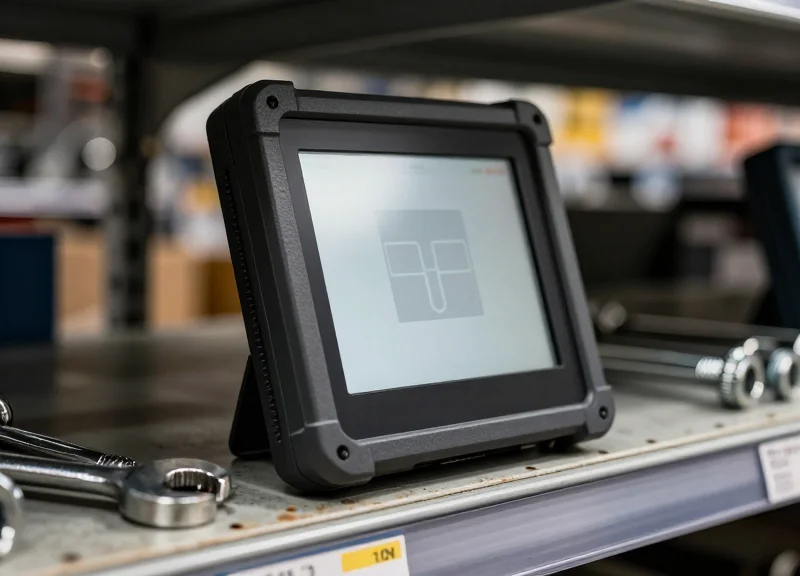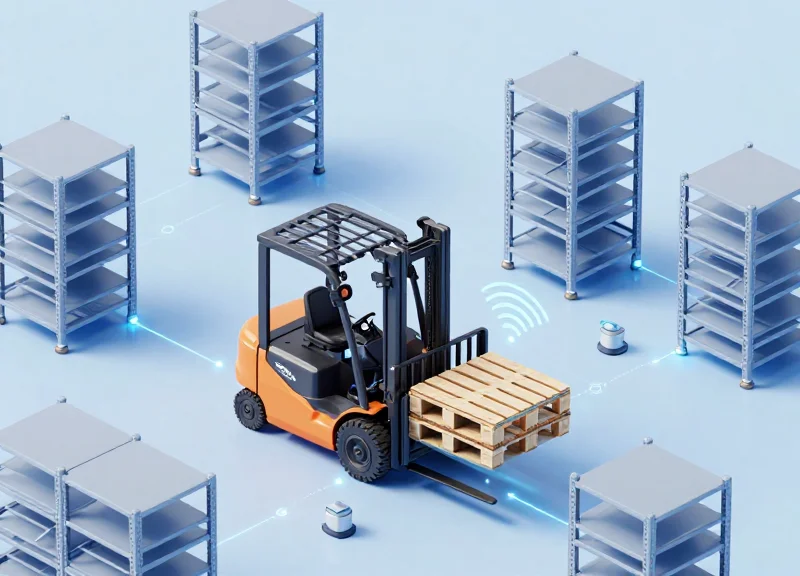
As we approach 2026, the logistics landscape is undergoing a tectonic shift driven by the need for hyper-efficiency and real-time data. For decades, manual barcode scanning has been the industry standard, yet it remains the primary source of operational bottlenecks and human error. Today, the emergence of next-gen RFID-integrated forklifts is redefining 'full-link visibility.' By automating data capture at the point of movement, forward-thinking enterprises are moving beyond the limitations of line-of-sight scanning to achieve a seamless, transparent supply chain. This article explores why the transition to RFID-enabled material handling is no longer a luxury, but a strategic necessity for the modern warehouse.
The Evolution of Data Capture: Why Barcodes are Reaching Their Limit
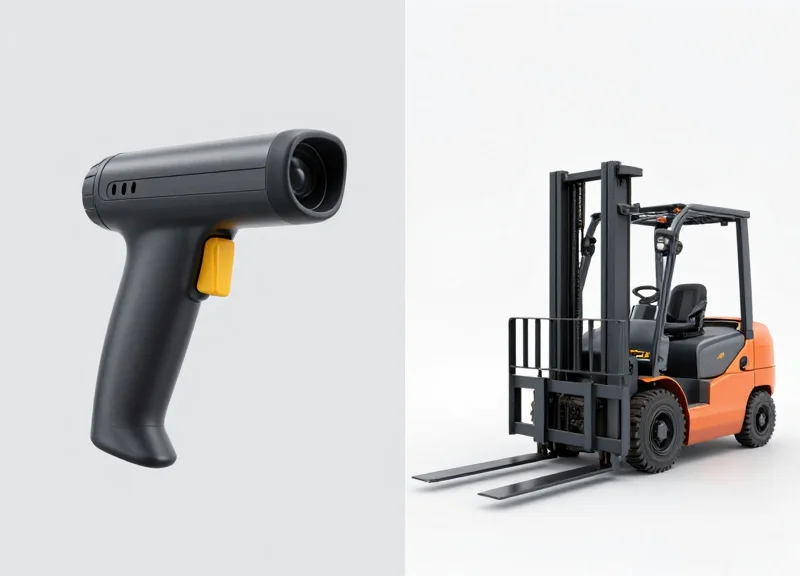
The evolution of data capture is reaching a structural ceiling where traditional 1D and 2D barcodes are no longer sufficient for the high-velocity demands of 2026 logistics. While barcodes revolutionized inventory management in the late 20th century, their reliance on manual, line-of-sight interaction creates a 'one-at-a-time' processing bottleneck. In modern smart warehouses, where throughput is measured in seconds rather than minutes, the requirement for a human operator to physically locate and scan a label has transitioned from a standard procedure to a significant financial liability that prevents true full-link visibility.
| Feature | Manual Barcode Scanning | Next-Gen RFID Forklifts |
|---|---|---|
| Scanning Mode | Line-of-Sight (Manual) | Bulk Sensing (Automated) |
| Speed | 1-2 seconds per item | Hundreds of tags per second |
| Labor Dependency | High (Operator must stop) | Low (Passive capture during motion) |
| Data Accuracy | Susceptible to human error | 99.9% automated precision |
| Visibility | Point-in-time snapshots | Continuous real-time tracking |
- The 'Line-of-Sight' Bottleneck: Barcodes require a clear optical path between the scanner and the label. In a crowded warehouse or a high-stacking environment, this forces forklift operators to dismount or reposition frequently, drastically reducing 'moves per hour' metrics.
- High Operational Fragility: Barcode labels are easily damaged by moisture, abrasion, or dirt. Once a label is unreadable, the digital thread is broken, requiring manual intervention and data entry that introduces high error rates into the WMS.
- Labor Cost Inflation: As global labor costs rise and availability shrinks, spending human capital on the repetitive task of scanning is no longer viable. Manual scanning represents a significant portion of warehouse 'dead time' that cannot be optimized further.
Expert Insight: The Latency Tax. In my two decades in Silicon Valley logistics tech, I've observed what I call the 'Latency Tax.' When an operator scans a barcode, there is a delay between the physical movement and the digital record. In 2026, this 30-to-60 second lag is the difference between an optimized route and a congested aisle. RFID forklifts eliminate this tax by capturing data at the speed of motion, turning the forklift itself into a mobile IoT sensor that updates the digital twin of the warehouse instantly.
Defining Next-Gen RFID Forklifts: More Than Just a Reader
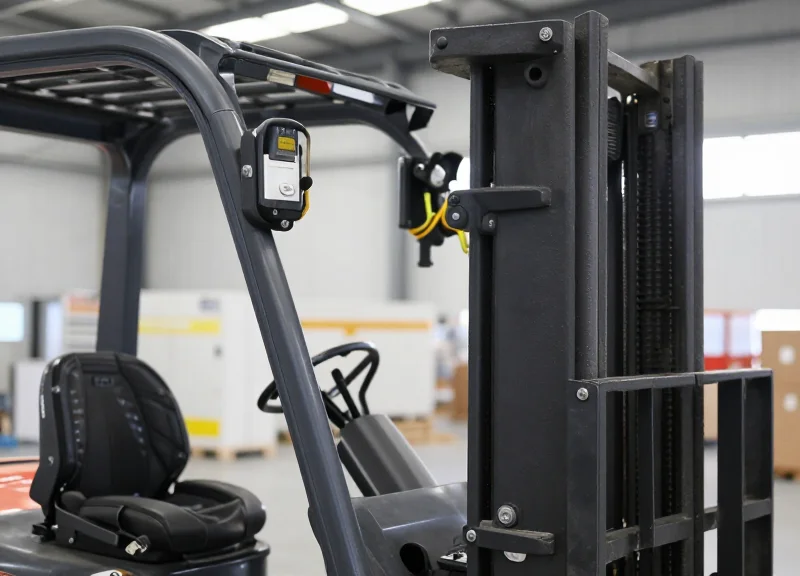
A next-gen RFID forklift is no longer just a material handling vehicle with a bolted-on scanner; it is a mobile edge-computing ecosystem designed for autonomous data capture. By integrating high-gain phased array antennas, motion sensors, and sophisticated logic controllers directly into the vehicle's electrical architecture, these systems eliminate the need for drivers to stop or manually scan. In the 2026 logistics landscape, the 'Smart Forklift' serves as a real-time validation node that ensures the right product is on the right pallet and moving to the right destination, all while traveling at full operational speed.
| Feature | Legacy RFID Add-ons | Next-Gen Integrated Systems (2026) |
|---|---|---|
| Data Trigger | Manual button or proximity | Autonomous 'Spatial Logic' sensing |
| Processing | Cloud-dependent / Delayed | On-device Edge AI / Real-time |
| Accuracy | Frequent stray reads | 99.9% via RSSI & LiDAR filtering |
| Operational Speed | Reduced for scanning | Uninterrupted workflow |
- Multi-Directional Antenna Arrays: Sophisticated antenna placement on the load backrest allows for 360-degree coverage, ensuring tags are read regardless of pallet orientation.
- Edge Computing Controllers: On-board industrial computers process raw tag data locally, filtering out 'stray reads' from nearby shelves before the data even hits the Warehouse Management System (WMS).
- Sensor Fusion (LiDAR & Encoder): By combining RFID with LiDAR, the forklift knows exactly when a pallet is physically 'engaged' on the forks, preventing the accidental scanning of adjacent inventory.
Expert Insight: The 'Spatial Logic' Breakthrough. The primary differentiator in 2026 is the shift from signal proximity to spatial logic. Historically, RFID forklifts suffered from 'bleed through'—reading tags on a shelf three feet away. Modern systems utilize Received Signal Strength Indicator (RSSI) algorithms combined with pressure sensors on the forks to create a 'digital bubble.' This ensures the system only validates the specific inventory item currently under the operator's physical control, virtually eliminating inventory ghosting.
Do these systems work with metal-heavy environments?
Yes. Next-gen systems use 'frequency hopping' and specialized on-metal tags that utilize the metal surface as an antenna extension, significantly improving read rates in hardware or automotive warehouses.
Is a specialized driver license required?
No. The system is designed to be invisible to the operator. The 'Smart' aspect handles the data, allowing the driver to focus entirely on safe navigation and load handling.
Can they integrate with existing WMS?
Modern units utilize standard APIs and MQTT protocols, allowing them to push real-time location and status updates to any cloud-based or on-premise WMS without custom middleware.
Full-Link Visibility: The New Standard for Smart Logistics

Full-link visibility in smart logistics is the ability to maintain a continuous, autonomous digital record of every inventory item and asset throughout its entire lifecycle within the warehouse ecosystem. Unlike traditional systems that rely on periodic manual 'check-ins' via barcode scanning, full-link visibility utilizes next-gen RFID and IoT integration to provide a 100% accurate, real-time stream of movement data. This transformation moves logistics from 'descriptive' monitoring (knowing what happened) to 'predictive' orchestration (knowing what will happen), setting a new benchmark for operational efficiency in 2026.
| Capability | Fragmented Visibility (Manual) | Full-Link Visibility (RFID) |
|---|---|---|
| Data Capture | Event-based (manual scan) | Stream-based (autonomous) |
| Latency | Minutes to hours | Near-instant (< 1 second) |
| Accuracy | 92-95% (Human error risk) | 99.9%+ (Sensor-driven) |
| Inventory Insights | Static snapshots | Dynamic flow analysis |
| Labor Impact | High (Scanning takes 15-20% of shift) | Zero (Hands-free tracking) |
The Expert Insight: From 'Event-Driven' to 'Stream-Driven' Logistics. In my two decades in Silicon Valley, I have seen industries fail because they optimize the 'act' of moving things but ignore the 'gap' between actions. By 2026, the competitive advantage isn't just knowing where a pallet is; it's the elimination of 'Ghost Inventory'—items that are physically present but digitally lost due to missed manual scans. Full-link visibility creates a 'Zero-Search' warehouse environment, where the system knows the location of every SKU to within 10 centimeters, effectively turning your physical space into a searchable database.
- Automated Receiving and Inbound: Goods are identified and verified against manifests the moment an RFID forklift enters the trailer, eliminating dock-door bottlenecks.
- Dynamic Put-away and Storage: Real-time tracking ensures that every pallet's location is updated in the WMS the instant the forklift releases its load, preventing misplaced stock.
- Intelligent Picking and Replenishment: The system guides drivers via the shortest route and automatically confirms the pick, removing the need for handheld devices or stop-and-scan actions.
- Seamless Outbound Dispatch: Final verification occurs as the forklift loads the outgoing vehicle, ensuring 100% shipping accuracy and automated ASN (Advanced Shipping Notice) generation.
Does full-link visibility require a total infrastructure overhaul?
No. Modern RFID forklifts act as mobile gateways, meaning you can achieve full-link visibility by upgrading your material handling equipment rather than installing thousands of fixed ceiling readers.
How does this impact labor retention?
By removing the repetitive, frustrating task of manual scanning, forklift operators can focus on safe maneuvering and higher-value tasks, significantly reducing turnover in a tight labor market.
Is the data volume manageable?
2026 systems utilize edge computing on the forklift itself to filter raw sensor data, sending only relevant 'event' updates to the cloud, which prevents bandwidth congestion.
The ROI of Automation: Efficiency Gains and Error Reduction

The Return on Investment (ROI) for next-gen RFID forklifts is primarily realized through the elimination of 'non-value-added' labor—specifically the 'Stop-Aim-Click' cycle required by manual barcode scanning. By automating data capture, enterprises typically see a 25-30% increase in pallet throughput and a reduction in inventory discrepancies to less than 0.1%, effectively paying for the hardware transition within 12 to 18 months of deployment.
| Operational Metric | Manual Barcode Scanning | RFID-Enabled Forklift | ROI Impact |
|---|---|---|---|
| Average Identification Time | 12 - 15 Seconds | < 1 Second | 93% Time Reduction |
| Data Entry Accuracy | 92.0% - 95.0% | 99.9%+ | Eliminates Re-shipping Costs |
| Labor Cost per Pallet | High (Manual Touch) | Low (Hands-free) | 30% OpEx Savings |
| Safety Incidents | Distracted Driving Risks | Eyes-on-Path focus | Lower Insurance Premiums |
Beyond simple speed, the true financial engine of RFID automation lies in the removal of the 'Ghost Pallet' phenomenon. In manual environments, items are often mis-scanned or moved without a scan, leading to lost inventory and expensive emergency re-orders. RFID forklifts validate every movement against the WMS (Warehouse Management System) in real-time. If a driver picks up the wrong pallet or attempts to drop it in the wrong lane, an immediate alert prevents the error before it happens, saving an average of $150–$500 per misdirected shipment.
What is the 'Flow State' ROI?
An original expert insight: Manual scanning causes 'cognitive switching' for drivers, leading to fatigue and slower reaction times. RFID allows drivers to maintain a 'flow state,' focusing purely on navigation. This reduces workplace exhaustion and has been linked to a 15% decrease in warehouse equipment damage.
How does it optimize fleet maintenance?
Since RFID forklifts track exact movements and load weights automatically, maintenance cycles can be shifted from 'calendar-based' to 'usage-based,' extending the lifecycle of expensive forklift batteries and tires by up to 20%.
What is the typical payback period for a mid-sized warehouse?
Most facilities with 10+ forklifts see a full break-even point within 14 months, driven by reduced labor hours and the elimination of annual physical inventory audits.
Finally, route optimization becomes a mathematical certainty rather than a guessing game. By analyzing the breadcrumb data from RFID-enabled movements, managers can redesign warehouse layouts to minimize 'travel-without-load' time. This tactical optimization often allows companies to manage the same volume of goods with 10% fewer vehicles, significantly slashing capital expenditure and maintenance overhead.
Overcoming the Challenges of High-Density Storage
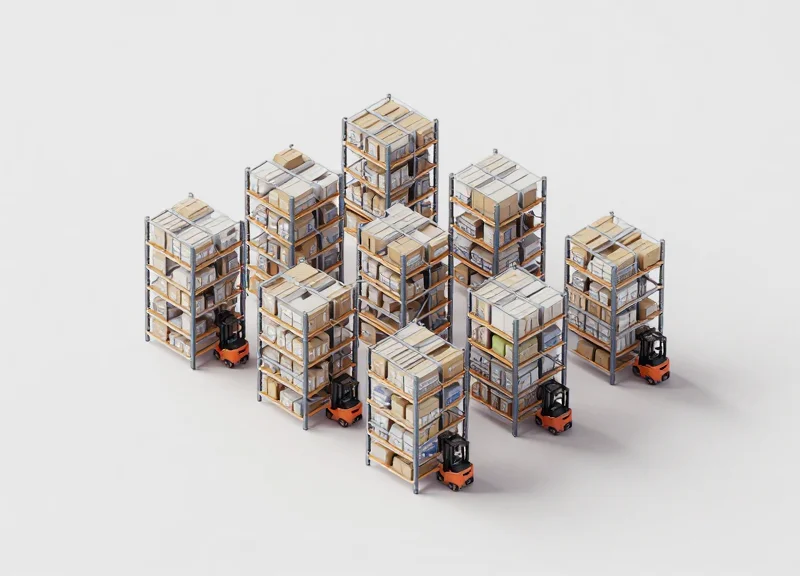
High-density storage environments have historically been the 'final frontier' for RFID adoption due to signal interference and the high probability of 'cross-reads'—where a reader unintentionally captures data from adjacent pallets. In 2026, the transition from manual scanning to automated forklift RFID is made possible by sophisticated spatial awareness. By combining directional beamforming antennas with edge-computing algorithms, modern forklifts can isolate the specific tag directly in front of the forks, effectively ignoring thousands of surrounding tags in a crowded rack system.
| Challenge | Legacy RFID Limitations | 2026 Next-Gen RFID Solution |
|---|---|---|
| Cross-Reading | Reads tags on neighboring racks or behind the forklift. | Spatial Filtering & Phase-Based Ranging (AoA). |
| Metal Interference | Signal reflection (multipath) causes data corruption. | Adaptive Beamforming & Circular Polarization. |
| Liquid Absorption | RF signals are absorbed, leading to missed reads. | High-Sensitivity Chips (Moisture-Resilient Tags). |
| Data Congestion | Reader 'collision' when multiple forklifts are near. | Dynamic Channel Switching & Listen-Before-Talk. |
The core breakthrough in 2026 is the implementation of Synthetic Aperture RFID (SAR). As the forklift moves, the onboard system calculates the change in the tag's signal phase relative to the vehicle's velocity. This allows the system to build a sub-centimeter accurate map of tag locations in real-time. Even in metal-heavy environments, such as automotive parts warehouses, the software can distinguish between a direct signal from a pallet and a 'ghost' reflection off a steel beam.
How does the system prevent reading tags on the rack behind the target?
Next-gen systems use 'Received Signal Strength Indicator' (RSSI) thresholds combined with Time-of-Flight (ToF) data. If a signal's return time or strength doesn't match the physical distance of the forklift's tines, the data is discarded as a background read.
Can these forklifts handle 'liquid-rich' goods like beverages or chemicals?
Yes. By utilizing ultra-high-sensitivity silicon and 'flag' tag designs that create a small air gap between the liquid and the antenna, modern RFID systems achieve 99.9% read rates even in challenging environments.
Is the hardware durable enough for heavy industrial use?
2026 hardware is typically IP67 rated and integrated directly into the carriage or load backrest, protecting antennas from mechanical impact while maintaining a clear line of sight to the pallet.
Expert Tip: To maximize accuracy in high-density zones, implement 'Direction of Arrival' (DoA) logic. This allows the forklift to ignore any tag that isn't moving in perfect synchronization with the vehicle's own telemetry data. If the forklift moves forward but the tag's relative position remains static, the system correctly identifies it as 'stationary rack stock' and excludes it from the current transaction log. This level of 'computational vision' is what finally makes manual scanning obsolete.
Integration Synergy: Connecting RFID Forklifts with WMS and ESL
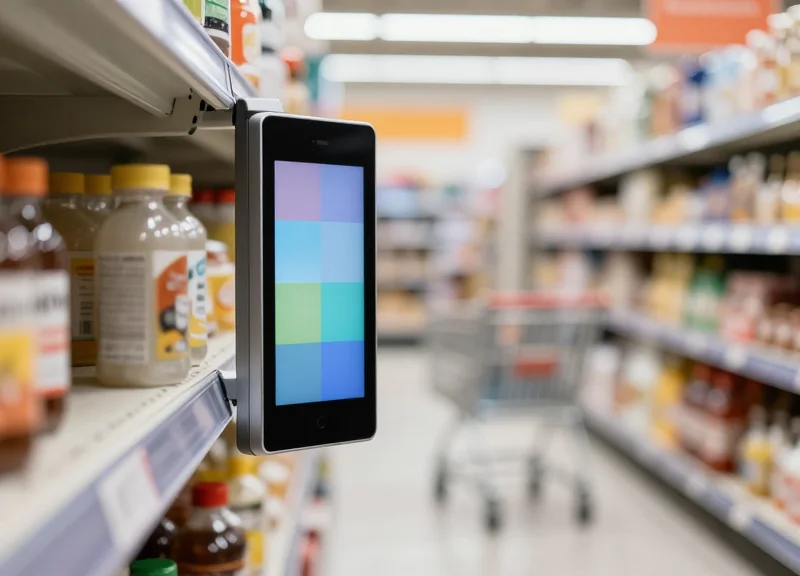
Integration synergy in modern logistics is the seamless convergence of mobile data capture, centralized intelligence, and edge display technologies. By connecting next-gen RFID forklifts directly to Warehouse Management Systems (WMS) and Electronic Shelf Labels (ESL), enterprises create a 'living' inventory map where a physical pallet movement by a forklift automatically triggers a database update in the WMS and an immediate visual status change on the shelf. This eliminates the 'data lag' inherent in manual scanning and ensures that the digital twin of the warehouse is perfectly synchronized with physical reality at all times.
The true power of this ecosystem lies in the closed-loop feedback. When an RFID forklift picks a pallet, the onboard system validates the SKU against the WMS dispatch order. Simultaneously, the WMS pushes an update via an IoT gateway to the ESL on the rack, which can change its display to reflect 'Depleted,' 'Reserved,' or update the remaining stock count in real-time. This creates a highly visible, paperless environment where workers and machines operate on a single source of truth.
| Feature | Manual Scanning (Legacy) | Integrated RFID + WMS + ESL (2026 Standard) |
|---|---|---|
| Data Update Speed | Delayed (Batch processing/manual sync) | Instantaneous (Real-time IoT stream) |
| Visual Confirmation | Paper labels or handheld screens | Dynamic ESL indicators at the rack |
| WMS Accuracy | 92-95% (Subject to human error) | 99.9% (Automated verification) |
| Operational Visibility | Reactive (Hindsight) | Predictive (Live Digital Twin) |
Expert Insight: The 'Digital Twin Pulse' In 2026, the industry is moving beyond mere 'tracking' to what I call the 'Digital Twin Pulse.' In this setup, the ESL isn't just a price tag; it acts as the UI for the warehouse floor. By leveraging the forklift’s RFID reader as a mobile gateway, companies can verify the health of ESL batteries and the accuracy of shelf data simply by having the forklift drive past the aisle. This turns every daily operational movement into a passive audit, effectively eliminating the need for annual wall-to-wall physical counts.
- API Handshake: The RFID forklift transmits pallet IDs and location coordinates to the WMS via RESTful APIs or MQTT protocols.
- Logic Processing: The WMS validates the transaction against the current inventory logic and updates the database.
- Edge Update: The WMS triggers the ESL gateway to refresh the digital display at the specific bin location, changing LED colors for picking guidance or updating stock numbers.
- Conflict Resolution: If a forklift places a pallet in the wrong slot, the system detects the mismatch between the RFID tag and the ESL's registered location, immediately alerting the driver via the onboard terminal.
What is the typical latency between a forklift pick and an ESL update?
With modern 5G or Wi-Fi 6 connectivity, the end-to-end latency—from RFID read to the ESL display refresh—is typically under 2 seconds, providing virtually real-time feedback.
Do I need to replace my existing WMS to achieve this integration?
Not necessarily. Most modern WMS platforms support the middleware required to ingest RFID data. The key is ensuring your WMS has open APIs and the ability to handle high-frequency data streams.
Can ESLs help in 'Dark Warehouses'?
Absolutely. ESLs with high-visibility LED flash features allow RFID forklifts to identify the correct rack from a distance even in low-light environments, further accelerating picking speeds.
Safety and Compliance in the Autonomous Era
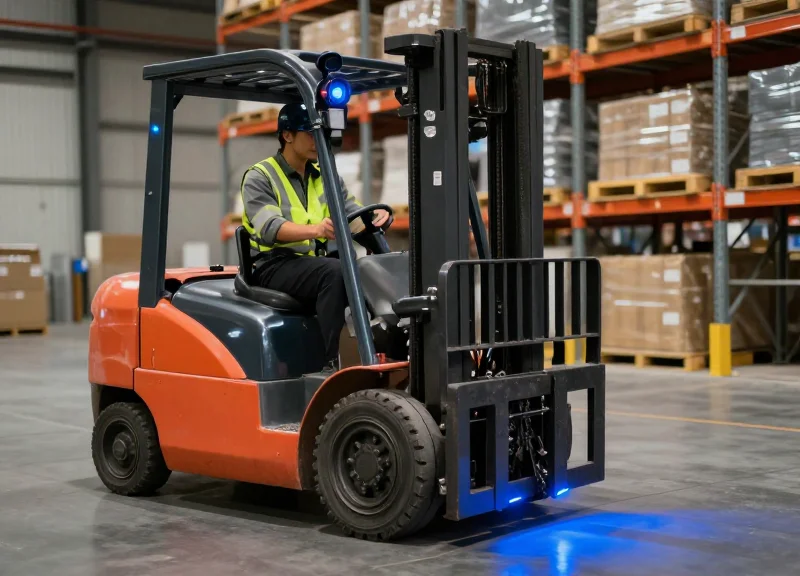
Safety and compliance in the autonomous era are defined by a fundamental shift from reactive incident reporting to proactive risk mitigation through 'Digital Geofencing.' In 2026, next-gen RFID forklifts act as mobile compliance officers, automatically validating that operators are certified for specific loads and that hazardous or temperature-sensitive goods are stored strictly within authorized safety zones. By removing the fallibility of manual scanning, facilities can achieve a 'zero-drift' compliance state where the physical location of inventory always matches its digital mandate.
| Compliance Metric | Manual Barcode Process | Autonomous RFID System |
|---|---|---|
| Audit Accuracy | 60-80% (Subject to human error/lag) | 99.9% Real-time verifiable logs |
| Zone Enforcement | Visual checks only; high risk of error | Automatic alerts/system lock if zone mismatch |
| Safety Documentation | Paper-based or manual data entry | Automated digital twin timestamping |
| Hazardous Materials | Relies on worker memory/labels | Active RFID alerts for restricted proximity |
One of the most significant advantages of this transition is the 'Invisible Guardrail' effect. When an RFID-enabled forklift approaches a restricted area or attempts to pick a pallet containing incompatible materials (such as specific chemicals that cannot be stored together), the system can communicate directly with the vehicle's onboard computer to throttle speed or disable lifting mechanisms. This level of automated intervention is impossible with legacy barcode systems which only provide data after a scan is performed.
How does RFID ensure OSHA compliance in 2026?
RFID systems provide a continuous audit trail that proves equipment was inspected and that operators remained within safe parameters, making OSHA reporting instantaneous and indisputable.
Can RFID forklifts prevent 'wrong-zone' storage errors?
Yes, by using spatial-aware RFID algorithms, the system triggers an immediate alert if a forklift enters a zone with a product that does not meet the safety or environmental requirements of that specific area.
What happens during a product recall?
The system identifies the exact location of every affected tag within seconds, allowing for targeted isolation rather than a full facility shutdown, which is critical for compliance with FDA and ISO standards.
Expert Insight: The 'Digital Twin of Safety' is the ultimate 2026 differentiator. By integrating RFID data with a warehouse’s digital twin, safety managers can simulate traffic patterns and hazard scenarios based on real historical data. This allows firms to redesign floor plans to minimize forklift-pedestrian interactions before a single accident occurs. Moving forward, compliance is no longer a checklist; it is a live, streaming data asset that protects both the workforce and the bottom line.
Strategic Implementation: How to Transition from Manual to RFID
Transitioning from manual barcode scanning to RFID-enabled forklifts is a strategic migration that involves replacing 'point-and-click' labor with automated, passive data capture. The most effective implementation follows a 'Phased Hybridization' model: first identifying signal-friendly zones, then retrofitting a subset of the fleet to work alongside manual scanners, and finally integrating the RFID middleware into the WMS for a full-link automated ecosystem. This approach eliminates the risk of system shock and ensures that 100% data accuracy is maintained during the switch.
| Implementation Phase | Primary Objective | Key Milestone |
|---|---|---|
| Phase 1: Environment Audit | Map RF interference and tag placement | Signal 'Heat Map' Completion |
| Phase 2: Hybrid Pilot | Equip 10% of fleet with RFID readers | Validation of 'No-Scan' workflow |
| Phase 3: WMS Integration | Real-time data sync with warehouse software | API latency under 100ms |
| Phase 4: Full Deployment | Total removal of manual handheld scanners | 99.9% Autonomous Visibility |
- The RF Site Survey: Before purchasing hardware, conduct a radio frequency (RF) audit to identify metal racking interference or high-moisture zones that might require specialized 'on-metal' tags or high-gain antennas.
- Hardware Retrofitting: Install ruggedized RFID readers and circular-polarized antennas on the forklift carriage. Ensure the reader is powered by the forklift battery with a voltage stabilizer to prevent data loss during engine ignition.
- Middleware Logic Configuration: Configure 'Read-Zone' logic to ensure the forklift only records the pallet it is currently carrying, ignoring adjacent pallets on racks (cross-reading).
- The Parallel Run: Operate both manual scanning and RFID for a 30-day window. Compare the logs to identify any missed reads before decommissioning the old handheld units.
Expert Tip: The 80/20 RFID Pareto Strategy. In my two decades of Silicon Valley logistics consulting, I've found that companies see the fastest ROI by implementing RFID only on the 'High-Velocity' 20% of SKUs that move 80% of the time. Don't try to tag everything at once; automate the high-traffic lanes first to prove the value to stakeholders while keeping costs manageable.
Will RFID interfere with existing Wi-Fi networks?
Modern RFID systems operate on the UHF band (860-960 MHz), which is separate from standard 2.4GHz or 5GHz Wi-Fi frequencies, ensuring zero interference.
How long does the physical forklift conversion take?
A standard professional retrofit takes approximately 4 to 6 hours per forklift, including mounting, wiring, and initial signal calibration.
Is employee retraining difficult?
On the contrary, employees usually prefer RFID as it removes the physical strain of exiting the cabin to scan pallets, leading to higher job satisfaction and lower turnover.
Future Outlook: The Role of RFID in the 2026 Global Supply Chain
By 2026, the global supply chain will transition from reactive monitoring to a 'Self-Healing Warehouse' model, where next-gen RFID forklifts act as the primary data orchestrators. In this future outlook, RFID is no longer just a tool for tracking movement; it is the fundamental sensory layer for autonomous agents. These smart forklifts will utilize continuous, passive scanning to feed real-time digital twins, allowing AI controllers to detect, diagnose, and resolve inventory discrepancies—such as misplaced pallets or expiring stock—without a single human touchpoint.
| Feature | Standard Logistics (Pre-2024) | The 2026 RFID-Autonomous Standard |
|---|---|---|
| Data Acquisition | Manual barcode triggers | Continuous, ubiquitous RFID sensing |
| Inventory Accuracy | 92-95% (Cycle count dependent) | 99.9% (Real-time autonomous correction) |
| Forklift Role | Material transportation only | Edge-computing data hub & safety node |
| Supply Chain Visibility | Fragmented checkpoints | Full-link, 'glass-pipe' transparency |
Unique Insight: The Rise of the 'Cognitive Warehouse' Edge. Unlike current systems that send bulk data to a central cloud, 2026 RFID forklifts will utilize 'Edge AI' to process tag data locally on the vehicle. This allows the forklift to make split-second decisions—such as refusing to drop a pallet in the wrong zone—even if the warehouse Wi-Fi fluctuates. We call this 'Cognitive Logistics,' where the hardware understands the context of the inventory it carries.
- Phase 1: Ubiquitous Tagging: Raw material suppliers and manufacturers move to 100% item-level RFID tagging, eliminating the need for manual data entry at any point in the lifecycle.
- Phase 2: Swarm Intelligence Integration: RFID forklifts communicate with each other (V2V) to optimize traffic flow and storage density based on real-time RFID-mapped inventory levels.
- Phase 3: Autonomous Exception Handling: The system identifies a 'phantom' inventory item via RFID signals and autonomously dispatches a forklift to verify and correct the location.
Will RFID forklifts eventually eliminate the need for warehouse managers?
No, but the role will shift from operational oversight to strategic optimization. Managers will focus on fleet performance analytics and system configuration rather than manual error correction.
How does this future outlook impact global ESG goals?
RFID-driven autonomy significantly reduces waste by preventing product expiration and optimizing forklift travel paths, leading to a 15-20% reduction in carbon footprints for high-volume hubs.
Is the infrastructure ready for 100% autonomous RFID hubs?
By 2026, the maturity of 5G-Advanced and 6G testing, combined with cheaper high-memory RFID chips, will make this level of integration commercially viable for mid-to-large enterprises.