For decades, the humble barcode has been the backbone of inventory management. However, as we approach 2026, the demands of Industry 4.0—characterized by hyper-connectivity, IoT integration, and autonomous systems—have pushed traditional line-of-sight scanning to its breaking point. Radio Frequency Identification (RFID) has emerged not just as a replacement, but as the core catalyst enabling the next generation of smart manufacturing. In this deep dive, we explore how RFID technology is dismantling the bottlenecks of legacy systems to drive the future of industrial efficiency.
The Evolution of Data Capture: Why Barcodes Are Falling Behind
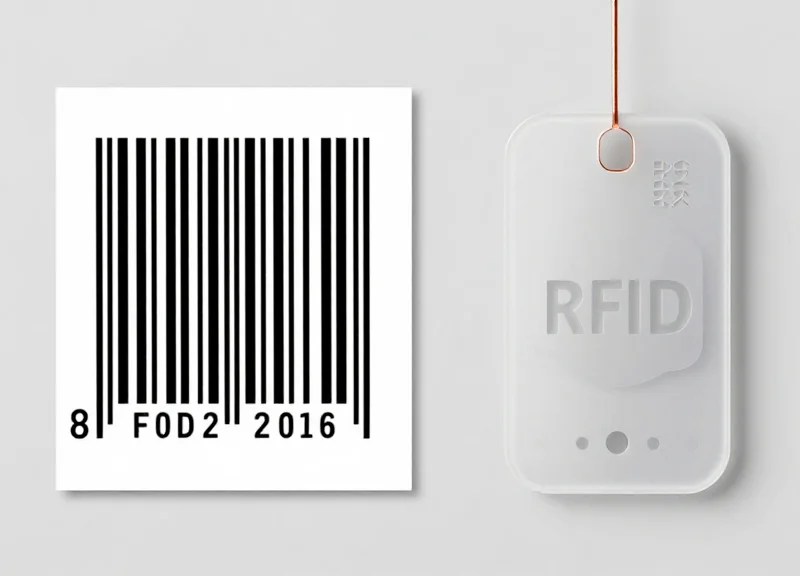
In the landscape of Industry 4.0, the 'barcode bottleneck' refers to the physical limitation of manual, line-of-sight data capture in environments requiring microsecond decision-making. As manufacturers transition toward 2026 smart manufacturing standards, barcodes are falling behind because they represent 'passive' data capture in an 'active' world. They require human intervention or precise robotic orientation to function, which creates significant latency in the digital feedback loops necessary for autonomous production. In high-speed industrial settings, the transition from barcodes to RFID isn't just an upgrade; it is a fundamental shift from reactive inventory management to proactive, real-time asset orchestration.
| Feature | Traditional Barcodes | Industry 4.0 RFID | |||
|---|---|---|---|---|---|
| Scan Requirement | Manual Line-of-Sight | Automated, No Line-of-Sight | |||
| Read Rate | Single Item Scanning | Bulk Reading (1,000+ tags/sec) | Durability | Low (Subject to dirt/tears) | High (Resistant to heat/chemicals) |
| Data Interaction | Read-Only | Read/Write Capability | |||
| Human Labor | High Dependency | Low/No Dependency |
Why is the 'Line-of-Sight' requirement failing modern factories?
In 2026 smart factories, goods move through automated conveyors and robotic sorting at high velocities. Barcodes require an optical path, meaning if a label is smudged, tilted, or hidden, the process stops. RFID eliminates this by using radio waves that penetrate packaging and debris, ensuring 100% visibility without stopping the line.
How does barcode data capacity limit AI integration?
Barcodes typically store a simple ID string. RFID tags can store comprehensive 'pedigree' data, including manufacturing timestamps, batch quality metrics, and maintenance history. Without this localized data on the item itself, AI-driven edge computing cannot make autonomous decisions at the machine level.
Can barcodes support Digital Twin synchronization?
Rarely. Digital Twins require real-time updates to be accurate. Barcodes provide 'point-in-time' snapshots only when scanned. RFID provides a continuous stream of location and status data, ensuring the digital twin is a living reflection of the physical floor.
Expert Insight: The Data Velocity Gap. The most significant hidden cost of barcodes in 2026 is not the labor, but the 'Data Velocity Gap.' In a world of predictive maintenance and just-in-sequence (JIS) manufacturing, a 30-second delay in data entry is an eternity. RFID closes this gap by providing 'presence-based' data—knowing an item is there simply because it exists in the field—which is the only way to feed the real-time algorithms that drive modern smart manufacturing.
The Core Pillars of Industry 4.0: Where RFID Fits In

In the framework of Industry 4.0, Radio Frequency Identification (RFID) functions as the critical sensory nervous system that bridges the gap between physical hardware and digital intelligence. Unlike traditional systems that require human intervention, RFID provides the automated, real-time data stream necessary to power Cyber-Physical Systems (CPS), the Internet of Things (IoT), and Big Data analytics. By transforming passive objects into 'smart assets' that communicate their identity, location, and history, RFID enables the decentralized decision-making and high-level transparency that define modern smart manufacturing.
| Industry 4.0 Pillar | RFID Integration Role | Operational Impact |
|---|---|---|
| Interoperability | Connects machines, sensors, and products via a universal ID. | Seamless communication across the entire value chain. |
| Information Transparency | Feeds real-time location and status data into Digital Twins. | Provides a high-fidelity virtual map of physical operations. |
| Technical Assistance | Automates data collection for AI-driven maintenance alerts. | Reduces human error and speeds up bottleneck resolution. |
| Decentralized Decisions | Items 'tell' machines how they should be processed. | Enables autonomous production lines and custom manufacturing. |
The true catalyst effect of RFID lies in its contribution to Cyber-Physical Systems (CPS). In a smart factory, a product is no longer a silent passenger on a conveyor belt; it is a data-carrying entity. As an item moves through production, RFID tags updated by fixed readers allow the product to 'negotiate' its own path. This eliminates the 'Data Shadow'—the lag between a physical event and its digital record—which has historically been the biggest barrier to achieving true 2026-standard smart manufacturing. When your ERP system knows what is happening the exact millisecond it happens, your Big Data models shift from reactive reporting to predictive orchestration.
How does RFID differ from standard IoT sensors in Industry 4.0?
While IoT sensors often measure environmental variables (temp, humidity), RFID provides the unique identity and 'State Integrity' of the object itself. It is the cost-effective link that allows millions of individual components to join the IoT network without requiring expensive batteries for every unit.
What is the 'Semantic Edge' in 2026 manufacturing?
Expert Insight: We are moving toward 'Semantic Connectivity' where RFID tags don't just store an ID, but hold localized logic. By 2026, tags with expanded user memory will store build-instructions locally, allowing machines to process items even if the central cloud connection is momentarily interrupted.
Does RFID replace the need for Big Data?
No, RFID is the primary fuel for Big Data. Without the granular, high-velocity data points provided by RFID, Big Data analytics in manufacturing often suffer from 'Garbage In, Garbage Out'—RFID ensures the input is accurate, automated, and comprehensive.
Real-Time Visibility and the Rise of the 'Digital Twin'

A Digital Twin is a virtual representation that serves as the real-time digital counterpart of a physical object or process. In the context of Industry 4.0, RFID technology acts as the essential 'nervous system' that feeds these digital models with continuous, high-fidelity data. While barcodes provide a snapshot, RFID enables a live stream of telemetry—location, status, and history—allowing manufacturers to synchronize their digital simulations with the actual reality of the factory floor with zero human intervention.
As we approach 2026, the industry is moving away from 'Static Twins' (which rely on historical data) toward 'Dynamic Orchestration.' This shift requires every pallet, tool, and component to have a unique digital identity that updates its state automatically as it moves through the production cycle. Without the automated data capture of RFID, a Digital Twin is merely a map of where things should be; with RFID, it becomes a mirror of where they actually are, enabling predictive analytics and autonomous decision-making.
| Feature | Legacy Digital Twin (Manual/Barcode) | Industry 4.0 Twin (RFID-Enabled) |
|---|---|---|
| Data Latency | High (Batch updates) | Real-Time (Millisecond updates) |
| Accuracy | Subject to human error | Automated; 99.9% precision |
| Visibility | Point-to-point scanning | Continuous 'in-transit' tracking |
| Maintenance | Reactive (Fixed schedules) | Predictive (Based on actual usage) |
Expert Insight: 'Contextual Fidelity' is the next frontier. By 2026, the most competitive manufacturers will use RFID not just to track location, but to record environmental exposure—such as temperature or vibration—directly into the Digital Twin's ledger. This creates a 'Product Birth Certificate' that ensures quality compliance and material integrity throughout the entire lifecycle of a part.
Does a Digital Twin require constant RFID connectivity?
While the twin exists in the cloud or edge server, it requires frequent 'heartbeat' updates from RFID readers to maintain accuracy. Gaps in data lead to 'twin drift,' where the virtual model deviates from the physical reality.
How does RFID improve predictive maintenance in Digital Twins?
By tracking the exact number of cycles a tool or machine part has undergone via RFID tags, the Digital Twin can accurately predict wear and tear, scheduling maintenance only when actually needed rather than on a generic timeline.
Can RFID-enabled Digital Twins reduce WIP (Work-in-Process) inventory?
Yes. Real-time visibility allows for 'Just-in-Sequence' manufacturing, reducing the need for safety stock because the system knows the exact location and arrival time of every sub-component.
2026 Smart Manufacturing Trends: The Shift Toward Autonomous Supply Chains
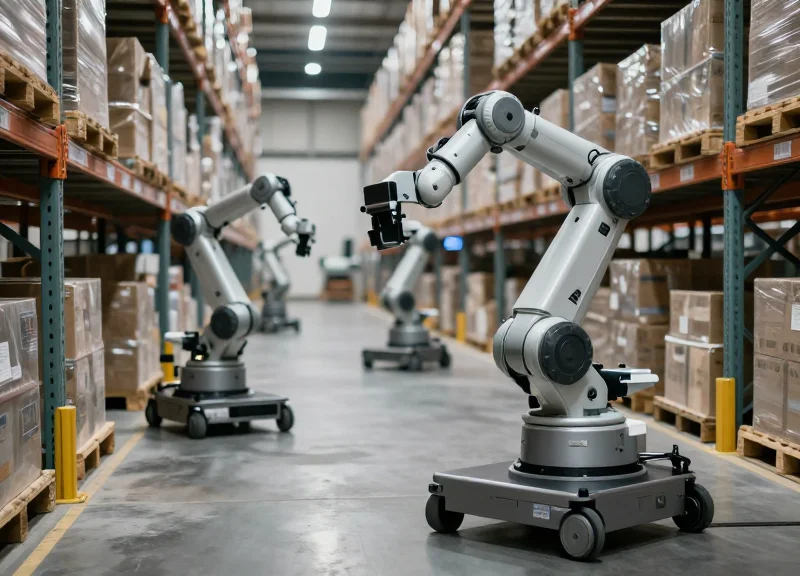
By 2026, the pinnacle of Smart Manufacturing will be the 'Autonomous Supply Chain'—a self-correcting ecosystem where Ultra-High-Frequency (UHF) RFID serves as the nervous system. Unlike traditional automation, which follows pre-programmed scripts, autonomous supply chains leverage sensor fusion and real-time RFID data to make independent decisions, such as rerouting raw materials during a delay or adjusting production schedules based on actual inventory velocity without human intervention.
The shift is being fueled by the plummeting cost of UHF RFID tags and the maturation of Edge AI. In this 2026 model, the factory no longer 'asks' where a pallet is; it 'knows' and acts. When RFID data is combined with other sensory inputs—like humidity, vibration, or temperature—the resulting 'Sensor Fusion' allows the supply chain to predict failures before they happen, moving beyond reactive maintenance into the realm of prescriptive logistics.
| Feature | Automated Supply Chain (Current) | Autonomous Supply Chain (2026 Trend) |
|---|---|---|
| Decision Making | Human-led, based on system alerts. | AI-led, self-executing corrective actions. |
| Data Capture | Intermittent (manual scans or fixed gates). | Continuous (UHF RFID mesh networks). |
| Inventory Control | Periodic reconciliation/cycle counting. | Zero-touch, real-time perpetual inventory. |
| Response Time | Minutes to hours (reactive). | Milliseconds (proactive/prescriptive). |
Expert Insight: The 'Self-Healing' Logistics Loop. A unique trend emerging for 2026 is 'Self-Healing Logistics.' This occurs when an RFID-tagged component is identified as defective at a receiving dock; the system instantly triggers a replacement order from the supplier, updates the production floor’s digital twin to bypass that unit, and schedules a return carrier—all before a floor manager even opens their dashboard. This level of autonomy eliminates the 'information lag' that currently costs manufacturers billions in downtime.
How does UHF RFID facilitate autonomous decisions?
UHF RFID allows for long-range, bulk reading of thousands of items simultaneously. By providing a 100% accurate, real-time data stream, AI algorithms can trust the input enough to execute high-stakes decisions without human verification.
What is the role of sensor fusion in 2026 manufacturing?
Sensor fusion combines RFID identity data with environmental sensors (IoT). For example, knowing an item's identity (RFID) and its health (temperature sensor) allows the system to autonomously discard spoiled goods before they enter the assembly line.
Will autonomous supply chains replace human workers?
The goal is not total replacement but 'cognitive offloading.' Humans will shift from monitoring data entry to managing high-level strategy and system optimization, while the autonomous system handles the mundane task of tracking and basic troubleshooting.
Enhancing Sustainable Manufacturing with RFID Traceability

In the context of Industry 4.0, sustainable manufacturing is no longer a peripheral corporate social responsibility (CSR) goal; it is a core operational requirement. RFID traceability acts as the 'digital backbone' for sustainability by providing an automated, immutable record of a product's journey—from raw material extraction to end-of-life recycling. By 2026, as global regulations like the EU's Digital Product Passport (DPP) take effect, RFID will be the primary catalyst for ESG (Environmental, Social, and Governance) compliance, allowing manufacturers to move beyond estimated impact models to real-time, item-level environmental accounting.
| Sustainability Pillar | Traditional (Barcode) Limitations | RFID-Driven Impact (2026 Standard) |
|---|---|---|
| Waste Reduction | Excess inventory due to poor visibility lead to high scrap rates. | Inventory precision (99%+) eliminates overproduction and perishability waste. |
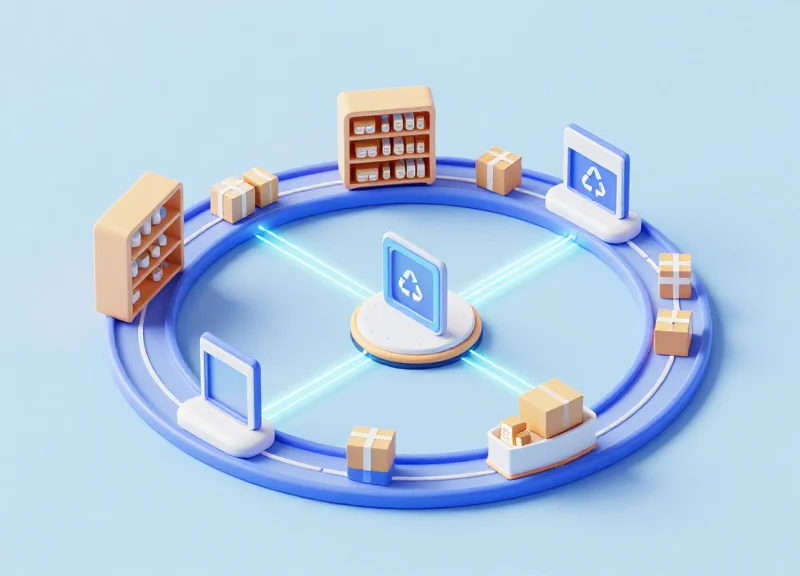
| Circular Economy | Manual sorting of returned goods is slow and error-prone. | Automated sorting at recycling centers via 'Digital Birth Certificates'. |
| Carbon Footprint | Calculated using industry averages and static data. | Real-time tracking of energy-intensive processes for precise Scope 3 reporting. |
One of the most significant shifts we are seeing in Silicon Valley's tech-manufacturing nexus is the move toward 'Cradle-to-Cradle' automation. Unlike traditional methods where data stops at the point of sale, RFID tags remain embedded in or attached to products, serving as a 'return ticket' for recycling. Expert Tip: To future-proof your 2026 strategy, look into 'Eco-tags'—printed, paper-based RFID antennas that are fully recyclable, eliminating the irony of using plastic or metal-heavy sensors to track green initiatives.
How does RFID support the 2026 Digital Product Passport (DPP) mandates?
The DPP requires products to carry a data carrier that provides information on durability, reparability, and recycled content. RFID is the only technology capable of providing this data at scale without requiring line-of-sight, allowing bulk processing of returns and repairs.
Can RFID traceability reduce a factory's carbon footprint?
Yes. By optimizing logistics and reducing 'ghost assets' (lost tools/containers), RFID minimizes the unnecessary transportation and manufacturing of replacement parts, directly lowering operational carbon emissions.
Does item-level tracking improve ethical sourcing?
Absolutely. By tagging raw materials at the source, manufacturers can create an unbroken chain of custody, ensuring that components are not swapped for cheaper, non-compliant alternatives during the complex manufacturing process.
Solving the 'Cost vs. Value' Equation for RFID Migration
The transition from legacy barcodes to RFID is no longer a matter of 'if' but 'when,' driven by a fundamental shift in the Cost-Value Equation. While the initial capital expenditure for RFID hardware was once a barrier for Small and Medium Enterprises (SMEs), the 'Tipping Point of 2026' has arrived: the price of passive UHF tags has plummeted by nearly 80% over the last decade, while the cost of manual labor has risen significantly. Solving the equation requires moving beyond looking at 'cost-per-tag' and instead calculating 'cost-per-insight,' where the elimination of manual scanning and human error creates a self-funding ROI model within 12 to 18 months.
| Metric | Legacy Barcoding | Modern RFID (2026 Standards) |
|---|---|---|
| Data Capture Speed | 1-2 items per second (Line-of-Sight) | Up to 1,000 items per second (No Line-of-Sight) |
| Labor Intensity | High (Requires manual handling) | Near-Zero (Autonomous portal/overhead reads) |
| Inventory Accuracy | Typically 65% - 75% | Consistently 99%+ |
| Long-term TCO | Increasing (Labor dependent) | Decreasing (Economies of scale) |
Expert Insight: The 'Shadow Inventory Tax'. Most manufacturers underestimate the true cost of barcode-based systems. We call this the 'Shadow Inventory Tax'—the hidden capital tied up in safety stock because you don't trust your inventory data. RFID eliminates this tax. By providing real-time visibility, companies can typically reduce safety stock levels by 15-20%, instantly freeing up cash flow that often covers the entire cost of the RFID infrastructure in the first year alone. In 2026, the competitive advantage belongs to those who view RFID not as a hardware expense, but as a strategic financial instrument.
Is RFID migration still too expensive for smaller manufacturing plants?
No. The rise of 'Cloud-RFID' and SaaS-based middleware has shifted the financial burden from CapEx to OpEx. Smaller plants can now implement 'lite' versions using handheld readers and mobile apps, avoiding the massive upfront costs of fixed industrial portals.
What is the primary driver of ROI in smart manufacturing?
Labor reduction is the primary driver. By automating the receiving, shipping, and work-in-progress (WIP) tracking processes, facilities can reallocate human workers from low-value scanning tasks to high-value technical roles, effectively increasing throughput without increasing headcount.
Does environmental interference affect the value proposition?
While metal and liquids previously posed challenges, 2026-grade 'on-metal' tags and advanced signal processing have largely neutralized these issues, ensuring that the reliability of the data (and thus the value) remains high even in harsh industrial environments.
Integration Best Practices: Bridging RFID with ERP and ESL Systems
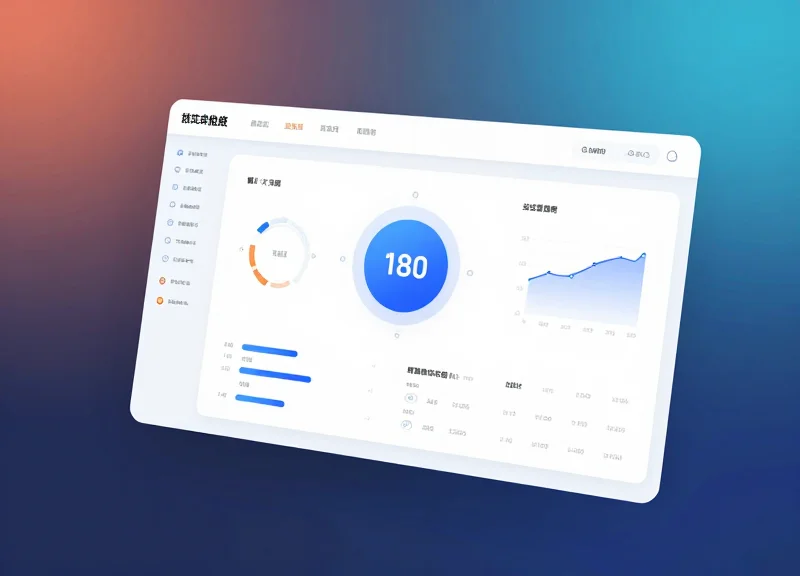
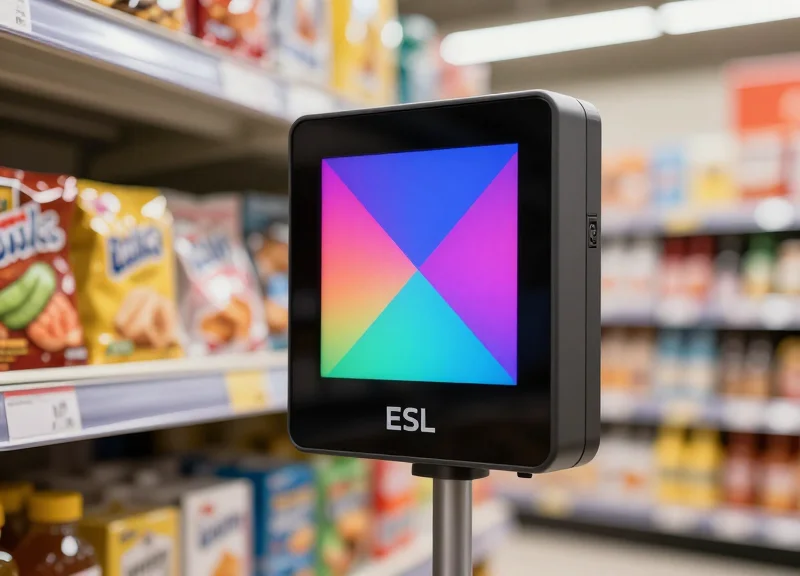
To realize the full potential of Industry 4.0, RFID must not exist in a vacuum. Effective integration involves creating a seamless 'data bridge' where RFID hardware captures movement at the edge, Electronic Shelf Labels (ESL) provide visual confirmation and dynamic instructions on the floor, and the ERP serves as the centralized 'source of truth.' By 2026, the benchmark for success is no longer just data collection, but the bi-directional flow of information where ERP updates trigger ESL changes, and RFID events automatically reconcile ERP inventory levels.
- Implement Edge-Based Data Filtering: Avoid 'data floods' by using middleware or smart readers to filter redundant RFID pings at the source. Only transmit meaningful state changes (e.g., 'Item Departed Area A') to the ERP to maintain system performance.
- Leverage Unified APIs for ESL Synchronization: Utilize RESTful APIs or MQTT protocols to link RFID tag events with ESL displays. For example, when an RFID reader detects low stock in a bin, the ERP can automatically push a 'Restock Needed' alert to the corresponding DragonGuardGroup ESL.
- Standardize Data Formats (GS1 EPCIS): Ensure all integrated systems speak the same language by adopting the EPC Information Services (EPCIS) standard. This allows for interoperability between different hardware vendors and legacy ERP software.
- Establish Real-Time Validation Loops: Program the system to cross-reference RFID scans against ERP work orders instantly. If a worker picks the wrong item, the integrated ESL can flash a red LED alert, providing immediate corrective feedback.
| Feature | RFID System Role | ESL System Role | ERP System Role |
|---|---|---|---|
| Data Direction | Inbound (Captures Physical Action) | Outbound (Visualizes Status) | Centralized (Processes Logic) |
| Primary Value | Automated Data Entry | Human-Readable Interface | Inventory & Financial Record |
| Update Frequency | Millisecond (Event-Driven) | Real-Time (Triggered) | Batch or Real-Time Synchronized |
Expert Insight: The 2026 'Zero-Latency' Strategy. Leading manufacturers are now moving away from traditional batch processing. By utilizing 'Event-Driven Architecture' (EDA), an RFID scan doesn't just wait for the next ERP sync; it triggers a micro-service that updates the ESL and the ERP simultaneously. This 'Edge-to-Enterprise' shortcut reduces the window for inventory errors to near zero and is the primary differentiator for high-throughput smart factories.
Can RFID and ESL work without a central ERP?
Technically yes, using a localized middleware, but for Industry 4.0 scalability, an ERP is essential to link production data with procurement and logistics.
What is the biggest challenge in RFID-ERP integration?
Data latency and 'ghost reads.' Proper antenna shielding and sophisticated middleware logic are required to ensure only accurate data reaches the ERP.
How does DragonGuardGroup simplify this process?
By providing hardware that supports open communication standards, making it easier to bridge the gap between physical tags, visual labels, and enterprise software suites.
Cybersecurity and Data Integrity in the RFID Ecosystem
As manufacturers transition from line-of-sight barcodes to wireless RFID environments, the security perimeter shifts from the physical tag to the invisible air interface. In a Smart Manufacturing 2026 context, RFID cybersecurity is the practice of protecting tag-to-reader transmissions and backend data integration from unauthorized interception, cloning, and malicious data injection. Because RFID tags broadcast data via radio waves, they are theoretically susceptible to 'sniffing' or industrial espionage if not properly encrypted. Ensuring data integrity means that the information received by your ERP system is exactly what was recorded on the factory floor, free from corruption or tampering by external actors.
| Security Feature | Legacy Barcodes | 2026 Smart RFID Standards |
|---|---|---|
| Data Access | Public/Visual (Anyone can scan) | Encrypted Air Interface (AES-128/256) |
| Authentication | None (Easily photocopied) | Cryptographic Handshakes (Gen2v2) |
| Data Alteration | Impossible (Static) | Read/Write Protection & Locking |
| Anti-Counterfeiting | Low (Visual verification only) | High (UID Tracking & PUF Silicon) |
Unique Industry Insight: The Rise of PUF and AI-Driven Anomaly Detection. By 2026, the 'Gold Standard' for high-value manufacturing is moving beyond simple passwords to Physically Unclonable Functions (PUF). PUF uses the microscopic, random physical variations in each silicon chip to create a unique 'digital fingerprint' that cannot be cloned, even if the manufacturer’s design is stolen. Furthermore, modern RFID readers are now being equipped with edge-AI that monitors signal patterns; if a reader detects an unexpected 'burst' of scans or a tag responding with a mismatched signal strength, the system automatically flags a potential 'relay attack' or unauthorized rogue reader in the facility.
- Implement Gen2v2 Protocol: Ensure all tags and readers support the EPCGlobal Gen2v2 standard, which introduces advanced cryptographic authentication to prevent unauthorized tags from spoofing legitimate inventory.
- Segment the IoT Network: Isolate RFID reader traffic on a dedicated VLAN. This prevents a compromised reader from becoming an entry point into the broader corporate or ERP network.
- Use Kill/Privilege Commands: Utilize the 'Kill' command for items leaving the facility to protect consumer privacy, or use 'Access' passwords to lock specific memory banks on the tag from being overwritten.
Can RFID signals be jammed to disrupt production?
While intentional RF interference (jamming) is possible, modern industrial systems use frequency-hopping spread spectrum (FHSS) technology to switch frequencies rapidly, making them highly resilient to signal noise and localized jamming attempts.
Is data corruption common in high-interference environments?
No. RFID protocols use Cyclic Redundancy Checks (CRC). If the data is distorted by motor noise or metal reflections, the reader will detect the checksum error and request a re-transmission, ensuring only clean data enters the database.
How does RFID prevent industrial espionage?
By encrypting the 'Electronic Product Code' (EPC) and using mutual authentication, an unauthorized reader scanning a pallet would only receive gibberish, preventing competitors from scraping your production volumes or client lists.
Future-Proofing Your Operations: A Checklist for 2026 Readiness
Future-proofing for 2026 smart manufacturing requires transitioning from manual 'point-of-scan' processes to an 'ambient intelligence' environment where RFID tags provide continuous, real-time telemetry across the entire production lifecycle. This shift is no longer optional; as supply chains become more fragmented and demand for traceability increases, the ability to automate data capture without line-of-sight becomes the primary differentiator between agile leaders and stagnant legacy operators. Readiness involves auditing physical environments for radio frequency (RF) interference and ensuring your middleware can handle the 100x increase in data volume compared to traditional barcodes.
| Operational Pillar | Legacy State (Barcodes/Manual) | 2026 Target State (RFID-Enabled) |
|---|---|---|
| Data Capture | Manual, sequential, line-of-sight required. | Automated, bulk reading, no line-of-sight. |
| Asset Visibility | Snapshot-based (last known scan). | Real-time location and status telemetry. |
| Labor Allocation | High overhead for inventory counting. | Zero-touch inventory management. |
| Interoperability | Isolated silos of data. | Seamless integration with ERP, MES, and AI. |
- Phase 1: RF Environmental Audit: Conduct a comprehensive site survey to identify metal interference or 'dead zones.' Professional RF mapping ensures that antenna placement provides 99.9% read accuracy in industrial environments.
- Phase 2: Hybrid Tagging Implementation: Begin with a 'hybrid' approach—printing RFID tags that include 1D/2D barcodes. This ensures backward compatibility while your internal systems transition to fully automated RFID reading.
- Phase 3: Middleware and Edge Integration: Deploy edge computing nodes to filter raw RFID 'pings' before they hit your ERP. This prevents data bloat and ensures only actionable events (e.g., 'Pallet Shipped') are recorded.
- Phase 4: Pilot in a 'Closed-Loop' Process: Test your deployment in a controlled, high-value area like returnable transport items (RTIs) or work-in-progress (WIP) tracking before expanding to the open supply chain.
- Expert Tip: The 'Silicon Valley' Scalability Rule: Don't just buy tags; invest in Gen2V3 ready hardware. By 2026, enhanced security protocols and sensor-integrated tags (measuring temperature/humidity) will be standard. Buying 'cheap' readers today often results in a full hardware refresh by 2027.
- Can RFID work alongside my existing ESL system?: Absolutely. Leading manufacturers are using Electronic Shelf Labels (ESL) to provide visual cues to workers while RFID handles the backend inventory data, creating a unified 'Phygital' workspace.
- What is the biggest roadblock to 2026 readiness?: Data hygiene. RFID captures data so fast that it will expose flaws in your current ERP workflows. Cleaning your master data must happen concurrently with hardware installation.
By following this roadmap, manufacturers can move beyond the experimentation phase and build a resilient infrastructure capable of supporting the next decade of Industry 4.0 innovations. The key is to start with high-impact, low-complexity use cases that provide immediate ROI, such as tool tracking or high-value asset management, creating the internal momentum needed for a full-scale digital transformation.