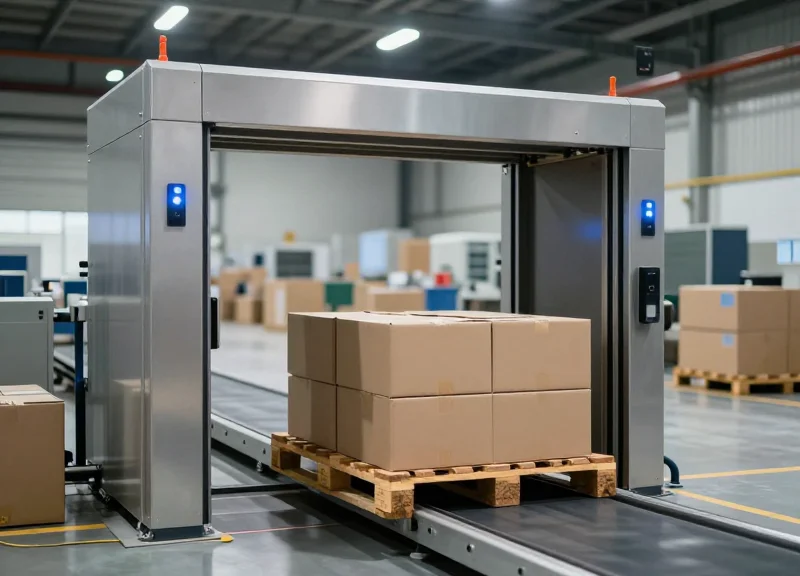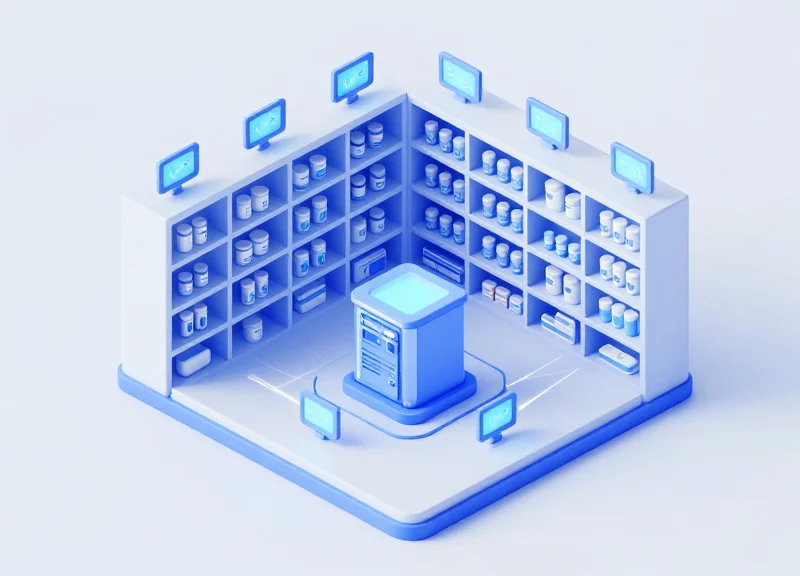
In the fast-paced modern industrial landscape, manual paper-based tracking is no longer just an environmental concern—it is a significant bottleneck to operational efficiency. Traditional workflows often lead to data silos, human errors, and a complete lack of real-time visibility. By transitioning to RFID-driven digital workflows, businesses can eliminate paper waste while achieving 100% visibility over their resources. This guide explores the strategic implementation of RFID technology to streamline processes, enhance accuracy, and drive sustainable growth in a digital-first economy.
The High Cost of Manual Paper-Based Workflows

The high cost of manual paper-based workflows is defined by the cumulative financial and operational burden of physical documentation, which includes direct material expenses, labor-intensive data entry, and the 'Information Decay' caused by data latency. Organizations relying on paper lose approximately 20% to 30% of their annual revenue to process inefficiencies, as manual tracking lacks the real-time visibility required for modern supply chain and asset management.
| Cost Category | Paper-Based Impact | Digital/RFID Impact |
|---|---|---|
| Data Entry Labor | High: Manual transcription required | Negligible: Automated capture |
| Error Rate | Significant: 1-4% human error rate | Near Zero: Automated validation |
| Search Time | Minutes to hours per document | Instantaneous (Seconds) |
| Storage & Space | Physical filing cabinets/offsite storage | Cloud-based/Scalable digital storage |
- Operational Latency: In a paper-driven system, information is 'frozen' in physical transit. By the time a clipboard reaches a manager's desk, the data is often 4 to 24 hours old, preventing proactive decision-making.
- The Error Multiplier: A single typo in a manual log can lead to misallocated resources, inventory shrinkage, and shipping delays that cost thousands of dollars to rectify further down the line.
- Compliance and Audit Risk: Paper records are susceptible to loss, damage, and unauthorized alteration, making regulatory compliance (ISO, HIPAA, GDPR) a logistical nightmare during audits.
Expert Insight: The Information Decay Principle. Having spent two decades optimizing workflows in Silicon Valley, I have observed that the true cost of paper is not the 'dead trees,' but what I call Information Decay. In a manual system, the value of data depreciates exponentially from the moment it is recorded. Every minute that information sits on a physical page rather than in a digital database is a minute where your organization is blind to its own assets, creating a 'Data Latency Tax' that hampers agility.
How much does a lost document actually cost?
Industry research suggests that a lost document costs an average of $122 to $220 in labor hours to recreate, not including the potential cost of the missed business opportunity.
Is the environmental impact of paper really that significant for businesses?
Beyond ethics, the environmental impact carries economic weight. Carbon taxes and corporate ESG requirements make paper waste a direct financial liability for modern enterprises.
Transitioning to Digital: The Power of RFID Technology

Transitioning to a digital workflow requires replacing static, physical documentation with Radio Frequency Identification (RFID) systems that enable automated, non-line-of-sight data capture. Unlike paper-based tracking, RFID uses radio waves to communicate between a tag and a reader, allowing for the instantaneous identification and localization of assets without manual scanning or human intervention. This shift creates a foundation for 100% resource visibility by ensuring that every physical movement is recorded in a digital ledger in real-time.
| Feature | Paper-Based Manual Tracking | Barcode Systems | RFID-Driven Digital Workflows |
|---|---|---|---|
| Data Capture | Manual entry/Handwriting | Manual line-of-sight scan | Automated, bulk reading |
| Visibility | Lagged/Periodic | Snapshot-based | Continuous/Real-time |
| Human Error | Extremely high (10-15%) | Moderate (scanning misses) | Near-zero (<0.1%) |
| Update Speed | Hours or Days | Minutes | Milliseconds |
The true power of RFID in digital transformation lies in its ability to eliminate 'Data Debt.' In traditional systems, there is a constant gap between the physical reality of an item's location and the digital record of it. I call this the 'Silent Twin' effect: an RFID system creates a high-fidelity digital twin of your operations that mirrors physical reality so closely that the need for a paper 'check-and-balance' system becomes obsolete. This isn't just about faster scanning; it is about creating a self-reporting infrastructure where the assets themselves manage the record-keeping.
- Digitizing the Physical Asset: Every resource is assigned a unique Electronic Product Code (EPC) via an RFID tag, turning an anonymous physical object into a smart, trackable data point.
- Automated Trigger Events: As assets pass through RFID portals or reader zones, digital workflows are automatically triggered, such as inventory updates or shipping notifications, without staff intervention.
- Database Synchronization: The captured data is instantly funneled into ERP or WMS systems, ensuring that management sees the same reality on their screens that exists on the warehouse floor.
Can RFID work in environments with high metal or liquid content?
Yes. Modern specialized tags (on-metal tags) and specific frequencies (UHF) are designed to overcome interference, ensuring 100% readability even in harsh industrial settings.
Does RFID eliminate the need for all manual audits?
While it reduces the frequency, it shifts the focus of audits from 'finding things' to 'verifying system health,' significantly reducing labor hours.
How does RFID integrate with existing legacy software?
Most RFID hardware uses middleware that translates raw radio signals into standard API calls or CSV formats compatible with nearly any modern ERP system.
Designing an RFID Workflow for 100% Resource Visibility
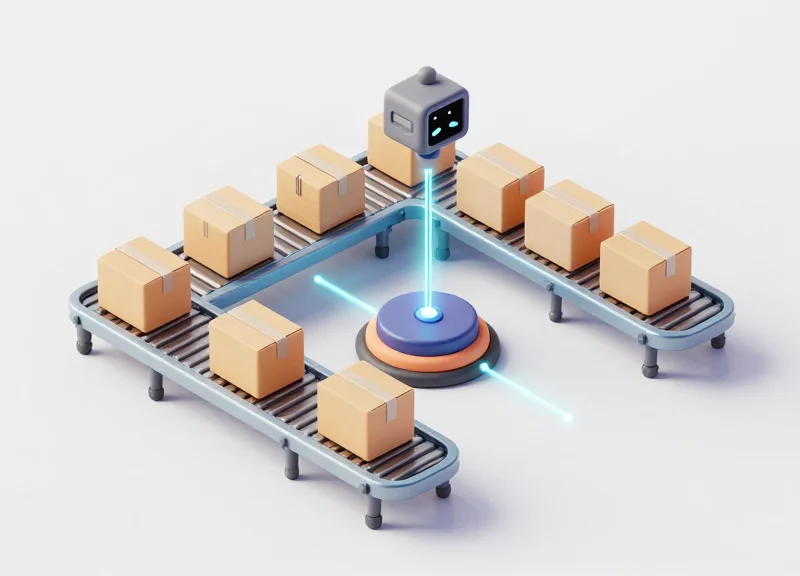
Designing an RFID workflow for 100% resource visibility requires a fundamental shift from manual logging to automated 'event-based' tracking. By mapping every physical touchpoint of an asset’s lifecycle and installing RFID readers at critical transitions—often called choke points—organizations can create a seamless digital thread that updates the central database automatically, ensuring that the location and status of every resource are always accurate without a single sheet of paper being signed.
- Process Mapping and Critical Node Identification: Begin by auditing the physical path of your assets. Identify 'Critical Nodes' where items enter, leave, or change status (e.g., from 'In Production' to 'Quality Checked'). These nodes are where readers will replace manual check-in desks.
- Asset Characterization and Tag Selection: Not all tags are created equal. Match RFID tags to the physical environment; use specialized 'on-metal' tags for machinery or ruggedized passive tags for outdoor equipment to ensure 99.9% read reliability.
- Hardware Infrastructure Geometry: Strategic placement of fixed readers (portals) at entry/exit points and overhead antennas in high-density storage zones ensures continuous coverage. Handheld readers should only be used as a secondary tool for ad-hoc audits.
- API Orchestration with ERP Systems: Raw RFID data is just noise without context. Design a middleware layer that filters tag reads and translates them into business events (e.g., 'Order #101 has moved to shipping') within your existing ERP or WMS.
| Feature | Paper-Based Workflow | RFID-Driven Digital Workflow |
|---|---|---|
| Data Capture | Manual / Human Entry | Automated / Sensor-Based |
| Accuracy Rate | 75% - 85% (Due to human error) | 99.5% - 99.9% |
| Data Latency | Hours or Days | Real-Time (Milliseconds) |
| Search Time | High (Manual searching) | Zero (Instant location lookup) |
The Silicon Valley Edge: Implementing 'Predictive Visibility'. A unique advantage of RFID workflows often overlooked by competitors is the ability to calculate 'Asset Velocity.' By analyzing the time an RFID tag spends between two readers, the system can predict bottlenecks before they happen. If a batch of materials is moving 20% slower than the historical average between Station A and Station B, the system can trigger an automated alert to supervisors—turning your tracking system from a reactive log into a proactive management tool.
How do we handle 'stray' reads from nearby tags?
Modern RFID design uses RSSI (Received Signal Strength Indicator) filtering and shielded antennas to ensure that only tags directly within the intended zone are recorded, preventing 'ghost' movements.
Can RFID work in metal-heavy environments?
Yes. By using 'on-metal' spacer tags or UHF tags designed with a built-in air gap, the interference from metal surfaces is neutralized, allowing for high-read accuracy on containers and machinery.
What happens if a tag is damaged?
A robust workflow includes a 'Tag Health' exception rule. If a reader detects a missing expected item at a choke point, the system triggers a manual exception alert, ensuring the 'digital twin' of the asset is never permanently lost.
Hardware Selection: Choosing the Right RFID Tags and Readers
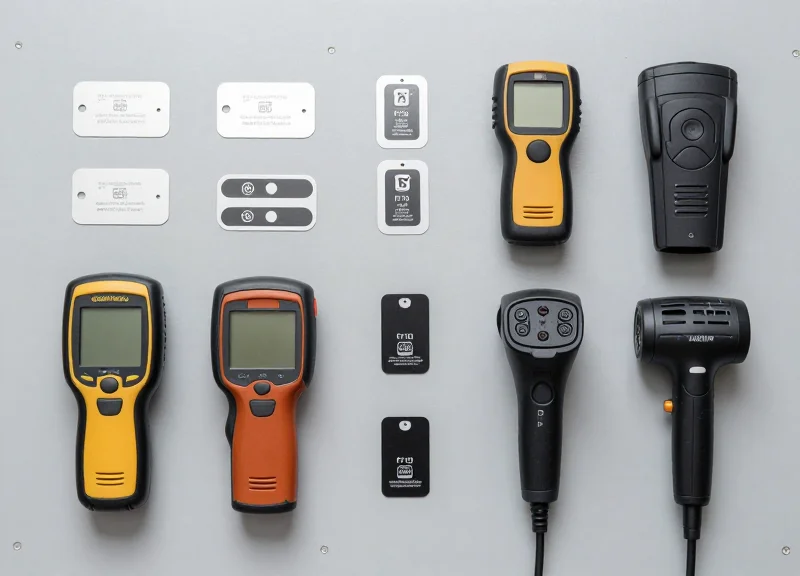
To achieve 100% resource visibility, hardware selection must move beyond basic compatibility to environmental optimization. The right RFID setup is defined by the physical characteristics of your assets—specifically whether they contain metal or liquids—and the speed at which they move through your workflow. For most digital transitions aimed at eliminating paper, the choice boils down to Passive RFID for high-volume, low-cost tracking, or Active RFID for high-value, real-time location systems (RTLS) in complex industrial settings.
| Feature | Passive RFID | Active RFID |
|---|---|---|
| Power Source | Powered by the reader's signal | Internal battery powered |
| Read Range | Up to 10-15 meters (UHF) | Up to 100+ meters |
| Cost per Tag | Low ($0.10 - $1.50) | High ($15.00 - $50.00+) |
| Ideal Use Case | Inventory, supply chain, files | Heavy machinery, vehicle tracking |
| Lifespan | Indefinite (no battery) | 3-5 years (battery dependent) |
One critical factor often overlooked is the 'RF-Hostile' environment. Metal surfaces reflect RF energy, while liquids absorb it, both of which can cause 'blind spots' in your digital workflow. If your resources include steel containers or chemical drums, you must utilize specialized 'on-metal' tags that feature a spacer to prevent signal cancellation. Expert Tip: Always conduct a 'site survey' with a spectrum analyzer before purchasing; interference from high-voltage machinery or existing Wi-Fi networks can reduce your effective read range by up to 40%.
Which frequency is best for industrial resource tracking?
Ultra-High Frequency (UHF) is the global standard for industrial digital workflows because it offers the longest range and fastest data transfer rates, allowing for the simultaneous reading of hundreds of tags.
Should I use fixed or handheld readers?
Fixed readers are best for automated 'choke points' like warehouse doors to ensure hands-free data capture, while handhelds provide flexibility for manual audits and locating specific misplaced items.
How do I deal with interference from metal and liquid?
Use 'On-Metal' RFID tags that use a foam or plastic backing to create a physical gap between the antenna and the surface, or opt for High-Frequency (HF) tags if tracking liquids at very close range.
Unique Silicon Valley Insight: Don't chase 100% power. Many engineers make the mistake of setting readers to maximum gain, which creates 'false reads' from nearby rooms or adjacent lanes. The key to a clean digital workflow is 'Power Right-Sizing'—tuning the reader's signal to cover exactly the zone required and nothing more. This precision prevents data ghosting and ensures that your resource visibility is accurate, not just abundant.
Software Integration: Connecting RFID to ERP and WMS Systems

Software integration is the critical bridge that transforms raw RFID radio signals into actionable business intelligence within your Enterprise Resource Planning (ERP) or Warehouse Management System (WMS). Rather than manually typing data from paper logs, integration allows for the automatic synchronization of physical asset movements with digital records. This process typically involves a middleware layer that filters 'noisy' tag data—eliminating redundant reads—before passing clean, structured events to your central database via APIs or webhooks, effectively creating a real-time 'digital twin' of your entire supply chain.
- Middleware Deployment: Install an intermediary software layer to manage hardware commands and aggregate thousands of tag reads into distinct business events (e.g., 'Pallet 402 has entered Dock Door 5').
- Data Field Mapping: Align the Electronic Product Code (EPC) stored on the RFID tag with the corresponding SKU or Serial Number fields in your ERP (such as SAP, Oracle, or Microsoft Dynamics 365).
- API Configuration: Utilize RESTful APIs or MQTT protocols to push data packets from the RFID readers to the cloud or on-premise servers in milliseconds.
- Logic Triggering: Set up automated business rules where a tag read automatically triggers actions, such as generating an Electronic Proof of Delivery (ePOD) or updating stock levels.
| Integration Method | Best For | Latency Level | Complexity |
|---|---|---|---|
| REST APIs | Cloud-based ERPs (NetSuite, Acumatica) | Moderate | Medium |
| Webhooks | Event-driven updates (Shipping/Receiving) | Low (Real-time) | Low |
| MQTT | High-volume industrial IoT environments | Minimal | High |
| Direct Database Insert | Legacy on-premise WMS solutions | Variable | High |
Expert Insight: Beware of the 'Data Storm'. A common mistake in RFID deployment is sending every single tag 'ping' directly to the ERP. In a high-density warehouse, a single reader can generate 1,000 reads per second. Without 'Edge Filtering'—logic processed at the reader level to only report state changes—you risk crashing your ERP database with redundant logs. Always implement 'report-by-exception' logic to keep your digital workflow lean and performant.
Does RFID integration require a total ERP overhaul?
No. Most modern RFID middleware acts as a translator, allowing you to bolt RFID capabilities onto existing systems without changing your core database architecture.
How do we handle offline data if the network goes down?
Advanced RFID readers utilize 'Store-and-Forward' technology, caching tag data locally and syncing it with the WMS once the connection is restored, ensuring no resource visibility is lost.
What is the primary security risk in software integration?
The main risk is unauthorized access to the data stream between the reader and the cloud. Using TLS-encrypted API endpoints and mutual authentication (M-TLS) mitigates this risk effectively.
Overcoming Implementation Challenges: Staff Training and Change Management
Successful RFID implementation hinges on bridging the 'analog-to-digital' psychological gap by demonstrating that automated data capture reduces administrative burden rather than increasing surveillance. To overcome implementation challenges, organizations must pivot from viewing RFID as a hardware upgrade to treating it as a cultural shift that empowers workers by removing the friction of manual documentation.
- Identify Digital Champions: Select influential team members across different shifts to serve as early adopters. These 'Digital Champions' provide peer-to-peer support and act as a credible feedback loop between leadership and the frontline.
- The 'Invisible UI' Training Approach: Instead of training staff on complex software interfaces, focus training on the physical movement of goods. Emphasize that the technology works 'behind the scenes,' requiring less active input than legacy paper systems.
- Simulated Environment Testing: Run 'sandbox' sessions where employees can interact with RFID gates and handheld readers in a zero-risk environment before the official go-live date.
- Iterative Feedback Loops: Schedule weekly stand-ups during the first 30 days to identify workflow bottlenecks. Rapidly adjusting software triggers or reader placements based on staff input builds trust and ownership.
| Common Friction Point | Employee Concern | Management Solution |
|---|---|---|
| Privacy/Surveillance | Is this 'Big Brother' watching my every move? | Clarify that tracking is asset-centric, not person-centric, designed to find tools, not monitor breaks. |
| Job Security | Will automation replace my role? | Highlight the shift from data entry (administrative) to data-driven decision making (high-value). |
| Technical Complexity | I am not tech-savvy enough for this. | Design the workflow so that 'doing the job' automatically triggers the data capture without extra clicks. |
The Silicon Valley 'Shadow Paper' Insight: One of the greatest risks to RFID success is the 'Shadow Paper Trap.' In many failed implementations, staff continue to keep 'cheat sheets' or unofficial paper logs as a safety net. To truly eliminate waste, management must identify why these logs exist—often due to a lack of trust in the digital dashboard—and systematically address those data-integrity gaps until the paper becomes redundant. True digital transformation happens when the digital record is more reliable and easier to access than the physical one.
How do we handle employees who refuse to use the new system?
Resistance often stems from a lack of clarity. Pair resistant workers with 'Digital Champions' and use gamification to reward high-accuracy data capture until the new habit is formed.
What is the most effective training format for industrial teams?
Micro-learning modules (3-5 minutes) delivered on-site via mobile devices are significantly more effective than long-form classroom sessions for warehouse and floor staff.
When should we officially 'sunset' the paper process?
Wait until the RFID system achieves a 99% data accuracy rate over a 14-day period. Once this threshold is met, remove all physical forms to prevent the 'Shadow Paper Trap'.
Measuring ROI: Cost Savings and Environmental Impact

Measuring the Return on Investment (ROI) for RFID-driven digital workflows involves a 'Triple Bottom Line' approach: calculating the direct financial savings from paper elimination, the operational gains from 100% resource visibility, and the measurable reduction in environmental impact. Most organizations find that while the initial hardware investment is significant, the 'payback period' typically falls between 12 to 18 months, driven primarily by the elimination of the 'Hidden Labor Tax'—the thousands of hours employees spend manually recording data, correcting entry errors, and physically searching for lost assets.
| Metric | Manual Paper-Based Workflow | RFID-Driven Digital Workflow |
|---|---|---|
| Data Capture Time | 2-5 minutes per item | < 1 second (Batch scanning) |
| Data Accuracy | 60% - 80% (Human error prone) | 99.9% (Automated capture) |
| Search & Audit Labor | High (Hours/Days) | Minimal (Real-time location) |
| Consumable Costs | Recurring (Paper, Toner, Storage) | Low (Reusable tags / Digital storage) |
| Environmental Impact | High deforestation & waste | Significant carbon footprint reduction |
Expert Insight: The Data-Latency Penalty. A unique financial drain rarely calculated in standard ROI models is 'Data Latency.' In a paper-based system, information is typically 24 to 48 hours old by the time it is digitized. This delay forces companies to maintain 'safety stock'—excess inventory kept just in case of errors. RFID eliminates this latency, allowing for a 10-15% reduction in inventory carrying costs because you can finally trust your real-time data.
- Audit Direct Paper Costs: Calculate the annual expenditure on paper, printing supplies, and physical storage space. Include the cost of off-site document shredding and archiving services.
- Quantify 'Re-Work' Hours: Track how many hours your team spends fixing data entry errors or searching for misplaced files. Multiply these hours by the average loaded labor rate to find the 'Hidden Labor Tax'.
- Assess Resource Utilization: Measure the increase in asset turnover. With 100% visibility, assets are utilized more frequently, reducing the need to purchase additional redundant equipment.
- Calculate Carbon Offsets: Translate saved paper into trees preserved and gallons of water saved. Many modern ERPs now include ESG modules to convert these efficiencies into carbon credit equivalents.
Does removing paper really impact the carbon footprint significantly?
Yes. Beyond saving trees, digital workflows eliminate the carbon-intensive logistics of transporting physical documents and the energy-heavy climate control required for long-term paper archiving.
What about the environmental cost of RFID tags themselves?
Modern silicon-free and 'green' RFID tags use biodegradable substrates. Furthermore, the efficiency gains in supply chain logistics—reducing empty truck miles through better visibility—far outweigh the footprint of the tags.
How do we justify the 'soft' benefits to stakeholders?
Focus on 'Compliance and Risk Mitigation.' Digital trails are immutable and instantly auditable, which drastically reduces the cost of regulatory fines and legal discovery compared to paper records.
Case Studies: Industry Success in Paperless Resource Tracking
Real-world industry success in paperless resource tracking is characterized by the replacement of manual, error-prone paper logs with automated RFID data capture systems. These implementations consistently deliver 100% resource visibility, eliminate human entry errors, and reduce operational costs by up to 30%. By digitizing the physical movement of assets, organizations transition from 'reactive' management to 'predictive' operations, where data is captured at the point of action rather than at the end of a shift.
| Industry Sector | Legacy Paper Process | RFID Digital Workflow | Key Impact Metric |
|---|---|---|---|
| Aerospace Manufacturing | Paper-based Work-in-Progress (WIP) travelers moved with parts. | Embedded UHF RFID tags track component history automatically. | 45% reduction in production cycle time. |
| Specialized Logistics | Manual manifest signing and physical clipboard filing. | Automated gate readers log arrivals/departures in real-time. | 99.9% shipping and receiving accuracy. |
| Acute Healthcare | Nurses manually logging medical equipment locations. | Active RFID sensors provide a 'live map' of critical assets. | Save 3,000+ staff hours annually per facility. |
A notable Silicon Valley success story involves a global server manufacturer that suffered from 'The Ghost Asset Phenomenon.' Despite having a robust paper trail, 15% of their testing equipment was statistically 'missing' because paper logs were not updated in real-time. By implementing a zone-based RFID solution, they achieved a digital twin of their facility. The original insight here is that paperless tracking does not just save trees; it eliminates 'Data Latency'—the time gap between an event happening and the system knowing it happened. In high-velocity environments, reducing latency from 4 hours (paper) to 4 milliseconds (RFID) is the difference between profit and loss.
How long does it typically take to see a ROI after removing paper?
Most industrial implementations report a full Return on Investment (ROI) within 12 to 18 months, primarily driven by labor savings and the elimination of lost-asset replacement costs.
Can RFID work in 'dirty' environments where paper usually fails?
Yes. Unlike paper manifests that can be stained, torn, or lost, ruggedized RFID tags are designed to withstand extreme temperatures, chemical exposure, and physical abrasion.
What is the biggest cultural hurdle in moving to paperless RFID?
The 'Clipboard Habit.' Workers often feel more secure with a physical record. Success stories emphasize training staff to use mobile dashboards that provide more value than a paper log ever could.
Future Trends in RFID-Driven Digital Transformation
The future of RFID-driven digital transformation is defined by the shift from passive tracking to 'Cognitive Traceability.' This evolution integrates RFID tags with advanced sensory capabilities, blockchain-backed security, and Artificial Intelligence (AI) to create a self-orchestrating supply chain. By moving beyond simple identification, the next generation of RFID will provide deep contextual data—such as environmental conditions and chain-of-custody verification—enabling businesses to achieve 100% resource visibility without a single sheet of paper.
| Technology Trend | Key Innovation | Impact on Digital Workflows |
|---|---|---|
| Sensor-Fusion RFID | Integration of temperature, humidity, and shock sensors into passive tags. | Eliminates manual quality logs by automatically recording environmental compliance. |
| RFID + Blockchain | Linking unique RFID IDs to immutable distributed ledgers. | Provides a 'Digital Birth Certificate' for assets, ensuring zero-paper proof of origin. |
| Sustainable Chipless RFID | Tags printed with conductive ink directly onto packaging. | Drastically reduces e-waste and lowers the cost-per-unit for high-volume tracking. |
| AI-Driven Predictive Analytics | Machine learning models analyzing raw RFID ping patterns. | Predicts bottlenecks before they occur, automating resource reallocation. |
Expert Insight: The Rise of the 'Ambient IoT' One original perspective often overlooked is the transition toward Ambient IoT. In the next five years, we will see the deployment of energy-harvesting RFID tags that communicate via existing Bluetooth or 5G infrastructure. This removes the need for expensive, dedicated RFID readers, allowing every smartphone or smart-light fixture in a facility to act as a data gateway. This 'infrastructure-less' approach will democratize high-resolution tracking for small-to-medium enterprises (SMEs), finally making paper-based systems obsolete across the entire global supply chain.
How will 6G affect RFID implementation?
6G is expected to support massive machine-type communications (mMTC) with micro-millisecond latency, allowing for real-time tracking of millions of RFID-tagged items per square kilometer with pinpoint accuracy.
Is 'Green RFID' a reality?
Yes. The industry is moving toward biodegradable paper-based antennas and chipless technology, which removes the need for silicon and metal, making the digital workflow as environmentally friendly as it is efficient.
Can RFID help with Circular Economy goals?
Absolutely. Future RFID tags will store 'Digital Product Passports,' tracking a resource through multiple lifecycles (use, repair, recycle) to ensure maximum material recovery and zero landfill waste.
As these technologies mature, the 'digital twin' of a physical asset will become more accurate than ever. Companies that adopt these trends now will not only eliminate paper waste but will possess the granular data needed to transition from reactive management to proactive, autonomous operations.