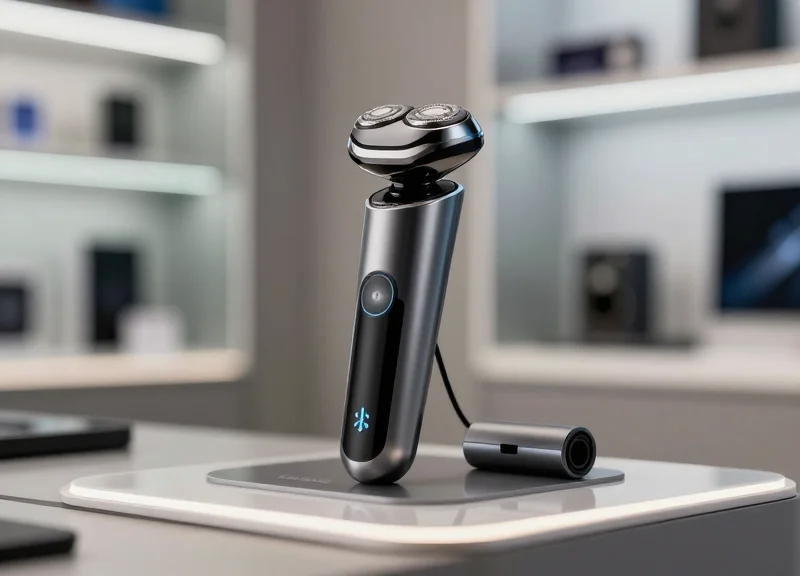
As the retail landscape pivots toward immersive, touch-and-feel shopping experiences, traditional Electronic Article Surveillance (EAS) is proving insufficient for high-value personal care electronics. Smart shavers, which combine high price points with a need for ergonomic testing by the consumer, present a unique challenge for loss prevention teams. By 2026, the industry is moving toward a new benchmark: Next-Gen Bluetooth-Integrated Pull-Cords. This technology transcends simple theft deterrence, offering a sophisticated blend of physical security, real-time connectivity, and consumer behavior analytics that legacy systems simply cannot match.
The Crisis of Legacy EAS in High-End Retail
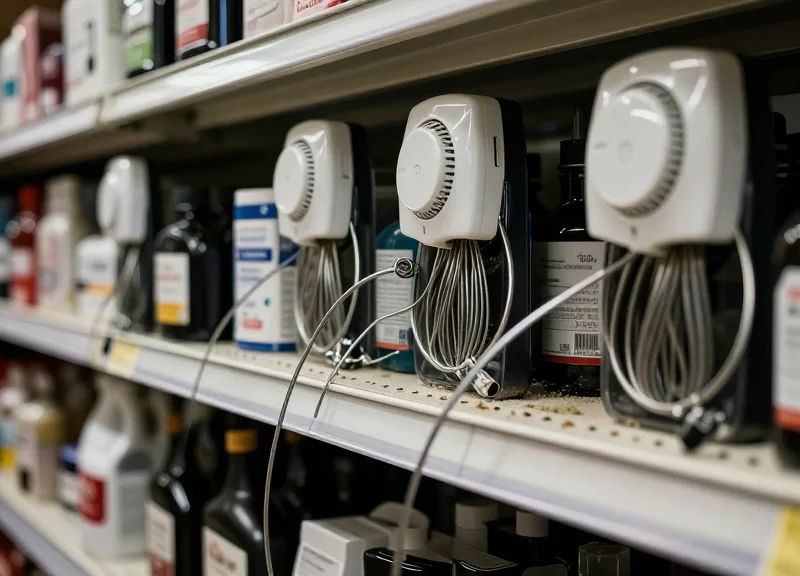
The crisis of legacy Electronic Article Surveillance (EAS) in high-end retail stems from the widening gap between antiquated security hardware and the sophisticated tactics of Organized Retail Crime (ORC). Traditional AM (Acousto-Magnetic) and RF (Radio Frequency) systems—originally designed in the late 20th century—rely on a binary 'gate-alarm' logic that is easily bypassed by signal-shielding 'booster bags' and foil-lined containers. For high-value smart shavers, which often retail between $250 and $600, these legacy systems fail to provide the 'active' deterrent necessary for an open-sell environment, forcing retailers to choose between high shrink rates or locking products behind glass, which can slash sales conversion by up to 30%.
| Feature | Legacy RF/AM Systems | Next-Gen Bluetooth Pull-Cords |
|---|---|---|
| Theft Detection | Passive (only at exit) | Active (instant lift/tether alerts) |
| ORC Resilience | Low (easily shielded by foil) | High (digital handshake/physical tether) |
| Customer Friction | High (false alarms/gate chirps) | Zero (seamless interaction) |
| Data Analytics | None (binary signal) | Full (lift counts, dwell time, heatmaps) |
The technical failure of legacy systems is compounded by the 'Security/Experience Paradox.' When an RF tag fails to trigger—or worse, triggers a false positive on a legitimate customer—the brand equity of a luxury grooming aisle is instantly damaged. Sophisticated shoplifters now use 'jamming' devices that render traditional pedestals useless, turning expensive security investments into mere psychological deterrents that no longer scare professional thieves. In the high-stakes world of smart personal care, these blind spots represent millions in lost annual revenue.
Why are smart shavers specifically targeted?
Their high resale value on secondary markets (eBay/FB Marketplace) combined with their compact, easily concealed size makes them a 'top-five' target for professional retail thieves.
What is 'Security Anxiety' in retail?
It is the phenomenon where intrusive legacy security (aggressive alarms, cages) makes legitimate customers feel untrusted, leading them to abandon high-ticket purchases.
How does signal shielding work against legacy EAS?
Thieves line bags with aluminum foil to create a Faraday cage, which prevents the RF or AM signal from reaching the exit pedestals, allowing the item to leave the store undetected.
Expert Insight: Beyond physical loss, the 'Shadow Cost' of legacy EAS is the loss of actionable data. While a traditional pedestal only tells you an item has left the store, it cannot tell you how many times a shaver was handled before the theft. Next-gen Bluetooth-integrated systems turn every security tether into a data point, transforming loss prevention from a cost center into a source of business intelligence. By 2026, any retailer relying solely on gate-based alarms for $300+ electronics will likely be priced out of the market due to unmanageable shrink-to-margin ratios.
Understanding Bluetooth-Integrated Pull-Cord Technology
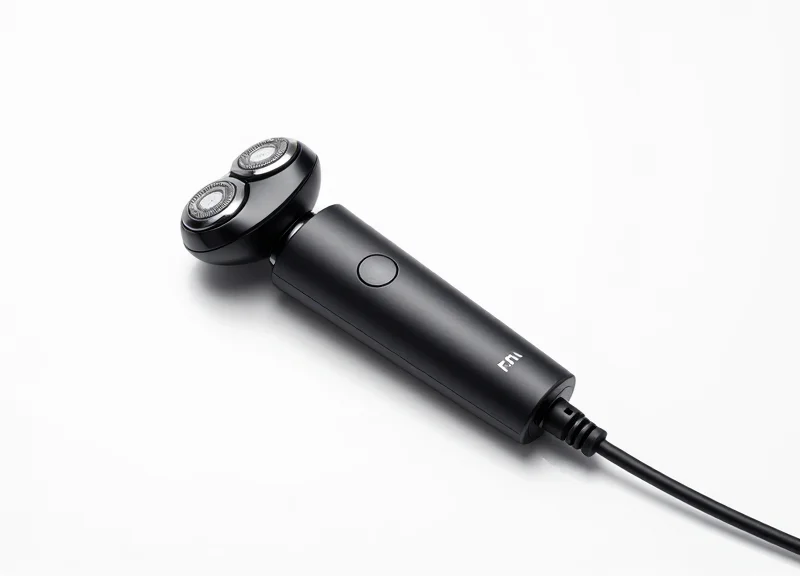
Bluetooth-integrated pull-cords represent a fundamental shift from reactive to proactive security, utilizing a dual-layer architecture where a mechanical aircraft-grade cable provides physical resistance while an embedded Bluetooth Low Energy (BLE) module communicates constant status telemetry to a central retail hub. By merging the tactile reliability of a physical tether with the data-rich capabilities of wireless sensors, retailers can now monitor the exact state of a high-value shaver the moment it is handled, creating a security perimeter that begins at the shelf rather than the exit.
The mechanical component typically consists of a multi-strand steel cable coated in a cut-resistant polymer, housing a thin conductive wire that forms a continuous closed-loop circuit. Simultaneously, the BLE module—integrated into either the sensor head or the recoiler—broadcasts an encrypted heartbeat signal. This 'Digital Twin' approach ensures that even if a sophisticated shoplifter attempts to bypass the physical circuit using a shunt or specialized tool, the disruption in the BLE signal strength (RSSI) or a mismatch in the heartbeat interval will trigger a localized or network-wide alert immediately.
| Feature | Standard EAS Pull-Cords | Next-Gen BLE-Integrated Cords |
|---|---|---|
| Security Type | Passive/Mechanical Only | Active/Hybrid Intelligence |
| Real-Time Tracking | None | State-of-health and lift-count telemetry |
| Alarm Trigger | Physical cut or exit gate | Cut, signal loss, or 'unauthorized dwell' |
| Data Integration | Non-existent | Full Cloud/API connectivity |
| Staff Notification | Local Siren only | Mobile App, Smart Watch, and CRM alerts |
Expert Insight: The 'Aggressive Hospitality' Trigger. One unique advantage of BLE integration is the ability to utilize proximity data for sales conversion. By setting a threshold for 'dwell time,' the system can send a silent notification to a floor associate's smartwatch if a customer has been handling a premium shaver for over 45 seconds. This allows staff to provide assistance—effectively deterring theft through high-quality customer service before a crime even occurs, a tactic known in Silicon Valley retail circles as 'Active Deterrence through Engagement.'
Does Bluetooth interference from shoppers' phones affect the system?
No. Next-gen systems use Frequency Hopping Spread Spectrum (FHSS) within the 2.4GHz band to ensure the security signal remains clear even in high-traffic environments crowded with consumer devices.
What happens if the store's Wi-Fi goes down?
The BLE-integrated pull-cords operate on a localized mesh or direct-to-hub connection that is independent of public Wi-Fi, ensuring 100% security uptime even during network outages.
Is the battery life a concern for the wireless sensors?
These systems typically use 'Power-over-Tether' logic where the base unit provides a trickle charge to the sensor head while docked, meaning the BLE module has an indefinite lifespan and requires zero battery maintenance.
From Protection to Perception: The Customer Experience Factor
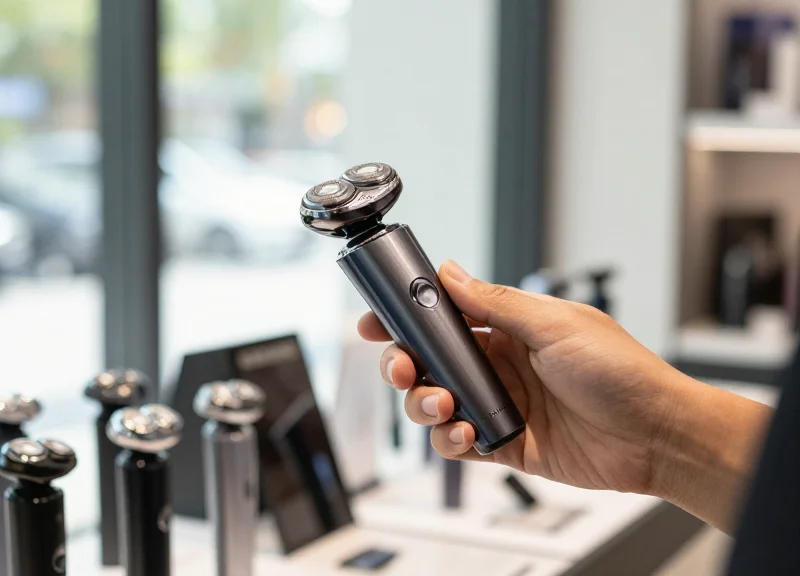
In the world of high-end male grooming, the transition from 'protection' to 'perception' marks the shift where security technology stops being a deterrent to shoplifters and starts being an invitation to customers. Traditional Electronic Article Surveillance (EAS) relies on bulky plastic tags that throw off the weight and balance of a shaver, effectively 'breaking' the consumer's ability to evaluate the product's ergonomics. Next-gen Bluetooth-integrated pull-cords solve this by replacing clunky hardware with discrete, low-tension tethers that offer a frictionless, 'zero-gravity' interaction, allowing the customer to focus on the product's finish and hand-feel rather than the security device attached to it.
| Feature | Legacy EAS Tags | Next-Gen Bluetooth Pull-Cords |
|---|---|---|
| Physical Weight | Adds 50g-100g (Unbalanced) | Near-Zero (Integrated into stand) |
| Tactile Feedback | Obstructive & Clunky | Seamless / Ergonomic |
| Range of Motion | Limited by stiff cables | Full 360-degree rotation |
| Customer Psychology | Feel 'watched' or 'mistrusted' | Feel 'empowered' to test |
The psychological impact of 'Ownership Mindset' is a critical driver for conversion in the 2026 retail landscape. When a customer picks up a smart shaver and experiences zero resistance—thanks to ultra-thin, high-tensile fibers and constant-force spring technology—they begin to imagine the product in their own bathroom. This frictionless movement is what we call 'Tactile ROI.' By removing the physical micro-stresses of traditional security, retailers see a measurable uptick in dwell time and interaction quality.
- The 'Zero-Gravity' Insight: Expert Tip: Leading retailers are now measuring 'Tactile Latency'—the micro-seconds of resistance a user feels when pulling a product. Next-gen systems reduce this by 85%, which biological studies suggest lowers the customer's subconscious 'threat perception' during the browsing phase.
- Aesthetic Consistency: Premium shavers are works of industrial design. Bluetooth pull-cords use minimalist attachments that do not obscure brand logos or OLED displays, ensuring the brand's design language remains the focal point.
- Uninterrupted Digital Sync: Because the security is Bluetooth-integrated, picking up the device can trigger 'Lift-and-Learn' video content on adjacent screens without the lag associated with mechanical sensors.
Does the pull-cord tension affect the shaver's perceived quality?
Yes. If the tension is too high, the product feels cheap or 'tethered.' Next-gen systems use calibrated constant-force springs to ensure the pull is identical from the first inch to the last, mimicking a free-floating experience.
How does Bluetooth integration improve the shopping journey?
Beyond security, the Bluetooth link notifies staff via wearables when a product is being interacted with for an extended period, allowing for timely, non-intrusive sales assistance.
Will customers find the thin cables less secure?
Perception is reality. While the cables are thinner and more flexible, their high-tensile core is actually harder to cut than traditional thick steel cables, but to the customer, they look like premium, non-threatening accessories.
The Power of Real-Time Interaction Analytics

Real-time interaction analytics in retail security refers to the automated collection of data whenever a product is handled, enabled by Bluetooth Low Energy (BLE) sensors embedded in smart pull-cords. Unlike traditional Electronic Article Surveillance (EAS) which only alerts during theft, next-gen pull-cords track every 'lift event,' measuring exactly how long a customer holds a shaver, how many times it is picked up daily, and the specific duration of the interaction. This granular data allows retailers to bridge the gap between foot traffic and final sales, identifying high-interest products versus those that are overlooked.
For the first time, brick-and-mortar retailers can access 'digital-style' funnel metrics for physical shelves. By monitoring the dwell time on a high-end smart shaver, management can determine if a product has a 'conversion problem' (many lifts, no sales) or a 'visibility problem' (no lifts at all). This insight is critical for 2026 retail strategies where every square inch of shelf space must justify its ROI through active engagement data.
| Metric Category | Legacy EAS Capability | Bluetooth Pull-Cord Analytics |
|---|---|---|
| Interaction Tracking | Zero (Binary: Stolen or Not) | Real-time Lift & Return events |
| Dwell Time | None | Seconds/Minutes of active handling |
| Heatmapping | Requires expensive 3rd party cameras | Native sensor-based interaction maps |
| Staff Alerts | Post-theft alarm only | Proactive 'High-Interest' service alerts |
What is a 'Lift-to-Lead' ratio?
This is a new KPI enabled by Bluetooth pull-cords that measures how many physical interactions result in a customer seeking more information or a staff member intervention, similar to a click-through rate in e-commerce.
Can these analytics prevent 'Sweethearting' or internal theft?
Yes. By cross-referencing lift data with Point-of-Sale (POS) timestamps, retailers can identify if products are being removed from the tether without a corresponding transaction, flagging internal security risks.
Does this data integrate with existing CRM systems?
Modern BLE pull-cord hubs typically offer API integrations that allow interaction data to be layered over loyalty program traffic to personalize future marketing based on what products a customer physically touched.
Expert Insight: The 'Interaction Elasticity Index' In my two decades of Silicon Valley marketing, we've always valued the 'micro-moment.' For 2026, the competitive edge lies in what I call the Interaction Elasticity Index. This isn't just about how many people touch a shaver, but the 'Reset Delay'—the time between one customer putting a device down and another picking it up. A low Reset Delay indicates a 'hot' display zone, whereas a long delay suggests the display or the product ergonomic is failing to attract. By measuring the velocity of interactions, retailers can move from static monthly reports to dynamic, hour-by-hour merchandising adjustments that capitalize on real-time consumer trends.
Smart Alarms: Reducing False Positives in Busy Stores
Smart alarms represent a paradigm shift from binary 'on/off' security to intent-based monitoring. By leveraging Bluetooth-integrated pull-cords equipped with high-precision accelerometers, these systems analyze the velocity, duration, and angle of movement to distinguish between a shopper examining a shaver's ergonomics and a 'snip-and-run' theft attempt. This intelligent filtering ensures that high-decibel alerts only trigger during verified security breaches, preserving the premium store atmosphere and ensuring staff remain responsive to real threats.
In traditional retail environments, 'alarm fatigue' is a silent killer of security efficacy. When Electronic Article Surveillance (EAS) systems trigger falsely due to interference or minor cord tangles, staff eventually begin to ignore the sirens. In a 2026 retail landscape, this is unacceptable. Next-gen systems solve this by moving the decision-making process from a simple circuit break to a sophisticated data-processing event at the edge of the network.
| Feature | Legacy EAS Pull-Cords | Next-Gen Bluetooth Smart Alarms |
|---|---|---|
| Trigger Mechanism | Physical circuit break only | Multi-sensor fusion (Motion + Signal) |
| False Positive Rate | High (Mechanical wear/tags) | Ultra-Low (Software-defined logic) |
| Notification Style | Immediate loud store-wide siren | Tiered alerts (Haptic -> Silent -> Audible) |
| Staff Impact | High fatigue, slow response | Data-driven focus, rapid intervention |
- Engagement Detection: The system wakes from low-power mode the moment the Bluetooth pull-cord detects a lift, initiating high-frequency data sampling.
- Contextual Analysis: Onboard logic compares the movement profile against known 'theft signatures' (e.g., sudden violent tension or cord-cutting vibrations).
- Threshold Evaluation: If the interaction exceeds normal browsing parameters but isn't a confirmed theft, a 'soft alert' is sent to staff handhelds instead of sounding a siren.
- Automated Escalation: Only upon a confirmed breach does the system trigger the 100dB local alarm and lock down digital display content.
Expert Insight: The Concept of 'Concierge Security' One original advantage of the 2026 standard is the move toward 'Concierge Security.' Instead of a loud alarm that embarrasses customers, Bluetooth-integrated cords can trigger a 'Service Required' notification to the nearest associate's smartwatch when a shaver has been handled for more than 30 seconds. This transforms a security event into a sales opportunity, effectively deterring theft through increased staff presence without ever firing a traditional alarm.
How does the system handle 'accidental' pulls?
The software uses a 'grace period' logic. If a cord is pulled to its limit but immediately returns to its holster, the system logs it as a 'curious lift' rather than a theft attempt.
Can sensitivity be adjusted for holiday sales?
Yes. Managers can use the centralized dashboard to push 'High Traffic Mode' profiles to all displays, widening the alarm thresholds to account for a more chaotic store floor.
Does this work if the store Wi-Fi goes down?
Absolutely. The Bluetooth mesh network operates independently of local Wi-Fi, ensuring that the smart alarm logic remains local and functional even during network outages.
Sustainability and Lifecycle Value in 2026
By 2026, the retail standard for sustainability is defined by Lifecycle Value (LCV) rather than initial purchase price. Bluetooth-integrated pull-cords represent a shift from disposable, one-size-fits-all EAS tags to modular, long-term assets that offer a five-to-seven-year operational window. These systems provide a 'Circular ROI' by utilizing durable mechanical tethers combined with updateable digital cores, effectively reducing total cost of ownership (TCO) by up to 40% compared to traditional legacy systems that require frequent hardware replacement and generate substantial e-waste.
| Feature Metric | Traditional EAS (Disposable/Low-End) | Next-Gen Bluetooth Pull-Cords |
|---|---|---|
| Average Operational Lifespan | 12 - 18 Months | 5 - 7 Years |
| Electronic Waste Profile | High (Non-repairable housing) | Low (Modular component replacement) |
| Maintenance Model | Reactive (Wait for failure) | Predictive (Bluetooth health pings) |
| Firmware Upgradability | None | Over-the-Air (OTA) Updates |
| 5-Year Cost Projection | Increasing (Replacement + Labor) | Decreasing (Optimization + Data Value) |
- Predictive Health Monitoring: Bluetooth connectivity allows the pull-cord to report battery levels and sensor health in real-time. This eliminates the 'blind spot' of traditional security where devices remain broken on the shelf for weeks, costing sales.
- Component-Level Repairability: Unlike sealed plastic tags, next-gen systems are designed for 2026 circularity standards. If a tether is cut, only the cable is replaced—not the entire sensor and Bluetooth module.
- Remote Re-Configurability: Retailers can adjust alarm sensitivity or reporting frequency via software. This means the hardware stays on the shelf even as store layouts and security protocols evolve.
Do Bluetooth-integrated systems consume more power than traditional tags?
No. By utilizing Bluetooth Low Energy (BLE) protocols and intelligent sleep modes, these systems achieve multi-year battery life, often outlasting the mechanical components of the display itself.
How do these systems contribute to Corporate Social Responsibility (CSR) goals?
They significantly reduce plastic and heavy metal waste. By moving away from high-volume, low-quality disposables, retailers can report measurable reductions in their Scope 3 emissions.
Is the initial higher investment justified?
Yes. When factoring in the reduction in 'shrinkage-from-failure' and the elimination of repeat purchasing for replacement tags, the break-even point is typically reached within 14 months.
Expert Insight: The Concept of 'Hardware Elasticity'. A unique advantage for 2026 is the ability to leverage existing security hardware for secondary purposes. Because these pull-cords are Bluetooth-enabled, they can act as 'micro-beacons' for store heat-mapping or inventory localization without requiring additional infrastructure. This 'hardware elasticity' allows the security budget to effectively subsidize the analytics and marketing budgets, creating a value proposition that traditional EAS simply cannot match.
Integration with the IoT Store Ecosystem
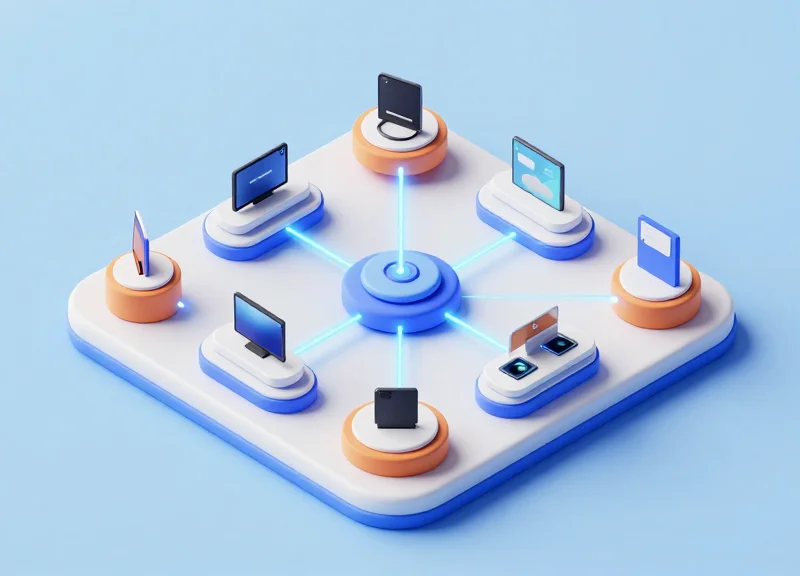
In the 2026 retail landscape, the Bluetooth-integrated pull-cord is no longer a standalone security peripheral; it is a primary input device for the IoT Store Ecosystem. By leveraging Bluetooth Low Energy (BLE) and Mesh networking, these smart cords communicate with a centralized gateway to orchestrate 'Retail Theatre.' When a shopper lifts a smart shaver, the pull-cord acts as a trigger that signals the store's edge computing layer to adjust environmental variables—such as dimming ambient lights while spotlighting the product or instantly launching a targeted comparison video on an adjacent 4K display. This seamless interoperability transforms a static shelf into a responsive, automated environment that guides the customer journey without human intervention.
| Interaction Event | IoT Trigger Action | Outcome/Business Value |
|---|---|---|
| Initial Lift | Digital signage switches to 'Product Features' loop | Increased engagement & feature awareness |
| Dwell > 30 Seconds | Smart lighting intensifies; Mobile push to staff | High-intent lead identification for sales floor |
| Unauthorized Cut | Store-wide security lighting pulse; Video lock-on | Instant theft deterrence & visual evidence capture |
| Return to Dock | Signage resets to generic promotional content | Dynamic content cycling for energy efficiency |
Expert Insight: The 'Angle-of-Interest' Metadata. A unique capability of 2026-gen cords is the integration of 6-axis accelerometers. Beyond just knowing a shaver is 'lifted,' the system recognizes the angle at which it is held. If a customer tilts the shaver to inspect the blade head, the IoT system triggers a specific video detailing blade longevity. This level of granular metadata allows retailers to optimize display layouts based on physical interaction patterns that were previously invisible to traditional EAS systems.
- Edge Gateway Synchronization: The pull-cord connects to a local BLE gateway, ensuring sub-100ms latency between the physical lift and the digital response.
- API-Driven Orchestration: The gateway pushes data to the store's Middleware via REST APIs or MQTT, allowing integration with third-party lighting (e.g., Philips Hue) and CMS platforms.
- Mobile Workforce Integration: Real-time alerts are routed to associate smartwatches or handhelds, providing context-aware tasks like 'Restock needed' or 'Customer assistance requested'.
Does this require a total store overhaul?
No. Most next-gen systems use retrofittable BLE gateways that plug into existing Ethernet ports, allowing you to layer IoT capabilities over current infrastructure.
How does this impact Wi-Fi performance?
These devices operate on BLE 5.x channels specifically designed to coexist with Wi-Fi, utilizing frequency hopping to avoid interference in high-traffic retail environments.
Can it integrate with CRM data?
Yes. If the customer has the store's loyalty app open, the pull-cord lift can be cross-referenced with their profile to show personalized pricing or 'Recommended for You' content on the display.
Strategic Implementation: Transitioning Your Displays
Transitioning to next-gen Bluetooth-integrated pull-cords is not a simple hardware swap; it is a systematic shift from reactive Electronic Article Surveillance (EAS) to a proactive, data-driven loss prevention ecosystem. Successful implementation involves a 'hybrid-first' approach, where existing pedestals are retrofitted with Bluetooth-enabled controllers, allowing retailers to gather lift-and-learn data while maintaining legacy frequency support. By 2026, the standard for smart shaver displays will focus on modularity, enabling retailers to upgrade internal electronics without discarding the physical display infrastructure.
| Implementation Phase | Legacy EAS (Traditional) | Next-Gen Bluetooth (2026) |
|---|---|---|
| Installation | Hardwired, permanent mounting | Modular, snap-in retrofitting |
| Network Connectivity | None (Standalone alarm) | Mesh-networked (Cloud synced) |
| Data Logging | Manual incident reports | Automated real-time lift analytics |
| Staff Response | Audio cues only | Mobile alerts and haptic feedback |
- Site Audit and Power Assessment: Evaluate current shaver display pedestals for power availability. Most Bluetooth pull-cords require consistent 5V/2A power to maintain the internal battery and wireless beacon.
- Modular Retrofitting: Install Bluetooth controller hubs within existing shelving units. This allows the pull-cord to communicate with the store’s Wi-Fi or local gateway without replacing the entire acrylic display.
- API Integration & Dashboard Configuration: Connect the hardware to your retail management software. Define the parameters for 'high-risk' behavior, such as a shaver being held off the dock for more than 120 seconds.
- Staff Onboarding and UX Testing: Train associates to use the mobile dashboard. They should learn to distinguish between 'Curiosity Lifts' and 'Theft Indicators' via the app’s color-coded alerts.
- Phased Global Rollout: Launch in high-shrink urban locations first, using the gathered data to fine-tune alarm sensitivity before a nationwide 2026 deployment.
The Veteran's Tip: Implement 'Predictive Cable Fatigue' Monitoring. One of the most overlooked benefits of the 2026 Bluetooth standard is the ability to monitor the mechanical health of the pull-cord itself. Advanced units now track the 'tension cycle count'—the number of times a shaver is pulled and retracted. By setting an automated alert at 15,000 cycles, maintenance teams can replace a worn cable before it snaps, preventing both a security gap and a poor customer experience. This shift from corrective to predictive maintenance is what separates 2026 leaders from those stuck in the 2010s.
Can I keep my existing EAS gates?
Yes. Modern Bluetooth pull-cords are designed to work in tandem with AM/RF gates, acting as a secondary, more granular layer of security that provides data the gates cannot.
What is the average downtime during a retrofit?
With modular 'snap-in' components, a single shaver display can be upgraded in under 15 minutes, allowing for overnight transitions with zero impact on store hours.
How does Bluetooth handle interference in busy stores?
Next-gen cords utilize Frequency Hopping Spread Spectrum (FHSS) to remain stable even in environments crowded with customer smartphones and store Wi-Fi.