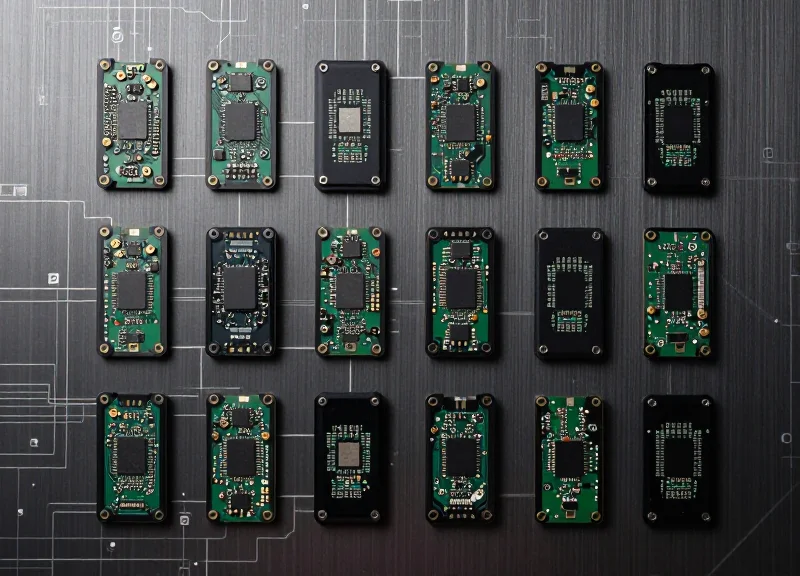
In the high-stakes environment of modern manufacturing, even a minor discrepancy in inventory data can lead to catastrophic losses. As factories evolve toward Industry 4.0, the reliance on manual tracking is being replaced by automated RFID (Radio Frequency Identification) portals. However, not all systems are created equal. The difference between a standard 90% read rate and a professional-grade 99.9% accuracy level is the difference between a leaky supply chain and a robust, profit-generating engine. This article examines how investing in high-precision RFID portals serves as a strategic shield for your bottom line, ensuring that every asset is accounted for and every operational dollar is optimized.
The Critical Role of RFID Portals in Modern Manufacturing

In the context of Industry 4.0, an RFID portal is a strategic infrastructure component—typically a frame or gateway equipped with fixed readers and antennas—designed to automatically capture data from tagged items as they pass through specific transition points. Unlike manual scanning, these portals act as high-speed digital checkpoints that provide real-time visibility into the movement of raw materials, work-in-progress (WIP), and finished goods. By serving as the primary interface between the physical floor and the enterprise resource planning (ERP) system, RFID portals ensure that every asset is accounted for without human intervention, effectively eliminating the data silos that traditionally plague high-volume manufacturing environments.
| Feature | Manual Barcode Scanning | Automated RFID Portals |
|---|---|---|
| Data Capture Speed | Slow (1-by-1 scanning) | Ultra-fast (Bulk reading of hundreds of items) |
| Human Error Risk | High (Missed items, mislabeling) | Negligible (Automated detection) |
| Line of Sight | Required | Not Required |
| Labor Cost | High (Requires dedicated operators) | Low (Passive operation) |
- Real-Time Work-in-Progress (WIP) Tracking: Portals placed between production stages allow managers to see exactly where a batch is located, preventing bottlenecks and optimizing station throughput.
- Automated Shipping and Receiving: Dock-door portals automatically verify incoming supplies against purchase orders and outgoing shipments against invoices, ensuring 100% order accuracy.
- Digital Twin Synchronization: They provide the 'ground truth' data needed to maintain an accurate digital twin of the factory, ensuring that software models reflect physical reality.
Expert Insight: The Zero-Touch Audit Trail. Most manufacturers view RFID portals as mere 'scanners,' but the true strategic value lies in the creation of a 'Zero-Touch Audit Trail.' In a high-precision environment, every manual touchpoint is a potential failure point. By engineering portals that achieve near-perfect accuracy, you aren't just saving seconds on a scan; you are creating an immutable, timestamped record of every asset's journey. This level of granular data is the prerequisite for advanced AI-driven predictive maintenance and supply chain orchestration. Without the high-fidelity data from these portals, your smart factory is essentially flying blind.
Quantifying the 'Accuracy Gap': Why 99.9% is the Gold Standard

The 'Accuracy Gap' refers to the critical performance divide between standard RFID systems—which typically hover between 95% and 98% detection—and elite 99.9% precision portals. In a high-throughput factory environment, 99.9% is considered the 'Gold Standard' because it represents the intervention threshold: the point at which exceptions become rare enough to be managed by a skeleton crew rather than requiring a dedicated team for manual reconciliation. While a 2% or 5% error rate might seem negligible on paper, in reality, it creates a 'friction tax' that scales linearly with volume, eventually negating the ROI of automation entirely.
| Accuracy Rate | Daily Volume (Units) | Daily Missed Reads | Annual Exceptions (260 Days) | Labor Impact |
|---|---|---|---|---|
| 95.0% | 10,000 | 500 | 130,000 | High (Requires full-time auditing) |
| 98.0% | 10,000 | 200 | 52,000 | Moderate (Frequent line stoppages) |
| 99.9% | 10,000 | 10 | 2,600 | Negligible (Exception-based handling) |
The danger of the Accuracy Gap lies in 'Error Compounding.' In a multi-stage manufacturing process, errors are additive. If a portal at the assembly stage is 98% accurate and the portal at the shipping dock is also 98%, the cumulative probability of a unit being correctly tracked through both points drops to approximately 96%. By the time an item passes through five or six automated checkpoints, a 98% system produces a data integrity rate that is effectively useless for real-time inventory management. Only a 99.9% rate maintains a high enough 'Signal-to-Noise' ratio to support fully autonomous logistics.
How does 99.9% accuracy prevent 'Phantom Inventory'?
Phantom inventory occurs when the system believes an item is in stock because it missed the 'out' scan at the portal. 99.9% accuracy ensures that digital twins stay perfectly synced with physical assets, preventing over-purchasing and stockouts.
Is the cost of a 99.9% system worth the 2% jump from 98%?
Yes. Statistics show that the labor cost to resolve a single missed read (finding the item, manual data entry, and system updates) is often 10x higher than the cost of the initial automated scan. A 2% improvement often pays for itself within 6 months through labor savings alone.
What technical factors enable 99.9% accuracy?
Achieving this level requires a 'High-Density Read Zone' which utilizes phased-array antennas, advanced interference filtering, and high-speed algorithms that can distinguish between tags moving through the portal and 'stray' tags nearby.
Expert Insight: The '1:10:100 Rule' of Accuracy. In my two decades of experience, I’ve observed that an error caught at the RFID portal costs $1 in labor to fix. If that error bypasses the portal and reaches the warehouse floor, it costs $10 to locate and rectify. If the error reaches the end customer—resulting in a shipping claim or a line-down situation at their facility—the cost balloons to $100 or more. The 99.9% gold standard isn't about perfection; it's about containing costs at the $1 level.
Direct ROI Drivers: Reducing Shrinkage and Misshipments

Direct ROI in manufacturing is primarily driven by the 'Detection Ceiling'—the ability of RFID portals to achieve 99.9% accuracy. This precision transforms inventory from an estimated asset into a verified reality, effectively closing the multi-million dollar gap caused by shrinkage and misshipments. While 95% accuracy leaves a 'blind spot' of 500 units for every 10,000 shipped, 99.9% accuracy reduces that exposure to just 10 units, ensuring that the bottom line is protected by data-driven certainty rather than statistical probability.
| Metric | 95% Accuracy (Industry Avg) | 99.9% Accuracy (Gold Standard) |
|---|---|---|
| Unidentified Shrinkage | High (Requires manual audits) | Negligible (Real-time tracking) |
| Misshipment Rate | 50 per 1,000 pallets | 1 per 1,000 pallets |
| Cost of Correction | 1.5% - 3% of Revenue | <0.1% of Revenue |
| Customer Compliance Fines | Frequent / Variable | Near Zero |
Inventory shrinkage—the loss of goods due to theft, administrative errors, or damage—often goes unnoticed until a physical cycle count reveals a discrepancy. A 99.9% accurate RFID portal creates a 'Digital Fence' at every transition point. Because the system captures almost every tag in a high-density environment, it identifies exactly where an item left the workflow. This level of granularity discourages internal pilferage and ensures that 'lost' items are usually just 'misplaced' in a different zone, allowing for immediate recovery rather than a total loss write-off.
- Automated Manifest Verification: The portal compares every item scanned against the outbound manifest in the WMS in real-time. If a single item is missing or extra, the dock door remains locked or a signal light alerts the operator immediately.
- Elimination of 'Ghost Inventory': By ensuring 99.9% accuracy, factories avoid purchasing raw materials they already have but cannot find, reducing unnecessary capital expenditure.
- Reduction in Labor-Heavy Returns: Correcting a misshipment once it reaches a customer costs approximately 3x the original shipping cost. High-accuracy portals catch errors before the truck leaves the bay.
Expert Insight: The Triple-Cost Rule of Errors. In my two decades of industrial consulting, I have observed the '1-10-100' rule in action: it costs $1 to verify an item at the portal, $10 to fix an error in the warehouse, and $100 in labor, shipping, and brand damage if the wrong item reaches the customer. A 99.9% detection rate isn't just about 'better data'; it is a strategic barrier against the exponential cost of human and systemic failure.
Does 99.9% accuracy eliminate the need for manual audits?
While it doesn't eliminate them entirely, it reduces the frequency of full-wall audits by up to 80%, as the digital record remains highly synchronized with the physical reality.
How does this impact customer relationships?
Precision in shipping leads to 'Perfect Order' metrics. High-value retailers often levy heavy fines for misshipments; 99.9% accuracy removes these penalties and solidifies 'Preferred Vendor' status.
Can portals handle mixed-SKU pallets accurately?
Yes, high-grade RFID portals are designed specifically to handle dense, mixed-SKU environments where signal interference is high, maintaining the 99.9% threshold even through liquid or metal-rich cargo.
Operational Efficiency: Eliminating Manual Audits and Bottlenecks

Operational efficiency in a modern factory is defined by the elimination of 'friction'—any process that slows the movement of goods or requires human intervention to verify data. High-accuracy RFID portals (99.9%+) serve as the ultimate friction-reducers by providing autonomous verification at every transition point. Unlike manual barcode scanning or physical cycle counts, these portals capture 100% of data at full transit speed, effectively turning loading docks and warehouse gates into 'smart corridors' that require zero downtime for auditing.
| Metric | Manual Audit Process | 99.9% Accuracy RFID Portal |
|---|---|---|
| Throughput Speed | 60-120 seconds per pallet | < 1 second (at full transit speed) |
| Labor Requirement | 1-2 workers per station | Zero (Fully Autonomous) |
| Data Reliability | Variable (Human Error) | Near-Perfect (99.9%) |
| Systemic Bottlenecks | High (Stop-and-Scan) | None (Flow-through) |
A unique insight often overlooked by facility managers is the 'Confidence Chasm.' When an RFID system only achieves 95-97% accuracy, the workforce typically loses trust in the data, leading to a 'shadow process' where employees continue to manually double-check automated reads. This redundant labor erases the ROI of the technology. By hitting the 99.9% gold standard, you cross the Trust Threshold, allowing for the complete decommissioning of manual audit protocols and the redirection of labor hours toward high-value production tasks.
- Identify High-Velocity Nodes: Deploy portals at critical transition points where manual scanning currently causes forklift queues or staging delays.
- Integrate Real-Time ERP Updates: Connect portal data directly to your Enterprise Resource Planning system to trigger automatic inventory adjustments without human data entry.
- Implement Exception-Only Management: Transition staff from scanning every item to only intervening when the 0.1% exception occurs, drastically reducing the labor-to-volume ratio.
- Scale Throughput Capacity: Leverage the speed of autonomous scanning to increase the daily volume of shipments and receipts without increasing headcount.
How does 99.9% accuracy impact labor costs?
It eliminates the 'hidden' 20-30% of labor hours typically spent on manual cycle counts, reconciliation of shipping errors, and the 'stop-and-scan' bottlenecks that plague traditional warehouses.
Can RFID portals handle high-speed transit?
Yes. Advanced portals with 99.9% accuracy are designed with high-gain antennas and rapid processing chips that can read hundreds of tags simultaneously on a forklift moving at speeds up to 15-20 mph.
What is the primary cause of bottlenecks in manual systems?
The primary cause is the 'Verification Wait.' For every pallet moved, a worker must stop, find the barcode, scan it, and wait for system confirmation. RFID portals eliminate this entire sequence.
Technical Resilience: Ensuring Performance in Harsh Industrial Zones
Technical resilience in RFID systems refers to the ability of portal hardware and software to maintain high-fidelity data capture in 'RF-unfriendly' environments characterized by high metal content, liquid presence, and electromagnetic noise. To achieve a 99.9% accuracy rate, industrial portals must go beyond basic scanning; they must actively mitigate multipath interference and signal 'shadows' that typically cause read failures on a standard factory floor.
| Feature | Standard Commercial RFID | Industrial-Grade Resilient Portals |
|---|---|---|
| Interference Handling | Passive; prone to signal bounce | Dynamic Waveform Analysis & Filtering |
| Antenna Type | Linear Polarization | Circular/Dual-Polarization Arrays |
| Durability Rating | IP54 (Basic dust/splash) | IP67+ (Dust-tight, heavy washdown) |
| Dense Read Logic | Sequential; slow on crowded pallets | Parallel Collision-Avoidance Algorithms |
The primary challenge in any factory is the 'Metal Reflection' phenomenon. Metal surfaces act as mirrors for radio waves, creating ghost reads or canceling out signals entirely. Resilient portals solve this through beam-steering technology and specialized shielding that creates a controlled 'read zone,' ensuring the system only listens to the tags inside the portal while ignoring the surrounding industrial chaos.
- Adaptive Power Control: The system automatically adjusts transmission power based on the material density detected, preventing 'over-reading' adjacent zones while ensuring penetration through liquid-filled containers.
- Circular Polarization: Using antennas that rotate the signal field allows the portal to read tags regardless of their orientation on the product, a critical requirement for high-speed conveyor lines.
- Spatial Filtering: Software algorithms triangulate tag positions to filter out 'leakage' from tags sitting in nearby storage racks, ensuring only items passing through the portal are logged.
Expert Insight: The 'Zero-Fade' Protocol. While many vendors focus on raw power, the key to 99.9% accuracy in harsh zones is actually 'Zero-Fade' signal processing. By using dual-phase receive paths, the portal can capture the 'backscatter' signal even when it is out of phase due to metal reflection. This eliminates the 'dead spots' that plague 90% of lower-tier RFID installations.
How do portals handle high-speed movement?
Industrial portals utilize high-speed processors capable of performing hundreds of 'inventory rounds' per second, ensuring that even at forklift speeds of 10mph, every tag is sampled multiple times.
Does moisture affect 99.9% accuracy?
Water absorbs RF energy, but resilient systems compensate by using lower frequency ranges within the UHF band and high-gain antennas to 'punch through' moisture-heavy products like beverages or fresh produce.
Is special shielding required for the portal?
In extremely high-metal environments, we utilize integrated RF-absorbent foam and physical shielding to isolate the portal's energy, effectively creating a 'clean room' for data capture.
Data Integrity and its Impact on Supply Chain Decision Making

Data integrity in the context of RFID portals is the assurance that the digital record within your ERP or WMS is an absolute, real-time mirror of physical reality. When portals achieve 99.9% detection accuracy, they provide the 'high-fidelity ground truth' required for automated decision-making systems. Without this level of precision, supply chain leaders are forced to manage by intuition rather than insight, as even a 5% error rate creates a 'data drift' that renders predictive algorithms and automated replenishment cycles unreliable.
In modern smart factories, the mantra 'Garbage In, Garbage Out' (GIGO) has never been more relevant. High-accuracy RFID serves as the foundational layer for the 'Digital Twin.' If your data integrity is compromised by missed reads at the portal, your digital twin becomes a distorted version of your factory floor, leading to 'phantom inventory'—stock that exists in the system but not on the shelf, or vice versa.
| Decision Metric | Fragmented Data (90-95% Accuracy) | High-Integrity Data (99.9% Accuracy) |
|---|---|---|
| Inventory Buffer | High safety stock to offset data errors. | Lean/JIT operations with minimal safety stock. |
| Demand Forecasting | High variance; manual adjustments required. | Automated, algorithmic accuracy (<1% variance). |
| Maintenance Strategy | Reactive: Repairs made after failure. | Predictive: Maintenance triggered by usage data. |
| Labor Allocation | Frequent manual cycle counts to verify data. | Exception-based management only. |
Expert Insight: The 'Uncertainty Tax'. Every percentage point below 99.9% accuracy represents a hidden 'Uncertainty Tax' on your bottom line. This tax is paid through oversized warehouses, expedited shipping fees to cover stockouts, and administrative hours spent reconciling discrepancies. High-integrity data removes this tax by providing the confidence to operate with lower margins of error and higher velocity.
How does 99.9% accuracy empower AI and Machine Learning in the supply chain?
AI models require clean datasets to identify patterns. Inaccurate RFID reads introduce 'noise' that leads to false correlations, causing AI to suggest incorrect purchasing or production volumes. 99.9% accuracy ensures the model is learning from reality, not from technical failures.
What is 'Data Drift' and how do high-accuracy portals prevent it?
Data drift occurs when small, repeated errors accumulate over time, leading to a massive gap between the ERP system and physical stock. High-accuracy portals catch nearly every transaction, ensuring the digital record remains synchronized with physical movement without needing constant manual resets.
Can 99.9% accuracy improve vendor relationships?
Yes. When data integrity is absolute, disputes over received quantities or shipment timings are eliminated. The RFID portal serves as a neutral, high-precision auditor that provides a transparent record for both parties.
Ultimately, the shift from 'mostly accurate' to '99.9% accurate' is the difference between a reactive supply chain and a proactive one. By securing the integrity of your data at the point of entry and exit, you enable a seamless flow of information that drives better forecasting, reduces waste, and ensures that your capital is never tied up in inventory you didn't know you had—or lost because of stock you didn't know was missing.
The Synergistic Power of RFID, EAS, and ESL Integration
The synergistic integration of RFID, Electronic Article Surveillance (EAS), and Electronic Shelf Labels (ESL) transforms a factory from a collection of tracked assets into a unified, self-correcting ecosystem. While RFID portals provide 99.9% granular data on 'what' and 'where,' EAS adds a specialized security layer to prevent unauthorized movement of high-value components, and ESLs provide the real-time visual interface for human operators. This 'Tech-Trifecta' eliminates the visibility gaps that lead to shrinkage and operational lag, ensuring that every piece of data captured by a portal is immediately actionable on the production line.
| Technology | Primary Function | Role in Factory ROI | Synergistic Benefit |
|---|---|---|---|
| RFID Portals | Bulk Data Capture | Automates inventory and eliminates manual audit labor. | Feeds real-time location data to ESLs and triggers EAS alerts. |
| EAS (Security) | Loss Prevention | Prevents high-value tool/part theft or unauthorized removal. | Acts as a 'hard stop' if RFID detects an unverified exit event. |
| ESL (Digital Labels) | Dynamic Communication | Reduces labeling errors and manual updates. | Visualizes RFID data (e.g., 'Low Stock' or 'Incorrect Bin') for workers. |
In a modern industrial setting, these technologies should not operate in silos. For example, when an RFID portal detects a shipment of high-value microchips moving toward an unauthorized exit, the integrated EAS system can trigger an immediate lockout of the bay doors. Simultaneously, ESLs on the assembly line can update their display to 'Delayed Arrival' and alert the shift supervisor. This automation replaces the traditional 30-minute lag between a security breach and an operational adjustment with a millisecond response time, effectively defending the bottom line from both theft and productivity loss.
Can RFID replace EAS for factory security?
While RFID tracks movement, it is not always optimized for high-volume deterrence. EAS remains superior for immediate, loud-alarm security, while RFID provides the intelligence of what specifically triggered the alarm.
How do Electronic Shelf Labels (ESL) improve factory floor efficiency?
ESLs eliminate the need for paper labels on bins and racks. When integrated with RFID portals, they can automatically flash an LED light to guide a worker to the correct material, a process known as 'Pick-to-Light,' significantly reducing search time.
Is it difficult to synchronize these three technologies?
Modern middleware platforms allow for a single source of truth. By using a unified API, data from RFID portals can trigger updates to ESL displays and set EAS security protocols without manual intervention.
Expert Tip: To truly maximize ROI, look beyond the 'security' aspect of this integration. Use ESLs as 'Active Status Indicators.' In high-precision manufacturing, we often see a 'Shadow Inventory Trap' where workers hoard parts because they don't trust the digital count. By linking your 99.9% accurate RFID portal data to highly visible ESLs at the point of use, you build 'Visual Trust' on the factory floor, which reduces over-ordering and optimizes your Just-In-Time (JIT) manufacturing cycles.
Strategic Deployment: Choosing the Right RFID Solution for Your Facility
Strategic RFID deployment is the process of aligning specific hardware architectures, antenna configurations, and edge-processing software with the unique physical and digital constraints of a manufacturing environment. Achieving 99.9% accuracy is not a 'plug-and-play' outcome; it is the result of a rigorous selection process that accounts for RF interference, material density, and the seamless handshake between portal middleware and your existing Warehouse Management System (WMS) or ERP. To maximize ROI, facility managers must prioritize solutions that offer adaptive power settings and high-gain circular polarization to mitigate the 'dead zones' common in high-velocity industrial corridors.
| Selection Criteria | Key Specification | ROI Impact |
|---|---|---|
| Antenna Type | Circular vs. Linear Polarization | Reduces tag orientation sensitivity, ensuring 99.9% reads regardless of placement. |
| Middleware Capability | Edge Filtering & De-duplication | Prevents ghost reads and data bloat, reducing cloud processing costs and server lag. |
| Environmental Rating | IP67+ Ingress Protection | Eliminates hardware replacement costs in dusty, humid, or high-vibration zones. |
| Frequency Hopping | FCC/ETSI Compliance | Minimizes interference from other wireless devices (Wi-Fi, Bluetooth) to maintain uptime. |
Expert Insight: The 20% Reflection Rule. A common mistake in RFID deployment is over-powering readers to compensate for poor antenna placement. In Silicon Valley's most advanced smart factories, we utilize 'RF Path Mapping' to identify reflective surfaces like metal racking and liquid vats. An expert tip: calibrate your portal so it achieves maximum read rates at 80% power; this leaves a 20% 'headroom' to compensate for future environmental changes—such as new machinery or altered floor plans—without requiring a complete system overhaul.
- Conduct a Dynamic Site Survey: Don't just test in a quiet facility. Measure RF noise when all machinery is running and forklifts are in motion to find the true signal-to-noise ratio.
- Define the 'Read Zone' Boundaries: Utilize shielded antennas or RF-absorbent materials to prevent 'stray reads' from items sitting near the portal that aren't actually moving through it.
- Validate Integration Scalability: Ensure the hardware's API can handle burst traffic (e.g., 500 tags passing in 2 seconds) without dropping packets during ERP ingestion.
Should I choose Passive or Active RFID for my portal?
For 99.9% accuracy at scale in factory environments, Passive UHF (Rain RFID) is the industry standard due to its lower cost per tag and high-speed read capabilities in dense corridors.
How do I handle metal and liquid interference?
Use specialized 'on-metal' tags and circular polarized antennas which are designed to manage the signal reflection and absorption challenges posed by conductive materials.
What is the role of middleware in ROI?
Middleware acts as the brain; it filters out redundant data so your ERP only receives clean, actionable logic, drastically reducing data storage costs and improving decision speed.