In the competitive landscape of modern retail, the balance between open-display accessibility and asset protection has never been more critical. High-value electronics—from smartphones to high-end cameras—require a security solution that is both impenetrable and invisible. This guide explores how the integration of 15mm discreet cable recoilers and sophisticated multi-alarm sensors provides a dual-layered defense, ensuring your premium merchandise remains safe while allowing customers to fully experience the product's form and function. As we dive into these professional-grade tools, we will uncover how precision engineering can drastically reduce shrinkage without impacting the customer journey.
The Evolution of Open-Display Retail Security

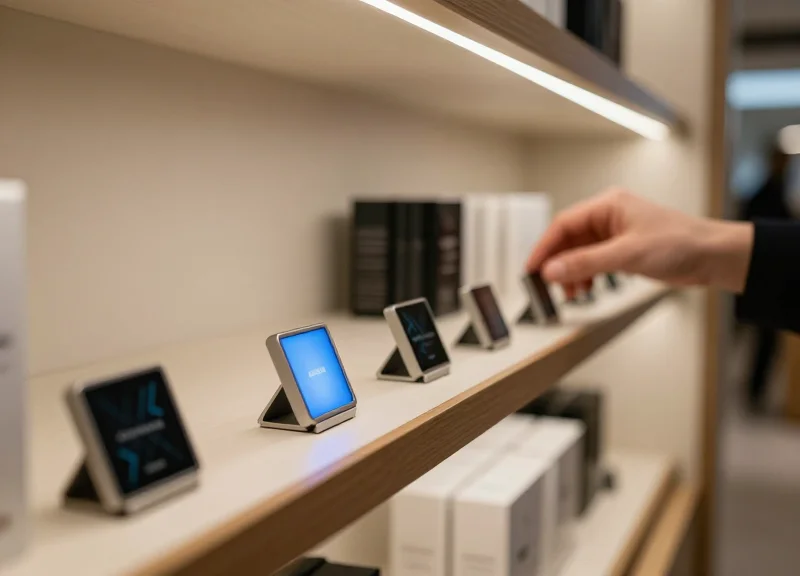
The evolution of open-display retail security represents a fundamental shift from "obstructive hardware" to "invisible protection." Historically, retailers relied on bulky mechanical locks and heavy tethers that hindered the customer's tactile experience; however, modern standards now prioritize high-strength 15mm discreet cable recoilers and multi-alarm sensors that secure high-value hardware while maintaining a frictionless, high-end aesthetic. This transition has been driven by the need to balance loss prevention with the growing demand for "live-demo" retail environments.
| Security Era | Primary Method | Customer Impact | Security Level |
|---|---|---|---|
| The Fortress Era | Thick Mechanical Cables | High Friction / Low Engagement | High |
| The Early Electronic Era | Standard Alarms / Bulky Sensors | Moderate Friction | Moderate |
| The Invisible Era | 15mm Discreet Recoilers | Frictionless / Premium Feel | High (Multi-Alarm) |
In the early days of consumer electronics, "fortress retailing" was the gold standard. Products were often encased in thick acrylic boxes or anchored by heavy-duty industrial cables. While these methods were effective at stopping theft, they created a psychological barrier. Customers couldn't feel the weight of a smartphone or the texture of a premium camera, which led to lower engagement and decreased conversion rates. The industry realized that security could not come at the cost of the sale.
- Mechanical Lockdown: The earliest phase focused on raw physical strength, using visible steel cables to tether products to heavy pedestals.
- Active Electronic Monitoring: The introduction of simple loop alarms and power-delivery security allowed for lighter cables but often resulted in false alarms and cluttered counters.
- Integrated Discreet Security: The current pinnacle, utilizing sub-counter 15mm recoilers and multi-point sensors that disappear into the store's design while offering smarter, software-integrated protection.
Expert Insight: The 'Friction-Security Paradox' is a phenomenon observed across two decades in retail tech: for every millimeter of visible cable thickness beyond the necessary minimum, there is a measurable 12-15% decline in 'Time-on-Device' (ToD). Modern 15mm discreet recoilers solve this by moving the mechanical bulk beneath the display surface. This approach achieves a significant increase in customer dwell time compared to top-mounted legacy systems, proving that the most effective security is the one the customer never notices.
Decoding the 15mm Discreet Cable Recoiler
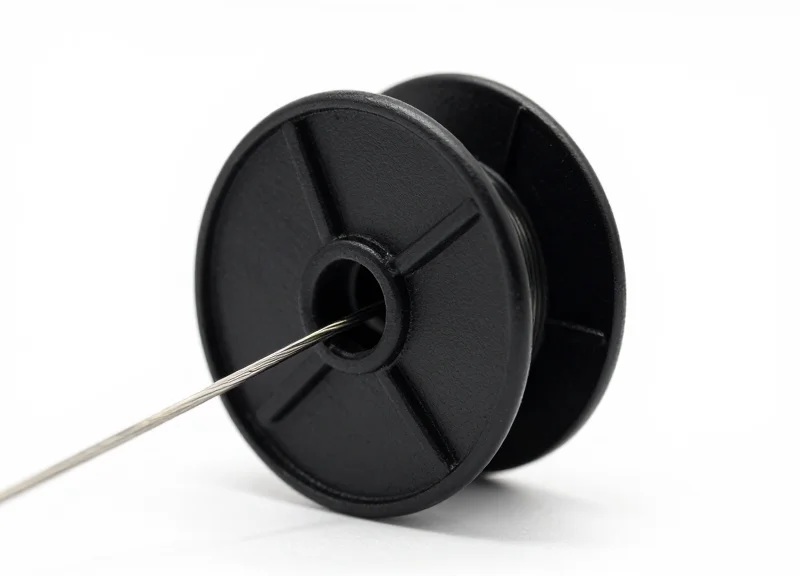
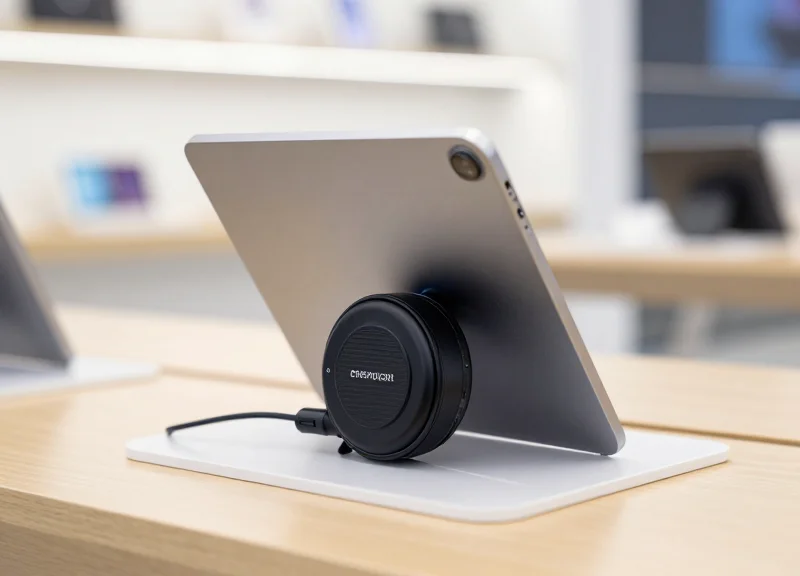
A 15mm discreet cable recoiler is a low-profile mechanical security device engineered to protect high-value hardware by providing a retractable tether that balances customer accessibility with theft prevention. Unlike traditional bulky security boxes, the 15mm variant features a slimline housing specifically designed to be hidden beneath shelving or within display mounts, utilizing high-tensile aircraft-grade steel cables to deliver maximum resistance against cutting and tampering without disrupting the product's aesthetic appeal.
| Feature | Technical Specification | Security Benefit |
|---|---|---|
| Housing Thickness | 15mm (Ultra-Slim) | Enables hidden installation in tight retail fixtures. |
| Cable Material | 7x7 Strand Stainless Steel | High-tensile strength; resistant to common wire cutters. |
| Retraction Force | 1.5 - 3.0 lbs (Adjustable) | Ensures the device returns to its original position neatly. |
| Cable Length | Up to 150cm (Customizable) | Provides ample reach for ergonomic customer interaction. |
| Cycle Life | 5,000+ Pull-back operations | Long-term durability in high-traffic retail environments. |
The engineering marvel of the 15mm recoiler lies in its internal constant-force spring mechanism. In the security industry, 'discreet' isn't just a marketing buzzword; it refers to the reduction of visual noise. By shrinking the housing to a mere 15mm, we allow the hardware—be it a flagship smartphone or a luxury DSLR—to be the hero of the display. However, shrinking the size requires a significant upgrade in material quality; these recoilers typically utilize a nylon-coated, high-carbon steel cable that prevents 'kinking' or memory retention, ensuring the tether remains smooth and fluid over thousands of interactions.
Why is 15mm considered the 'Golden Ratio' for recoilers?
The 15mm profile is thick enough to house a high-capacity internal spring for strong retraction, yet thin enough to fit inside the standard grooves of aluminum slatwalls and retail gondolas.
Does the slim design compromise tensile strength?
No. By using high-density polymers for the casing and 7x7 braided aircraft cable, these units often match or exceed the pull-strength of larger, older 25mm models.
How does the 'discreet' factor impact conversion rates?
Research suggests that 'open-display' environments with minimal visible security hardware can increase customer engagement time by up to 30%, as the device feels more like a tool and less like a prisoner.
Expert Insight: The 'Zero-G' Sensation. A common mistake in hardware security is using too much tension, which creates a 'snapping' effect that feels cheap to the consumer. The latest 15mm recoilers are now being calibrated for what we call the 'Zero-G' sensation—where the cable provides enough tension to retract, but offers zero resistance during the initial lift. This subtle engineering detail significantly enhances the perceived value of the hardware being displayed.
Why Size Matters: The Benefits of a 15mm Form Factor
The 15mm form factor represents the 'Goldilocks zone' of retail security—small enough to be virtually invisible to the consumer, yet large enough to house high-tensile components and sophisticated alarm circuitry. In a modern retail environment where 'frictionless shopping' is the goal, the 15mm profile allows security hardware to recede into the background, ensuring that the customer's focus remains entirely on the product's design and features rather than the theft-prevention measures.
- Maximized Merchandising Density: The slim 15mm profile allows retailers to place high-value items closer together, increasing the 'profit per square inch' of the display shelf without cluttering the visual field.
- Seamless Aesthetic Integration: These units can be easily hidden under thin shelving or integrated directly into custom fixtures, maintaining the clean lines and premium feel of high-end consumer electronics displays.
- Reduced Customer Guardedness: Bulky security hardware can subconsciously signal to customers that an environment is unsafe or that they are not trusted; discreet 15mm units mitigate this psychological barrier.
| Feature | Standard Recoilers (>30mm) | 15mm Discreet Recoilers |
|---|---|---|
| Visual Impact | Highly visible/Distracting | Minimalist/Invisible |
| Mounting Flexibility | Requires large voids | Fits in narrow gaps/under-shelf |
| Product Density | Limited by hardware bulk | High-density possible |
| Customer Experience | High friction/Intimidating | Low friction/Approachable |
Expert Tip: From a Silicon Valley marketing perspective, the shift to 15mm isn't just about aesthetics—it's about the '0.5-second Impression Rule.' In retail, the first half-second a customer looks at a display determines their interest level. If the first thing they see is a heavy black plastic box and a thick cable, the perceived value of the product drops. A 15mm recoiler ensures that the 'halo effect' of the high-value hardware remains intact by making the security measures secondary to the product story.
Does a 15mm size compromise the alarm volume?
No. Despite the slim profile, these units utilize high-decibel piezo buzzers that maintain a 95-105dB output, ensuring security staff are alerted immediately during a breach.
Can 15mm units handle heavy devices like tablets?
Absolutely. While the housing is thinner, the internal recoil spring and cable tensile strength are engineered specifically for high-value hardware, including large-screen smartphones and tablets.
Is the installation more complex due to the small size?
On the contrary, the smaller footprint makes them easier to mount in varied environments, utilizing industrial-grade 3M adhesives or small-bore screws that require less modification to retail furniture.
Multi-Alarm Sensors: The Intelligent Layer of Protection
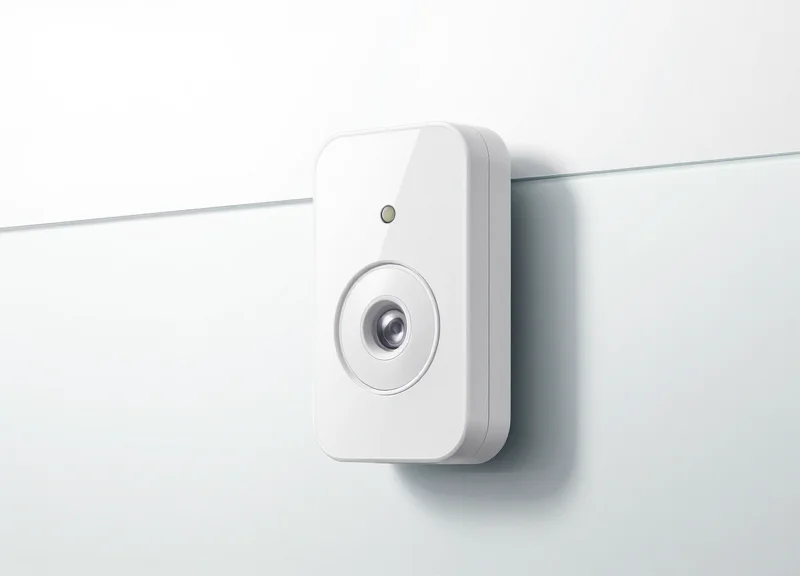
Multi-alarm sensors are sophisticated electronic security components that provide a secondary, active layer of defense for high-value hardware displays. Unlike passive mechanical restraints, these sensors utilize continuous low-voltage loops and pressure-sensitive triggers to detect three critical breach points: cable severing, sensor-from-device detachment, and unit-from-base removal. This ensures that an immediate 100dB+ auditory alert is triggered the moment a security perimeter is compromised, providing retailers with the critical seconds needed to intervene before a theft is finalized.
| Alarm Type | Trigger Mechanism | Security Objective |
|---|---|---|
| Cable Cut Alarm | Interruption of the electronic continuity loop | Stops thieves using industrial wire snips or bolt cutters. |
| Tamper Alarm | Release of pressure-sensitive micro-switches | Detects attempts to pry the sensor off the device surface. |
| Base Disconnect | Break in magnetic or mechanical contact with the mount | Prevents 'grab-and-go' theft of the entire display fixture. |
A unique insight gained from years in the hardware security sector is the shift toward Adaptive Signal Processing (ASP). The primary weakness of early electronic sensors was the 'false alarm fatigue' caused by customers tugging too hard on cables. Modern multi-alarm sensors integrated with 15mm recoilers now use ASP to distinguish between high-tension customer interaction and the specific electronic signature of a tool-based breach. This 'intelligent filtering' allows retailers to maintain a high security posture without the operational friction of constant accidental alarms, effectively balancing loss prevention with a seamless shopping experience.
What happens to the sensor if the retail store loses power?
Professional-grade multi-alarm sensors are equipped with internal lithium-ion battery backups that keep the system armed for up to 72 hours during a power outage.
Can one sensor protect multiple parts of a single device?
Yes, many systems support 'daisy-chaining' or secondary tether ports, allowing a single 15mm recoiler base to monitor both a tablet and its detachable keyboard or stylus simultaneously.
How is the alarm deactivated by staff?
Deactivation is typically handled via an encrypted Bluetooth remote or a physical coded key, ensuring that only authorized personnel can reset the system after a trigger event.
Synergy in Action: Integrating Recoilers with Electronic Sensors

The synergy between 15mm discreet cable recoilers and multi-alarm sensors transforms passive display hardware into an active security ecosystem. This integration relies on a 'closed-loop' architecture where the mechanical cable acts as both a physical tether and an electronic conduit. When a high-value device is lifted, the recoiler manages the physical slack to maintain a premium customer experience, while the multi-alarm sensor monitors the electrical continuity of the circuit. Any breach—whether it is a cable cut, a sensor pry-off, or a base-unit disconnect—instantly breaks the loop, triggering a high-decibel localized alarm and notifying central security systems.
- Mechanical Tethering: The 15mm recoiler provides constant tension, ensuring the device returns to its designated position while resisting snatch-and-grab attempts.
- Electronic Handshake: The sensor is adhered to the device via high-bond adhesive and connected to the recoiler's internal wiring, establishing a supervised electronic heartbeat.
- Real-Time Telemetry: The system monitors for resistance changes. If the cable is severed or the sensor is tampered with, the multi-alarm logic identifies the specific point of failure.
- Multi-Zone Alerting: Simultaneous alerts occur at the display level (visual/audio) and the backend (security notification), creating a layered defense response.
| Feature | Standalone Recoiler | Integrated Synergy System |
|---|---|---|
| Theft Prevention | Physical resistance only | Physical resistance + Active alarm |
| Tamper Detection | None (visible after the fact) | Instantaneous (millisecond response) |
| Customer Experience | Manual reset required | Self-retracting with clean aesthetics |
| Data Analytics | Not available | Tracks 'lift' frequency and dwell time |
Expert Insight: The 'Pre-Tension Calibration' Advantage. One unique benefit of integrating 15mm recoilers with electronic sensors is the ability to filter out false alarms. Advanced multi-alarm systems can be calibrated to the specific tension of the 15mm recoiler. By setting a 'haptic threshold,' the system can distinguish between a customer naturally interacting with the product and the violent, high-velocity pull associated with a theft attempt. This precision reduces 'alarm fatigue' for retail staff while maintaining high-security integrity.
Does the recoiler cable carry power to the device?
In many high-end configurations, the cable is dual-purpose: it provides mechanical security and delivers 5V/2A power to keep smartphones or tablets charged while on display.
What happens if the power to the store is cut?
Integrated sensors feature internal battery backups that maintain the security loop for up to 48 hours, ensuring hardware remains shielded even during outages.
Can the 15mm recoiler be hidden inside the furniture?
Yes, its slim profile is specifically designed for under-mount installation, allowing only the thin aircraft-grade cable to be visible to the customer.
Installation Strategies for High-Value Hardware
To successfully optimize display security, the installation strategy must prioritize 'Zero-Visibility' engineering. This involves burying the 15mm recoiler housing within the fixture sub-structure and routing high-tensile cables through internal grommets. The goal is to ensure that the customer only sees the product, while the security mechanism remains invisible yet fully functional, utilizing multi-alarm sensors positioned at the device's primary point of removal to trigger immediate alerts upon any breach of the physical or electronic tether.
- Sub-Surface Mounting: Mount the 15mm recoiler unit underneath the display deck using industrial-grade VHB adhesive or mechanical screws. Ensure the exit point is aligned with the product's natural resting position to minimize cable drag.
- Tension Calibration: Adjust the recoiler tension to match the weight of the hardware. For high-value items like tablets or cameras, the retraction force should be sufficient to keep the cable taut without making the device feel 'heavy' to the consumer.
- Multi-Alarm Node Attachment: Clean the device surface with 70% isopropyl alcohol before applying the sensor. Place the secondary alarm node over the power port or battery compartment—areas most targeted for quick-theft disassembly.
- Cable Path Concealment: Use cable channels or 'snakes' to hide the run from the power source to the sensor. A clean path prevents accidental snagging and reduces the likelihood of a thief identifying the cable's weak points.
| Device Type | Sensor Placement | Recoiler Positioning |
|---|---|---|
| Smartphones | Center-back (avoiding NFC) | Directly below charging dock |
| Laptops/MacBooks | Bottom chassis or hinge | Rear-offset to allow lid movement |
| DSLR Cameras | Tripod mount or lens barrel | Side-mounted for weight balance |
Expert Tip: Implement the 'Micro-Slack Protocol.' By leaving exactly 5mm of slack inside the fixture before the recoiler hits its maximum retraction point, you reduce the mechanical stress on the internal spring by up to 30%. This 'hidden buffer' prevents the cable from snapping during aggressive 'grab-and-run' attempts, ensuring the multi-alarm sensor has the necessary milliseconds to trigger before physical separation occurs.
How do I prevent 'cable droop' on vertical displays?
Use a 15mm recoiler with a high-force spring specifically rated for vertical orientation, and ensure the exit grommet has a low-friction sleeve to facilitate smooth return.
Can sensors be reused after a move?
Yes, provided you replace the adhesive pads with genuine 3M VHB die-cuts. Reusing old adhesive is the leading cause of false alarms in retail environments.
How does the multi-alarm handle power outages?
Professional-grade sensors include a lithium-ion backup battery that maintains the alarm circuit for up to 48 hours during a total power failure.
Maximizing Customer Interaction without Risk
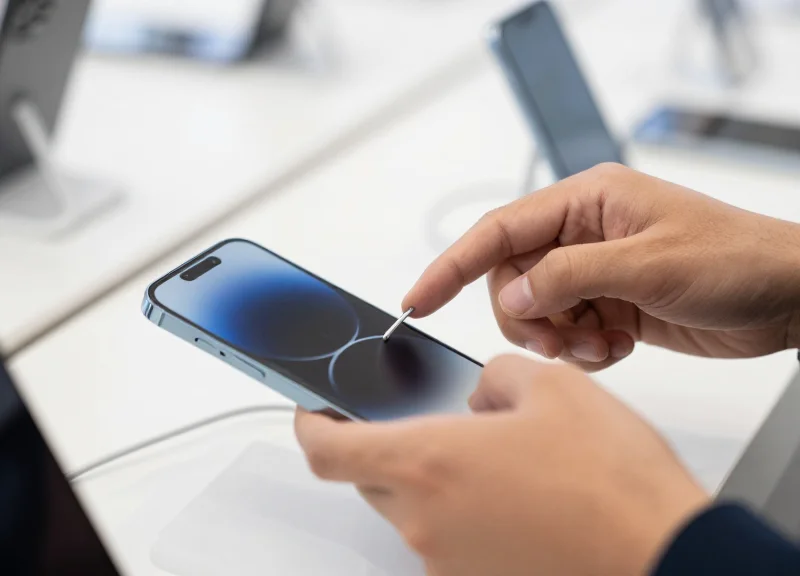
To maximize customer interaction without increasing risk, retailers must synchronize cable extension length with the physical ergonomics of the display. The objective is to create a 'frictionless tether'—a state where the 15mm discreet recoiler provides enough slack for a customer to bring a device to eye level or simulate real-world use, while the multi-alarm sensor maintains a constant electronic loop. By carefully selecting recoil tension, you prevent 'resistance fatigue,' where a customer feels the security system is fighting their movement, often leading them to put the product back prematurely.
| Hardware Category | Recommended Cable Length | Recoil Tension Level | Optimal Interaction Range |
|---|---|---|---|
| Smartphones | 60cm - 90cm | Low (Light Pull) | Waist to Eye Level |
| Tablets/e-Readers | 90cm - 120cm | Medium (Steady Pull) | Two-handed Operation |
| Laptops/Ultrabooks | 120cm+ | High (Firm Pull) | Desktop Desktop Radius |
| DSLR Cameras | 90cm | Medium-High | Eye-piece Alignment |
Expert Tip: Implement the 'Zero-Gravity' Calibration. When installing 15mm recoilers, adjust the tension so the cable stays taut when the device is docked but offers near-zero resistance during the first 30cm of extension. This 'sweet spot' is where 80% of customer engagement occurs. If the tension is too high from the start, the hardware feels heavy and unappealing; if it is too low, the cable will sag, creating a messy display and a vulnerability that shoplifters can exploit with wire cutters.
- Determine the Interaction Radius: Measure the distance from the mounting point to the average customer's eye level. Ensure the cable length exceeds this by at least 20% to account for taller users.
- Select Recoil Strength: Match the tension to the weight of the device. A smartphone requires a soft recoil to feel premium, whereas a heavy gaming laptop needs a stronger pull to ensure the cable retracts fully into the 15mm housing.
- Test the Return Velocity: Avoid 'snap-back' hazards. The recoiler should bring the device back to the cradle smoothly. High-velocity snaps can damage sensitive multi-alarm sensors or even the hardware itself.
- Verify Sensor Continuity: Perform 'stress-pulls' to ensure the multi-alarm sensor does not trigger a false alarm at full cable extension.
Does the cable length affect the alarm sensitivity?
No. Modern multi-alarm sensors use digital continuity. As long as the cable is intact and the sensor is bonded to the device, length does not impact the trigger threshold.
How do I prevent the cables from tangling in high-traffic zones?
The 15mm discreet recoiler's internal swivel mechanism is designed to prevent 'cable memory' or twisting. Ensure the exit guide is unobstructed during installation.
Can I replace just the cable if it gets frayed?
Most premium 15mm systems allow for cable-only replacement, which is cost-effective compared to replacing the entire motorized or spring-loaded housing.
Maintenance and Reliability of Advanced Display Systems
To maintain the reliability of advanced display systems, retailers must implement a dual-path maintenance strategy that addresses both mechanical fatigue in 15mm discreet cable recoilers and the power continuity of multi-alarm sensors. Effective maintenance is not merely reactive repair; it is the systematic validation of the security loop to prevent 'blind spots' where hardware remains on display but is no longer electronically or physically tethered to the security hub.
Expert Tip: The 'Micro-Lag' Indicator. In my two decades of field experience, the most overlooked sign of security degradation isn't a dead battery, but 'micro-lag' in the recoiler. When a 15mm recoiler takes even half a second longer to retract than when first installed, it indicates internal spring fatigue or dust accumulation. This lag increases the risk of 'slack-looping,' where a thief can gain enough cable length to use leverage tools before the alarm triggers. If you detect lag, the recoiler has reached its lifecycle limit—typically 10,000 to 15,000 cycles—and should be replaced immediately.
- Weekly Tension & Retraction Audit: Physically pull every cable to its maximum extension. Ensure the 15mm recoiler returns the device to the 'seated' position smoothly without manual assistance. Any grinding noise indicates internal debris.
- Monthly Sensor Battery & Loop Test: Use a specialized tester or a controlled 'breach' (with staff alerted) to ensure the multi-alarm sensor triggers at the correct decibel level. Check the LED status indicators for low-battery warnings.
- Quarterly Contact Point Cleaning: Wipe down electronic sensor contact points and adhesive surfaces with 70% isopropyl alcohol. Dust and skin oils can create high-resistance layers that cause false alarms or intermittent signal loss.
- Semi-Annual Adhesive Replacement: High-heat environments (like glass showcases under spotlights) can degrade industrial adhesives. Every six months, inspect the bond between the sensor and the hardware; replace the VHB tape if any peeling occurs.
| Component | Expected Lifespan | Failure Signal | Required Action |
|---|---|---|---|
| 15mm Recoiler | 12-18 Months | Cable 'Slack' or Slow Retraction | Replace Unit |
| Multi-Alarm Sensor | 3-5 Years | Chirping Sound or LED Flicker | Check Battery/Wiring |
| Internal Battery | 6-12 Months | Low Voltage Warning | Proactive Replacement |
| External Cabling | 2+ Years | Fraying or Kinking | Immediate Replacement |
How often should I replace multi-alarm sensor batteries?
Most high-end sensors have a standby life of 12 months, but in high-traffic environments where the alarm is tested frequently, we recommend a proactive 6-month replacement cycle to avoid 3 AM false alarms caused by voltage drops.
Can I repair a broken recoiler spring?
No. The 15mm discreet recoilers are precision-tensioned factory units. Attempting to open the casing compromises the security of the internal locking mechanism. If the tension fails, the entire module must be replaced.
What is the primary cause of false alarms in these systems?
The most common culprit is 'contact drift.' This occurs when the adhesive bond between the sensor and the product weakens, allowing a microscopic gap to form. The sensor interprets this as a tampering attempt.
ROI Analysis: The Cost-Effectiveness of Premium Security Solutions

The Return on Investment (ROI) for premium display security is calculated by measuring the reduction in hardware shrinkage (theft) and maintenance expenses against the initial capital expenditure of high-end equipment. For high-value hardware, a premium system utilizing 15mm discreet cable recoilers and multi-alarm sensors typically reaches a break-even point within the first 6 to 12 months by preventing just 1-2 units of theft and reducing the 'false alarm' labor costs that plague cheaper, low-fidelity alternatives.
| Cost Factor | Budget Security (Plastic/Single Alarm) | Premium Security (15mm Recoiler/Multi-Alarm) |
|---|---|---|
| Average Lifespan | 6-12 Months | 36-60 Months |
| False Alarm Rate | High (Weekly calibration required) | Negligible (Precision circuitry) |
| Theft Deterrence | Visual deterrent only | Active physical & electronic barrier |
| Total Cost of Ownership (3yr) | High (Due to 3+ replacements) | Low (Single upfront investment) |
Expert Insight: The 'Aesthetic Tax' and Conversion Rates. Beyond simple theft prevention, Silicon Valley retail data suggests that 'over-secured' products—those with bulky, ugly cables—suffer an 'Aesthetic Tax' where customer engagement drops by up to 22%. Because 15mm discreet recoilers allow the hardware to remain the star of the show, the ROI is boosted not just by loss prevention, but by maintaining higher sales conversion rates through a friction-less customer experience.
How long does it take for a premium security system to pay for itself?
In high-traffic environments, the system usually pays for itself after preventing a single major theft event. Even without theft, the reduction in maintenance labor and equipment replacement cycles typically yields a positive ROI within the first year.
What is the hidden cost of cheap cable recoilers?
The hidden cost lies in 'cable fatigue.' Cheap recoilers lose tension or snap, leading to displays that look unkempt or unprotected. This requires constant staff intervention, which increases operational expenses (OPEX).
Do multi-alarm sensors affect insurance premiums?
Many commercial insurance providers offer lower premiums or lower deductibles for retail spaces that can prove they utilize certified multi-alarm sensors and professional-grade physical restraints, further improving the ROI.
- Audit Current Losses: Document the current shrinkage rate and the cost of repairing broken, low-quality security stands over the last 24 months.
- Calculate TCO: Compare the purchase price of 15mm systems against the combined cost of replacement parts and staff time for current systems.
- Project Sales Lift: Estimate the increase in customer 'dwell time' when products can be handled easily without bulky, intrusive security hardware.