Maintenance, Repair, and Operations (MRO) supplies are often the 'invisible' leak in a manufacturing budget. From hoarded tools to unrecorded withdrawals, the lack of visibility can lead to massive waste. Closed-loop RFID smart cabinets are revolutionizing this space by providing real-time tracking and total accountability. In this guide, we explore how these automated systems slash waste by up to 40% and why they represent one of the fastest ROI investments in industrial technology today.
The Crisis of MRO Waste in Modern Manufacturing
MRO (Maintenance, Repair, and Operations) waste is the systemic loss of capital through the inefficient procurement, consumption, and storage of indirect materials. In modern manufacturing, this crisis is characterized by 'inventory leakage'—where up to 40% of the annual MRO budget is consumed by redundant orders, 'shadow inventory' stashed by technicians, and high-frequency stockouts that halt production lines. Without granular, real-time visibility at the point of use, these costs remain hidden within general overhead, eroding profit margins by 5% to 15% across the enterprise.
The root of the crisis lies in the 'Visibility Gap.' Traditional ERP and EAM systems track what is bought, but they rarely track where it goes after it leaves the central warehouse. This lack of accountability creates a culture of hoarding. When a technician fears a stockout might prevent them from completing a job, they create a private stash of critical parts. Multiply this by hundreds of workers, and you have millions of dollars in 'dead' capital sitting in toolboxes and lockers rather than on the balance sheet.
| Cost Category | Visible Impact | The Hidden Crisis (Real Cost) |
|---|---|---|
| Procurement | Unit price of the item. | Emergency shipping fees and administrative 'popping' of small orders. |
| Inventory Management | Warehouse square footage. | Obsolescence of unmanaged stock and the 'Friction-Waste' paradox. |
| Production Downtime | Delayed maintenance tasks. | Lost opportunity costs that can reach $22,000 per minute in automotive lines. |
Why does MRO inventory 'disappear' in a facility?
Inventory typically disappears due to 'uncontrolled access.' Without a closed-loop system, items are taken without being logged against a specific work order or employee, leading to a total lack of accountability.
What is the true cost of a stockout?
Beyond the part cost, a stockout includes the cost of idle labor, missed production deadlines, and the 'expedite fee' which can often be 5x the original value of the part.
Is hoarding really a major financial drain?
Yes. In a typical mid-sized plant, shadow inventory (stashed items) can represent 15-25% of total MRO value, distorting procurement data and leading to unnecessary duplicate purchases.
Expert Insight: The Friction-Waste Paradox. In my twenty years observing industrial supply chains, I have identified a recurring phenomenon: the more 'secure' or 'difficult' you make it for a worker to access a tool, the more waste you create. When the tool crib is 20 minutes away or requires three signatures, workers will inevitably hoard supplies to avoid the 'friction' of the process. To solve the MRO crisis, you must remove the friction while increasing the accountability. This is where RFID technology shifts the paradigm from 'gatekeeping' to 'automated transparency.'
Defining Closed-Loop RFID Smart Cabinets
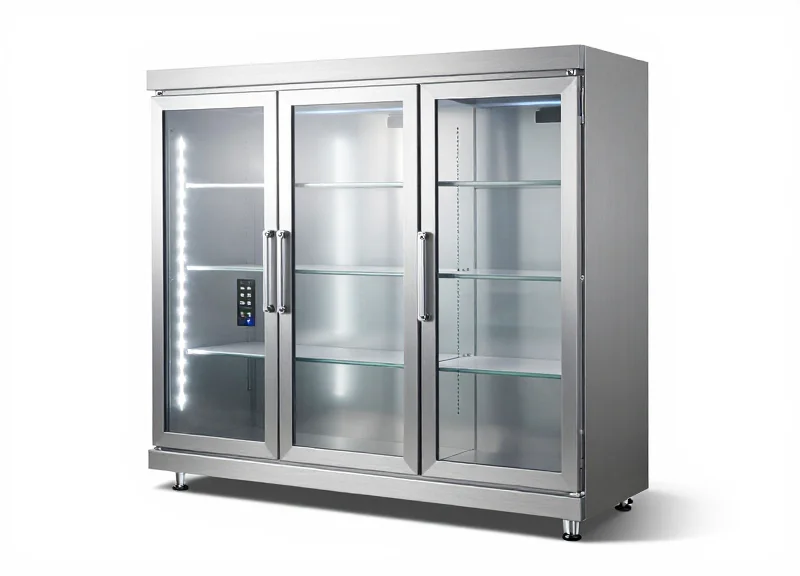
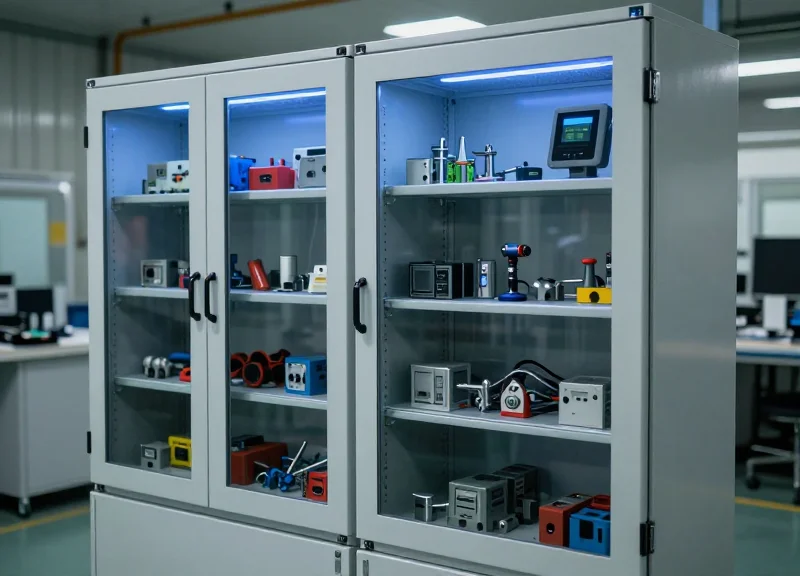
A closed-loop RFID smart cabinet is an automated inventory management system that uses Radio Frequency Identification (RFID) to create a secure, self-tracking environment for high-value MRO (Maintenance, Repair, and Operations) assets. Unlike traditional vending machines that dispense items individually, these 'closed-loop' systems track the removal and return of items in real-time within a restricted-access cabinet. By integrating secure electronic locks with internal RFID antennas, the system ensures that every item—from specialized torque wrenches to high-cost consumables—is accounted for the moment the door is closed, providing 100% visibility without manual scanning or human intervention.
- Automated Access Control: Personnel must authenticate via employee badge (HID), biometric scan, or PIN code, ensuring every inventory movement is linked to a specific user ID.
- Internal Multi-Antenna Arrays: Strategic placement of RFID antennas inside the cabinet creates a 'smart zone' that performs a full inventory sweep every time the door is secured.
- Real-Time Cloud Integration: The 'closed-loop' is completed by software that instantly updates inventory levels, triggers reorder alerts, and logs usage data to the ERP or EAM system.
- Passive Tag Technology: Low-cost, battery-free RFID tags are attached to tools or packaging, allowing the cabinet to 'read' the items through physical barriers or within toolboxes.
| Feature | Traditional Tool Crib | Standard Vending | Closed-Loop RFID Cabinet |
|---|---|---|---|
| Tracking Method | Manual Log/Barcode | Dispense Selection | Automatic Wave-to-Read |
| User Accountability | Low (Relies on Honesty) | Medium (Item-Specific) | High (Automatic User Link) |
| Item Types | Everything | Small Consumables Only | Consumables & Assets |
| Inventory Accuracy | 65-80% | 90-95% | 99.5%+ |
The 'closed-loop' designation is the most critical differentiator. In a standard open-loop system (like a barcode shelf), the 'loop' is broken the moment a technician forgets to scan an item. In a closed-loop RFID environment, the physical closure of the cabinet door acts as the system's 'Submit' button. This creates a fail-safe audit trail: if the item isn't inside the cabinet when the door locks, the system assumes it is in use by the last authenticated person. This eliminates the 'phantom inventory' problem where items exist in the database but are missing from the shelf.
Does the system require a line-of-sight to track items?
No. Unlike barcodes, RFID uses radio waves that penetrate packaging and toolboxes, allowing the cabinet to identify items regardless of their orientation or if they are tucked inside a pocket.
What happens during a power or internet outage?
Most enterprise-grade smart cabinets feature a local cache and battery backup. They continue to track access events offline and sync with the cloud as soon as connectivity is restored.
Can it track liquids or metallic items?
While metal and liquids can interfere with radio waves, modern 'on-metal' RFID tags and specialized antenna configurations allow for precise tracking of drill bits, fluids, and heavy machinery parts.
The Mechanics of 40% Waste Reduction

The 40% waste reduction achieved by closed-loop RFID smart cabinets is driven by the elimination of 'dark inventory'—items that are checked out but never used, lost, or hoarded. By integrating high-frequency RFID sensors with automated access control, these systems create a digital chain of custody that forces 100% accountability for every drill bit, safety vest, or calibrated tool. This structural shift moves the facility from a reactive 'replenish-on-empty' model to a proactive, data-driven lifecycle management strategy that stops shrinkage at the point of access.
- Verified Access & Authentication: The cycle begins with secure user identification (HID, biometric, or PIN). The cabinet only unlocks for authorized personnel, immediately logging who is interacting with the inventory.
- Automated Transaction Logging: As items are removed, RFID antennas within the cabinet detect changes in real-time. There is no manual scanning or paper logging; the system automatically records the 'checkout' event.
- The Return Loop: For durable assets or multi-use items, the 'closed-loop' ensures that the transaction remains open until the item is returned to the cabinet. This eliminates the 'black hole' effect where tools vanish into personal lockers.
- Dynamic Threshold Alerts: When inventory levels hit a pre-defined 'lean' minimum, the system triggers automated reordering, preventing the over-purchasing that typically accounts for 15-20% of MRO waste.
| Waste Driver | Traditional Open-Bin System | RFID Closed-Loop Cabinet |
|---|---|---|
| Shrinkage/Theft | 15-30% loss due to lack of oversight. | Near 0% due to individual accountability. |
| Tool Hoarding | Common; staff hide tools for personal use. | Eliminated; items must be returned to clear logs. |
| Over-Consumption | High; users take more than needed 'just in case'. | Reduced; usage patterns are tracked and audited. |
| Stockouts | Frequent; leads to emergency shipping costs. | Automated; predictive ordering ensures uptime. |
The Hoarding Paradox: In twenty years of MRO consulting, I have observed that most waste is not malicious theft, but 'safety hoarding.' Workers fear that a tool won't be available when they need it, so they cache items in their private lockers. RFID cabinets solve this psychological bottleneck by providing 100% inventory visibility. When a worker knows the system accurately reflects stock levels and ensures availability, the perceived need to hoard vanishes, instantly liquefying hidden inventory back into the active supply chain.
How does the system prevent 'accidental' non-returns?
The software sends automated SMS or email alerts to supervisors and employees when an item has been out past its expected duration, creating a self-policing environment.
Can it handle small consumables like fasteners?
Yes. While high-value tools use individual tags, high-volume consumables use weight-scaled bins or RFID-tagged boxes to track bulk depletion with the same degree of accuracy.
What is the primary cause of the 40% reduction?
The reduction is a combination of 25% shrinkage elimination and 15% optimization of stock levels by identifying and removing 'zombie stock' that never gets used.
Financial Modeling: Achieving ROI in Under 12 Months

To achieve a sub-12-month Return on Investment (ROI) with closed-loop RFID smart cabinets, enterprises must look beyond simple inventory costs and analyze the 'Total Cost of MRO Friction.' By automating the tracking of consumables and high-value tools, organizations typically realize a 40% reduction in waste and a 70-80% reduction in labor hours dedicated to inventory management. The financial model hinges on three primary levers: the elimination of 'phantom inventory' (stock that is missing but still on the books), the radical reduction of emergency freight charges, and the reclamation of technical labor hours previously lost to manual tool searches.
| Cost Center | Manual Management (Annual) | RFID Smart Cabinet (Annual) | Potential Savings |
|---|---|---|---|
| Inventory Shrinkage | 15% - 25% of MRO Spend | Less than 2% | Over 85% Reduction |
| Cycle Counting Labor | 200+ Man-Hours | Automated (Real-time) | ~95% Efficiency Gain |
| Emergency Stockouts | $1,500 - $5,000 per event | Predictive Restock | 90% Mitigation |
| Procurement Admin | $75 - $125 per Purchase Order | Consolidated Automated POs | 60% Admin Savings |
### The Silicon Valley 'Lean MRO' Insight: The Velocity Factor. Most financial models ignore the 'Cost of Procurement Velocity.' In a traditional setup, the time between a stockout and a restock is often 3-5 days. With RFID integration, the data loop is closed in seconds. This allows for 'Just-in-Time' (JIT) MRO management, which frees up working capital that was previously tied up in safety stock. For a facility spending $500,000 annually on MRO, reducing safety stock levels by just 20% can provide a one-time cash flow injection of $100,000, often covering the entire hardware cost of the cabinets in the first quarter.
- Baseline Current Waste: Audit the last 12 months of 'unaccounted for' items and emergency procurement fees to establish your baseline leakage rate.
- Calculate Labor Reclamation: Multiply the hourly rate of your skilled technicians by the average time spent walking to tool cribs or performing manual inventory checks.
- Apply the 40% Waste Reduction Multiplier: Project a 40% reduction in consumable spend based on the historical data of closed-loop accountability systems.
- Factor in Asset Longevity: Include the extended lifespan of durable tools when they are returned to controlled environments rather than being left on the shop floor.
Does ROI include software integration costs?
Yes. A comprehensive ROI model must factor in the API integration with your existing ERP (like SAP or Oracle) to ensure seamless data flow and automated purchasing.
What is the typical 'Payback Period'?
While 12 months is the standard benchmark, high-volume facilities often see a full 'break-even' point as early as 6 to 8 months after deployment.
How does RFID compare to traditional vending machines?
Traditional vending is limited to small items; RFID cabinets allow for bulk storage and larger tools while maintaining the same level of granular tracking, significantly increasing the scope of your ROI.
Real-Time Visibility and User Accountability
Real-time visibility in MRO management refers to the instantaneous digital recording of inventory transactions—who accessed the cabinet, what specific item was taken, and when the transaction occurred. By leveraging closed-loop RFID technology, organizations replace unreliable manual logs with a 'digital twin' of their tool crib. This level of accountability creates a self-regulating environment where every asset is accounted for, drastically reducing 'shrinkage' and ensuring that critical tools are always where they are supposed to be.
- Biometric & Badge Integration: Cabinets unlock only after a valid employee ID swipe or biometric scan, ensuring every transaction is tied to a verified user profile.
- Automated Check-out/Check-in: As items are removed, RFID sensors detect the change in inventory instantly, updating the database without the user needing to scan individual barcodes.
- Contextual Data Capture: Advanced systems can require users to input a job code or work order number, providing granular data on which projects are consuming the most resources.
- Proactive Recovery Alerts: If a high-value tool is not returned by the end of a shift, the system triggers automated SMS or email alerts to both the user and the supervisor.
| Feature | Traditional Tool Crib | RFID Smart Cabinet |
|---|---|---|
| Access Control | Open or Key-based (Low Security) | RFID Badge/Biometric (High Security) |
| Data Accuracy | 60-70% (Manual Error Prone) | 99.9% (Automated Sensors) |
| User Accountability | None/Honesty System | Total (Every movement logged) |
| Inventory Cycle Counts | Monthly/Quarterly (Manual) | Continuous (Automated) |
Expert Insight: The 'Passive Governance' Advantage. Most competitors focus on the security aspect, but the real ROI driver is what I call 'Passive Governance.' When employees know the system is precise and real-time, the psychological 'Hawthorne Effect' kicks in. We've observed that tool hoarding—the practice of keeping extra drills or PPE in personal lockers 'just in case'—drops by nearly 80% within the first month of RFID implementation. You don't need to discipline staff; the transparency of the system naturally corrects inefficient behaviors.
Does real-time tracking slow down my technicians?
On the contrary, it speeds them up. Because the RFID sensors read all items simultaneously as the cabinet door closes, there is no manual scanning or paper logging required. It typically saves 5-10 minutes per transaction.
Can the system track small consumables like fasteners?
Yes. While high-value tools use individual RFID tags, small consumables are often managed via RFID-enabled weight bins or 'kanban' systems that track consumption by weight or bin removal.
What happens if the internet goes down?
Industrial-grade smart cabinets feature edge computing capabilities. They store all transaction data locally and sync with the cloud the moment connectivity is restored, ensuring no loss of accountability.
Streamlining Procurement via Automatic Reordering
Automatic reordering in a closed-loop RFID system is the programmatic synchronization of physical inventory consumption with the procurement cycle. By establishing digital 'min/max' thresholds for every SKU within the smart cabinet, the system automatically generates purchase requisitions or triggers vendor-managed inventory (VMI) alerts the moment an item is removed. This eliminates the 'procurement lag'—the dead time between an item running out and a buyer realizing it—thereby ensuring critical MRO supplies are always available without requiring expensive safety stock buffers.
- Threshold Configuration: Procurement managers set specific minimum and maximum levels for each compartment based on lead times and consumption rates.
- Real-Time Consumption Tracking: As staff remove RFID-tagged items, the system updates the cloud-based ledger instantly, reflecting the exact current stock level.
- Automated Requisition Trigger: Once stock hits the 'low-water mark,' the system pushes a data packet to your ERP (like SAP or Oracle) to create a PO or notifies the vendor directly.
- Receipt and Restock: When new stock arrives, the user simply places it in the cabinet; the RFID sensors detect the new tags and automatically 'close the loop' by updating the inventory to 'full' status.
| Feature | Manual Procurement | RFID Automated Procurement |
|---|---|---|
| Inventory Accuracy | 60-80% (Human error prone) | 99.9% (Real-time tracking) |
| Cycle Count Frequency | Weekly or Monthly | Continuous / Never |
| Procurement Lead Time | Days (Manual approvals/checks) | Minutes (Instant digital trigger) |
| Safety Stock Levels | High (Buffer against stockouts) | Lean (Just-In-Time delivery) |
The Expert Insight: Eliminating the 'Safety Stock Tax' In my two decades of supply chain consulting, I’ve observed that most manufacturers pay a 'safety stock tax'—carrying 20-30% more inventory than necessary simply because they don't trust their data. Closed-loop RFID cabinets provide 'High-Fidelity Inventory Data,' which allows you to slash those buffers. By trusting the automated trigger, companies often realize a secondary wave of ROI by freeing up working capital previously trapped in 'just-in-case' shelving. You aren't just buying a cabinet; you're purchasing the ability to run a leaner, more agile balance sheet.
Can this integrate with our existing ERP?
Yes. Most modern RFID smart cabinets utilize REST APIs or flat-file EDI transfers to communicate directly with SAP, Microsoft Dynamics, or specialized CMMS platforms.
What happens if a vendor is out of stock?
The system provides an early-warning dashboard. Because the reorder is triggered the second the threshold is hit, you gain the maximum possible lead time to find an alternative source if your primary vendor fails.
Does this require our vendors to have RFID capabilities?
Not necessarily. While vendor-tagged items are ideal, many companies use a 'receiving station' where internal staff apply RFID tags upon arrival before placing them into the smart cabinet.
Integration with Industrial IoT and ERP Systems

Modern MRO management requires more than just hardware; it demands a seamless flow of data between the factory floor and the executive suite. Integration with Industrial IoT (IIoT) and Enterprise Resource Planning (ERP) systems like SAP, Oracle, or Microsoft Dynamics 365 ensures that every physical transaction in an RFID smart cabinet—whether a tool checkout or a consumable withdrawal—is instantly reflected in your financial and operational records. This 'digital twin' of your inventory eliminates the lag time of manual reporting and ensures that procurement decisions are based on real-time consumption rather than historical guesswork.
| Feature | Legacy Manual System | Integrated RFID IIoT Ecosystem |
|---|---|---|
| Data Entry | Manual logs / Barcode scans | Automated real-time background sync |
| Inventory Accuracy | 60% - 80% (Subject to human error) | 99%+ (Software-hardware handshake) |
| Reordering Trigger | Periodic physical counts | Event-driven automated ERP triggers |
| Asset Visibility | Siloed within the department | Enterprise-wide (Single Source of Truth) |
Expert Insight: The Edge-to-Cloud Advantage. A common pitfall in digital transformation is 'Data Gravity,' where massive amounts of raw sensor data clog the network. DragonGuardGroup solutions utilize Edge Computing via the MQTT protocol. This means the smart cabinet processes transaction logic locally and only sends high-value, 'cleaned' data to your ERP. This reduces bandwidth costs and ensures that even if your facility's primary network flickers, the cabinet continues to function and caches the data for a zero-loss sync once connectivity is restored.
- Phase 1: Connectivity and Protocol Alignment: Establishing a secure connection between the hardware and the network using standardized protocols such as RESTful APIs, MQTT, or OPC UA to ensure compatibility with existing IIoT gateways.
- Phase 2: Data Normalization and Mapping: Mapping unique RFID tag IDs to existing Part Numbers (SKUs) and User IDs within the ERP system to ensure that 'Asset A' in the cabinet matches 'Asset A' in the balance sheet.
- Phase 3: Automated Workflow Orchestration: Setting up logic gates where a low-stock alert in the RFID cabinet automatically generates a Purchase Requisition (PR) in the ERP, requiring only a single click for approval.
Will integration disrupt my current ERP workflows?
No. Modern RFID integrations act as a data layer that feeds into your existing UI. Your procurement team continues to use the same SAP or Oracle interface they know, but with more accurate data.
What happens if the ERP system is offline?
DragonGuardGroup smart cabinets feature local data persistence. They log all activity offline and perform an 'asynchronous handshake' with the ERP once the connection is restored, preventing data gaps.
Can IIoT integration help with predictive maintenance?
Absolutely. By tracking the exact usage hours of specific tools via RFID, the system can feed data into maintenance modules to schedule service based on actual wear rather than calendar dates.
Selecting the Right RFID Hardware for Your Environment
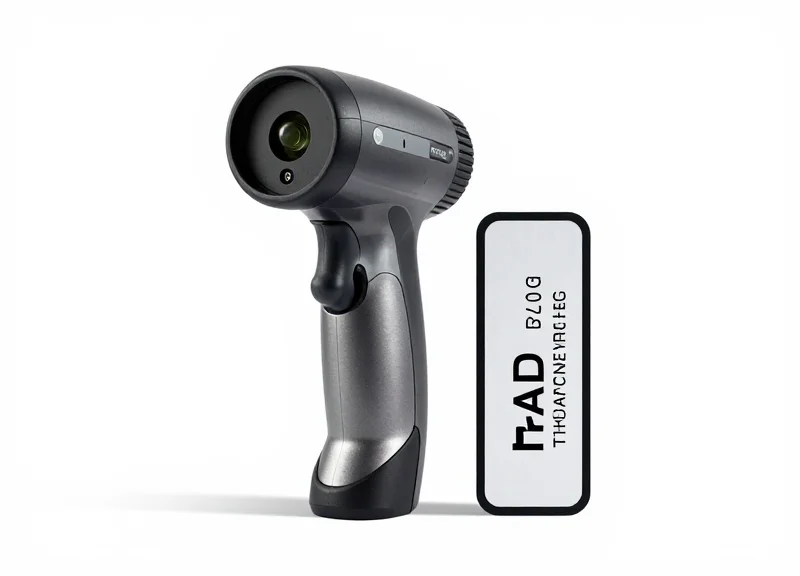
Selecting the right RFID hardware for MRO smart cabinets requires a strategic evaluation of three core factors: the physical environment, the material composition of the items being tracked, and the required read range. While Ultra-High Frequency (UHF) is the gold standard for bulk inventory and long-range visibility, High Frequency (HF) or Near Field Communication (NFC) is often preferred for precision tool tracking where signal bleed must be eliminated to ensure 100% data integrity within a confined cabinet space.
| Feature | UHF (860-960 MHz) | HF (13.56 MHz) |
|---|---|---|
| Read Range | Long (up to 12 meters) | Short (typically < 10 cm) |
| Read Speed | High (hundreds of tags per second) | Moderate (item-by-item or small batches) |
| Metal/Liquid Tolerance | Low (requires 'on-metal' spacer tags) | High (stable near liquids/metals) |
| Primary MRO Use Case | Bulk PPE, fasteners, and large consumables | High-value specialty tools and precision assets |
Expert Insight: The 'Faraday Effect' in Smart Cabinets. In typical warehouse settings, metal is an enemy of RFID. However, in closed-loop smart cabinets, the metal enclosure acts as a controlled environment. By utilizing circular-polarized antennas within the cabinet, we create a controlled multipath environment where signals 'bounce' to reach hidden tags, effectively turning a potential interference problem into a coverage advantage. This allows for 99.9% read accuracy even when tools are stacked irregularly.
How do I track items made of solid metal?
Use 'On-Metal' (Mount-on-Metal) UHF tags. These tags include a physical spacer or a specialized antenna design that uses the metal surface of the tool as a ground plane to actually enhance the signal rather than dampen it.
Is UHF or HF better for high-density tool drawers?
HF is generally superior for high-density drawers where items are touching. UHF can suffer from 'tag shadowing,' where one tag physically blocks the signal to another. HF's magnetic coupling is less prone to this specific type of interference.
What role does antenna polarization play?
Circular polarization is essential for MRO cabinets because it reads tags regardless of their orientation. Linear polarization is stronger but requires the tag and antenna to be perfectly aligned, which is rarely possible in a fast-moving maintenance environment.
- Audit Item Material: Categorize your MRO inventory by metal content and liquid volume to determine if you need specialized tags.
- Define Read Zones: Decide if you need to read an entire cabinet at once (UHF) or if users should scan items individually at a kiosk point (HF).
- Environmental Stress Test: Test hardware against EMI (Electromagnetic Interference) from nearby heavy machinery or motors that could disrupt signal clarity.
Implementation Best Practices for Immediate Impact
To successfully implement RFID smart cabinets for MRO waste reduction, organizations must move beyond hardware installation and focus on a 'User-Centric Deployment' model. This involves auditing inventory data accuracy, selecting high-traffic pilot locations, and establishing clear performance baselines. By prioritizing the human-to-machine interface during the first 30 days, companies can eliminate user resistance and ensure the 40% waste reduction target is met through consistent, automated data capture.
- The 80/20 Baseline Audit: Identify the 20% of MRO items that account for 80% of your shrinkage or stockout costs. Cleanse this data in your ERP before migrating it to the RFID system to prevent 'garbage-in, garbage-out' errors.
- Strategic 'Point-of-Use' Placement: Install cabinets as close to the actual work area as possible. Reducing the 'travel distance' for technicians is the single most effective way to ensure they use the cabinet rather than bypassing it.
- The 'Incentivized' Pilot Phase: Launch a 4-week pilot in one department. Use this time to refine the tagging process for odd-shaped items and identify any RF interference from nearby industrial machinery.
- API-First Integration: Ensure your RFID middleware is pushing real-time consumption data to your ERP or CMMS. Automation is only valuable if it triggers the procurement workflow without manual intervention.
| Deployment Phase | Primary Goal | Typical Duration | Key ROI Metric |
|---|---|---|---|
| Pre-Deployment | Data Sanitization | 2 Weeks | Database Integrity |
| Pilot Launch | User Adoption | 4 Weeks | User Error Rate |
| Full Scaling | Waste Elimination | 12 Weeks | Shrinkage Reduction |
| Optimization | Predictive Restock | Ongoing | Inventory Turnover |
How do we handle items that are too small for individual RFID tags?
Use 'Bin-Level Tracking' or 'Weight-Sensory RFID' drawers. Instead of tagging every screw, tag the bin or use high-precision scales within the cabinet to detect weight changes when items are removed.
What is the biggest risk to a 12-month ROI?
Shadow Stocking. This occurs when workers hoard items at their personal desks because they fear the new system will lead to stockouts. Counter this by displaying real-time stock levels on a screen above the cabinet.
How often should RFID tags be audited for signal health?
Initial tagging should involve a 'Read-Rate Stress Test.' After the first 90 days, the software should automatically flag any SKUs that show intermittent connectivity issues.
Expert Insight: The 'Ghost SKU' Phenomenon. In my two decades of Silicon Valley tech deployments, I've found that the most successful RFID projects include a 'Ghost SKU' trap. By placing a few dummy tags on non-essential items, managers can test if the system is actually catching unauthorized removals or if the hardware needs recalibration. This proactive 'chaos engineering' approach ensures that when high-value assets go missing, the system is 100% ready to catch them.