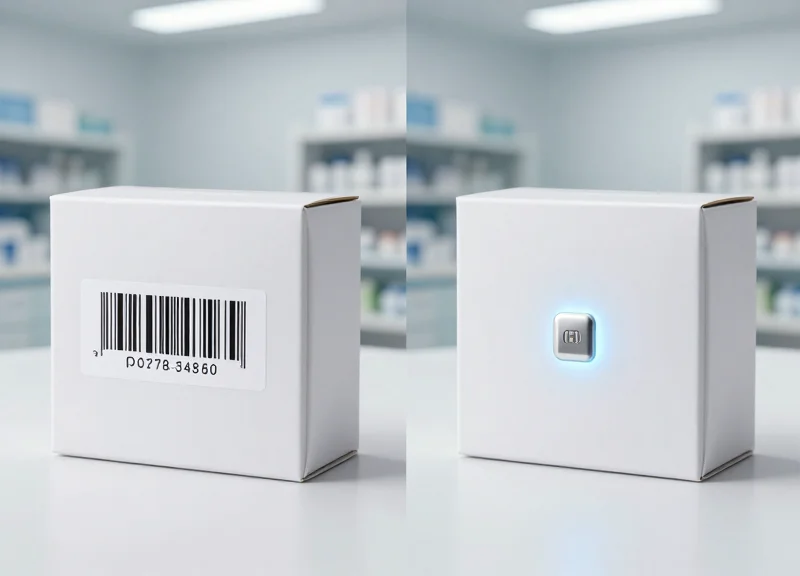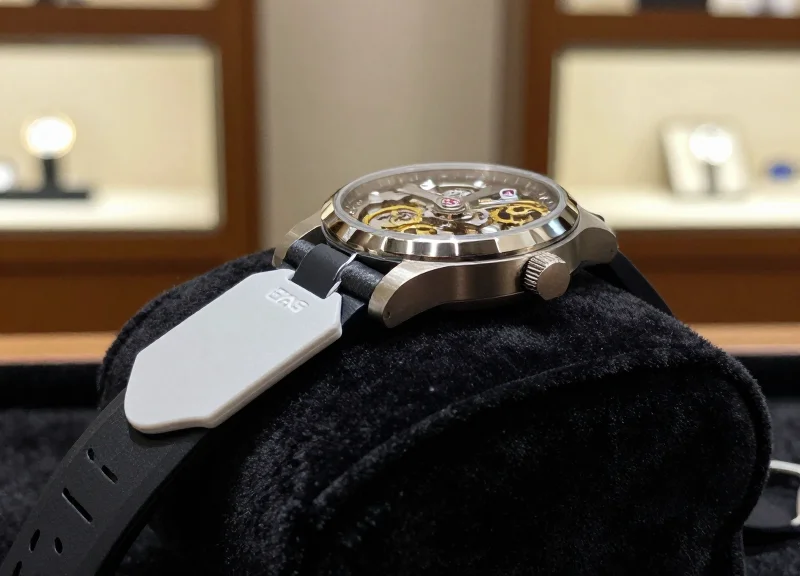
In the world of luxury horology, the physical integrity of a timepiece is as valuable as its movement. For boutique owners, the dilemma has always been how to secure high-value inventory without risking the micro-scratches or strap indentations that can occur with traditional security hardware. As we move into 2026, the industry has pivoted toward 'soft-touch' Electronic Article Surveillance (EAS) technology. This guide provides an authoritative look at how modern boutiques are using non-damaging EAS tags to safeguard their assets while maintaining the pristine condition required by elite collectors.
The Evolution of Horological Loss Prevention in 2026

The 2026 landscape of horological loss prevention represents a paradigm shift toward 'Invisible Stealth Protection,' where security measures are engineered to be as refined as the mechanical movements they safeguard. In modern high-value boutiques, the traditional reliance on heavy, abrasive plastic tags has been replaced by precision-engineered EAS (Electronic Article Surveillance) systems. These contemporary solutions are designed to provide robust protection against shrink without compromising the hand-finished surfaces of platinum, gold, or surgical steel cases, effectively ending the historical trade-off between inventory security and product condition.
| Feature | Legacy Security (Pre-2022) | Modern Horological EAS (2026) |
|---|---|---|
| Material Impact | Hard plastic clamps; risk of micro-scratches | pH-neutral, soft-touch silicone or micro-fiber linings |
| Aesthetic | Large, distracting white or black tags | Low-profile, transparent, or jewelry-inspired designs |
| Weight | Heavy (15g+); affects bracelet drape | Ultra-lightweight (<3g); maintains natural feel |
| Technology | Basic RF/AM 58kHz | Dual-layer RF/RFID with real-time dwell analytics |
Expert Insight: The 'Contact-Surface Chemistry' Standard. A critical development in 2026 is the adoption of pharmaceutical-grade polymers in tag linings. Unlike older rubberized coatings that could leach oils or cause oxidation on vintage bronze or 18k gold over time, today’s top-tier tags utilize inert fluoropolymer liners. This ensures that even if a timepiece remains in the display for months, there is zero chemical interaction between the tag and the metal.
Why has the industry moved away from traditional 'alligator' clamps?
Traditional clamps exerted uneven pressure on watch lugs and leather straps, leading to permanent indentations or spring-bar fatigue. 2026 designs utilize 'calibrated tensioning' which ensures the tag stays secure without exceeding 2 Newtons of pressure.
How does 2026 EAS technology improve the customer experience?
Modern tags are designed for 'uninterrupted horology.' They allow clients to feel the weight and balance of the watch on their wrist without the tag digging into the skin or blocking the view of the exhibition caseback.
What role does IoT play in modern watch security?
Current EAS tags often include 'dwell-time' sensors that alert staff via wearables when a high-value piece has been out of the case for an extended period, facilitating better service and subtle surveillance simultaneously.
The High Cost of 'Standard' Tags: Why Watch Boutiques Need Specialized Gear
Standard EAS tags are designed for high-volume retail, utilizing high-tension clamping forces and abrasive hard plastics that cause 'pressure-point scarring' on leather straps and 'micro-swirl scratching' on polished precious metals. For a high-value boutique, the financial liability of a single damaged crocodile strap or a scuffed 18k gold lug can range from $500 to $5,000 in immediate depreciation, often exceeding the total investment in a specialized, non-damaging security system. Specialized horological gear is required because luxury materials are reactive; they respond poorly to the non-calibrated compression and chemical composition of mass-market security hardware.
| Feature | Generic Retail Tags | Horological-Grade EAS Tags |
|---|---|---|
| Contact Surface | Hard ABS Plastic / Serrated Metal | Medical-Grade Silicone / Teflon Lining |
| Clamping Mechanism | Fixed High-Tension (One size fits all) | Calibrated Pressure / Adjustable Gap |
| Material Focus | Denim, Cotton, Synthetic Blends | Alligator, Gold, Platinum, Fine Ceramics |
| Primary Risk | Surface Indentation & Abrasions | None (Maintains Showroom Condition) |
A unique insight often overlooked by generalist security providers is the 'Plasticizer Migration' effect. Generic tags often use low-grade polymers that can leach chemical stabilizers when pressed against organic materials like leather or the oils used in high-end finishes. This chemical reaction can cause permanent discoloration or 'blooming' on a strap that no amount of cleaning can fix. In the 2026 market, where collectors demand 'New Old Stock' (NOS) perfection, any hint of a security tag's previous presence—even if invisible to the naked eye under standard light—is enough to kill a sale.
Can I use felt pads on standard tags to save money?
No. DIY padding often increases the thickness of the tag's grip, paradoxically increasing the pressure on the strap. Furthermore, adhesives on felt pads can melt or migrate onto the watch surface, creating a secondary cleaning risk.
Why is 'Micro-Deformation' such a concern for leather?
Exotic leathers like crocodile and lizard have complex fiber structures. High-pressure tags crush these fibers; once the 'memory' of the skin is broken, the indentation is permanent, significantly lowering the resale value of the timepiece.
Do metal bracelets require specialized tags too?
Yes. While harder than leather, polished gold and 904L steel are highly susceptible to 'micro-swirls' caused by the vibration of a hard plastic tag during customer handling or transport.
Material Science: The Rise of Silicone-Coated and Padded EAS Tags
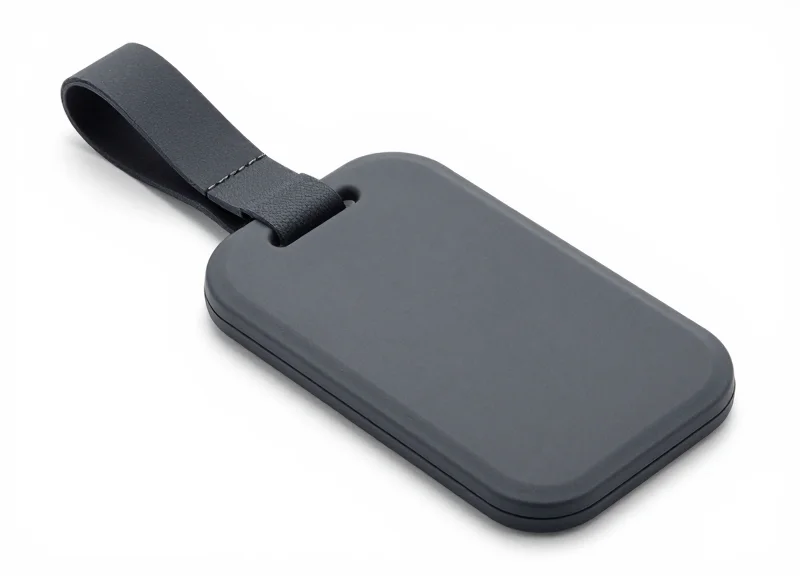
By 2026, the industry standard for high-end horological security has shifted from rigid polycarbonate shells to multi-layered composite materials that prioritize surface integrity. The 'Rise of Silicone' refers to the integration of medical-grade, low-friction silicone and high-density memory foam linings into the contact points of EAS tags. These materials act as a molecular buffer, distributing clamping pressure evenly across the watch case or strap and eliminating the micro-vibrations that cause scratching on precious metals like 18k gold or 950 platinum.
| Material Standard | Shore A Hardness | Key Protection Property | Recommended Watch Surface |
|---|---|---|---|
| Medical-Grade Silicone | 45 - 55 | Inert friction reduction; non-slip | Polished Gold & Platinum Cases |
| Micro-Pore Memory Foam | 10 - 20 | Uniform pressure distribution | Exotic Caiman & Alligator Straps |
| Standard ABS (Legacy) | 90+ | Impact resistance only | Entry-level Stainless Steel Only |
| TPE (Thermoplastic) | 60 - 75 | Balanced grip and durability | Brushed Titanium & Steel |
Expert Insight: In the 2026 market, the most critical advancement isn't just softness, but 'Chemical Migration Resistance.' Previous generations of rubberized tags often contained plasticizers that could leach into porous exotic leathers over time, causing permanent staining or 'clouding' on leather oils. Modern silicone-coated tags are chemically inert, ensuring that even if a tag remains on a display piece for months, no chemical exchange occurs between the security device and the watch strap.
Does silicone coating affect the sensitivity of the EAS signal?
No. Modern silicone encasement is RF-transparent, meaning it provides a physical buffer without interfering with the 58kHz or 8.2MHz signals required for gate detection.
How often should memory-foam linings be replaced?
For boutiques with high-turnover displays, we recommend inspecting the 'rebound' of the foam every six months. If the foam stays compressed, it loses its ability to distribute pressure effectively.
Can these materials withstand ultrasonic cleaning?
Yes, high-grade silicone used in 2026 tags is designed to be cleaned with isopropyl alcohol or ultrasonic cycles to maintain boutique hygiene standards without degrading the material.
The adoption of these materials represents a shift in the 'Security vs. Aesthetics' paradigm. By utilizing materials with a lower Shore Durometer rating, boutiques can apply tags with sufficient tension to prevent theft while maintaining the 'mint condition' status of their inventory, which is essential for high-value resale and collector confidence.
Frequency Matters: Choosing Between AM, RF, and RFID for Metal Timepieces

In the specialized world of horological retail, the choice of Electronic Article Surveillance (EAS) frequency is not merely a technical preference but a critical operational decision. Because high-value watches are primarily composed of conductive metals like stainless steel, titanium, and gold, they create a 'detuning' effect that can render standard security tags invisible to detection gates. For 2026, the industry standard for watch boutiques has converged on Acousto-Magnetic (AM) 58 kHz technology as the primary defense, while RFID is increasingly utilized for inventory intelligence rather than raw exit-point security.
| Technology | Frequency | Performance on Metal | Detection Range | Primary Use Case |
|---|---|---|---|---|
| AM (Acousto-Magnetic) | 58 kHz | Excellent; Minimal detuning | Wide (up to 2.4m) | Anti-theft for metal timepieces |
| RF (Radio Frequency) | 8.2 MHz | Poor; High signal shielding | Moderate | Soft goods and leather accessories |
| RFID (Rain/UHF) | 860-960 MHz | Variable; Requires spacers | High (up to 10m+) | Inventory tracking and luxury provenance |
The fundamental challenge with Radio Frequency (RF) at 8.2 MHz is the 'Faraday Cage' effect. When an RF tag is placed in close proximity to a metal watch case, the metal absorbs and reflects the electromagnetic field, shifting the tag's resonance frequency away from the pedestal's detection range. This results in 'dead zones' where a shoplifter can pass through the gates undetected. Conversely, AM technology operates at a much lower frequency, allowing the signal to propagate more effectively around metallic surfaces without being neutralized by the watch's own conductivity.
- The AM Advantage: AM systems are less prone to 'phantom alarms' caused by environmental electronic noise, making them ideal for high-end malls where neighboring stores might have conflicting systems.
- RFID for Hybrid Security: While not a replacement for AM in 2026, UHF RFID tags with dielectric spacers are now used inside watch boxes to provide real-time inventory counts without needing line-of-sight.
- The 2026 Expert Tip: Passive Shielding Awareness: Always calibrate your AM pedestals for 'Tag-Near-Metal' scenarios. Even the best AM tags lose 10-15% of their signal strength when applied directly to a solid platinum or 904L steel case back compared to a leather strap.
Can I use RF tags if they are attached to the leather strap instead of the metal case?
While attaching an RF tag to a leather strap reduces direct contact detuning, the proximity of the metal watch head still creates a 'signal shadow' that significantly lowers detection rates. AM remains the safer choice.
Why is RFID becoming more common in boutiques despite metal interference?
Modern 2026 RFID tags utilize 'On-Metal' bridge technology or foam spacers that create a physical gap between the chip and the metal, allowing for inventory management, though they are still more expensive than AM for pure loss prevention.
Will AM tags interfere with the movement of a mechanical watch?
No. The 58 kHz frequency used by AM systems is non-ionizing and does not produce a magnetic field strong enough to magnetize hairsprings or disrupt modern anti-magnetic movements like those found in Master Chronometer certified watches.
Ergonomics and Aesthetics: Maintaining the Luxury Experience
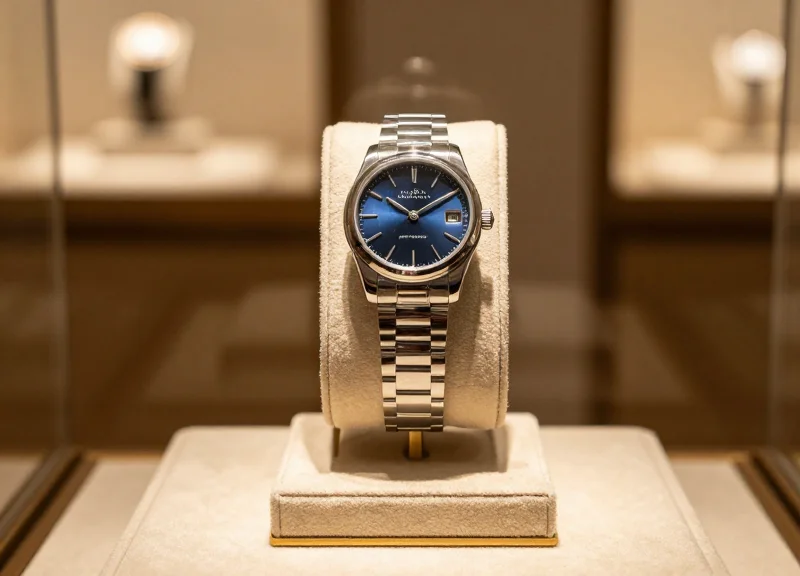
In the world of high-end horology, the 'try-on' is the pivotal moment where a prospect becomes a patron. To maintain the luxury experience, EAS tags must achieve tactile invisibility and visual harmony: they must be engineered to avoid altering the watch's center of gravity, obscuring the craftsmanship of the movement, or interfering with the sensory feedback of the strap. A 2026 selection strategy prioritizes low-profile designs that allow the timepiece to sit flush against the wrist, ensuring the client feels the intended weight and texture of the watch, not the security hardware.
- Weight Neutrality: Premium tags now utilize aerospace-grade polymers that weigh less than 5 grams, preventing 'bottom-heaviness' that can make a delicate dress watch feel unbalanced.
- Visual Transparency: Utilizing crystal-clear polycarbonate housings or matte finishes that match boutique lighting prevents the 'security-first' look that can detract from a display's elegance.
- Contoured Geometry: Modern tags feature curved profiles that mimic the radius of a human wrist, allowing the watch strap to close naturally without creating awkward gaps.
| Feature | Generic EAS Tag | 2026 Luxury-Grade Tag |
|---|---|---|
| Wrist Profile | Bulky, prevents strap closure | Ultra-slim, allows full buckle engagement |
| Light Refraction | High-gloss plastic (glare) | Anti-reflective or transparent finish |
| Center of Gravity | Shifts watch head outward | Neutral; maintains original watch balance |
| Customer Perception | Industrial/Restrictive | Professional/Premium Integration |
Expert Insight: The Psychological Anchoring of Weight. From a neuromarketing perspective, the perceived quality of a watch is tied to its weight-to-volume ratio. If an EAS tag adds 'clunky' weight in the wrong place, it disrupts the customer's subconscious evaluation of the timepiece's engineering. We recommend using 'Zero-Torque' tags which attach to the clasp rather than the case-back, preserving the vital tactile connection between the watch’s movement and the wearer's pulse point.
Do these tags interfere with photography for social media?
Modern high-value tags are designed with 'matte-black' or 'minimal-sheen' finishes specifically to reduce lens flare when clients inevitably take 'wrist shots' for Instagram during their boutique visit.
Will the tag interfere with the operation of the crown or pushers?
No. The 2026 selection criteria require tags to be mounted on the 6 o'clock or 12 o'clock strap positions, leaving the 3 o'clock crown and chronograph pushers completely accessible for the client to test.
How do these tags affect the 'heft' of precious metals?
By using ultra-lightweight components, these tags ensure that the unique density of platinum or 18k gold remains the dominant sensation during a try-on.
The 2026 Watch Tag Selection Checklist
The 2026 Watch Tag Selection Checklist is a specialized procurement framework designed to help high-value horology boutiques vet security hardware against the specific physical and technical needs of luxury timepieces. Unlike generic retail security, this checklist prioritizes 'Zero-Trace' protection, ensuring that the EAS tag secures the asset without compromising the metallurgical integrity of gold cases or the delicate fibers of exotic leather straps. By following this structured evaluation, retailers can transition from reactive loss prevention to a proactive asset preservation strategy.
- Phase 1: Physical Load & Weight Assessment: Ensure the tag weighs less than 15 grams. Excessive weight on a display stand or during customer handling can cause 'strap stretch' or put undue pressure on spring bars, especially on vintage or gold models.
- Phase 2: Contact Surface Validation: Inspect the internal lining of the tag. For 2026 standards, only medical-grade silicone or high-density PTFE (Teflon) should make contact with the watch case to prevent micro-abrasions on polished surfaces.
- Phase 3: Frequency & Shielding Verification: Verify that the tag’s internal resonator is compatible with your boutique's gate frequency (AM 58kHz or RF 8.2MHz). Ensure the tag includes 'Caliber-Shield' technology to prevent magnetic interference with mechanical movements.
- Phase 4: Locking Mechanism Torque Test: Evaluate the detachment force. The locking mechanism must be secure enough to resist tampering but engineered with a 'soft-stop' to prevent over-tightening around the bracelet or strap.
| Feature | Standard Requirement | Luxury Boutique Elite Standard (2026) |
|---|---|---|
| Maximum Weight | < 25 grams | < 12 grams (Ultra-Lightweight) |
| Lining Material | Rubber or Plastic | Medical-Grade Non-Leaching Silicone |
| Magnetic Field | Standard Ferrite | Mu-Metal Shielded (Movement Safe) |
| Strap Compatibility | Metal Only | Universal (Exotic Skins & NATO Straps) |
Expert Tip: Perform the 'Gauss Leakage' test. When selecting tags for mechanical watches, use a magnetometer to check the external magnetic flux of the tag's locking pin. In 2026, the elite standard requires tags to emit less than 10 Gauss at a 5mm distance to ensure that the watch's balance spring remains unmagnetized during long-term display.
Can I use the same tags for both metal bracelets and leather straps?
No. Leather and crocodile skins require tags with 'distributed pressure' pads. Standard loop tags can leave permanent indentations on soft skins that significantly reduce the watch's resale value.
Do RFID tags interfere with the watch's accuracy?
Passive RFID tags are generally safe; however, the metal case of the watch can 'detune' the tag. Look for 'On-Metal' optimized RFID tags specifically designed for horological environments.
How often should the locking pins be replaced?
Locking pins should be inspected every 6 months for burrs or sharp edges that could develop through repeated use and potentially scratch a watch lug.
Mechanical Integrity: Ensuring No Stress on Movement or Bracelets
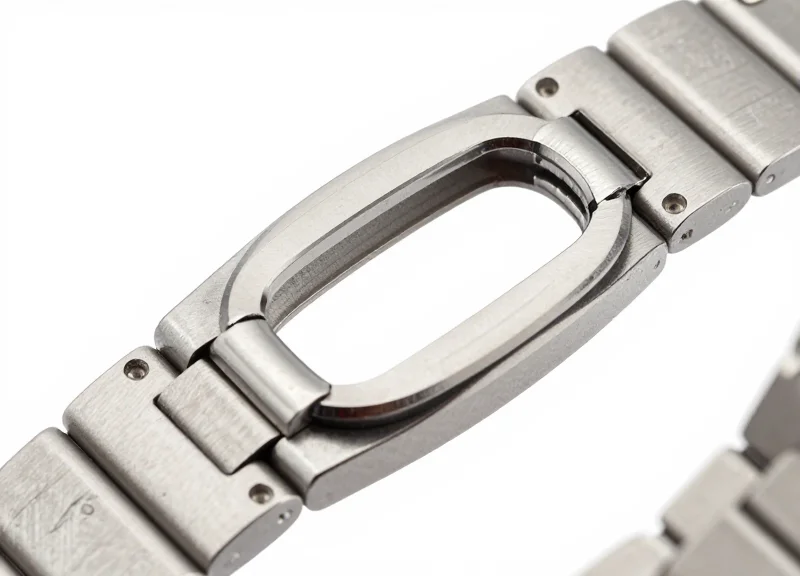
In the world of ultra-luxury horology, mechanical integrity refers to the preservation of a timepiece's structural geometry and internal calibration. Modern EAS tags achieve this by prioritizing 'Geometric Locking' over 'Frictional Compression.' Rather than squeezing a bracelet to stay in place, 2026-standard tags are engineered with force-limited hinges that secure the tag around the narrowest point of a clasp or link without exerting lateral pressure. This prevents the microscopic bending of spring bars and the compression of leather fibers that can lead to permanent 'memory' marks or structural fatigue over time.
| Feature | Legacy Security Tags | 2026 Horological-Grade Tags |
|---|---|---|
| Clamping Pressure | High (>20 Newtons) | Low (<5 Newtons) |
| Security Method | Tight Compression | Anatomical Contouring |
| Impact on Pins | Risk of Shear/Bending | Zero Load-Bearing |
| Vibration Dampening | None | Integrated Polymer Shocks |
A critical, often overlooked risk of high-pressure tagging is the transfer of external shocks directly to the movement. If a tagged watch is handled roughly, a rigid, over-tightened tag can act as a lever, amplifying the force of the impact and potentially displacing the balance wheel or disrupting the escapement. 2026 selection guides now mandate 'Iso-static' clamping, where the tag floats slightly on the bracelet, allowing the watch's own weight to be distributed naturally rather than being pinched at a single point of failure.
- The Expert Tip: The 'Micro-Gap' Protocol: Always select tags that allow for a 0.5mm 'Micro-Gap' between the tag liner and the bracelet surface. This gap ensures that thermal expansion of the metal—common under boutique halogen lighting—does not turn a snug fit into a damaging high-pressure grip.
- Will these tags stretch delicate alligator or calfskin straps?: No. By using wide-aperture clamps with medical-grade silicone inserts, the load is distributed over a larger surface area, keeping the pressure below the 'permanent deformation threshold' of organic fibers.
- Can the magnetic components in some tags affect the hairspring?: While the mechanical clamp is the focus here, the 2026 standard requires magnetic shielding to ensure the locking mechanism's flux does not interfere with the watch's amagnetic ratings.
- Assess Clasp Taper: Identify the thinnest part of the bracelet (usually near the buckle) to allow the tag to sit loosely but securely.
- Verify Torque-Limiters: Ensure the EAS tag model features an internal 'click' or stop-gap that prevents staff from over-tightening the tag during application.
- Perform the Gravity Test: Once applied, the tag should be able to slide slightly under its own weight without catching on link edges or leather stitching.
Operational Efficiency: Speed of Removal and Staff Training
Operational efficiency in high-value horology retail is defined by the 'Transaction Velocity'—the speed and grace with which a security tag is removed at the point of sale. For a luxury watch boutique, the removal process must be invisible to the client, taking less than three seconds to complete without the use of high-force mechanical tools that risk slipping and scratching the polished lugs or sapphire crystal of a timepiece. An efficient EAS system ensures that security never disrupts the psychological flow of a high-ticket purchase.
| Removal Technology | Avg. Removal Time | Risk Level | Training Complexity |
|---|---|---|---|
| High-Gauss Magnetic Detacher | < 2 Seconds | Low | Minimal |
| Mechanical Claw-Style | 5-7 Seconds | Medium | Moderate |
| Coded Electronic Release | 1-2 Seconds | Negligible | High |
| Manual Screw-Lock | 10+ Seconds | High | Moderate |
Unique Industry Insight: In 2026, the elite standard is 'Proprioceptive Removal.' This technique involves using detachers with haptic guides that allow sales associates to decouple the tag using tactile feedback alone. By eliminating the need for the associate to look down at the tool, they can maintain uninterrupted eye contact and rapport with the client during the most vulnerable part of the sale: the moment of payment.
- The 'Anchor-and-Pivot' Technique: Train staff to anchor the watch hand against the counter before applying the detacher. This eliminates 'free-floating' removals where a sudden release of tension can cause the watch to strike the detaching unit.
- Zone-Based Detacher Placement: Install detachers at a 45-degree angle to the dominant hand of the cashier to minimize wrist strain and ensure a natural, fluid motion during the decoupling phase.
- Daily Tool Calibration: Verify magnetic pull-strength daily using a tension tester to ensure tags release instantly. Weak magnets lead to 'yanking,' which is the primary cause of bracelet pin deformation.
- The 'Silent Handoff' Drill: Conduct role-play where the tag is removed and placed into a padded sub-counter bin in one motion, ensuring no metallic 'clink' breaks the luxury ambiance.
How do we prevent 'Detacher Theft' by sophisticated shoplifters?
Utilize 'Coded' or 'Infrared-Linked' detachers that remain deactivated until a staff member enters a biometric code or swipes an encrypted employee card.
Can the magnetic field of a detacher damage an automatic movement?
Modern professional detachers are engineered with directional flux shields. This focuses the magnetic energy upward into the tag's locking teeth while keeping the lateral magnetic leakage well below the threshold that would affect a watch's hairspring.
What is the ideal staff-to-training ratio for new tag systems?
We recommend a 'Train-the-Trainer' model where one lead associate per 5 staff members is certified in 'Zero-Impact Removal' to ensure peer-to-peer quality control.
Hybrid Solutions: Integrating EAS with Digital Inventory Tracking

Hybrid EAS-RFID solutions represent the 2026 gold standard for luxury retail, merging loss prevention with operational intelligence. These systems embed both Acousto-Magnetic (AM) or Radio Frequency (RF) security elements and Ultra-High Frequency (UHF) RFID chips into a single, non-damaging watch tag. This integration enables boutiques to deter theft at the door while providing real-time, item-level visibility into stock levels, display cycles, and individual product movement without the need for manual scanning or intrusive hardware.
| Feature | Traditional EAS Tags | 2026 Hybrid Solutions |
|---|---|---|
| Primary Function | Loss Prevention Only | Security + Real-time Inventory |
| Inventory Counting | Manual / Weekly | Automated / Instantaneous |
| Data Granularity | Binary (Safe vs. Stolen) | Item-level (Specific Serial Number) |
| Customer Insights | None | Try-on frequency and 'Dwell-time' |
Expert Insight: In the 2026 landscape, the most successful boutiques are utilizing 'Dwell-to-Deal' analytics. By tracking how often a specific high-value reference is removed from the display case versus how many sales it generates, retailers can identify 'cold' models that may require better lighting or staff training, or 'hot' models that are frequently handled but rarely purchased due to price or mechanical complexity.
- Infrastructure Assessment: Evaluate current EAS pedestals to ensure they can operate alongside RFID readers without frequency interference.
- Dual-Tech Tag Selection: Choose tags that house both the AM/RF coil and the RFID inlay in a slim, non-marring chassis designed for horological use.
- ERP Integration: Sync the RFID data stream with your Enterprise Resource Planning (ERP) software to automate re-ordering and stock reconciliation.
- Staff Training: Train associates to use handheld RFID wands for 'cycle counting'—the ability to scan an entire vault of 500+ watches in under 60 seconds.
Does RFID technology interfere with the accuracy of mechanical movements?
No. Modern UHF RFID inlays are passive and operate at extremely low power levels. They do not emit a constant magnetic field and have no measurable effect on a watch’s hairspring or timekeeping accuracy.
Is the tag size significantly larger for hybrid solutions?
Not anymore. 2026 miniaturization allows the dual-tech components to fit within the same footprint as a standard luxury EAS tag, maintaining the aesthetic profile required for high-end displays.
Can hybrid tags help locate 'lost' stock within the boutique?
Yes. Using a handheld reader in 'Geiger counter mode,' staff can locate a specific misplaced watch (e.g., left in a private viewing room) by its unique RFID signature.