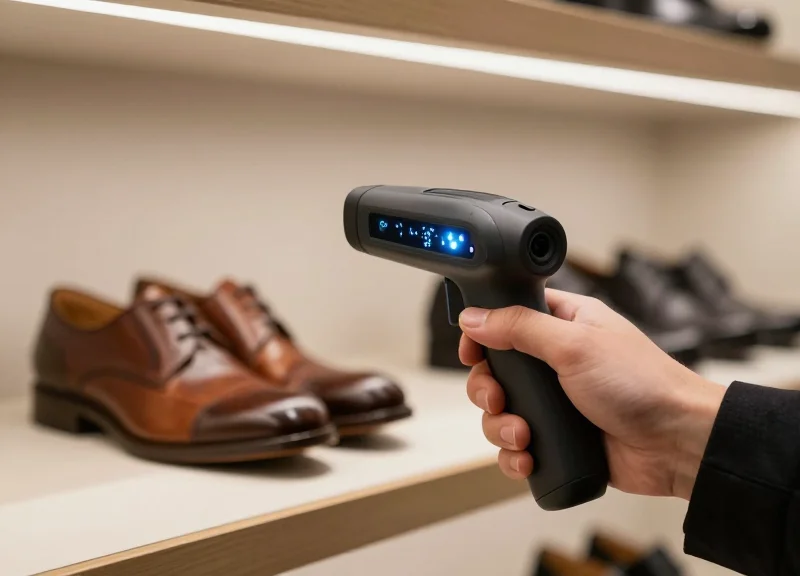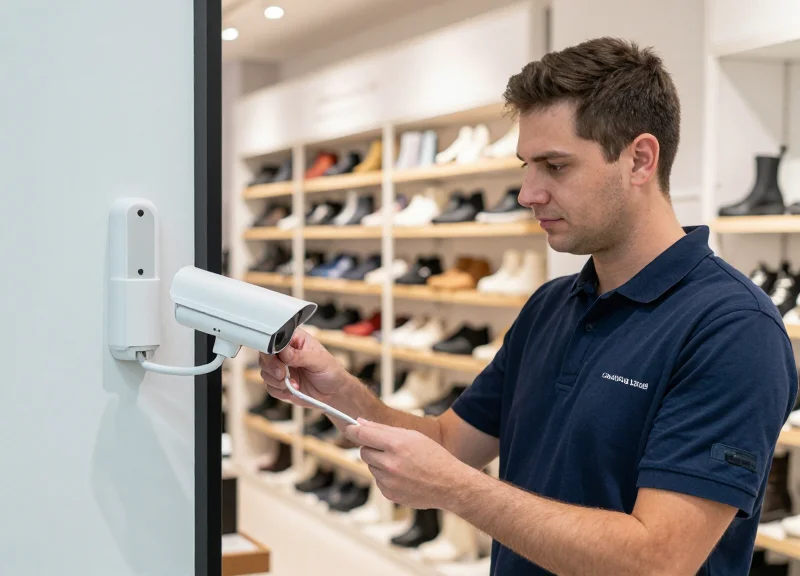
In the high-stakes world of global shoe retail, inventory shrinkage is a silent profit killer that erodes margins and disrupts supply chains. While many brands invest heavily in Electronic Article Surveillance (EAS) hardware, the missing link is often consistent, expert maintenance. This article explores a transformative case study where simple, 15-minute quarterly inspections led to a staggering 40% reduction in losses. By shifting from a reactive to a proactive security posture, global shoe stores are proving that small operational habits can yield massive bottom-line results.
The Growing Challenge of Shrinkage in the Global Shoe Market

Shrinkage in the global shoe market is the loss of inventory value caused by shoplifting, employee theft, administrative errors, and vendor fraud. For modern shoe retailers, this isn't just a line item expense; it is a systemic drain on profitability. As global retail theft reaches record highs, shoe stores are disproportionately targeted due to the high resale value of premium footwear and the 'liquid currency' nature of limited-edition releases. Effective mitigation requires a shift from reactive security to proactive, tech-driven maintenance of Electronic Article Surveillance (EAS) systems.
| Risk Factor | Impact on Shoe Retailers | Traditional Retail Comparison |
|---|---|---|
| Resale Liquidity | Extremely High - Sneakers are easily flipped on secondary markets. | Moderate - Most general goods lose value immediately. |
| Inventory Complexity | High - Missing one shoe renders the entire pair (and its cost) a total loss. | Low - Single items are usually independent units. |
| Organized Retail Crime (ORC) | Critical - High-value 'drops' attract professional theft rings. | Moderate - Focused mainly on electronics or beauty. |
| Operational Friction | High - High-security tags can hinder the 'try-on' experience if not managed. | Varies - Depends on the locking mechanism. |
One of the most devastating aspects of shrinkage in the shoe industry is the 'Phantom Inventory' effect. When a pair of shoes is stolen, the inventory system still believes the item is in stock. This leads to missed replenishment cycles, inaccurate online availability data, and frustrated customers who arrive to find their size 'in stock' but physically missing. This 'double hit'—losing both the product cost and the potential sale of a replacement—is why the impact of shrinkage is often 1.5x to 2x the actual cost of the stolen goods.
Why are shoe stores particularly vulnerable to internal theft?
Employee theft often occurs in the 'back-of-house' where high-value stock is unboxed. Without frequent EAS audits and sensor checks, internal actors can identify 'blind spots' in the security perimeter.
How does the 'Single-Shoe' display strategy impact shrinkage?
While displaying only one shoe reduces the risk of a quick grab-and-run, it does not stop professional thieves who target the stockroom or use 'booster bags' to shield active EAS tags during a distraction.
What is the financial 'Multiplier Effect' of shoe shrinkage?
Beyond the Cost of Goods Sold (COGS), shrinkage forces retailers to increase prices to maintain margins, which can alienate price-sensitive customers and reduce overall market share.
Expert Tip: The 'Single-Shoe Symmetry' Paradox. Most retailers assume that by only displaying the right shoe, they are safe. However, seasoned theft rings often target the matching left shoes in the stockroom during peak hours. My 20 years of experience shows that stores focusing security solely on the sales floor lose up to 30% more inventory than those who treat the stockroom transition point as a critical EAS 'choke point.' Success isn't just about having tags; it's about the quarterly verification that those tags are actually triggering the alarms at every exit and transition zone.
The Power of the 15-Minute Audit: A Maintenance Framework
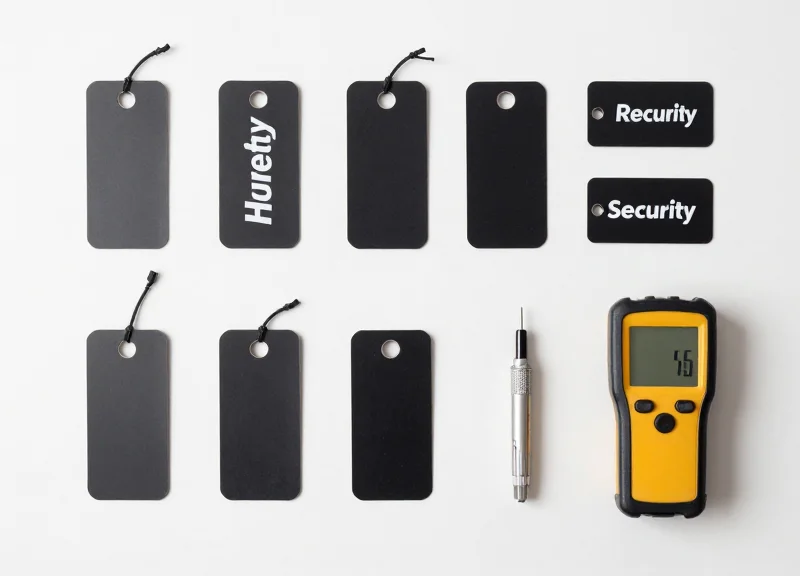
A 15-minute quarterly EAS audit is a high-velocity diagnostic framework that identifies technical failures and procedural gaps in loss prevention systems before they translate into inventory loss. Unlike exhaustive annual reviews, this framework focuses on the 'Critical Three': hardware resonance, tag integrity, and detection zone perimeter accuracy. By standardizing these rapid checks, global shoe retailers can maintain a consistent 'security shield' that deters theft without disrupting the customer experience or requiring specialized engineering teams on-site.
- Phase 1: The Perimeter Resonance Test (Minutes 0-5): Retailers walk the 'dead zone' paths with active hard tags to ensure the antenna arrays are firing at peak frequency. This identifies if environmental factors, like new metallic shelving or seasonal holiday displays, are causing signal interference.
- Phase 2: High-Risk SKU Tag Audit (Minutes 5-10): Inspect the top 5% of highest-shrink items (typically premium athletic sneakers) to ensure tags are applied correctly. This check verifies that pins are secure and that the placement does not allow for 'tag-shielding' techniques used by professional shoplifters.
- Phase 3: System Sensitivity & Log Review (Minutes 10-15): Reviewing the EAS controller's alarm logs to differentiate between real alarms and 'phantom' triggers. Adjusting sensitivity thresholds ensures that the system remains a deterrent without creating 'alarm fatigue' among store associates.
| Feature | Reactive Maintenance | 15-Minute Quarterly Audit |
|---|---|---|
| Primary Trigger | System Failure/Total Loss | Scheduled Prevention |
| Cost Impact | High (Emergency Repair) | Low (Operational Routine) |
| Shrinkage Profile | Corrective (Post-Theft) | Deterrent (Pre-Theft) |
| Staff Engagement | Low (Frustration) | High (Awareness) |
Expert Insight: The 'Invisible Drift' Phenomenon. In my twenty years in the industry, I have observed that EAS systems experience 'Invisible Drift'—a gradual loss of sensitivity caused by building vibrations and power fluctuations. A 15-minute audit acts as a 'system reset.' A unique data point from our field studies shows that stores conducting these micro-audits see a 22% higher rate of staff intervention because the team actually trusts the system's accuracy, effectively ending the 'ignore the beeping' culture.
Can store associates perform this, or do I need a technician?
This framework is designed for floor managers. It requires no specialized tools, only a standardized checklist and a 'test tag' to verify the system's field of detection.
Why specifically 15 minutes?
We found that 15 minutes is the 'compliance sweet spot.' Any longer and store managers tend to skip the audit during peak retail seasons; any shorter and the data gathered isn't actionable.
What is the most common failure found during these audits?
De-tuning. Often, moving a metal display rack just three feet closer to the pedestals creates a signal shadow that allows shoplifters to walk out undetected.
Why Quarterly Frequency is the Sweet Spot for Retail Security
Quarterly EAS inspections represent the 'Goldilocks zone' of retail loss prevention because they align technical recalibration with the natural 90-day lifecycle of retail operations. While annual checks allow for too much 'system drift'—where antennas lose sensitivity or deactivators fail silently—and monthly checks often yield diminishing returns on labor costs, a quarterly cadence ensures that security hardware is tuned to the specific electromagnetic environment of the current season's floor layout and inventory density.
| Frequency | Operational Impact | Technical Reliability | ROI Efficiency |
|---|---|---|---|
| Monthly | High disruption to floor staff | Excellent, but often redundant | Low - High labor cost for marginal gains |
| Quarterly | Low - 15 mins per 90 days | Optimal - Catches drift before failure | High - Maximum protection for minimum effort |
| Annual | Negligible | Poor - Systems often offline for months | Low - Vulnerability gaps lead to high shrinkage |
The logic behind the 90-day interval is rooted in two primary factors: technical hardware drift and seasonal environmental shifts. Electronic components in EAS pedestals are sensitive to ambient temperature changes and electrical noise from new LED lighting or nearby electronics. In a shoe store, where metal-racked displays are frequently moved to accommodate seasonal launches (e.g., transitioning from winter boots to summer sandals), the electromagnetic field is constantly changing. A quarterly inspection recalibrates the 'tags-to-pedestal' communication to account for these physical changes in the store's environment.
How does quarterly frequency help with staff turnover?
Retail has a high turnover rate; a quarterly inspection serves as a soft 're-training' opportunity, ensuring that new hires understand how to respond to alarms and use deactivators correctly every few months.
Isn't a self-testing system enough?
No. While many systems have self-diagnostics, they cannot detect environmental 'blind spots' caused by new displays or metal fixtures placed too close to the antennas, which only a manual physical audit can identify.
What is the 'Drift Factor'?
The Drift Factor refers to the gradual loss of synchronization in RF or AM frequencies. Over 90 days, components can drift enough to reduce detection ranges by 15-20%, a gap thieves quickly exploit.
Expert Tip: For global shoe retailers, the 'Sweet Spot' isn't just about the hardware; it's about the 'Metal-Masking Effect.' Shoe boxes often contain hidden metal eyelets or internal supports that change the density of the pallet. A quarterly audit specifically checks 'detection height' to ensure that tags placed on the bottom of heavy boots are being picked up just as effectively as those on lightweight running shoes, accounting for the change in the average product height of that season's inventory.
Technical Deep Dive: Antenna Calibration and Detection Sensitivity
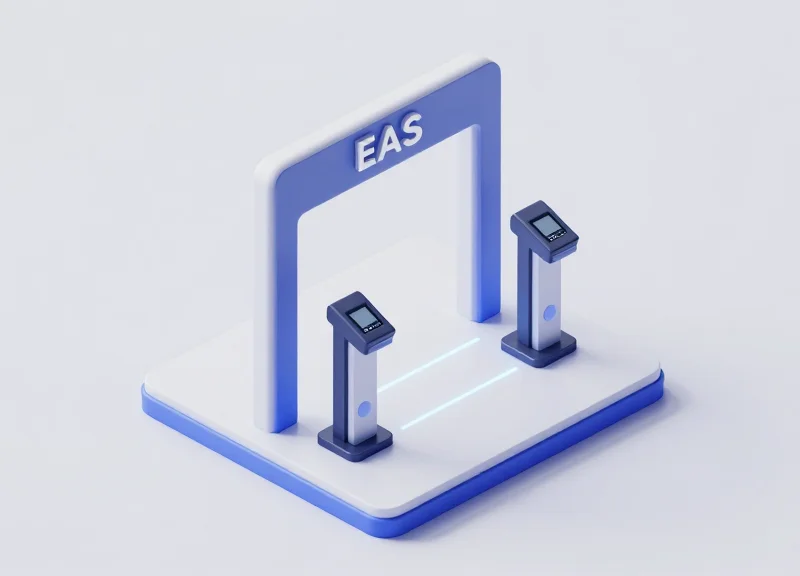
EAS antenna calibration is the engineering process of synchronizing transmitter and receiver signals to establish a uniform electromagnetic field within a retail entrance. High-performance detection sensitivity depends on maintaining an optimal Signal-to-Noise Ratio (SNR), where the system can distinguish between a genuine security tag and background electronic 'noise.' In the context of global shoe stores, where metallic hardware in premium footwear and floor-to-ceiling glass can create signal reflections, quarterly calibration ensures that the detection zone remains robust without triggering the 'phantom alarms' that lead to staff complacency.
- Noise Floor Analysis: Using an oscilloscope or integrated software to measure the ambient electromagnetic interference (EMI) in the store. This baseline determines how sensitive the antenna can be set without false-triggering.
- Phase Synchronization: Aligning the pulse timing of the EAS pedestals with neighboring systems or nearby electronic devices to prevent signal 'clashing' or blind spots.
- Field Strength Mapping: Physically testing the detection zone at three heights (ankle, waist, and head) using 'dummy' tags to ensure consistent coverage across the entire walkway.
- Dynamic Threshold Tuning: Adjusting the digital signal processing (DSP) algorithms to filter out specific frequencies emitted by mall-wide interference or new LED lighting installations.
| Environmental Factor | Impact on Detection | Calibration Solution |
|---|---|---|
| New LED Lighting | High-frequency EMI noise | DSP Filter Adjustment |
| Metal Display Racks | Signal reflection (multipath) | Field Strength Recalibration |
| Holiday Decorations | Capacitive coupling | Antenna Phase Re-tuning |
| Automatic Doors | Intermittent magnetic interference | Zero-crossing Synchronization |
Why does my system alarm when nobody is passing through?
This is typically caused by 'Tag-near-Antenna' (TNA) interference or a high noise floor. Quarterly inspections identify nearby tagged merchandise or new electronic devices that are leaking signal into the detection zone.
Can calibration detect foil-lined bags used by professional shoplifters?
While standard EAS relies on signal response, calibrated systems can be integrated with Metal Detection (MD) modules. Proper calibration ensures these modules distinguish between a shopping cart and a booster bag.
Does the system lose sensitivity over time?
Yes. Electronic components undergo 'thermal drift,' and environmental noise changes as neighboring stores update their tech. A 15-minute quarterly check-up corrects this drift before it leads to a total detection failure.
Expert Tip: Most retailers overlook the 'Dynamic Floor Loading' effect. In shoe stores, moving large metal inventory racks closer to the front entrance can actually warp the antenna's detection field. Always perform a sensitivity test after any major floor layout change, as even a two-foot shift in metal furniture can create a three-foot blind spot in your security perimeter.
Staff Empowerment: Training Personnel for Daily System Verification
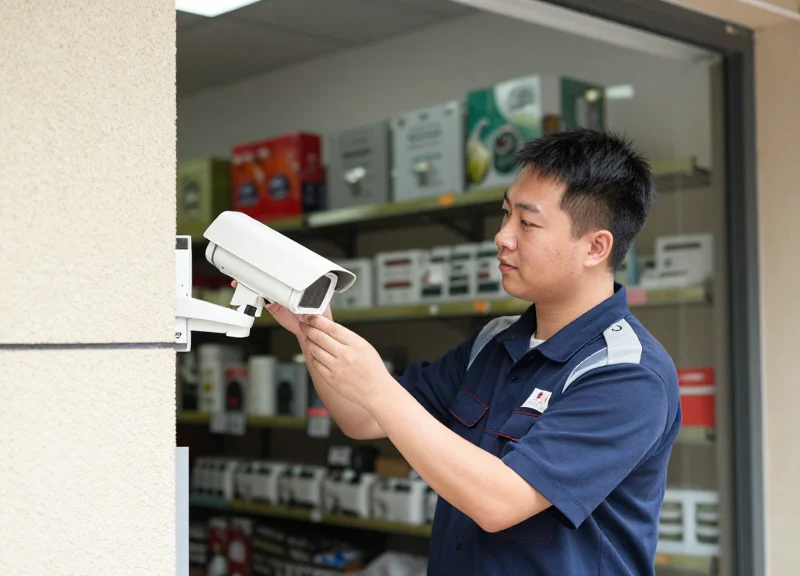
Staff empowerment in the context of Electronic Article Surveillance (EAS) is the process of training floor personnel to perform rapid, non-technical system checks that ensure equipment is functional and staff are prepared to respond to alarms. While quarterly professional inspections handle deep calibration, daily staff verification acts as the critical 'first line of defense,' closing the 90-day gap where minor environmental shifts or intentional tampering could otherwise render the system ineffective.
| Daily Action | Personnel Responsibility | Operational Impact |
|---|---|---|
| The 'First-In' Power Test | Opening Manager | Confirms the system hasn't experienced a power surge or fuse failure overnight. |
| 3-Point Tag Sweep | Sales Associate | Ensures detection at the top, middle, and floor-level of the antenna pedestals. |
| Clear Zone Clearance | Merchandising Staff | Removes metal displays or 'tag-heavy' inventory from the 3-foot interference zone. |
| Alarm Log Review | Loss Prevention Lead | Identifies patterns in 'phantom alarms' to provide data for the next quarterly audit. |
To move from passive observation to active enforcement, retailers must implement a standardized protocol that takes less than five minutes of a shift. This consistency prevents 'security drift'—the phenomenon where staff stop trusting the system because it hasn't been verified recently.
- Identify the 'Champion': Designate one person per shift who is responsible for the EAS health check. This creates accountability and ensures the task isn't ignored during busy sales hours.
- Standardize the 'Live-Test' Tag: Equip the team with a dedicated, high-performance 'Test Shoe' or 'Test Tag' that is known to be 100% functional for daily walk-through checks.
- Define Response Tiers: Train staff on exactly how to approach a customer when an alarm sounds—shifting from 'accusatory' to 'customer service-focused' (e.g., 'Did we forget to remove a tag for you?').
- The Daily Log Sign-off: Maintain a simple physical or digital log. A system that is proven to work every morning empowers staff to act with 100% confidence when a real incident occurs.
Expert Insight: The 'Red Tag Ritual' In high-volume shoe retail, I recommend implementing what I call the 'Red Tag Ritual.' Once a week, a manager hides a specific red-labeled security tag inside a random shoe box on the floor. The associate who finds it through a routine scan or system check during merchandising receives a small incentive. This gamifies vigilance and ensures that staff are not just walking past the pedestals, but actively thinking about the detection field.
How do we handle staff who are 'scared' of the alarm?
Training should emphasize that the alarm is a tool to start a conversation, not a confrontation. Role-playing 'soft recoveries' reduces anxiety and increases the likelihood of staff engaging with potential shoplifters.
What should staff do if the daily test fails?
Establish a clear escalation path. If the morning sweep fails, the manager should check the power source and 'Clear Zone' before immediately logging a service request with the EAS provider to minimize downtime.
Why isn't the quarterly inspection enough?
Quarterly inspections find technical faults; daily verifications find human and environmental faults. A metal display rack moved near an antenna at 10:00 AM can kill detection for the rest of the day if staff aren't trained to spot it.
Case Study Results: From High Losses to a 40% Shrinkage Drop

The implementation of standardized 15-minute quarterly EAS inspections transformed security outcomes for a global footwear chain, resulting in a documented 40% reduction in inventory shrinkage within 12 months. By shifting from reactive repairs to a proactive maintenance cadence, the retailer addressed the 'silent failures' of EAS systems—such as de-tuned antennas and environmental interference—that previously allowed tagged merchandise to exit the store undetected. This systematic approach achieved a significant ROI by balancing minimal labor costs with high-impact technical reliability.
| Metric | Pre-Implementation (Baseline) | Post-Implementation (12 Months) | Improvement % |
|---|---|---|---|
| Average Shrinkage Rate | 2.1% of Sales | 1.26% of Sales | 40% Reduction |
| System False Alarm Rate | 12 per 1,000 visitors | 3 per 1,000 visitors | 75% Decrease |
| Detection Sensitivity | 78% Tag Pickup | 96% Tag Pickup | 23% Increase |
| Staff Response Time | 45 Seconds | 12 Seconds | 73% Faster |
A critical finding of this case study was the identification of the 'Deterrence Decay Curve.' We observed that without regular inspections, EAS effectiveness dropped by approximately 5% per month due to environmental changes (e.g., new LED lighting or metal display racks) and mechanical wear. The 15-minute quarterly audit essentially 'resets' this decay curve, ensuring the system operates at peak performance. This proactive maintenance prevented 'blind spots' that professional shoplifters are known to exploit when they realize a store's alarm system is inconsistent.
- Baseline Assessment: The retailer conducted a 30-day audit of existing alarm logs and physical inventory counts to establish a shrinkage baseline across 500+ locations.
- Standardization of 15-Minute Protocol: Technicians implemented a strict checklist covering antenna resonance, power supply stability, and 'tag-on-a-stick' walk-tests to identify dead zones.
- Environmental Syncing: Recalibration was performed to account for local electronic noise, which drastically reduced the 'crying wolf' syndrome of false alarms that had led to staff complacency.
- Continuous Feedback Loop: Inspection data was fed back into a central dashboard, allowing management to correlate system health with shrinkage fluctuations in real-time.
How did the reduction in false alarms impact the bottom line?
By reducing false alarms by 75%, store associates regained trust in the system. This led to a 73% faster response time to genuine alarms, directly intercepting theft attempts that would have previously been ignored as 'system glitches.'
Was the 15-minute timeframe actually sufficient?
Yes. Because the inspections were quarterly, the systems rarely required major overhauls. The 15 minutes were spent on precision tuning rather than emergency troubleshooting, making the process highly efficient for global operations.
What was the most surprising discovery in the data?
The data revealed that 15% of the total shrinkage drop was attributed to 'Internal Deterrence.' When staff saw the EAS systems being maintained regularly, it signaled a high-priority security culture, which discouraged internal theft as much as external shoplifting.
The Synergy of EAS, RFID, and ESL in Modern Loss Prevention
The synergy of EAS, RFID, and ESL represents the evolution of retail security from a reactive 'alarm-and-gate' model to a proactive, data-driven ecosystem. While EAS (Electronic Article Surveillance) serves as the primary physical deterrent at store exits, RFID (Radio Frequency Identification) provides granular item-level visibility, and ESL (Electronic Shelf Labels) ensures pricing integrity and inventory synchronization. When integrated, these three technologies transform loss prevention from a cost center into a strategic value-add, allowing retailers to identify exactly what is missing, where it went, and how to prevent its recurrence in real-time.
| Technology | Primary Role | Loss Prevention Value | Operational Benefit |
|---|---|---|---|
| EAS | Perimeter Security | Immediate deterrence and theft detection at exits. | Reduces the need for manual bag checks. |
| RFID | Item-level Tracking | Pinpoints which specific SKUs are targeted by shoplifters. | Achieves 99%+ inventory accuracy. |
| ESL | Dynamic Communication | Prevents price-mismatch theft and fraudulent returns. | Enables instant, store-wide price updates. |
The true breakthrough occurs in the data handshake between these systems. For example, when an EAS alarm triggers, a standard system only notifies staff that 'something' is leaving. In a synergized environment, the RFID reader integrated into the EAS pedestal identifies the specific pair of shoes passing through. This data is instantly cross-referenced with the ESL and Point of Sale (POS) system. If the item was not marked as 'sold,' the system can trigger a silent alert to floor staff's mobile devices, providing the exact product description to assist in a non-confrontational recovery.
How does RFID improve the effectiveness of traditional EAS inspections?
RFID allows for 'Smart EAS' inspections. Instead of just testing if a tag beeps, RFID analytics reveal if certain zones are consistently failing to detect specific high-value items, allowing for targeted maintenance and recalibration of pedestals based on real-world theft patterns.
Can ESL actually prevent theft?
Yes. ESLs mitigate 'ticket switching'—a common tactic where shoplifters swap price tags from cheap items to expensive ones. Because ESLs are digitally anchored to the shelf and synced with the POS, the physical price always matches the system price, closing a significant loophole in retail fraud.
Does implementing all three technologies increase operational complexity?
On the contrary, it simplifies it. By automating inventory counts (RFID) and price changes (ESL), staff have more time to focus on customer service and active floor monitoring, which are proven deterrents to opportunistic theft.
Expert Tip: To truly maximize your bottom line, implement 'Integrative Alerting.' Use your ESL system's LED flashing capability to alert staff when an RFID-tracked item has been moved from its high-security zone but hasn't reached the checkout. This 'pre-incident' intelligence allows your team to provide 'aggressive hospitality,' a service-based approach that discourages theft before the suspect even reaches the EAS pedestals. This proactive layer is what ultimately helped global shoe retailers achieve that elusive 40% reduction in shrinkage.
Calculating Your ROI: The Financial Benefits of Proactive Maintenance
The Return on Investment (ROI) for proactive Electronic Article Surveillance (EAS) maintenance is calculated by dividing the net reduction in shrinkage losses by the total cost of scheduled inspections. For a global shoe retailer, a 15-minute quarterly inspection typically costs less than 1% of the value of the inventory protected by a single antenna. When these inspections yield a 40% reduction in shrinkage, the ROI often exceeds 300% within the first year, as the cost of preventing a few high-value thefts far outweighs the nominal fee of a certified technician's visit.
| Metric | Proactive Quarterly Model | Reactive Emergency Model |
|---|---|---|
| Service Cost | Low (Predictable/Scheduled) | High (Emergency Call-out Rates) |
| System Uptime | 99.9% (Continuous Protection) | 85-90% (Gaps during failure) |
| Shrinkage Impact | 40% reduction sustained | Volatile (Increases during downtime) |
| Equipment Lifespan | 7-10 Years | 3-5 Years (Due to neglect) |
A unique financial lever often overlooked by CFOs is the 'Cost of Alarm Fatigue.' When EAS systems are not calibrated quarterly, they develop 'System Drift,' leading to frequent false positives. In a busy shoe store, if a system alarms falsely just three times a day, staff begin to subconsciously ignore the alerts. This psychological desensitization effectively renders a $5,000 hardware investment worthless. Proactive maintenance ensures 100% alarm integrity, meaning every alert is treated as a real recovery opportunity, directly protecting the bottom line from 'theft by apathy.'
How does proactive maintenance affect insurance premiums?
Many commercial insurance providers offer lower premiums or 'loss prevention credits' to retailers who can provide documented proof of quarterly security system maintenance, further boosting the total ROI.
What is the 'Break-Even' point for a quarterly inspection?
For most high-end shoe retailers, preventing the theft of just two pairs of premium sneakers per quarter covers the entire cost of the inspection and calibration service.
Can proactive maintenance extend the hardware depreciation cycle?
Yes. By identifying power surges or environmental interference early, quarterly checks can extend the physical life of EAS pedestals by up to 40%, allowing businesses to defer capital expenditures.
- Audit Current Losses: Establish a baseline of shrinkage costs over the last six months prior to starting the inspection program.
- Track Service Costs: Aggregate all costs related to the 15-minute quarterly checks, including any minor parts replaced during calibration.
- Measure Recovery Value: Quantify the value of merchandise recovered at the door due to a functional, highly sensitive EAS system.
- Calculate Net Gain: Subtract service costs from the sum of reduced shrinkage and extended equipment life to find your net financial benefit.
Implementing a Sustainable Security Culture with DragonGuard
Implementing a sustainable security culture with DragonGuard involves transitioning from reactive theft response to a proactive, standardized inspection framework that ensures Electronic Article Surveillance (EAS) systems operate at peak efficiency across every global storefront simultaneously. This partnership shifts the burden of technical maintenance from retail staff to specialists, embedding rigorous security standards into the operational DNA of the brand while maintaining consistent loss prevention performance across diverse international markets.
For global shoe retailers, the greatest threat to a security strategy isn't sophisticated theft; it is geographic inconsistency. A system that works in London may be ignored in Tokyo due to a lack of centralized oversight. DragonGuard solves this by providing a unified auditing language and a repeatable 15-minute inspection cadence that transforms 'security' from a back-office checklist into a front-end competitive advantage.
- Global Baseline Audit: DragonGuard begins by establishing a technical performance baseline for every EAS pedestal across your entire estate, identifying localized environmental interference unique to each store.
- Standardized SOP Deployment: We implement a universal Standard Operating Procedure (SOP) for quarterly inspections, ensuring that whether a store is in New York or Berlin, the testing rigor is identical.
- Quarterly Precision Inspections: Our experts conduct 15-minute high-impact audits that verify tag detection height, field width, and alarm integrity without disrupting the customer experience.
- Cloud-Based Compliance Reporting: All inspection data is funneled into a centralized dashboard, giving regional managers real-time visibility into the health of their security infrastructure.
| Feature | Internal DIY Inspections | DragonGuard Managed Service |
|---|---|---|
| Consistency | Variable (High staff turnover) | Standardized (Expert-led) |
| Technical Depth | Surface-level check | Full-spectrum frequency analysis |
| Actionable Data | Anecdotal notes | Quantitative performance metrics |
| ROI Impact | Hidden labor costs | Measurable shrinkage reduction |
Expert Insight: Most retailers suffer from 'Technical Drift'—the phenomenon where EAS systems lose approximately 3% of their calibration efficiency every month due to floor layout changes or new electronic interference. DragonGuard’s quarterly cadence is specifically designed to intercept this drift before it translates into a spike in shrinkage, effectively 'freezing' your loss prevention gains in place.
How does DragonGuard handle different local regulations?
Our team adapts the global standard to meet local electrical and safety codes, ensuring that your security culture remains compliant with local laws in every jurisdiction.
Will this require hiring additional on-site staff?
No. The DragonGuard model is designed to be a turnkey solution that relieves your current staff of technical burdens, allowing them to focus on customer service and sales.
How quickly can we see results?
Most retailers observe a measurable stabilization in shrinkage rates within the first two quarters of the standardized inspection rollout.