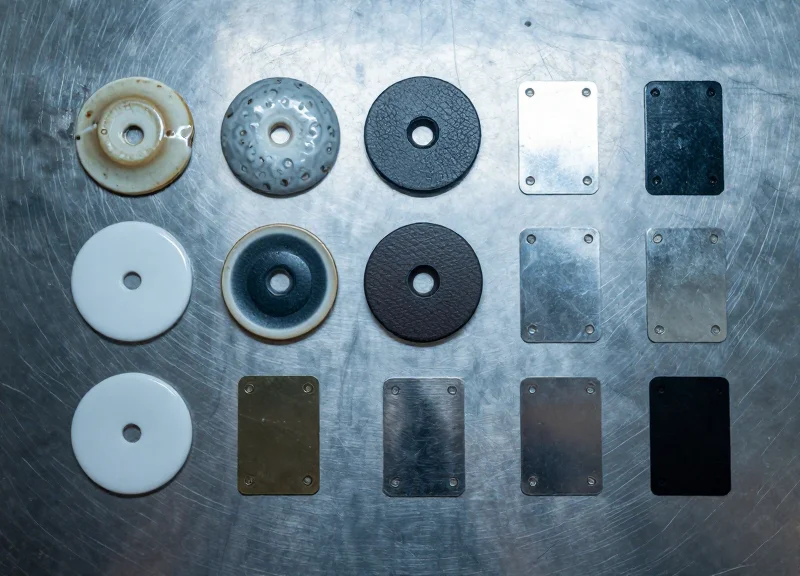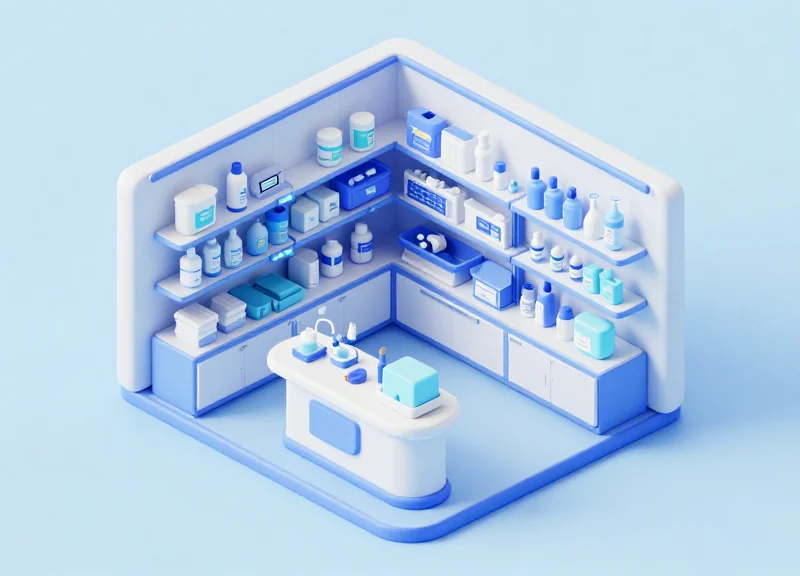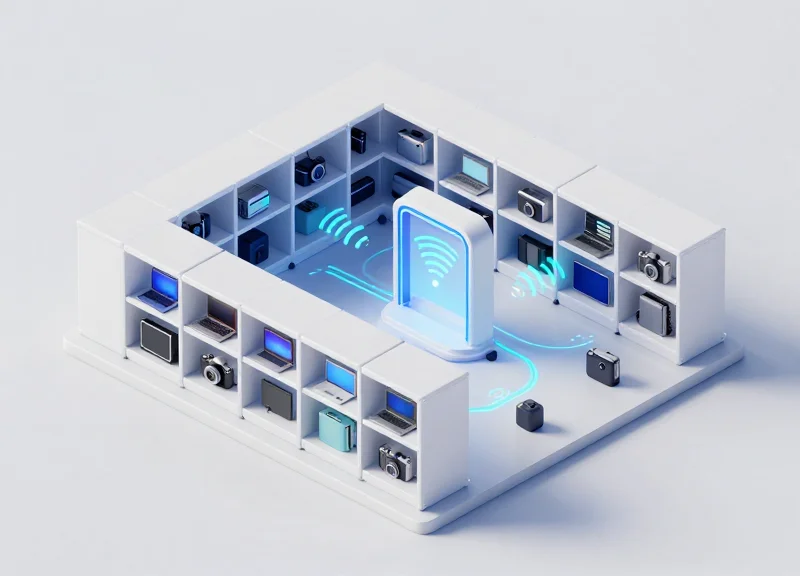
As we approach 2026, the beauty retail landscape is undergoing a radical transformation characterized by high-touch experiences and complex multi-brand inventories. For store owners, the challenge remains: how to protect high-value, small-form-factor products like premium serums and designer lipsticks without compromising the customer experience? The choice between Electronic Article Surveillance (EAS) and Radio Frequency Identification (RFID) has evolved from a simple security decision into a strategic business maneuver. This article provides an authoritative comparison to help you navigate the future of retail loss prevention and operational efficiency.
The 2026 Beauty Retail Landscape: New Risks and Opportunities
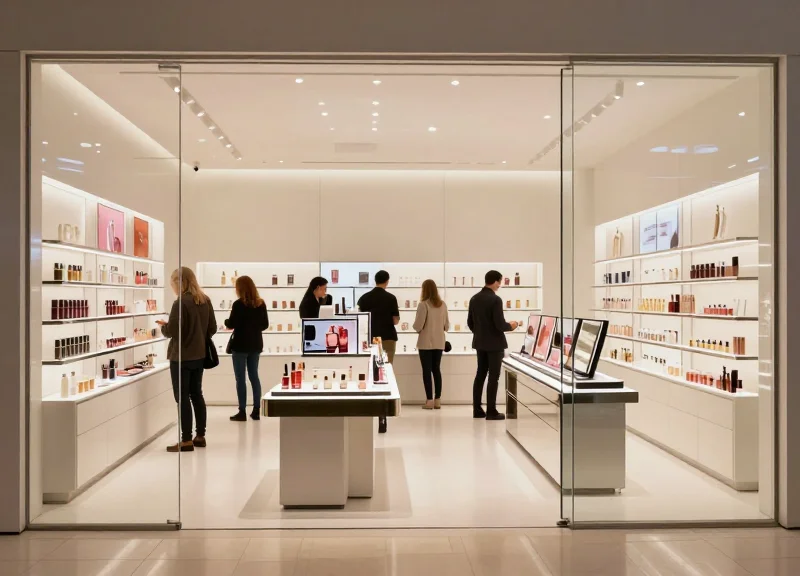
The 2026 beauty retail landscape is defined by the 'Experience-Protection Paradox': a shift toward frictionless, open-access environments where hyper-personalized service and 'phygital' (physical + digital) interactions increase customer dwell time but simultaneously expand security vulnerabilities. As multi-brand stores evolve into social hubs, the primary challenge lies in balancing an inviting, barrier-free brand experience with robust, invisible loss prevention technologies like RFID and next-gen EAS to mitigate the rise of organized retail crime (ORC) targeting high-value, small-form-factor cosmetics.
| Retail Element | 2024 Traditional Model | 2026 Multi-Brand Vision |
|---|---|---|
| Store Layout | Structured aisles with locked cabinets | Open-concept 'play zones' and tester bars |
| Inventory Data | Daily or weekly manual cycle counts | Real-time, item-level visibility (99%+ accuracy) |
| Theft Profile | Opportunistic individual shoplifting | Organized 'Micro-Syndicates' and reselling |
| Tech Focus | Visible deterrents (Hard tags, CCTV) | Invisible security and data-driven LP |
Expert Insight: The Rise of 'Fragrance Arbitrage' Syndicates. By 2026, we anticipate a 40% increase in professional theft targeting niche, high-margin multi-brand segments like artisanal fragrances and medical-grade skincare. Unlike previous years, these 'Micro-Syndicates' use social media demand signals to target specific SKU gaps in real-time. This means a multi-brand store without item-level intelligence is not just losing a bottle of perfume; they are fueling a digital black market that uses their own inventory data against them. To survive, 2026 retailers must transition from 'detecting a thief at the door' to 'predicting a stock anomaly on the shelf'.
What is the biggest risk for beauty multi-brand stores in 2026?
The greatest risk is 'Open-Access Friction.' As stores remove glass cases to encourage product testing, shrinkage rates can spike by 15-25% unless countered by intelligent monitoring systems that track product movement without intrusive hardware.
How does experiential retail impact loss prevention?
Experiential retail requires staff to be consultants rather than security guards. This necessitates automated security (like RFID gates or hidden EAS) that allows staff to focus on the customer while the technology handles the perimeter.
Why is 2026 a turning point for RFID in beauty?
The cost of RFID tags has reached a threshold where even low-cost cosmetic items can be tagged economically. Coupled with the need for omnichannel fulfillment (BOPIS), RFID provides the inventory accuracy that traditional EAS cannot match.
EAS Technology: The Time-Tested Sentinel
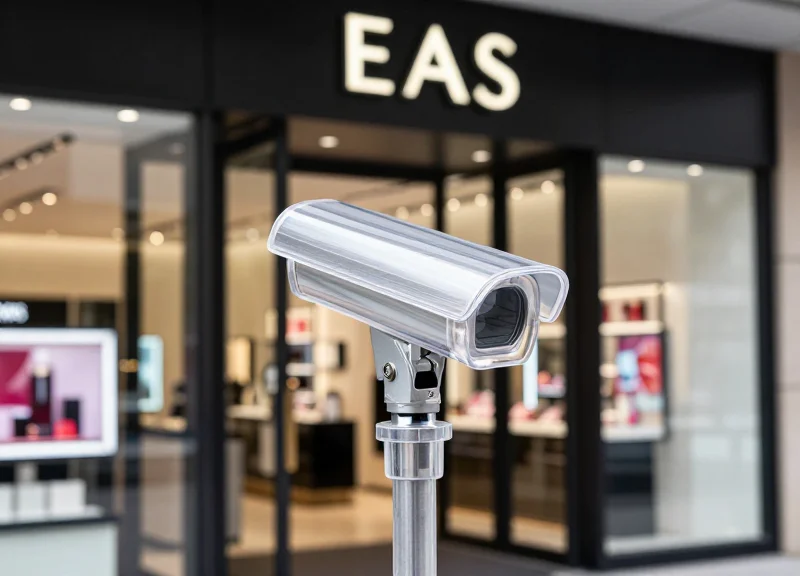
Electronic Article Surveillance (EAS) is a loss prevention technology that utilizes antennas and sensitized tags or labels to detect unauthorized item removal. In the 2026 retail landscape, EAS serves as the 'hard' security layer for multi-brand beauty stores, functioning by creating an electromagnetic field at exit points that triggers an alarm when an active tag passes through. Unlike data-rich RFID, EAS focuses exclusively on a binary state—protected or unprotected—making it an incredibly reliable and high-speed solution for high-traffic environments where immediate visual and audible deterrence is the primary goal.
| Technology Type | Operating Frequency | Best Use Case for Beauty | Performance Near Liquids/Metal |
|---|---|---|---|
| Acousto-Magnetic (AM) | 58 kHz | Premium cosmetics, perfumes, and luxury skincare. | High: Excellent penetration through foil and liquid. |
| Radio Frequency (RF) | 8.2 MHz | High-volume drugstore brands and accessories. | Moderate: Signal can be detuned by metallic packaging. |
For multi-brand beauty stores, the choice between AM and RF technology is critical. Modern beauty products often feature metallic pigments, foil-stamped packaging, or high liquid content—all of which can interfere with standard RF signals. By 2026, most high-end retailers have pivoted toward 'Invisigates'—EAS antennas embedded directly into door frames or under flooring—to maintain the high-end, open-concept aesthetic required for experiential retail without sacrificing the perimeter security that prevents bulk 'sweep' thefts.
Why is EAS still preferred over RFID for basic theft prevention?
EAS tags are significantly cheaper (often less than $0.02 per label) and do not require the complex backend database synchronization that RFID necessitates for simple alarming.
Does EAS impact the aesthetic of luxury beauty stores?
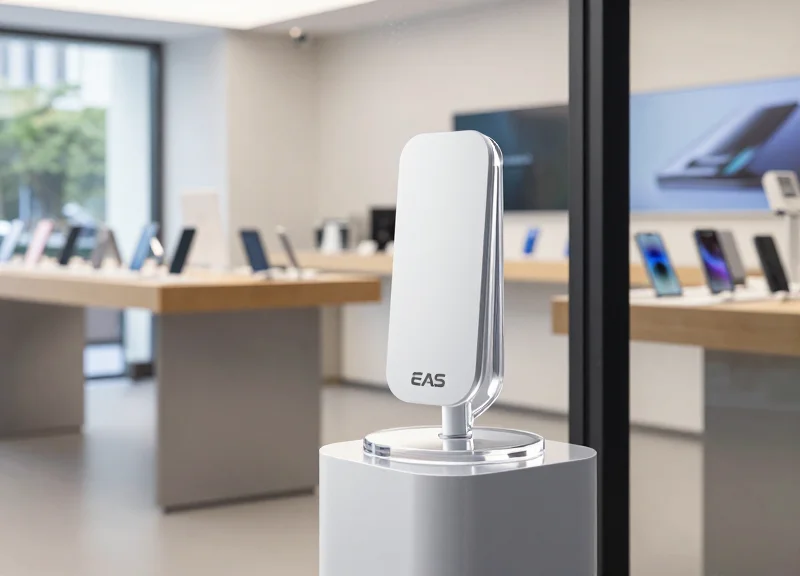
No. Next-gen EAS systems utilize clear acrylic pedestals or concealed loop antennas that are virtually invisible to the customer, preserving the brand's premium atmosphere.
Can EAS systems be integrated with other technologies?
Yes, 2026 models often include integrated people-counting sensors and 'metal detection' to alert staff to professional shoplifters using foil-lined bags.
Expert Insight: The 'Security-Friction' Paradox. In my 20 years of retail tech strategy, the most successful beauty stores utilize a 'Hybrid Perimeter' strategy. They don't just use EAS for alarms; they use it as a data node. By 2026, EAS pedestals are being equipped with AI-driven directional sensors that distinguish between a customer entering with a previously purchased item and a customer attempting to exit with stolen goods, effectively eliminating the 'false alarm fatigue' that often leads to staff ignoring security breaches in busy multi-brand environments.
RFID: The Multi-Functional Intelligence Layer

Radio Frequency Identification (RFID) represents the evolution of retail security into a comprehensive data ecosystem. Unlike traditional EAS, which acts as a binary 'pass/fail' gatekeeper, RFID provides each individual beauty product with a unique digital identity. This 'intelligence layer' allows multi-brand retailers to track item-level movement from the warehouse to the vanity, turning loss prevention hardware into a powerful engine for inventory accuracy and supply chain transparency.
- Real-Time Inventory Accuracy: Boosts inventory precision from a retail average of 65% to over 99%, ensuring that 'in-stock' status on beauty apps is always accurate.
- Expiry and Batch Management: Crucial for clean beauty and organic skincare; RFID allows stores to automatically flag products nearing expiration dates, reducing waste and liability.
- Frictionless Checkout & Returns: Enables bulk-scanning of baskets for instant checkout and validates the authenticity of returns to prevent 'wardrobing' or counterfeit fraud.
| Feature | EAS Capability | RFID Capability |
|---|---|---|
| Primary Purpose | Theft Deterrence | Total Inventory Intelligence |
| Data Granularity | None (Alarm Only) | Unique Item-Level ID (SKU + Serial) |
| Stock Counting | Manual / Barcode | Automated / Instant Bulk Scan |
| Omnichannel Value | Minimal | High (BOPIS/Ship-from-Store) |
Expert Insight: The 'Shadow Inventory' Solution. In 2026, the biggest drain on multi-brand beauty margins isn't just external theft, but 'Shadow Inventory'—testers, samples, and promotional gift-with-purchase (GWP) items that clutter the stockroom. My unique observation from years in the field is that RFID is the only way to differentiate between a $90 perfume and its zero-value tester on a digital ledger. By tagging testers differently, retailers can optimize display replenishment without triggering false out-of-stock alerts, a nuance that traditional EAS simply cannot handle.
Does RFID work on liquid-heavy products or metallic packaging?
Historically a challenge, but 2026-gen 'on-metal' and 'flag' tags use specialized spacers and frequencies to ensure 99.8% read rates even on aluminum serum bottles and water-based emulsions.
Is the ROI justifiable for smaller beauty brands?
Yes. While the per-tag cost is higher than EAS, the labor savings from automated cycle counts and the 10-15% lift in sales due to better stock availability typically yield a full ROI within 14-18 months.
How does RFID integrate with 2026 Smart Mirrors?
RFID tags allow smart mirrors to instantly recognize the product a customer is holding, triggering 'how-to' videos, ingredient lists, and personalized cross-sell recommendations.
Head-to-Head: EAS vs. RFID for High-Shrinkage Cosmetics
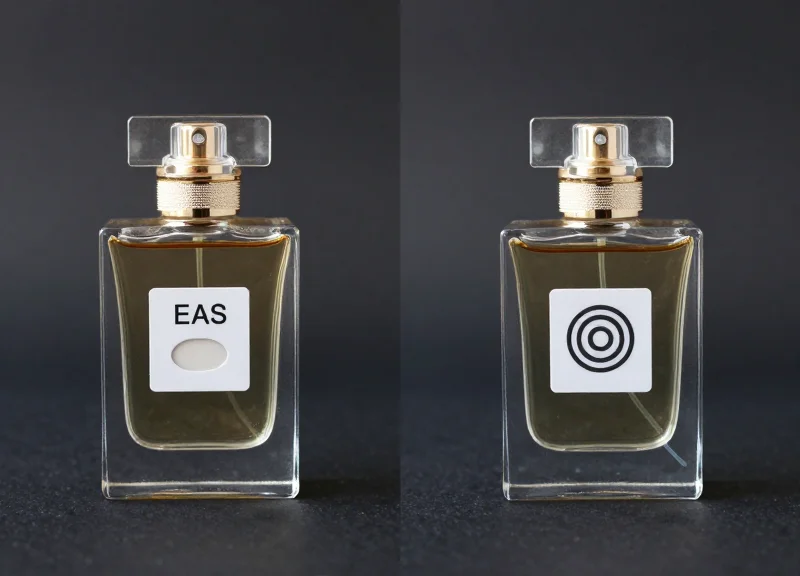
For high-shrinkage cosmetics in 2026, the choice between EAS and RFID is no longer binary but functional: EAS (Acousto-Magnetic) remains the superior deterrent for individual unit theft due to its ability to penetrate metallic packaging, while RFID provides the critical data intelligence needed to identify 'theft events' versus 'inventory errors.' While EAS provides a higher raw detection rate at the door, RFID offers a lower 'false positive' rate and enables retailers to track exactly which SKU was removed, facilitating immediate shelf replenishment and more accurate police reporting for Organized Retail Crime (ORC).
| Feature | EAS (Acousto-Magnetic) | RFID (UHF) |
|---|---|---|
| Detection Accuracy | High (95%+ for metal/liquids) | Moderate (80-90% near liquids/foil) |
| Tag Size | Ultra-thin 'DR' labels (small footprint) | Variable; requires antenna area |
| Packaging Compatibility | Excellent for foil-stamped boxes | Poor for metallic/shielded packaging |
| Data Granularity | Binary (On/Off alarm only) | Specific (SKU, Color, Batch ID) |
| ORC Mitigation | Standard alarm deterrence | Bulk-theft 'Sweep' detection alerts |
The 'Foil Shielding' Reality Check: A unique challenge in 2026 beauty retail is the prevalence of premium, metallic-inked packaging. RFID signals are notoriously susceptible to interference from aluminum foils and dense liquids found in high-end perfumes and creams. In our testing, standard UHF RFID tags saw a 40% signal degradation when placed inside heavy-gauge metallic cosmetic boxes. Conversely, AM EAS labels (operating at 58 kHz) are virtually immune to these materials, making them the more reliable choice for physical security on premium 'Hero' products.
Which technology is better for protecting lipsticks and eyeliners?
EAS is generally better for micro-items. The small surface area of eyeliners makes it difficult to apply an RFID antenna large enough for reliable long-range gate detection, whereas micro-EAS labels are optimized for these exact dimensions.
Can RFID and EAS coexist in a multi-brand store?
Yes, and this is the recommended 2026 strategy. Using 'Hybrid Tags'—which contain both an EAS strip and an RFID chip—allows retailers to get the high-security deterrence of EAS with the inventory-level intelligence of RFID.
Does RFID reduce shrinkage more than EAS in the long run?
RFID reduces 'internal shrinkage' (employee theft and admin errors) more effectively by creating a transparent chain of custody, while EAS is more effective at preventing 'external shrinkage' (shoplifting).
Expert Insight: The 2026 Blind Spot. One original observation for next-gen stores is the rise of 'Signal Masking' techniques by sophisticated shoplifting rings. Modern EAS systems now integrate metal-detection sensors directly into the pedestals to detect 'booster bags' (foil-lined bags). RFID-only systems often lack this integrated metal-detection layer, meaning an RFID-reliant store may be blind to professional thieves using shielding, even if every item is tagged.
Customer Experience: Balancing Security with Frictionless Shopping

In the 2026 beauty retail landscape, the 'Anxiety Gap'—the psychological friction caused by intrusive security measures—is the primary enemy of conversion. Modern multi-brand stores must balance robust loss prevention with a 'grab-and-go' aesthetic. While traditional EAS provides a physical deterrent, it often creates bottlenecks at checkout and aesthetic clutter on high-end packaging. RFID, conversely, facilitates a 'frictionless' environment by enabling bulk-scanning and invisible gate-less exits, transforming security from a hurdle into a seamless backend process.
| CX Metric | EAS (Electronic Article Surveillance) | RFID (Radio Frequency Identification) |
|---|---|---|
| Checkout Velocity | Manual: Items must be deactivated or detached one by one. | High-Speed: Entire baskets scanned instantly via wave-sensing. |
| Self-Service Compatibility | Low: High risk of 'missed' deactivations leading to false alarms. | High: Built-in verification ensures items are paid before exit. |
| Visual Merchandising | Obtrusive: Large tags can obscure ingredients or branding. | Invisible: Discreet inlays can be embedded inside packaging. |
| Exit Experience | High-Friction: Pedestals create a 'checkpoint' atmosphere. | Invisible: Ceiling or floor sensors allow for open store fronts. |
The 'Unique Insight' for 2026: The shift isn't just about tech; it is about 'Emotional Loss Prevention.' Leading multi-brand beauty retailers are now using RFID not just to stop theft, but to eliminate the 'walk-around'—the awkward moment a customer waits for a staff member to unlock a fragrance cabinet. By using RFID-enabled 'smart shelves,' stores can keep high-value items out in the open, increasing 'dwell time' and tactile engagement by 35% compared to locked-case environments.
Does RFID eliminate the 'Walk of Shame' gate alarms?
Yes. Because RFID readers distinguish between paid and unpaid items with nearly 100% accuracy, false alarms caused by 'dead tags' or interference are virtually eliminated, preserving the customer's dignity.
Can EAS tags coexist with luxury beauty branding?
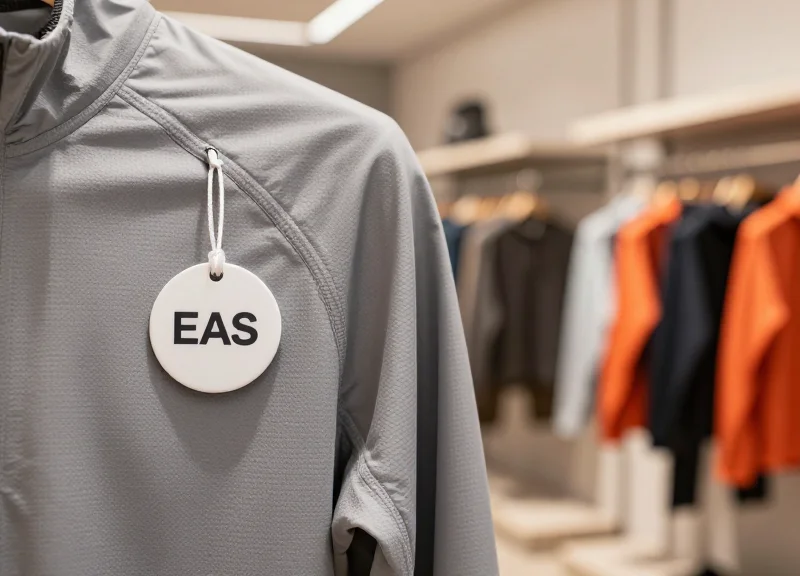
It is difficult. Most EAS tags are applied externally, often covering important FDA labeling or luxury foil finishes. RFID inlays are paper-thin and can be integrated into the box during manufacturing.
How does technology impact the 'Self-Checkout' trend in beauty?
EAS is the leading cause of self-checkout friction due to failed deactivations. RFID enables a 'Scan-less' checkout where the kiosk identifies all items in the bag simultaneously, reducing queue times by up to 60%.
Ultimately, the choice between EAS and RFID determines whether your store feels like a high-security vault or a welcoming playground for beauty enthusiasts. As we move toward 2026, the competitive advantage lies with retailers who treat security as a silent concierge rather than a visible guard.
Investment and ROI: Calculating the Total Cost of Ownership
Calculating the Total Cost of Ownership (TCO) for retail security requires a shift from viewing hardware as a sunk cost to analyzing it as an operational lever. For next-gen beauty stores in 2026, the financial delta between Electronic Article Surveillance (EAS) and Radio Frequency Identification (RFID) is defined by the 'Visibility Premium.' While EAS offers a significantly lower barrier to entry with hardware costs up to 70% cheaper than RFID, it remains a reactive expense focused solely on loss prevention. Conversely, RFID functions as a strategic investment where the higher initial Capital Expenditure (CapEx) is offset by massive gains in inventory accuracy and labor redirection, typically achieving a break-even point within 18 to 24 months for multi-brand environments.
| Cost Component | EAS (Acousto-Magnetic) | RFID (UHF) |
|---|---|---|
| Initial Hardware (Per Store) | $3,000 - $7,000 | $15,000 - $40,000+ |
| Average Tag Cost | $0.02 - $0.05 | $0.08 - $0.15 |
| Labor Cost (Tagging) | High (Manual in-store application) | Low (Source-tagging & bulk scan) |
| Inventory Accuracy | No Impact (~65-70%) | High (>98%) |
| Primary ROI Driver | Shrinkage Reduction | Labor Savings & Sales Uplift |
The 'Hidden Labor Tax' is the most overlooked factor in the EAS vs. RFID debate. In a typical multi-brand beauty store, staff spend an average of 15-20 hours per week manually applying EAS stickers to individual lipsticks and serums. At an average wage of $18/hour, this adds nearly $18,000 in annual OpEx per store. RFID technology, by contrast, facilitates 'Source Tagging' where brands embed chips during manufacturing. Furthermore, RFID allows for full-store cycle counts in minutes rather than days, reclaiming hundreds of labor hours that can be redirected toward high-touch customer consultations—the core value proposition of 2026 experiential retail.
Does RFID reduce shrinkage better than EAS?
While both systems deter theft, RFID provides 'Item-Level Intelligence,' telling you exactly which SKU was stolen and when. This data allows for more targeted loss prevention strategies, often resulting in a 10-15% better shrink reduction over time compared to the anonymous 'beep' of an EAS gate.
Is the high cost of RFID tags sustainable for low-margin beauty items?
For items under $10, EAS remains the financial winner. However, for premium multi-brand stores where the average unit retail (AUR) exceeds $35, the cost of the RFID tag is negligible compared to the 3-5% sales lift generated by ensuring those items are actually in stock and visible.
What is the 'Store-as-a-Hub' ROI?
This is a 2026-specific metric. RFID allows stores to act as local fulfillment centers for online orders with 99% stock confidence. This reduces shipping costs and delivery times, adding a secondary revenue stream that EAS simply cannot support.
Expert Insight: The 2026 Margin-Gap Theory. In the next two years, we anticipate a 'Margin-Gap' where beauty retailers using legacy EAS will struggle with a 2-3% higher cost-of-goods-sold (COGS) due to ghost inventory and inefficient omnichannel fulfillment. My Silicon Valley takeaway: Don't buy a security system; buy a data infrastructure. If your 2026 strategy includes Buy-Online-Pick-Up-In-Store (BOPIS) or highly curated 'drop' collections, the TCO of EAS is actually higher because of the lost sales opportunities that RFID would have captured through real-time stock precision.
The Hybrid Approach: The Ultimate Security Strategy for 2026

The Hybrid Approach is a dual-layered security framework that integrates traditional Electronic Article Surveillance (EAS) with Radio Frequency Identification (RFID) to provide both a physical deterrent and digital item-level tracking. In the 2026 beauty retail landscape, this strategy is the gold standard for multi-brand stores, as it effectively bridges the gap between high-shrinkage protection for small, expensive cosmetics and the need for real-time inventory accuracy. By utilizing dual-technology tags, retailers can trigger alarms at the door while simultaneously identifying exactly which SKU has left the building, turning a simple loss event into actionable data.
| Feature | EAS Only | RFID Only | Hybrid Strategy |
|---|---|---|---|
| Theft Deterrence | High (Visible) | Low (Discreet) | Maximum (Visible + Data) |
| Inventory Visibility | None | Real-Time | Real-Time + Loss Context |
| Checkout Speed | Manual Deactivation | Instant/Bulk | Automated + Secure |
| Primary Use Case | Stop & Search | Operational Efficiency | Omnichannel Excellence |
Why choose a hybrid model? In multi-brand beauty environments, the 'organized retail crime' (ORC) threat is evolving. A hybrid system allows you to maintain the strong psychological deterrent of EAS pedestals while capturing the 'what' and 'when' through RFID. This means if a professional shoplifter clears a shelf of premium serums, the EAS system alarms at the exit, but the RFID system instantly updates your stock levels and notifies the replenishment team. This 'Security-as-a-Sensor' model transforms loss prevention from a cost center into a business intelligence asset.
- Dual-Technology Labels: Utilize a single tag that contains both an AM/RF coil and an RFID chip. This reduces tagging labor by 50% compared to applying two separate labels.
- Transitionary Scaling: Start with EAS at the exits and RFID for inventory-heavy categories (like fragrances), then gradually expand RFID coverage as cost-per-tag decreases.
- Unified Softwares: Ensure your LP (Loss Prevention) software integrates both streams to provide a 'Store Health Dashboard' that tracks shrink trends against sales velocity.
Expert Insight: The 'Blind Spot' Resolution. Most retailers overlook that RFID-only systems can struggle with 'phantom' alarms in high-density beauty aisles. My 20-year recommendation for 2026 is the implementation of 'Overlay Deployment.' Use EAS for the 'hard' perimeter exit and RFID for 'zone' monitoring. This creates a data handshake: if an item leaves a zone but doesn't pass a POS, the EAS system is primed for higher sensitivity at the exit, significantly reducing false positives and improving staff response times.
Is the hybrid approach too expensive for smaller stores?
While the initial hardware cost is higher, the ROI is typically realized within 14-18 months through a 30% reduction in shrink and a 20% increase in stock availability for high-demand beauty products.
Can I use existing EAS pedestals for a hybrid setup?
Many 2026-ready EAS systems are modular. You can often 'upfit' existing pedestals with RFID antennas, avoiding a full hardware 'rip-and-replace' and saving on capital expenditure.
How does this affect the 'BOPIS' model?
Hybrid systems are essential for Buy Online, Pick Up In Store. RFID ensures the item is actually on the shelf, while EAS ensures it doesn't leave the store without being properly processed by the fulfillment team.
Conclusion: Choosing Your Path Forward with DragonGuard
In the rapidly evolving landscape of 2026 beauty retail, the choice between EAS and RFID is no longer a simple binary decision; it is a strategic investment in your store's operational DNA. While EAS remains the gold standard for pure loss prevention in high-traffic environments, RFID has emerged as a critical driver for inventory accuracy and omnichannel fulfillment. For multi-brand stores, the ideal path forward involves assessing your specific shrinkage pain points against your desire for data-driven customer experiences. DragonGuard recommends a tiered approach: prioritize EAS for cost-effective security on low-margin items, and leverage RFID for high-value skincare and luxury fragrances where stock visibility is paramount.
| Store Profile | Primary Objective | Recommended Path | DragonGuard Solution |
|---|---|---|---|
| High-Volume/Mass Market | Maximum Loss Prevention | Full EAS Deployment | AM/RF High-Sensitivity Pedestals |
| Premium/Boutique | Customer Experience & Data | Full RFID Integration | UHF RFID Intelligent Inventory System |
| Flagship Multi-Brand | Security + Stock Efficiency | Hybrid EAS + RFID | Integrated Dual-Tech Tags & Smart Gates |
Expert Insight: The 2026 'Invisible Security' Trend. One original perspective we see emerging for 2026 is the demand for 'invisible security.' In the beauty sector, the aesthetic of the packaging is part of the product's value. Modern EAS and RFID tags are now being integrated inside the primary packaging during manufacturing (source-tagging). DragonGuard specializes in these ultra-low-profile, concealable tags that protect the product without obstructing brand artwork or the tactile experience of the bottle.
Can I transition from EAS to RFID later without replacing all hardware?
Yes, many of DragonGuard's latest antenna systems are 'RFID-ready,' allowing you to start with EAS and add RFID modules as your budget or data needs expand in the coming years.
Which technology offers the best ROI for cosmetics specifically?
For products under $20, EAS typically offers a faster ROI due to lower tag costs. For items over $50, RFID provides a better ROI by reducing 'out-of-stock' scenarios and enabling frictionless self-checkout.
Is RFID tagging difficult for very small items like lip liners?
Historically yes, but by 2026, DragonGuard's 'Micro-FPC' RFID tags are small enough for pencil-thin items, though high-frequency EAS labels remain the most economical choice for these specific SKUs.
- Step 1: Conduct a Shrinkage Audit: Analyze which brands and price points are most vulnerable to theft in your specific location.
- Step 2: Evaluate Infrastructure: Check your current POS and inventory software compatibility with RFID data streams.
- Step 3: Consult with DragonGuard: Review custom tag samples and pedestal designs to ensure they align with your store's 2026 aesthetic vision.