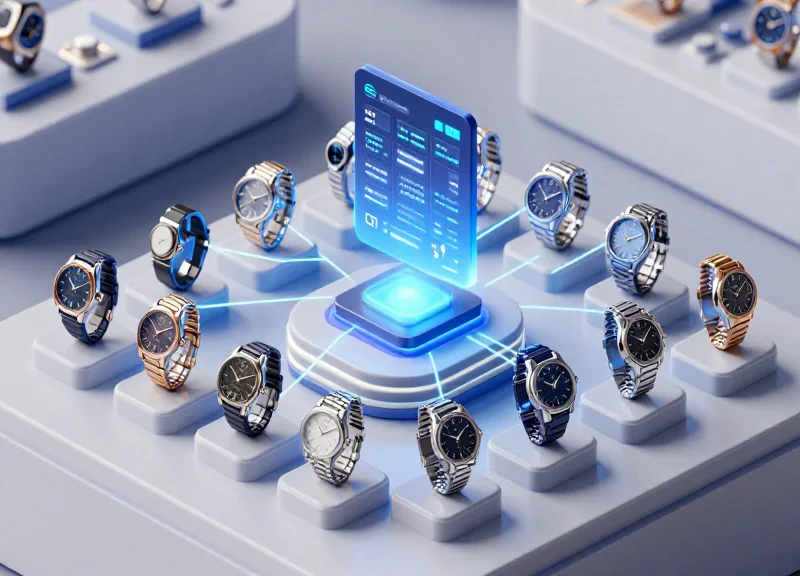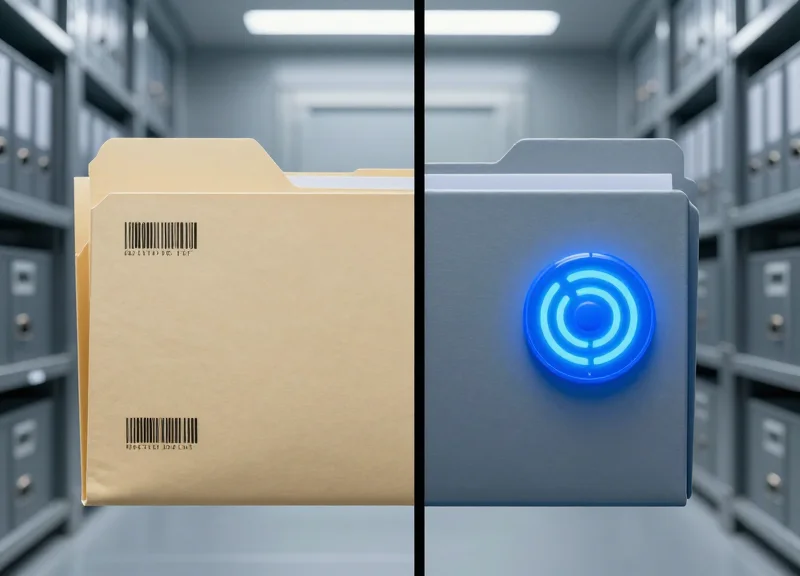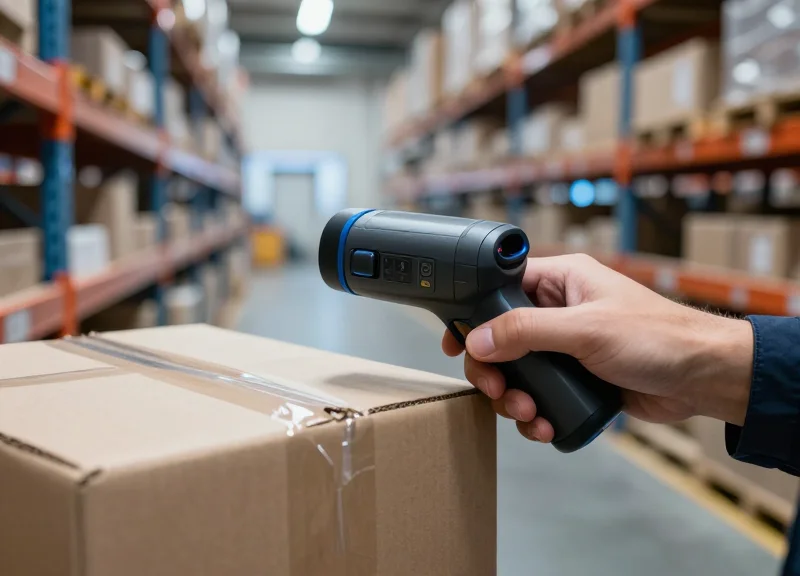
As global supply chains brace for the heightened demands of 2026, the transition from traditional handheld devices to wearable RFID scanners has shifted from a luxury to a competitive necessity. In high-frequency logistics environments—where speed, accuracy, and worker safety are paramount—the ability to scan hands-free is a game-changer. This guide, authored by industry experts, provides a strategic framework to help decision-makers navigate the evolving hardware landscape and select scanners that offer long-term ROI and operational excellence.
The Strategic Importance of Wearable RFID in 2026 Logistics
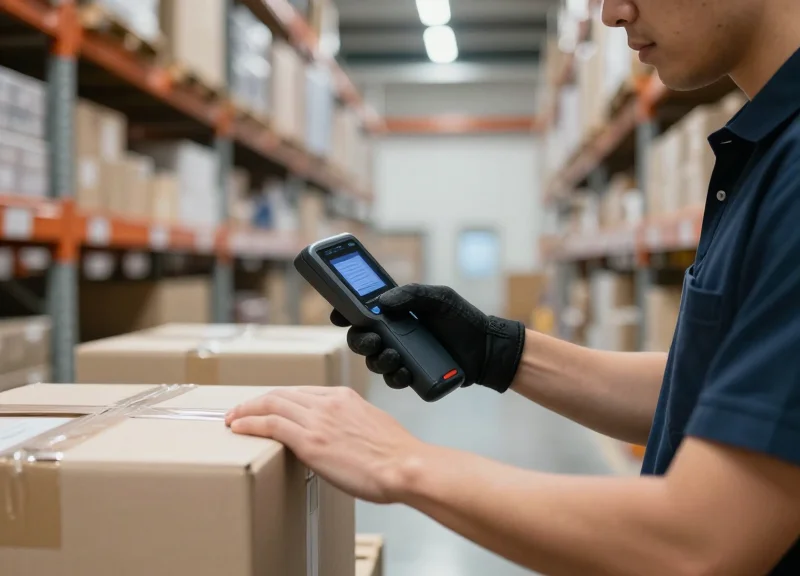
By 2026, wearable RFID scanners will no longer be an optional upgrade; they will be the primary catalyst for high-frequency logistics. The strategic importance lies in their ability to eliminate the 'scan-and-set' bottleneck, allowing workers to maintain natural motion while capturing data in real-time. As global supply chains shift toward hyper-localization and micro-fulfillment, the delta between human speed and system data must close. Wearable RFID technology solves this by integrating data capture directly into the ergonomic workflow, effectively turning every warehouse associate into a live data node within a fully synchronized, AI-governed ecosystem.
| Operational Metric | Legacy Handheld Scanners | 2026 Wearable RFID Solutions |
|---|---|---|
| Average Transaction Time | 5.5 Seconds (Pick/Set Down/Scan) | 1.2 Seconds (Hands-free capture) |
| Labor Fatigue Factor | High (Repetitive gripping/lifting) | Minimal (Natural arm/hand motion) |
| Data Accuracy | Variable (Dependent on manual aim) | 99.9% (Continuous background reading) |
| Throughput Capacity | Baseline (1x) | Optimized (1.3x to 1.5x) |
Does wearable RFID improve worker retention?
Yes. By reducing the physical strain of carrying heavy handhelds and streamlining repetitive tasks, wearables significantly lower physical fatigue and cognitive load, which are primary drivers of turnover in high-frequency environments.
How does it interact with 2026 WMS systems?
Modern wearables utilize ultra-low-latency 5G or Wi-Fi 6E to feed data into AI-driven Warehouse Management Systems, allowing for instant inventory reconciliation and dynamic task re-assignment.
Is the ROI faster than traditional hardware?
Typically, yes. While the initial unit cost may be higher, the gains in 'picks per hour' and the reduction in scanning errors usually lead to a full ROI within 8 to 14 months.
Expert Insight: The 'Invisible Scan' Paradigm. In 2026, the most successful logistics hubs will move toward what I call 'Cognitive Ergonomics.' Traditional scanning requires a worker to think about the tool; wearable RFID removes that mental step. When a worker grabs a box and the system automatically registers the move via a ring or glove scanner, the technology becomes invisible. This allows the worker to focus entirely on safety and spatial organization rather than the hardware, leading to a profound reduction in 'micro-errors' that cost large-scale fulfillment centers millions annually.
Point 1: Ergonomics and Form Factor – Prioritizing Worker Comfort
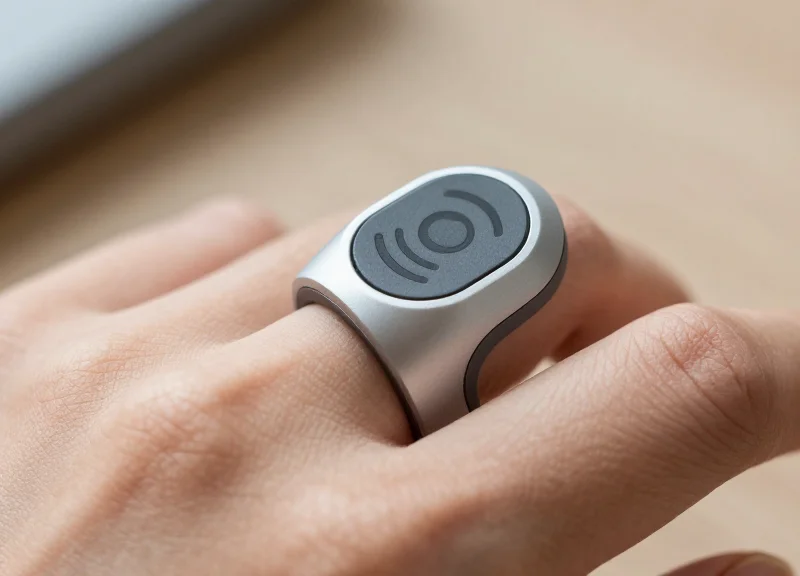
In high-frequency logistics, ergonomics is the most significant predictor of long-term ROI. A wearable RFID scanner must function as a natural extension of the worker’s body, allowing for 'hands-free' operation without compromising natural movement or causing musculoskeletal strain. By 2026, the industry has shifted from 'one-size-fits-all' hardware to task-specific form factors, categorized primarily into ring scanners, glove-integrated units, and wrist-mounted devices. Choosing the wrong form factor leads to 'device fatigue,' which can reduce scanning throughput by up to 15% over an eight-hour shift.
| Form Factor | Best Use Case | Key Advantage | Ergonomic Consideration |
|---|---|---|---|
| Ring Scanners | Small parcel sorting & picking | Ultra-lightweight; minimal footprint | Can cause finger strain if weight exceeds 40g |
| Glove-Integrated | Heavy pallet handling & bulky items | Zero-grip requirement; maximum protection | Hygiene and heat buildup (requires breathable mesh) |
| Wrist-Mounted | Complex data entry & inventory audits | Large screen for visual feedback | Potential for 'wrist-drop' fatigue; requires balanced straps |
Expert Insight: The 'Total Daily Load' (TDL) Metric. In my 20 years of experience, I’ve found that logistics managers often look at device weight in isolation. However, for 2026, we recommend calculating the TDL. If a worker performs 3,000 scans a day, even a 10-gram difference in device weight equates to moving an extra 30kg of 'dead weight' daily. Prioritize devices with 'center-of-gravity' alignment—where the battery and sensor are positioned directly over the metacarpal bones—to minimize torque on the wrist joint.
How do I choose between a ring scanner and a glove unit?
Choose ring scanners for high-dexterity tasks involving small items. Choose glove-integrated units if the environment is rugged or if workers need extra hand protection while handling rough materials.
What is the ideal weight for a wearable RFID scanner in 2026?
Aim for a total weight under 50 grams for finger-mounted devices and under 150 grams for wrist-mounted units to prevent long-term Repetitive Strain Injury (RSI).
Does the ambidextrous design matter?
Yes. To prevent muscle fatigue, workers should be able to switch the device between hands easily. Look for modular designs that support 'one-click' swapping without re-configuration.
- Assess Task Frequency: Measure the average scans per hour. If it exceeds 400, prioritize the lightest possible ring or glove solution.
- Evaluate Range of Motion: Ensure the device does not inhibit the 'pincer grasp' or the ability to make a full fist.
- Audit Haptic Feedback: In 2026, ergonomic comfort includes sensory comfort. Ensure vibration alerts are adjustable so they don't cause 'phantom vibration syndrome' or nerve irritation.
Point 2: Scanning Speed and Read Range for High-Volume Environments
In 2026, the benchmark for high-frequency logistics isn't just raw speed—it is sustained read density. For high-volume environments like micro-fulfillment centers and cross-docking hubs, a wearable RFID scanner must provide a read rate of at least 1,000 tags per second while maintaining a selective read range of 0.5 to 3.0 meters. The goal is to maximize 'Actionable Reads per Minute' (ARM), ensuring that workers can process entire pallets or dense bins in a single pass without capturing 'ghost reads' from adjacent aisles or inventory stored behind the operator.
The technical backbone of this performance lies in advanced anti-collision algorithms. As tag density increases, the likelihood of signal interference (tag clashing) rises. Modern enterprise-grade wearables now utilize ISO 18000-63 (EPC Gen2v2) protocols coupled with AI-driven signal processing to prioritize tags based on proximity and signal strength. This prevents the scanner from stalling when faced with hundreds of simultaneous responses, a common failure point in older hardware.
| Logistics Scenario | Required Read Range | Target Throughput | Key Feature Needed |
|---|---|---|---|
| E-commerce Sorting | 0.5m - 1.5m | 600+ Tags/Min | Near-field sensitivity |
| Pallet Receiving | 2.0m - 4.0m | 1200+ Tags/Min | Anti-collision logic |
| High-Bay Inventory | 5.0m - 8.0m | 200+ Tags/Min | Long-range directional antenna |
| Cold Chain/Liquid | 1.0m - 2.5m | 400+ Tags/Min | Signal penetration tuning |
How does read range impact worker fatigue?
A well-tuned read range reduces the need for 'physical scanning gymnastics.' If the range is too short, workers must constantly bend or reach; if too long, they capture irrelevant data. A 2-meter 'sweet spot' is ideal for most wearable applications.
Why is 'Read Sensitivity' more important than 'Transmit Power'?
High transmit power drains battery and causes cross-talk between devices. High sensitivity allows the scanner to 'hear' weak tag responses without shouting, preserving battery and improving accuracy in dense areas.
Can these scanners handle tags near liquids or metals?
By 2026, top-tier scanners include dynamic RSSI (Received Signal Strength Indicator) filtering that adjusts in real-time to compensate for signal attenuation caused by challenging materials.
Expert Insight: The Rise of 'Zone-Locking' Technology. One original trend we are seeing in Silicon Valley's latest logistics deployments is the move toward 'Zone-Locking.' Instead of just reading everything in range, 2026-era scanners use dual-polarized antennas and phase-angle analysis to determine if a tag is moving with the worker or just sitting on a shelf. This effectively eliminates 99% of accidental 'over-reads,' allowing for high-power scanning in even the most crowded warehouse corridors.
Point 3: Battery Life and Fast-Charging for 24/7 Operations
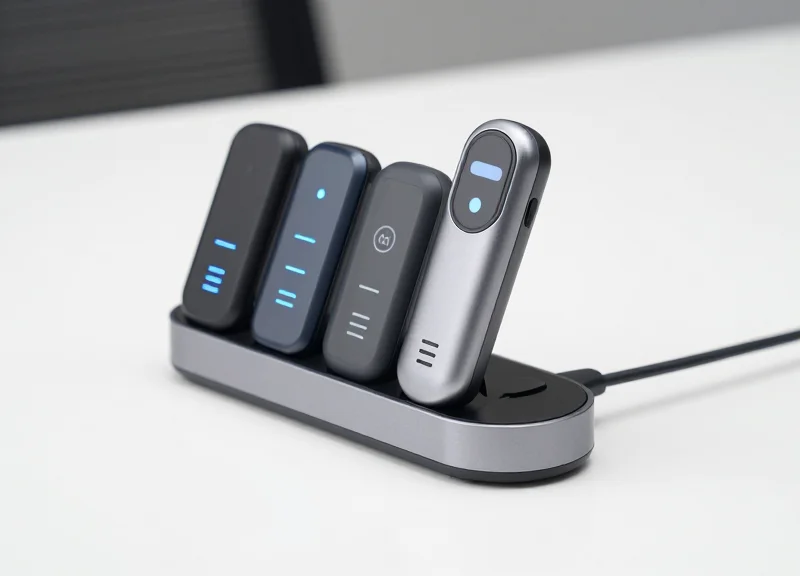
For high-frequency logistics in 2026, the benchmark for wearable RFID battery performance is no longer just 'lasting a shift,' but achieving 'infinite uptime' through a combination of high energy density and ultra-rapid charging cycles. As warehouse automation accelerates, any device tethered to a charging dock for more than 20 minutes represents a critical bottleneck. Modern scanners must leverage advanced chemistries, such as silicon-anode or solid-state variants, which offer up to 40% more capacity in the same compact form factor required for ergonomic wearable use. This ensures that even with constant Bluetooth 5.4 or Wi-Fi 7 connectivity and frequent high-power RFID pings, the device maintains peak performance for 12+ hours.
| Feature | Legacy Standards (2022-2024) | 2026 High-Frequency Standards |
|---|---|---|
| Battery Chemistry | Standard Lithium-Ion | High-Density Silicon-Anode / Solid-State |
| Charging Protocol | Proprietary Pogo-Pins | USB-C PD 3.1 & Qi2 Wireless |
| Charge Time (0-80%) | 60 - 90 Minutes | 12 - 18 Minutes |
| Cycle Life | 500 - 800 Cycles | 1,500+ Cycles with AI Management |
| Communication Mode | Bluetooth 5.0 (Basic) | BLE 5.4 / Wi-Fi 7 (Low-Power Optimized) |
The move toward universal charging standards is the most significant operational shift for 2026. Proprietary charging cradles are being phased out in favor of USB-C Power Delivery (PD) and Qi2 magnetic wireless charging. This allows logistics managers to utilize standardized multi-bay charging stations, reducing infrastructure costs and e-waste. Furthermore, 'Expert Tip': When evaluating hardware, look for devices featuring 'Hot-Swap Persistence.' This technology utilizes a small internal supercapacitor that keeps the device’s logic and network connection alive for 60 seconds while the main battery is swapped, preventing the 2-3 minute reboot and re-authentication lag that kills productivity in fast-paced sorting centers.
How does 'AI Power Tuning' improve 2026 RFID scanners?
Modern scanners use edge-AI to analyze scanning frequency; during low-activity periods, the device automatically throttles the RFID polling rate and CPU clock speed, extending effective battery life by up to 25% without user intervention.
Is wireless charging fast enough for industrial logistics?
Yes, the Qi2 standard adopted in 2026-gen devices utilizes magnetic alignment to ensure 15W-30W efficiency, which is sufficient for 'top-up' charging during worker breaks, effectively eliminating the need for full-cycle charges during a shift.
What is the importance of 'Cycle Health Intelligence' in 2026?
Unlike older 'dumb' batteries, 2026 units report precise health metrics to the Warehouse Management System (WMS), flagging batteries for replacement before they fail and cause mid-shift disruptions.
Point 4: Connectivity and Seamless WMS/ERP Integration
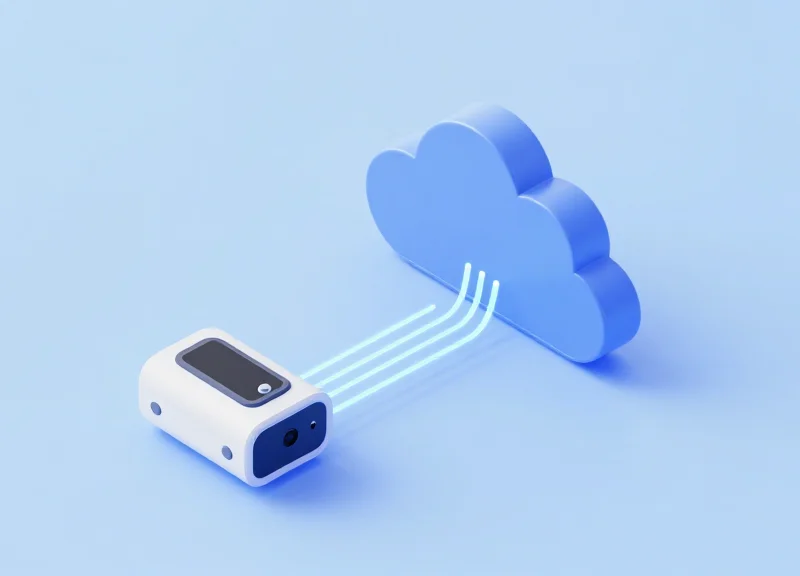
In high-frequency logistics, the connection between a wearable RFID scanner and the backend system is the most common point of failure. By 2026, 'seamless integration' has evolved beyond simple pairing; it now requires sub-millisecond latency and the ability to maintain a persistent data handshake even in environments with high electromagnetic interference. To ensure future-proof operations, organizations must prioritize hardware that supports Bluetooth 5.3 or higher, Wi-Fi 6E/7, and native integration protocols that bypass traditional, lag-heavy middleware.
| Connectivity Standard | Key Advantage for 2026 | Typical Use Case |
|---|---|---|
| Bluetooth 5.3 / 5.4 | Periodic Advertising Enhancement for lower power and higher stability. | High-density sorting centers with hundreds of active devices. |
| Private 5G / LTE | Ultra-reliable low-latency communication (URLLC) over massive areas. | Expansive outdoor yards and automated shipping ports. |
| Wi-Fi 6E (6 GHz) | Avoidance of legacy 2.4/5GHz congestion in 'noisy' warehouses. | Real-time inventory reconciliation in dense storage racks. |
A critical 2026 differentiator is the move toward 'Edge-to-Cloud Intelligence.' Instead of sending raw tag data to the server, advanced scanners now perform 'Edge-side Data Pruning.' This means the device filters duplicate reads and formats the data locally before transmission. This reduces the 'data tax' on your WMS/ERP, preventing the backend from being overwhelmed during peak throughput periods. When evaluating vendors, ask for native SDKs that support RESTful APIs or MQTT protocols, as these allow for direct communication with cloud-native ERPs like SAP S/4HANA or Oracle NetSuite without needing a PC-based intermediary.
- Assess Protocol Compatibility: Ensure the hardware supports Bluetooth Low Energy (BLE) 5.3 to leverage 'Channel Classification' which helps the scanner avoid frequencies used by other warehouse equipment.
- Validate Middleware Requirements: Prioritize 'Direct-to-Cloud' scanners that eliminate the need for a host mobile computer, reducing the total cost of ownership by 30%.
- Test Reconnection Speed: In high-speed logistics, a scanner that takes 5 seconds to reconnect after a signal drop is a productivity killer. Look for 'Instant-Pairing' features with sub-1-second recovery.
Does Bluetooth 5.3 really matter for RFID?
Yes. It introduces features like 'Connection Subrating' which allows devices to switch between low and high-duty cycles faster, significantly improving battery life while maintaining a 'hot' connection for instant data bursts.
How do I handle Wi-Fi dead zones in 2026?
Select scanners with 'Batch-and-Forward' logic. This allows the wearable to store up to 50,000 scans in local buffer memory and automatically sync them the moment a connection is re-established.
Is 5G overkill for a warehouse?
Not for 'Dark Warehouses.' If you are running a fully automated or massive-scale facility, Private 5G provides the network slicing necessary to ensure RFID traffic is never throttled by other warehouse traffic.
Expert Tip: For 2026, don't just look at the hardware specs. Check the vendor's 'Software Lifecycle Management.' The best scanners now offer 'Zero-Touch Provisioning,' where connectivity settings and ERP endpoints are pushed to thousands of devices via an MDM (Mobile Device Management) platform instantly, eliminating manual configuration.
Point 5: Durability Standards – IP Ratings and Drop Resistance
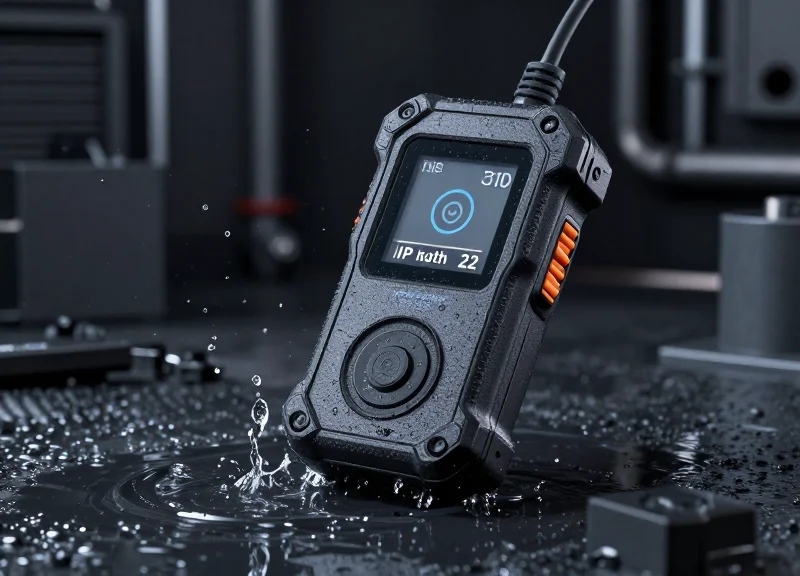
For 2026 high-frequency logistics, the benchmark for wearable RFID durability is defined by a device's ability to withstand 'total lifecycle stress' rather than just a single accident. A truly industrial-grade wearable must meet a minimum of IP65 ingress protection to prevent dust and moisture from compromising internal circuitry, alongside a certified drop rating of 1.8 meters (6 feet) to concrete. In modern warehouses, durability is the primary driver of Total Cost of Ownership (TCO), as device downtime during a high-volume shift can cost significantly more than the initial hardware investment.
| Durability Metric | Standard Level | Logistics Application |
|---|---|---|
| IP Rating | IP65 to IP67 | Protection against dust clouds and heavy rain/sprays in outdoor loading docks. |
| Drop Specification | 1.8m (6ft) to Concrete | Survival after accidental drops from mezzanine heights or forklift platforms. |
| Tumble Spec | 2,000+ tumbles @ 0.5m | Simulates the 'death by a thousand cuts' common in fast-paced sorting centers. |
| Operating Temp | -20°C to 50°C | Ensures functionality in cold storage facilities and non-climate-controlled hubs. |
The Veteran's Perspective: The 'Tumble' is More Important Than the 'Drop'. While most manufacturers highlight a 6-foot drop spec, the more realistic metric for 2026 is the 'Tumble Specification.' Wearable scanners are rarely dropped from great heights; instead, they are frequently knocked against steel racking or tumbled during high-speed sorting. A device rated for 2,000 consecutive 0.5-meter tumbles will outlast a device with a high drop rating but low tumble resilience every single time.
Why is IP67 becoming the new standard over IP54?
As logistics hubs become more automated, fine dust from packaging materials can penetrate IP54 seals, causing sensor drift. IP67 provides a complete vacuum seal and immersion protection, essential for 24/7 uptime.
Does 'Rugged' mean heavy and uncomfortable?
In 2026, no. Advances in carbon-fiber reinforced polymers allow scanners to maintain high impact resistance while weighing less than 80 grams, balancing durability with ergonomic health.
What role does chemical resistance play?
Modern logistics requires frequent sanitization. High-quality wearables use medical-grade plastics that resist cracking when exposed to isopropyl alcohol or industrial cleaning agents.
Finally, look for devices featuring 'Field-Replaceable Components.' The most durable scanners of 2026 allow for the rapid replacement of trigger assemblies or mounting straps without tools. This modularity ensures that if a high-wear part fails, the expensive RFID engine remains in service, maximizing the lifespan of your fleet.
Future-Proofing: AI and Edge Computing in Wearable Scanners

By 2026, the most advanced wearable RFID scanners have transitioned from 'dumb' data collection peripherals to sophisticated edge computing nodes. Future-proofing your logistics stack requires hardware equipped with specialized Neural Processing Units (NPUs) that can handle data validation, pattern recognition, and error correction directly on the device. This shift to edge intelligence ensures that only clean, verified data reaches your Warehouse Management System (WMS), significantly reducing the bandwidth and processing strain on your central servers while providing workers with instantaneous haptic or visual feedback when a mistake occurs.
| Feature | Legacy Wearable Scanners (Pre-2024) | Next-Gen AI-Edge Scanners (2026+) |
|---|---|---|
| Data Processing | Raw data sent to backend; high latency. | On-device edge validation; near-zero latency. |
| Stray Read Handling | Manual filtering or software rules. | AI-driven signal isolation (Dynamic RSSI). |
| Error Detection | Post-scan alerts from WMS. | Real-time predictive error prevention. |
| Battery Efficiency | Constant radio transmission drains power. | Selective transmission via edge filtering. |
Expert Insight: The 'Contextual Awareness' Revolution. A critical 2026 differentiator is 'Dynamic RSSI Filtering.' In high-frequency logistics, 'stray reads' (picking up tags on a nearby shelf instead of the one in the worker's hand) are the leading cause of inventory errors. 2026 AI models use machine learning to analyze the specific movement patterns and signal strength curves of a human arm in motion. By recognizing the 'signature' of a deliberate pick versus a passive scan, the device can automatically ignore 99.9% of background noise without requiring manual configuration changes.
- Identify Edge-Ready Hardware: Ensure the scanner chipset supports on-device machine learning (ML) frameworks like TensorFlow Lite or ONNX.
- Implement Local Validation Logic: Program the devices to verify barcode/RFID cross-references locally before the data is transmitted to the cloud.
- Utilize Over-the-Air (OTA) AI Updates: Select vendors that offer OTA updates to refine AI filtering models as your warehouse environment evolves.
Does AI scanning significantly drain the battery?
Surprisingly, no. While AI processing consumes power, it reduces the total time the radio (Wi-Fi/5G) is active by sending compressed, verified data packets instead of raw streams, often resulting in a net battery gain.
Can edge computing work with existing WMS?
Yes. Edge-enabled scanners typically output data in standard formats (HID, SPP, or MQTT), making them compatible with legacy systems while providing 'cleaner' data.
Is on-device AI secure?
Edge computing actually enhances security. By processing sensitive operational data locally and only transmitting results, you minimize the 'attack surface' for data interception during transit.
ROI Analysis: Calculating the Cost-Benefit of Hands-Free Scanning
In 2026, the Return on Investment (ROI) for wearable RFID scanners is defined by the 'Wearable Multiplier Effect.' Unlike legacy handheld devices that require a repetitive 'pick-up, scan, put-down' cycle, wearable scanners reclaim approximately 4 to 6 seconds per touchpoint. For high-frequency logistics environments processing thousands of items daily, this labor efficiency typically results in a full payback period of 6 to 9 months. To calculate your specific ROI, you must weigh the Total Cost of Ownership (TCO)—including hardware, software licensing, and MDM (Mobile Device Management) overhead—against the aggregate value of recovered labor hours and eliminated shipping errors.
| Metric | Legacy Handheld Scanner | 2026 Wearable RFID Scanner | Impact Change |
|---|---|---|---|
| Average Time per Scan | 8.5 Seconds | 2.5 Seconds | -70% Time Spent |
| Daily Scans per Worker | 1,200 | 1,850 | +54% Throughput |
| Error Rate (Human Factor) | 1.2% | 0.15% | -87% Errors |
| Equipment Search Time | 15 mins/shift | 0 mins (On-body) | 100% Recovery |
Expert Insight: The 'Labor Fluidity' Metric. Beyond simple time-savings, 2026 logistics managers are focusing on 'Labor Fluidity.' Wearable scanners allow workers to use both hands for heavy lifting or sorting while the device scans in the background. This parallel processing capability reduces physical fatigue and workplace injuries, providing a hidden 'soft ROI' through lower insurance premiums and reduced employee turnover—factors that are often excluded from traditional spreadsheets but are critical for long-term profitability.
- Determine Baseline Labor Costs: Calculate the current cost per scan by dividing total hourly wages by the number of scans performed in that hour using handheld devices.
- Quantify the Seconds-Per-Touchpoint (SPT) Delta: Measure the time difference between wearable scanning and handheld scanning. Multiply this by the total annual scan volume to find total hours saved.
- Assign Value to Error Reduction: Calculate the average cost of a mis-shipment (re-shipping costs, customer service time, and lost inventory). Multiply by the expected reduction in error rates provided by hands-free RFID automation.
- Calculate TCO vs. Annual Gains: Subtract the initial investment and annual maintenance from the sum of labor savings and error reduction to find your Year 1 Net Profit.
What is the typical lifespan of a 2026 industrial wearable?
While consumer tech moves fast, industrial wearable RFID scanners are built for a 3-to-5-year lifecycle. Most ROI models should be calculated over 36 months to account for battery degradation and software evolution.
Do hidden integration costs offset the productivity gains?
In 2026, most scanners use standard APIs and 'Keyboard Wedge' profiles that integrate with WMS in hours, not weeks. This plug-and-play capability ensures integration costs rarely exceed 10% of the hardware investment.
How does RFID compare to 2D Barcode scanning ROI?
RFID scanners offer a 3x higher ROI in bulk processing scenarios because they can read multiple tags simultaneously without line-of-sight, whereas barcodes still require individual, manual alignment.
Security and Data Privacy in Enterprise Wearables
In 2026, enterprise security for wearable RFID scanners has evolved from a secondary feature to a core operational requirement. As these devices become nodes in a larger AI-driven logistics network, they must support end-to-end encryption (E2EE), typically utilizing AES-256 at rest and TLS 1.3 for data in transit. For logistics leaders, the standard for 'secure' now necessitates a Hardware Root of Trust (RoT) to prevent unauthorized firmware modifications and ensure that only authenticated devices can interface with the Warehouse Management System (WMS).
| Security Feature | Legacy Scanners (Pre-2024) | 2026 Enterprise Standard |
|---|---|---|
| Encryption | Basic AES-128 | AES-256 with Quantum-Resistant Algorithms |
| Authentication | Static Passkeys | Multi-Factor (MFA) or Biometric Tethering |
| Data Transmission | Standard Bluetooth/Wi-Fi | WPA3-Enterprise & Bluetooth 5.4 Channel Sounding |
| Device Management | Manual Updates | Automated OTA (Over-the-Air) with Delta Patching |
Expert Insight: The Shift to Zero Trust Wearables. A unique development for 2026 is the implementation of 'Zero Trust' at the edge. Unlike older systems that trusted any device within the facility's Wi-Fi range, modern scanners utilize Ephemeral Key Exchange. This means the encryption keys are regenerated for every single scanning session or shift, rendering 'replay attacks'—where a hacker intercepts and re-transmits a valid tag ID—virtually impossible in high-frequency logistics environments.
How do wearable scanners comply with GDPR and CCPA?
Modern scanners include 'Privacy by Design' features that anonymize PII (Personally Identifiable Information) at the device level before syncing to the cloud, ensuring that worker movement data and productivity metrics are decoupled from individual identities unless specifically authorized.
What is the risk of 'RFID Spoofing' in 2026?
While spoofing remains a threat, 2026-grade scanners use dynamic authentication chips that require a handshake between the tag and the scanner, ensuring that cloned or counterfeit tags are immediately flagged as invalid.
Can these devices be remotely wiped if lost?
Yes, through integrated Mobile Device Management (MDM) protocols, administrators can trigger a 'kill-switch' that wipes local caches and revokes the device's digital certificates the moment it leaves the geofenced facility.
Beyond technical specifications, procurement teams must verify that vendors provide a transparent 'Software Bill of Materials' (SBOM). This document allows your IT security team to audit every open-source library and third-party component within the scanner’s firmware, mitigating supply chain vulnerabilities before the hardware ever enters your warehouse.