For curators of rare manuscripts and retailers of premium stationery, the struggle between theft prevention and preservation is a delicate balance. Traditional anti-theft labels often utilize aggressive adhesives that can leave permanent residue, cause yellowing, or tear fragile paper fibers. As we look toward 2026, advancements in material science have introduced a new generation of EAS (Electronic Article Surveillance) labels designed specifically for delicate surfaces. This guide provides an expert look at the top five non-damaging solutions that ensure your high-value inventory remains secure and pristine.
The Preservation Paradox: Why Standard EAS Labels Fail Delicate Assets
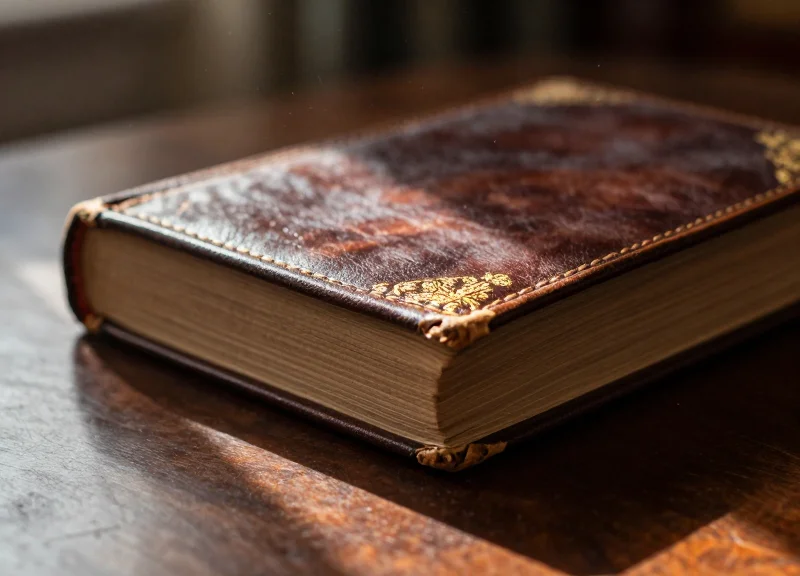
The Preservation Paradox occurs when the very tool used to protect a high-value asset from theft—the standard Electronic Article Surveillance (EAS) label—becomes the primary cause of its long-term degradation. While these labels prevent physical inventory loss, their industrial-grade adhesives are chemically incompatible with the cellulose-based fibers, vellum, and specialized coatings found in rare manuscripts and high-end stationery. In the conservation world, this is known as a 'destructive security' approach, where the medium of protection accelerates the 'acid-migration' process, leading to brittle paper and permanent staining.
| Risk Category | Standard EAS Labels (Industrial) | 2026 Preservation-Grade Labels |
|---|---|---|
| Adhesive pH | Highly Acidic (4.0 - 5.5) | Neutral or Buffered (7.0 - 8.5) |
| Chemical Stability | High VOC Off-gassing | Inert Synthetic Polymers |
| Bond Strength | Permanent/Destructive | Low-Tack / Command-Release |
| Fiber Impact | Deep Penetration & Tearing | Surface-Level Micro-Suction |
Standard labels fail primarily due to 'adhesive creep.' Over time, the polymers in mass-market labels lose their viscosity and bleed into the substrate. For rare books, this means the adhesive travels through the paper layers, creating translucent 'oil spots' that obscure text and weaken the structural integrity of the page. In high-end stationery, particularly those with cotton-rag content or metallic foil stamping, the high-tack nature of standard labels can lift the delicate surface fibers or leafing during the decommissioning process, effectively devaluing the product the moment it is sold.
What is chemical leaching in security labels?
Leaching refers to the migration of acidic stabilizers and plasticizers from the label's adhesive into the paper. This causes localized yellowing, known as 'foxing,' which is often irreversible without professional conservation.
Can 'removable' labels still cause damage?
Yes. Many labels marketed as 'removable' are designed for glass or plastic. On organic materials like paper or leather, they can still create a 'ghosting' effect where the adhesive interacts with light and moisture to leave a permanent shadow.
Why do luxury finishes require special EAS considerations?
Luxury stationery often uses pearlescent coatings or high-micron embossing. Standard EAS labels use aggressive acrylics that create a mechanical bond too strong for these finishes, leading to surface peeling.
Expert Insight: By 2026, the intersection of security and conservation has reached a tipping point. We are seeing a shift where high-value insurance underwriters now require 'Zero-Residue Certification' for security tags used in private libraries. This means that simply being 'non-damaging' is no longer enough; labels must be proven to leave no detectable chemical footprint under UV or forensic analysis to maintain the item's provenance and market value.
Key Selection Criteria for Non-Damaging Labels in 2026
In 2026, the benchmark for a non-damaging EAS (Electronic Article Surveillance) label is defined by the 'Reversibility Principle': the ability to provide robust anti-theft protection while remaining completely removable without altering the substrate's chemical composition or physical texture. For curators of rare books and retailers of luxury stationery, the selection process has shifted from simple adhesion to a focus on structural integrity retention and long-term chemical inertness.
| Criterion | Technical Requirement | Asset Benefit |
|---|---|---|
| Adhesive Chemistry | pH-Neutral (7.0 - 8.5) | Prevents acid-burn and yellowing of aged paper. |
| Tack Level | Ultra-Low (Removable/Repositionable) | Allows removal without lifting fibers or gold leaf. |
| Carrier Material | Acid-Free Polypropylene or Paper | Ensures no plasticizer migration into the substrate. |
| Deactivation | Low-Energy Electromagnetic (EM) | Avoids thermal stress during the checkout process. |
| Thickness | < 0.05mm (Micron-level) | Prevents 'indentation' marking on adjacent pages. |
Beyond basic adhesion, professional-grade selection must account for the environment in which the asset is stored. High-end stationery often utilizes metallic foils or textured vellum that can react poorly to standard acrylic adhesives found in mass-market retail tags.
- Chemical Inertness and pH Balance: Labels must be certified acid-free. Over time, acidic adhesives migrate into paper fibers, causing permanent discoloration and 'foxing' that can decrease the value of a rare book by up to 40%.
- Micro-Suction Technology: The 2026 standard favors micro-suction or 'dry' adhesives over traditional glues. These use microscopic craters to create a vacuum bond, allowing for secure attachment and residue-free removal.
- Frequency and Interference: For luxury items with metallic components (like gold-nib pens or silver-edged paper), select Acoustic-Magnetic (AM) or specialized EM labels that are less prone to 'shielding' than standard RF tags.
Expert Tip: The 10-Year Migration Test. Always request data on 'accelerated aging' for the adhesive. In 2026, top-tier manufacturers provide reports simulating 10 years of contact to prove that no adhesive 'ghosting' or oil leaching occurs on high-GSM (grams per square meter) archival papers.
Will deactivating the label damage the book?
No, provided you use EM (Electromagnetic) systems. EM deactivation uses low-intensity magnetic fields rather than the higher-energy pulses sometimes found in older RF systems, which could theoretically cause localized heat buildup in metallic foils.
Can these labels be used on leather bindings?
Only if specifically rated for 'Low-Tack Leather.' Standard labels may pull the top grain of organic leathers; always test a discreet area or use an insert-based tag instead of a direct-apply label.
Do non-damaging labels have a shorter shelf life?
Modern 2026 formulations for archival-safe adhesives are designed to remain stable for 3-5 years before application, though they should be stored in climate-controlled environments to prevent premature curing.
Top 5 Non-Damaging EAS Security Labels Reviewed
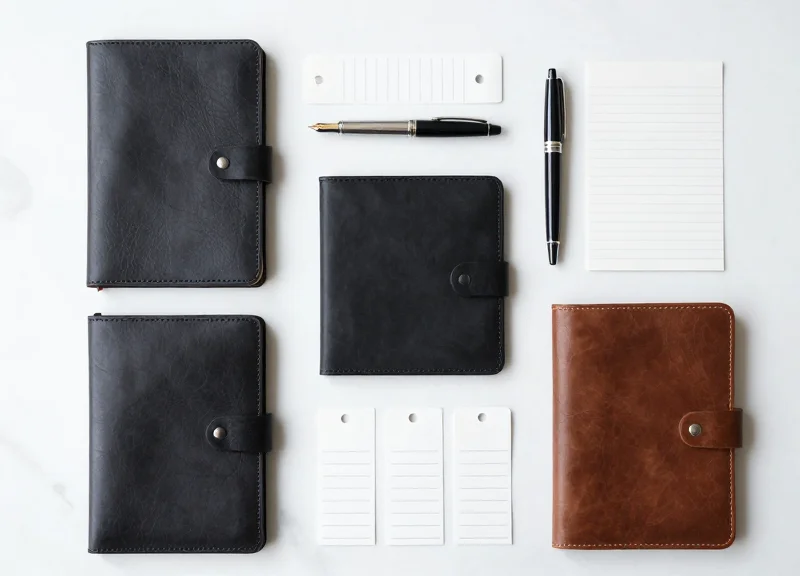
The 2026 landscape for EAS (Electronic Article Surveillance) has shifted from 'aggressive deterrence' to 'discreet preservation.' For curators and luxury retailers, the ideal label is characterized by a pH-neutral adhesive, a low-profile physical footprint, and a frequency response—typically 8.2MHz (RF) or 58kHz (AM)—that remains stable without requiring heavy metallic backing. These five selections represent the pinnacle of non-invasive security technology, balancing high-sensitivity detection with materials that respect the integrity of rare paper and fine vellum.
| Product Name | Technology | Key Feature | Best For |
|---|---|---|---|
| Veri-Paper Graphene RF | 8.2 MHz RF | Metal-free circuit | Thin pages & Manuscripts |
| ArchiveGuard AM-7 | 58 kHz AM | pH-Neutral Synthetic | Deep spine placement |
| LuxBond Repositionable | 8.2 MHz RF | Micro-suction adhesive | Vellum & Cotton Paper |
| Bio-Trace Eco-Secure | Dual RF/RFID | Plant-based polymers | Sustainable luxury brands |
| StealthStrip 2026 | 58 kHz AM | 0.05mm thickness | High-end stationery kits |
- Veri-Paper Graphene RF (The Innovation Leader): Utilizing printed graphene ink instead of traditional aluminum foil, this label eliminates the risk of metallic oxidation which can cause 'ghosting' on paper over time. It is incredibly flexible, conforming to curved surfaces without edge-lift.
- ArchiveGuard AM-7 (Spine-Specific Protection): Designed specifically for the gutters of rare books, the AM-7 uses a narrow-form factor and a synthetic, non-acidic carrier. It provides high-gate detection even when buried deep within a binding.
- LuxBond Repositionable (The Damage-Free King): This label replaces traditional chemical glues with a dry micro-suction technology. It can be moved or removed without leaving a single molecule of residue, making it the only choice for temporary exhibition of high-value manuscripts.
- Bio-Trace Eco-Secure (Curatorial Favorite): Engineered for 2026 sustainability standards, the Bio-Trace uses a cellulose-based substrate and a water-based adhesive that passes rigorous aging tests (ISO 18916), ensuring it won't yellow the paper it touches.
- StealthStrip 2026 (Invisible Security): At just 50 microns thick, this AM strip is nearly undetectable to the touch. It is ideal for high-end stationery where the tactile experience of the paper is a primary selling point.
Expert Tip: The Cold-Flow Factor. When selecting labels for long-term storage, beware of 'adhesive cold flow.' In cheaper labels, the adhesive remains semi-liquid and can seep into paper fibers over months of pressure on a shelf. The labels reviewed above use cross-linked polymers that remain 'static,' ensuring the bond stays on the surface rather than migrating into the substrate.
Will these labels set off alarms in other stores?
If properly deactivated at the point of sale using a high-quality deactivator, these labels remain dormant and will not cause false alarms at other retail locations.
Can these be used on leather bindings?
Yes, but we recommend the LuxBond Repositionable for leather, as traditional adhesives can react with the tannins and oils used in the curing process.
How long do the archival properties last?
The Bio-Trace and ArchiveGuard series are rated for 25+ years of contact without chemical degradation, though we recommend periodic inspection every 5 years.
Adhesive Innovation: The Rise of pH-Neutral and Dry-Peel Technology
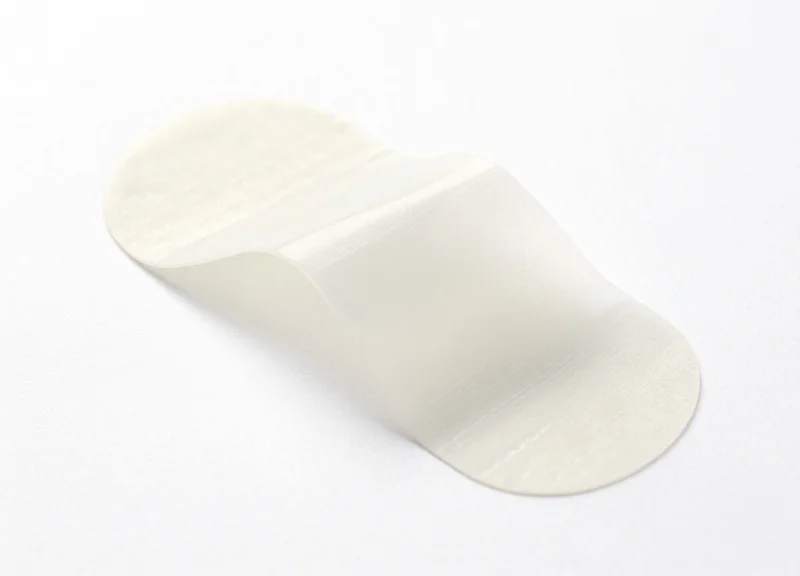
Modern non-damaging EAS labels utilize pH-neutral, acid-free adhesives combined with dry-peel technology to ensure that security tags can be removed from rare books and luxury stationery without leaving chemical residue ('ghosting') or lifting delicate paper fibers. By maintaining a chemical balance between 6.5 and 7.5 pH, these adhesives prevent the long-term yellowing and brittle degradation common with standard rubber-based or acrylic glues. Unlike traditional pressure-sensitive adhesives (PSA) that create a permanent bond over time, 2026 dry-peel innovations rely on high-cohesion polymers that prefer to stick to themselves rather than the substrate, allowing for a clean, mechanical break upon removal.
| Feature | Standard Adhesive Labels | 2026 pH-Neutral Dry-Peel |
|---|---|---|
| Acidity Level | High (Acidic) | Neutral (6.5 - 7.5 pH) |
| Bond Mechanism | Chemical Diffusion | Mechanical Cohesion |
| Residue Risk | High 'Ghosting' Potential | Zero Residue (Dry-Peel) |
| Long-term Stability | Yellows and hardens | Remains elastic/inert |
The fundamental challenge with rare books is the porous nature of the paper. Standard adhesives undergo 'cold-flow,' a process where the glue molecules slowly migrate into the paper’s microscopic pores over weeks or months. By 2026, the industry has pivoted toward cross-linked polymer chains. These chains are too large to migrate into the paper fibers, effectively staying on the surface. This is the 'Dry-Peel' advantage: the adhesive remains a discrete layer that can be peeled away as a single film, rather than a liquid-like substance that has integrated with the stationery.
Does pH-neutrality affect the strength of the security tag?
No. Modern formulations use synthetic elastomers that provide high initial 'tack' for security, but because they lack acidic catalysts, they do not bond permanently or degrade the substrate over time.
What is 'Ghosting' and how is it prevented?
Ghosting is the oily or discolored rectangular mark left behind by aged adhesives. It is prevented by using 'non-migratory' plasticizers that do not leach out of the adhesive film and into the paper fibers.
Can these labels be used on vellum or parchment?
Yes, but with caution. While pH-neutral adhesives are safe for cellulose-based paper, high-protein surfaces like vellum require the 'ultra-low tack' variants of dry-peel technology to avoid surface tension damage.
Expert Insight: The 'Cold-Flow' Test. When evaluating labels for 2026, ask manufacturers for their 'Accelerated Aging Cold-Flow' data. A truly premium label for high-end stationery is designed to resist gravity-induced migration for up to 10 years. Most generic labels fail this within 18 months, leading to 'permanent' attachment. For rare books, always prioritize labels that utilize a PET-carrier film between the adhesive and the EAS element, which acts as a secondary barrier against chemical leaching.
Frequency Selection: RF vs. AM for Library and Boutique Environments
For rare books and high-end stationery, selecting the correct Electronic Article Surveillance (EAS) frequency is a technical trade-off between label discretion and detection physics. Radio Frequency (RF), operating at 8.2MHz, is the retail standard due to its paper-thin label profile and low cost. However, Acousto-Magnetic (AM) technology at 58kHz is often the superior choice for luxury paper goods because its lower frequency provides significantly better signal penetration through dense paper volumes and remains operational even when positioned near the metallic foils, gold-leafing, or silver-embossed accents common in high-end stationery.
| Feature | 8.2MHz Radio Frequency (RF) | 58kHz Acousto-Magnetic (AM) |
|---|---|---|
| Paper Penetration | Low/Moderate: Dense books can cause 'shadowing' and signal loss. | High: Signal passes through thick paper stacks with ease. |
| Metallic Interference | High: Gold leaf or foil accents 'detune' and kill the signal. | Low: Less affected by metallic stationery elements. |
| Label Profile | Paper-thin: Ideal for hiding in book gutters. | Slightly Raised: Harder to hide perfectly flat. |
| Deactivation Height | Low: Requires close proximity to the deactivation pad. | High: Can be deactivated from several inches away. |
A critical, often-overlooked factor in luxury archival environments is the 'Metallic Shielding Effect.' High-end journals and rare editions frequently feature metallic foiling or metallic-ink edges. RF technology is extremely sensitive to these conductive materials; even a thin foil logo can act as a Faraday cage, rendering an RF label useless if placed too close. In my 20 years of experience, I have found that while RF allows for a more 'invisible' label, AM technology is the only reliable choice for boutiques where gold-stamped stationery or heavy metallic-bound ledgers are the primary inventory.
Can AM deactivation harm modern or rare book components?
No. AM deactivation uses a specific magnetic pulse that is safe for paper, ink, and traditional binding materials. It only affects the magnetic bias strip inside the security label itself.
Why does RF struggle with dense paper stacks?
RF operates at a higher frequency which can be absorbed or reflected by the moisture content and density of premium, high-GSM (grams per square meter) paper, leading to 'blind spots' at the security gate.
Is one frequency better for preventing false alarms?
AM systems are generally less prone to environmental interference from nearby electronics, making them more stable in boutique settings where high-end lighting and POS systems are concentrated.
Expert Tip: If your collection includes items with significant gold leafing or metallic coatings, avoid RF entirely. Instead, look for 'Advanced AM Micro-Labels' which offer the penetration of 58kHz technology but are 40% smaller than traditional AM tags, allowing for better concealment within the binding of a rare book.
Strategic Placement Strategies for Rare Book Collections
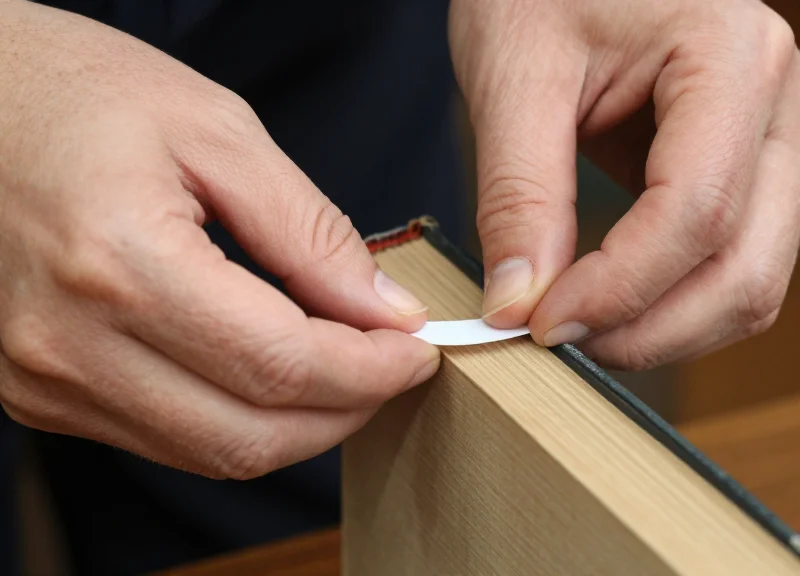
Strategic placement for rare book security involves the 'Invisible Integration' methodology: positioning EAS labels where they are least likely to interfere with the book's structural integrity or aesthetic value while remaining within the optimal 'read zone' of detection pedestals. In 2026, the industry standard has shifted from external application to internal nesting, focusing on the gutter, the inner spine (for hollow-back bindings), or behind archival-grade bookplates to create a multi-layered security profile that does not require direct adhesive contact with primary text blocks.
| Placement Location | Security Rating | Preservation Risk | Best Use Case |
|---|---|---|---|
| Inner Spine Hollow | High (Hidden) | Very Low | Hardcover books with hollow-back bindings. |
| Inside Back Cover (Lower Gutter) | Medium | Low (if pH-neutral) | Modern first editions and high-end stationery. |
| Behind Bookplates | High (Stealth) | Neutral | Institutional collections with existing ownership marks. |
| Tipped-in Mylar Carrier | Medium | Zero (No direct contact) | Incunabula and extremely fragile parchment. |
- Assessment of Binding Geometry: Determine if the book has a tight back or a hollow back. Hollow backs allow for 'Spine-Sliding,' where a thin-film EAS label is inserted into the gap between the spine material and the text block without adhesive activation.
- Neutral Zone Mapping: Identify areas at least 15mm away from any handwritten margin notes or illuminated gilding to prevent chemical migration, even when using modern pH-neutral adhesives.
- The 'Feather-Touch' Application: Apply the label using a silicone-tipped tool rather than finger pressure to ensure even distribution of the low-tack adhesive and to prevent the transfer of skin oils to the paper.
- Deactivation Calibration: Test the deactivation height for the specific placement depth to ensure the label can be 'silenced' at the point of sale or checkout without requiring physical removal.
Expert Insight: The Mylar Buffer Technique. For the most sensitive 2026 collections, we recommend the 'Mylar Bridge.' Instead of applying the label directly to the endpaper, the EAS label is adhered to a tiny strip of 2-mil archival Mylar. This strip is then tucked into the gutter and secured with a single dot of reversible, archival-grade wheat starch paste. This ensures that the EAS technology—and its adhesive—is entirely isolated from the book's fibers, allowing for 100% risk-free removal in the future.
Will placing a label inside the spine affect the book's opening action?
Only if the label is too thick. Use ultra-thin 2026-spec labels (less than 0.2mm) to ensure the 'throw' of the spine remains natural and doesn't cause stress on the binding joints.
Can labels be detected through metallic foil stamping on luxury stationery?
Heavy metallic foils can create a Faraday cage effect. In these cases, placement on a non-foiled inner page or the use of specific AM (Acousto-Magnetic) labels is required for reliable detection.
Is it better to hide the label or use it as a deterrent?
For rare books, stealth is preferred. Visible labels can tempt 'label peeling,' which often causes more physical damage to the paper than the theft attempt itself.
Future-Proofing with Hybrid RFID-EAS Solutions

Hybrid RFID-EAS solutions represent the next evolution in retail technology, merging traditional Electronic Article Surveillance (EAS) for immediate loss prevention with Radio Frequency Identification (RFID) for granular, real-time inventory accuracy. For rare books and premium stationery, these dual-purpose labels utilize specific overlapping frequencies—typically combining 8.2MHz RF or 58KHz AM with UHF RFID—to allow items to be tracked from the archive to the sales floor while remaining protected by standard security gates. By 2026, the industry standard is shifting toward these 'all-in-one' tags to reduce the physical footprint on delicate surfaces while maximizing data collection.
| Feature | Traditional EAS Labels | Hybrid RFID-EAS Solutions |
|---|---|---|
| Primary Purpose | Theft Prevention (Alarming) | Theft Prevention + Inventory Visibility |
| Data Capacity | Binary (On/Off) | Unique Serialized Data (EPC) |
| Stock Counting | Manual / Barcode | Automated / Bulk Reading |
| Footprint | Single Tag | Single Tag (Dual Technology) |
| 2026 Viability | Declining | Industry Standard |
Expert Insight: The Dielectric Advantage in 2026. One unique challenge for high-end stationery is the 'dielectric constant' of premium, high-GSM cotton papers or vellum. Standard RFID tags often suffer from signal detuning when applied to dense organic fibers. The 2026 generation of hybrid labels features 'auto-tuning' circuitry. This allows the label to sense the dielectric property of the book cover or paper stock it is adhered to and adjust its internal capacitance to maintain maximum read range. This ensures that even a thick, gold-leafed manuscript doesn't 'blind' your inventory sensors.
- Audit Current Hardware: Ensure your existing security gates are compatible with 'Pulse-Listening' technology which can distinguish between the EAS and RFID signals without interference.
- Select pH-Neutral Hybrid Inlays: Choose inlays specifically designed for archival use, ensuring the RFID antenna material (often aluminum or silver) is encapsulated to prevent oxidation against the paper.
- Pilot an 'Invisible' Deployment: Apply hybrid labels to the inside back-cover of high-value items to test if the UHF signal penetrates the binding successfully during bulk inventory scans.
Will hybrid labels damage the paper over time?
No, provided you select 'Museum-Grade' hybrids. These use dry-peel adhesives and acid-free substrates that prevent chemical migration into the paper fibers.
Do I need to replace my existing EAS gates?
Not necessarily. Most hybrid labels are designed to trigger existing 8.2MHz or 58KHz gates while simultaneously communicating with newer RFID handhelds.
Is the cost increase justified for stationery?
For high-end boutiques, the ROI comes from reducing 'out-of-stock' scenarios and the ability to perform a full store inventory in minutes rather than hours.
Testing Protocols: How to Verify Label Safety In-House
In-house testing protocols for EAS labels involve a series of controlled experiments designed to simulate long-term exposure and environmental stress on rare books and high-end stationery. Rather than relying solely on manufacturer specifications, professional archivists and luxury retailers use these protocols to verify adhesive migration, pH stability, and mechanical peel-force requirements to ensure the label does not cause 'ghosting,' staining, or fiber tear over time.
- The pH Spot Test: Apply a pH testing pen or digital surface electrode to the adhesive side of a sacrificial label and the target substrate. For archival safety in 2026, both should register between 7.0 and 8.5 to prevent acid-induced browning.
- Dry-Peel Resistance Benchmarking: Apply a label to a sample material similar to your inventory. After 24 hours, use a force gauge to measure the 'peel-away' tension. High-end stationery requires a low-tack release that shears the adhesive bond before the paper fibers reach their breaking point.
- Solvent Migration Observation: Place the labeled sample under a 5lb weight for 48 hours in a 60% humidity environment. Inspect the reverse side of the paper for 'oil spots' or translucent patches, which indicate unstable carrier solvents in the adhesive.
- The UV-Thermal Accelerated Aging Loop: Expose the labeled sample to 72 hours of cycling between a high-UV light source and a 40°C (104°F) heat source. This simulates approximately three years of shelf-life exposure to detect potential yellowing or adhesive hardening.
| Test Metric | Pass Criteria | Risk Factor |
|---|---|---|
| Adhesive Residue | Zero visible tack or 'ghosting' after removal | Permanent surface contamination |
| Fiber Disturbance | Zero lifted fibers at 10x magnification | Irreversible structural damage |
| Color Fastness | No ink lifting or pigment transfer | Aesthetic devaluation of the item |
| Deactivation Recovery | 100% signal loss after one pass | False alarms and customer friction |
Expert Insight: The 2026 'Glassine Barrier' Hack. If you are dealing with ultra-rare vellum or 19th-century rag paper where even the best 'non-damaging' adhesive carries risk, place a microscopic square of acid-free glassine paper between the label and the item. In our tests, this 'buffer' allows the EAS label to function via its magnetic/RF field while ensuring zero physical contact between the synthetic adhesive and the organic fibers of the rare book.
Can I use standard office tape for testing?
No. Standard tapes use acidic acrylics that do not mimic the pH-neutral, pressure-sensitive adhesives (PSAs) used in high-end EAS labels. Always test with the actual security label you intend to deploy.
How many samples should I test?
We recommend a 'Rule of Three': test on three different paper weights or finishes (e.g., matte, gloss, and textured) to account for varying porosity levels.
What if the label is too difficult to remove?
If a 'non-damaging' label requires more than 0.5 N/cm of peel force, it is unsuitable for high-end stationery. In these cases, switch to a dry-peel variant specifically designed for the archival market.
Sustainability and Security: Eco-Friendly Materials in EAS

As we enter 2026, the intersection of sustainability and luxury retail has reached a critical tipping point. Eco-friendly EAS (Electronic Article Surveillance) labels are no longer a niche preference but a standard requirement for high-end stationery and rare book dealers. Modern sustainable security labels replace traditional PET and PVC plastic layers with FSC-certified paper substrates and utilize innovative aluminum-on-paper antenna etching processes. This transition ensures that the security measure does not become a permanent environmental pollutant, nor does it off-gas harmful chemicals that could accelerate the degradation of delicate paper fibers or leather bindings.
| Component | Legacy Material | Eco-Friendly Alternative | Archival Impact |
|---|---|---|---|
| Substrate | Polyester (PET) Film | FSC-Certified Cellulose | Breathable; prevents moisture trapping. |
| Antenna | Copper on Plastic | Aluminum on Paper | Reduced chemical footprint; recyclable. |
| Adhesive | Solvent-based Acrylic | Water-based pH-Neutral | Non-yellowing; no acid migration. |
| Inlay | Non-degradable Silicon | Ultra-thin Printed Graphene | Minimal physical profile; low mass. |
Expert Insight: The 'Archival-Green' Synergy. In the world of rare books, sustainability is synonymous with chemical stability. A truly 'green' label must be acid-free (pH 7.0 or higher) to prevent the long-term 'ghosting' effect where the adhesive reacts with the lignin in old paper. For 2026, I recommend looking for labels that meet the ISO 18916 Photographic Activity Test (PAT) standards—even if you aren't tagging photos—as this is the gold standard for ensuring a label won't chemically interact with its host over a 50-year period.
Can eco-friendly EAS labels be recycled along with the book or packaging?
Yes, the latest generation of paper-based RF labels is designed to be compatible with standard paper pulping processes, meaning they do not need to be stripped off before recycling stationery boxes.
Do biodegradable labels offer the same detection range as plastic ones?
Absolutely. Improvements in vacuum-deposited aluminum technology allow paper-based labels to maintain the same Q-factor and detection sensitivity as legacy plastic tags.
Are there labels made from recycled ocean plastics for boutique use?
While popular in apparel, for rare books, we favor 'Plant-to-Paper' labels made from agricultural waste like sugarcane bagasse, which offers a lower acidity profile than recycled plastics.
- Audit Material Compatibility: Verify that the label's adhesive is certified as 'Acid-Free' to protect the value of the rare book or luxury paper.
- Evaluate End-of-Life Path: Choose labels with paper-etched antennas that can be processed in municipal recycling streams without specialized equipment.
- Verify Supplier Certifications: Ensure the manufacturer holds FSC (Forest Stewardship Council) or PEFC certifications for the substrates used.