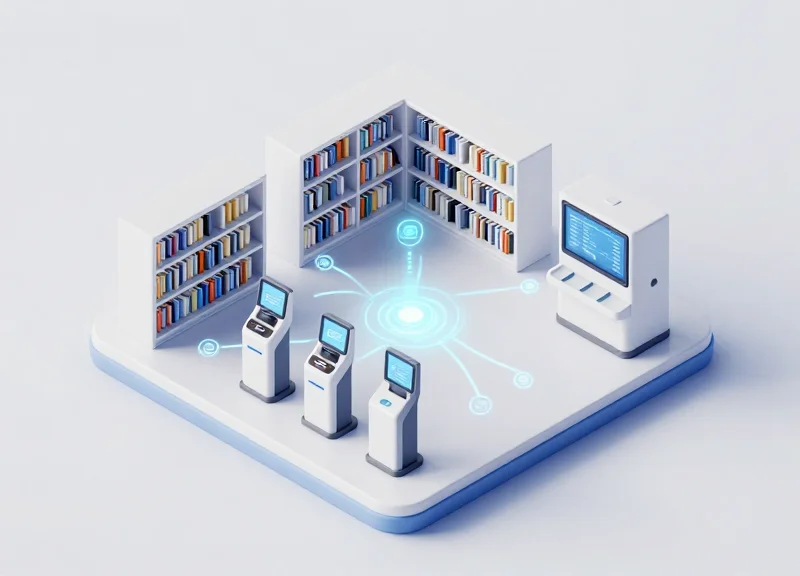
As we approach 2026, the role of public libraries in high-traffic urban centers is shifting from simple book repositories to complex digital-physical hubs. For facilities handling thousands of daily transactions, traditional manual processes are no longer sustainable. Implementing a robust RFID (Radio Frequency Identification) Library Management System is the only way to maintain efficiency and security. However, not all RFID systems are created equal. To ensure your investment survives the next decade of technological advancement, you must look beyond basic tagging. This article explores the seven non-negotiable features that define a world-class RFID solution for the high-volume public spaces of tomorrow.
The Strategic Shift: Why RFID is Mandatory for 2026 Libraries
In 2026, the mandate for Radio Frequency Identification (RFID) in library management is defined by 'Frictionless Patronage'—the necessity to remove all physical and administrative barriers between the community and their resources. For high-volume public spaces, RFID is no longer just a tracking tool; it is the essential infrastructure that allows a library to scale its services without a linear increase in labor costs. By automating the bulk of circulation tasks, RFID enables libraries to maintain operational viability in an era of persistent labor scarcity and rising public expectations for instant, self-service interactions.
| Metric | Manual/Barcode Systems | RFID-Enabled Systems (2026) |
|---|---|---|
| Average Checkout Time per Item | 15-25 Seconds | < 2 Seconds |
| Inventory Speed (10,000 items) | Approximately 40-50 hours | Approximately 1-2 hours |
| Return Processing | Manual sorting/scanning | High-speed automated sorting |
| Security Reliability | Line-of-sight dependent | Omnidirectional spatial tracking |
Why is 2026 the definitive tipping point for RFID adoption?
The convergence of significantly lower tag manufacturing costs and a permanent shift in the labor market means that the opportunity cost of manual circulation is now higher than the capital investment of RFID. High-volume libraries can no longer afford the 'administrative debt' of manual book handling.
How does RFID address modern urban library challenges?
Beyond simple theft prevention, RFID acts as a data engine. It provides real-time heat maps of item movement, allowing administrators to optimize floor plans and collection placement based on actual usage patterns rather than anecdotal evidence.
Does RFID eliminate the need for library staff?
On the contrary, it elevates their role. By removing the 40-60% of time previously spent on repetitive clerical tasks, RFID allows staff to transition into high-impact roles like digital literacy coaching, community curation, and specialized research assistance.
Expert Insight: The 'Shadow Circulation' Cost. Traditional barcode systems suffer from a high 'Shadow Circulation' cost—the measurable loss of utility when an item is in the building but improperly shelved or stuck in the processing queue. In high-volume 2026 spaces, an item that is 'lost' on the wrong shelf is effectively non-existent to the patron. RFID eliminates this through 'Geofenced Inventory' capabilities, allowing staff to locate misplaced items in seconds using handheld readers, effectively increasing the 'active' collection size by up to 15% without purchasing a single new volume.
Feature 1: Ultra-High-Speed Automated Material Handling (AMH)

Ultra-high-speed Automated Material Handling (AMH) is the operational backbone of a modern library, utilizing sophisticated conveyor systems and RFID readers to automatically check in, sort, and process returned materials at rates exceeding 2,000 items per hour. For 2026, the standard shifts from simple sorting to "intelligent logistics," where systems autonomously resolve exceptions and synchronize instantly with the Integrated Library System (ILS) to ensure materials are back on the shelf—or in the hands of the next patron—within minutes.
| Capability | Legacy Systems (Pre-2020) | Next-Gen AMH (2026) |
|---|---|---|
| Processing Speed | 800 - 1,200 items/hr | 2,000+ items/hr |
| Sort Accuracy | 98.5% | 99.9% with AI-vision backup |
| Operational Window | Scheduled uptime | True 24/7 lights-out processing |
| Noise Emission | 65-70 dB | <55 dB (Whisper-quiet) |
Beyond simple raw speed, the 2026 AMH systems prioritize mechanical longevity and modularity. In high-volume public spaces, the cost of downtime is measured not just in labor, but in the degradation of the patron experience. Modern systems use modular "plug-and-play" divert points, allowing libraries to expand their sorting capacity as community needs grow without requiring a total system overhaul.
- The 15% Latency Buffer Rule: A common mistake in procurement is sizing for average daily volume. In 2026, industry leaders suggest a '15% Latency Buffer'—your system must be capable of processing your peak daily volume within 85% of its rated mechanical speed. This prevents mechanical fatigue and allows the system to clear massive holiday surges without backlogging the return chutes or triggering emergency stops.
- Multi-Tag Collision Detection: Advanced RFID readers now identify multiple items dropped simultaneously, preventing the 'missing check-in' errors common in older, single-feed systems.
- SIP2/NCIP Instant Handshake: Millisecond-level communication with the library database to clear fines and update item status immediately upon physical contact with the conveyor.
- Dynamic Bin Routing: Materials are routed based on real-time demand, such as pending holds or branch transfers, rather than static pre-defined categories.
Does AMH require full-time staff supervision?
No. 2026-grade systems are designed for 'lights-out' operation, featuring self-clearing jams and remote diagnostic monitoring that alerts staff only for physical bin swaps or rare mechanical obstructions.
Can these systems handle non-book media?
Yes, modern AMH uses soft-touch diverters and gentle-slope chutes specifically engineered to handle fragile items like DVDs, tablets, and 'Library of Things' kits without risk of impact damage.
Feature 2: Seamless SIP2 and NCIP Integration
In 2026, the 'brain' of your library's operations is the connection between your RFID hardware and the Integrated Library System (ILS). Seamless SIP2 (Standard Interchange Protocol) and NCIP (NISO Circulation Interchange Protocol) integration is the non-negotiable standard for ensuring that every transaction—whether a return, a checkout, or a hold—is reflected instantly across all platforms. Without deep, native integration, libraries suffer from 'data latency,' where an item is physically returned but still appears on a patron's account, leading to unnecessary fines, security gate false alarms, and a breakdown in patron trust.
| Capability | SIP2 (The Baseline) | NCIP (The 2026 Standard) |
|---|---|---|
| Primary Function | Basic checkout, check-in, and status polling. | Complex transactions and cross-library resource sharing. |
| Data Direction | Predominantly one-way (request/response). | Bidirectional, stateful communication. |
| Patron Experience | Simple authentication for self-service. | Rich account updates, fine payments, and profile management. |
| Future-Proofing | Legacy; may struggle with modern API demands. | Designed for interoperability between diverse vendors. |
For high-volume public spaces, NCIP is particularly critical because it handles 'Lookups' and 'Renewals' more elegantly than SIP2. In a scenario where your library belongs to a consortium, NCIP allows a patron from a neighboring system to interact with your RFID kiosks as if they were local users. This creates a frictionless 'borderless library' experience that will be the benchmark for public service in the coming years.
- Expert Tip: The Middleware Trap: Avoid vendors that rely on proprietary 'translation layers' or 'black-box' middleware. In my 20 years of experience, these layers are the first point of failure during ILS updates. Demand native support for NCIP v2.02 to ensure that your RFID system can communicate directly with your ILS database without a third-party translator that adds 200-500ms of latency per scan.
- Why is real-time synchronization mandatory for 2026?: As libraries move toward 'Open Library' models and 24/7 automated access, the system must update item security (AFI/EAS) and circulation status simultaneously. Any delay creates a security risk where items could be removed without being logged.
What happens if the SIP2 connection drops?
Top-tier RFID systems for 2026 must include an 'Offline Mode' that caches transactions locally and synchronizes them via SIP2/NCIP the moment the connection is restored, preventing service interruptions.
Can NCIP replace SIP2 entirely?
While NCIP is more robust, many legacy self-check machines still rely on SIP2. A modern system should support both concurrently to manage a mixed fleet of hardware.
How does integration affect AMH speed?
Automated Material Handling (AMH) systems require sub-100ms response times from the ILS to sort items into the correct bins. If your SIP2 integration is sluggish, your high-speed sorter will be forced to default to an 'Exception' bin, increasing manual labor.
Feature 3: Multi-Item Self-Checkout with AI-Enhanced Accuracy
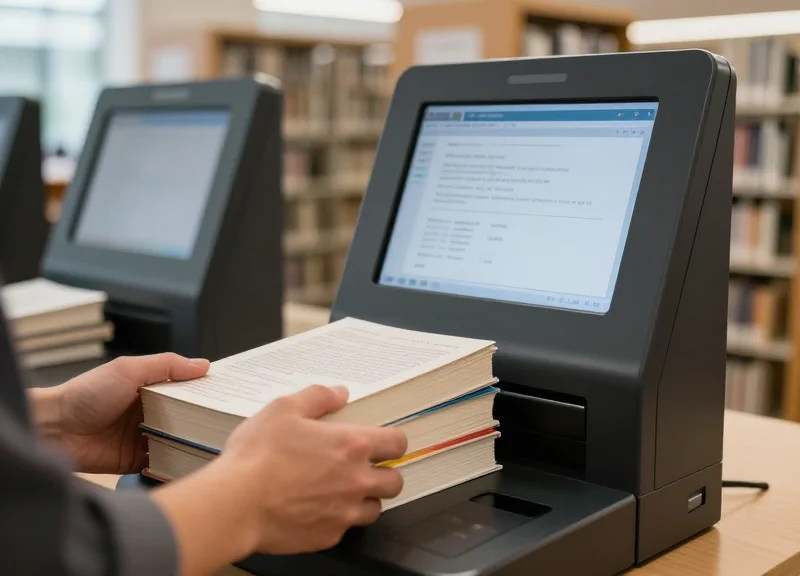
In high-volume public spaces for 2026, multi-item self-checkout represents the shift from manual 'scan-and-beep' workflows to frictionless, bulk-processing environments. This feature allows patrons to place a stack of 10 to 20 items—books, DVDs, and media kits—onto a checkout kiosk simultaneously. The system uses advanced RFID read-zones coupled with AI-driven computer vision to identify, verify, and process the entire pile in under three seconds. Unlike legacy systems that struggled with 'tag shielding' or signal interference, AI-enhanced accuracy ensures that every item in the stack is accounted for without requiring the patron to separate or re-orient their materials.
- Frictionless Patron Experience: Eliminates the 'grocery store' checkout fatigue by allowing one-step placement of all borrowed materials.
- Queue Mitigation: Reduces average checkout time per patron from 45 seconds to less than 5 seconds, preventing lobby congestion during peak hours.
- Anomaly Detection: AI algorithms identify 'hidden' items that may have missing tags or tags that are non-responsive due to metal interference.
| Capability | Legacy RFID Kiosks (Pre-2023) | 2026 AI-Enhanced Systems |
|---|---|---|
| Processing Speed | 1-3 items at a time; 5+ seconds | Up to 20 items simultaneously; <2 seconds |
| Verification Method | RFID signal only | Dual-Layer: RFID + Computer Vision (AI) |
| Error Rate | Moderate (Shielding errors common) | Near-zero (AI compensates for 'tag shadows') |
| Patron Movement | Static placement required | Dynamic placement with 360-degree reading |
Expert Insight: The 'Tag Shadowing' Solution. A common failure point in traditional RFID is when two tags are perfectly aligned, causing the radio waves to bounce off the first and 'shadow' the second. In 2026, top-tier systems utilize 'Signal Triangulation AI.' By analyzing the signal strength and Phase Difference of Arrival (PDoA) from multiple internal antennas, the system can mathematically prove a second tag exists even if its signal is weak. My recommendation: When vetting vendors, ask for their 'stack-read success rate' specifically for items containing metallic foils or hidden electromagnetic interference.
Can the system detect if a patron hides a book inside another book?
Yes. 2026 AI-enhanced systems use weight-sensor integration and overhead computer vision to compare the physical volume of the stack with the number of detected RFID tags, flagging any discrepancy instantly.
Does this work with CD/DVD collections?
Modern AI systems use specialized 'High-Q' antennas that can penetrate the metallic layers of discs, which previously caused read failures in older RFID models.
Is special training required for library staff?
No. The system is designed to be autonomous. Staff primarily interact with a dashboard that highlights 'unreadable' items via a heat-map visual of the checkout tray.
Feature 4: Advanced Security Gates with Directional Sensing
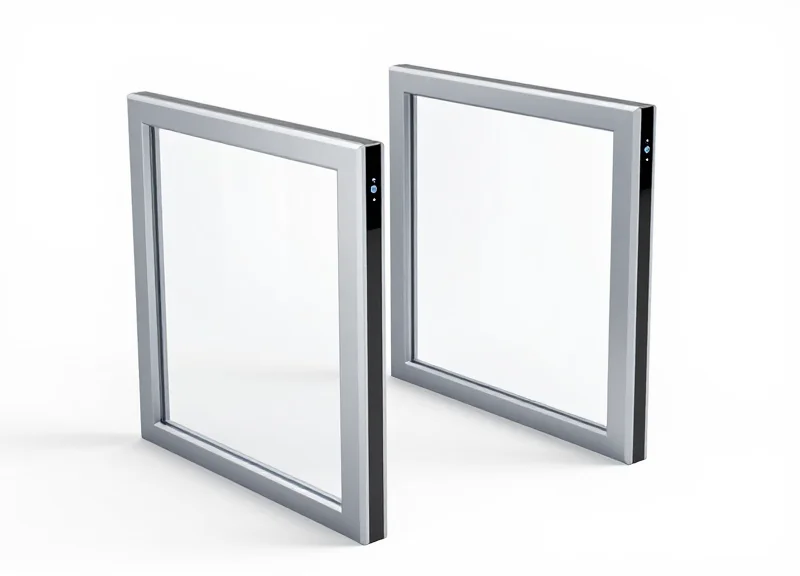
Advanced security gates with directional sensing utilize specialized antenna arrays and signal processing to determine the movement vector of an RFID tag, ensuring alarms only trigger for unauthorized items exiting the library while remaining silent for patrons entering with previously borrowed materials. In high-volume public spaces, this technology is the primary defense against 'alarm fatigue,' a phenomenon where staff begin to ignore security alerts due to the high frequency of false positives caused by patrons returning books through the main entrance.
By 2026, the standard for security pedestals has moved beyond simple detection. Modern systems integrate three-dimensional 'gate zones' that can track dozens of tags simultaneously. This is critical for urban libraries where large groups often enter and exit at the same time. Without directional sensing, a single person walking in with a stack of books to return would trigger a loud alarm, disrupting the flow and creating a negative experience for everyone involved.
| Feature Capability | Legacy RFID Gates | 2026 Directional Sensing Gates |
|---|---|---|
| Detection Logic | Omni-directional (any tag proximity) | Vector-based (direction of travel) |
| False Alarms | High (triggered by returns/walk-ins) | Near-zero (filtered entry events) |
| Traffic Analytics | Total count only | Inbound vs. Outbound breakdown |
| Aesthetic Options | Wide plastic pedestals | Slim, clear glass or overhead 'invisible' arrays |
Expert Tip: Look for systems that offer 'Crowd Flow Heatmapping' capabilities. Because these gates already track the direction and volume of movement, high-end 2026 systems can export this data to your facility management software. This allows you to identify peak usage times and optimize staff placement at the help desk or security station based on actual real-time pedestrian density rather than guesswork.
- Antenna Calibration: Ensure the vendor performs a site survey to calibrate the gates against interference from nearby metal structures or automated doors.
- Software Integration: Connect the gate alarm logs directly to your ILS to see exactly which titles are triggering alerts in real-time.
- Visual Indicators: Configure the LED lighting on the gates to show different colors for 'System OK' (Green) versus 'Unauthorized Exit' (Red).
Will these gates interfere with medical devices like pacemakers?
No. Modern RFID library gates operate at 13.56 MHz (HF) and are fully compliant with international safety standards regarding electromagnetic interference with medical implants.
Can the gates detect tags inside a foil-lined bag?
While foil can shield RFID signals, high-performance 2026 gates include 'magnetic strip detection' or 'metal shielding alerts' to notify security when a potential shoplifting device passes through.
Do directional gates require more space?
Actually, they often require less. Because the sensing is more precise, you can often place pedestals further apart without losing detection accuracy, facilitating better ADA compliance and wheelchair access.
Feature 5: Mobile-First Staff Tools and Handheld Inventory Management

Mobile-first staff tools leverage high-performance handheld RFID readers and cloud-connected software to decentralize library operations. In high-volume public spaces, these tools enable librarians to perform 'inventory-at-the-shelf,' where thousands of items can be scanned per hour to identify misplaced books, update circulation statuses, and fulfill hold requests in real-time. By 2026, the standard for library management will shift from desk-bound stations to agile, handheld-centric workflows that maximize staff visibility on the floor rather than behind a counter.
- Rapid Shelf Reading: Wanding shelves at a walking pace to automatically detect items out of call-number order.
- Instant Pull-List Fulfillment: Uploading 'Hold' or 'Reserve' lists directly to the handheld device, which triggers a haptic or audible alert when the specific tag is detected.
- Batch Status Updates: Changing the status of entire shelves (e.g., 'In Repair' or 'Reference Only') in a single pass without individual barcode scanning.
| Capability | Legacy Handheld Scanners | 2026 Mobile-First RFID Tools |
|---|---|---|
| Sync Speed | Batch/End-of-day docking | Real-time via Wi-Fi 6 / 5G |
| Detection Range | 1-3 inches (Line of sight) | Up to 20 feet (Non-line of sight) |
| Software UI | Text-heavy Windows CE/Mobile | Responsive iOS/Android App |
| Search Precision | Hot/Cold proximity only | RSSI Triangulation (Visual Guidance) |
The Veteran's Insight: Solving the 'Ghost Item' Problem. Many generic RFID guides ignore Signal Strength Indicator (RSSI) calibration. For 2026, the best systems allow staff to adjust the 'read power' on the fly. This prevents 'ghost reads'—picking up a book on the opposite side of a wall—while ensuring the system can still penetrate through thick coffee-table books or dense media collections. This granularity reduces false positives by 40% during inventory audits.
How long does the battery typically last on modern RFID wands?
Top-tier 2026 models feature swappable lithium-ion batteries designed for 8-12 hours of continuous use, ensuring a full shift of inventory work without recharging.
Can these tools work with our existing smartphones?
Yes, the most flexible systems offer Bluetooth-connected RFID sleds that pair with staff smartphones via a secure app, reducing hardware costs and shortening the learning curve.
Does the system handle offline mode?
Robust systems include an offline buffer that stores scanned data during Wi-Fi dead zones (like basement archives) and syncs automatically once connectivity is restored.
Feature 6: Integration with ESL and Digital Wayfinding
In high-volume public spaces, the most significant friction point for patrons is the 'last ten feet'—the gap between finding a book in the digital catalog and locating it on a physical shelf. Integration with Electronic Shelf Labels (ESL) and Digital Wayfinding uses RFID data to bridge this gap, turning static furniture into 'Smart Shelves.' By synchronizing the library's RFID database with e-ink displays on the shelf edge, the system can dynamically update titles, availability, and even trigger LED beacons to guide patrons or staff directly to a specific volume.
| Feature | Traditional RFID Library | RFID + ESL Integrated System |
|---|---|---|
| Location Accuracy | Static (Section/Aisle Level) | Dynamic (Precise Shelf Position) |
| Search Experience | Manual scanning of spines | Visual 'Find-to-Light' cues |
| Staff Efficiency | Manual shelf reading | Automated missing item alerts |
| Update Speed | Physical labels required | Instant digital sync via ILS |
The true power of this integration lies in the 'Find-to-Light' functionality. When a patron or librarian selects an item on a mobile app or kiosk, the RFID-enabled ESL tag for that specific shelf segment flashes a discrete LED light. In 2026, this will be paired with Augmented Reality (AR) wayfinding, where the patron’s smartphone camera overlays a digital path on the floor leading them through the stacks. This eliminates the 'search fatigue' often experienced in massive, multi-story public libraries.
How does ESL handle books that are shelved incorrectly?
Modern systems use 'Smart Shelf' RFID antennas that continuously poll the tags. If an item is placed on the wrong shelf, the system detects the mismatch between the RFID tag and the ESL location, immediately updating the backend and alerting staff to the misplaced item.
Can digital wayfinding work without GPS inside a library?
Yes. By using the RFID gates and the ESL infrastructure as Bluetooth Low Energy (BLE) or Wi-Fi RTT anchor points, the system creates an ultra-precise Indoor Positioning System (IPS) that is far more accurate than standard GPS.
Is the energy consumption of ESL labels a concern?
No. Most 2026-grade ESLs use e-ink technology and possess a battery life of 5 to 10 years, as they only consume power during the millisecond when the display content changes.
Expert Tip: Look for a system that supports 'Heatmap Analytics.' By combining RFID movement data with wayfinding requests, you can identify 'dead zones' in your library. If data shows patrons frequently search for a genre but rarely enter that specific aisle, you can use those insights to redesign your floor plan or improve signage, essentially applying retail-grade conversion optimization to public knowledge spaces.
Feature 7: Cloud-Based Analytics for Resource Optimization

Cloud-based analytics for RFID systems represent the transition from simple inventory tracking to high-level strategic intelligence. By aggregating data from every RFID-tagged item, self-checkout kiosk, and security gate, these platforms provide a 360-degree view of library operations. In 2026, the 'Best' systems will not just report what happened yesterday; they will use Big Data and machine learning to predict what will happen tomorrow, allowing administrators to optimize collection development, adjust staffing levels, and justify budget allocations with hard evidence.
| Feature Capability | Legacy Reporting (Pre-2024) | 2026 Cloud-Based Analytics |
|---|---|---|
| Data Latency | Delayed (Daily/Monthly Reports) | Real-Time Live Dashboards |
| Scope of Tracking | Check-outs and Returns only | In-house browsing, pathing, and shelf-dwell time |
| Decision Support | Reactive (Fixing past issues) | Predictive (Forecasting demand and trends) |
| Access | On-site server access only | Secure, multi-branch mobile access |
- Demand-Driven Collection Management: Automatically identify 'dead' zones in the library where items are rarely touched, and highlight high-turnover categories that require deeper inventory investment.
- Heatmapping and Pathing: Visualize patron flow through the library using RFID gate data to identify bottlenecks or underutilized spaces, allowing for better physical layout design.
- Labor Efficiency Metrics: Track the speed of shelf-reading and sorting to optimize staff schedules during peak return windows.
Expert Insight: The 'Ghost Circulation' Metric. One of the most significant advantages of 2026-era RFID analytics is the ability to track 'in-house use' or 'Ghost Circulation.' Traditional systems only record data when an item is checked out. Modern RFID readers can detect when a book is pulled from a shelf and later placed in a return bin without ever being scanned at a kiosk. This reveals the true value of reference materials and children's books that are consumed on-site, providing a much more accurate picture of library ROI than circulation numbers alone.
Is our patron data safe in the cloud?
Top-tier 2026 systems utilize SOC2 Type II compliance and anonymized data tokens, ensuring that analytics track item movement without ever linking personal identifiable information (PII) to the cloud-based datasets.
Does this require a dedicated data scientist on staff?
No. The best systems feature 'Natural Language Querying' (NLQ), allowing librarians to ask questions like 'Which sections had the most traffic on Tuesday mornings?' and receive automated visual reports.
Can it integrate with our municipal dashboard?
Yes, through robust REST APIs, modern RFID analytics can push high-level performance metrics directly to city or university management consoles for transparent reporting.
Evaluating ROI: Calculating the Long-Term Value of RFID
Return on Investment (ROI) for RFID in high-volume public libraries is calculated by measuring the Total Cost of Ownership (TCO) against the cumulative value of reclaimed staff hours, increased circulation velocity, and the reduction in unrecovered assets. For most urban systems, the break-even point occurs within 36 to 60 months, but the strategic value lies in 'Human Capital Reinvestment'—shifting personnel from low-value manual scanning to high-impact community programming and digital literacy instruction.
| ROI Metric | Legacy System (Barcode) | RFID-Enabled System (2026) |
|---|---|---|
| Inventory Audit Speed | 100 items per hour | 2,500+ items per hour |
| Checkout Throughput | 1 item per scan | 15+ items per scan (Bulk) |
| Average Staff Interaction | Administrative / Clerical | Consultative / Educational |
| Loss Prevention Accuracy | Low (Frequent False Alarms) | High (Directional Intelligence) |
- Phase 1: Baseline Labor Audit: Quantify the current man-hours dedicated solely to check-ins, check-outs, and shelf-reading. Multiply this by the average hourly burdened labor rate to establish your 'clerical cost floor'.
- Phase 2: Projecting Circulation Velocity: Estimate the increase in circulation resulting from faster turnaround times. RFID allows books to return to the shelves 40% faster than barcode systems, increasing the number of borrows per asset per year.
- Phase 3: Asset Protection Analysis: Factor in the reduction of 'shrinkage' or lost items. With RFID’s superior security gate accuracy, libraries typically see a 20-30% drop in unreturned materials that require replacement.
- Phase 4: TCO Amortization: Spread the cost of tags, hardware, and software integration over a 7-10 year lifecycle. Compare this annualized cost against the annual labor and asset savings calculated in phases 1-3.
Expert Insight: In 2026, the most overlooked ROI factor is 'Circulation Velocity Index' (CVI). High-volume spaces are moving toward a 'Liquid Collection' model where RFID automated sorting returns items to the floor so quickly that the library can maintain higher service levels with 15% fewer physical copies of popular titles, significantly reducing collection acquisition costs.
Does RFID lead to library staff layoffs?
Rarely. Instead, it solves the 'capacity crisis.' Most high-volume libraries use the labor savings to expand operating hours or launch new community services without increasing headcount.
What is the lifespan of an RFID tag in a public space?
Passive RFID tags are designed to last the life of the book (typically 10-15 years), meaning the tagging cost is a one-time investment per asset.
Can we calculate the ROI of user satisfaction?
While 'soft,' this is measured through increased gate counts and net promoter scores (NPS). Reduced wait times at kiosks are directly correlated with higher bond measure support and local funding.
Partnering with Experts: The DragonGuardGroup Advantage
The DragonGuardGroup advantage is defined by our ability to move beyond isolated hardware sales toward providing a 'Unified Library Ecosystem.' By converging Electronic Article Surveillance (EAS) for loss prevention, Radio Frequency Identification (RFID) for inventory intelligence, and Electronic Shelf Labels (ESL) for real-time user guidance, we provide a single-pane-of-glass management solution designed specifically for the high-density traffic of 2026 public spaces.
In the rapidly evolving landscape of 2026, library directors face the challenge of 'system fragmentation.' Most vendors specialize in only one area—security or inventory. DragonGuardGroup eliminates this siloed approach. Our expertise ensures that your security gates don't just beep; they communicate with your RFID database and your digital shelf displays to provide a seamless flow of data that improves both staff productivity and the patron experience.
| Capability | Generic RFID Vendors | DragonGuardGroup Holistic Solution |
|---|---|---|
| Security Integration | Standard RFID gates only | Hybrid EAS+RFID dual-layer protection |
| Display Technology | Paper-based or manual signs | Dynamic ESL integration for real-time wayfinding |
| Scalability | Limited to single-protocol hardware | Multi-protocol support (EAS, RFID, BLE, ESL) |
| Technical Support | Hardware-only troubleshooting | Comprehensive workflow optimization and signal tuning |
Expert Insight: The 'Inter-Protocol Harmony' Edge. As we approach 2026, the density of wireless signals in public spaces (5G, Wi-Fi 7, and IoT) can lead to 'spectral noise' that degrades RFID performance. DragonGuardGroup differentiates itself through advanced signal-tuning expertise, ensuring that your EAS and RFID systems operate with 99.9% accuracy even in environments saturated with patron devices and electronic interference.
Why is the combination of EAS and RFID important?
While RFID tracks data, EAS provides a more robust physical deterrent. Combining them ensures that libraries reduce 'shrinkage' (theft) while maintaining the data-rich benefits of RFID tracking.
How does DragonGuardGroup handle legacy system migration?
We specialize in 'Interoperable Transitioning,' allowing libraries to maintain their existing EM or barcode systems while phased RFID and ESL deployments occur, ensuring no downtime for public services.
What role does ESL play in this partnership?
Electronic Shelf Labels (ESL) act as the visual interface of the RFID system, allowing for automated book location updates and 'Click-and-Collect' light-guided picking for library staff.