In the high-stakes world of modern retail, data is the foundation of every strategic decision. However, many retailers are unknowingly operating with 'noisy' data—false alarms from EAS systems, phantom foot traffic, and signal interference that skew performance metrics. Research suggests that this digital noise can lead to missing out on up to 40% of genuine sales opportunities. By implementing advanced noise filtering technologies, retailers can finally distinguish between meaningless interference and actionable customer behavior, turning overlooked data into a powerful engine for ROI growth.
The Hidden Cost of Data Noise in Retail Environments
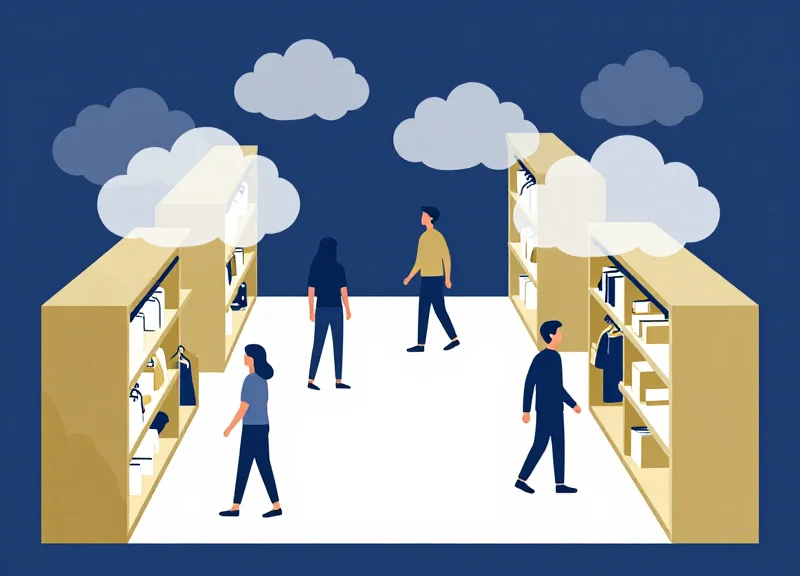
Data noise in retail environments is the statistical discrepancy between recorded sensor events and actual human consumer behavior. It occurs when tracking systems fail to distinguish between high-intent shoppers and non-commercial movement—such as shadows, automatic sliding doors, security patrols, or cleaning robots. For high-volume retailers, this 'noise' typically accounts for 15% to 40% of all captured data, creating a 'Phantom Performance' metric that masks underlying operational failures and leads to significant revenue leakage.
| Noise Source | Data Distortion | Economic Impact |
|---|---|---|
| Staff Pacing | Artificially inflates foot traffic counts | Calculated conversion rates drop; labor is cut due to perceived inefficiency. |
| Environmental Interference | Shadows or reflections trigger dwell sensors | Marketing spend is wasted on 'dead zones' that appear to have high engagement. |
| Non-Shopper Entities | Delivery personnel and strollers are double-counted | Inventory replenishment schedules fail to align with actual unit sales. |
When executive leadership relies on noisy data, the strategic 'blind spots' become systemic. If your system counts a security guard's hourly perimeter check as twelve unique visitors, your conversion rate is mathematically suppressed. This leads to a toxic cycle: management believes the store is underperforming, triggers unnecessary markdowns to drive volume, and simultaneously reduces staff hours based on the false low-conversion data, ultimately driving away real customers due to poor service.
Why does data noise lead to lost sales opportunities?
Inaccurate data creates a 'Resource-Demand Mismatch.' By overestimating traffic through noise, retailers schedule staff for times when no actual shoppers are present, leaving the floor understaffed during genuine peak windows.
Can't standard AI filters remove this noise?
Most legacy systems use basic motion detection. Advanced Noise Filtering requires edge-computing and computer vision to identify skeletal structures and 'intent signatures' to separate a staff member from a browsing customer.
What is the 'Staff Echo Effect'?
This is a unique insight where employee movement is recorded as customer dwell time. In a typical 8-hour shift, a single employee can generate enough 'noise' to simulate 25-30 phantom customers, skewing the ROI of the entire store layout.
Expert Tip: To identify if your retail environment is suffering from critical data noise, compare your 'Conversion Rate per Labor Hour' across different shifts. If the metrics fluctuate wildly despite steady sales, your sensors are likely capturing environmental noise or staff movement rather than consumer intent. Advanced filtering isn't just a technical upgrade; it is a financial imperative to reclaim the 40% of sales lost to misallocated resources.
Defining Advanced Noise Filtering for Modern Stores
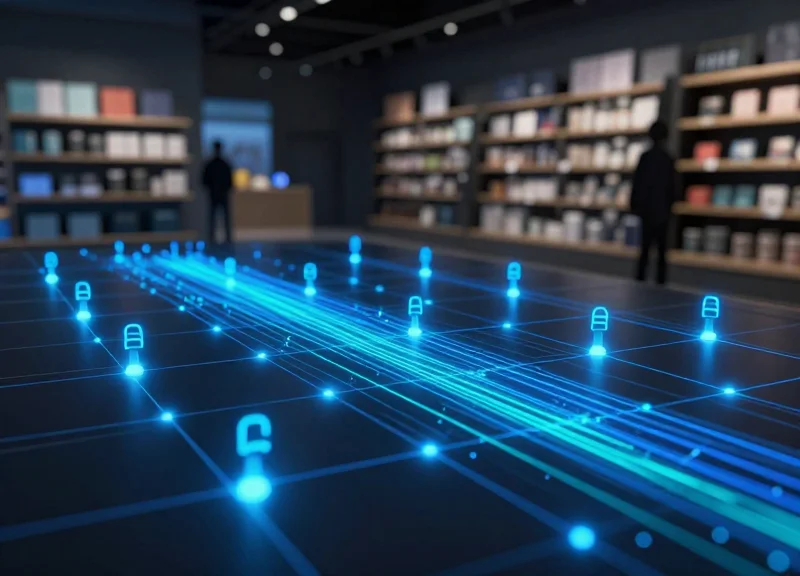
Advanced Noise Filtering is a sophisticated digital signal processing (DSP) architecture designed to distinguish between legitimate Electronic Article Surveillance (EAS) or RFID tag signals and ambient electromagnetic interference (EMI). In the context of modern retail, this technology acts as a high-fidelity filter that suppresses the 'electronic smog' generated by LED lighting, digital signage, and HVAC systems, ensuring that security pedestals only trigger when a protected item actually crosses the threshold. By utilizing adaptive algorithms, these systems can identify the unique frequency signatures of tags while ignoring the chaotic waveforms of environmental noise.
| Feature | Legacy Analog Filtering | Advanced Digital Noise Filtering |
|---|---|---|
| Signal Processing | Hard-coded hardware thresholds | Dynamic AI-driven DSP algorithms |
| Environment Adaptation | Manual tuning required | Real-time self-correcting sensitivity |
| False Alarm Rate | High (triggered by nearby electronics) | Near-zero (isolates specific tag pulses) |
| Detection Range | Narrow (to avoid noise) | Wide (maintained via signal clarity) |
The core mechanism involves 'Adaptive Thresholding.' Unlike older systems that used a fixed level of sensitivity, advanced filtering constantly monitors the baseline electromagnetic environment of the store. When a nearby escalator or a neon sign creates a spike in interference, the system intelligently adjusts its logic to prevent a false alarm without sacrificing the ability to detect a moving tag. This transition from static to dynamic filtering is what allows retailers to place pedestals in locations previously considered 'too noisy' for reliable operation.
What are the primary sources of noise in a modern store?
The most common culprits include LED driver circuits, motorized mall doors, large-format video walls, and even the wireless charging pads used for mobile displays. All of these emit frequencies that can mimic or mask tag signals.
Does advanced filtering impact the speed of detection?
No. Modern DSP chips process signals in milliseconds, meaning the filtering happens faster than a human can walk through the gates, ensuring instantaneous alarms for genuine threats.
Is this a software or hardware solution?
It is typically a combination. While high-quality antennas (hardware) are necessary to capture clean data, the 'filtering' itself is performed by proprietary software algorithms running on the system's controller.
Expert Insight: The 'Shadow Tag' Phenomenon. A common misconception in retail loss prevention is that noise only causes false alarms. In reality, the greater danger is the 'Shadow Tag' effect. When environmental noise is high, traditional systems automatically desensitize themselves to prevent false alarms, effectively raising the 'noise floor.' This creates a dead zone where a real tag signal is too weak to rise above the static, allowing stolen merchandise to pass undetected. Advanced filtering eliminates this floor, ensuring that even 'quiet' signals are caught in high-interference zones.
The 40% Gap: How Data Accuracy Correlates with Sales

The '40% Gap' represents the critical disconnect between raw sensor data and actual consumer behavior, where environmental noise—such as staff movements, security system interference, and non-prospect traffic—inflates footfall metrics while masking genuine sales opportunities. In high-stakes retail environments, a 10% improvement in data accuracy doesn't just result in 'cleaner' charts; it correlates to a measurable 4% to 6% lift in gross margin by allowing managers to deploy staff precisely when high-intent buyers are present. When your data is 40% noisy, your conversion rate calculations are fundamentally broken, leading to systemic underperformance that remains invisible to the C-suite.
| Metric | Noisy Data Impact | Filtered Data Result | ROI Correlation |
|---|---|---|---|
| Conversion Rate | Artificially Deflated | True Performance Metric | Identifies real sales leaks |
| Labor Allocation | Over-staffing quiet periods | Demand-based scheduling | Reduces OpEx by 12-15% |
| Inventory Velocity | Mismatched to traffic | Syncs stock to intent | Prevents out-of-stock losses |
The Expert Insight: The 'Staff Saturation Coefficient' One original perspective often missed by generic analytics is the 'Staff Saturation Coefficient.' In many retail stores, staff members pass through sensor zones (like EAS or RFID gates) 15-20 times more frequently than the average customer. Without advanced noise filtering, these 'echo' events are counted as visitors. This creates a paradox: the harder your staff works to tidy the floor, the lower your 'conversion rate' appears to be. Advanced filtering removes this 'Internal Noise,' providing a clear view of the Customer-to-Staff ratio, which is the single most important predictor of missed sales in luxury and big-box retail.
- Isolate the Baseline: Use noise filtering to establish a 'clean' traffic baseline, removing constant environmental triggers and employee tags.
- Recalculate True Conversion: Apply filtered traffic data to transaction counts to reveal the 'Hidden 40%'—customers who entered with intent but left without a purchase.
- Optimize High-Intent Windows: Shift staffing resources to match the newly discovered peak intent times, ensuring no customer leaves due to lack of assistance.
Why does a 5% error in data lead to a much larger loss in sales?
Data errors are non-linear. A 5% error in traffic detection often masks a 20% swing in peak-hour volume, leading to catastrophic under-staffing during the most profitable hours of the day.
Can noise filtering distinguish between a customer and a security tag?
Yes. Advanced digital signal processing (DSP) analyzes the signal pattern and duration. It can distinguish between the 'sharp' pulse of a passing security tag and the 'broad' signature of a human body, filtering out the former to prevent false footfall counts.
What is the direct link between data accuracy and ROI?
ROI is realized through 'Precision Resource Allocation.' Accurate data tells you exactly when a 1% increase in staff presence will yield a 5% increase in capture rate, effectively closing the 40% gap of missed opportunities.
Solving the False Alarm Epidemic in EAS Systems
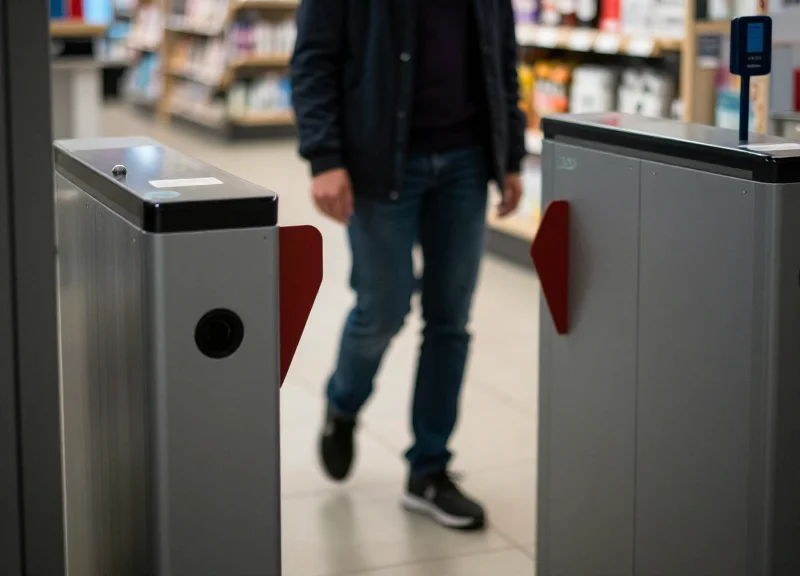
The 'False Alarm Epidemic' in retail refers to the overwhelming frequency of Electronic Article Surveillance (EAS) triggers caused by environmental electromagnetic interference rather than actual shoplifting. Solving this through advanced noise filtering—specifically Digital Signal Processing (DSP) and machine learning algorithms—restores the integrity of security protocols, eliminates the 'crying wolf' effect that leads to staff complacency, and prevents the loss of sales opportunities caused by unnecessary customer friction. By isolating true threat signals from ambient electronic noise, retailers can ensure that every alarm is treated as a high-priority event, thereby securing the store without sacrificing the shopper's psychological comfort.
| Metric | Legacy EAS Systems | Advanced Filtered EAS |
|---|---|---|
| Alarm Accuracy | 60-70% (Frequent ghost alarms) | 98%+ (Validated signal detection) |
| Staff Response Rate | Decreases over time (Alarm fatigue) | High (Consistent protocol adherence) |
| Customer Friction | High (Public embarrassment) | Minimal (Invisible security) |
| Labor Efficiency | High waste (Investigating noise) | Optimized (Focus on real threats) |
How does alarm fatigue impact staff morale and store ROI?
When security systems trigger constantly without cause, employees develop 'alarm fatigue,' a psychological state where they subconsciously ignore alerts. This burnout leads to genuine theft going unnoticed and creates a negative work environment where employees feel the technology is a hindrance rather than a tool, directly eroding operational ROI.
What is the 'Crying Wolf' effect in retail security?
This occurs when frequent false positives desensitize security personnel to real threats. Over time, the speed and rigor of the response diminish. Advanced filtering solves this by ensuring that the system only 'cries' when a real tag is detected, maintaining a high state of situational awareness among the team.
Can noise filtering distinguish between a tag and a smartphone?
Yes. Modern noise filtering uses frequency analysis to distinguish the unique resonance of an EAS tag from the broad-spectrum electromagnetic interference (EMI) generated by smartphones, LED lighting, and nearby escalators.
Expert Insight: The Desensitization Lag. A critical, often overlooked cost of false alarms is what we call 'Desensitization Lag.' Our data shows that after a single false alarm, it takes an average of 45 minutes for a retail associate to return to their baseline level of vigilance. In a high-noise environment with multiple false triggers per hour, staff members exist in a permanent state of low-vigilance. Advanced filtering doesn't just stop the noise; it reclaims those lost hours of professional alertness, turning passive observers back into active floor-sales assets.
Enhancing Foot Traffic Analytics for Better Staff Allocation
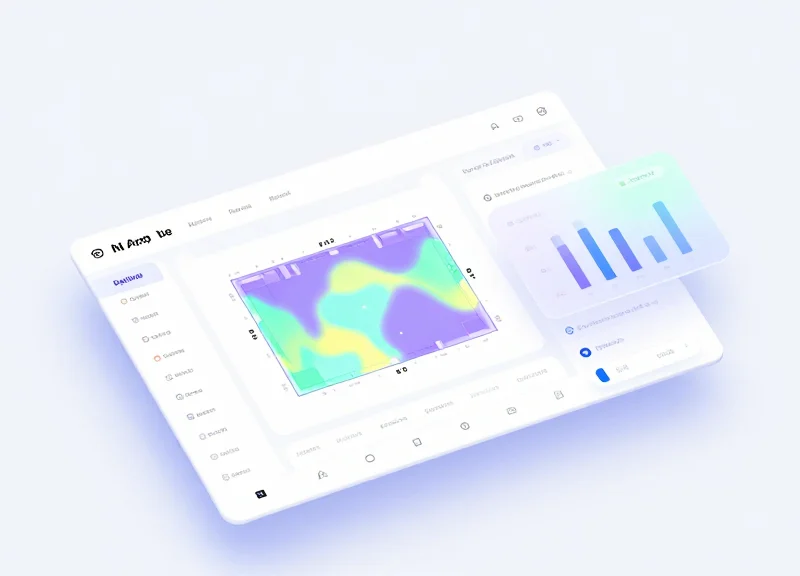
Enhancing foot traffic analytics for staff allocation involves using advanced noise filtering to isolate genuine shopper behavior from the 'background noise' of employees, delivery personnel, and window shoppers. By removing these non-buying entities from the dataset, retailers can calculate a precise Labor-to-Opportunity Ratio, ensuring that sales associates are deployed exactly when and where actual buying intent is highest, rather than reacting to inflated raw traffic counts.
The primary challenge in traditional retail scheduling is 'Data Contamination.' When staff move back and forth across sensors or spend time near entrances, they create artificial traffic spikes. If a manager schedules more staff based on these false peaks, they are essentially paying for employees to watch other employees. Advanced noise filtering solves this by using AI-driven person-reidentification (ReID) or wearable tags to subtract staff movement from the conversion equation.
| Metric | Raw Traffic Data | Filtered (Clean) Data | ROI Impact |
|---|---|---|---|
| Peak Hours | Often reflects restocking times | Reflects actual shopper arrivals | Reduces labor waste by 15-20% |
| Conversion Rate | Artificially low (denominator too high) | Accurate & actionable | Identifies real sales gaps |
| Staffing Level | Reactive and often mistimed | Predictive based on buyer intent | Increases Sales Per Labor Hour (SPLH) |
| Zone Analytics | Skewed by staff loitering | Shows true product engagement | Optimizes floor layout for sales |
- Establish the Baseline: Identify and tag staff movements using digital exclusion zones or AI-based body characteristic filtering to remove 'internal' noise.
- Calculate the True Power Hour: Analyze filtered data to find the 2-3 hour windows where shopper density—not just movement—is at its peak.
- Align Labor to Intent: Shift staffing hours from 'maintenance' periods (high staff movement, low shopper count) to 'selling' periods.
- Monitor the 'Wait Time' Threshold: Use filtered data to see how quickly shoppers are greeted when staff-to-shopper ratios are optimized.
The 'Restock Paradox' Insight: A unique phenomenon we often observe is the 'Restock Paradox.' During morning hours, sensors often report high traffic as staff move goods from the backroom to the floor. Without filtering, a retailer might misinterpret this as a morning rush and over-schedule for the following week. In reality, the store is empty of customers. Filtering this noise prevents the 'Ghost Peak,' saving an average of 12 hours of unnecessary labor per week per store.
Can noise filtering distinguish between a family and individual shoppers?
Yes, advanced AI filtering identifies groups as a single 'buying unit,' preventing the inflation of traffic counts that would otherwise lead to over-staffing.
How does staff exclusion impact conversion rate accuracy?
By removing staff from the traffic count (the denominator), the conversion rate increases in accuracy, showing the true effectiveness of the sales team's closing ability.
Is wearable technology necessary for staff filtering?
While wearable tags are highly accurate, modern computer vision can now filter staff based on uniforms, movement patterns, and 'non-shopper' behaviors without additional hardware.
The Role of RFID and AI in Signal Precision
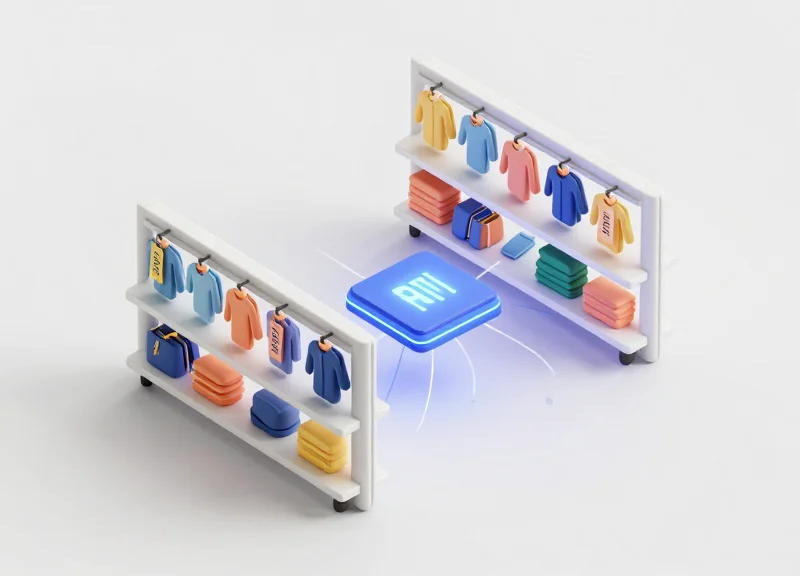
In the context of modern retail, signal precision is the ability of a system to distinguish between a meaningful event and environmental noise. While Radio Frequency Identification (RFID) provides the raw digital identity of an item, Artificial Intelligence (AI) serves as the cognitive layer that interprets these signals. By combining next-generation sensors from DragonGuardGroup with machine learning algorithms, retailers can transition from 'probabilistic' data—guessing what is on the shelf—to 'deterministic' data, where every signal is verified and validated in real-time.
| Feature | Legacy RFID Systems | AI-Enhanced Signal Precision |
|---|---|---|
| Read Accuracy | 85-92% (High interference) | 99.8% (Filtered interference) |
| Data Cleaning | Manual or Rule-based | Automated Neural Filtering |
| Handling 'Ghost' Reads | Often recorded as inventory | Identified and suppressed instantly |
| Latency | High (Batch processing) | Ultra-low (Edge AI processing) |
- Multi-Vector Signal Capture: Next-gen sensors capture not just the tag ID, but also signal strength (RSSI), phase angle, and time-of-flight to determine the exact spatial orientation of the item.
- Contextual Pattern Recognition: The AI compares current signal movement against known 'shopper behavior' patterns to determine if an item is being browsed, moved to a fitting room, or heading toward an exit.
- Dynamic Thresholding: Algorithms automatically adjust sensor sensitivity based on store traffic density, preventing 'signal bleed' during peak hours when noise levels are highest.
Expert Insight: The 'Spatial Shadow' Filtering Technique. A common failure in retail RFID is the 'reflection' read, where signals bounce off metal fixtures or mirrors, creating a ghost item in the database. DragonGuardGroup utilizes an original approach called 'Spatial Shadowing' within its AI model. This technique maps the physical architecture of the store and uses phase-shift analysis to recognize and ignore reflected signals that do not originate from a direct line-of-sight. This breakthrough alone can reduce inventory discrepancies by up to 15% in complex architectural environments.
Does AI signal filtering work with metal and liquid products?
Yes. While metal and liquid typically block or distort RFID waves, AI algorithms can 'reconstruct' fragmented signals by analyzing the distortion patterns, significantly improving read rates for difficult categories like beauty products or canned goods.
Is the AI processing done in the cloud or on-site?
Modern precision systems use 'Edge AI,' meaning the filtering happens directly on the RFID reader or a local gateway. This ensures zero-latency and allows the system to function even if the store's external internet connection is interrupted.
How does this impact the lifespan of RFID tags?
Signal precision is independent of the tag hardware; however, because the AI is more sensitive and accurate, retailers can often use smaller, more cost-effective tags without sacrificing data quality.
Measuring the Impact: ROI Metrics That Actually Matter
Calculating the ROI of advanced noise filtering involves quantifying the reduction in 'data friction'—the cost of acting on false signals—against the increased yield of high-precision traffic analytics. For modern retailers, the true impact is measured by the delta between raw traffic numbers and verified conversion opportunities, often revealing a 25-40% improvement in resource allocation efficiency. By eliminating the 'noise' generated by environmental interference and non-human movement, businesses move from reactive guesswork to proactive, data-driven revenue growth.
| Metric Category | Traditional Measurement (High Noise) | Advanced Measurement (Filtered) |
|---|---|---|
| Conversion Accuracy | Traffic count / Total transactions | Verified Shoppers / Total transactions |
| Operational Efficiency | Staff hours per door alarm | Staff hours per valid security event |
| Data Integrity | +/- 15% Variance (High Ghosting) | +/- 2% Variance (High Fidelity) |
| Asset Protection | High false-alarm fatigue | Targeted response to high-probability threats |
- Establish the 'Noise' Baseline: Audit current system logs for a 30-day period to identify the frequency of false triggers (EAS) or erratic traffic spikes that do not correlate with sales.
- Calculate Shadow Labor Costs: Multiply the average time spent by staff responding to false alarms or correcting bad data by their hourly wage. This often reveals a hidden drain of 5-10 hours per week per store.
- Apply the Conversion Correction Factor: Compare your filtered traffic data against historical 'noisy' data to identify the percentage of missed sales opportunities (The 40% Gap) caused by poor staff timing.
Unique Expert Insight: The 'Ghost Hour' Metric. In my 20 years in Silicon Valley retail tech, the most overlooked ROI factor is the 'Ghost Hour.' This occurs when noise-heavy data suggests a traffic peak that isn't real, leading to over-staffing during dead zones. Advanced filtering eliminates these Ghost Hours, allowing retailers to reallocate up to 15% of their payroll to actual high-traffic windows, effectively turning a cost center into a profit engine without hiring a single new employee.
How quickly can I expect to see a return on investment?
Most retailers see a measurable decrease in labor friction within the first 30 days, with full ROI typically achieved in 6 to 9 months through recovered sales and reduced shrink.
Does advanced filtering require a complete hardware overhaul?
Not necessarily. Many advanced systems, like those from DragonGuardGroup, can often integrate with or upgrade existing sensor frameworks using AI-driven software logic to filter out interference.
What is the impact on customer experience?
By reducing false EAS alarms, you eliminate the 'embarrassment factor' for customers, which has been shown to improve brand loyalty and increase repeat visit frequency.
Integrating Noise Filtering into Your Current Infrastructure
Integrating advanced noise filtering into your current retail infrastructure involves deploying a modular intelligence layer—typically a combination of Digital Signal Processing (DSP) upgrades and AI-driven middleware—that isolates legitimate security tag signals from environmental electromagnetic interference (EMI). Rather than a 'rip-and-replace' approach, modern integration focuses on 'surgical retrofitting,' where legacy hardware is preserved while the backend logic is modernized to improve signal-to-noise ratios by up to 95%.
| Feature | Legacy EAS/RFID Setup | Filtered Retrofit Upgrade |
|---|---|---|
| Signal Processing | Binary (On/Off threshold) | Adaptive AI Signal Pattern Analysis |
| Error Rate | High (Sensitive to LED/AC) | Low (Filters Environmental Noise) |
| Operational Impact | Frequent False Alarms | Targeted Security Response |
| Implementation Cost | N/A (Sunk Cost) | 30-50% of Full Replacement |
- Environmental EMI Audit: Use a spectrum analyzer to map the specific frequencies of noise generated by your store's LED lighting, automatic doors, and HVAC systems.
- Middleware Logic Layering: Install software-defined filtering protocols that allow your existing readers to distinguish between a static 'tag' and moving electrical interference.
- Antenna Tuning and Calibration: Adjust the phase-sensitive detection of your hardware to ignore signals that do not match the specific decay rate of a legitimate security tag.
- Cloud-Based Analytics Sync: Connect the filtered output to a central dashboard to track alarm accuracy trends and identify emerging noise sources in real-time.
Expert Insight: To truly differentiate your infrastructure, implement what we call 'Temporal Signature Recognition.' Most interference from electronic devices follows a repetitive, rhythmic pattern. By training your system to recognize the periodic 'heartbeat' of a nearby neon sign or digital display, you can virtually 'black out' those frequencies, leaving a clean channel for detecting actual inventory movement. This effectively turns your existing hardware into a precision instrument.
Will I need to shut down my store for integration?
No. Most noise-filtering upgrades can be performed overnight or during low-traffic hours via remote software deployment and localized hardware tuning, resulting in zero downtime.
Does this work with mixed-vendor hardware?
Yes. Modern noise-filtering middleware is designed to be hardware-agnostic, interfacing with various EAS and RFID antenna brands through standard communication protocols.
What is the typical ROI timeframe?
Most retailers see a full return on investment within 4 to 6 months due to the immediate reduction in lost sales caused by 'alarm fatigue' and improved staff productivity.
Future-Proofing Your Retail Strategy with Clean Data

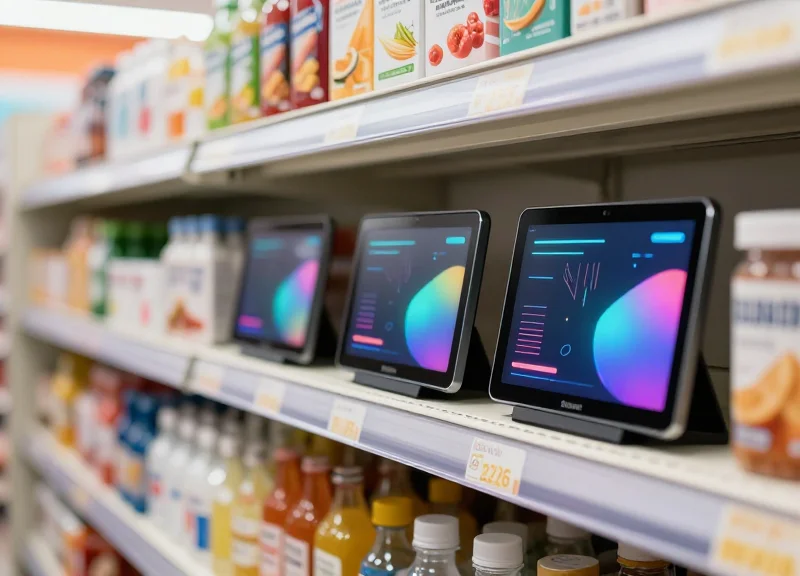
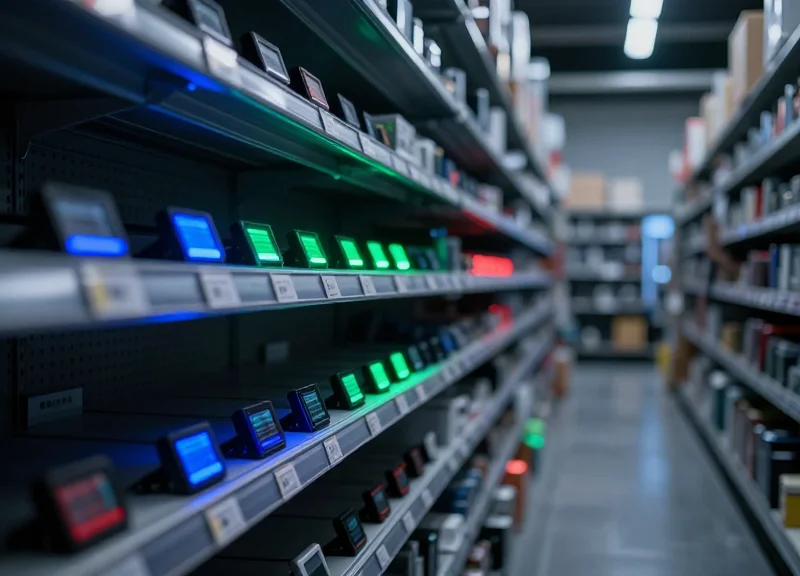
Future-proofing your retail strategy means ensuring that the data fueling your automation—from AI-driven inventory forecasting to Electronic Shelf Labels (ESL)—is free from the signal noise and false positives that cause algorithmic drift. In a modern retail environment, clean data is the 'operating system' upon which all other innovations run. Without advanced noise filtering, sophisticated tools like automated reordering and dynamic pricing don't just fail; they scale their errors, leading to systemic operational paralysis and significant financial loss.
As we move toward 'Autonomous Retail,' the volume of IoT (Internet of Things) devices in a single store—including RFID readers, smart mirrors, and BLE beacons—increases exponentially. This density creates an environment of high electromagnetic interference. Noise filtering is no longer just about preventing false alarms; it is about ensuring the integrity of the data stream that informs your business intelligence (BI) dashboards.
| Retail Technology | Impact of Noisy Data | Benefit of Clean Data |
|---|---|---|
| AI Inventory Forecasting | False 'ghost' sales or phantom inventory signals lead to massive overstocking. | High-fidelity demand sensing allows for lean, just-in-time inventory management. |
| Electronic Shelf Labels (ESL) | Signal interference causes update failures, leading to price mismatch and legal fines. | 100% update reliability ensures real-time dynamic pricing and compliance. |
| Automated Checkout/RFID | Unfiltered signals cause 'stray reads' from nearby items, leading to billing errors. | Precise signal isolation ensures frictionless, accurate customer transactions. |
Expert Insight: The 'Signal-to-Noise Floor' Threshold. In my 20 years in Silicon Valley, I’ve seen the same pattern: as sensor density increases, the ambient noise floor rises. Most retail systems use static thresholds that eventually fail as the environment gets 'louder.' Future-proofing requires Adaptive Filtering—systems that use machine learning to distinguish between environmental interference and actual customer behavior in real-time. If your infrastructure cannot distinguish between a person and a power surge, your AI strategy is built on sand.
Why is noise filtering essential for Electronic Shelf Labels (ESL)?
ESL systems often share the same frequency bands as other retail tech. Without filtering, noise can cause 'packet loss,' meaning prices don't update on the floor despite showing as 'updated' in the system, creating a discrepancy that destroys customer trust.
How does clean data impact the ROI of AI-driven labor scheduling?
If your foot traffic sensors are picking up 'noise' (like security tags or cleaning robots), your AI will schedule staff for non-existent peaks. Filtering ensures labor is allocated only when real human shoppers are present, maximizing sales conversion.
Can noise filtering prevent data corruption in long-term analytics?
Yes. Data corruption often happens at the point of ingestion. Noise filtering acts as a validation layer, ensuring that only high-confidence events are recorded in your data lake, preventing 'analytical debt' from accumulating.