In the rapidly evolving landscape of Industry 4.0, visibility is no longer a luxury—it is the bedrock of operational excellence. As we move toward 2026, the complexity of smart factories demands more than just knowing where an asset is; it requires real-time, actionable intelligence. Choosing the right Real-Time Location System (RTLS) can be the difference between a seamless digital twin and a fragmented data silo. This comprehensive guide breaks down the essential criteria to ensure your RTLS investment drives long-term value in a competitive manufacturing environment.
The Evolution of Asset Visibility: Why RTLS is Essential in 2026

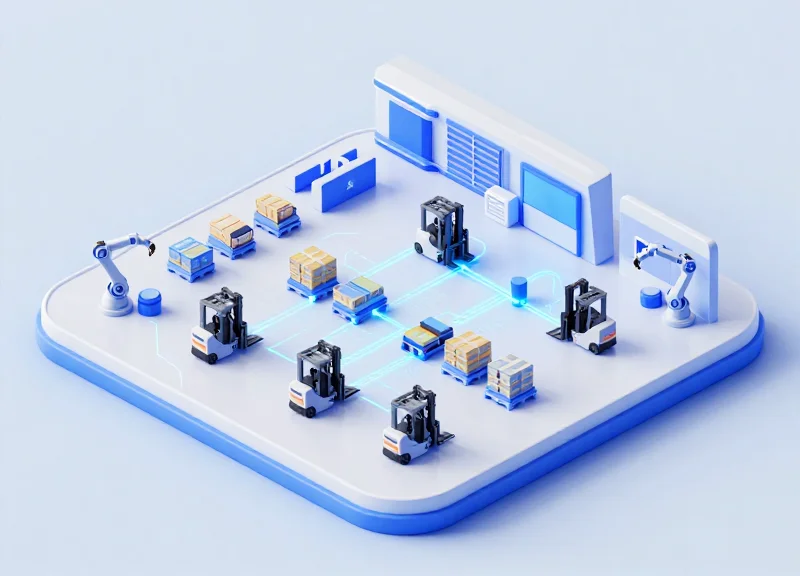
In 2026, the definition of asset visibility has undergone a seismic shift from passive observation to active intelligence. Real-Time Location Systems (RTLS) have become the mandatory architectural backbone for smart factories, moving beyond simple 'dots on a map' to provide a continuous stream of sub-meter spatial data. This evolution is driven by the need for millisecond-latency feedback loops that power Autonomous Mobile Robots (AMRs), dynamic scheduling AI, and real-time safety protocols. Without a robust RTLS framework, the modern industrial environment remains siloed, reactive, and unable to leverage the full potential of Industry 5.0 automation.
| Feature | Legacy Passive Tracking (Pre-2022) | Modern Active RTLS (2026) |
|---|---|---|
| Data Frequency | Snapshot (Gate-based/Manual) | Continuous (Streaming/Real-time) |
| Precision | Zone-level (10-30 meters) | Sub-meter (5-30 centimeters) |
| Primary Function | Audit & Compliance | Workflow & AMR Orchestration |
| Integration | Silod Spreadsheet/ERP | Live Digital Twin & AI Feedback |
Expert Insight: The Shift to 'Contextual Spatial Intelligence' As a veteran of Silicon Valley’s industrial tech scene, I’ve observed that the most successful 2026 implementations treat RTLS not as a tracking tool, but as a 'Contextual Engine.' The unique value today lies in combining location data with telemetry—for instance, knowing not just that a tool is at Station B, but that its current temperature and vibration levels indicate it will fail in 4 hours. This intersection of where and how is the secret sauce of the modern competitive edge.
Why is passive RFID no longer sufficient for smart factories?
Passive RFID only provides data when an asset passes a fixed reader. In a dynamic 2026 factory floor where paths are non-linear and robots move freely, 'chokepoint' data is too late to prevent bottlenecks or collisions.
How does RTLS support the 'Lights-Out' manufacturing trend?
True autonomous manufacturing requires zero human intervention. RTLS provides the 'eyes' for the central control AI, allowing it to navigate parts, verify assembly stages, and manage inventory without a single manual scan.
What role does 5G and UWB play in this evolution?
The convergence of Ultra-Wideband (UWB) for precision and 5G for massive connectivity has solved the interference issues of the past, allowing thousands of tags to operate simultaneously in metal-heavy environments.
Factor 1: Precision vs. Cost - Defining Your Accuracy Requirements

In the context of Smart Factory RTLS, precision refers to the margin of error between an asset's reported location and its actual physical position. Selecting the right level of accuracy is a strategic trade-off: while Ultra-Wideband (UWB) can provide sub-10cm precision, the infrastructure cost can be 3x to 5x higher than Bluetooth Low Energy (BLE) or Wi-Fi-based systems. Over-specifying accuracy leads to 'dead capital' trapped in unnecessary hardware, while under-specifying results in operational bottlenecks where workers cannot locate tools or materials quickly enough.
| Technology | Typical Precision | Cost per Sqm | Primary Use Case |
|---|---|---|---|
| UWB (Ultra-Wideband) | 5cm - 30cm | High ($$$) | Automated Tooling & High-Value AGVs |
| BLE (Bluetooth LE 5.x) | 1m - 3m | Moderate ($$) | Pallet Tracking & General Inventory |
| Wi-Fi (RSSI/FTM) | 3m - 10m | Low ($) | Staff Safety & Large Asset Staging |
| Passive RFID | Gate-level (On/Off) | Very Low ($) | Checkpoint & Loading Dock Verification |
Expert Insight: The 2026 Hybrid Anchor Strategy. Leading manufacturers are moving away from monolithic RTLS deployments. Instead of a factory-wide UWB setup, we now recommend 'Zone-Based Precision.' By using a common software backend, you can deploy UWB in high-density assembly zones where centimeter-level precision is vital, while utilizing low-cost BLE anchors in storage or transit areas. This hybrid approach reduces Total Cost of Ownership (TCO) by up to 40% without compromising operational intelligence.
Does 10cm accuracy always mean better ROI?
No. For inventory management in a warehouse, 10cm precision adds no value over 2m precision but significantly increases maintenance costs. ROI is maximized when the precision matches the physical footprint of the asset.
How does environment affect RTLS precision costs?
Metal-heavy environments (multipath interference) require more anchors to maintain accuracy. In 2026, AI-enhanced signal processing can mitigate some interference, but choosing a robust technology like UWB or Chirp Spread Spectrum is often cheaper than over-engineering a BLE network.
What is the 'Diminishing Return' threshold in RTLS?
For most smart factory applications, once you move beyond 1-meter accuracy, the cost of infrastructure begins to scale exponentially rather than linearly. Only invest in sub-meter accuracy if your workflow involves robotic interaction or critical safety distancing.
Factor 2: Technology Stack Evaluation - UWB, BLE, and Beyond
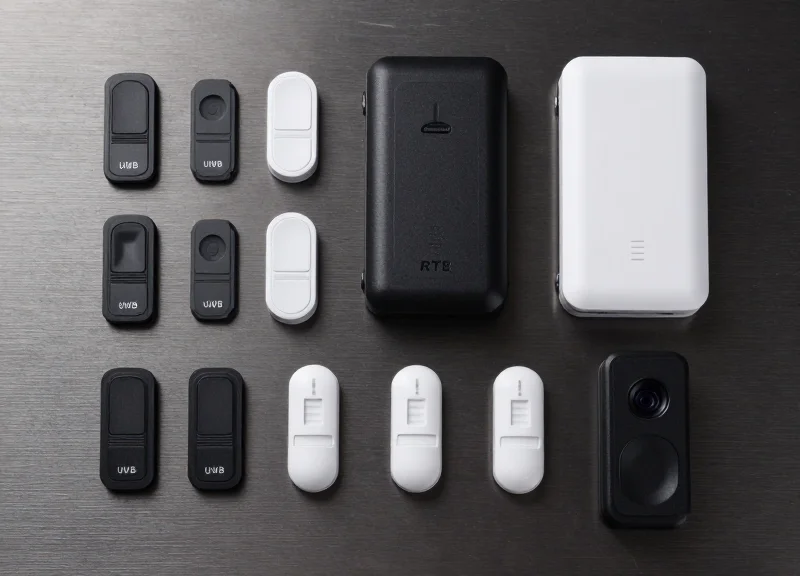
In 2026, the choice of a Real-Time Location System (RTLS) technology stack is no longer a binary decision but a strategic alignment of signal physics with operational environments. While Ultra-Wideband (UWB) remains the gold standard for high-precision tracking, Bluetooth Low Energy (BLE) and next-generation RFID have evolved into highly scalable alternatives. The key is evaluating how these technologies perform in 'RF-noisy' environments characterized by heavy machinery, metallic shielding, and high-density node clusters. An effective evaluation looks beyond marketing specifications to the actual physics of multipath interference and signal penetration.
| Technology | Typical Accuracy | Battery Life | Infrastructure Cost | Primary Factory Use Case |
|---|---|---|---|---|
| Ultra-Wideband (UWB) | 10 - 30 cm | 1 - 2 Years | High | High-value tool tracking and automated AGV navigation. |
| BLE (Direction Finding) | 1 - 3 Meters | 3 - 5 Years | Low to Moderate | Work-in-progress (WIP) flow and personnel safety. |
| Passive RFID | Zone Level | N/A (Battery-less) | Low | High-volume inventory and consumable replenishment. |
| Hybrid (UWB + BLE) | Adaptive | 3+ Years | Moderate | Variable precision needs across massive facilities. |
The 2026 Expert Insight: The Rise of the Multi-Protocol Gateway. A common mistake in earlier RTLS deployments was 'technology siloing'—investing in a single radio frequency that eventually hit a scalability ceiling. The most successful smart factories today utilize multi-protocol gateways that can listen to UWB, BLE, and even Wi-Fi 6/7 signals simultaneously. This 'Infrastructure Convergence' allows you to use cheap BLE tags for 90% of your assets while reserving expensive UWB tags for the 10% of assets that require centimeter-level precision, all managed via a single unified dashboard.
How does UWB handle high-metal factory environments?
UWB is uniquely resilient to multipath interference because its short-pulse signals (nanosecond duration) allow the system to distinguish the direct path from reflections off metal walls and machinery.
Can BLE compete with UWB for accuracy in 2026?
With the maturation of Angle of Arrival (AoA) and Angle of Departure (AoD) protocols, BLE can now achieve sub-meter accuracy in controlled environments, making it a viable, lower-cost competitor for non-mission-critical tracking.
Is Wi-Fi-based RTLS still relevant for smart factories?
Wi-Fi RTLS is generally relegated to 'presence detection' rather than precise tracking. However, Wi-Fi 6/7 Fine Timing Measurement (FTM) is increasingly used for secondary location validation without needing dedicated RTLS hardware.
Factor 3: Infrastructure Scalability and Ease of Deployment
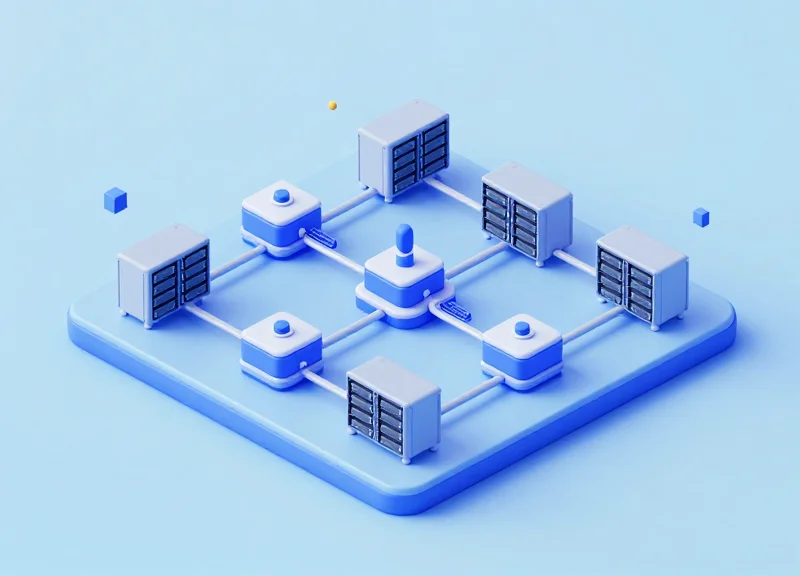
Infrastructure scalability in RTLS refers to a system's ability to expand tracking coverage and tag density across millions of square feet without requiring a proportional increase in hardware complexity or manual configuration. In the 2026 smart factory landscape, ease of deployment is no longer just about 'plug-and-play' hardware; it is defined by 'Infrastructure-Light' architectures that leverage existing network backbones (like Wi-Fi 6E or 5G Private Networks) to minimize the physical footprint of dedicated anchors and gateways.
| Infrastructure Type | Installation Effort | Scalability Potential | 2026 Recommendation |
|---|---|---|---|
| Wired (PoE) Anchors | High (Requires cabling) | Linear / Rigid | Best for high-precision zones only |
| Wireless Mesh / Battery | Low (Stick-and-go) | Exponential / Flexible | Ideal for general floor visibility |
| Virtual/Software-Defined | Minimal (Cloud-based) | Infinite | The gold standard for multi-site rollout |
A common pitfall in industrial RTLS projects is the 'Pilot Purgatory,' where a system works flawlessly in a 5,000 sq. ft. lab but collapses under the data load of a 500,000 sq. ft. production floor. Scalability must be evaluated through two lenses: Vertical Scalability (handling more data points per second as tag density increases) and Horizontal Scalability (adding new zones or facilities with zero-touch provisioning). In 2026, leading solutions utilize edge computing within the anchors themselves to process location data locally, preventing the central server from becoming a processing bottleneck.
- Site Survey & Auto-Calibration: Modern systems use SLAM (Simultaneous Localization and Mapping) or mobile apps to auto-calibrate anchor positions, reducing setup time from weeks to days.
- Backhaul Flexibility: Ensure the system supports multiple backhaul options (Ethernet, Wi-Fi, or LTE/5G) to adapt to different areas of the factory without new wiring.
- Over-the-Air (OTA) Management: The ability to push firmware updates and configuration changes to thousands of tags and anchors simultaneously is non-negotiable for enterprise scale.
Expert Insight - The 'Convergence Strategy': Most competitors focus on dedicated RTLS hardware. However, the most successful 2026 deployments utilize 'Convergence.' Look for RTLS vendors that offer 'Anchor-as-a-Service' capabilities or modules that plug directly into your existing Cisco or Aruba access points. This eliminates the 'Siloed Hardware' problem, effectively making your IT network your tracking network, which reduces total cost of ownership by up to 40% over five years.
What is the typical deployment time for a 100,000 sq. ft. facility?
With modern 'Infrastructure-Light' BLE or Chirp-based systems, hardware installation and software commissioning can be completed in 3 to 5 business days.
Can I add more tags without adding more anchors?
Yes, provided the system bandwidth is sufficient. High-capacity protocols like UWB or advanced BLE 5.4 can support thousands of tags per anchor through time-division multiplexing.
How does environmental change affect scalability?
In dynamic factories where layouts change, look for 'self-healing' mesh networks that automatically reroute data if a signal path is blocked by new machinery.
Factor 4: Tag Battery Life and Long-term Maintenance
In a smart factory environment, tag battery life is the primary driver of long-term operational expense. While manufacturers often quote 'up to 5 years,' actual performance depends heavily on the 'Update Rate vs. Power' equation: the frequency at which a tag transmits its location. Choosing a solution with advanced power management and over-the-air (OTA) configuration is essential for scaling to thousands of assets without creating a permanent maintenance backlog.
| RTLS Technology | Typical Update Rate | Expected Battery Life | Maintenance Profile |
|---|---|---|---|
| Ultra-Wideband (UWB) | 1 Hz (1 sec) | 6 - 18 Months | High: Frequent swaps required for high-precision tracking. |
| BLE (Standard) | 1 Hz (1 sec) | 2 - 4 Years | Medium: Balanced for most general asset tracking needs. |
| BLE (Periodic/Quiescent) | 10 mins / Motion-based | 5 - 8 Years | Low: Ideal for tools or inventory with low mobility. |
| Ambient IoT / Harvesting | Variable | Infinite (Battery-free) | Minimal: Future-proof technology for 2026 and beyond. |
The 'Hidden' Maintenance Trap: Many buyers overlook the labor cost of battery replacement. In a facility with 10,000 tags, a 2-year battery life means replacing 14 tags every single day. If each replacement takes 10 minutes of labor (finding the asset, swapping the battery, and re-provisioning), you are committing over 800 man-hours annually just to keep the system alive.
- Expert Tip: Demand Intelligent Sleep Modes: Ensure your RTLS solution uses accelerometer-based 'smart sleep.' By only transmitting when an asset is in motion, you can extend a 1-year battery life to 5+ years for assets that spend 80% of their time stationary.
- Look for Multi-protocol Flexibility: Modern 2026 tags often support multiple protocols (e.g., BLE for long-range and UWB for 'the last meter'). This allows the tag to conserve power on low-precision tasks and only activate high-drain precision when necessary.
- Prioritize Remote Health Monitoring: A robust RTLS platform must provide a proactive dashboard for battery levels. Avoid systems that only alert you when a tag goes offline; look for predictive analytics that forecast expiration dates based on historical discharge curves.
What is the impact of environmental temperature on RTLS battery life?
Extreme cold (e.g., cold storage) or high-heat manufacturing zones can reduce lithium battery capacity by up to 40%. Always specify industrial-grade batteries if your factory floor fluctuates outside of 10°C to 30°C.
Should I choose replaceable or non-replaceable batteries?
Non-replaceable (sealed) tags offer better IP-ratings against dust and water, but they are 'single-use' hardware. For most smart factories, replaceable coin-cell batteries provide a 30-50% lower TCO over a 5-year period despite the initial labor.
What is 'Battery-Free' RTLS?
Emerging in 2026, these tags harvest energy from ambient radio waves (Wi-Fi/Bluetooth) or light. While they have lower transmission power, they eliminate the maintenance cycle entirely for high-density, low-mobility inventory.
Factor 5: Integration with ERP, MES, and Digital Twin Platforms

Integration is the bridge that transforms raw spatial coordinates into industrial intelligence. For a smart factory to achieve true ROI in 2026, an RTLS solution must provide seamless, low-latency data flow into Enterprise Resource Planning (ERP), Manufacturing Execution Systems (MES), and Digital Twin platforms, ensuring that location data triggers automated business logic without human intervention.
In the past, RTLS was often a standalone 'island of data.' In the modern factory, if your location system cannot talk to your SAP/Oracle ERP or your Siemens MES, you are merely watching dots move on a screen. The value lies in 'Event-Driven Architecture'—where a pallet entering a specific zone automatically updates the inventory status in the ERP and triggers the next step in the MES production queue.
| Integration Method | Best Use Case | Latency Level | Complexity |
|---|---|---|---|
| MQTT / Webhooks | Real-time event triggers (e.g., Geofencing) | Ultra-Low (<50ms) | Medium |
| REST APIs | On-demand data retrieval & reporting | Medium (200ms+) | Low |
| Native Connectors | Direct sync with specific ERP/MES (SAP, MS Dynamics) | Variable | Low (Plug-and-Play) |
| GraphQL | Complex Digital Twin queries with nested data | Low/Medium | High |
- Automated Work-in-Progress (WIP) Tracking: By feeding RTLS data into the MES, manufacturers can automate the movement of work orders from one stage to the next, eliminating manual barcode scans and paperwork.
- Inventory Accuracy and Reconciliation: Direct ERP integration allows for 'live inventory' counts, where the ERP system automatically reconciles physical asset locations with financial records.
- High-Fidelity Digital Twins: Advanced RTLS feeds provide the 'spatial pulse' for Digital Twins in platforms like NVIDIA Omniverse, allowing for predictive simulations based on real-world movement patterns.
Expert Insight: The Semantic Data Gap. A common pitfall in RTLS deployment is focusing on the 'pipe' rather than the 'language.' In 2026, the most successful implementations utilize a Semantic Middleware layer. It is not enough to pass a coordinate (X,Y,Z); the system must translate that into a business context—'Asset 502' is now 'Stator Housing for Turbine B'—before it reaches the ERP. Without this semantic translation, your downstream systems will suffer from data noise.
Does the RTLS support 'Write-Back' capabilities?
A top-tier solution should not only push location data but also receive data from the MES to update tag behavior (e.g., changing a tag's LED color based on a priority rush order).
What is the standard for Digital Twin synchronization?
Look for support for the Asset Administration Shell (AAS) or Digital Twin Definition Language (DTDL) to ensure future-proof compatibility with Industry 4.0 standards.
How does integration impact network bandwidth?
Choose systems that support 'Edge Processing,' where the RTLS gateway filters out redundant data and only sends significant changes to the cloud or enterprise servers.
Latency and Data Refresh Rates for Dynamic Environments
In a smart factory, latency is the time delay between an asset's physical movement and the system's awareness of that movement, while the refresh rate is the frequency at which location updates are transmitted. For dynamic environments featuring Autonomous Mobile Robots (AMRs) and Automated Guided Vehicles (AGVs), high-precision is useless without high-speed data delivery; a delay of even 500 milliseconds can result in a 'ghost position' where an AMR is reported to be nearly a meter away from its actual location, leading to navigation errors or safety shutdowns.
| Asset Category | Typical Speed | Recommended Refresh Rate | Target Latency |
|---|---|---|---|
| Static Inventory | 0 m/s | 5 - 15 Minutes | Sub-10 Seconds |
| Manual Forklifts | 2 - 4 m/s | 1 - 2 Seconds | < 500 Milliseconds |
| Standard AMRs/AGVs | 1 - 2 m/s | 5 - 10 Hz (0.1s) | < 50 Milliseconds |
| Collaborative Robots (Cobots) | Variable | 20+ Hz (0.05s) | < 20 Milliseconds |
Expert Insight: The 'Stale Data Trap' and Predictive Edge Processing. By 2026, the industry has shifted from 'reporting what happened' to 'predicting what will happen.' A common mistake is focusing solely on the radio-frequency (RF) latency. Total System Latency includes the time it takes for the tag to pulse, the anchor to process it, the gateway to forward it, and the software to visualize it. To counter this, look for solutions that utilize Edge Computing or Dead Reckoning. These systems use Inertial Measurement Units (IMUs) on the tag to predict the path between pings, effectively bridging the gap between low-power pings and high-speed motion requirements.
Does a higher refresh rate always mean better tracking?
Not necessarily. Higher refresh rates increase network congestion and deplete tag battery life significantly. The goal is 'Contextual Frequency'—a system that increases the ping rate when an asset moves and enters a 'sleep mode' when static.
How does network latency affect Digital Twins?
If your RTLS has high latency, your Digital Twin will always show a delayed version of reality. This causes 'jitter' where digital assets appear to jump across the screen, making real-time remote monitoring or automated orchestration impossible.
Which technology offers the lowest latency for 2026 standards?
Ultra-Wideband (UWB) remains the gold standard for low-latency applications due to its wide bandwidth and short pulse duration, which minimizes signal processing time compared to Bluetooth or Wi-Fi.
When evaluating vendors, demand a demonstration of 'Motion-to-Photon' latency. This measures the time from physical movement to the updated coordinate appearing on the dashboard. In a smart factory where every millisecond counts toward throughput, your RTLS must act as a nervous system, not just a record-keeping tool.
Total Cost of Ownership (TCO): Hidden Expenses to Watch For
The Total Cost of Ownership (TCO) for a Real-Time Location System (RTLS) is the aggregate of all capital expenditures (CapEx) and operational expenses (OpEx) incurred over the system's entire lifecycle—usually a 5-to-7-year window for smart factories. While hardware costs like tags and anchors are highly visible, they typically represent less than 40% of the long-term financial commitment. In the 2026 landscape, the 'hidden' 60% is comprised of software licensing, site-specific environmental tuning, and the labor required to maintain signal integrity in a constantly shifting industrial environment.
| Expense Category | Typical TCO % | The Hidden Cost Element |
|---|---|---|
| Hardware (Tags/Anchors) | 35-40% | Spare inventory for loss/damage and shipping duties. |
| Software & Cloud | 20-25% | API call limits, data storage tiers, and security updates. |
| Implementation & Tuning | 20% | Professional site surveys and RF environment mapping. |
| Lifecycle Maintenance | 15-20% | Battery recycling logistics and periodic recalibration. |
Expert Insight: Beware of the 'Environmental Tuning Tax'. A common mistake in smart factory planning is treating the initial installation as a one-time event. Factories are dynamic; adding new metal mezzanines, moving heavy machinery, or even changing inventory density alters the RF (Radio Frequency) environment. By 2026, leading firms are budgeting for 'Signal Integrity Audits' twice per year. Failing to account for this manual or AI-assisted recalibration leads to 'Coordinate Drift,' rendering your asset visibility data unreliable and negating your initial ROI.
What is the most overlooked Opex in RTLS?
The labor cost associated with 'Tag Management.' Beyond battery changes, this includes the human time spent attaching tags to assets, unpairing them at the exit point, and managing the database to ensure every ID matches the physical asset correctly.
Should I choose a perpetual license or a SaaS model?
In 2026, SaaS is standard for its scalability and security patches. However, ensure the contract caps annual increases; many vendors offer low entry costs but raise subscription fees by 10-15% annually once the infrastructure is 'locked in' at your facility.
Does system density affect TCO?
Significantly. A system that requires an anchor every 10 meters (like some UWB setups) has a much higher TCO in terms of cabling and PoE (Power over Ethernet) installation than a 'thin infrastructure' BLE system.
- Phase 1: Pre-Deployment Survey: Allocate 5% of your budget for a professional RF site survey to identify interference zones before buying hardware.
- Phase 2: Integration Buffer: Set aside funds for middleware or custom API development to connect the RTLS data to your specific ERP or Digital Twin setup.
- Phase 3: Operational Reserve: Budget for a 10% annual hardware replacement rate due to the harsh conditions of factory floors (forklift impacts, heat, and moisture).
Future-Proofing Your RTLS Strategy for 2026 and Beyond
To future-proof an RTLS strategy for 2026, manufacturers must shift their mindset from 'location tracking' to 'spatial intelligence.' This means investing in infrastructure that supports multi-modal connectivity (such as UWB for precision and 5G-RedCap for scale) and ensures data interoperability through open standards. A future-ready system doesn't just record where an asset is; it uses Edge AI to predict where that asset needs to be to prevent production bottlenecks before they occur.
| Technology Feature | Standard Practice (2024) | Future-Proof Standard (2026+) |
|---|---|---|
| Connectivity | Proprietary Wi-Fi or Bluetooth | 5G-RedCap (Reduced Capability) & Wi-Fi 7 |
| Data Processing | Centralized Cloud/On-Prem Server | Edge Computing (Processing at the Gateway) |
| Location Logic | Reactive: 'Where is the asset?' | Predictive: 'When will the asset arrive?' |
| Interoperability | Vendor-locked APIs | Omlox or FiRa Consortium Standards |
Expert Insight: The Rise of 'Infrastructure-less' RTLS. One of the most significant shifts we are seeing in Silicon Valley's industrial tech labs is the move toward leveraging existing lighting and power infrastructure as the 'anchors' for RTLS. By 2026, the most successful factories will avoid dedicated 'RTLS-only' cabling, instead opting for smart-sensor-embedded LED fixtures that provide both illumination and decimeter-level tracking, drastically reducing TCO.
- Prioritize 5G-RedCap Compatibility: As private 5G networks become standard in smart factories, ensure your RTLS hardware can leverage 5G-RedCap. This provides the high reliability of 5G with significantly lower power consumption and device cost compared to full-scale 5G modules.
- Adopt Hybrid Sensor Fusion: Don't marry a single technology. Future-proof strategies use 'Hybrid Tags' that combine UWB for high-precision zones (assembly lines) and BLE/LoRaWAN for low-precision zones (storage yards) to optimize cost-per-square-foot.
- Enforce Omlox Compliance: Demand that vendors comply with the Omlox open standard. This allows you to mix and match different hardware manufacturers within a single software interface, preventing the catastrophic 'vendor lock-in' that plagues early RTLS adopters.
Will 5G replace UWB for indoor tracking?
No. While 5G is excellent for wide-area coverage and connectivity, UWB remains the gold standard for centimeter-level precision. In 2026, they will coexist: 5G for the 'backhaul' and UWB for the 'precision' tracking.
How does AI impact RTLS in 2026?
AI will move to the 'edge'—directly on the gateways. This allows for real-time gesture recognition and path optimization, enabling the RTLS to automatically detect if a worker is performing a task incorrectly based on their movement patterns.
Is it worth waiting for newer standards?
The best approach is 'Modular Deployment.' Start with an open software platform today that supports various hardware protocols, allowing you to swap out sensors as newer 2026-gen tags become available.