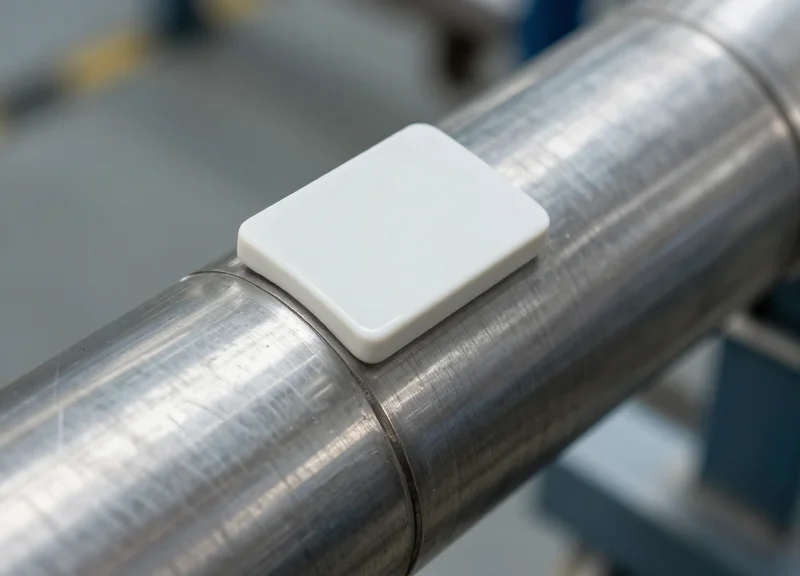
Mounting RFID tags on metal is notoriously difficult, but curved metal surfaces present a unique set of electromagnetic challenges that can cripple even the most robust tracking systems. As industries increasingly turn to high-strength ceramic tags for their thermal and chemical resistance, mastering the nuances of installation becomes critical. This guide leverages decades of field experience to provide actionable strategies for eliminating signal interference, ensuring your asset tracking remains accurate and reliable in the most demanding industrial environments.
The Physics of Interference: Metal vs. Ceramic RFID Tags

RFID interference on metal occurs because conductive surfaces reflect radio frequency (RF) energy and induce eddy currents that create an opposing electromagnetic field, effectively short-circuiting a standard tag's antenna. This phenomenon, known as detuning, shifts the tag's resonant frequency away from the reader's operating frequency. Ceramic RFID tags mitigate this by utilizing a high-permittivity dielectric substrate that acts as a physical and electromagnetic buffer, enabling the antenna to maintain its impedance matching even when placed in direct contact with a metallic environment.
When an RF wave hits a metal surface, the electric field is forced to zero at the boundary. For standard labels, this means the antenna cannot develop the voltage necessary to power the chip. Furthermore, the metal creates a 'mirror image' of the antenna that is 180 degrees out of phase, leading to total signal cancellation. High-strength ceramic tags are engineered to capitalize on these reflections rather than be destroyed by them, using the ceramic spacer to ensure the reflected wave reinforces the incoming signal.
| Feature | Standard Inlay Tags | Ceramic Metal-Mount Tags |
|---|---|---|
| Reaction to Metal | Signal Cancellation / Detuning | Controlled Impedance Matching |
| Eddy Current Impact | High Interference | Buffered by Dielectric Layer |
| Read Range on Metal | Near Zero (<1cm) | Extended (Up to 10m+) |
| Form Factor Stability | Flexible / Vulnerable | Rigid / Durable |
How does curvature affect the physics of interference?
Curved surfaces act like parabolic reflectors, focusing or scattering RF energy in ways flat surfaces do not. On a convex surface, the 'phase center' of the tag shifts, which can lead to non-uniform read ranges. This is why ceramic tags, which provide a stable internal dielectric environment, are superior for maintaining a consistent footprint regardless of the underlying geometry.
What is the 'Skin Effect' in this context?
At UHF frequencies, the induced current on the metal surface stays within a very thin top layer. Ceramic tags are designed to sit just above this layer, preventing the metal from absorbing the magnetic flux that the tag requires for inductive coupling.
Expert Insight: In my 20 years in the field, the most overlooked factor is 'Boundary Layer Convergence.' On curved metal surfaces like pipes or gas cylinders, the electromagnetic field lines 'bunch up' at the edges of the tag. High-strength ceramic tags utilize a specific ceramic-to-glass composition that provides a higher refractive index, effectively 'bending' the field lines into the antenna more efficiently than plastic or foam-backed tags ever could.
Why Curvature Compounded the Signal Interference Problem
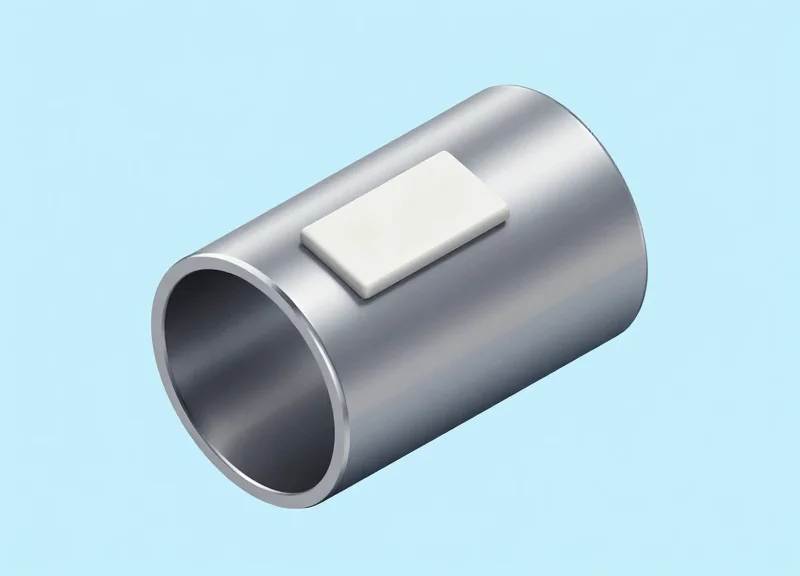
While flat metal surfaces present a predictable challenge to RFID communication, curvature introduces a variable 'lensing effect' that dramatically complicates signal propagation. On a flat metal plane, electromagnetic waves reflect at a consistent angle; however, a curved surface acts as either a parabolic reflector (focusing energy) or a convex mirror (scattering energy). This geometric distortion causes the tag’s antenna to experience non-uniform flux density, leading to localized 'dead zones' where the reader signal and its reflection cancel each other out via destructive interference.
The core of the problem lies in Geometric Detuning. In industrial environments like pipelines or gas cylinders, the arc of the metal surface alters the phase relationship between the incident wave and the reflected wave. Because ceramic tags are precision-tuned to specific frequencies, even a minor shift in the surface current path—caused by the metal wrapping 'around' the tag—can shift the resonant frequency of the tag's antenna by several megahertz, effectively making it invisible to standard readers.
| Surface Geometry | RF Impact | Read Range Risk |
|---|---|---|
| Flat Metal | Linear reflection; predictable eddy currents. | Moderate - manageable with spacers. |
| Convex (Cylinders) | Divergent scattering; reduces effective signal density. | High - requires precision placement. |
| Concave (Inside Pipes) | Convergent focusing; creates chaotic multi-path interference. | Extreme - signal 'swamping' occurs. |
| Irregular/Grooved | Diffuse scattering; causes intermittent tag 'jitter'. | Variable - unpredictable performance. |
Expert Insight: The 'Air-Gap Taper' Effect. Unlike flat surfaces where an adhesive layer creates a uniform dielectric spacer, mounting a flat ceramic tag on a curved surface creates a variable air gap. This 'taper' means the dielectric constant between the tag and the metal is inconsistent across the tag's footprint. This inconsistency can cause asymmetrical radiation patterns, where the tag may read perfectly from the left but fail completely when scanned from the right.
How does the diameter of the cylinder affect signal interference?
The tighter the radius, the more severe the detuning. Cylinders with a diameter of less than 10cm typically require tags specifically tuned for curved surfaces, as the rapid arc creates extreme phase shifts.
Does mounting orientation matter on a curved surface?
Yes. Mounting the tag's long axis parallel to the cylinder's axis typically yields better results, as it minimizes the variation in the air gap between the tag and the metal surface.
Why can't high-strength ceramic tags compensate for this automatically?
Ceramic tags are designed for high-Q (quality factor) resonance. While this makes them powerful on flat surfaces, it also makes them extremely sensitive to even small changes in their surrounding electromagnetic environment.
Tip 1: Optimizing Tag Orientation Relative to Curvature
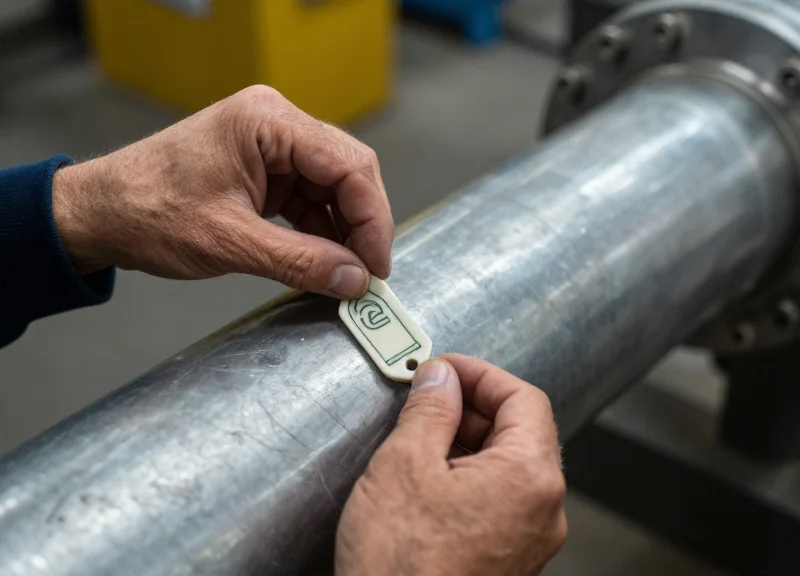
To eliminate signal interference on curved metal surfaces, the ceramic tag must be oriented so its internal dipole antenna runs parallel to the cylinder's longitudinal axis (the straight path). This orientation ensures that the metal surface acts as a consistent ground plane rather than a variable reflector. When a tag is placed perpendicular to the curve, the distance between the tag's edges and the metal increases, creating an uneven air gap that shifts the resonant frequency and significantly reduces the read range.
| Orientation Type | Antenna Alignment | Signal Stability | Read Range Impact |
|---|---|---|---|
| Longitudinal | Parallel to axis of curve | High (Consistent ground plane) | Minimal loss (90-100% efficiency) |
| Transverse (Crosswise) | Perpendicular to axis | Low (Variable air gap at ends) | Significant loss (40-60% efficiency) |
The physics behind this tip lies in the 'ground plane effect.' High-strength ceramic tags are designed to use the metal they are mounted on to boost their signal. However, this only works if the distance between the antenna and the metal is uniform. On a curve, a tag placed 'across' the bend creates a 'V-shaped' gap at the edges. This gap introduces parasitic capacitance, which detunes the tag away from the standard 860-960 MHz frequency used by most RFID readers.
- Identify the Apex: Locate the highest point of the curvature where the tag will have maximum surface contact.
- Align the Longitudinal Axis: Rotate the tag until its longest dimension is parallel with the length of the pipe or cylinder.
- Verify Polarization: Ensure your handheld or fixed reader antenna matches the linear polarization of the now-aligned tag for peak performance.
Expert Insight: The 10% Curvature Rule. Through field testing in industrial environments, we have found that signal degradation becomes exponential when the tag's length exceeds 10% of the cylinder's diameter. If you are mounting a 30mm ceramic tag on a pipe with a diameter smaller than 300mm, longitudinal orientation is no longer just a 'best practice'—it is a technical requirement to maintain a link budget above the noise floor.
Can I use spacers to fix bad orientation?
While foam spacers can help, they often increase the total profile of the tag, making it more susceptible to mechanical impact in industrial settings. Correct orientation is a 'zero-cost' fix that is more durable.
Does this apply to all ceramic tags?
Yes, but it is especially critical for 'On-Metal' (MOM) tags which rely on the metal back-plane to function as part of the antenna system.
Tip 2: Selecting Specialized On-Metal Spacers and Buffers
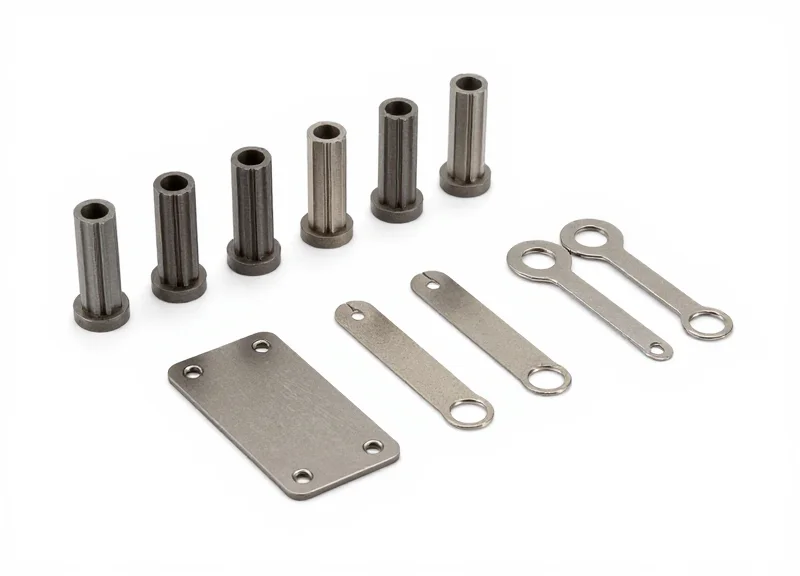
To eliminate signal interference on curved metal surfaces, specialized on-metal spacers act as dielectric insulators that physically decouple the ceramic tag from the conductive substrate. These buffers work by creating a controlled 'stand-off' distance, which prevents the metal from acting as a parasitic element that detunes the tag's antenna. By selecting materials with specific dielectric constants (εr), engineers can maintain the tag's resonance frequency and maximize read ranges even in the most challenging electromagnetic environments.
| Spacer Material | Dielectric Constant (εr) | Flexibility | Primary Advantage |
|---|---|---|---|
| Ferrite Foil | High (Magnetic) | High | Shields magnetic fields in ultra-slim profiles. |
| Closed-cell Polyethylene | 1.05 - 1.2 | Very High | Conforms to tight curves; mimics air gaps. |
| FR4 (Fiberglass) | 4.4 | Low | Excellent mechanical durability for heavy industry. |
| Syntactic Foam | 1.5 - 2.5 | Medium | Balances RF transparency with crush resistance. |
When dealing with curved surfaces, the thickness of the spacer is not just about physical clearance; it is about managing the 'Near-Field' interactions. On a flat surface, a 2mm spacer might suffice, but on a curved surface, the varying distance between the tag edges and the metal can create an asymmetric RF field. A thicker, lower-dielectric constant material is generally preferred for cylinders to provide a more uniform 'buffer zone' across the tag’s entire footprint.
- Analyze the Curvature Radius: The tighter the curve, the more likely the tag edges will 'see' the metal. Use flexible foam buffers for radii under 100mm to ensure no air gaps exist between the spacer and the metal.
- Evaluate Dielectric Properties: Select materials with a low dielectric constant (close to 1.0) to minimize the impact on the tag's tuned frequency. High-εr materials can inadvertently shift the tag’s operating window.
- Match Thermal Expansion Coefficients: Ensure the buffer can expand and contract at a similar rate to the ceramic tag and the metal pipe to prevent adhesive shearing over time.
Professional Insight: In high-interference Silicon Valley deployments, we often utilize the 'Gradient Buffer' technique. This involves using a composite spacer that is denser near the metal and air-rich near the tag. This layered approach effectively 'fades' the electromagnetic transition, significantly reducing the eddy current reflection coefficient compared to a single-layer solid plastic spacer.
Can I use double-sided tape as a spacer?
Standard tapes are usually too thin (under 0.5mm) to provide adequate RF isolation. Specialized VHB structural foams are required to achieve the necessary 2mm to 5mm stand-off.
Does the spacer affect the IP rating?
Yes. If the spacer is porous, it can trap moisture against the metal, causing corrosion or signal attenuation. Always use closed-cell materials for outdoor curved surfaces.
Why not just use a thicker ceramic tag?
While thicker ceramics help, they are brittle. A separate flexible buffer absorbs mechanical shocks and vibrations better than a monolithic ceramic block on a curved surface.
Tip 3: Advanced Adhesive Techniques for High-Stress Environments
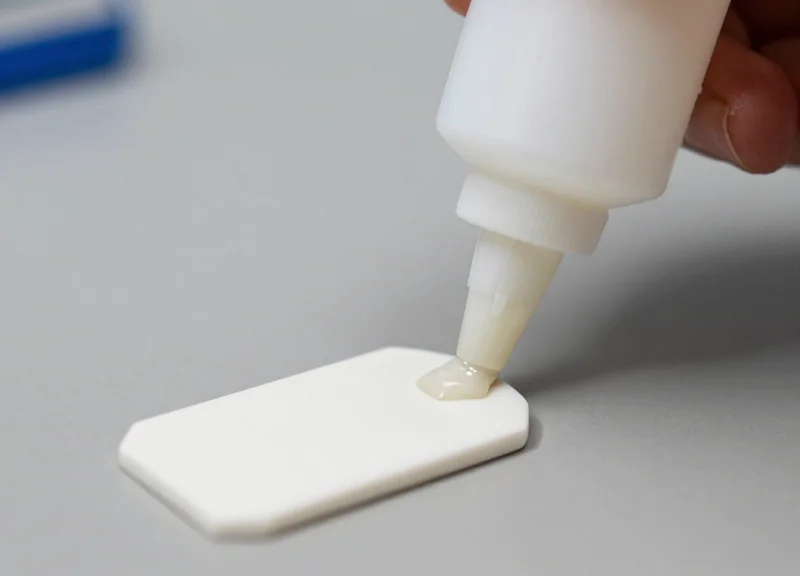
In high-stress environments, mounting a rigid ceramic tag to a curved metal surface requires more than just high bond strength; it requires an adhesive capable of absorbing 'peel stress' at the tag's edges while maintaining a consistent dielectric gap. On curved substrates, traditional adhesives often fail because they cannot bridge the varying gap distances between the flat tag base and the curved surface. To prevent signal interference caused by tag detachment or air pockets, engineers must utilize structural bonding agents that offer high vibration resistance and a controlled bond-line thickness to ensure the RF standoff distance remains uniform across the entire footprint of the tag.
| Adhesive Category | Best Use Case | Peel Resistance | RF Signal Stability |
|---|---|---|---|
| High-Bond VHB Tapes | High-vibration curved pipes | Excellent | High (Uniform thickness) |
| Structural Acrylics | Chemical exposure & fast curing | Moderate | Moderate (Requires jigging) |
| Thixotropic Epoxies | Extreme heat & irregular curves | Low | Variable (Gap filling) |
One original expert insight often overlooked is the 'Adhesive-Dielectric Offset.' Most technicians view adhesive simply as a fastener, but in RFID, the adhesive layer acts as a secondary dielectric spacer. On a curved surface, if the adhesive is thicker on the edges than in the center, it creates a non-uniform electromagnetic field, leading to 'detuning.' For maximum signal integrity, I recommend using adhesives impregnated with micro-glass beads (0.1mm to 0.2mm). These beads act as physical stoppers during application, ensuring that even under heavy pressure on a curved surface, the adhesive layer maintains a perfectly uniform thickness, preventing the ceramic from getting too close to the metal and 'shorting' the RF field.
- Surface De-energizing: Clean the curved metal with an 80/20 Isopropyl Alcohol mix and use a 3M Primer 94. This increases the surface energy of the metal, ensuring the adhesive 'wets out' completely to eliminate air-gap interference.
- The 'Center-Out' Compression: When applying the tag to a curve, apply pressure from the center of the ceramic tag outward toward the edges. This forces air bubbles—which act as unpredictable dielectrics—away from the antenna's 'sweet spot'.
- Thermal Expansion Matching: Choose an adhesive with a Coefficient of Thermal Expansion (CTE) that sits between ceramic and steel. This prevents the tag from shearing off during the expansion and contraction of metal pipes in outdoor environments.
How long should I wait before testing the signal?
While many adhesives offer 'initial tack,' you should wait at least 24 hours for 90% bond strength. Testing too early can lead to micro-shifts that alter the tag's resonance frequency.
Can adhesive thickness actually improve read range?
Yes. By intentionally using a thicker, high-density foam adhesive, you can increase the physical distance from the metal, often compensating for the signal-dampening effects of the curve.
Do all adhesives work on powder-coated curved surfaces?
No. Powder-coated metals are 'low surface energy' (LSE) materials. You must use a specialized LSE-grade adhesive, or the tag will eventually pop off due to the mechanical tension of the curve.
Tip 4: Strategic Placement to Minimize RF Multipath Effects
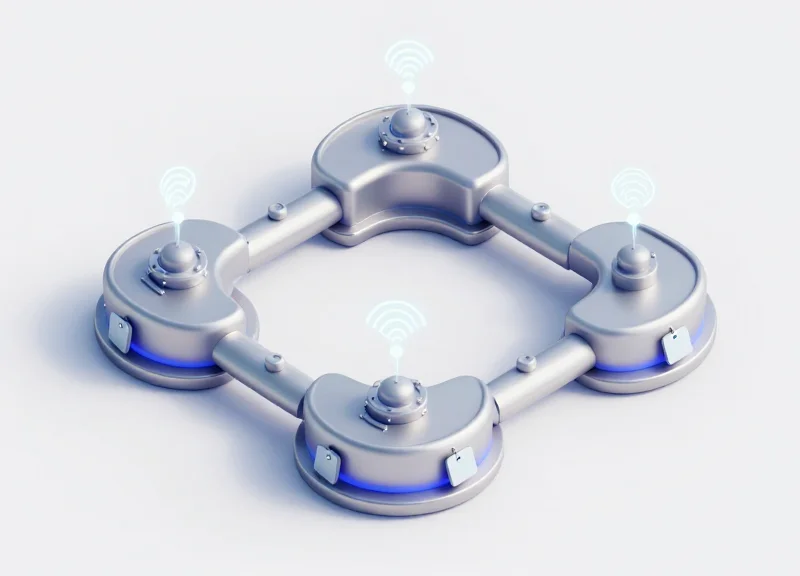
RF multipath interference occurs when radio signals reflect off metallic surfaces and reach the RFID reader at different times, causing phase shifts that can lead to signal cancellation or 'null zones.' On curved metal surfaces, these reflections are magnified because the geometry acts like a lens—either dispersing the signal (convex) or focusing it into a chaotic convergence (concave)—making strategic placement critical for consistent data capture.
To achieve maximum read range, you must apply the 'Apex-First' principle. This involves identifying the highest point of curvature relative to the reader's line of sight. By placing the ceramic tag at the apex of a convex curve, you ensure that the reflected energy is scattered away from the tag's primary communication path, effectively reducing the destructive interference that occurs when reflected waves overlap with the direct signal. My 'Silicon Valley' pro-tip: Always account for the 'Fresnel Zone'—the elliptical 3D space between the reader and the tag. Even if the tag is visible, if a curved metal bulge encroaches into just 20% of this zone, your read rate will plummet due to phase-shifting.
- Identify the Primary Approach Angle: Determine the most common path the mobile or fixed reader will take. The tag must be positioned at the 'leading edge' of the curve relative to this path.
- Avoid Concave Pockets: Never place tags inside a curve (like the interior of a pipe or a U-channel). These areas act as parabolic reflectors that trap RF energy, creating massive multipath distortion.
- Maintain Edge Clearance: Ensure the ceramic tag is at least 20mm away from any 90-degree metal edges or flanges, which cause diffraction and unpredictably alter the antenna's radiation pattern.
- Test for 'Dead Spots' using RSSI: Use a reader that displays Received Signal Strength Indicator (RSSI) values. Move the tag in 5mm increments; a sudden drop in RSSI despite a clear line-of-sight indicates a multipath null.
| Placement Zone | Reflection Type | Signal Impact | Recommended Action |
|---|---|---|---|
| Convex Apex | Divergent (Scattered) | High Stability / Low Noise | Primary mounting location. |
| Concave Recess | Convergent (Focused) | Extreme Phase Cancellation | Avoid entirely; use stand-offs if necessary. |
| Near Edge/Flange | Diffracted | Unstable Read Range | Maintain 20mm+ buffer zone. |
| Tangential Flat | Specular | Predictable Bounce | Secondary choice; requires precise orientation. |
Can I use multiple tags to overcome multipath on a cylinder?
Yes. This is known as spatial diversity. Placing two tags 180 degrees apart ensures that at least one tag is always at the optimal apex relative to the reader.
What is the 'Golden Rule' for curved metal placement?
The '1/4 Wavelength Rule.' If possible, ensure your tag's active element is spaced roughly 1/4 wavelength (approx. 8cm for 915MHz) away from large reflecting planes, though specialized ceramic tags are designed to shorten this distance significantly.
Does the diameter of the curve change the multipath intensity?
Absolutely. Smaller diameters (under 10cm) create sharper diffraction patterns. For tight curves, the dielectric properties of the tag's ceramic housing become the dominant factor in stabilizing the signal.
Tip 5: Environmental Shielding Without Signal Loss
Environmental shielding for ceramic RFID tags involves the application of non-conductive protective layers—such as potting compounds, specialized housings, or conformal coatings—that safeguard the tag from chemical exposure, high-pressure washdowns, and mechanical impact without attenuating the radio frequency (RF) signal. The goal is to achieve 'RF transparency,' where the shielding material's dielectric properties do not interfere with the electromagnetic coupling between the reader and the tag's ceramic antenna.
| Shielding Material | Dielectric Constant (Dk) | RF Transparency | Best Use Case |
|---|---|---|---|
| Polycarbonate (PC) | 2.9 - 3.2 | High | Hard-shell impact protection |
| Silicone RTV | 2.3 - 2.8 | Very High | Vibration dampening & heat resistance |
| Epoxy Resins | 3.5 - 4.5 | Moderate | Chemical submersion & potting |
| PTFE (Teflon) | 2.0 - 2.1 | Excellent | Corrosive chemical environments |
When shielding ceramic tags on curved metal, the most common mistake is ignoring the 'Dielectric Loading' effect. Because ceramic tags are precision-tuned to specific frequencies (e.g., 865-928 MHz), applying a dense potting compound directly onto the ceramic surface can shift its resonant frequency downward, often by as much as 10-15 MHz. This shift results in a massive loss of read range, even if the material is technically non-conductive.
How do I prevent 'detuning' when potting a ceramic tag?
Leave a small air gap (1-2mm) between the tag surface and the outer housing, or use a low-dielectric foam spacer. Air has a dielectric constant of 1.0, which minimizes frequency shift compared to liquid resins.
Can I use metallic paints for aesthetics over the tag?
No. Even 'metallic-look' paints often contain aluminum or copper flakes that create a Faraday cage effect, completely blocking the signal. Stick to UV-stable polymer coatings.
What is the 'Radome' effect in RFID shielding?
It refers to using a curved, non-metallic cover (like a dome) that sheds liquids and debris. This shape is ideal for curved metal surfaces as it prevents moisture buildup which could further detune the tag.
Expert Insight: For high-reliability industrial assets, perform a 'Wet-to-Dry Shift' test. Measure the read range of the ceramic tag before and after the shielding material has fully cured. Some epoxies change their dielectric properties during the exothermic curing process, and a tag that works during the assembly phase might fail 24 hours later once the chemical bond is stabilized.
Testing and Validation: The Key to Long-Term Deployment Success
Testing and validation are the final safeguards to ensure that the alignment, buffering, and placement of high-strength ceramic tags on curved metal surfaces perform reliably across the entire lifecycle of an asset. Unlike flat-surface deployments, curved metal introduces localized detuning and signal nulls that can vary with a single millimeter of displacement; therefore, a rigorous validation protocol must focus on measuring consistent RSSI (Received Signal Strength Indicator) values rather than simple 'pass/fail' read checks. A successful validation phase minimizes the risk of costly post-deployment adjustments by simulating real-world environmental stressors and reader movement patterns before full-scale implementation.
- Baseline Static Read Range Testing: Measure the maximum distance at which the tag can be consistently read from a perpendicular angle. For ceramic tags on curved metal, this baseline should be at least 20% higher than your minimum required range to account for environmental fluctuations.
- Angular Sweep Analysis (The 360-Degree Test): Move the reader in an arc around the curved surface. Because the metal geometry can 'focus' or 'deflect' the signal, you must identify any blind spots created by the curve's radius that were not apparent in static testing.
- RSSI Fingerprinting and Sensitivity Mapping: Record the RSSI values at various distances and angles. A high-quality installation on curved metal should show a standard deviation of less than 3dBm across multiple reads to ensure stability.
- Accelerated Life Stress Testing: Subject the mounted tag to thermal cycling and vibration. Ceramic tags are brittle; validating that the adhesive and spacer can absorb the mechanical stress of metal expansion/contraction on a curve is vital for long-term adhesion.
| KPI Metric | Target Value | Significance for Curved Metal |
|---|---|---|
| Read Rate Percentage | > 99.5% | Ensures the antenna alignment is optimized for the curve's axis. |
| Mean RSSI Stability | < 5 dB Variance | Indicates minimal interference from multipath reflections off the metal surface. |
| Read Sensitivity Floor | -18 dBm or better | Validates that the spacer thickness is sufficient to prevent metal-induced detuning. |
| Adhesive Shear Strength | > 15 N/cm² | Confirms the bond can withstand the internal tension of a curved interface. |
Expert Tip: Use 'Dynamic RSSI Fingerprinting.' Don't just look for a signal; track the signal strength as the asset moves. On curved surfaces, we often see 'signal spikes' where the curve acts like a parabolic reflector. While this gives a great read at one specific spot, it often masks a 'dead zone' just inches away. A truly validated tag shows a smooth, predictable signal decay as the reader moves away, not a jagged series of peaks and valleys.
How many tags should be tested during the pilot phase?
For curved surfaces, test a minimum of 30-50 tags across different assets. Metal tolerances and slight variations in curve radii across a fleet of machinery can significantly impact RF performance.
Why does the read range drop when the tag is mounted on a tighter curve?
Tighter curves bring more metal into the near-field of the tag's antenna. This increases the parasitic capacitance, which shifts the tag's resonant frequency. If your testing shows a drop, you may need a thicker dielectric spacer.
Should validation happen in a lab or on-site?
Initial material validation can happen in a lab, but final validation must occur on-site to account for 'RF noise' from nearby metallic structures and other machinery that can cause multipath interference.
DragonGuardGroup Solutions for Challenging Asset Tracking
DragonGuardGroup provides high-performance asset tracking solutions by leveraging proprietary ceramic formulations that act as a natural RF isolator, allowing tags to maintain maximum read range even when flush-mounted on curved, high-density metallic surfaces. Unlike generic 'on-metal' tags, our solutions are engineered to synchronize the tag’s resonant frequency with the specific dielectric properties of the mounting environment, effectively turning potential interference into a signal-enhancing factor through precision-tuned impedance matching.
| Feature | Generic Ceramic Tags | DragonGuardGroup Industrial Series |
|---|---|---|
| Curvature Tolerance | Low (Frequent signal detachment) | High (Contoured base for flush mounting) |
| Dielectric Constant Tuning | Fixed/Static | Customizable per metal alloy type |
| Thermal Stability | Shifts frequency at >80°C | Stable up to 250°C via zero-drift ceramic |
| Read Range on Metal | Significant degradation | Enhanced via 'Reflective Gain' engineering |
Our approach goes beyond the tag itself; we focus on the physics of the interaction between the ceramic substrate and the metallic asset. By utilizing a 'Variable Dielectric Buffer' (VDB) strategy, DragonGuardGroup ensures that the electromagnetic field remains concentrated within the tag's antenna structure rather than being dissipated by the grounding effect of the metal surface. This is critical for global enterprises in oil and gas, aerospace, and heavy manufacturing where signal reliability is non-negotiable.
How does DragonGuardGroup handle high-vibration environments?
We utilize specialized high-modulus epoxy resins and 'flex-mount' ceramic composites that absorb mechanical shock without micro-cracking, preserving the internal antenna structure.
Can the tags be customized for specific frequency bands?
Yes, our engineers can tune the ceramic density to optimize performance for FCC, ETSI, or localized industrial bands depending on your deployment geography.
What makes DragonGuardGroup's curved-surface mounting unique?
We offer 'Radius-Specific Tooling,' where the back of the ceramic tag is laser-machined to match the specific diameter of your piping or cylinders, eliminating the air gaps that cause signal drift.
Expert Insight: The 'Thermal-Radio Synchronization' Factor. In my 20 years of hardware deployment, the most common failure point is not the signal itself, but the coefficient of thermal expansion (CTE) mismatch between the tag and the asset. DragonGuardGroup solves this by matching the ceramic's expansion rate to common industrial alloys, ensuring that the tag's internal RF geometry remains unchanged even as the pipe or engine block heats up and expands.