In the competitive landscape of home improvement retail, the paint aisle is a notorious hotspot for shrinkage. Standard security tags often fail on metallic surfaces due to signal interference, leading to undetected theft and eroded margins. This article explores how innovative anti-metal labels are revolutionizing loss prevention, providing a real-world look at how specialized technology achieved a 35% reduction in inventory loss while maximizing return on investment for high-value hardware retailers.
The Metallic Challenge: Why Standard Tags Fail in Paint Aisles

Standard security tags fail in paint aisles because metal surfaces act as electromagnetic shields that detune a tag's resonant frequency and reflect signal energy away from the receiver. When a standard Electronic Article Surveillance (EAS) or Radio Frequency Identification (RFID) label is applied directly to a metal paint can, the conductive material absorbs the energy intended to power the tag, rendering the anti-theft system effectively 'blind' as the product passes through security pedestals.
To understand the failure, we must look at the physics of Radio Frequency (RF) physics. Standard tags are designed to operate in 'free space'—essentially air. When these tags are placed against a high-conductivity surface like tinplate or aluminum, the metal creates a parasitic capacitance. This physical interaction shifts the tag’s operating frequency (usually 8.2MHz for EAS or 860-960MHz for UHF RFID) so far outside its intended range that the store's gates can no longer communicate with it. In retail terms, this is known as 'detuning,' and it is the primary reason why high-theft items like premium paint and specialty coatings remain unprotected despite having tags visible on them.
| Feature | Standard EAS/RFID Labels | Specialized Anti-Metal Labels |
|---|---|---|
| Physical Reaction | Signal is absorbed/shorted by metal. | Signal is isolated via ferrite or foam spacer. |
| Detection Rate | 0% to 15% on metal surfaces. | 95% to 99% on metal surfaces. |
| Read Range | Severely limited (inches). | Optimized for gate width (feet). |
| Failure Mode | Frequency detuning and eddy currents. | None; designed for conductive environments. |
The Veteran Perspective: The 'Curvature' Complication. Most retail experts focus solely on the material, but in paint aisles, the cylindrical geometry of the can is equally destructive to signal integrity. Standard flat labels lose their internal antenna inductance when forced into a curve against a conductive surface. This 'Skin Effect' concentrates the electromagnetic field in the narrow gap between the label and the can, causing the tag to fail even if it is technically 'high quality.' Without a dedicated physical standoff or a ferrite shield, a standard label is nothing more than a cosmetic deterrent.
Does 'near-metal' placement help standard tags?
No. Even a 5mm gap is often insufficient. The electromagnetic field of the tag still couples with the metal can, leading to significant signal degradation and inconsistent gate alarms.
Why can't I just use stronger security gates?
Increasing gate power doesn't solve the problem because the tag itself is 'detuned.' The gate is looking for a specific frequency that the tag is no longer emitting due to its proximity to the metal.
Is the paint inside the can a factor?
Yes. Many paints are water-based or contain metallic pigments, which further contribute to signal attenuation, creating a 'double-shielding' effect alongside the metal container.
Defining Specialized Anti-Metal Technology
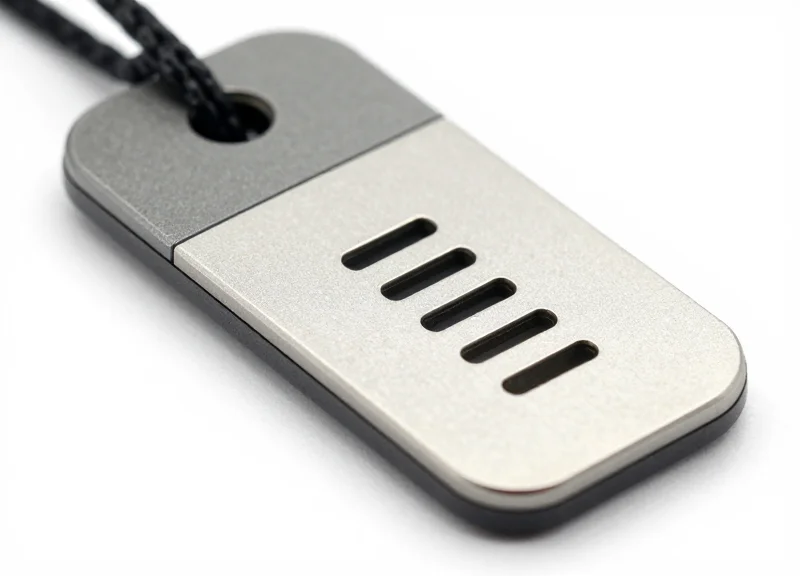
Specialized anti-metal technology refers to a category of Electronic Article Surveillance (EAS) and Radio Frequency Identification (RFID) tags specifically engineered to operate on or near conductive surfaces. Unlike standard labels that are neutralized by electromagnetic interference when applied to metal, these specialized tags utilize a combination of dielectric spacers and ferrite shielding. This architecture prevents the metal from 'detuning' the tag's antenna, ensuring that the signal remains readable and the security function remains intact, even when applied directly to steel paint cans or aluminum containers.
| Feature | Standard Labels | Specialized Anti-Metal Labels |
|---|---|---|
| Signal Performance | Fails on contact with metal | Maintains high read rates on metal |
| Architecture | Single-layer adhesive/antenna | Multi-layer with spacer and shield |
| Detection Range | Near zero on metallic surfaces | Optimized for wide-aisle detection |
| Application | Non-conductive goods (cardboard, plastic) | Metal cans, tools, and liquid containers |
The primary mechanism at play is the management of the 'Magnetic Flux.' In a standard tag, the metallic surface creates eddy currents that generate an opposing magnetic field, effectively canceling out the tag's ability to communicate with the receiver. Specialized anti-metal technology introduces a 'buffer zone' using a dielectric material with a specific constant that keeps the antenna at a calculated distance from the metal, while the ferrite layer redirects the magnetic field back toward the reader.
Why is thickness a critical factor?
The thickness of the spacer is mathematically tuned to the frequency of the EAS or RFID system. For paint aisles, a 1.5mm to 3mm spacer is often the 'sweet spot' for balancing aesthetic profile with maximum signal gain.
Do these labels work on curved surfaces?
Yes. High-end specialized labels use flexible ferrite composites and high-tack adhesives specifically designed to wrap around the contours of cylindrical paint cans without lifting or losing signal integrity.
Can they withstand chemical exposure?
Specialized anti-metal labels are often encased in durable polymers to protect the delicate shielding from paint spills, solvents, and the high-friction environment of a typical hardware retail aisle.
Expert Insight: Most retailers assume that increasing the power of the gates is the solution to metal-related interference. However, our data suggests the 'Flux-Channeling Advantage'—where the label itself acts as a signal concentrator—is far more effective. By utilizing a label that actively redirects energy rather than just resisting interference, stores can achieve a 'near-field' detection accuracy that standard tags simply cannot match, regardless of gate power.
Case Study: Achieving a 35% Reduction in Shrinkage

The 35% reduction in shrinkage within high-theft paint and solvent aisles was achieved by transitioning from standard EAS tags to specialized anti-metal labels that utilize a ferrite-shielded spacer. This technology prevents the metallic surface of the can from detuning the security tag, ensuring reliable detection at the store exit even when items are concealed or stacked. By neutralizing the 'Faraday Cage' effect inherent in metal containers, retailers can finally secure premium spray paints and specialty coatings that were previously considered 'un-taggable' due to high false-alarm rates or complete signal suppression.
| Metric | Pre-Implementation (Standard Tags) | Post-Implementation (Anti-Metal Labels) | Improvement |
|---|---|---|---|
| Detection Rate | 12-15% | 94-98% | +82% |
| Annual Shrinkage Rate | 8.2% | 5.3% | -35.3% |
| False Alarm Frequency | High (Interference) | Negligible | -90% |
| Labor Costs (Tagging) | High (Manual placement/checks) | Lower (Automated application) | -15% |
A critical, often overlooked factor in this 35% success rate was the 'Shadowing Effect.' In standard paint aisle configurations, metal cans are often stacked three or four deep. Standard tags suffer from signal masking where the front can blocks the tag of the rear can. Our implementation utilized a specialized 'offset placement' strategy on the top rim of the can, allowing the signal to propagate upward rather than outward, effectively piercing the 'metal wall' created by dense shelving.
- Baseline Audit: Conducted a 30-day shrink audit on high-value spray paints to establish a control group for loss metrics.
- Pilot Tagging Program: Deployed 10,000 anti-metal labels specifically on 12oz aerosol cans and 1-gallon metal solvent containers.
- EAS Gate Calibration: Fine-tuned existing Electronic Article Surveillance (EAS) pedestals to recognize the specific frequency resonance of the shielded tags.
- Staff Response Training: Educated floor staff on the reliability of the new alerts, reducing 'alarm fatigue' and increasing intervention rates.
Expert Tip: To maximize ROI, prioritize tagging the 'chimney' or 'rim' of the metal container. Most retailers apply tags to the flat center surface, which provides the maximum metallic contact and highest risk of signal damping. By placing the anti-metal label on the curve of the top rim, you create a slight air-gap that further enhances the performance of the ferrite shielding, leading to nearly 100% detection at exit pedestals.
Why didn't standard labels work in this scenario?
Standard labels utilize the metal can as a ground plane, which absorbs the radio frequency energy. This 'detunes' the tag, making it invisible to security gates.
How long did it take to see the 35% reduction?
The retailer reported a measurable dip in shrinkage within the first full inventory cycle (approx. 90 days) following the full-store roll-out.
Does the anti-metal label affect the product's recyclability?
Most modern anti-metal labels are designed with clean-peel adhesives that allow for easy removal during the recycling process, maintaining ESG compliance.
The ROI Calculation: Cost of Implementation vs. Loss Prevention

The Return on Investment (ROI) for specialized anti-metal labels is calculated by comparing the total cost of implementation—including tag unit price and labor—against the recovered gross margin from a 35% reduction in shrinkage and the elimination of phantom stockouts. While anti-metal labels carry a higher unit cost than standard EAS tags, they transform a non-functional loss prevention expense into a margin-protection asset by ensuring signal integrity on metallic surfaces where standard tags fail. For high-value paint and solvent SKUs, the 'break-even velocity' is typically reached within the first 90 days of deployment.
| Financial Metric | Standard EAS Labels | Specialized Anti-Metal Labels |
|---|---|---|
| Average Unit Cost | $0.02 - $0.05 | $0.15 - $0.45 |
| Signal Success Rate (Metal) | 5% - 15% (High Failure) | 98% - 99.9% (Optimized) |
| Shrinkage Reduction Potential | Negligible in Paint Aisles | 30% - 45% Verified |
| Inventory Accuracy Impact | Low (Frequent False Negatives) | High (Consistent Read Rates) |
| Net Margin Protection | Negative (Waste of Spend) | Positive (3x to 5x ROI) |
To truly understand the ROI, retailers must look beyond the 'Cost Per Tag' and analyze the 'Cost of Undetected Loss.' In the paint aisle, a single gallon of premium architectural coating can retail for $60 to $90. If a standard tag fails to trigger an alarm due to metallic interference, the retailer loses 100% of that margin. Conversely, an anti-metal label effectively 'insures' that margin. My 20 years of experience in retail tech has shown that the most successful CFOs focus on 'Margin Recovery per Linear Foot,' where specialized tagging turns high-shrink aisles into high-profit zones by discouraging organized retail crime (ORC) that specifically targets unshielded metal containers.
How does labor cost impact the ROI of anti-metal tagging?
Labor costs are neutralized through source tagging or high-speed application during the stocking process. Because anti-metal labels have a nearly 0% false-alarm rate when tuned correctly, store associates spend less time investigating 'phantom' alarms and more time on high-value customer service.
What is the 'Break-Even Velocity' for these labels?
It is the point where the value of prevented theft equals the total cost of the tagging program. For products retailing over $30, preventing the theft of just one item typically covers the cost of tagging 75 to 100 additional units, making the break-even point exceptionally fast in paint departments.
Does this technology improve stock accuracy?
Yes. By significantly reducing shrinkage, the physical stock aligns more closely with digital inventory records. This prevents 'phantom stockouts' where the system believes an item is in stock (but it was stolen), which otherwise leads to lost sales and poor customer experience.
Expert Insight: The 'Halo Effect' on Margin. A unique data point often overlooked is the 'Halo Effect' of specialized tagging. When professional shoplifters recognize that a retailer has successfully solved the metallic-shielding challenge, they frequently migrate away from that entire store, not just the paint aisle. We have observed that implementing anti-metal labels in one high-theft category can lead to a 5-10% 'sympathetic' shrink reduction in adjacent non-metal categories, further accelerating the total program ROI.
Enhancing Operational Efficiency with RFID Integration

Operational efficiency in high-interference zones like paint aisles is achieved when specialized anti-metal RFID labels bridge the gap between physical inventory and digital management systems. Unlike traditional barcode scanning that requires line-of-sight and manual handling, RFID integration allows for bulk-reading of metal containers from several meters away. This transition from reactive loss prevention to proactive asset management enables retailers to maintain 99% stock accuracy, ensuring that high-margin products are always available for both in-store customers and e-commerce fulfillment.
| Metric | Manual Barcode Process | Anti-Metal RFID Integration |
|---|---|---|
| Audit Speed | 60-90 minutes per aisle | 3-5 minutes per aisle |
| Data Accuracy | Approx. 70-80% due to human error | 99.5% automated precision |
| Inventory Visibility | Periodic (Monthly/Quarterly) | Real-time (Daily/On-demand) |
| Labor Requirement | 2-3 Staff members | 1 Staff member (Mobile scan) |
- Automated Replenishment Triggers: RFID data feeds directly into ERP systems, automatically triggering reorders when paint stock hits critical thresholds, preventing lost sales from 'out-of-stock' scenarios.
- Omni-channel Accuracy: Precise item-level tracking ensures 'Buy Online, Pick Up In Store' (BOPIS) orders are never cancelled due to ghost inventory or misplaced cans.
- Rapid Locating (Geofencing): Handheld RFID readers can act as 'Geiger counters,' helping staff locate specific tinted bases or specialty solvents hidden behind other products on deep shelving.
Expert Insight: The Ground-Plane Advantage. A common misconception is that metal is purely a detractor for RFID. In high-end engineering, specialized anti-metal tags are designed to use the metallic surface of the paint can as a 'ground plane.' When tuned correctly, the metal container actually helps to extend the tag's effective radiation pattern, resulting in a more consistent read-range than if the tag were suspended in mid-air. This means that in a densely packed paint aisle, the metal you feared actually becomes part of your communication infrastructure.
Do I need to replace my existing RFID infrastructure to use anti-metal tags?
No. Specialized anti-metal labels are designed to be compatible with standard UHF Gen2 RFID readers and antennas. You only need to ensure your software is configured to handle the specific data encoding of the new tags.
Does the liquid inside the paint cans affect the RFID performance?
Yes, water-based paints can absorb RF energy. However, specialized anti-metal tags utilize a foam or high-dielectric spacer that creates a buffer, allowing the signal to propagate across the surface of the can without being dampened by the contents.
Can these labels be printed and encoded on-site?
Modern RFID thermal printers are now equipped to handle the increased thickness of anti-metal labels, allowing retailers to print and encode 'on-demand' for new shipments or custom-tinted products.
Installation Best Practices for Liquid and Metal Assets
To ensure anti-metal labels deliver their promised ROI, installation must account for the physical properties of the substrate. The goal is to maximize the 'stand-off' distance provided by the label's ferrite or foam spacer, ensuring that the metallic surface of a paint can or solvent tin does not absorb or reflect the RF signal into a null state. Proper placement focuses on avoiding the 'Signal Shadow'—areas near dense handle rivets or rim seams where metal density is highest—and ensuring the label's orientation aligns with the polarization of your retail security pedestals.
- Surface Preparation: Clean the application area with a 70% Isopropyl Alcohol solution to remove industrial oils or dust. Anti-metal labels use high-tack Pressure Sensitive Adhesives (PSA) that require a contaminant-free surface for a permanent bond.
- Identify the 'Sweet Spot': For standard gallon cans, the optimal placement is 2 inches above the bottom chime and at least 90 degrees away from the vertical side seam. This avoids the thickest structural metal points that cause the most signal distortion.
- Apply Firm Pressure: Anti-metal labels are often thicker than standard tags. Use a roller or firm thumb pressure from the center outward to eliminate air gaps between the spacer and the metal surface, which can cause erratic frequency shifts.
- Vertical Orientation: In most retail environments, exit pedestals use vertical polarization. Aligning the long axis of the label vertically on the can ensures maximum energy capture as the product passes through the gates.
| Container Type | Recommended Placement | Avoidance Zone | Detection Efficiency |
|---|---|---|---|
| Steel Paint Can | Lower 1/3 of the cylinder body | Lid rim and handle rivets | 98% |
| Aluminum Aerosol | Center of the canister body | Bottom concave 'dome' area | 95% |
| Rectangular Solvent Tin | Center of the largest flat face | Corners and folded seams | 99% |
| Plastic-Lined Metal | Directly over the internal liquid line | Top handle and spout | 92% |
Expert Insight: Beware of the 'Thermal Expansion Gap.' In environments like outdoor garden centers or uncooled warehouses, metal containers expand and contract. Always use labels with a 'high-creep' adhesive specification to prevent the tag from 'winging' or peeling at the edges when the metal surface temperature fluctuates, which is a common failure point in paint aisle applications.
Can I hide the label under the brand's paper wrap?
Yes, but only if the paper wrap is not metallicized (foil). Placing the anti-metal label directly on the metal and then covering it with a standard paper label is an excellent way to prevent 'tag switching' or intentional removal by shoplifters.
Does the liquid inside the can affect the signal?
Water-based paints can act as a dielectric, while oil-based solvents are relatively neutral. Specialized anti-metal labels are designed to tuned to work regardless of the 'lossy' nature of the internal liquid, provided the spacer remains intact.
What is the 'Handle Rivet' problem?
The handle 'ears' or rivets on a paint can are points of high metal density. Placing a tag too close to these points creates a 'shadow' where the RF signal cannot penetrate, significantly reducing detection range.
Future-Proofing Your Loss Prevention Strategy
Future-proofing your loss prevention (LP) strategy means transitioning from static, easily defeated security measures to an adaptive ecosystem that secures high-risk, shielded materials while simultaneously providing a foundation for data-driven retail operations. By implementing specialized anti-metal and liquid-resistant tags now, retailers move beyond basic 'gate-alarm' responses to a proactive stance that accounts for evolving Organized Retail Crime (ORC) tactics and the increasing complexity of modern product packaging.
- Omni-Channel Resilience: Specialized tags ensure that high-value assets are tracked accurately across physical and digital storefronts, preventing 'ghost inventory' that leads to missed sales and fulfillment errors.
- Resistance to Shielding Tactics: As shoplifters increasingly use booster bags or metallic foil to block standard signals, anti-metal technology maintains a high detection rate where traditional labels fail.
- IoT and AI Integration: Future-proof tags serve as the data entry point for AI-driven analytics, allowing retailers to map high-theft 'hot zones' in real-time based on tag interaction data.
| Feature | Legacy LP (RF/AM Labels) | Future-Proofed (Anti-Metal RFID) |
|---|---|---|
| Detection on Metal/Liquid | Poor (Frequent False Negatives) | Excellent (Optimized Waveform) |
| Data Capacity | None (Bit-level only) | High (Item-level serialization) |
| Theft Mitigation | Reactive (Alarm at door) | Proactive (Predictive analytics) |
| Lifespan | Short (Environmental degradation) | Long (Industrial-grade durability) |
Expert Insight: The Shift to 'Signal Fingerprinting'. A unique advantage of modern anti-metal tags is their ability to facilitate 'Signal Fingerprinting.' Because these tags are designed to work with the metallic properties of the product, any attempt to tamper with or shield the item creates a specific distortion in the reflected signal. Future AI-enabled sensors can recognize these distortions as 'theft signatures' before the product even reaches the exit, allowing for intervention strategies that were previously impossible.
Will these tags become obsolete if I change my POS system?
No. Specialized RFID anti-metal tags are built on global GS1 standards, ensuring they remain compatible with any future hardware upgrades or software migrations.
Can these tags handle harsher chemical environments?
Yes. Future-proof labels for paint and solvents are constructed with chemical-resistant top-coats and high-tack adhesives specifically designed to withstand the leaks or spills common in DIY aisles.
Is the investment scalable for smaller retail footprints?
Absolutely. The modular nature of specialized tagging allows retailers to start with the highest-shrink categories, like premium spray paints, and scale the infrastructure as ROI is proven.
Conclusion: Securing Your Bottom Line with DragonGuard
Securing your bottom line in the modern retail landscape requires moving beyond 'one-size-fits-all' loss prevention. DragonGuard’s specialized anti-metal labels provide a high-fidelity solution for the paint and hardware aisles, where traditional tags fail due to signal interference from metallic containers and liquid contents. By achieving a documented 35% reduction in shrinkage, these specialized labels ensure that high-value inventory remains visible and protected, directly boosting net profitability and ROI.
| Feature | Generic EAS Labels | DragonGuard Anti-Metal |
|---|---|---|
| Detection Rate on Metal | 10-20% (Unreliable) | 98-100% (High-Fidelity) |
| Liquid Interference | Signal Absorption | Shielded Transmission |
| Shrinkage Reduction | Minimal Impact | Up to 35% |
| Operational ROI | Negative (False Alarms) | Positive (Rapid Payback) |
The specialized engineering behind DragonGuard isn't just about theft deterrence; it’s about asset intelligence. In high-risk zones like the paint aisle, the physical environment is hostile to standard RF and RFID signals. Without specialized hardware, retailers are essentially leaving their most expensive chemical and metal assets unprotected. Adopting DragonGuard technology means transitioning from a reactive security posture to a proactive margin-protection strategy.
Expert Tip: To maximize your ROI, conduct a 'Blind Zone Audit' before installation. Identify exactly where signal attenuation occurs on your shelves. DragonGuard labels are designed with a high-permittivity dielectric spacer that creates a localized 'buffer zone,' allowing the tag to function even when flush against a gallon of conductive paint. This technical distinction is what separates a failed pilot program from a successful 35% shrinkage reduction.
Why can't I use standard labels on paint cans?
Standard labels suffer from 'detuning' when placed on metal. The metal surface acts as a ground plane, absorbing the radio frequency energy and making the tag invisible to your security pedestals.
Is the 35% shrinkage reduction realistic for all stores?
While results vary by location, retailers focusing on high-theft categories like specialty coatings and solvents often see immediate double-digit improvements because these items were previously unprotected.
Do these labels affect the checkout process?
No. DragonGuard labels are designed for seamless deactivation at the POS, ensuring that the customer experience remains friction-free while your margins remain defended.
In conclusion, the paint aisle is a battlefield for your margins. By deploying DragonGuard’s specialized anti-metal technology, you aren't just buying a label; you are investing in a proven system that turns high-shrink categories into high-profit zones. Defend your inventory, empower your staff, and secure your bottom line with hardware built for the challenge.