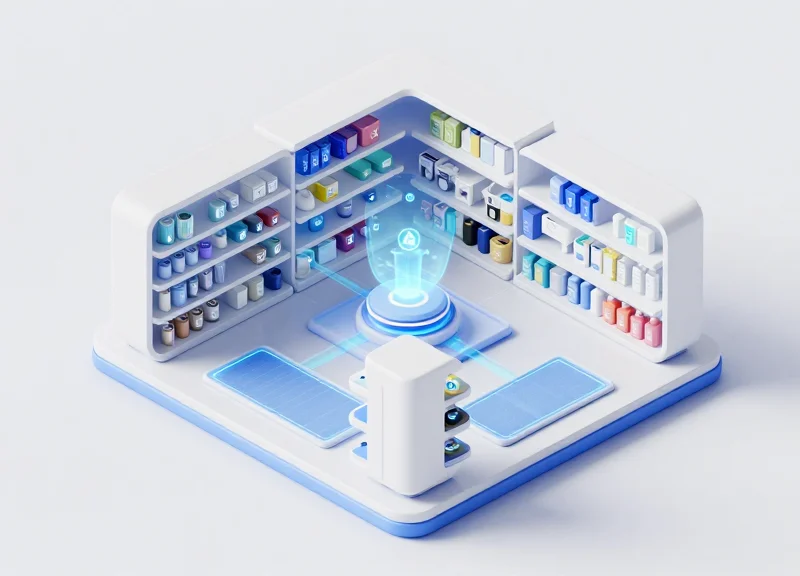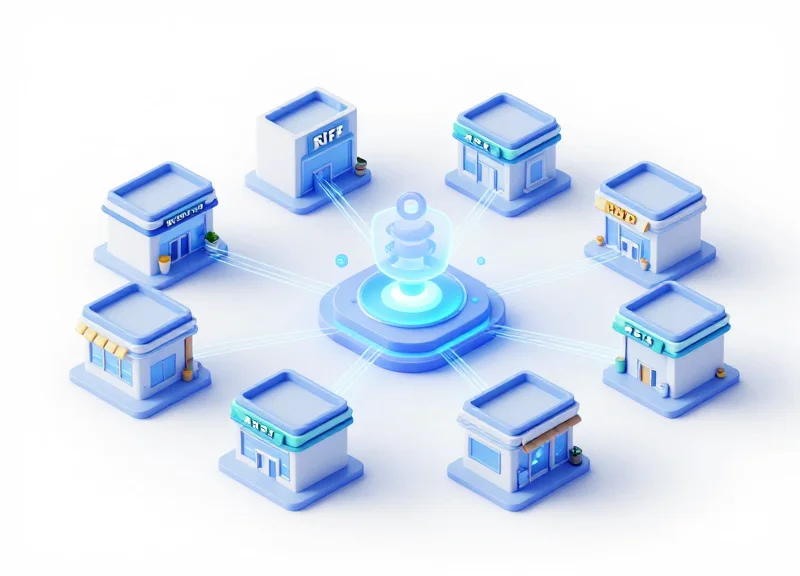
In the rapidly evolving retail landscape of 2026, the gap between physical inventory and digital records is no longer acceptable. For multi-site retailers, the challenge isn't just capturing RFID tag data, but orchestrating that data across hundreds of locations without creating disconnected information islands. RFID middleware serves as the critical 'nervous system' of your operation, filtering raw data into actionable business intelligence. However, choosing the wrong platform can lead to fragmented data silos that hinder omnichannel performance and customer satisfaction. This guide outlines the five non-negotiable factors for selecting a middleware solution that ensures seamless data flow and operational excellence across your entire retail footprint.
The Strategic Role of RFID Middleware in 2026
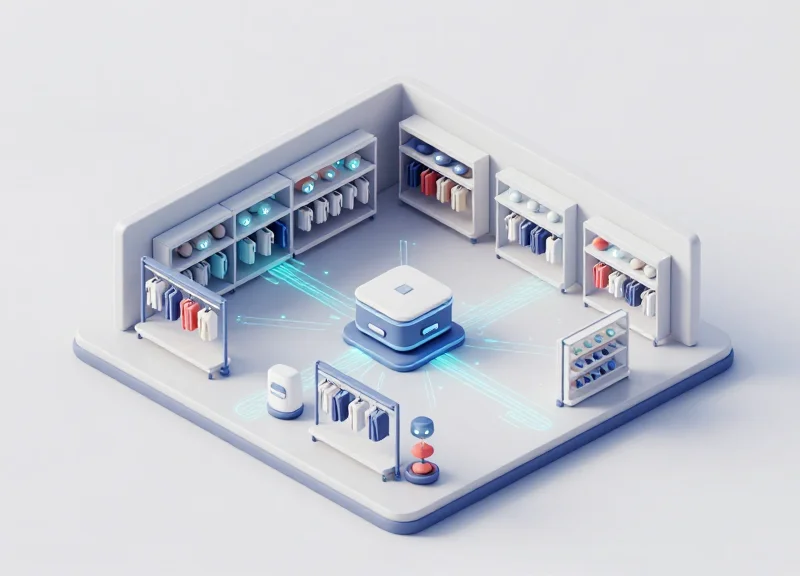
In the 2026 retail landscape, RFID middleware serves as the 'intelligent nervous system' of the enterprise. It is no longer just a bridge between readers and databases; it is a decentralized orchestration layer that processes millions of data points at the edge to provide a single, immutable source of truth. For multi-site retailers, its strategic role is to eliminate 'data latency silos' by harmonizing raw sensor inputs with high-level ERP logic, ensuring that a product scanned in a London flagship store is instantly reflected in the global availability pool for an e-commerce customer in New York.
| Feature | Legacy Middleware (Pre-2022) | Strategic Middleware (2026+) |
|---|---|---|
| Primary Function | Basic data filtering and device management | Edge-based event processing and AI inference |
| Architecture | Centralized/Monolithic | Cloud-native, Microservices-based |
| Data Handling | Batch processing to ERP | Real-time streaming via MQTT/Kafka |
| Decision Making | Human-reliant reports | Autonomous inventory reconciliation |
The shift toward 'Autonomous Retail' necessitates a middleware that does more than just report 'what' is on the shelf. Modern middleware now provides 'contextual intelligence'—interpreting the movement of goods to predict stockouts before they happen and identifying shipping errors in real-time at the loading dock. My unique industry observation for 2026 is the rise of 'Latency-Adjusted Inventory Truth.' This is the capability of middleware to calculate the probability of item availability based on the physical distance and transit time between multi-site nodes, effectively turning static data into a dynamic logistical asset.
Why is middleware more important than the hardware itself in 2026?
While hardware has become commoditized, the middleware is where the value is extracted. It manages the 'data noise' from thousands of sensors and ensures only actionable insights reach the executive dashboard, preventing system-wide performance bottlenecks.
Does 2026 middleware support cross-brand data sharing?
Yes, strategic middleware now utilizes standardized EPCIS 2.0 protocols to allow secure, permissioned data sharing across the supply chain, enabling retailers to track a product's journey from the factory floor to the store shelf seamlessly.
How does it help in eliminating data silos?
By acting as a universal translator, it breaks down the walls between legacy POS systems, warehouse management software (WMS), and modern e-commerce platforms, ensuring every department views the same real-time inventory count.
The High Cost of Data Silos in Multi-Site Operations
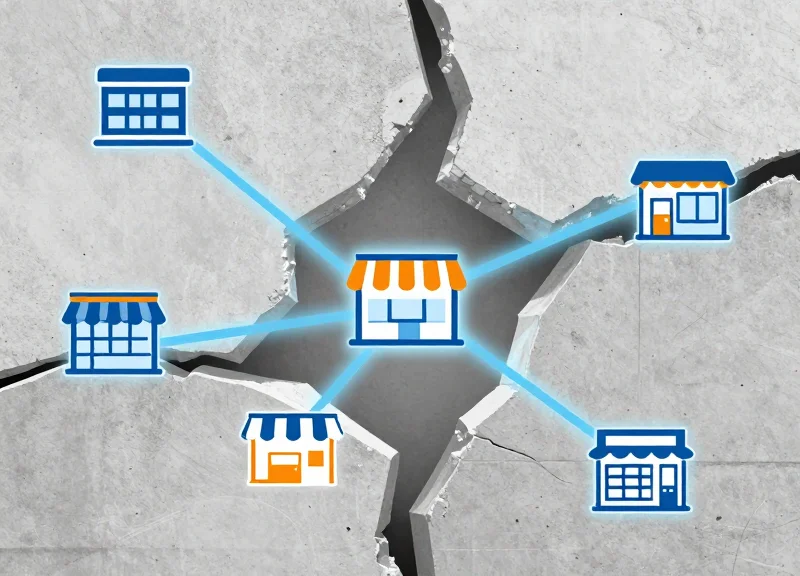
In a multi-site retail environment, data silos occur when RFID tag data is processed in isolation at the store level without real-time synchronization with a centralized enterprise resource planning (ERP) or warehouse management system (WMS). This fragmentation leads to 'Inventory Drift'—a phenomenon where digital records and physical reality diverge at an average rate of 2-3% per month. By the end of a fiscal quarter, a retailer without unified middleware effectively 'loses' visibility of over 10% of their stock, resulting in massive capital tie-ups in safety stock that shouldn't be necessary.
| Operational Metric | Siloed Data Impact (Traditional) | Unified RFID Middleware Impact (2026 Standard) |
|---|---|---|
| Inventory Accuracy | 65% - 75% (Manual/Periodic) | 98% - 99.8% (Real-Time) |
| BOPIS Fulfillment Rate | 15% Cancellation Rate due to Stockouts | < 1% Cancellation Rate |
| Labor Allocation | High (Manual Cycle Counting) | Low (Automated Exception-Based Tracking) |
| Markdown Rates | High (Due to 'Lost' Seasonal Stock) | Low (Dynamic Stock Rebalancing) |
What is the financial impact of 'Ghost Inventory'?
Ghost inventory refers to items recorded in the system that aren't actually on the shelf. In multi-site operations, this causes replenishment algorithms to stop ordering needed items, leading to lost sales. Industry data suggests ghost inventory costs retailers roughly $1.1 trillion globally in missed opportunities.
How do silos break the omnichannel customer experience?
When a customer sees an item 'In Stock' online but finds the shelf empty because the store's local RFID data hasn't updated the web-store, brand loyalty evaporates. In 2026, a single failed 'Buy Online, Pick Up In-Store' (BOPIS) incident can decrease a customer's lifetime value by up to 30%.
Why is data latency a hidden cost?
Data latency—the delay between a tag being read and the record being updated globally—leads to 'double selling' during high-traffic events like Black Friday. Without a low-latency middleware, the cost of customer service recovery and expedited shipping often exceeds the profit margin of the sale itself.
Expert Insight: The AI Poisoning Effect. As we move into 2026, the most dangerous cost of data silos is not just lost stock, but 'Automated Intelligence Poisoning.' Modern retail relies on AI-driven predictive replenishment. If your RFID middleware provides fragmented or 'noisy' data from different sites, your AI models will learn from inaccuracies, leading to 'hallucinated demand.' This results in over-ordering the wrong products for the wrong locations, a mistake that can take months of aggressive markdowns to correct. Strategic middleware is no longer just a data filter; it is the truth-engine for your brand's intelligence.
Factor 1: Edge Computing and Decentralized Processing
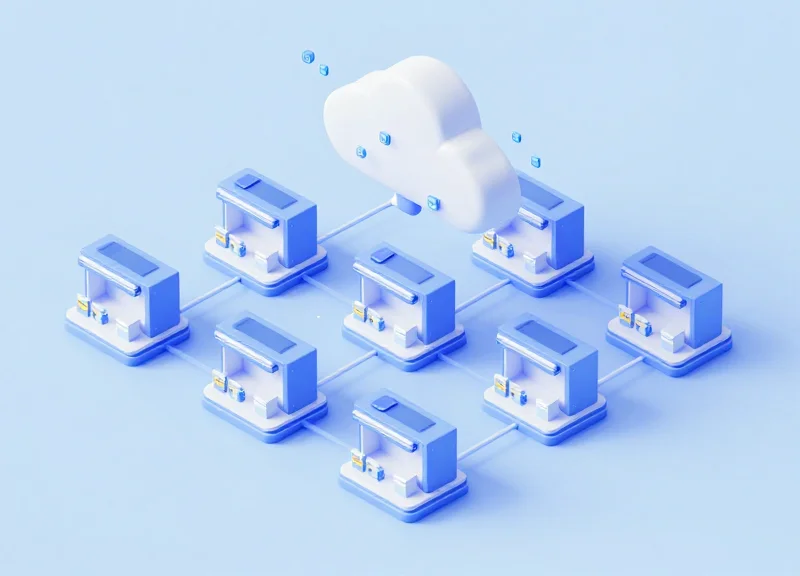
By 2026, the volume of RFID data generated by item-level tagging across global retail networks will exceed the capacity of traditional cloud-only architectures. Edge computing refers to the middleware's ability to filter, deduplicate, and process RFID tag data locally at the physical store level before transmitting summarized, actionable intelligence to the central cloud. This decentralized approach eliminates the 'latency tax'—the delay caused by data traveling to a remote server and back—which is critical for real-time applications like smart mirrors, automated checkout, and instant stock lookups.
| Operational Metric | Cloud-Only Middleware | 2026 Edge-Native Middleware |
|---|---|---|
| Processing Speed | Latency of 500ms to 2s per scan | Ultra-low latency (<20ms) |
| Network Resilience | System fails during ISP outages | Store stays operational offline |
| Bandwidth Usage | High (constant raw data stream) | Low (compressed insights only) |
| Data Integrity | High risk of packet loss | Local buffering ensures 100% capture |
A unique insight for 2026 is the 'Local-First Autonomy' mandate. As retailers transition to 'Dark Store' fulfillment models—where physical locations serve as micro-distribution hubs—middleware must guarantee 72 hours of complete local autonomy. This means the middleware must host a local state of inventory that can power ship-from-store and click-and-collect services even if the regional wide-area network (WAN) is severed. Relying on the cloud for every tag-read verification is no longer a viable strategy for multi-site retailers who cannot afford a single point of failure across hundreds of locations.
Why is sub-20ms latency critical for modern RFID middleware?
In high-velocity environments like automated self-checkout, any delay over 50ms is perceptible to the user and can cause 'scan-skipping' where items are missed, leading to shrinkage and customer frustration.
How does decentralized processing help eliminate data silos?
By processing data at the edge, middleware ensures that local inventory counts are always the 'source of truth' for that specific site, preventing the discrepancies often found when waiting for asynchronous cloud updates.
Does edge computing require specialized hardware?
No, modern 2026 middleware is typically containerized (using Docker or Kubernetes) and can run on existing store servers, intelligent RFID readers, or low-cost IoT gateways.
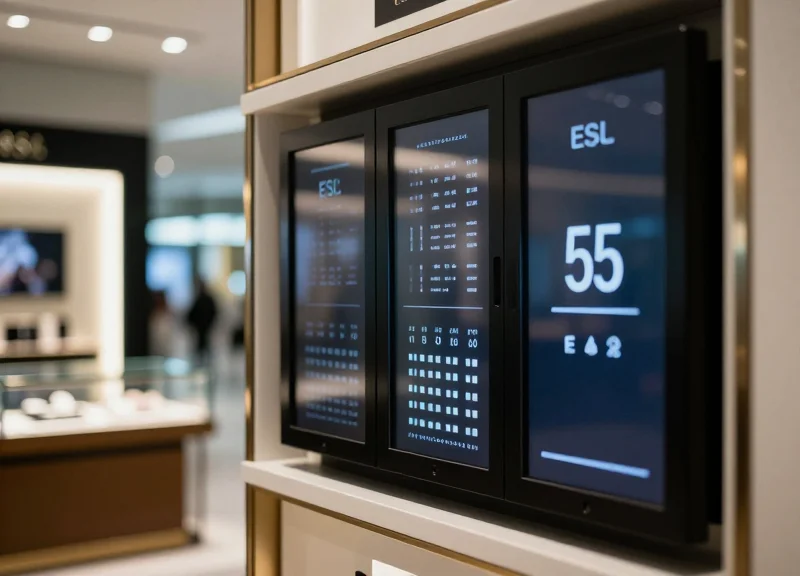
Factor 2: API-First Architecture and ESL Integration

In 2026, the best RFID middleware is defined by an API-first architecture, where the system is built from the ground up to communicate with external applications rather than treating integration as an afterthought. For multi-site retailers, this architecture is the 'connective tissue' that links real-time RFID inventory counts with Electronic Shelf Labels (ESL) and ERP systems. By prioritizing RESTful or GraphQL APIs, middleware allows for the instantaneous flow of data, ensuring that the price on the shelf always matches the stock level and the digital storefront, effectively eliminating the risk of overselling or pricing discrepancies.
| Feature | Legacy Middleware (Middleware-Lite) | Modern API-First Middleware |
|---|---|---|
| Integration Method | Proprietary Connectors / Batch File Uploads | Standardized REST/GraphQL APIs |
| ESL Connectivity | Manual sync or third-party middleware required | Native, real-time bi-directional sync |
| Scalability | Limited by fixed server-side endpoints | Elastic microservices designed for high-volume calls |
| Data Latency | Minutes to hours (Polling) | Sub-second (Event-driven Webhooks) |
The synergy between RFID and ESL is where retail ROI truly accelerates. When middleware identifies a low-stock situation via RFID, an API-first system can trigger the ESL to display 'Limited Stock' or automatically adjust pricing to move the remaining inventory. This 'Reactive Merchandising' eliminates the manual labor previously required to audit shelves and update paper tags, allowing staff to focus on high-value customer interactions.
How does API-first middleware prevent data silos?
It acts as a single source of truth by pushing real-time inventory updates to ERP, CRM, and e-commerce platforms simultaneously, ensuring all departments see the same data.
Why is ESL integration critical for 2026 retail?
ESL integration allows for dynamic pricing and inventory transparency at the shelf edge, which is essential for competing with online marketplaces and managing flash sales.
What is the role of Webhooks in RFID middleware?
Webhooks allow the middleware to 'push' data to other systems immediately when an event occurs (like a tag being read), rather than waiting for the other system to 'poll' or ask for updates.
Expert Tip: The 'Webhooks over Polling' Mandate. When evaluating vendors, demand a 'Push-First' architecture. Traditional middleware relies on 'polling,' where the ERP asks the middleware for updates every few minutes. In a high-velocity multi-site environment, this is too slow. Modern middleware uses Webhooks to instantly alert your ESL and e-commerce systems the millisecond a garment leaves the sales floor, enabling a level of omnichannel precision that was impossible five years ago.
{ "event": "inventory.low", "store_id": "NYC_01", "sku": "BLUE-JNS-32", "current_stock": 2, "action": { "target": "ESL_System", "command": "update_display", "payload": { "template": "low_stock_promo", "new_price": 49.99 } } }Factor 3: Scalability for Rapid Regional Expansion
For multi-site retailers in 2026, scalability is no longer defined by the ability to store large amounts of data, but by the elasticity of the architecture to handle sudden bursts of inventory events across thousands of miles. True scalability requires a middleware solution that employs a 'Hub-and-Spoke' model, where localized edge processing handles high-frequency tag reads while a centralized cloud-native engine synchronizes global inventory states. When evaluating a solution, you must determine if the platform can onboard a new regional distribution center or a hundred boutique storefronts in hours rather than months, ensuring that data integrity remains intact even as the volume of 'Move' and 'Sell' events scales exponentially.
| Scalability Metric | Legacy Middleware (2020-2023) | Next-Gen Middleware (2026+) |
|---|---|---|
| Provisioning | Manual server-by-server config | Zero-Touch automated discovery |
| Throughput | Fixed limits per site | Elastic auto-scaling on demand |
| Data Handling | Full raw data backhaul | Intelligent data gating at the edge |
| Global State | Batch synchronization | Real-time eventual consistency |
Expert Insight: Beware of 'Shadow Latency.' Many platforms claim to scale because they use cloud storage, but they fail to account for the latency that occurs when thousands of stores simultaneously try to update a central database. In 2026, elite middleware avoids this by using 'State Sharding.' This involves partitioning data by region or store group, allowing the system to process local updates in parallel without creating a global bottleneck at the headquarters level.
- Validate Containerization Support: Ensure the middleware is built on microservices (e.g., Docker or Kubernetes) to allow for rapid deployment and independent scaling of specific features like 'Inventory Counting' or 'Loss Prevention'.
- Assess Multi-Tenancy Architecture: The platform should support logical isolation of data for different regions or brands within your portfolio while sharing the same underlying infrastructure to keep costs low.
- Test Network Resiliency: Evaluate how the system handles 'bursty' data environments, such as during a Black Friday sale or a massive seasonal inventory audit across all sites simultaneously.
Does scaling up increase my licensing costs linearly?
The best 2026 models offer value-based pricing where costs are tied to business outcomes or active read points, rather than punishing you for every byte of data generated.
Can I manage 500 stores from a single dashboard?
Yes, modern middleware provides a single pane of glass for global health monitoring, allowing IT teams to push firmware updates to RFID readers in London, Tokyo, and New York with a single click.
What happens if our regional internet goes down?
A truly scalable solution uses an 'Offline-First' edge approach, where data is cached and processed locally, then synchronized once the regional connection is restored, preventing any data gaps.
Factor 4: Advanced Data Security and Privacy Compliance
In the 2026 retail landscape, RFID middleware is no longer just a data conduit but a primary security frontier. The best middleware solutions must implement a Zero Trust Architecture (ZTA), ensuring that every tag read, API call, and data packet is authenticated, authorized, and continuously validated. To eliminate data silos while remaining compliant, enterprises must prioritize middleware that supports end-to-end encryption (AES-256 at rest and TLS 1.3 in transit) and robust data residency features to meet strict global mandates like GDPR, CCPA/CPRA, and evolving regional privacy laws.
| Security Metric | Legacy Middleware (Pre-2024) | 2026 Enterprise Standard |
|---|---|---|
| Encryption Protocol | SSL/TLS 1.2 (Periodic) | TLS 1.3 with Perfect Forward Secrecy |
| Access Control | Static Role-Based Access (RBAC) | Dynamic Zero Trust & Multi-Factor (MFA) |
| Data Sovereignty | Centralized Cloud Storage | Geo-fencing & Localized Data Residency |
| Anomaly Detection | Rule-based alerts | AI-Driven Predictive Threat Modeling |
Expert Insight: The Rise of 'Privacy-by-Design' in RFID. A critical differentiator for 2026 is the support for Untraceable Tag Modes. As consumer privacy concerns escalate, advanced middleware can now manage 'privacy bits' on Gen2v2 tags, allowing retailers to hide or limit tag data after a purchase is completed. This ensures that while you have full supply chain visibility, you are not inadvertently creating a 'tracking footprint' for the consumer post-sale—a major win for brand trust and legal compliance.
Why is data residency important for multi-site retail?
Many regions now require that data generated within their borders stays there. If your middleware processes UK customer data in a US-based cloud, you risk massive fines. 2026 middleware should offer 'Data Sharding' to keep local data local while syncing only anonymized metadata to the global HQ.
How does RFID middleware protect against 'Cloned Tags'?
Advanced middleware utilizes cryptographic authentication (such as NXP’s UCODE DNA) to verify the tag's digital signature. If the middleware detects a duplicate UID without a valid crypto-handshake, it automatically flags the item as a potential counterfeit or security breach.
What role does the 'Edge' play in security?
By processing data at the store level (the edge), the middleware reduces the amount of sensitive raw data transmitted across the public internet, significantly narrowing the attack surface for hackers.
Furthermore, look for middleware that provides detailed Immutable Audit Logs. In the event of a data discrepancy or security audit, your system must provide a tamper-proof record of every interaction between the hardware, the middleware, and the integrated ERP systems. This transparency is the final step in breaking down silos: when every department trusts the security and integrity of the data, they are more likely to utilize it for cross-functional collaboration.
Factor 5: Intuitive Centralized Management Dashboards
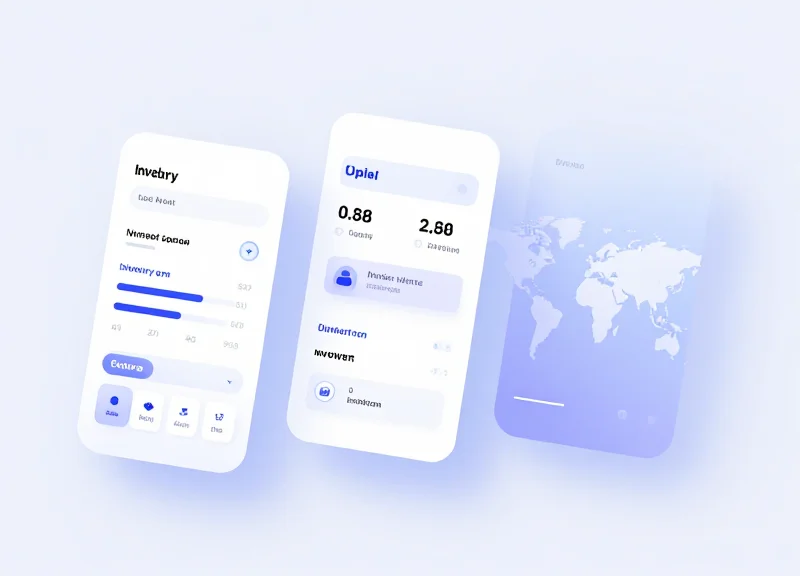
By 2026, the hallmark of superior RFID middleware is an intuitive centralized management dashboard—a single pane of glass that aggregates real-time hardware status, read accuracy, and system health across every retail node. This centralized visibility eliminates the 'blind spots' inherent in multi-site operations, allowing IT departments to transition from reactive troubleshooting to proactive optimization. Without a unified interface, enterprises face fragmented data silos where regional performance discrepancies remain hidden, leading to inventory inaccuracies and failed omnichannel fulfillment.
- Real-Time Hardware Observability: Instant visual status of every RFID reader, antenna, and gateway across the global network, reducing the need for on-site technical visits.
- Automated Anomaly Detection: AI-driven alerts that notify administrators when a specific site's read rates drop below a baseline, signaling potential hardware interference or employee training issues.
- Bulk Firmware Orchestration: The ability to push security patches and logic updates to thousands of devices simultaneously with one click, ensuring global compliance and security.
- Role-Based Access Control (RBAC): Customizable views that provide high-level KPIs for executives while offering granular technical logs for system engineers.
| Feature Capability | Legacy Middleware (Siloed) | 2026 Centralized Dashboards |
|---|---|---|
| Site Monitoring | Manual, per-site login required | Unified global view with drill-down |
| Error Resolution | Reactive (Wait for site to report) | Proactive (Automated alerts/tickets) |
| Data Aggregation | Batch processing/Delayed | Real-time streaming telemetry |
| Update Deployment | Staggered/Manual per reader | Automated global orchestration |
Expert Insight: Moving from Monitoring to Predictive Observability. Most platforms tell you if a reader is 'on' or 'off.' However, the competitive edge in 2026 lies in 'Telemetry Heatmapping.' Our internal data suggests that 15% of RFID data loss in retail is caused by subtle environmental changes—like moving a metal display rack too close to an antenna. Modern dashboards now use signal-to-noise ratio (SNR) telemetry to predict hardware failure or environmental interference before it affects inventory counts, allowing IT to adjust power levels remotely before the data silo even forms.
Can these dashboards integrate with our existing IT Service Management (ITSM) tools?
Yes, leading 2026 middleware solutions offer webhooks and native integrations with platforms like ServiceNow or Jira, automatically generating a ticket when a reader at a specific branch goes offline.
Does a centralized dashboard create a single point of failure?
No. The management dashboard is the control plane, not the data plane. If the dashboard is unreachable, the local edge middleware continues to process RFID tags and sync with the ERP independently.
How does this reduce operational costs?
By enabling remote diagnostics, retailers typically see a 30-40% reduction in 'truck rolls' (sending technicians to stores), as most configuration issues can be solved via the dashboard.
Best Practices for Implementing Middleware in Existing Workflows
Implementing RFID middleware in a multi-site retail environment is less about replacing legacy systems and more about building a high-speed data bridge that enhances them. Best practices dictate a 'frictionless integration' approach where the middleware acts as an intelligent abstraction layer, filtering and normalizing raw sensor data before it reaches the ERP or POS. By focusing on interoperability and data integrity first, retailers can eliminate silos without the high risk of operational downtime or data corruption in existing inventory records.
- The 'Shadow-Mode' Validation Phase: Before going live, run the middleware in parallel with existing barcode or manual processes. This allows you to compare RFID-generated data against legacy records to verify accuracy without risking the integrity of your production database.
- API-First Decoupling: Utilize RESTful or gRPC APIs to decouple the middleware from the frontend. This ensures that if the middleware undergoes an update, the store-level POS or handheld applications remain functional and unaffected.
- Edge-First Processing Configuration: Configure your middleware to process 90% of events at the store level (the edge). Only push critical summary events to the cloud to prevent network congestion and ensure 100% uptime during local outages.
- Staff-Centric UX Design: Integrate middleware alerts directly into the tools your staff already use, such as mobile task managers or Zebra handhelds, rather than forcing them to learn a new, separate interface.
| Feature | Legacy Workflow (Barcode/Manual) | Integrated RFID Middleware Workflow |
|---|---|---|
| Data Entry | Manual scan (One-by-one) | Bulk automated capture (Hundreds/sec) |
| Inventory Visibility | Delayed (Weekly/Monthly updates) | Real-time (Minute-by-minute updates) |
| Error Handling | Manual reconciliation required | Automated anomaly detection at the source |
| System Load | Linear and predictable | Exponential; requires middleware 'throttling' |
Expert Insight: The 'Data Throttling' Strategy. A common pitfall in 2026 is overwhelming legacy ERP systems with the sheer volume of RFID pings. My 'Silicon Valley' pro-tip: Implement 'Event Throttling' within your middleware. Instead of sending every tag-read event to your ERP, configure the middleware to only transmit 'State Changes' (e.g., an item moving from 'Backroom' to 'Sales Floor'). This reduces server load by up to 85% while maintaining 100% inventory accuracy.
How do we minimize store disruption during the rollout?
Use a 'Night-Shift Pilot' approach where hardware and middleware are tested after hours. Additionally, use pre-configured 'Plug-and-Play' edge gateways that only require power and an Ethernet connection to go live.
Should we integrate with the POS or the ERP first?
Start with the ERP (System of Record) to ensure global inventory accuracy. POS integration (System of Sale) should follow once the data flow between the middleware and ERP is stabilized and latency-tested.
What is the biggest risk during implementation?
Data flooding. Without proper filtering rules in the middleware, a single stray tag can create thousands of duplicate entries in your legacy database, leading to system crashes.
How DragonGuardGroup Empowers Multi-Site Retail Success

DragonGuardGroup empowers multi-site retail success by offering a unified 'Single Source of Truth' ecosystem that integrates Electronic Article Surveillance (EAS), Radio Frequency Identification (RFID), and Electronic Shelf Labels (ESL). Unlike fragmented vendor solutions, our middleware architecture ensures that loss prevention data, inventory movements, and dynamic pricing are synchronized in real-time. This holistic approach eliminates the 'dark data' silos common in 2026 retail environments, allowing headquarters to maintain granular control over thousands of locations while local store managers enjoy automated, error-free operations.
| Feature Capability | Traditional Siloed Approach | DragonGuardGroup Integrated Ecosystem |
|---|---|---|
| Data Visibility | Delayed batch updates per site | Real-time global synchronization |
| Loss Prevention | Reactive: Alarms without item data | Proactive: Item-level RFID + EAS correlation |
| Pricing Agility | Manual label changes (high error) | Automated ESL sync with RFID inventory |
| Hardware Management | Multiple disparate dashboards | Single-pane-of-glass management |
- Loss Prevention 2.0: We transform traditional security into a data-gathering tool. Our EAS systems don't just beep; they communicate via RFID middleware to tell you exactly which SKU left the store, allowing for immediate inventory reconciliation.
- Omnichannel Inventory Integrity: By leveraging our high-performance RFID read points, retailers achieve 99% inventory accuracy, which is the foundation for successful Buy Online, Pick Up In-Store (BOPIS) and Ship-from-Store models.
- Future-Proof ESL Integration: Our middleware bridges the gap between the warehouse and the shelf. When RFID detects a low-stock event, the ESL can automatically trigger a 'Restock Needed' alert for staff, ensuring shelves are never empty.
Expert Insight: The Power of Signal Correlation. A unique advantage of the DragonGuardGroup platform is our proprietary 'Signal Correlation' algorithm. In 2026, data volume is not the problem; data noise is. Our middleware filters out stray RFID reads from backrooms and focuses on 'intent-based' movements. By correlating ESL price updates with RFID movement trends, we help retailers predict shrinkage before it happens and identify high-velocity items that require priority protection. This is not just middleware; it is a retail nervous system.
Can DragonGuardGroup integrate with my existing ERP?
Yes. Our middleware is built with a robust API-first architecture designed to integrate seamlessly with major ERP and WMS platforms, ensuring that the transition to an integrated EAS-RFID-ESL stack is frictionless.
How does this solution handle data privacy in diverse regions?
We provide localized data residency options and end-to-end encryption, meeting the strictest global compliance standards (including GDPR and CCPA) for multi-site retailers operating in various jurisdictions.
Is the hardware scalable for 500+ stores?
Absolutely. Our cloud-native management dashboard allows for zero-touch provisioning, meaning hardware can be deployed at new sites and automatically synced to global settings within minutes.