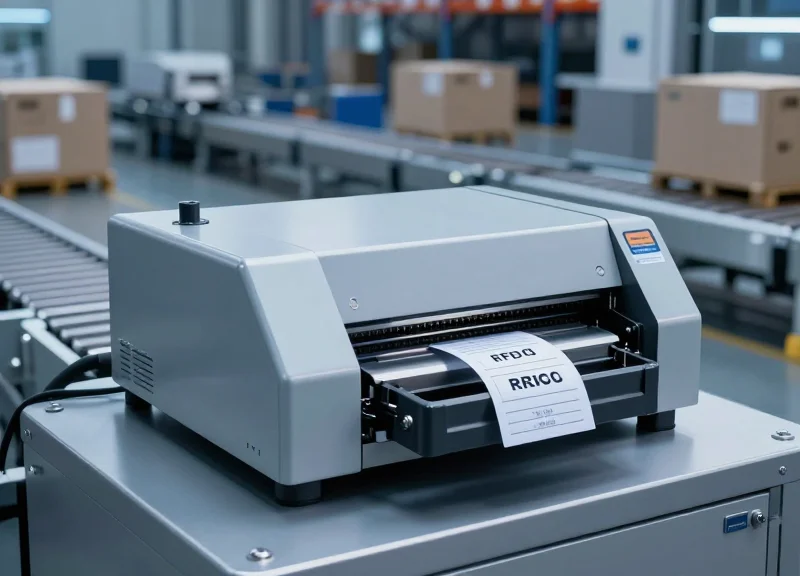
As we approach 2026, the logistics landscape is defined by near-total item-level visibility. For high-volume warehouses and distribution centers, the RFID printer-encoder is no longer a peripheral device; it is the heartbeat of the supply chain. With the surge in global mandates and the need for real-time data, selecting a machine that can keep pace with 24/7 operations while maintaining 99.9% encoding accuracy is critical. This guide explores the essential criteria for choosing hardware that survives the rigors of industrial environments and thrives in the digital-first era.
The Shift Toward Hyper-Automation in 2026 Logistics

Hyper-automation in 2026 logistics represents the strategic integration of AI-driven robotics, real-time data orchestration, and IoT-enabled hardware to eliminate manual friction across the supply chain. In this high-velocity environment, the RFID industrial printer-encoder acts as the primary 'data on-ramp,' transforming physical assets into digital intelligence. No longer a standalone peripheral, the 2026 printer-encoder must operate as a mission-critical edge device capable of autonomous decision-making and high-speed data validation to support fully automated warehouses and distribution centers.
The shift toward this 'Zero-Intervention' model is driven by the collapse of traditional labor markets and the explosive growth of item-level tracking requirements. As we move into 2026, organizations are moving beyond simple labeling to complex data encoding that includes encrypted provenance and sensor-based telemetry. Consequently, the printer-encoder is now a top-tier business priority; if the encoding stream stops for even a second, the entire hyper-automated sorting and shipping ecosystem grinds to a halt.
| Feature | Standard RFID (Legacy) | Hyper-Automated RFID (2026) |
|---|---|---|
| Operational Logic | Reactive/Batch Processing | Proactive/Real-time Edge Intelligence |
| Failure Handling | Manual Intervention Required | Autonomous Error Rerouting & Self-Healing |
| Data Integration | Siloed Printer Management | Unified Cloud-to-Edge Orchestration |
| Maintenance | Scheduled/Break-fix | AI-Driven Predictive Maintenance |
Why is the printer-encoder considered an 'Edge Node' in 2026?
In hyper-automated environments, these devices process encoding logic locally to minimize latency. This allows for millisecond-level verification of tags before they hit a high-speed conveyor, ensuring data integrity without relying on a constant cloud handshake.
How does hyper-automation impact the ROI of RFID hardware?
ROI is no longer calculated solely on hardware cost but on 'Uptime Assurance.' A high-performance encoder prevents downstream bottlenecks that can cost thousands of dollars per minute in automated sortation facilities.
What role does AI play in 2026 printer-encoder performance?
AI algorithms now monitor RF signal patterns during the encoding process to detect 'near-failure' tags or environmental interference, adjusting power levels on-the-fly to maintain 99.99% encoding accuracy.
Expert Insight: The Rise of 'Edge-Native Encoding' — A critical trend for 2026 is the decoupling of the print engine from the encoding logic. Top-tier industrial units now feature dedicated neural processing units (NPUs) that allow them to handle cryptographic encoding tasks locally. This is essential for high-volume logistics where the speed of the physical label application often exceeds the speed of traditional network protocols. My advice to Silicon Valley logistics tech-stack architects: prioritize hardware that supports 'asynchronous verification' to ensure your automation lanes never slow down for a data buffer.
Factor 1: True Throughput and Encoding Synchronicity
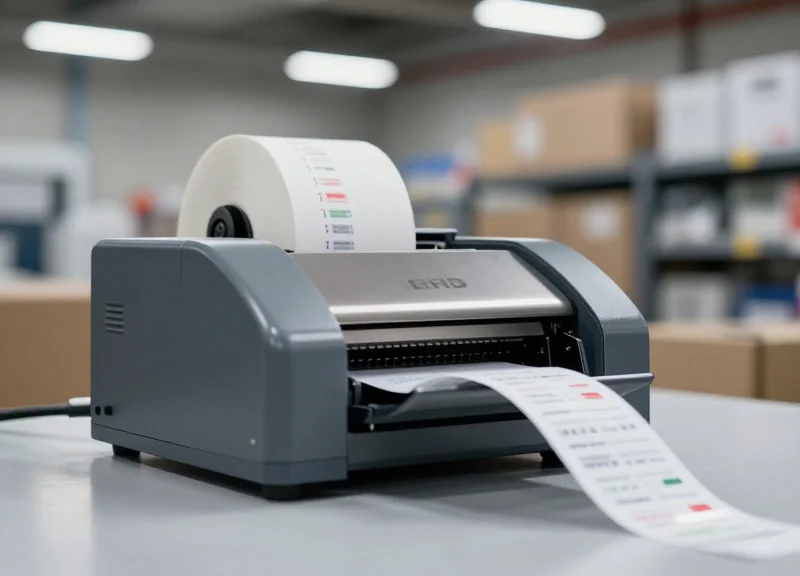
True throughput is the actualized output speed of an RFID printer-encoder when the dual tasks of thermal transfer printing and chip encoding are performed simultaneously. In 2026, high-volume logistics environments cannot afford the 'stutter' effect common in legacy devices, where the print head stops for milliseconds to allow the encoder to catch up with the chip. Synchronicity is the measure of how seamlessly the machine aligns the data stream with the physical movement of the media, ensuring that the 14-ips (inches per second) speed on the spec sheet is what you actually experience on the warehouse floor.
| Performance Metric | Legacy Industrial Printer | 2026 Next-Gen Encoder |
|---|---|---|
| Nominal Print Speed | 10-12 IPS | 14-16+ IPS |
| RFID Encoding Dwell Time | 150ms - 300ms | < 10ms (Near-Zero) |
| Throughput Drop-off | 30-50% when encoding | < 5% when encoding |
| Buffer Capacity | Limited/Serial | Multi-Threaded/Parallel Processing |
Expert Insight: The 'Dwell-Time' Trap. Most buyers look only at the DPI or the maximum IPS. However, the real bottleneck is the encoder’s 'Adaptive Encoding Window.' In 2026, the best printers use predictive algorithms to begin the encoding process before the tag even reaches the antenna's center point. This parallel processing eliminates the physical 'stop-and-start' motion, which not only boosts speed but also reduces mechanical wear on the drive belts and print heads by up to 25%.
- Verify 'On-the-Fly' Encoding: Ensure the printer supports continuous motion encoding rather than a 'stop-to-write' methodology.
- Analyze Buffer Depth: The internal processor must be capable of handling complex serialized data for the next five tags while the current tag is being printed.
- Assess Error Suppression Speed: When a bad chip is detected, the printer must void and move to the next tag in less than 200ms to maintain line momentum.
Does antenna placement affect throughput?
Yes. Printers with adjustable or multiple antenna arrays can find the 'sweet spot' for specific inlay designs faster, reducing the time spent on retries.
What is the impact of high-memory chips on speed?
Encoding User Memory (e.g., 512 bits) takes longer than EPC memory (96-128 bits). True throughput machines use high-wattage writers to blast this data faster without slowing the motor.
Why does synchronicity matter for automated applicators?
If the printer stutters, it desyncs with the vacuum arm of an automated applicator, leading to physical jams and line downtime.
Factor 2: Advanced Error Handling and Tag Validation
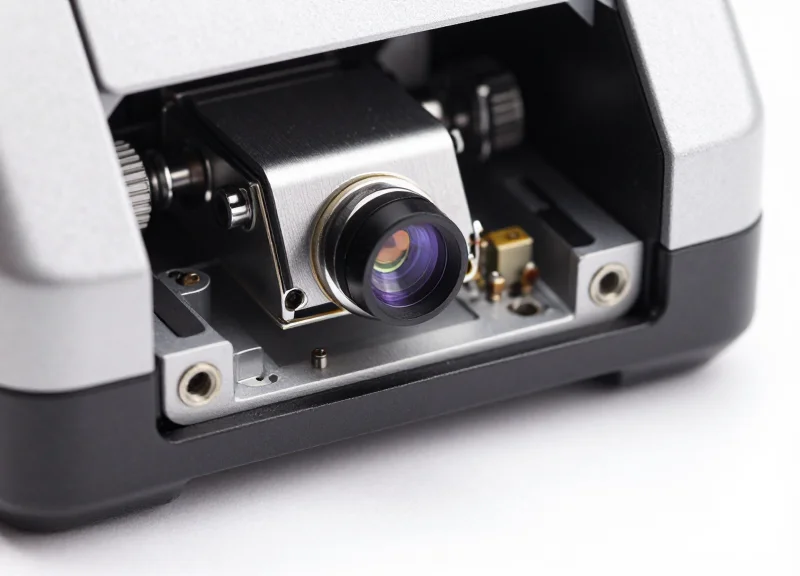
Advanced Error Handling and Tag Validation is an automated system within an industrial printer-encoder that verifies the success of an RFID write operation in real-time. By utilizing a post-encode 'verify' pass, the system identifies defective chips or signal interference immediately. In 2026 high-volume environments, this feature is critical because it ensures that every label leaving the printer is 100% functional, automatically marking failed tags as 'VOID' and reprinting a replacement without human intervention or production downtime.
| Feature Capability | Standard Printer-Encoder | 2026-Grade Industrial Encoder |
|---|---|---|
| Validation Speed | Sequential (adds 2-3 seconds) | Parallel (Zero-latency verification) |
| Faulty Tag Management | Stops print job; requires manual clear | Auto-overstrike (Void) and auto-reprint |
| Data Integrity Check | Checksum only | Full bit-level cryptographic verification |
| Adaptive Power Control | Fixed antenna power | Dynamic signal adjustment per tag |
The '1:10:100 Rule' of RFID Data Integrity: A unique insight for 2026 operations is that a failed tag costs $1 to catch at the printer, $10 to fix at the shipping dock, and over $100 in labor, penalties, and reverse logistics if it reaches the customer. Modern encoders now utilize 'Adaptive Encoding Technology' which dynamically adjusts the RF signal strength for each tag in a roll. This compensates for slight variations in inlay sensitivity or moisture levels in the label stock, significantly reducing the 'false positive' failure rate that plagues cheaper hardware.
- Real-time Verification: The encoder reads back the data from the chip immediately after the 'write' command to ensure it matches the host system's data packet.
- Automated Voiding: If a chip is found to be defective or unresponsive, the printer overstrikes the physical label with a 'VOID' pattern to prevent it from being used by mistake.
- Auto-Recovery Reprint: The firmware triggers an immediate reprint of the failed data onto the next available tag in the roll, maintaining the correct sequence for the batch.
- Log Reporting: The system logs the unique ID of the failed chip and the timestamp, providing an audit trail for quality control and supplier accountability.
What causes 'dead tags' in high-volume printing?
Most failures result from ESD (Electrostatic Discharge), physical inlay damage during the winding process, or 'ghost encoding' where the printer accidentally writes to an adjacent tag on the roll.
How does advanced validation prevent supply chain 'blind spots'?
By ensuring only valid tags enter the system, you eliminate 'no-reads' at automated sortation centers, which would otherwise require manual intervention and slow down the entire facility.
Is voiding tags wasteful for high-volume users?
While it uses one extra label, the cost is negligible compared to the labor cost of a 'no-read' exception at a downstream distribution center.
Factor 3: Multi-Protocol Support and Future-Proofing
Future-proofing in 2026 is defined by a printer's ability to support the RAIN RFID UHF Gen2v2 (ISO/IEC 18000-63) protocol, which extends beyond simple identification to include advanced features like cryptographic authentication, memory partitioning, and the management of sensor-based data. As high-volume logistics shifts from 'track and trace' to 'sense and respond,' your printer-encoder must be capable of writing complex datasets—such as temperature logs or moisture levels—directly onto specialized sensor tags without sacrificing throughput speed.
| Feature | Standard Industrial Printer | 2026 Future-Proof Encoder |
|---|---|---|
| Protocol Support | Legacy Gen2 Only | Full Gen2v2 + ISO 18000-6 |
| Memory Handling | Small EPC Bank Only | Large User Memory & File Management |
| Security | None/Basic Lock | AES Crypto & Untraceable Commands |
| Tag Variety | Standard Paper Inlays | Sensors, Metal-Mount & Eco-Tags |
A critical, often overlooked aspect of future-proofing is the 'Silicon-on-Paper' movement. By 2026, sustainability mandates are pushing logistics providers toward plastic-free, recyclable RFID inlays. These 'green' tags often use thinner substrates or printed antennas that possess different thermal and pressure sensitivities than traditional PET-based tags. An industry-leading encoder should offer software-defined radio (SDR) capabilities, allowing the machine to be recalibrated via firmware updates to accommodate new antenna designs and chip sensitivities without requiring hardware replacement.
Why is Gen2v2 support mandatory for 2026 logistics?
Gen2v2 allows for enhanced security features like 'Untraceable' commands that hide portions of data from unauthorized readers, which is essential for consumer privacy and high-value asset protection in modern supply chains.
Can these printers handle active or battery-assisted tags?
Most industrial RFID encoders are designed for passive tags; however, future-ready models support BAP (Battery Assisted Passive) tags which are becoming standard for long-range sensor monitoring in cold-chain logistics.
How does firmware play a role in protocol longevity?
Look for printers with 'Extensible Architecture.' This allows the manufacturer to push updates that enable new air-interface protocols or frequency adjustments as global RFID regulations evolve, effectively extending the hardware's lifespan by 3 to 5 years.
Expert Insight: In 2026, the most resilient enterprises are prioritizing 'Dual-Frequency' readiness. While UHF remains the king of logistics, the rise of NFC for last-mile consumer interaction means that the best encoders are those offering modular read/write heads that can be swapped or upgraded to handle both UHF and HF/NFC frequencies within the same chassis. Investing in a modular platform today prevents a total infrastructure overhaul when your customers demand smartphone-compatible tag interactions tomorrow.
Factor 4: Seamless Integration with Cloud-Based WMS and ERP

In the 2026 logistics landscape, the 'printer driver' is becoming a legacy concept. Seamless integration now refers to a printer's ability to function as an autonomous Edge-IoT device that communicates directly with cloud-native Warehouse Management Systems (WMS) and Enterprise Resource Planning (ERP) platforms. Leading-edge RFID printer-encoders bypass traditional local print servers, utilizing native support for modern web protocols to send and receive data packets in real-time. This 'serverless' architecture reduces hardware overhead, eliminates the latency of print queues, and provides a unified data stream from the loading dock to the corporate cloud.
| Feature | Legacy Local Integration | 2026 Cloud-Native Integration |
|---|---|---|
| Connection Logic | Local PC -> Print Driver -> Printer | Direct Edge-to-Cloud (Serverless) |
| Data Protocol | Proprietary Command Languages (ZPL, IPL) | Universal JSON / XML via REST API |
| Real-Time Feedback | Delayed / Status polling required | Instant via WebSockets or MQTT |
| Security | Internal Network Only | End-to-End Encryption (TLS 1.3 / OAuth 2.0) |
Expert Insight: The Rise of JSON-First Printing. Historically, developers had to learn complex printer-resident languages to format labels. In 2026, the competitive advantage lies with printers that offer 'JSON-Direct' capabilities. This allows your WMS developers to send raw data in standard web formats, which the printer then maps to a stored template. This decoupling of data from design means you can update label formats across 50 global sites instantly without touching a single line of backend ERP code.
POST /api/v1/print-job HTTP/1.1
Host: rfid-printer-01.local
Content-Type: application/json
Authorization: Bearer

{
  "template_id": "shipping_label_v4",
  "variables": {
    "epc_code": "303425789012345678901234",
    "sku": "XYZ-990",
    "dest": "BERLIN-WH-02"
  }
}
Why is MQTT support critical for RFID printers in 2026?
MQTT is a lightweight messaging protocol that allows the printer to 'publish' status updates (like ribbon-out or encoding errors) to a central dashboard. This enables predictive maintenance and ensures that high-volume logistics lines never stop due to undetected hardware issues.
Can these printers work with legacy ERP systems?
Yes. Top-tier 2026 models feature 'hybrid-mode' firmware. They can accept legacy ZPL/IPL commands via standard drivers while simultaneously running cloud-based REST APIs, allowing for a phased digital transformation.
Does cloud-native printing increase security risks?
Actually, it decreases them if implemented correctly. By using TLS 1.3 and certificate-based authentication, modern printers are more secure than legacy printers sitting on unpatched local Windows print servers.
Factor 5: Industrial Durability and Ease of Maintenance
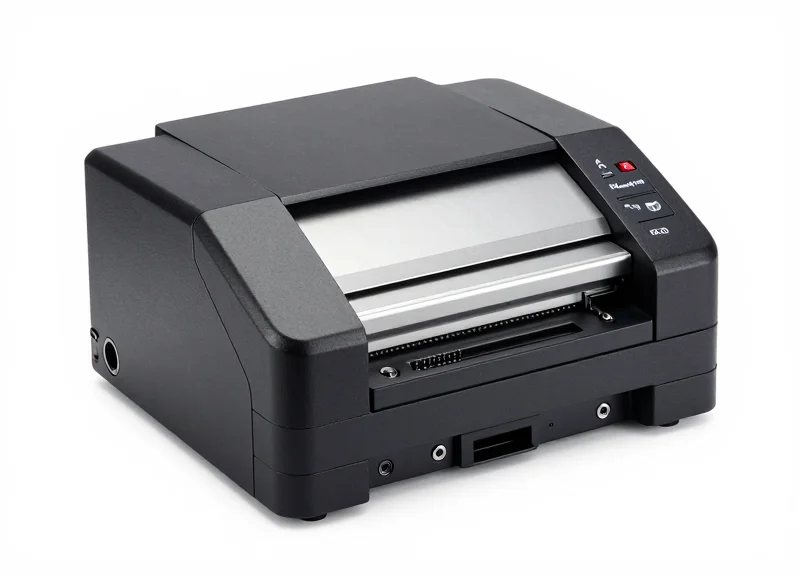
In 2026, industrial durability for RFID printer-encoders has evolved beyond simple metal chassis to encompass 'smart resilience'—the ability to withstand 24/7 duty cycles while providing real-time telemetry on mechanical wear. For logistics operations processing thousands of tags hourly, a printer's durability is measured by its Mean Time Between Failure (MTBF) and its resistance to the electrostatic discharge (ESD) often generated by high-speed label friction. True industrial-grade machines utilize die-cast aluminum frames and reinforced gearing to ensure that the delicate alignment between the RFID antenna and the printhead remains precise over millions of inches, preventing the 'misalignment drift' that plagues lighter-duty models.
| Feature | Standard Industrial (Pre-2024) | Next-Gen Logistics Grade (2026+) |
|---|---|---|
| Chassis Construction | Sheet metal or plastic hybrids | Full die-cast aluminum frame with anti-corrosive coating |
| Maintenance Access | Requires specialized tools (hex/torx) | 100% tool-less replacement for printheads and rollers |
| Thermal Management | Passive heat sinks | Active cooling with intelligent thermal throttling prevention |
| Component Monitoring | Reactive error codes | AI-driven predictive failure analysis via cloud telemetry |
The Veteran's Insight: Most managers overlook the 'Platen Roller'—the rubber cylinder beneath the printhead. In 2026, the best printers use high-grip, anti-static rollers that prevent RFID inlay slippage, a common cause of encoding offsets. Look for printers that treat the platen roller as a quick-release consumable rather than a fixed mechanical part. This allows a floor operator to restore factory-perfect print quality in under 30 seconds without calling an engineer.
- Tool-less Printhead Replacement: The ability for a floor operator to swap a printhead in under 60 seconds without a screwdriver reduces downtime by 90% compared to legacy models.
- Side-Loading Media Paths: Open-access designs minimize the risk of damaging the sensitive RFID encoding antenna during label loading, ensuring long-term hardware integrity.
- Smart Sensors & Dust Mitigation: Enclosed media bays and dual-gap sensors prevent dust accumulation on the RFID reader, which is essential for environments like cross-docking facilities where particulates are high.
How long should an industrial RFID printhead last?
In high-volume environments using direct thermal labels, expect 1 million to 2 million linear inches; however, using thermal transfer with high-quality ribbons can extend this to 3 million+ inches if the printer has a balanced pressure system.
What is the most common cause of RFID printer failure in warehouses?
The buildup of adhesive residue and static electricity. Machines with built-in static brushes and ceramic-coated printheads are significantly more resilient to these factors.
The Role of Software in Optimizing Printer Performance
In the high-stakes environment of 2026 logistics, software is no longer a peripheral utility but the primary driver of printer efficiency. While hardware dictates the physical limits of speed, it is the integration of firmware, middleware, and label design software that determines actual throughput. Advanced software ecosystems enable 'Zero-Touch' provisioning and intelligent print-spooling, ensuring that the printer-encoder never waits for data, which is often the silent killer of productivity in large-scale RFID deployments.
- Adaptive Firmware Scaling: Firmware that dynamically adjusts heat settings and motor torque based on real-time sensor data from the RFID inlay, reducing ribbon breaks and extending the life of the thermal printhead.
- Cloud-Native Fleet Management: Centralized dashboards that allow IT teams to push security patches and configuration profiles to thousands of global units simultaneously via IoT protocols like MQTT.
- Intelligent Buffer Management: Software that optimizes the local cache to handle complex XML or JSON data streams directly from the ERP, eliminating the need for local print servers.
| Feature | Legacy Software Approach | 2026 Optimized Software |
|---|---|---|
| Connectivity | Static IP / Manual Driver Install | Auto-Discovery / REST API Integration |
| Diagnostics | Reactive (Error Lights) | Predictive (AI-Driven Heatmap Analytics) |
| Update Method | USB / Local Network Flash | Global OTA (Over-The-Air) Managed Updates |
| RFID Encoding | Linear Serial Processing | Parallel Multi-Tag Stream Processing |
Expert Insight: By 2026, the competitive edge lies in 'Software-Defined Printing.' Instead of replacing hardware to gain new features, top-tier industrial printers now use edge-computing firmware capable of running custom scripts. This allows the printer to act as an independent logic gate, verifying tag data against the cloud database before the label is even applied, essentially turning the printer into a firewall for your data integrity.
Why is firmware more important than raw mechanical speed?
Firmware manages the timing between the mechanical label feed and the RF signal burst. If the firmware isn't optimized, the printer must pause to wait for encoding verification, which can reduce actual output by up to 30% regardless of the rated motor speed.
Does label design software affect RFID read rates?
Yes. Advanced software optimizes the placement of data within the tag's memory banks (TID, EPC, User Memory) and ensures that the antenna positioning in the design software perfectly aligns with the hardware's 'sweet spot' for encoding.
Calculating Total Cost of Ownership (TCO) in 2026
In 2026, the Total Cost of Ownership (TCO) for an RFID industrial printer-encoder is the comprehensive sum of the initial purchase price plus all operational expenses (OpEx) incurred over a projected five-year lifecycle. For high-volume logistics, the acquisition price typically represents only 15% to 20% of the total cost; the remaining 80% is driven by consumables, energy consumption, maintenance, and the 'latency tax' associated with slow encoding speeds. Understanding TCO requires a shift from viewing a printer as a hardware purchase to viewing it as a long-term utility within the automated supply chain.
| Cost Category | Primary Drivers (2026 Tech) | Estimated 5-Year Impact |
|---|---|---|
| Capital Expenditure (CapEx) | Hardware, initial software licensing, and integration. | High: $2,500 - $6,500 |
| Consumables | RFID inlays, specialized labels, and thermal ribbons. | Very High: $100,000+ |
| Maintenance | Printheads, rollers, and AI-driven predictive repairs. | Moderate: $3,000 - $5,000 |
| Energy & Connectivity | Power efficiency (Energy Star 4.0) and cloud data egress. | Low: $500 - $1,200 |
| Downtime Costs | Lost productivity during hardware failures. | Critical: Varies by throughput |
One original metric we track in 2026 is the 'RFID Verification Yield Loss.' Unlike standard thermal printing, RFID encoding can fail due to inlay defects. A printer that lacks high-speed 'over-strike' (voiding) capabilities can cost a facility upwards of $15,000 annually in manual labor just for identifying and replacing failed tags that made it into the shipping lane. Investing in a printer with 100% verification accuracy is no longer optional; it is a primary TCO reduction strategy.
- Project the 5-Year Volume: Estimate your daily label throughput and multiply by 1,825 days to determine the baseline for consumable and printhead wear.
- Calculate the Printhead Lifecycle: In 2026, high-volume printers should achieve 2-3 million linear inches per printhead. Divide your total volume by this rating to estimate replacement costs.
- Account for Software and Cloud Fees: Modern printers often require subscription-based remote management tools or cloud-connector licenses. Factor these recurring monthly fees into your OpEx.
- Quantify Labor Efficiency: Calculate the time saved by tool-less maintenance and fast media changes. A printer that saves 10 minutes of downtime per shift saves approximately 60 hours of labor per year.
How does energy efficiency affect TCO in 2026?
With rising ESG regulations, printers with 'Smart Sleep' modes and high-efficiency power supplies reduce both utility bills and carbon tax liabilities.
Is it cheaper to use ribbonless (Direct Thermal) RFID?
While it removes ribbon costs, direct thermal printheads wear out 25% faster and labels are more expensive. Thermal transfer remains the TCO winner for high-volume logistics.
What is the 'hidden' cost of cheap hardware?
Low-cost printers often lack adaptive encoding. This leads to higher tag failure rates and increased 'no-reads' at the dock door, which can trigger retailer fines.
Final Checklist: Questions to Ask Your RFID Hardware Provider
Before finalizing a high-volume RFID printer-encoder purchase in 2026, it is vital to move beyond basic technical specs and evaluate the provider’s ability to support complex, high-velocity logistics environments. A successful partnership is defined by the hardware's integration with edge computing, the vendor's commitment to zero-trust security standards, and the total transparency of their long-term maintenance SLAs.
| Evaluation Category | Target Question for Provider | The Ideal Benchmark |
|---|---|---|
| Integration | Does the hardware support native MQTT or OPC UA protocols for direct cloud/IoT communication? | Yes, allowing direct integration without middle-ware or local PC dependencies. |
| Encoding Integrity | What is the 'Bad Tag' rejection rate at speeds exceeding 10 inches per second? | A verified rejection rate of less than 0.05% under high-volume stress tests. |
| Security | Is the firmware compliant with current ISO/IEC 27001 or SOC2 security standards for IoT? | Full compliance with encrypted data transmission and secure boot features. |
| Supportability | What is the Mean Time to Repair (MTTR) and do you offer remote diagnostic capabilities? | Remote diagnostics included with a target MTTR of under 4 hours for critical failures. |
How does the encoder handle 'over-encoding' and adjacent tag interference?
Ask the provider if their printer uses adaptive antenna technology to isolate the target tag. In high-density labels, proximity can cause accidental encoding of the wrong tag; the best providers offer precise signal attenuation to prevent this.
What is the true cost of thermal head replacement over a 3-year cycle?
Don't just ask for the price of one head. Ask for the expected lifespan in 'millions of inches' and if the provider offers a 'Printhead Protection Program' that covers replacements if specific consumables are used.
Can the printer-encoder be upgraded via software for future RFID protocols (e.g., Gen3)?
Ensure the hardware has a Software-Defined Radio (SDR) or field-upgradable firmware architecture. This prevents the hardware from becoming obsolete if global RFID standards shift before 2030.
What is the latency between the WMS data trigger and the physical tag encoding?
In high-speed logistics, milliseconds matter. Ask for the internal processing delay (back-channel latency) to ensure the printer doesn't become a bottleneck for your conveyor system.
Expert Insight: The 'Hidden Latency' Factor. While most vendors advertise 'mechanical print speed' (e.g., 14 ips), few discuss 'encoding latency'—the time it takes for the printer's internal processor to receive data from the cloud, verify the RFID chip, and commit the write. In 2026, as AI-driven WMS systems demand real-time throughput, a printer with a fast mechanical motor but a slow internal buffer will cause 'micro-stops' in your line. Always ask for the 'Data-to-Tag' cycle time to ensure the electronics can keep up with the mechanics.