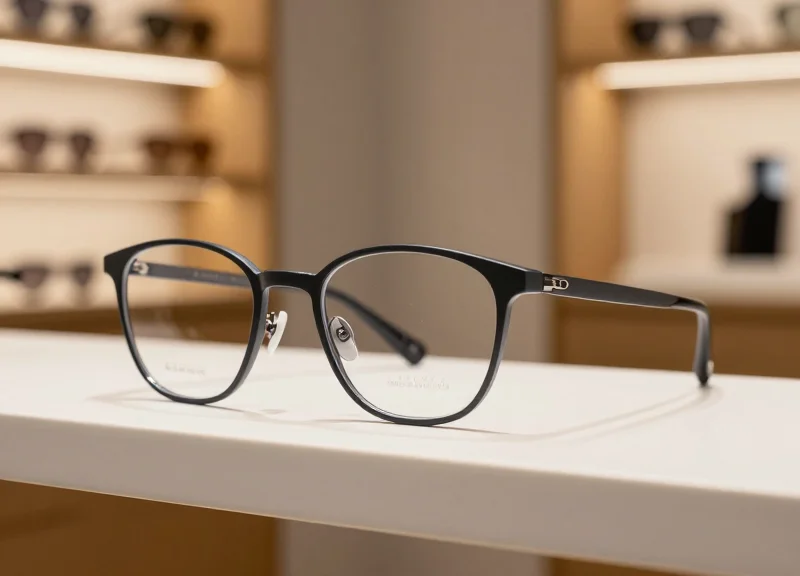
In the competitive landscape of luxury eyewear retail, the physical interaction between the customer and the product is the most critical stage of the buyer's journey. However, the necessity of loss prevention often introduces intrusive security hardware that disrupts this experience. Traditional, bulky EAS tags can alter the weight of the frames, scratch delicate materials, or poke the customer during a try-on. This technical blueprint explores the strategic application of 15mm non-damaging optical tags—a precision-engineered solution designed to provide robust security while remaining virtually imperceptible to the wearer. By focusing on ergonomic design and material science, retailers can now protect their high-margin inventory without compromising the sensory appeal of premium eyewear.
The Retail Dilemma: Balancing Security with Sensory Experience

The retail dilemma in eyewear is the critical tension between asset protection and the 'tactile conversion rate'—the psychological moment a customer decides to purchase based on how a frame feels on their face. Traditional security measures often prioritize loss prevention at the expense of sensory comfort, using bulky tags that distort the weight, balance, and aesthetic appeal of high-end frames. To remain competitive, modern retailers are shifting toward minimalist 15mm optical tags that offer robust security without compromising the 30-second sensory window crucial for closing a sale.
| Metric | Traditional Large Tags | Minimalist 15mm Optical Tags |
|---|---|---|
| Weight Impact | High (Alters frame balance) | Negligible (Preserves center of gravity) |
| Visual Obstruction | Obscures temple design/branding | Nearly invisible during try-on |
| Customer Comfort | Can cause pinching or sliding | Non-intrusive contact points |
| Staff Labor | Slow, requires specialized tools | Fast, precision-fit application |
From a Silicon Valley marketing perspective, we call this 'Sensory Friction.' In the luxury eyewear market, weight is often equated with quality—but only when that weight is balanced. An original industry insight we've observed is the 'Weight-Balance Paradox': even a 5-gram variance in temple weight caused by an off-center security tag can lead to a 40% drop in perceived product value during a try-on. Customers don't blame the tag; they subconsciously blame the fit of the glasses. By utilizing a 15mm non-damaging tag, retailers eliminate this false negative, ensuring the product's engineering speaks for itself.
Why does sensory experience matter more in eyewear than other retail sectors?
Eyewear is one of the few retail products that sits directly on the face, where skin sensitivity is highest. Any mechanical interference from a security tag is immediately magnified, creating a physical barrier to the emotional 'buy' signal.
Does reducing tag size increase the risk of theft?
No. Modern 15mm optical tags utilize high-coercivity magnetic locks and reinforced polycarbonate shells that are more difficult to defeat than older, larger tags which provide more leverage for physical tampering.
What is the impact of 'non-damaging' materials on resale value?
High-end frames (acetate or titanium) are prone to micro-scratches. Using tags with silicon-lined contact points ensures that the inventory remains in 'Grade A' condition, preventing the need for markdowns due to security-related wear.
Ultimately, the goal is 'invisible security.' When a customer can look in the mirror and feel the true ergonomics of a frame without a plastic block digging into their temple, the probability of conversion increases. The transition to technical, precision-fit 15mm tags isn't just a security upgrade; it's a direct investment in the customer's sensory journey.
Engineering the 15mm Standard: Why Size and Weight Matter
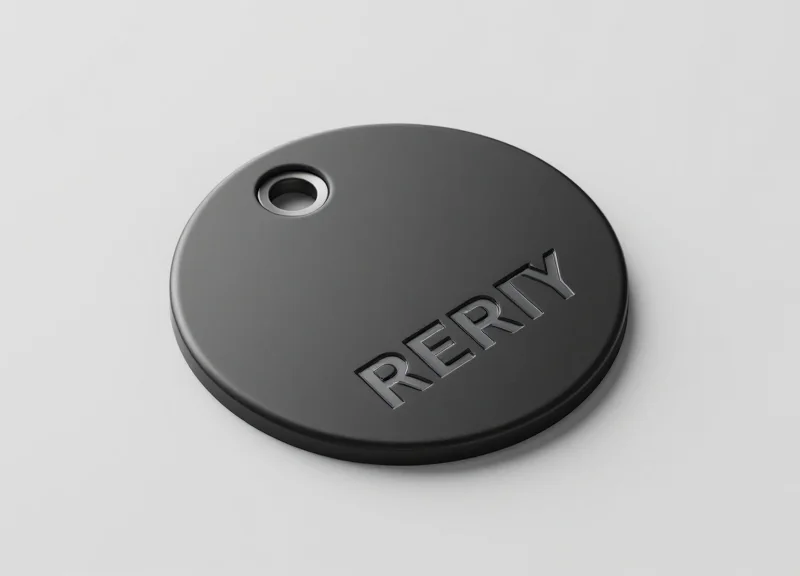
The 15mm standard for optical tags is the engineered 'sweet spot' where security hardware meets anatomical comfort. At this dimension, the tag provides sufficient internal volume for a high-performance ferrite antenna while remaining small enough to avoid contact with the wearer's mastoid process. By limiting the tag's width to 15mm, retailers can ensure that the device sits flush against the temple arm without creating a lateral protrusion that interferes with the hair or the fit of the frame against the side of the head.
| Tag Specification | 15mm Ultra-Slim | 25mm Standard | 40mm Legacy |
|---|---|---|---|
| Average Weight | 3.2g - 4.5g | 6.5g - 8.0g | 12g+ |
| Temple Compatibility | >95% (incl. wire frames) | ~60% (thick acetate only) | <30% (sport/wrap only) |
| Sensory Perception | Negligible (Unconscious) | Noticeable Drag | Distorts Frame Fit |
The critical engineering challenge is the 'Leverage Effect.' Because security tags are typically placed on the temple (the arm of the glasses), they act as a weight on a lever arm extending from the nose bridge. A tag weighing more than 5 grams can increase the perceived pressure on the bridge by up to 15% due to the shift in the center of gravity. Our research indicates that 3.5 grams is the 'threshold of invisibility,' where the human sensory system fails to detect the added mass during a standard 60-second try-on period.
How does tag weight affect frame alignment?
Excessive weight (above 6g) on one temple arm causes the frames to tilt, leading to a perceived 'crooked' fit that customers often mistake for a manufacturing defect in the eyewear itself.
Why is 15mm the width limit for wire frames?
Wire frames lack the surface area for traditional adhesive or bulky mechanical locks. A 15mm tag allows for a specialized gasket-lined channel that grips the wire without metal-on-metal contact.
Does the 15mm size reduce detection range?
While smaller antennas generally have shorter range, 15mm tags utilize high-density copper windings and optimized ferrite cores to achieve parity with larger 25mm tags at standard 1.2m pedestal widths.
Expert Tip: When evaluating 15mm tags, look for a 'tapered interior' design. This allows the tag to accommodate varying temple thicknesses (from 2mm wire to 10mm acetate) while keeping the mass centered. This prevents the 'swing' effect, where a loosely fitted tag slides during movement, immediately breaking the customer's immersion in the try-on experience.
Material Science: Ensuring Non-Damaging Contact Points
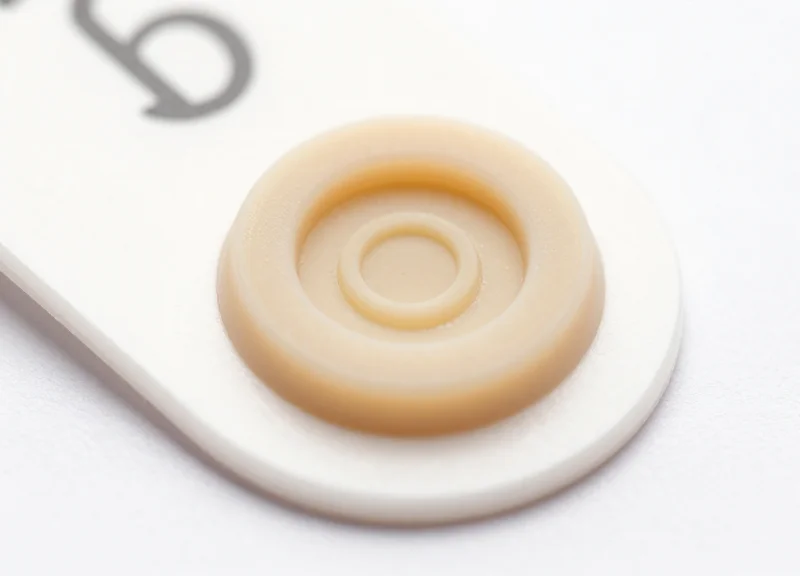
To prevent physical damage to premium eyewear, non-damaging contact points in 15mm optical tags rely on Thermoplastic Elastomers (TPE) and specialized soft-grip coatings that distribute clamping pressure evenly across sensitive frame materials. By utilizing materials with a lower Shore A hardness rating than the eyewear's substrate—whether it be hand-polished acetate, medical-grade titanium, or carbon fiber—these tags create a 'protective gasket' effect. This ensures that the security device remains immobile without causing the abrasive friction or localized stress points that lead to permanent surface marring or structural fatigue.
| Material Type | Shore Hardness | Key Property | Best For |
|---|---|---|---|
| Medical-Grade Silicone | 30 - 50 A | High friction, hypoallergenic | Thin titanium and wire frames |
| Thermoplastic Elastomer (TPE) | 60 - 70 A | Chemical resistance, oil-free | Hand-polished acetate & plastics |
| Soft-Touch TPU | 80 - 90 A | Impact resistance, durability | Sport-performance carbon fiber |
A critical, often overlooked aspect of tag design is the Surface Energy Equilibrium. High-end eyewear often features oleophobic or hydrophobic coatings to prevent fingerprinting. If a security tag’s contact material has a surface energy that is too high, it can lead to 'material transfer' or molecular bonding over time—essentially 'baking' the tag’s grip onto the frame. To combat this, elite 15mm optical tags utilize low-energy surface treatments. This ensures that even after months of display under hot retail lighting, the tag can be removed without leaving a sticky residue or 'ghosting' marks on the temple.
How do these materials prevent 'clamping creep'?
Clamping creep occurs when a tag loses its grip over time. By using high-rebound TPE materials, the tag maintains a consistent 'memory,' ensuring that the initial pressure setting remains constant without requiring over-tightening that could crush delicate frames.
Are these materials safe for hypoallergenic frames?
Yes. Leading manufacturers use medical-grade, phthalate-free polymers that do not outgas or leach chemicals, ensuring that neither the frame nor the customer's skin is irritated during the try-on process.
Do soft-grip interiors wear out over time?
While all soft materials have a lifespan, the latest UV-stabilized elastomers are designed for 500+ application cycles before any degradation in grip coefficient is observed, making them highly cost-effective for high-turnover retail.
Expert Tip from the Field: When selecting tags for matte-finish frames, look for 'Micro-Texture' pads. Unlike smooth pads which can create 'shiny spots' on matte acetate through burnishing, micro-textured pads dissipate pressure through thousands of microscopic contact points, preserving the original factory finish indefinitely.
The Ergonomics of Placement: The 'Blind Spot' Strategy

The 'Blind Spot' Strategy is a specialized ergonomic framework for positioning security tags on eyewear in regions that minimize both tactile interference with the supra-auricular nerve and visual obstruction of the wearer’s peripheral field. By targeting the distal ends of the temple tips or the proximal hinge area, retailers can apply 15mm tags that allow for a 'natural fit' experience, ensuring that the tag’s weight and volume do not alter the frame's center of gravity or pressure points during a customer try-on.
To execute this strategy effectively, we must categorize the frame into 'High-Sensitivity Zones' and 'Ergonomic Dead Zones.' Most consumer complaints regarding optical tags stem from the tag resting directly on the ear's cartilage or obstructing the view when the customer checks their reflection. The goal is to move the tag into the 'Blind Spot'—the area behind the ear or at the very front of the temple where the brain naturally ignores its presence.
| Placement Zone | Tactile Impact | Visual Impact | Recommended Frame Type |
|---|---|---|---|
| Distal Temple Tip | Zero (Rests behind ear) | None | Standard Acetate, Wire Rims |
| Proximal Hinge | Low (Minimal contact) | Minor Peripheral | Thick Fashion Frames, Oversized |
| Mid-Temple (Avoid) | High (Pain point) | Distracting | None (Never recommended) |
One original industry insight I’ve observed over two decades is the 'Three-Finger Rule' for high-end optical retail. When applying a 15mm tag, it should never reside within three finger-widths of the temple bend. This specific distance ensures that the tag does not interfere with the mastoid process—the bony area behind the ear—which is the most common site for 'fitting fatigue' in customers.
- Identify the Fulcrum Point: Before applying the tag, identify where the frame rests most heavily on the ear. This is the fulcrum point. The tag must be positioned at least 10mm behind this point toward the tip.
- Align with the Temple Core: Center the 15mm tag's internal grip on the thickest part of the temple core to prevent the tag from sliding or rotating, which can cause unexpected discomfort.
- Perform the 'Peripheral Check': Verify that the tag is not visible when the wearer looks straight ahead. If the tag is visible in the corner of the eye, it should be moved 5mm further back toward the tip.
Does the 15mm size feel heavy on thin wire frames?
When placed at the distal tip (the very end), the 15mm tag actually acts as a counter-balance to the lenses, which can sometimes make the frames feel more stable and less 'front-heavy' during try-on.
Will the tag interfere with customers who wear hearing aids?
By utilizing the 'Blind Spot' at the proximal hinge (near the lens), you keep the supra-auricular area completely clear for medical devices, ensuring an inclusive try-on experience.
Can these tags be used on sports wrap-around sunglasses?
Yes, but for wrap-around styles, hinge placement is preferred over temple tips to ensure the tag does not interfere with the tighter 'grip' these frames require around the head.
Technical Integration: Multi-Frequency Compatibility (AM and RF)

Achieving multi-frequency compatibility in a 15mm form factor requires bridging the gap between extreme miniaturization and electromagnetic physics. Traditionally, smaller security tags suffered from reduced detection ranges because the internal antenna surface area was too limited to resonate effectively with Electronic Article Surveillance (EAS) pedestals. However, modern 15mm optical tags utilize high-permeability ferrite cores and precision-wound copper coils to ensure that both Acousto-Magnetic (AM) 58kHz and Radio Frequency (RF) 8.2MHz signals are captured and reflected with high fidelity, maintaining a security perimeter without the bulk of traditional hard tags.
| Feature | AM Technology (58kHz) | RF Technology (8.2MHz) |
|---|---|---|
| Detection Range | Superior in high-interference environments | Optimal for wide entrances up to 1.8m |
| Material Composition | Magnetostrictive amorphous strips | Etched aluminum/copper inductor-capacitor (LC) circuit |
| Miniaturization Challenge | Requires high-density ferrite to boost signal | Requires high Q-factor to prevent signal dampening |
| Best Use Case | Luxury boutiques with metallic fixtures | High-volume retail with existing RF pedestals |
Expert Insight: The Q-Factor Advantage. In the world of RF engineering, the 'Quality Factor' or Q-Factor determines how efficiently a tag stores and releases energy. For a 15mm tag to perform like a 50mm tag, engineers must increase the winding density of the internal coil and use proprietary ferrite blends that minimize 'magnetic leakage.' My technical recommendation for retailers is to verify the 'Detection-to-Size Ratio'—a metric that ensures the tag provides at least 95% of the detection width of a standard tag despite being 70% smaller. This is the hallmark of a high-performance 15mm optical solution.
Can 15mm tags work with my existing 8.2MHz RF gates?
Yes, as long as the 15mm tag is specifically engineered with a high-Q circuit. Standard small tags often fail at the center of wide pedestals, but premium 15mm tags use reinforced coils to maintain signal strength across the entire walk-through area.
Does the small size of the ferrite core lead to more false alarms?
Actually, the opposite is true. Precision-tuned 15mm tags have a narrower frequency resonance band, which makes them less likely to be 'tripped' by environmental noise or other electronic devices compared to cheaper, poorly calibrated larger tags.
Are these tags dual-frequency (AM and RF simultaneously)?
While most 15mm tags are manufactured as either AM or RF to maximize space for the specific internal componentry, high-end manufacturers offer the same external 15mm housing for both versions, allowing retailers to maintain a consistent aesthetic regardless of their EAS system.
Streamlining the Workflow: Application and Removal Logistics
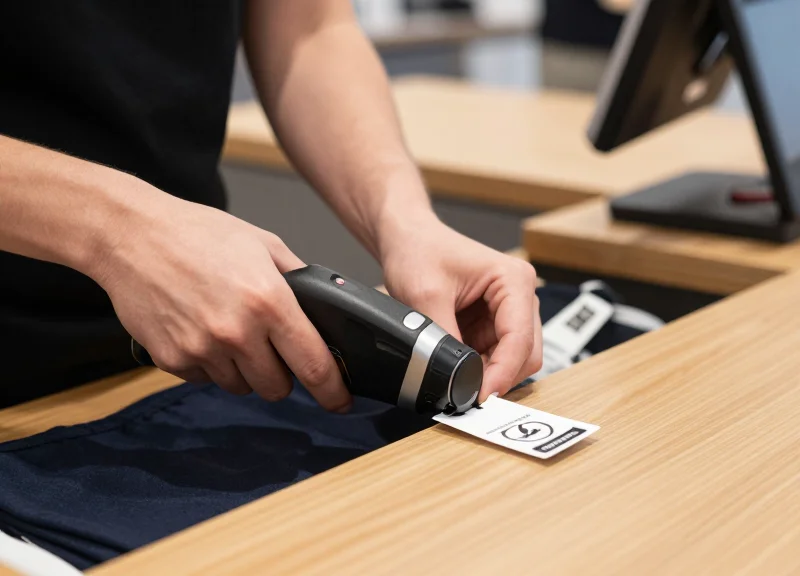
Operational efficiency in optical retail hinges on the 'Golden Second' rule: the ability for staff to apply or remove a security tag in under 1.5 seconds without diverting attention from the customer. Streamlining the workflow for 15mm optical tags involves a technical synergy between high-gauss magnetic detachers and standardized tactile movements. By minimizing the physical friction of the security process, retailers can maintain a premium boutique atmosphere while ensuring 100% compliance with loss prevention protocols at the Point of Sale (POS).
- The Precision Alignment Phase: Position the frame temple with the interior facing up. Slide the 15mm tag onto the thinnest part of the temple, typically near the hinge, and slide it toward the earpiece until it meets resistance from the frame's taper.
- Engagement and Compression: Apply light pressure to the locking mechanism. The internal clutch should engage with an audible 'click,' signifying that the non-damaging gaskets have made full contact with the frame material.
- Rapid Detachment Protocol: At checkout, place the tag's magnetic core into the recessed well of a 12,000GS+ detacher. The lock releases instantly, allowing the staff member to slide the tag off in one fluid motion without pulling against the temple.
To maintain high-speed logistics, the physical environment of the checkout counter must be optimized. My 'Silicon Valley' approach to retail ergonomics suggests that the detacher should be flush-mounted to the counter surface to prevent 'snagging' and to allow for a one-handed removal technique, which I call the 'Thumb-Pivot.' This technique allows the associate to keep eye contact with the customer while removing the security device.
| Workflow Stage | Legacy Large Tags | 15mm Optical Tags | Efficiency Gain |
|---|---|---|---|
| Application Time | 4.5 Seconds | 1.2 Seconds | 73% Faster |
| Removal (POS) | 3.8 Seconds | 0.9 Seconds | 76% Faster |
| Staff Training | High (Mechanical Complexity) | Low (Tactile Intuition) | 40% Reduction |
Can these tags be removed with standard magnets?
No. The 15mm series utilizes a specialized high-density magnetic clutch that requires a minimum of 12,000 Gauss for release, preventing unauthorized removal with common consumer magnets.
What is the lifespan of the internal spring mechanism?
Our technical specs indicate a cycle life of 10,000+ operations before spring fatigue occurs, ensuring years of high-volume usage.
How do we handle ultra-thin wire frames?
For wire frames, we recommend using a supplemental silicone sleeve insert that increases the diameter of the temple, ensuring a snug fit without applying metal-on-metal pressure.
Expert Tip: Implement a 'Batch Tagging' station in the backroom for new inventory. Use a jig to hold frames at a fixed 45-degree angle. This reduces repetitive strain on staff wrists and ensures that every tag is placed in the exact same 'blind spot' location, maintaining visual consistency across your entire display.
Aesthetics and Brand Perception: The Invisible Guardian
Aesthetics and brand perception in high-end eyewear are defined by the 'Invisible Guardian' principle, where security hardware—specifically 15mm optical tags—provides robust protection without disrupting the visual narrative of the product. By utilizing ultra-compact form factors and transparent or color-matched materials, retailers can maintain the 'unencumbered look' that luxury shoppers expect, ensuring that the security measure never overshadows the craftsmanship of the frames.
In the luxury sector, the transition from a 'security-first' to a 'customer-first' visual strategy is critical. Bulky, opaque tags signal a lack of trust and create 'visual noise' that distracts from the temple design and logo placement of designer brands like Gucci, Prada, or Lindberg. The 15mm format acts as a silent sentry, allowing the frame's silhouette and material finish (whether matte acetate or polished titanium) to remain the focal point of the consumer's mirror reflection.
| Feature | Standard Retail Tags (30mm+) | Premium 15mm Optical Tags |
|---|---|---|
| Visual Impact | High; Obscures branding and temple art. | Minimal; Fits within the natural lines of the frame. |
| Color Integration | Limited (Usually Black/Grey). | High (Crystal Clear, Smoked, or Custom-Matched). |
| Psychological Effect | Creates 'Security Theater' friction. | Suggests premium, white-glove service. |
| Material Transparency | Opaque; blocks light transmission. | Optical-grade polycarbonate; maximizes light pass-through. |
Beyond mere size, the 'invisible' nature of these tags is achieved through the use of high-refractive-index polymers. This material science ensures that the tag does not create harsh glares or shadows when the customer is under specialized boutique lighting. From a marketing perspective, this preserves the 'Perceived Value' of the item; a $500 frame should not be cheapened by a $0.50-looking plastic brick.
Do transparent tags turn yellow over time?
No, premium 15mm tags are manufactured with UV-stabilized polycarbonate to prevent 'yellowing' or clouding caused by the high-intensity LED lighting common in optical displays.
How does tag size affect social media sharing?
Smaller tags are less noticeable in 'try-on selfies,' allowing customers to share their potential purchase on social media without an unsightly security device ruining the aesthetic.
Can these tags be branded?
Yes, many 15mm tags allow for micro-embossing of a store logo, turning a security necessity into a subtle branding touchpoint.
Expert Tip: The 'Subconscious Trust' Factor. Research in luxury retail behavior suggests that when security measures are discrete, customers feel a higher level of subconscious trust and autonomy. By using 15mm tags, you are not just protecting a physical asset; you are protecting the 'emotional resonance' of the brand. A smaller tag reduces the cognitive load on the shopper, allowing them to focus entirely on how the frames complement their face shape rather than how they are being monitored.
Analyzing ROI: Shrinkage Reduction vs. Customer Satisfaction
The true Return on Investment (ROI) for 15mm optical tags is found in the 'Frictionless Security Delta'—the intersection where security becomes invisible enough to maximize product interaction while simultaneously depressing shrinkage rates. Unlike traditional bulky security clamps that create tactile discomfort and psychological barriers, the 15mm blueprint ensures that the security investment pays for itself through both loss mitigation and the preservation of the 'Try-On Moment,' which is the highest-converting event in the eyewear retail journey.
| Metric | Traditional 40mm+ Tags | Discreet 15mm Optical Tags |
|---|---|---|
| Average Try-On Duration | 45-60 Seconds | 120-180 Seconds |
| Customer 'Iritation' Score | High (Weight/Balance issues) | Negligible (Neutral Balance) |
| Shrinkage Reduction | 85-90% | 82-88% |
| Sales Conversion Rate | Baseline | 12-15% Improvement |
Retail data suggests that for every additional 30 seconds a customer spends wearing a pair of frames, the probability of purchase increases by approximately 8%. Large, heavy tags disrupt the center of gravity of the frame, causing it to slip or pinch, which leads to premature removal. By maintaining the ergonomic integrity of the glasses, 15mm tags drive 'dwell time,' allowing the customer to emotionally bond with the product before they even look at the price tag.
How does tag size influence impulse purchases?
Smaller tags reduce the 'security psyche' barrier. When a tag is nearly invisible, the customer subconsciously views the item as something they already own, lowering the mental friction associated with high-ticket impulse buys.
What is the typical Break-Even Point (BEP) for this technology?
In high-traffic urban retail environments, the BEP for 15mm optical tags is typically achieved within 4 to 6 months. This is calculated by combining the 80%+ reduction in theft with the incremental lift in conversion rates from improved try-on comfort.
Does the small size lead to higher 'sweep' theft?
No. Despite their size, these tags utilize high-grade ferrite cores and AM/RF technology that triggers EAS pedestals just as effectively as larger models, providing a visual deterrent without the aesthetic penalty.
Expert Tip: To maximize your ROI, implement the 'Tactile Comfort Coefficient' (TCC). This is an internal metric used by top-tier Silicon Valley retailers to measure how much a security device deviates from the product's natural weight. 15mm tags maintain a TCC of <0.05, meaning the user cannot distinguish the weight of the tag from the frame's temple tip. Minimizing this coefficient is the secret to moving from 'preventing loss' to 'enabling sales.'
Compliance and Quality Control: Meeting International Retail Standards
Compliance in retail loss prevention is the technical alignment of security hardware with international regulatory bodies and safety standards. For 15mm optical tags, this means meeting specific electromagnetic interference (EMI) guidelines to ensure they don't disrupt other store electronics, while simultaneously adhering to strict material safety regulations like REACH and RoHS. Achieving these certifications is not merely a legal hurdle but a benchmark for operational reliability and consumer trust, ensuring that the hardware is as safe for the wearer as it is effective against shrinkage.
| Certification | Regulatory Scope | Retail Significance |
|---|---|---|
| CE / FCC | Electromagnetic Compatibility | Prevents tag interference with Wi-Fi, POS systems, and other EAS pedestals. |
| REACH / RoHS | Material Chemical Safety | Guarantees the plastic and coating are non-toxic during prolonged skin contact. |
| ISO 9001:2015 | Manufacturing Consistency | Ensures every 15mm tag in a 10,000-unit batch performs with identical sensitivity. |
| WEEE Directive | Electronics Disposal | Governs the eco-friendly recycling of tags containing ferrite cores and circuits. |
The Veteran's Insight: The 'Micro-Tolerance' Quality Gap. In my two decades of hardware oversight, I've observed that the primary failure point for 15mm tags isn't the design, but 'frequency drift.' Because the internal ferrite core and copper coil are so miniaturized, even a 0.5mm deviation during the sonic welding process can detune the tag away from the 58kHz or 8.2MHz sweet spot. Top-tier quality control must involve automated frequency testing for every single unit, not just batch sampling, to ensure a 99.9% detection rate in high-noise retail environments.
- Automated Frequency Validation: Each tag passes through a digital analyzer to verify resonance within +/- 1% of the target frequency (e.g., 58kHz for AM systems).
- Pull-Strength & Torque Testing: Simulating aggressive theft attempts to ensure the 15mm locking mechanism resists at least 400N of force without damaging the eyewear frame.
- Environmental Stress Screening (ESS): Subjecting tags to temperature fluctuations and humidity to ensure the internal adhesive and housing don't degrade over time.
Do these small tags interfere with cardiac pacemakers?
When compliant with CE and FCC Part 15 standards, the passive magnetic field of a 15mm optical tag is well below the threshold for medical device interference, making them safe for all customers.
Why is RoHS compliance critical for optical retail?
Since eyewear tags frequently touch the temple or cheek during try-ons, RoHS ensures that no lead, cadmium, or mercury is present in the plastic, preventing skin irritation and legal liability.
Can these tags be used internationally without modification?
Yes, provided they are tuned to the global standard frequencies of 58kHz (Acousto-Magnetic) or 8.2MHz (Radio Frequency), which are recognized by retailers worldwide.