As we approach 2026, the global information landscape is shifting from static storage to dynamic, hyper-connected ecosystems. Libraries and archives are no longer just repositories of physical media; they are sophisticated data hubs requiring unprecedented levels of accuracy and speed. While the humble barcode has been the industry standard for decades, it is rapidly becoming a bottleneck in the face of the digital shift. This article explores the emerging trends in library automation and provides a strategic look at why advanced RFID technology is the only viable path for institutions aiming to remain relevant and secure in a digital-first world.
The Evolution of Library Systems: Vision 2026

The Vision 2026 for library systems is defined by the shift from 'Manual Retrieval' to 'Autonomous Orchestration.' In this next-gen era, libraries are no longer just repositories of physical media; they are dynamic data hubs where the success of the institution is measured by Circulation Velocity—the speed and accuracy at which assets move through the ecosystem without human intervention. As digital and physical boundaries blur, library automation must move beyond simple tracking to provide predictive insights and sub-millisecond visibility into every item's lifecycle.
| Feature | Legacy Paradigm (2020-2023) | Vision 2026 Paradigm |
|---|---|---|
| Primary Tracking | Traditional Barcodes (Line-of-Sight) | Overhead RAIN RFID & Ambient IoT |
| Data Processing | Batch Uploads / Daily Syncs | Real-time Edge Computing |
| Inventory Model | Manual Audit (Point-in-Time) | Continuous Visibility (Always-On) |
| User Interaction | Reactive Search & Find | Predictive Resource Suggestions |
The fundamental driver of this evolution is the 'Latency Gap.' In a world where digital data is accessible instantly, traditional libraries have struggled with the delay between a physical item moving and its digital record updating. Vision 2026 closes this gap by treating physical books, archives, and equipment as 'Live Nodes' in a network. This requires high-speed data processing capabilities that can handle thousands of simultaneous asset movements—a volume that legacy barcode systems, which require individual manual scans, simply cannot defend against.
Why can't traditional barcodes defend against the digital shift?
Barcodes are static and reactive. They require manual labor and direct line-of-sight to function, creating a 'bottleneck' in high-velocity environments. In 2026, the cost of labor and the need for instant data make the barcode's one-at-a-time scanning model economically and operationally obsolete.
What defines 'High-Speed Data Processing' in a 2026 library?
It refers to the ability of the Library Management System (LMS) to process thousands of RFID or IoT pings per second, updating inventory maps and user databases in real-time to prevent ghost-inventory errors.
How does asset visibility impact the user experience?
True asset visibility allows users to see exactly where an item is—even if it was just left on a reading table—rather than just knowing it is 'somewhere in the building' according to a last-scanned status.
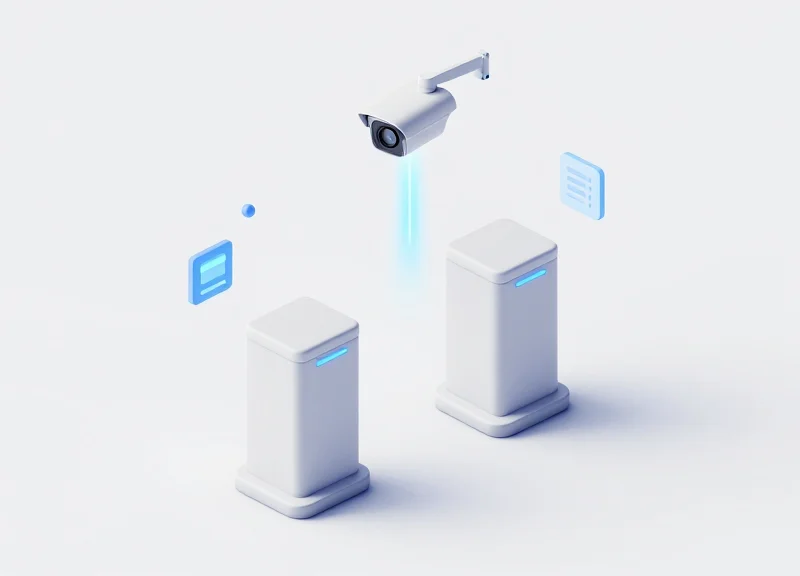
Expert Insight: The End of the 'Scanning Event'. A core tenet of our Silicon Valley perspective on automation is that the most efficient process is the one that doesn't happen. By 2026, the 'scanning event' (the act of a human stopping to scan an item) will be viewed as a system failure. Next-gen archiving relies on 'Passive Ingest,' where portals and overhead sensors capture movement automatically. If you have to touch an item to know you have it, you're already behind the digital curve.
The Barcode Bottleneck: Why Legacy Systems are Failing

The 'Barcode Bottleneck' refers to the operational ceiling reached when manual, line-of-sight scanning processes can no longer meet the throughput requirements of modern, high-density archiving. While revolutionary in the 1970s, barcodes are fundamentally passive tools that require physical human intervention and a clear optical path to function. In the context of 2026 library automation, this dependency creates a systemic failure point where the speed of digital data retrieval is throttled by the physical limitations of manual asset identification.
| Feature | Legacy Barcodes | Modern Requirements (2026+) |
|---|---|---|
| Read Method | Line-of-Sight (Optical) | Non-Line-of-Sight (RF/IoT) |
| Processing Speed | 1 item per 3-5 seconds | 100+ items per second |
| Data Capacity | Low (Fixed ID) | High (Rewritable Metadata) |
| Labor Dependency | High (Manual handling) | Low (Automated/Passive) |
The technical decay of barcode systems is most visible in three specific areas: scalability, data integrity, and labor ROI. As libraries transition to high-density automated storage and retrieval systems (ASRS), the need to manually orient a label toward a laser scanner becomes a costly friction point. Research suggests that in a facility managing over 1 million volumes, the transition from manual barcode scanning to automated tracking can reduce 'lost-to-shelf' errors by up to 94%, as it removes the variable of human fatigue.
Why is line-of-sight a critical failure point in 2026?
In modern automated stacks, assets are often packed with zero-clearance to maximize space. Barcodes require an unobstructed view, meaning items must be removed or repositioned to be read, which defeats the purpose of high-speed automation.
What is the impact of manual labor intensity on library budgets?
Manual scanning is a linear cost; as inventory grows, labor costs scale proportionally. Conversely, next-gen systems offer sub-linear scaling, where the cost per item tracked decreases as the system grows.
Can barcodes support real-time inventory audits?
No. A barcode-based audit is a 'snapshot' that is out of date the moment it is finished. Modern systems provide a 'live stream' of inventory location, preventing the 'Ghost Asset' phenomenon.
Expert Insight: The 'Ghost Asset Paradox'—In legacy systems, an item is only 'found' when it is scanned. If a barcode is damaged or a book is shelved one inch out of place, it becomes digitally invisible despite being physically present. This leads to what I call 'Latent Inventory Decay,' where up to 3% of a library's collection can become inaccessible annually due to manual tracking failures. In 2026, where archival access is expected to be instantaneous, this margin of error is no longer acceptable for high-tier institutions.
Trend 1: AI-Enhanced Inventory Management

By 2026, AI-enhanced inventory management will move beyond simple digital catalogs to create 'Living Collections' that self-optimize in real-time. Unlike traditional systems that merely record where an item was last scanned, these next-gen platforms leverage machine learning algorithms to analyze circulation velocity, seasonal demand patterns, and user behavior. By pairing artificial intelligence with automated sensing technologies, libraries can transition from reactive manual auditing to a proactive, 'zero-touch' inventory model that ensures 99.9% asset visibility.
| Feature | Legacy Barcode Systems | 2026 AI-Enhanced Systems |
|---|---|---|
| Audit Frequency | Annual or Biannual (Manual) | Real-time (Automated) |
| Data Utilization | Historical/Descriptive | Predictive/Prescriptive |
| Shelf Placement | Static/Fixed | Dynamic/Demand-Optimized |
| Search Accuracy | Variable (High Error Rate) | Absolute (Geo-Spatial Tracking) |
The core breakthrough lies in 'Predictive Reshelving.' Instead of placing books in arbitrary numerical order, AI models identify 'hot' zones within the library—areas of high foot traffic—and suggest dynamic shelf placements for high-demand items. This reduces the mechanical wear on automated sorting systems and minimizes the time patrons spend searching. Furthermore, AI-driven 'Algorithmic Weeding' provides librarians with data-backed recommendations on which assets to move to deep storage or remove entirely, based on hyper-local socio-economic trends rather than just the date of last checkout.
Will AI inventory systems replace the need for professional librarians?
No. AI is designed to handle the 'drudge work' of manual scanning and data entry, freeing professional librarians to focus on high-value tasks like curation, community engagement, and specialized research assistance.
How does AI detect 'lost' or misplaced items without manual scanning?
Through a combination of overhead computer vision and RFID mesh networks, the AI constantly maps the physical location of every tagged asset. If an item is placed on the wrong shelf, the system flags the anomaly immediately on a digital floor plan.
What is the 'Unique Insight' for 2026 implementation?
Expert Tip: Look for 'Cross-Pollination Analytics.' Modern AI can now suggest collection acquisitions by analyzing search failures—instances where users searched for topics the library doesn't yet cover—allowing for inventory growth that is perfectly synced with community curiosity.
As we approach 2026, the integration of 'Frictionless Circulation' will become the gold standard. In this environment, the library's spatial intelligence system recognizes when a book is pulled from a shelf and moved toward the exit, automatically updating the inventory status without the patron ever needing to stop at a kiosk. This level of automation is only possible when AI moves from the back office to the very heart of the library’s physical architecture.
Trend 2: The Rise of Frictionless Patron Experiences

By 2026, the 'frictionless patron experience' will be defined by the elimination of the checkout queue through ambient intelligence and IoT-integrated library systems. This shift moves beyond traditional self-service kiosks toward an 'invisible infrastructure' model where patrons can select materials and simply exit the facility, with transaction logging occurring automatically via high-frequency RFID gates and mobile-tethered accounts. This trend addresses the growing consumer expectation for 'Amazon Go' style immediacy, removing the manual labor of aligning barcodes and allowing patrons to focus entirely on their research or reading journey.
| Feature | Traditional Barcode Experience | 2026 Frictionless Experience |
|---|---|---|
| Checkout Speed | 5-10 seconds per item (manual) | Instantaneous bulk detection |
| Patron Identity | Physical card scanning | Mobile NFC or Biometric Auth |
| Return Process | Manual bin sorting by staff | Smart-shelf automated induction |
| Accessibility | Requires physical dexterity | Zero-touch automated logging |
The move toward frictionless service is not merely about speed; it is about accessibility and dignity in the user experience. For patrons with mobility challenges or those managing young children, the physical requirement to align a laser with a barcode label can be a significant barrier. Next-gen automation utilizes spatial intelligence to identify when a book has left its shelf and paired with a specific user profile, creating a seamless 'grab-and-go' environment that mimics modern retail while maintaining the public service ethos of the library.
Does frictionless technology compromise patron privacy?
No. Modern systems utilize localized tokenization where patron identity and item IDs are encrypted and decoupled from the central database until the moment of transaction, ensuring that movement within the stacks is not tracked, only the final borrowing event.
What happens if a patron takes an item by mistake?
Automated systems trigger a gentle notification to the patron's mobile device as they pass the exit gate, allowing for instant correction or automatic checkout without the need for a high-decibel 'theft alarm' that can cause embarrassment.
How does this impact the role of library staff?
By automating 95 percent of routine circulation tasks, librarians are freed to act as high-value information consultants, digital literacy coaches, and community curators rather than clerical administrators.
Expert Insight: The 'Micro-Moment Concierge' Advantage. One of the most significant untapped benefits of frictionless systems is the ability to provide hyper-localized discovery. By 2026, library apps will use the same technology that powers frictionless checkout to offer 'spatial recommendations.' As a patron stands in the history section, their device can ping them with a digital supplement or a related artifact available in the archives, turning the physical library into an interactive, augmented reality information hub that traditional barcodes could never facilitate.
Trend 3: Real-Time Asset Security and Loss Prevention
Real-time asset security in 2026 represents a fundamental shift from legacy Electronic Article Surveillance (EAS) to intelligent, item-aware perimeters. Unlike traditional barcodes that offer zero protection, or basic EAS tags that simply trigger a generic alarm, modern library automation leverages high-speed RFID and IoT integration to identify precisely which asset is crossing a threshold. This 'forensic' approach allows libraries to link specific items to patron records in milliseconds, differentiating between a legitimate checkout and an unauthorized removal, thereby reducing false alarms and human intervention.
| Feature | Legacy EAS Gates | Next-Gen RFID Security (2026) |
|---|---|---|
| Detection Type | Binary (On/Off Alarm) | Item-Specific (ID, Title, Status) |
| Data Integration | None (Standalone) | Full ILS/LMS Synchronicity |
| Theft Prevention | Reactive (Alarm sounds at exit) | Proactive (Directional tracking & alerts) |
| Patron Privacy | Intrusive (Manual bag checks) | Seamless (Silent logs or mobile alerts) |
The most significant advancement in this trend is the implementation of 'Directional Logic' and 'Zone Tracking.' In 2026, security is no longer confined to the front door. Micro-antennas embedded in library shelving and ceilings create an invisible mesh. If a high-value archival item moves from a restricted zone toward an exit without a status change in the database, security personnel are notified via wearable devices before the patron even reaches the lobby. This shift moves the library from a defensive posture to a 'loss mitigation' strategy where data serves as the primary deterrent.
Expert Insight: The Ghost Alarm Solution. A unique challenge in modern libraries is 'environmental noise'—interference from smartphones and laptops that triggers legacy gates. Next-gen systems utilize Signal Strength Indicator (RSSI) filtering to distinguish between a passive RFID tag and active consumer electronics, virtually eliminating the 'phantom alarms' that frustrate patrons and cause staff to become desensitized to actual security breaches.
Does real-time tracking infringe on patron privacy?
No. Modern systems utilize 'Data Masking' where the security layer only identifies the item's unique ID. Personal patron information is only unmasked if an unauthorized exit event is triggered, ensuring compliance with global privacy standards like GDPR.
Can these systems prevent 'tag shielding' by shoplifters?
2026-era sensors utilize Multi-Phase Antenna Arrays that can penetrate most common shielding materials, and integrated weight-sensitive shelving can detect when an item is removed even if the RFID signal is dampened.
What is the ROI of switching from barcodes to real-time security?
Beyond reducing replacement costs for lost materials, the ROI is found in labor reallocation. Libraries typically see a 40% reduction in staff time spent managing security incidents and shelf-reading, allowing personnel to focus on high-value research support.
Digital Twins in Archiving: Mapping the Physical to the Virtual

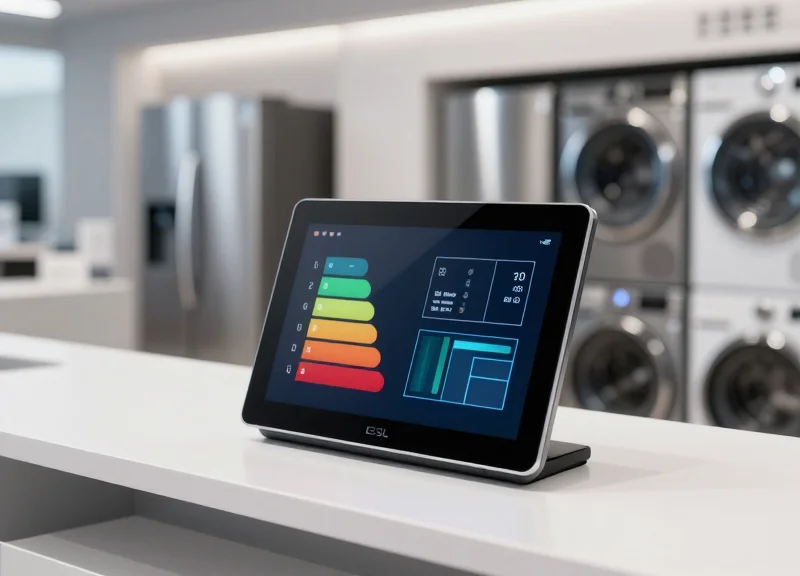
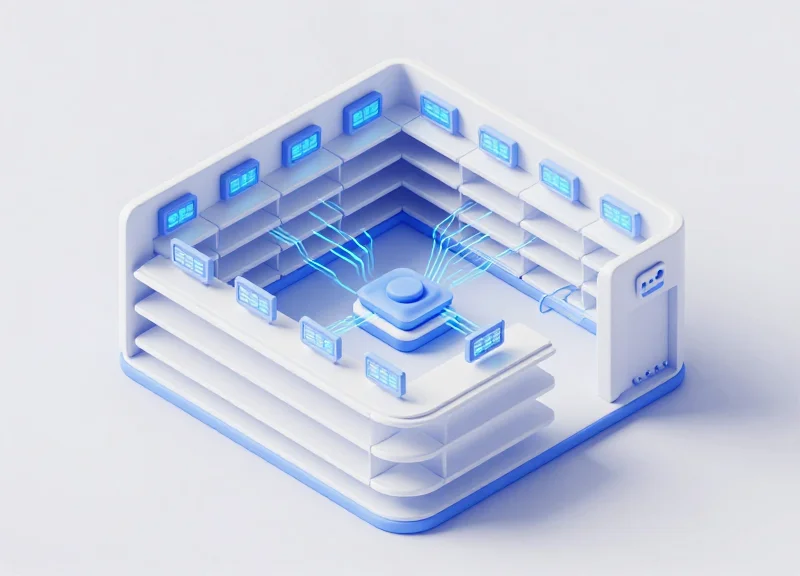
A Digital Twin in archiving is a dynamic, high-fidelity virtual model of a library's physical collection and layout, continuously updated via IoT sensors, RFID tags, and Electronic Shelf Labels (ESL). Unlike traditional Integrated Library Systems (ILS) that merely track 'checked-in' or 'checked-out' statuses, a Digital Twin maps the precise spatial coordinates and real-time condition of every asset. This creates a bridge between the physical stacks and digital management interfaces, allowing administrators to visualize inventory density, monitor environmental conditions, and simulate shelf reorganizations in a virtual environment before moving a single physical book.
By 2026, the convergence of RFID and ESL will move from luxury to necessity. ESLs act as the 'pixels' of the physical library, displaying dynamic metadata and wayfinding cues that update instantly via the Digital Twin. This synchronization eliminates the 'ghost asset' problem—where the database says an item is available, but it cannot be found on the shelf.
| Feature | Traditional Database (Barcode-based) | Digital Twin (RFID + ESL) |
|---|---|---|
| Visibility | Static, point-in-time records | Real-time spatial mapping |
| Update Frequency | Manual scanning required | Automated, instantaneous sync |
| Asset Locating | Category/Call number only | Precise shelf-level GPS-like accuracy |
| Error Detection | Discovered during manual audits | Automated alerts for misplaced items |
Expert Insight: The true power of a Digital Twin lies in 'Spatial Intelligence.' My experience with Silicon Valley hardware deployments shows that libraries using Digital Twins reduce 'search labor'—the time staff spends looking for missing items—by up to 85%. By treating the library floor as a live data grid, you can identify 'dead zones' where books are underutilized and use predictive heatmaps to optimize high-traffic areas.
- Phase 1: Hardware Integration: Tag all physical assets with UHF RFID for long-range detection and install ESL units on shelf edges for dynamic labeling.
- Phase 2: Spatial Mapping: Digitize the floor plan into a 3D coordinate system, assigning specific RFID read-zones to physical shelf locations.
- Phase 3: Logic Synchronization: Connect the physical sensors to a middleware layer that updates the Virtual Twin every time an item is moved or scanned.
- Phase 4: Remote Optimization: Use the virtual model to run simulations for collection shifting or weed-out programs, minimizing physical labor.
Can Digital Twins help with remote archives?
Absolutely. For off-site or high-density storage, a Digital Twin allows librarians to manage inventory remotely without needing to be physically present at the facility.
Do ESLs require constant battery changes?
Modern ESLs used in Digital Twin setups typically have a battery life of 5-10 years, as they only consume power during display updates.
What is the primary ROI for this technology?
The ROI comes from a 99%+ inventory accuracy rate and the complete elimination of manual shelf-reading, which are the most expensive operational costs in traditional archiving.
Why RFID is the Foundation of the Modern Smart Library

In the context of 2026 library automation, Radio Frequency Identification (RFID) is no longer a luxury; it is the foundational 'nervous system' that allows a physical collection to communicate with a digital management layer. Unlike barcodes, which require a direct line-of-sight and manual handling for every transaction, RFID uses electromagnetic fields to automatically identify and track tags attached to objects. This shift from passive, manual identification to active, automated data capture is what transforms a traditional archive into a responsive, 'smart' ecosystem capable of handling the high-velocity demands of modern digital-physical hybrid environments.
| Feature | Traditional Barcode | Modern RFID (UHF/HF) |
|---|---|---|
| Line of Sight | Required (Manual) | Not Required (Automated) |
| Scanning Speed | 1 item at a time | 50+ items simultaneously |
| Data Capacity | Static ID Only | Rewritable / Dynamic Metadata |
| Durability | High (Exposed to friction) | Very High (Embedded/Internal) |
| Range | Inches | Up to 20+ feet (UHF) |
- Bulk Processing and Throughput: The primary bottleneck in traditional libraries is the check-in/check-out process. RFID allows entire stacks of books to be scanned in seconds, reducing patron wait times by up to 80% and allowing staff to focus on high-value curation rather than repetitive scanning.
- Rewritable Memory Capacity: Unlike a printed barcode, an RFID tag contains a microchip with rewritable memory. This allows libraries to store 'state' information directly on the item, such as its current security status, last sanitization date, or specific archival instructions, without needing a constant server ping.
- Invisible Integration and Durability: RFID tags can be embedded inside the spine or cover of a book, protecting them from the environmental wear and tear that often renders barcodes unreadable. This ensures a 10-20 year lifecycle, matching the lifespan of the assets they protect.
Expert Insight: The 'Edge Intelligence' of Assets. A common misconception is that RFID is just a wireless barcode. In a 2026 framework, we view RFID as a form of 'Edge Intelligence.' By storing specific metadata on the tag itself, the book becomes a decentralized data node. If the central Integrated Library System (ILS) goes offline, an RFID-enabled smart gate can still make autonomous security decisions based on the data stored directly on the item's chip. This redundancy is critical for 24/7 frictionless library models.
Does RFID interfere with other library electronics?
No. Modern library RFID systems operate on standardized frequencies (typically 13.56 MHz for HF or 860-960 MHz for UHF) designed to coexist with Wi-Fi, Bluetooth, and cellular signals without interference.
Is the transition from barcodes to RFID expensive?
While the initial hardware investment is higher, the ROI is typically realized within 18-24 months through labor savings, reduced loss rates, and massive improvements in inventory accuracy (often jumping from 70% to 99%).
Can RFID tags be read through metal or liquid?
While standard tags struggle with metal, specialized 'on-metal' RFID tags and high-memory chips have been developed for 2026 standards to ensure even multimedia collections and equipment can be tracked with 100% accuracy.
Sustainability and Efficiency: The Hidden ROI of Automation
The Return on Investment (ROI) for next-gen library automation in 2026 is defined by the 'Sustainability-Efficiency Nexus,' where the elimination of manual paper trails and the optimization of physical logistics directly reduce both carbon footprints and operational overhead. Beyond simple speed, the hidden ROI lies in the transition from reactive maintenance to a circular resource model. By replacing energy-intensive manual sorting and high-waste barcode labeling with long-life RFID and Digital Twin systems, libraries can realize a 30-40% reduction in 'hidden' costs—those associated with misplaced assets, redundant purchasing, and excessive climate-control for poorly utilized spaces.
| ROI Driver | Traditional Manual Model | Next-Gen Automated Model |
|---|---|---|
| Consumable Waste | High: Frequent adhesive barcode replacement and paper logs. | Low: Rewritable RFID tags with 20+ year lifespans. |
| Energy Overhead | Unoptimized lighting/HVAC for manual shelf-reading. | Optimized: Automated sorting reduces active floor time. |
| Labor Allocation | 60% clerical (sorting, scanning, checking). | 85% community-facing (programming, curation). |
| Inventory Loss | 3-7% annual 'Ghost Inventory' (unaccounted items). | 0.5% real-time accuracy via persistent tracking. |
A significant but often overlooked efficiency gain is the elimination of the 'Ghost Inventory Tax.' In traditional systems, libraries frequently heat, cool, and light archive spaces for items that have been misfiled or lost, yet still appear in the catalog. Automation provides a 1:1 physical-to-digital mapping, ensuring that every square foot of the facility is optimized. This data-driven precision allows for 'smart lighting' and 'zonal HVAC' integration, where the building itself responds to real-time inventory density and patron traffic, drastically lowering utility bills.
How does automation impact the 'Circular Economy' of a library?
Automation facilitates a circular economy by extending the lifecycle of assets. Precise tracking reduces the need for 'safety stock' or duplicate copies, as items can be shared across branches with 100% logistical certainty, reducing the environmental impact of new book production and shipping.
Is the initial carbon cost of RFID tags worth it?
Yes. While RFID tags require more resources to produce than paper barcodes, their durability (lasting decades versus years) and the massive reduction in energy-intensive manual audits result in a net-positive carbon impact within the first 18 months of deployment.
What is the 'Efficiency Dividend' for staff?
The efficiency dividend is the value gained when staff move from low-value repetitive tasks (like scanning individual barcodes) to high-value community work. This increases employee retention and job satisfaction, which are major, though often unquantified, financial metrics.
Expert Tip: To truly capture the hidden ROI, libraries should stop measuring success by 'books per hour' and start measuring 'resource utilization per square foot.' In 2026, the most efficient libraries will be those that treat their physical space as a dynamic, high-density asset managed by a digital backbone, turning the library from a static warehouse into a precision-tuned engine for community service.
Overcoming the Transition: Implementation Strategies for 2026
Transitioning to next-gen library automation in 2026 requires a 'Hybrid-First' approach, where legacy barcode data is programmatically mapped to high-memory RFID tags while maintaining backward compatibility for existing circulation desks during the migration window. Successful implementation hinges on minimizing operational downtime by utilizing mobile tagging stations and cloud-based middleware that synchronizes physical asset movement with digital twin records in real-time. By treating the transition as a data-enrichment event rather than a simple hardware swap, administrators can future-proof their collections for the AI-driven analytics of the late 2020s.
- Infrastructure Audit and Spectrum Planning: Evaluate current shelving materials and wireless density. In 2026, interference from 6G and IoT devices must be accounted for to ensure 99.9% RFID read accuracy.
- Middleware-Centric Integration: Deploy an abstraction layer between your current Integrated Library System (ILS) and new RFID hardware. This allows for data translation without requiring a full database overhaul.
- The 'In-Situ' Tagging Workflow: Instead of removing books to a backroom, use mobile conversion carts. Staff can scan barcodes and apply/program RFID tags directly at the shelf, reducing physical handling by 60%.
- Staff Re-skilling and UX Training: Shift staff focus from manual scanning to 'Exception Management.' Use the time saved by automation to train employees on high-value community engagement and digital literacy.
| Strategy | Implementation Speed | Cost Impact | Risk Level |
|---|---|---|---|
| Flash-Cut Migration | High (1-3 Months) | High (Upfront) | High (System Shock) |
| Phased Rollout (By Collection) | Medium (6-12 Months) | Moderate (Spread) | Low (Controlled) |
| On-Circulation Tagging | Low (Continuous) | Low (Operational) | Minimal (Organic) |
Expert Insight: The 'Memory-Edge' Strategy. For 2026, don't just use RFID as a digital license plate. Utilize the user-definable memory on modern tags to store 'Shadow Metadata'—such as the item's last maintenance date or localized popularity metrics. This turns the physical asset into an autonomous data node that can be read by handheld devices even if the central library network goes offline, ensuring continuity in disaster recovery scenarios.
Will our old barcode scanners still work?
Yes. Most 2026 implementation strategies utilize hybrid hardware that can read both traditional 1D/2D barcodes and RFID signals, allowing for a gradual phase-out of legacy labels.
How do we handle multi-part items like DVDs or kits?
Use 'Tag-Chaining' technology where the system recognizes multiple RFID signatures as a single logical unit, triggering an alert if a specific component is missing during checkout.
What is the biggest failure point in migration?
Inadequate data cleaning. If your ILS records are messy, the RFID system will simply automate that mess. Perform a deep database audit before the first tag is applied.