In the high-stakes world of scientific research, the margin for error is becoming razor-thin. As we approach the 2026 regulatory horizon, laboratory managers are facing a pivotal realization: manual processes are the leading threat to data integrity. The traditional reliance on manual barcoding—once the gold standard—is being eclipsed by the necessity for speed, accuracy, and auditability. This shift is driving a global transition toward 2-second RFID batch scanning. By automating the identification of hundreds of assets simultaneously, institutions are not just saving time; they are shielding the very foundation of their research from human error and non-compliance.
The Evolution of Laboratory Standards: Heading Toward 2026
Laboratory standards for 2026 are undergoing a paradigm shift, moving from static sample identification to active, automated traceability. As regulatory bodies like ISO and the FDA tighten requirements for data provenance, the traditional reliance on manual barcode scanning—which is prone to human error and omission—is being replaced by batch-capable RFID technology. This evolution aims to secure research integrity by ensuring that every asset is accounted for in real-time, reducing the "Integrity Gap" that currently compromises up to 15% of longitudinal study data through missed scans or incorrect logging.
| Compliance Metric | 2024 Standard (Manual Barcoding) | 2026 Standard (RFID Batch Scanning) |
|---|---|---|
| Data Capture Velocity | 1-5 seconds per individual item | Sub-2 seconds for hundreds of items |
| Error Probability | Moderate (Human oversight/Line-of-sight issues) | Near-Zero (Autonomous bulk detection) |
| Audit Readiness | Reactive (Requires manual inventory reconciliation) | Proactive (Live chain-of-custody reporting) |
| Integrity Verification | Point-in-time check | Continuous digital twin synchronization |
A critical, often overlooked driver for this shift is the concept of the "Passive Audit Trail." In previous years, compliance was a manual task—a researcher had to remember to scan a sample at every stage of the workflow. The 2026 standards prioritize systems that capture data without human intervention. By utilizing 2-second RFID batch scanning, laboratories can achieve 100% visibility into sample movement, effectively neutralizing the "Integrity Gap" where samples are moved or processed but not recorded. This shift transforms compliance from a burdensome administrative task into a seamless byproduct of the scientific process.
Why is 2026 considered the tipping point for lab standards?
Major updates to ISO/IEC 17025 and GLP guidelines are aligning to address the 'Replication Crisis.' By 2026, the demand for verifiable, automated data streams will make manual barcode systems obsolete for high-stakes research.
Will manual barcoding still be permitted under new regulations?
While not explicitly banned, manual barcoding will likely fail to meet 'Real-Time Verification' requirements, making it difficult to pass audits for complex, multi-site studies or high-volume repositories.
How does batch scanning improve research integrity?
It eliminates 'Selective Reporting' and 'Human Omission.' By scanning entire racks of samples instantly, the system ensures that every sample is accounted for at every checkpoint, leaving no room for unrecorded data gaps.
The Hidden Risks of Manual Barcoding in Modern Research
Manual barcoding poses hidden risks to modern research integrity by introducing human-induced errors, such as 'phantom scans' and transcription mistakes, which occur in approximately 1% to 3% of all manual entries. These small-scale inaccuracies often lead to large-scale failures in data reproducibility, compromising the audit trails required by upcoming 2026 laboratory standards. As throughput increases, the 'human element' becomes a bottleneck that facilitates data silos and breaks the chain of custody.
| Risk Factor | Manual Barcoding Impact | RFID Automation Impact |
|---|---|---|
| Error Rate | 1-3% per 1,000 scans | <0.01% via batch processing |
| Chain of Custody | Easily broken by missed scans | Continuous digital handshake |
| Fatigue Sensitivity | High; errors double after 90 mins | Zero; performance is constant |
| Data Traceability | Subjective/Manual entry | Immutable time-stamped logs |
How does fatigue affect scan accuracy?
Repetitive manual scanning induces 'cognitive tunneling,' where a researcher may believe they scanned a vial (a phantom scan) when the beam did not actually register the data, leading to gaps in the dataset.
Why is 'mis-orientation' a risk in manual workflows?
Manual scanners require line-of-sight. If a label is frosted, scratched, or slightly rotated, the researcher may manually type the ID, introducing a high probability of character transposition errors.
What is the impact on sample viability?
Manual barcoding requires removing samples from controlled environments for extended periods to ensure a clear scan, risking thermal degradation that RFID batch scanning avoids by reading through containers in seconds.
The most dangerous consequence of manual scanning is what we call the 'Data Cascading Error.' In modern high-throughput environments, a single misidentified sample at the storage stage doesn't just result in one lost vial; it corrupts every downstream AI and machine learning model that processes that data point. By the time the error is discovered—often during the peer review or clinical trial phase—the cost of remediation can exceed $15,000 per incident, not including the reputational damage to the institution. As 2026 standards approach, 'human-in-the-loop' scanning is being reclassified from a standard practice to a high-risk liability.
Breaking Down the Technology: What is 2-Second RFID Batch Scanning?
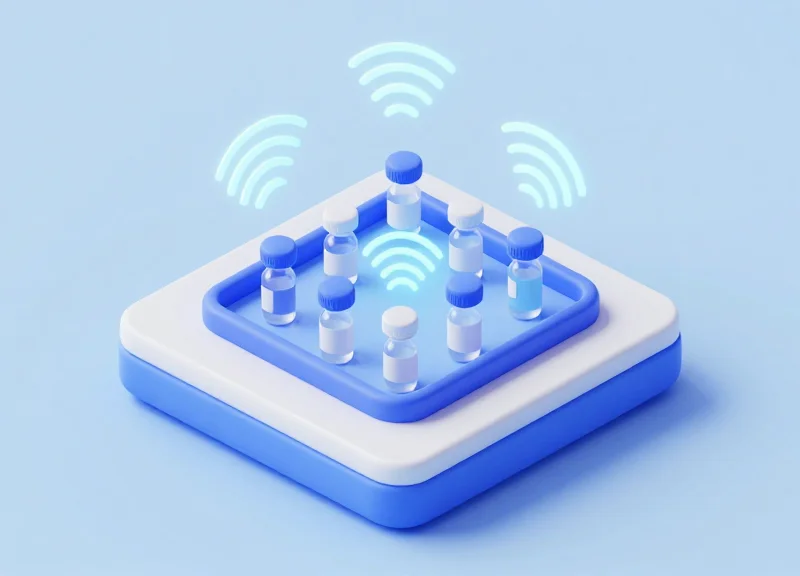
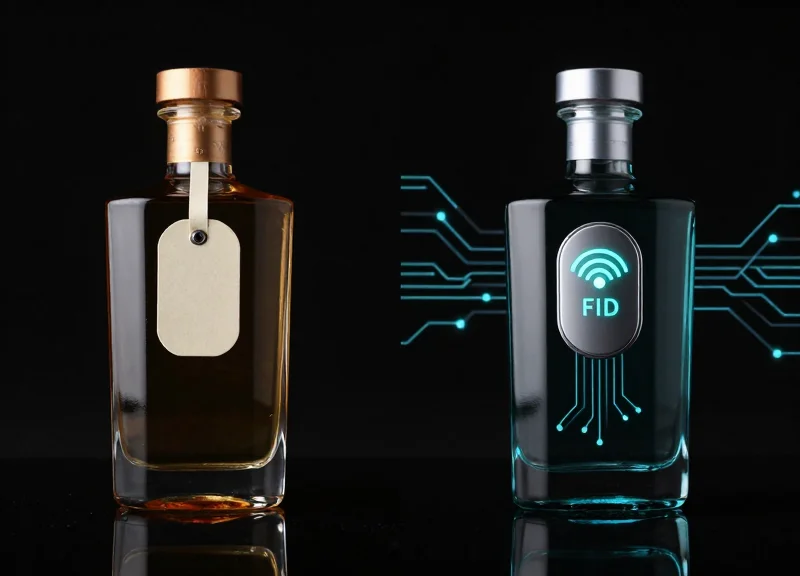
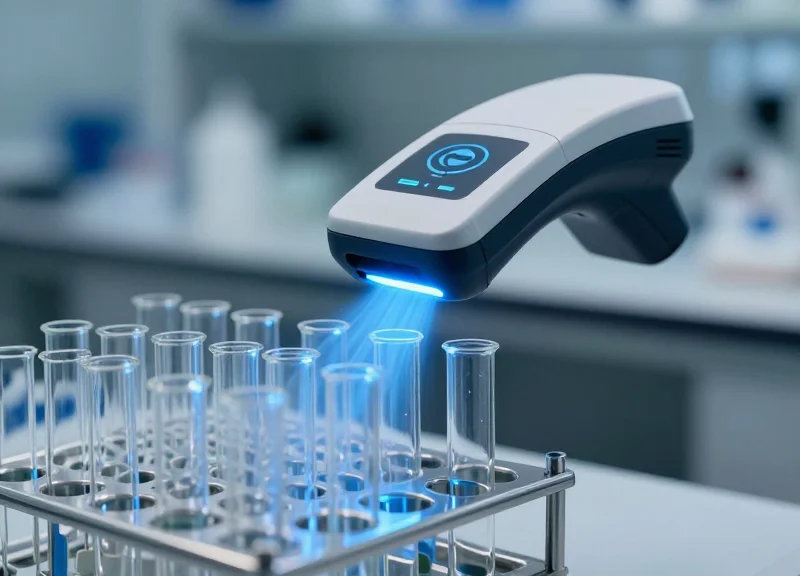
2-second RFID batch scanning is a high-speed data acquisition method that utilizes Radio Frequency Identification (RFID) technology to simultaneously capture data from hundreds of tagged laboratory assets in a single 'broadcast' event. Unlike manual barcoding, which requires a physical line-of-sight and individual item handling, RFID batch scanning uses electromagnetic fields to wirelessly identify and track tags attached to vials, specimens, or equipment. In a laboratory setting, this allows an entire tray or storage rack to be inventoried in under two seconds by simply passing it through a reading zone or using a handheld 'wave' motion.
The physics behind this speed lies in the shift from optical recognition to radio wave propagation. An RFID reader emits a radio signal that 'wakes up' passive tags within its range. These tags then backscatter their unique identification numbers to the reader. Because radio waves can penetrate plastic, cardboard, and even some cryogenic storage materials, the reader does not need to 'see' the tag to record its data, effectively removing the human bottleneck from the inventory process.
| Feature | Manual Barcode Scanning | 2-Second RFID Batch Scanning |
|---|---|---|
| Data Capture Method | Optical (Line-of-Sight Required) | Radio Frequency (No Line-of-Sight) |
| Processing Volume | Sequential (One-by-One) | Simultaneous (Hundreds at once) |
| Average Time for 100 Vials | 5 to 8 Minutes | Under 2 Seconds |
| Human Error Rate | High (Fatigue, Mis-scans) | Negligible (Automated Polling) |
| Cold Chain Integrity | Compromised (Requires thawing/wiping) | Maintained (Scans through ice/frost) |
Expert Insight: The Power of Anti-Collision Protocols. The true 'Silicon Valley' secret to the 2-second scan isn't just radio waves—it is the sophisticated 'Anti-Collision Algorithm.' In a typical batch, hundreds of tags respond to the reader's signal at the same millisecond. Without these protocols, the signals would overlap into unintelligible noise. Modern lab-grade RFID readers use a 'Binary Tree' or 'Slotted Aloha' protocol to silence tags that have already been read, allowing the remaining tags to be heard in rapid-fire succession. This digital orchestration is what allows for 99.9% accuracy at speeds that appear instantaneous to the human eye.
Can RFID scan through liquids or metals?
While traditional UHF RFID struggled with liquids, modern 'on-metal' tags and tuned antennas allow for high-accuracy reading even in moisture-rich environments. For labs, specialized tags are designed to perform reliably on glass vials containing aqueous solutions.
Does the 2-second scan compromise data security?
No. In fact, it enhances it. RFID batch scanning usually incorporates 128-bit encryption and 'Kill/Lock' features, ensuring that the data captured in those two seconds is more secure and harder to spoof than a printed barcode.
Is the technology compatible with cryogenic storage?
Yes. Leading RFID tags for the 2026 standards are rated for temperatures as low as -196°C (Liquid Nitrogen), allowing for batch scanning of samples without ever removing them from their ultra-low temperature environment.
Boosting Research Integrity through Automated Data Capture
Automated data capture protects research integrity by removing the 'human buffer' between physical lab events and digital records. Unlike manual barcoding, which relies on a technician's active intent to scan an item, 2-second RFID batch scanning creates a non-discretionary, objective record of every sample's location, movement, and environmental history. This transition ensures a tamper-proof chain of custody that satisfies the increasingly rigorous demands of peer review and 2026 global regulatory audits.
In the context of the upcoming 2026 standards, 'Research Integrity' is no longer just about the honesty of the scientist; it is about the verifiable provenance of the data. Manual data entry and individual barcode scanning are inherently 'lossy' processes. If a researcher forgets to scan a vial or misplaces a logbook entry during a high-stress trial, a gap is created in the sample's history. These gaps are red flags for auditors and can lead to the rejection of entire datasets. Automated RFID capture eliminates these gaps by moving the responsibility of data entry from the human to the infrastructure itself.
| Integrity Metric | Manual Barcoding (Human-Driven) | RFID Batch Scanning (System-Driven) |
|---|---|---|
| Data Provenance | Fragmented; relies on manual logging | Continuous; automated timestamping |
| Audit Trail | Reconstructive (post-hoc) | Real-time and Immutable |
| Human Error Risk | High (mis-scans, fatigue, omissions) | Near-Zero (systemic capture) |
| Chain of Custody | Validated by individual action | Validated by environmental sensing |
How does batch scanning prevent 'phantom samples'?
Phantom samples occur when a sample exists in a lab but not in the digital inventory. RFID batch scanning identifies every tag within range simultaneously, ensuring the digital 'Twin' of the lab environment is updated every 2 seconds without human oversight.
Can RFID data be manipulated after the fact?
Most 2026-compliant RFID systems use encrypted protocols and write-once, read-many (WORM) memory sectors on tags, combined with blockchain-integrated logs, making it virtually impossible to retroactively alter the chain of custody.
Why is 'Zero-Trust' infrastructure becoming a lab standard?
The Zero-Trust model assumes that any manual entry is a potential point of failure. By automating capture, the lab infrastructure verifies the sample's identity and location automatically, removing the need to 'trust' that a technician scanned every item correctly.
Expert Tip: To maximize integrity, laboratories should implement 'Passive Audit' zones. By placing RFID gateways at transitions between storage, workstations, and waste areas, the system creates a high-fidelity 'Temporal Map' of research assets. This unique perspective—knowing exactly how long a sample was at room temperature versus in a centrifuge without a human ever touching a scanner—provides the ultimate defensive layer for data reproducibility and patent protection.
Operational Efficiency: Manual Entry vs. RFID Batch Scanning
Operational efficiency in the laboratory environment is defined by the ratio of time spent on high-value research versus the administrative burden of sample management. While manual barcoding requires a technician to handle each individual vial, find the label, and ensure a line-of-sight laser alignment, 2-second RFID batch scanning utilizes non-line-of-sight radio waves to capture data from hundreds of items simultaneously. This shift represents more than just a speed increase; it is a fundamental transformation that reduces inventory time by up to 98% and eliminates the 'administrative bottleneck' that traditionally slows down longitudinal studies.
| Efficiency Metric | Manual Barcoding | RFID Batch Scanning |
|---|---|---|
| Processing Time (500 Samples) | ~45 - 60 Minutes | 2 Seconds |
| Human Intervention | Continuous (Item-by-item) | Passive (Proximity-based) |
| Search & Locate Function | Manual visual inspection | Geiger-counter style 'Find' mode |
| Data Entry Accuracy | 92-95% (Subject to fatigue) | 99.9% (Automated verification) |
| Labor Cost (Annualized) | High (Significant FTE hours) | Low (Automated background task) |
The disparity between these two methods becomes exponential as sample volumes grow. In a typical 2026-compliant facility handling 10,000+ assets, the manual approach requires dedicated 'inventory days' that halt research activity. Conversely, RFID systems provide real-time visibility, allowing the digital database to mirror the physical freezer state with zero downtime. This creates a 'frictionless' lab where scientists can focus on discovery rather than data entry.
How does RFID batch scanning improve 'Chain of Custody' speed?
By capturing the movement of entire trays through smart portals, RFID logs time-stamped location data without requiring the scientist to stop, scan, or log into a terminal, ensuring a seamless and fast audit trail.
Is the 2-second scan time realistic for bulk cryogenic storage?
Yes. Modern ultra-high frequency (UHF) RFID readers can penetrate standard frost and cardboard dividers, allowing a technician to scan a full cryo-box in the time it takes to pull it from the freezer rack.
What is the ROI on switching from manual to RFID batch scanning?
Most labs see a return on investment within 12 to 18 months, driven primarily by the recovery of thousands of highly-paid researcher hours previously lost to manual inventory management.
Expert Insight: The 'Data Latency' Dividend. In my two decades observing Silicon Valley lab tech, the biggest overlooked benefit of RFID isn't just speed—it's the elimination of 'Data Latency.' Manual entry often results in a 4-to-24 hour delay between a sample being moved and the database being updated. RFID batch scanning creates a Zero-Latency Environment where the physical and digital worlds are perfectly synchronized. This prevents 'ghost assets' (samples that appear in the system but aren't in the drawer) which are the leading cause of wasted experiment prep time.
Meeting the 2026 Regulatory Compliance Requirements
Compliance in 2026 is defined by a fundamental shift from 'periodic verification' to 'continuous provenance.' Regulatory bodies, including the FDA and EMA, are moving toward standards that demand a verifiable audit trail where data is captured at the point of origin without human mediation. Meeting these requirements means ensuring your data is ALCOA+ compliant: Attributable, Legible, Contemporaneous, Original, and Accurate, plus Complete, Consistent, Enduring, and Available. While manual barcoding creates 'data gaps' during the transit between stations, 2-second RFID batch scanning provides an unbroken digital chain of custody that satisfies the 2026 mandate for real-time visibility and non-repudiation.
| Regulatory Pillar | Manual Barcoding Capability | 2026 RFID Standard |
|---|---|---|
| Data Contemporaneousness | Delayed: Entry occurs after the physical action. | Instant: Record is created as the batch passes the reader. |
| Audit Trail Transparency | Low: High risk of 'ghost' entries or missed scans. | High: Automated logs create a timestamped digital twin. |
| Personnel Attributability | Manual: Requires separate sign-off per scan. | Automatic: Integrated badge and batch scanning. |
| Error Prevention | Reactive: Errors found during manual review. | Proactive: System alerts for missing items in real-time. |
The upcoming updates to ISO/IEC 17025 and specific revisions to EU Annex 11 place a heavy emphasis on 'Automated Data Capture' (ADC) to eliminate the risk of transcription errors. In a 2026 landscape, a laboratory that relies on a human to scan 500 individual vials is viewed as having an 'uncontrolled risk profile.' Conversely, RFID batch scanning is recognized as a validated process that inherently minimizes the 'human factor,' making it the preferred technological control for high-stakes research environments.
Does 21 CFR Part 11 specifically require RFID?
While the regulation is technology-agnostic, the 'Time-Stamped Audit Trail' requirement is increasingly difficult to satisfy with manual barcoding. RFID is the most cost-effective way to achieve the precision required for modern electronic records.
How does RFID improve 'Data Longevity' for 2026 standards?
Manual labels degrade and become unreadable over years of storage. RFID chips are often rated for 20+ years of data retention and can be read through frost or protective layers, ensuring data remains 'Available' as per ALCOA+.
Will manual barcoding be banned in 2026?
Not banned, but it will face significantly higher scrutiny. Labs using manual methods will likely be required to perform more frequent, expensive validation audits to prove their data integrity, making RFID the more economical choice long-term.
Expert Tip: The 'Digital Shadow' Requirement. In my two decades in Silicon Valley's life science sector, the biggest shift I've seen is the move toward 'Digital Shadowing.' By 2026, regulators won't just want to know where a sample is; they will want to know exactly where it was every second it was in your facility. RFID creates a 'Digital Shadow' that follows the physical asset automatically. If you are still using manual barcoding, you aren't just scanning items; you are creating 'dark periods' in your data history that will become a major red flag during future regulatory inspections.
The ROI of Transitioning to RFID Infrastructure
The Return on Investment (ROI) for transitioning to RFID infrastructure is realized through the convergence of operational efficiency and risk mitigation. While the initial capital expenditure for readers and smart-labels is higher than traditional barcoding, labs typically achieve a break-even point within 14 to 18 months by reducing manual inventory labor by 95% and virtually eliminating the 'research restart' costs associated with misidentified or lost specimens. In the context of the 2026 standards, RFID is no longer a luxury but a financial safeguard against regulatory non-compliance fines and the catastrophic loss of experimental integrity.
| ROI Metric | Manual Barcoding (Status Quo) | 2-Second RFID Batch Scanning | Financial Impact |
|---|---|---|---|
| Annual Labor Cost | $45,000 - $60,000 (Avg. Lab) | $2,500 - $4,000 | 90%+ Reduction |
| Sample Search Time | 15 - 20 Minutes / Item | < 1 Second / Item | High Productivity Gain |
| Data Error Rate | 1% - 3% (Human Error) | < 0.01% (Automated) | Prevents Re-run Costs |
| Audit Readiness | Weeks of Prep / Manual Logs | Instantaneous / Digital | Zero-Penalty Assurance |
| Asset Utilization | Often Under-utilized/Lost | Real-time Tracking | Lower CAPEX for Equipment |
The 'Scientific Opportunity Cost' Perspective: Most ROI models fail to account for the pivot from 'maintenance tasks' to 'discovery time.' In a Silicon Valley-style high-throughput environment, every hour a PhD spends scanning individual tubes is an hour not spent on data analysis or experimental design. We estimate that shifting to RFID batch scanning reclaims approximately 300 hours per researcher per year. When multiplied by the average salary of a senior scientist, the labor recovery alone often pays for the entire hardware transition within the first year of deployment.
How does RFID reduce the 'Cost of Failure'?
A single lost or mislabeled sample in a Phase II clinical trial can invalidate an entire cohort, costing upwards of $500,000 in lost time and materials. RFID eliminates this risk by providing a 100% accurate, automated chain of custody.
What is the typical payback period for a mid-sized lab?
Most mid-sized laboratories see a full return on investment within 12-18 months, driven primarily by labor reallocation and significant reductions in consumables waste.
Can RFID infrastructure lower insurance and compliance premiums?
Yes. As 2026 standards approach, insurance providers and regulatory bodies are beginning to offer lower risk-profile assessments to labs that utilize automated, tamper-proof tracking systems, reducing long-term Opex.
Does the infrastructure require replacing all existing storage?
No. Modern RFID batch scanners are designed to be retrofitted into existing cold storage and bench-top workflows, minimizing the 'sunk cost' of current laboratory furniture.
Expert Insight: The 'Zombie Sample' Tax. One hidden drain on lab budgets is the 'Zombie Sample'—aliquots that take up expensive -80°C freezer space but have lost their metadata or identifying barcode. Over five years, the energy and space costs of these unidentifiable samples can exceed $20,000 per freezer. RFID batch scanning allows for 'Full-Freezer Audits' in minutes, enabling labs to reclaim 20-30% of their existing storage capacity by identifying and purging undocumented materials.
Overcoming Implementation Challenges in Sensitive Environments
Implementing RFID batch scanning in sensitive laboratory environments involves navigating the complexities of electromagnetic interference (EMI) and signal attenuation caused by high-density metals and liquid-based reagents. While early RFID adoption faced hurdles with signal collision and 'dead zones,' the 2026 standards leverage High-Fidelity (HiFi) RFID protocols and specialized shielding materials that ensure near-100% read rates without disrupting sensitive electronic instruments or biological samples.
| Challenge | Legacy RFID Limitation | 2026 Standard Solution |
|---|---|---|
| Liquid Interference | RF absorption leading to missed scans | UHF 'Flag' tags and On-Liquid tuning |
| Metal Reflection | Signal bouncing and data corruption | Ferrite-backed tags and adaptive beamforming |
| Instrument EMI | Potential interference with sensitive PCR/Mass Spec | Low-power burst modes and shielded reader zones |
| Data Collisions | Slow read times in dense inventory | Anti-collision algorithms (Gen2V3 protocols) |
A common concern among researchers is the impact of radio frequency energy on sensitive cell cultures or genomic materials. Modern systems utilize 'Adaptive Power Scaling,' where the reader dynamically reduces its output to the minimum required level to achieve a 2-second batch scan. Furthermore, the use of directional antennas and 'RF Zone Carving' allows labs to create invisible boundaries, ensuring that the tracking system only interacts with the targeted inventory and does not bleed into adjacent high-sensitivity zones.
Will RFID signals interfere with my -80°C ultra-low temperature freezers?
No. Modern cryogenic tags are passive and do not emit signals unless queried. The readers are configured with targeted frequency windows that operate outside the range of freezer control electronics, and specialized shielding prevents signal leakage into the compressor housing.
How do we handle inventory inside metal cabinets?
The 2026 standards recommend 'Internalized Reader Integration' where low-profile antennas are mounted inside the cabinet. The metal structure then acts as a natural Faraday cage, keeping the scan localized and 100% accurate without external interference.
Is the system secure against signal hijacking?
Yes. The transition to 2026 standards mandates AES-128 bit encryption for all over-the-air transmissions, ensuring that sensitive research data cannot be intercepted by unauthorized external devices.
Expert Insight: The 'RF Silent' Protocol. One unique advancement in 2026-compliant systems is the implementation of 'Listen-Before-Talk' (LBT) logic. In a lab setting, the RFID reader scans the ambient spectrum for any noise from sensitive scientific equipment first. If it detects a specific frequency being used by an active experiment, it automatically shifts its carrier wave to a 'silent' band. This cognitive radio approach ensures that the tracking infrastructure is a silent partner to the science, never a competitor for the airwaves.
Future-Proofing Your Lab with DragonGuardGroup Solutions
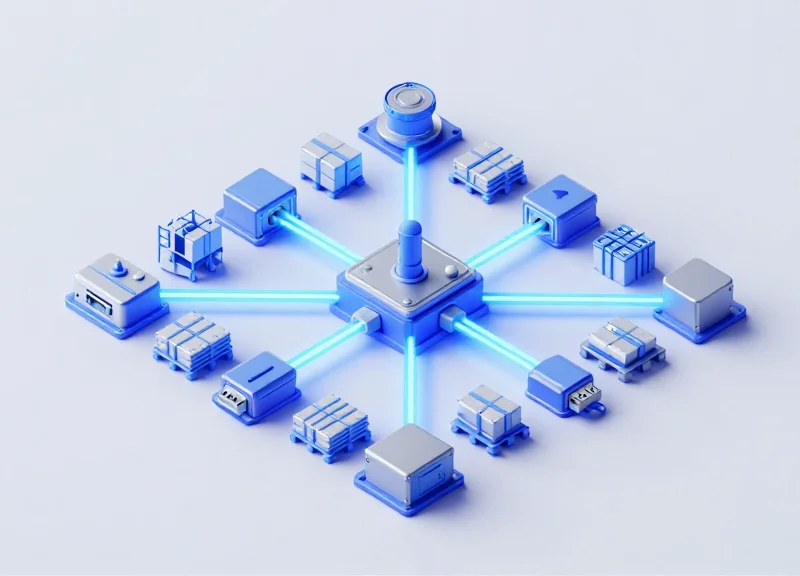
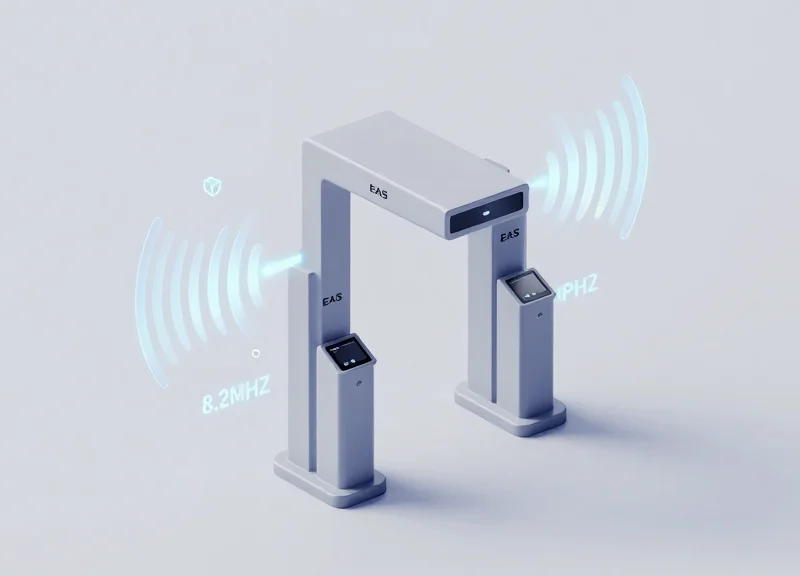
Future-proofing a laboratory for the 2026 standards requires more than just replacing a barcode scanner; it necessitates a holistic infrastructure where asset tracking, security, and real-time data visualization converge. DragonGuardGroup enables this transition by integrating high-frequency RFID batch scanning with Electronic Article Surveillance (EAS) and Electronic Shelf Labels (ESL), creating a unified environment that ensures 100% data integrity and asset security without manual intervention.
While many vendors offer fragmented RFID tags, DragonGuardGroup specializes in 'Ecosystem Integration.' Our solutions are designed to handle the specific stressors of a lab environment—such as cryogenic storage, chemical exposure, and electromagnetic interference—ensuring that your 2-second batch scan is accurate every single time, regardless of the physical conditions.
| Feature | DragonGuardGroup Integrated System | Legacy Barcode/Siloed RFID |
|---|---|---|
| Tracking Speed | 2-Second Batch Scanning (up to 500 items) | 15-30 Minutes for manual entry |
| Security Layer | Integrated EAS (prevents unauthorized removal) | Manual logs or separate security gates |
| Data Visualization | Real-time ESL (Electronic Shelf Labels) | Paper labels or static stickers |
| 2026 Compliance | Fully automated 'Chain of Custody' | High risk of human error/audit failure |
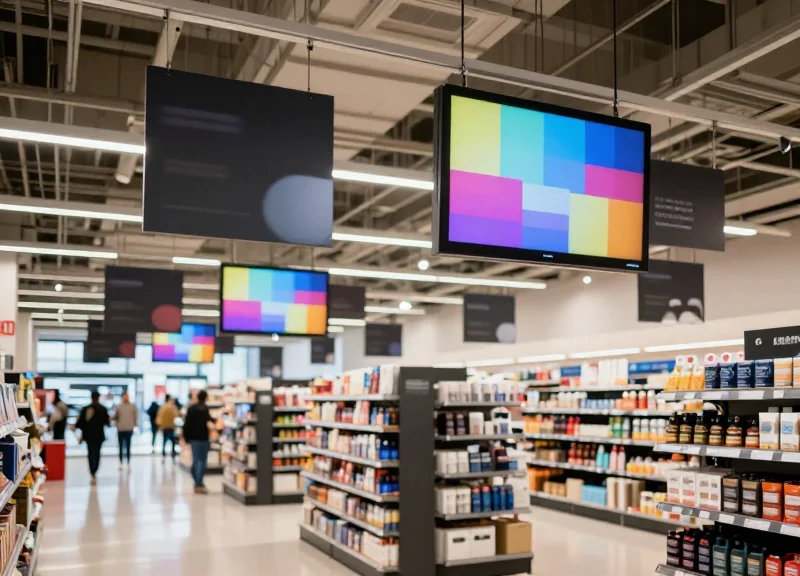
One unique advantage of the DragonGuardGroup approach is our 'Dynamic Ambient Intelligence' framework. By utilizing ESL (Electronic Shelf Labels) alongside RFID, we provide a visual data layer at the point of storage. If a sample's status changes in the database (e.g., expiration or quarantine), the ESL on the rack updates instantly, preventing researchers from using compromised materials before they even pull the item for an RFID scan.
How does DragonGuardGroup handle signal interference in metal-heavy labs?
We utilize specialized 'On-Metal' RFID tags and tuned antennas that mitigate multipath interference, ensuring clean reads even in stainless steel environments like cleanrooms or walk-in freezers.
Can our existing LIMS integrate with your RFID hardware?
Yes. Our systems are built on an open API architecture, allowing seamless data flow between the RFID scanning hardware and your existing Laboratory Information Management Systems (LIMS).
Is the EAS security component necessary for research integrity?
Absolutely. EAS provides the 'gatekeeper' layer, ensuring that high-value intellectual property or hazardous biological samples cannot leave the designated zone without a digital clearance event.
Expert Tip: To maximize your ROI, don't just tag your samples. Apply DragonGuardGroup's ESL technology to your high-value equipment. This allows you to track calibration dates and maintenance schedules automatically, effectively turning your entire facility into a self-auditing 'Smart Lab' that is ready for the 2026 regulatory shift today.