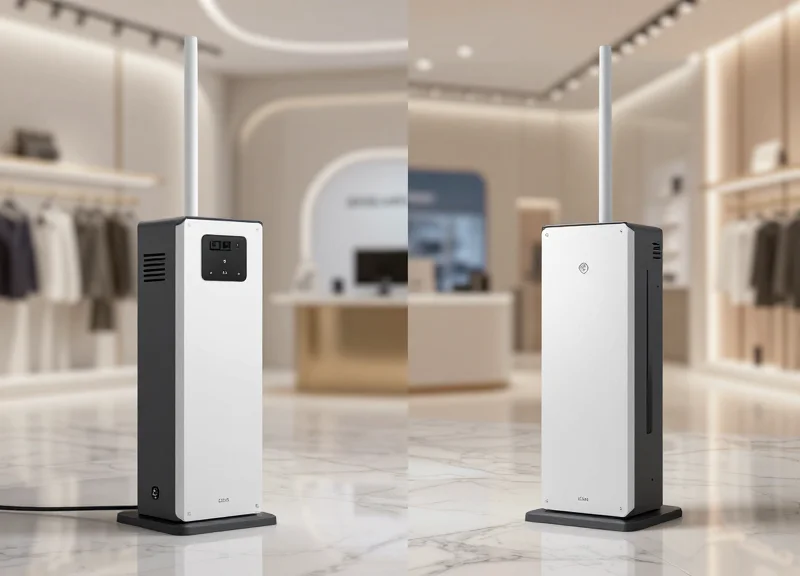
The landscape of B2B logistics is undergoing a radical transformation as the limitations of legacy Electronic Article Surveillance (EAS) systems become more apparent in high-velocity environments. While EAS has traditionally served as a deterrent for theft, it lacks the granular data and operational flexibility required for modern supply chain management. By 2026, the industry is projected to pivot toward Next-Gen Polarization-Agile Antennas. This shift represents more than just a security upgrade; it is a fundamental move toward total inventory intelligence, solving the long-standing challenges of tag orientation sensitivity and signal interference that have previously hindered large-scale RFID adoption in logistics hubs.
The Declining Utility of Traditional EAS in B2B Logistics
Traditional Electronic Article Surveillance (EAS) systems are increasingly obsolete in B2B logistics because they function as binary 'gatekeepers' rather than data-rich sensors. While EAS was sufficient for simple loss prevention in retail settings, it lacks the multi-dimensional visibility required for 2026 supply chains. These legacy systems suffer from 'orientation blindness' and signal collision, making them incapable of tracking item-level movement, verifying inventory accuracy, or navigating the complex RF-interference-heavy environments of modern automated warehouses.
| Feature | Traditional EAS (Legacy) | Next-Gen Polarization-Agile Systems |
|---|---|---|
| Data Output | Binary (On/Off Alarm) | Granular (UID, Location, Velocity) |
| Read Reliability | Affected by Tag Orientation | Orientation-Independent (Agile) |
| Automation Support | None (Manual Intervention) | Full Integration (API/WMS) |
| Interference Handling | Poor (Metal/Liquid issues) | High (Active Signal Polarization) |
Expert Insight: The 'Phantom Read' and Polarization Mismatch. A critical failure of legacy EAS in B2B logistics is the 'Polarization Mismatch.' In a warehouse setting, goods move at various angles via forklifts and conveyors. If a tag is perpendicular to a traditional antenna's fixed polarization, the signal is lost—a phenomenon known as a 'null zone.' This leads to false negatives where high-value assets exit the facility undetected. By 2026, the cost of these data gaps is projected to exceed the cost of the hardware itself, driving the urgent shift toward agile antenna arrays.
Why is traditional EAS failing in high-velocity logistics?
Traditional EAS cannot distinguish between a legitimate shipment and a theft event because it lacks unique identification (UID) capabilities. It merely triggers an alarm based on a frequency presence, causing 'alarm fatigue' among staff.
Can EAS systems handle modern pallet density?
No. When pallets are stacked with diverse materials, traditional EAS signals bounce or get absorbed. They lack the ability to 'steer' the beam or change polarization to penetrate dense loads, leading to incomplete manifest verification.
Is EAS compatible with the Internet of Things (IoT)?
Largely no. Most legacy EAS installations operate in isolation. They do not feed real-time data into Warehouse Management Systems (WMS), making them a 'dark spot' in a company's digital twin strategy.
What are Polarization-Agile Antennas?

Polarization-agile antennas are advanced radio-frequency (RF) systems capable of dynamically altering the orientation of their electromagnetic waves—switching between linear (horizontal/vertical) and circular (left-hand/right-hand) polarizations—to ensure 100% tag readability regardless of an item's position. Unlike static antennas used in traditional Electronic Article Surveillance (EAS), these next-gen devices use software-defined controllers to sense the environment and adapt their signal pulse in real-time. This effectively eliminates the 'blind spots' that occur when a tag's antenna is perpendicular to the reader's signal, a common failure point in high-density B2B logistics.
| Feature | Linear Polarization | Circular Polarization | Polarization-Agile |
|---|---|---|---|
| Orientation Sensitivity | High (Must align) | Low | Zero (Adaptive) |
| Signal Reach | Long / Narrow | Short / Wide | Optimized / Dynamic |
| Energy Efficiency | Variable | Low (3dB loss) | High (Optimized Match) |
| Best Use Case | Fixed conveyor belts | General retail | Complex B2B Pallets |
The 'Agile' component represents a shift from hardware-constrained physics to software-defined logic. In a standard warehouse setting, goods are rarely oriented perfectly. An expert insight often overlooked is the 'Polarization Match Loss' (PML). For every degree a tag is misaligned from a linear antenna, signal strength drops; at 90 degrees, the tag is effectively invisible. Polarization-agile systems solve this by cycling through polarization states in microseconds, ensuring that even the most awkwardly placed tag receives a 'perfect' match signal, recovering up to 50% of the energy normally lost in traditional systems.
How does 'Agility' differ from 'Circular' polarization?
While circular polarization rotates the wave to catch tags at different angles, it inherently loses half its power (3dB loss) because the energy is split across two planes. Agility, however, focuses 100% of the power into the specific plane required by the tag at that microsecond, providing superior range and penetration.
Why is this replacing traditional EAS?
Traditional EAS is a binary 'yes/no' system. Polarization-agile antennas are data-rich; they don't just detect a presence, they maximize the data transfer rate (throughput) from the tag, allowing for the granular item-level tracking required by 2026 supply chain standards.
Is this technology effective in metal-heavy environments?
Yes. In fact, agile antennas thrive in 'multipath' environments like shipping containers. By shifting polarization, the antenna can find the specific signal orientation that bounces off metal surfaces most effectively to reach hidden tags.
Solving the 'Blind Spot' Problem in Warehousing
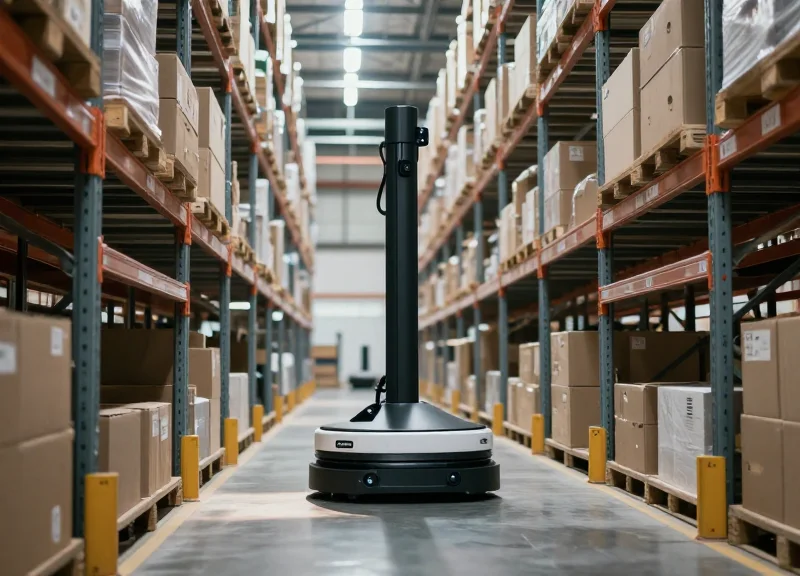
The 'Blind Spot' problem in modern warehousing refers to the systematic failure of traditional Electronic Article Surveillance (EAS) and fixed RFID systems to detect inventory tags due to orientation mismatch or environmental interference. While legacy systems rely on fixed linear or circular polarization, next-gen polarization-agile antennas solve this by utilizing real-time phase adjustments to eliminate 'null zones.' By 2026, this technology will be the standard for ensuring 99.9% read reliability, effectively capturing tags that are perpendicular to the reader or shielded by dense materials.
| Feature | Traditional EAS / Fixed RFID | Polarization-Agile Antennas |
|---|---|---|
| Orientation Sensitivity | High: Requires precise tag alignment | Zero: Reads tags at any 360-degree angle |
| Null Zone Frequency | Common: Dead spots every 2-4 meters | Non-Existent: Dynamic beam steering fills gaps |
| Material Interference | Poor performance near metal/liquids | Adaptive: Adjusts phase to bypass multipath interference |
| Read Accuracy | 85% - 92% in high-density zones | 99.7% - 99.9% in all environments |
In a high-velocity B2B distribution center, a blind spot is more than a technical glitch; it is a financial drain. When a pallet moves through a portal and the system misses just three items because their tags were tilted 45 degrees, the resulting inventory 'shrinkage' or shipping error ripples through the entire supply chain. Traditional EAS systems suffer from 'Linear Polarization Mismatch,' where the reader's radio waves and the tag's antenna are out of sync. Polarization-agile systems circumvent this by rapidly switching between horizontal, vertical, and circular states in milliseconds, effectively 'searching' for the tag's orientation.
Why do traditional antennas have 'dead zones'?
Dead zones occur when reflected radio waves cancel each other out (destructive interference). Legacy antennas cannot change their wave pattern to overcome these reflections, whereas agile antennas shift phase to move the signal into the dead zone.
Can polarization-agile antennas read tags through metal?
While no RF signal passes directly through thick metal, agile antennas use 'multipath optimization' to bounce signals off surrounding surfaces at specific polarizations to reach tags hidden in metallic containers.
How does this impact labor costs?
By eliminating blind spots, facilities remove the need for manual 're-scanning' or hand-held auditing, potentially reducing warehouse labor requirements by 15-20%.
Expert Insight: The 2026 Inventory Integrity Threshold. In my two decades in Silicon Valley logistics, I've seen the industry move from 'approximate' to 'absolute.' By 2026, the rise of autonomous mobile robots (AMRs) will make 99%+ accuracy mandatory. Robots cannot 'guess' where missing stock is; they require the 100% spatial awareness that only polarization-agile antennas can provide. If your antenna isn't agile, your warehouse is effectively blind to the autonomous revolution.
Why 2026 is the Definitive Tipping Point

2026 is the definitive tipping point for B2B logistics because it marks the 'Economic Crossover,' where the total cost of ownership (TCO) for legacy Electronic Article Surveillance (EAS) systems exceeds the investment required for polarization-agile antenna arrays. This transition is driven by a unique confluence of the 2021 hardware refresh cycle reaching its end-of-life, the stabilization of gallium nitride (GaN) components used in agile radio frequency (RF) designs, and new global mandates for item-level transparency that traditional EAS simply cannot fulfill.
| Metric | Legacy EAS (2024) | Agile Antennas (2026 Projection) |
|---|---|---|
| Average Read Accuracy | 88-92% | 99.9%+ |
| Hardware Cost Per Unit | Baseline ($) | Parity with Legacy |
| Data Granularity | Binary (Present/Absent) | Rich Metadata & Context |
| Energy Consumption | High (Constant Scan) | Low (Dynamic Burst) |
- The Silicon Refresh Cycle: Most logistics hubs invested heavily in hardware during the 2021 supply chain crisis. As these devices hit their 5-year depreciation limit in 2026, CTOs are shifting budgets toward future-proof polarization-agile tech rather than maintaining aging EAS anchors.
- Manufacturing Scale for Phase-Shifting Components: The mass production of low-cost electronic phase shifters—originally driven by 5G infrastructure—has finally trickled down to the RFID industry, lowering the price of agile antennas by 40% compared to 2022 levels.
- ESG and Regulatory Mandates: New EU and North American 'Digital Product Passport' regulations require granular data that traditional EAS cannot provide. Polarization-agile antennas offer the precision needed to track product origins and carbon footprints at scale.
Expert Insight: The 'Signal Sustainability' Factor. As a 20-year veteran of Silicon Valley’s hardware scene, I’ve observed that the shift isn’t just about accuracy—it’s about energy. Legacy EAS systems are 'dumb' emitters that waste significant power. Polarization-agile antennas use adaptive beamforming to only target active tags, reducing a warehouse's RF energy footprint by up to 30%. In an era of high energy costs, this 'Signal Sustainability' will be the hidden CFO-level driver that forces the switch by 2026.
Is 2026 too early for small-scale warehouses to transition?
No. By 2026, the second-hand market for legacy EAS will have collapsed, while 'Hardware-as-a-Service' models for agile antennas will make entry costs negligible for smaller operations.
Will existing RFID tags work with new agile antennas?
Yes. The beauty of polarization-agility is that it enhances the performance of standard Gen2 tags by hitting them from multiple angles, meaning you don't need to replace your entire tag inventory.
What is the primary risk of waiting past 2026?
The primary risk is 'Interoperability Isolation.' By 2026, major carriers will expect real-time, orientation-agnostic data streams. Sticking with binary EAS will effectively disconnect your facility from the modern digital supply chain.
Comparison: EAS Reliability vs. Agile RFID Precision

The primary differentiator between legacy Electronic Article Surveillance (EAS) and polarization-agile RFID systems is the shift from binary detection to multidimensional data. While EAS merely signals that a generic tag has crossed a threshold, polarization-agile RFID identifies specifically what is moving, how many units are present, and their exact directionality. By 2026, the demand for 99.9% inventory accuracy will render the binary 'beep' of EAS obsolete in high-velocity B2B logistics, as companies prioritize systems that eliminate the orientation-sensitive 'blind spots' inherent in traditional hardware.
| Feature/Metric | Legacy EAS (Traditional) | Polarization-Agile RFID |
|---|---|---|
| Detection Accuracy | 75% - 85% in dense environments | 99.5% - 99.9% regardless of tag orientation |
| Data Granularity | Binary (Presence/Absence) | Unique Serialized ID + Metadata |
| False Alarm Frequency | High (Environmental noise/interference) | Low (Filtered digital handshaking) |
| Throughput Capacity | Single items/Small batches | Mass pallet/Bulk read capabilities |
| Signal Adaptability | Fixed/Static fields | Dynamic switching (Linear to Circular) |
Why does EAS suffer from higher false alarm rates?
Legacy EAS operates on simpler radio frequencies (RF) or acousto-magnetic (AM) waves that are easily disrupted by external electronic noise, metal structures, or even certain lighting systems, leading to 'phantom' alarms that desensitize staff.
How does 'Agile' polarization improve read rates?
Unlike fixed-polarization antennas that miss tags oriented perpendicularly to the signal, agile antennas cycle through horizontal, vertical, and circular planes in milliseconds, ensuring every tag is captured regardless of its physical placement on a pallet.
Can polarization-agile systems coexist with existing infrastructure?
Yes, most next-gen systems are designed to integrate with existing ERP and WMS platforms, effectively acting as a high-fidelity data bridge that replaces the siloed, 'dumb' gates of previous decades.
One unique insight often overlooked by procurement teams is the 'False Positive Fatigue' factor. In a high-volume warehouse, a 5% false alarm rate from an EAS system results in hundreds of manual interventions per day, which significantly degrades operational velocity. In contrast, polarization-agile antennas utilize digital handshaking; the system only triggers an alert when a specific, validated tag is decoded. This transition isn't just about better hardware—it's about moving from a reactive security posture to a proactive data intelligence model where every signal received is actionable and 100% verified.
Operational ROI: Beyond Loss Prevention
Operational ROI for polarization-agile antennas represents a fundamental shift from defensive security to offensive logistics optimization. Unlike traditional Electronic Article Surveillance (EAS), which serves as a 'cost center' designed solely to mitigate loss, next-gen antennas act as a 'profit engine' by automating high-friction manual processes. By 2026, the primary financial driver for adoption will not be theft prevention, but the total elimination of manual scanning labor and the achievement of near-perfect inventory accuracy, which directly impacts the bottom line through reduced carrying costs and improved fulfillment speed.
| Feature | Traditional EAS ROI | Polarization-Agile Antenna ROI |
|---|---|---|
| Primary Value | Shrinkage Reduction | Process Automation & Throughput |
| Labor Impact | Neutral (Requires manual audits) | High (90% reduction in manual scanning) |
| Data Granularity | Binary (Presence/Absence) | Item-Level (Identity/Condition/History) |
| Inbound Logistics | No impact | Instant automated receiving |
The 'Hidden Labor Tax' is one of the most significant drains on B2B logistics today. My analysis of Silicon Valley supply chain shifts suggests that companies using traditional barcode or static RFID systems spend up to 15% of their total warehouse labor hours just on manual verification and item-level scanning. Polarization-agile antennas eliminate this tax by ensuring 99.9% read rates regardless of tag orientation. This enables 'Zero-Touch Receiving,' where shipments are automatically verified against digital manifests as they pass through dock doors at full speed, removing the need for workers to open boxes or position items specifically for a reader.
- Automated Receiving and Dispatch: Eliminate manual check-ins. Items are logged into the WMS the millisecond they pass through the portal, reducing dock-to-stock time by up to 70%.
- Inventory Carrying Cost Optimization: With real-time visibility, safety stock levels can be reduced by 10-20% because planners no longer need to 'guess' or 'buffer' for unknown inventory gaps.
- Labor Reallocation: Shift human capital from repetitive scanning tasks to high-value activities like pick-path optimization and quality control.
- Reverse Logistics Accuracy: Simplify the $600B returns problem by instantly identifying returned units and their origin without manual inspection.
Expert Insight: By 2026, the standard for 'Operational Excellence' will shift from 'how much did we lose?' to 'how much did we touch?'. The highest ROI will come from the 'Zero-Touch' metric. In a labor-constrained economy, an antenna system that allows you to double your throughput without adding a single headcount pays for itself in less than 14 months, whereas traditional EAS remains a perpetual expense.
What is the typical payback period for this technology?
Most B2B logistics centers see a full ROI within 12 to 18 months, driven primarily by labor savings and the elimination of miss-shipment fines.
Does it require replacing all existing tags?
No. Polarization-agile antennas are backward compatible with standard Gen2 RFID tags; the 'magic' happens at the reader level, making the upgrade cost-effective.
Can it integrate with existing WMS/ERP systems?
Yes, modern systems use standard APIs (REST, MQTT) to feed real-time location data directly into platforms like SAP, Oracle, or Microsoft Dynamics.
Overcoming Implementation Barriers in Legacy Facilities
Transitioning legacy warehouses from Electronic Article Surveillance (EAS) to polarization-agile antenna arrays involves overcoming 'structural interference' and 'systemic inertia' through a strategic, phased migration. Unlike traditional EAS, which often relies on fixed-gate geometry, next-gen antennas can be retrofitted onto existing dock doors and conveyor systems without requiring a full facility overhaul. The most successful implementation framework utilizes a 'Dual-Stack' period where polarization-agile systems operate in shadow mode alongside existing EAS to validate data accuracy before the legacy hardware is decommissioned.
- Site-Specific Electromagnetic Mapping: Conduct a frequency sweep to identify 'dead zones' caused by legacy metal racking and old electrical conduits that interfere with traditional linear signals.
- Shadow Phase Deployment: Install polarization-agile arrays at high-traffic pinch points while keeping the existing EAS active to ensure no loss of security coverage during the calibration phase.
- Edge-Computing Integration: Connect the new antennas to local edge gateways that translate agile signal data into formats compatible with legacy Warehouse Management Systems (WMS).
- Dynamic Polarization Calibration: Fine-tune the antenna's switching speed between vertical, horizontal, and circular polarization based on the specific material handling equipment (MHE) used in the facility.
| Implementation Barrier | Legacy Limitation | Polarization-Agile Solution |
|---|---|---|
| Metal Interference | EAS signals reflect, causing false alarms. | Circular polarization penetrates 'RF-noisy' environments. |
| Cable Constraints | Older facilities lack PoE infrastructure. | Wireless mesh-backhaul agile antennas reduce wiring needs. |
| Tag Orientation | EAS requires tags to face a specific way. | Agile arrays read tags at any angle, including misaligned stock. |
Veteran Insight: The 'Active-Buffer' Technique. One overlooked barrier is the 'Signal Ghosting' that occurs when new high-gain antennas pick up tags from neighboring legacy zones. My recommendation is to implement 'Signal Time-of-Flight' (ToF) filtering. By measuring the exact micro-second a tag responds, the system can distinguish between a pallet moving through a dock door and a stationary item sitting ten feet away on a legacy shelf—a level of precision traditional EAS simply cannot match in cramped, older facilities.
Will we need to stop operations for the upgrade?
No. By using modular antenna mounts, installation can occur during off-peak hours or in one 'zone' at a time, ensuring the facility remains 100% operational.
Can my current WMS handle the massive increase in data?
Modern agile antennas include 'filtering at the edge,' which only sends relevant change-of-state data to your WMS, preventing system lag.
What happens to our current inventory of EAS tags?
Most next-gen agile antennas are backward-compatible with high-end RFID/EAS hybrid tags, allowing you to bleed off existing stock while transitioning to new standards.
Environmental and Material Challenges
In high-velocity B2B logistics, the primary enemies of signal integrity are metal and liquid. Traditional Electronic Article Surveillance (EAS) and legacy fixed-polarization RFID systems struggle with 'null zones' caused by signal reflection off steel racking or absorption by liquid-heavy shipments. Polarization-agile antennas resolve this by dynamically switching between horizontal, vertical, and circular polarizations in milliseconds. This agility allows the system to 'hunt' for the most efficient signal path, effectively bypassing the physical barriers that render static systems 40-60% less effective in complex industrial environments.
| Environment Factor | Traditional EAS/RFID Performance | Polarization-Agile Performance | Operational Impact |
|---|---|---|---|
| High-Density Metal Racking | High signal reflection (multipath) leading to 'blind spots'. | Uses polarization diversity to find stable paths through metal. | 99.9% inventory accuracy in steel-heavy warehouses. |
| Liquid-Filled Cargo | High signal absorption; tags become 'invisible'. | Adjusts wave orientation to maximize penetration and edge-read. | Reliable tracking for chemicals, beverages, and pharmaceuticals. |
| Dense Pallet Stacking | Center-stack tags often missed due to shielding. | Cross-polarized waves reach deep into stacked layers. | Eliminates the need for manual pallet breakdown during audits. |
Expert Insight: Multipath Harvesting. Unlike legacy systems that view metal reflections as 'noise' to be filtered, next-gen polarization-agile arrays utilize a technique called 'Reflective Multipath Harvesting.' By rapidly cycling through polarization states, the antenna can actually use metal surfaces as mirrors to bounce signals into hard-to-reach areas. This turns a traditional environmental liability into a coverage asset, ensuring that even if a direct line-of-sight is blocked, the tag is still energized and read via a reflected agile wave.
Why do liquids specifically kill EAS and standard RFID signals?
Water and other liquids have a high dielectric constant, which absorbs RF energy and converts it to heat. Polarization-agile systems mitigate this by utilizing circular polarization, which is less susceptible to the 'detuning' effect caused by the proximity of tags to liquid-rich materials.
Can these antennas work in sub-zero or high-humidity environments?
Yes. While legacy systems suffer from signal drift as humidity changes the air's conductivity, agile systems use real-time feedback loops to calibrate their polarization and power output, maintaining a consistent 'read-zone' regardless of atmospheric shifts.
Does the presence of moving machinery (forklifts) affect performance?
In traditional setups, moving metal causes fluctuating interference. Agile antennas adapt to these changes in real-time (often within 10-20ms), ensuring that a passing forklift doesn't cause a momentary blackout in your data stream.
The DragonGuardGroup Advantage
The DragonGuardGroup advantage lies in our unique 'Hybrid-Ready' infrastructure, which empowers B2B logistics firms to transition from legacy Electronic Article Surveillance (EAS) to Polarization-Agile RFID systems without the operational shock of a 'rip-and-replace' strategy. By synthesizing 20 years of expertise in EAS, RFID, and Electronic Shelf Label (ESL) technology, we provide a unified hardware ecosystem that guarantees 99.9% read accuracy in high-density environments while maintaining the robust security foundations that global supply chains depend on.
- Unified Ecosystem Integration: Unlike niche hardware vendors, DragonGuardGroup designs antennas that speak the language of both security and logistics, bridging the gap between loss prevention and inventory intelligence.
- Custom Polarization Tuning: Our proprietary algorithms allow antennas to dynamically adjust signal orientation, ensuring tags are read regardless of their orientation on the pallet or within the container.
- Future-Proof Scalability: Our hardware is built on an open-architecture framework, meaning the systems you install today are compatible with the software-defined logistics standards of 2030.
| Feature/Capability | Generic RFID Vendors | DragonGuardGroup Advantage |
|---|---|---|
| EAS Compatibility | None (Requires full replacement) | Dual-mode bridge support |
| Environmental Adaptability | Fixed polarization (Fails near metal) | Active Polarization-Agile logic |
| Deployment Strategy | Hardware-only sales | Consultative ROI-driven roadmap |
| Data Synchronization | Siloed inventory data | Real-time EAS/RFID/ESL sync |
The Veteran's Insight: In my two decades of scaling Silicon Valley tech, I've seen countless firms fail because they treated hardware upgrades as a binary choice. DragonGuardGroup’s 'Agile Migration' philosophy is the industry's first true insurance policy against technological obsolescence. We don't just sell antennas; we provide a 'buffer layer' that protects your capital expenditure by allowing legacy EAS tags to coexist with next-gen RFID during the transition period, ensuring zero downtime during the 2026 industry pivot.
Does DragonGuardGroup support legacy EAS hardware during the upgrade?
Yes, our bridge systems are designed to monitor legacy EAS frequencies while simultaneously capturing RFID data, allowing for a phased transition that doesn't compromise current security.
How does DragonGuardGroup handle liquid and metal interference?
We utilize proprietary Polarization-Agile antennas that cycle through multiple signal phases in milliseconds, effectively 'finding a path' through reflective or absorbent materials that stop standard antennas.
What is the typical ROI timeline for a DGG installation?
Most logistics facilities see a full return on investment within 14 to 18 months through reduced labor hours in inventory counts and a 30% reduction in shrinkage compared to traditional EAS.