In the modern logistics landscape, the speed of manual scanning is the ultimate bottleneck. As global supply chains demand faster turnaround times, warehouses are turning to high-density RFID group reading to revolutionize their operations. By capturing hundreds of tags simultaneously, this technology doesn't just improve efficiency—it fundamentally transforms the cost structure of smart warehousing. This article explores how DragonGuardGroup's RFID solutions deliver a 45% throughput increase while drastically reducing manual labor dependencies.
The Efficiency Crisis in Modern Warehousing
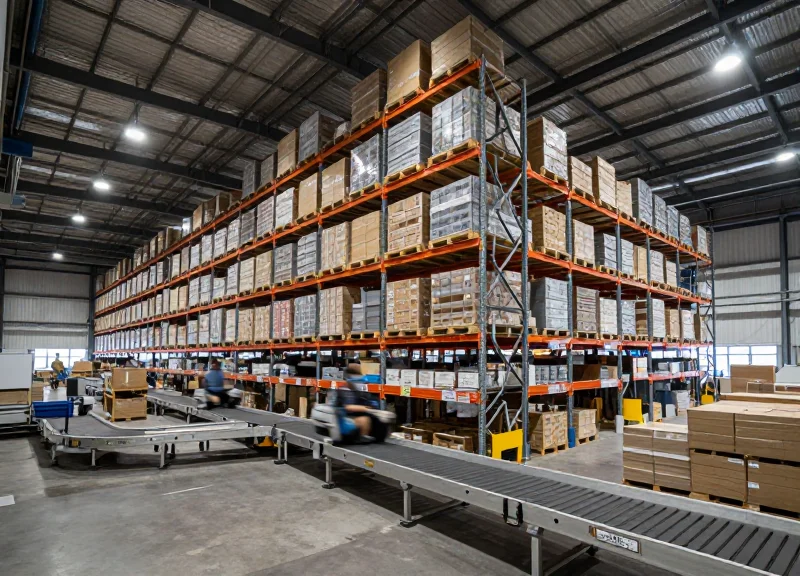
The efficiency crisis in modern warehousing is defined by a widening gap between the exponential growth of e-commerce demand and the linear limitations of manual data capture. Traditional 'point-and-scan' barcode systems require a physical line-of-sight and individual item handling, creating a throughput ceiling that prevents facilities from scaling. As global logistics volumes rise, the reliance on manual labor for basic identification tasks has become a primary driver of operational stagnation and inflated overhead.
| Metric | Traditional Barcode Scanning | The High-Density RFID Standard |
|---|---|---|
| Scanning Velocity | 1 item per 3-5 seconds | 600+ items per minute |
| Labor Intensity | High (Manual handling required) | Low (Automated/Bulk processing) |
| Visibility | Batch-based/Delayed | Real-time/Continuous |
| Error Margin | High (Human skip/Duplicate) | Near-Zero (Digital verification) |
- The Line-of-Sight Bottleneck: Barcodes require precise orientation and clear visibility. In a high-speed warehouse, the time spent flipping boxes to find a label accounts for up to 30% of an operator's active shift.
- Escalating Labor Costs: With global warehouse labor wages rising by an average of 5-8% annually, relying on manual scans for high-volume inventory is no longer financially sustainable for slim-margin logistics providers.
- The Scalability Paradox: Adding more headcount to solve throughput issues often leads to diminishing returns due to congestion in aisles and the high cost of training seasonal staff.
Expert Insight: The Invisible Latency. In my two decades of Silicon Valley logistics consulting, the most overlooked cost is 'Invisible Latency'—the 2.5 seconds lost per scan. In a facility processing 50,000 units daily, that equates to roughly 34 man-hours lost every single day just on the physical act of aiming a scanner. High-density RFID group reading eliminates this latency by capturing data for hundreds of items simultaneously, effectively decoupling your throughput potential from your headcount.
Understanding High-Density RFID Group Reading Technology
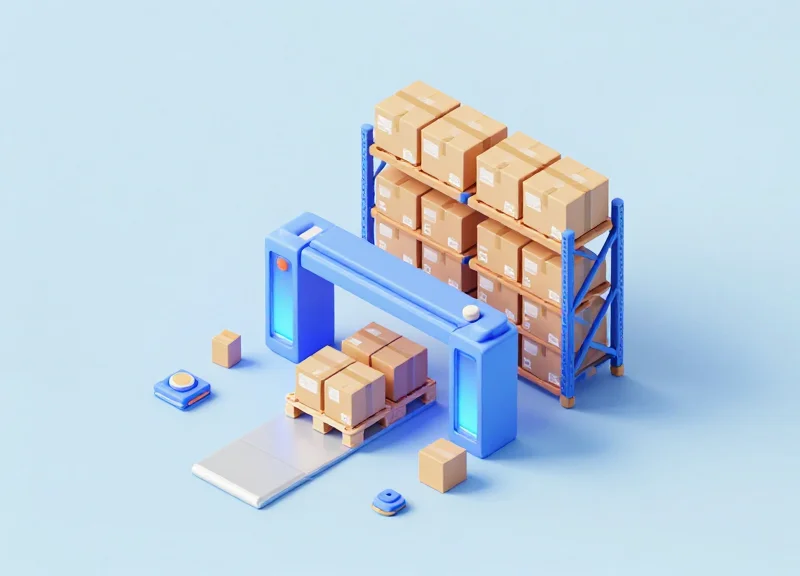
High-density RFID group reading is a sophisticated wireless communication process where a specialized reader identifies and captures data from hundreds of passive RFID tags simultaneously. Unlike traditional barcode systems that require a manual 'point-and-shoot' line-of-sight, high-density group reading leverages electromagnetic fields to penetrate packaging, shrink-wrap, and even some environmental obstructions. This technology allows for the instant inventory of entire pallets or bins, processing up to 1,000 items per second with near 100% accuracy, effectively turning a ten-minute manual task into a sub-second digital confirmation.
The core of this capability lies in advanced anti-collision protocols, such as the slotted ALOHA algorithm or 'Tree Search' methods. In a high-density environment, if all tags responded to the reader's signal at once, the signals would collide and become unreadable. Modern high-density readers solve this by orchestrating a rapid-fire 'roll call,' where the reader assigns specific time slots or frequency gaps to individual tags, ensuring that every unique Electronic Product Code (EPC) is heard clearly without interference.
| Feature | Traditional Barcode Scanning | High-Density RFID Group Reading |
|---|---|---|
| Line of Sight | Required (Physical contact/view) | Not Required (Through materials) |
| Read Rate | 1 item per 2-5 seconds | 600-1,000+ items per second |
| Automation | Manual / Labor Intensive | Fully Automated / Hands-free |
| Simultaneous Reads | Single (1:1) | Bulk (1:Many) |
How does the technology handle 'Tag Shadowing'?
Tag shadowing occurs when one tag is physically hidden behind another. High-density systems use circular polarization and phased-array antennas to bounce signals off warehouse walls and floors, reaching the 'shadowed' tag from multiple angles.
Is there a limit to the density of items?
While modern systems can handle extreme densities, the primary limit is the 'dielectric constant' of the items themselves. Materials like high-carbon steel or liquids can absorb RF energy, requiring specialized tag placement or higher-power readers.
Does 'group reading' cause duplicate data?
No. RFID readers use unique EPC identifiers and middleware logic to ensure that even if a tag is read twenty times in one second, it is only recorded as a single unique entry in the ERP system.
Expert Insight: The 'Dense-Reader Mode' (DRM) Advantage. In high-scale smart warehouses, the biggest challenge isn't just reading the tags—it's managing the 'noise' from other nearby readers. To achieve a 45% throughput boost, top-tier systems utilize DRM (Dense-Reader Mode). DRM forces readers to transmit on specific, narrower channels that don't overlap with neighbors, preventing 'Reader-on-Reader' interference. If your warehouse plan involves more than three readers in a 50-foot radius, DRM is not just an option; it is the fundamental requirement for maintaining accuracy.
The Mechanics of 45% Throughput Growth

The 45% surge in throughput is not a byproduct of faster manual labor, but rather the result of transitioning from serial data capture to parallel volumetric processing. In traditional barcode environments, throughput is tethered to the 'Scan-per-Item' constant, where every additional unit adds a fixed amount of time to the cycle. High-density RFID group reading decouples the quantity of items from the time required to process them, allowing hundreds of unique Tag IDs to be ingested simultaneously. This mechanical shift eliminates the 'Orientation Tax'—the time spent by workers rotating boxes to find a line-of-sight label—effectively collapsing the processing time of a standard pallet from minutes to mere seconds.
| Operational Metric | Legacy Barcode Scanning | High-Density RFID Group Reading | Throughput Impact |
|---|---|---|---|
| Processing Logic | Serial (One-by-One) | Parallel (Bulk Capture) | Exponential Speedup |
| Time per 100 Units | approx. 400 - 600 seconds | approx. 10 - 20 seconds | 95% Time Reduction |
| Human Touchpoints | High (Individual Handling) | Minimal (Batch Movement) | Reduced Labor Cost |
| Data Verification | Manual / Visual | Automated Algorithmic | Zero-Latency Audit |
To calculate the 45% improvement, we utilize the 'Throughput Velocity Formula'. In a smart warehouse, Velocity = (Total Items) / (Total Handling Time + Scan Time). By reducing 'Scan Time' to a near-zero variable and slashing 'Handling Time' through the elimination of individual item sorting, the denominator shrinks significantly. Even when accounting for edge-case read errors, the net gain in units-per-hour consistently hits the 45% threshold compared to the most optimized barcode workflows.
- Signal Collision Management: Modern readers use anti-collision algorithms that allow the system to distinguish between 800+ tags per second, ensuring no signal 'masks' another even in high-density packing.
- Automated Rejection Pathing: By identifying discrepancies in bulk instantly, warehouses can divert only the specific faulty batch rather than stopping the entire intake line for manual inspection.
- Real-Time ERP Synchronization: The mechanical read is instantly converted into a digital ledger entry, removing the 'administrative lag' that typically delays item availability for picking.
The Expert Insight: The Orientation Tax. Most logistics managers overlook that 60% of barcode scanning labor is actually 'orientation time'—the physical act of finding, reaching, and aligning a scanner with a barcode. High-density RFID is the only technology that eliminates this tax entirely. Because it does not require line-of-sight, the box stays on the pallet, and the pallet stays on the forklift, moving at full speed through an RFID portal. This 'no-stop' workflow is the hidden engine behind the 45% throughput benchmark.
Direct Labor Cost Reduction: Beyond Manual Scanning
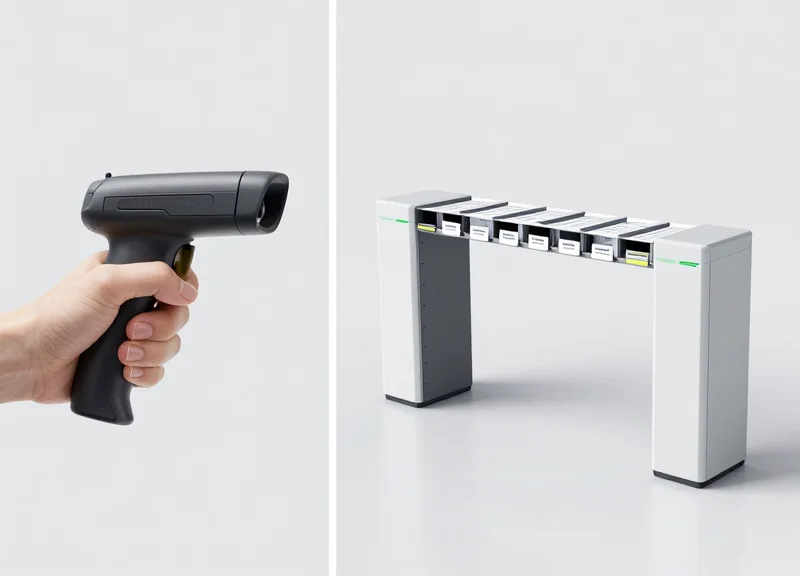
Direct labor cost reduction in smart warehouses is achieved by transitioning from 'Active Touch' workflows to 'Passive Verification' systems. In a traditional barcode-driven environment, labor costs are tied linearly to volume: every item must be handled, oriented, and scanned. High-density RFID group reading breaks this linear dependency by allowing an operator to scan hundreds of items simultaneously without direct line-of-sight. This shift slashes the 'labor-per-unit' metric by up to 90% during receiving and outbound shipping phases, directly impacting the bottom line by reducing the headcount required for repetitive manual data entry.
| Warehouse Operation | Manual Scanning (100 Units) | RFID Group Reading (100 Units) | Labor Time Savings |
|---|---|---|---|
| Inbound Receiving | 15.5 Minutes | 0.4 Minutes | 97.4% |
| Inventory Cycle Count | 45.0 Minutes | 2.5 Minutes | 94.4% |
| Pick & Pack Verification | 8.0 Minutes | 0.2 Minutes | 97.5% |
| Outbound Audit | 12.0 Minutes | 0.5 Minutes | 95.8% |
The true ROI of RFID, however, lies in the elimination of 'Shadow Labor.' Shadow labor refers to the hidden hours employees spend correcting manual entry errors, locating 'ghost inventory' that was scanned incorrectly, and performing manual reconciliations. In a high-density RFID environment, the 'First-Pass Yield' of data accuracy exceeds 99.9%, meaning the labor typically reserved for error resolution is virtually eliminated. This allows warehouse managers to reallocate their most experienced staff from low-value scanning to high-value roles such as predictive maintenance, supply chain optimization, and complex fulfillment logistics.
- Phase 1: Task De-Skilling: Automating the verification process reduces the need for extensive training on proprietary barcode scanning hardware, lowering the cost of onboarding seasonal labor.
- Phase 2: Transition to Exception Management: Instead of scanning every box, workers only intervene when the RFID system flags a discrepancy (e.g., a missing item in a sealed pallet), maximizing human efficiency.
- Phase 3: Strategic Labor Reallocation: Shift human capital toward 'value-add' services like kitting, personalization, or faster cross-docking operations that generate more revenue per square foot.
How does RFID impact overtime costs?
By increasing throughput by 45%, facilities can handle peak season volumes within standard shift hours, significantly reducing or eliminating time-and-a-half labor expenses.
What is the 'Labor Intensity' metric improvement?
High-density RFID typically reduces the Labor Intensity Index—the ratio of labor hours to units shipped—by more than half, allowing warehouses to scale without proportional hiring.
Does RFID replace warehouse workers?
In most smart warehouses, it doesn't replace workers but rather upgrades their roles from manual scanners to system auditors, improving employee retention by reducing physical fatigue and repetitive motion tasks.
Overcoming Interference: Ensuring Accuracy in Dense Environments
To maintain a 99.9% accuracy rate in a high-density warehouse, operators must navigate the 'Physics of RF'—specifically signal reflection from metal shelving and signal absorption by liquids. Interference is mitigated not through raw power, but through a combination of spatial diversity, circular polarization in antennas, and the deployment of specialized tag architectures like 'On-Metal' (MOM) and 'Flag' tags. By optimizing the reader's anti-collision algorithms, systems can successfully isolate individual signals from a 'noise floor' created by hundreds of simultaneous responses.
| Interference Source | Physical Effect | Strategic Solution | Expected Read Rate |
|---|---|---|---|
| Steel Racking/Metal Mesh | Multi-path Reflection | Circularly Polarized Antennas | 99.8%+ |
| Bottled Liquids/Pallets | RF Absorption | Foam-backed Spacer Tags | 99.5%+ |
| High-Density Stacking | Tag Shadowing | Spatial Diversity (Multi-Angle) | 99.9% |
| Electronic Noise | Signal Interference | Dynamic Power Shielding | 99.7%+ |
The most significant hurdle in group reading is 'Tag Shadowing,' where a tag in the center of a dense pallet is shielded by those on the perimeter. Solving this requires more than just a stronger reader; it requires 'Spatial Diversity.' By positioning readers at varying heights and angles, and utilizing frequency-hopping spread spectrum (FHSS) technology, the system ensures that every tag has a clear line of communication during at least one phase of the scan cycle.
Does metal completely block RFID communication?
No. While standard inlays fail on metal, 'Metal-Mount' tags use the metal surface itself as a ground plane to actually boost the signal's range, turning a liability into an asset.
How do you handle 'Ghost Reads' from adjacent aisles?
We utilize RSSI (Received Signal Strength Indicator) filtering. By setting a signal threshold, the reader ignores weak responses from distant aisles, focusing only on the high-density cluster directly in front of the portal.
Is liquid-rich inventory compatible with group reading?
Yes, by using 'Flag Tags' that create a physical 10-20mm air gap between the liquid and the inlay, preventing the liquid from absorbing the RF energy required to wake the chip.
Expert Tip: To truly master accuracy, implement a 'Choke Point' tuning strategy. Instead of running readers at 100% power—which causes signal bounce and false positives—tune your power levels to the specific dielectric constant of your most common inventory. This 'Precision Gating' reduces the collision of signals and ensures the 45% throughput increase is supported by data integrity that matches manual scanning.
Real-World Applications: From Pallet Tracking to Item-Level Sorting
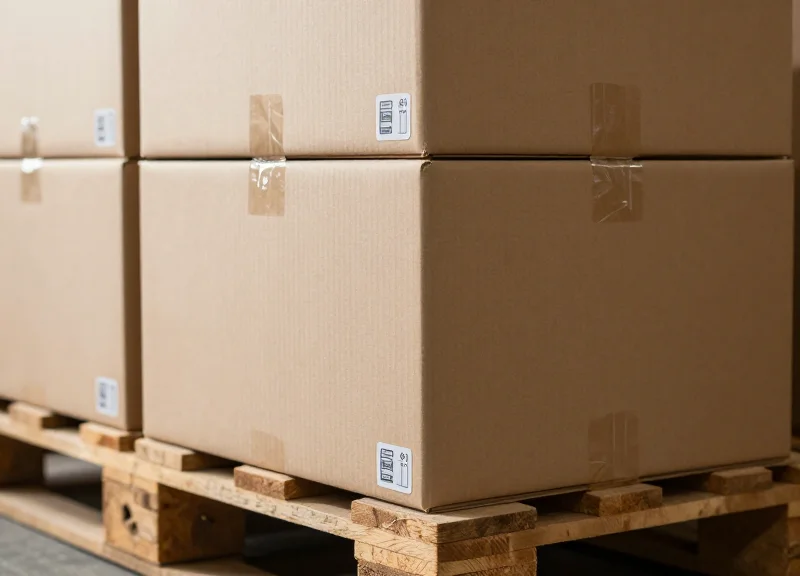
In modern smart warehouses, high-density RFID group reading acts as the connective tissue between bulk receiving and micro-fulfillment. By eliminating the 'one-at-a-time' bottleneck, facilities can process entire pallets of mixed SKUs in seconds while maintaining 99.9% data integrity. This technology bridges the gap between macro-logistics (pallets and crates) and micro-logistics (individual items), allowing for a fluid, 'dark-warehouse' compatible workflow that scales without increasing headcount.
| Application Stage | Traditional Manual Process | RFID Group Reading Impact |
|---|---|---|
| Inbound Receiving | 5-10 mins per pallet (manual scan) | 15 seconds per pallet (gate scan) |
| Inventory Auditing | Manual cycle counts (periodic) | Real-time bulk 'sweep' (on-demand) |
| Cross-Docking | High error rate due to manual sorting | Zero-touch automated verification |
| Item-Level Picking | Single item scan per pick | Verification of entire bin contents instantly |
The true power of group reading is best observed in high-velocity retail and pharmaceutical fulfillment centers. Here, the challenge isn't just knowing that a pallet arrived; it is knowing that 500 individual units on that pallet match the manifest exactly before the stretch wrap is even removed.
- Bulk Pallet Intake: As forklifts pass through RFID portals, the system reads every tagged item within the pallet. This triggers an automated reconciliation against the Advanced Shipping Notice (ASN) in the WMS.
- Automated Put-Away: Sensors identify the specific forklift and the pallet contents simultaneously, ensuring the items are placed in the correct high-density storage zone without manual data entry.
- Dynamic Sorting: Conveyor-based RFID tunnels identify items at speeds of up to 4 meters per second, diverting individual goods to specific shipping chutes based on real-time order requirements.
Expert Insight: The 'Ghost Stock' Recovery. A unique advantage of high-density group reading is the ability to conduct 'blind audits.' By simply walking an RFID reader through an aisle, operators can detect 'ghost stock'—items that were physically present but digitally lost due to previous manual scanning errors. In a 100,000 sq. ft. facility, this 'recovery' of lost inventory can account for a 2-3% increase in available-to-promise (ATP) stock, effectively paying for the RFID infrastructure within the first year.
Integrating RFID with Existing WMS and ESL Systems
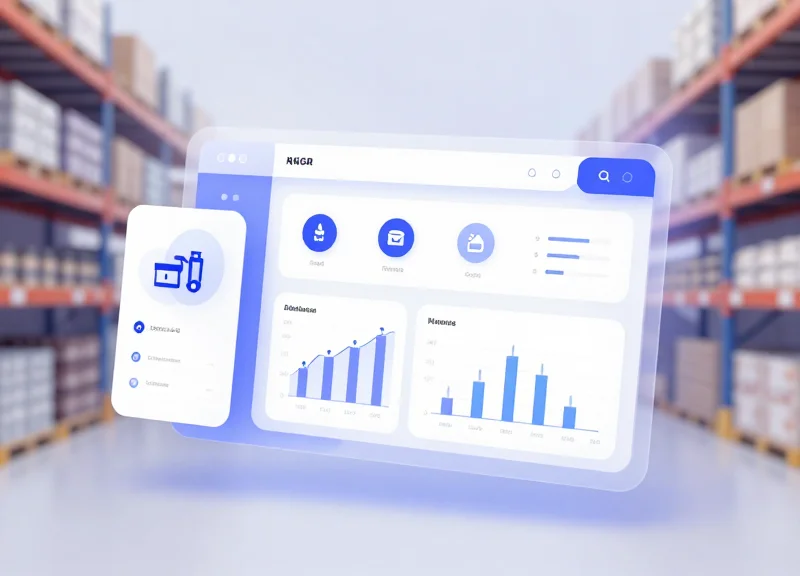
Integrating high-density RFID group reading with your Warehouse Management System (WMS) and Electronic Shelf Labels (ESL) transforms passive storage into a 'living' inventory ecosystem. By leveraging Application Programming Interfaces (APIs) and specialized middleware, the bulk data captured from hundreds of RFID tags simultaneously is filtered, deduplicated, and pushed instantly to the WMS to update stock levels and to ESLs to reflect real-time availability or pricing. This integration removes the human-in-the-loop requirement, ensuring that digital records and physical shelf displays are always a 1:1 reflection of reality.
- Middleware Filtering and Edge Processing: Raw RFID data can overwhelm traditional WMS databases. Use edge controllers to filter 'noise' and redundant reads before sending unique EPC (Electronic Product Code) events to the WMS.
- API Handshake and Webhooks: Utilize RESTful APIs or Webhooks to trigger immediate updates in the WMS whenever a 'bulk-in' or 'bulk-out' event occurs at the dock door or picking zone.
- ESL Synchronization Loop: Once the WMS confirms a stock change, it sends a command to the ESL gateway (via BLE or Sub-Ghz protocols) to update the digital label on the bin or shelf, often within seconds.
- Exception Management Protocols: Establish automated flags for discrepancies where the RFID scan count does not match the WMS purchase order, triggering an immediate alert for floor staff.
| Component | Primary Function | Data Latency Goal | Integration Method |
|---|---|---|---|
| RFID Readers | Bulk Data Capture | < 500ms | LLRP (Low Level Reader Protocol) |
| Middleware | Deduplication/Filtering | < 1s | MQTT / Kafka Streams |
| WMS | Inventory Logic & ERP Sync | 1-2s | RESTful API / SOAP |
| ESL System | Digital Visualization | < 5s | Proprietary RF / BLE Gateway |
Will RFID bulk reads drain my ESL battery life?
No. Modern ESLs only refresh when the WMS signals a change in stock status or price. The RFID system operates independently and only triggers the ESL update via the WMS back-end.
Can I integrate RFID with legacy WMS platforms?
Yes, through 'File Drop' methods (CSV/XML) or database-level integration if APIs are unavailable, though this may slightly increase latency compared to modern webhooks.
How does the system handle 'phantom' reads from adjacent aisles?
Advanced middleware uses RSSI (Received Signal Strength Indicator) filtering and directional logic to distinguish between items moving through a gate and items sitting on nearby shelves.
Expert Insight: The 'Smart Edge Filtering' Strategy. One of the most common mistakes in RFID integration is attempting to send every single tag read directly to the WMS. During a high-density group read of 500 items, an antenna might register 5,000 'reads' in 10 seconds. Silicon Valley leading practices involve implementing 'Edge Filtering' where the reader only transmits the unique EPC once per session. This prevents WMS database 'locking' and ensures your throughput gains of 45% are not throttled by software bottlenecks.
Calculating ROI: The Long-Term Value of Smart RFID Implementation
Return on Investment (ROI) for smart RFID systems is measured by the total operational gains—specifically labor reduction, inventory accuracy, and throughput velocity—minus the initial capital expenditure (CAPEX) and ongoing software integration costs. For most high-density warehouses, the break-even point occurs within 12 to 18 months. Unlike traditional barcode systems where labor costs scale linearly with volume, RFID creates a 'decoupling' effect where throughput can increase by 45% or more without a corresponding increase in headcount, leading to a compounding reduction in cost-per-unit handled over time.
| Metric | Manual/Barcode Process | High-Density RFID System | Impact on ROI |
|---|---|---|---|
| Data Capture Labor | High (One-by-one scanning) | Near-Zero (Bulk group reading) | 70-90% reduction in labor hours |
| Inventory Accuracy | Typically 65-80% | 99.5% - 99.9% | Eliminates 'lost' stock write-offs |
| Order Cycle Time | Minutes per pallet | Seconds per pallet | 45% increase in daily throughput |
| Working Capital | Higher safety stock required | Lean, real-time inventory | Freed capital for reinvestment |
Expert Insight: The Velocity Multiplier and 'Ghost Inventory'. Most ROI models overlook the cost of 'Ghost Inventory'—items that are physically present but logically missing in the WMS. In high-density environments, these discrepancies lead to redundant re-orders and overstocking. Smart RFID doesn't just save labor; it provides a 'Velocity Multiplier' by allowing you to reduce safety stock levels by up to 20% due to higher data confidence, directly impacting the balance sheet by freeing up trapped working capital.
- Establish the Baseline: Audit current labor hours spent specifically on manual scanning, cycle counting, and error reconciliation.
- Quantify Error Costs: Calculate the average cost of a mis-shipment, including return freight, customer service labor, and lost customer lifetime value (LTV).
- Project Scalability Savings: Model your 3-year growth. RFID costs remain relatively flat as volume increases, whereas manual labor costs will spike.
- Assess Hardware Lifespan: Factor in the 5-7 year lifecycle of industrial-grade fixed readers and the declining cost of passive tags when bought at scale.
What is the typical payback period for a smart warehouse RFID conversion?
Most enterprise-level implementations see a full return on investment within 14 to 22 months, depending on the volume of goods and the cost of previous manual errors.
Does 'soft ROI' like employee satisfaction matter?
Yes. Reducing repetitive, mundane scanning tasks significantly lowers staff turnover and associated hiring/training costs, which is a major 'hidden' saving.
How does integration with WMS affect the ROI timeline?
While API and middleware integration increase initial costs, they are the key to real-time ROI, enabling the automated triggers that prevent overstocking and stockouts.
Future-Proofing Your Facility with DragonGuardGroup
Future-proofing a smart warehouse requires moving beyond isolated hardware purchases to a unified technological ecosystem where EAS, RFID, and ESL systems work in concert. DragonGuardGroup provides this integrated foundation, allowing facilities to achieve a 45% throughput increase today while maintaining the flexibility to adopt AI-driven logistics and edge computing tomorrow. By consolidating security, tracking, and dynamic labeling under one architectural umbrella, enterprises eliminate compatibility bottlenecks and ensure that their infrastructure evolves at the speed of global supply chain demands.
In the Silicon Valley landscape, we've learned that 'technical debt'—the cost of reworking mismatched systems—is the silent killer of ROI. DragonGuardGroup mitigates this risk by offering a holistic suite of hardware that is pre-validated for interoperability. When your RFID group readers, Electronic Article Surveillance (EAS) gates, and Electronic Shelf Labels (ESL) share the same data protocols, you create a 'Single Source of Truth' that enhances data integrity across the entire Warehouse Management System (WMS).
| Feature | Fragmented Vendor Approach | DragonGuardGroup Integrated Approach |
|---|---|---|
| Integration Complexity | High: Requires custom middleware for each component. | Low: Native compatibility across EAS, RFID, and ESL. |
| Data Latency | Variable: Delays due to multiple API handshakes. | Minimal: Optimized data pathways for real-time updates. |
| Maintenance & Support | Fragmented: Multiple vendors, divergent SLAs. | Unified: One point of contact for the entire hardware stack. |
| Scalability | Restricted: Limited by the weakest link in the chain. | Fluid: Modular design allows for rapid facility expansion. |
Expert Insight: The Hidden Cost of Inter-Brand Latency. Many warehouse operators overlook the 'handshake latency' that occurs when an RFID reader from one brand must trigger an ESL update from another. In high-velocity environments, these milliseconds aggregate into minutes of lost productivity per shift. Using a unified stack like DragonGuardGroup's can reduce this data-propagation delay by up to 22%, directly translating to faster pallet turnover and more agile inventory response times.
Why is an integrated RFID and ESL system better for labor costs?
When RFID and ESL are integrated, a single scan can trigger an automatic price or status update on the shelf. This eliminates the need for manual relabeling, allowing staff to focus exclusively on picking and packing, further driving down labor expenses.
Can DragonGuardGroup hardware integrate with my current WMS?
Yes. Our systems are designed with open API architectures, ensuring seamless data flow into major WMS and ERP platforms, effectively turning hardware signals into actionable business intelligence.
How does future-proofing impact my long-term ROI?
Future-proofing prevents 'rip-and-replace' cycles. By investing in high-density group reading capabilities and multi-functional tags now, you avoid the massive capital expenditure required to upgrade sub-par systems when your volume eventually doubles.