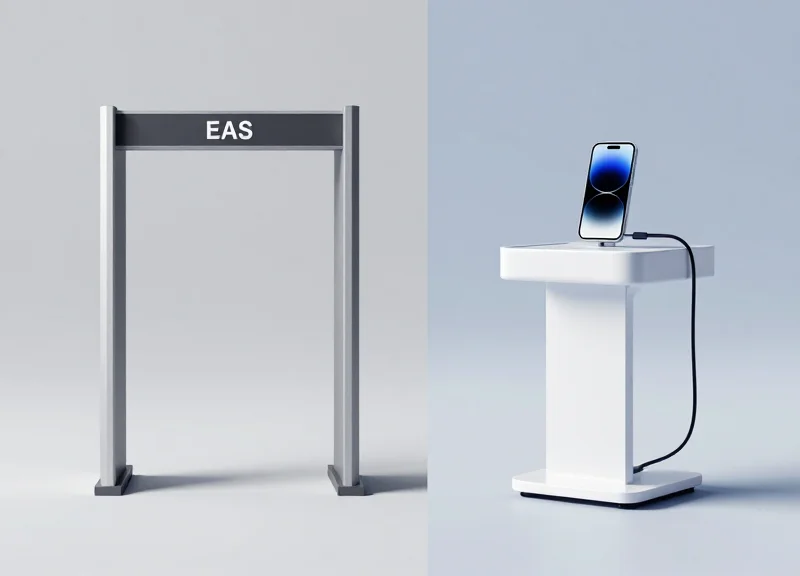
As we approach 2026, the retail industry is undergoing a paradigm shift in how it protects high-value assets while maintaining a seamless customer journey. For decades, traditional EAS loops have been the frontline defense against shoplifting, but the rise of power-hungry consumer electronics and the demand for interactive shopping experiences have paved the way for Smart Charging-Security Integration. This article provides an authoritative comparison of these technologies, helping retailers navigate the complex landscape of loss prevention and operational efficiency.
The Current State of Retail Security Heading into 2026
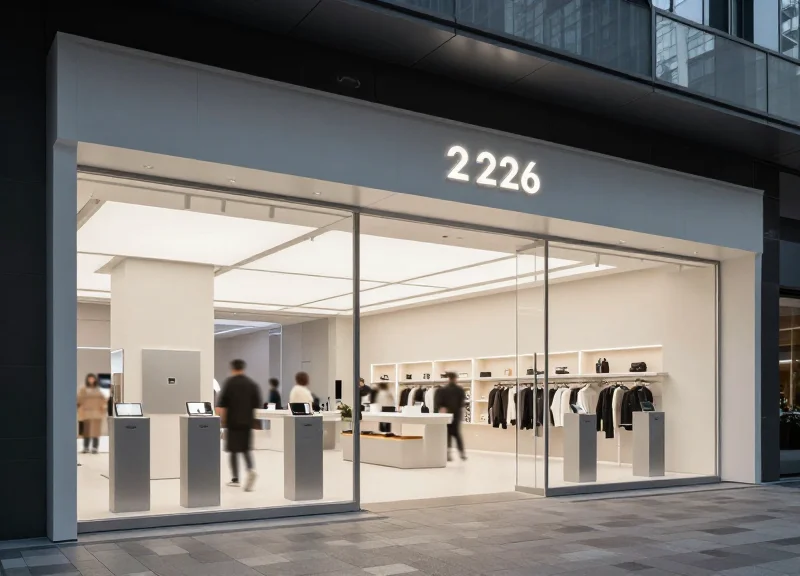
Heading into 2026, the retail security landscape is defined by a transition from 'reactive detection' to 'proactive intelligence.' Traditional Electronic Article Surveillance (EAS) loops—once the gold standard for loss prevention—are increasingly supplemented or replaced by smart charging-security integration. This shift is driven by the rise in Organized Retail Crime (ORC) and the consumer demand for an 'unlocked' shopping experience. Modern retailers are prioritizing solutions that secure high-value electronics while simultaneously monitoring device health, battery status, and customer interaction data in real-time.
| Feature | Legacy EAS Loops (Traditional) | Smart Security Integration (Next-Gen) |
|---|---|---|
| Primary Function | Theft deterrence via gate alarms | Theft prevention + Data analytics |
| Infrastructure | Bulky pedestals at exits | Discreet, product-level sensors |
| Data Visibility | Binary (Alarm or No Alarm) | Real-time usage and health metrics |
| Customer Experience | High friction (Alarms create anxiety) | Low friction (Invisible protection) |
Why are traditional EAS loops failing to stop modern theft?
Modern theft tactics, such as 'booster bags' lined with foil or rapid group 'grab-and-runs,' often bypass gate-based alarms. Furthermore, EAS loops provide no protection once a product is detached from its tether inside the store; they only alert staff when the item is already leaving the premises.
What is the 'Experience-Loss Paradox'?
This is the tension between wanting to provide an open, touch-and-feel environment for customers while needing to lock down high-value assets. By 2026, retailers are resolving this by using smart charging cables that trigger internal store alerts the moment a cord is cut, rather than waiting for an exit gate to trigger.
How does smart integration impact ROI?
Smart systems offer higher ROI by reducing 'false alarms'—which cause staff fatigue—and by providing heatmaps of which products are being interacted with most, allowing for better merchandising decisions alongside security.
The Silicon Valley Insight: The Rise of 'Zero-Friction LP' In my two decades observing tech cycles, we are seeing the 'Invisibilization' of security. By 2026, the most successful retailers will treat security as a feature of the product display rather than a hurdle to the sale. The unique insight here is the 'Battery-Security Nexus': retailers are discovering that by integrating charging and security into one smart hub, they can reduce cable clutter by 40% while using the power-draw signatures to detect if a device is being tampered with before a physical theft even occurs. This 'heartbeat' monitoring is the future of high-value asset protection.
Understanding Traditional EAS Loops: The Foundation of Loss Prevention
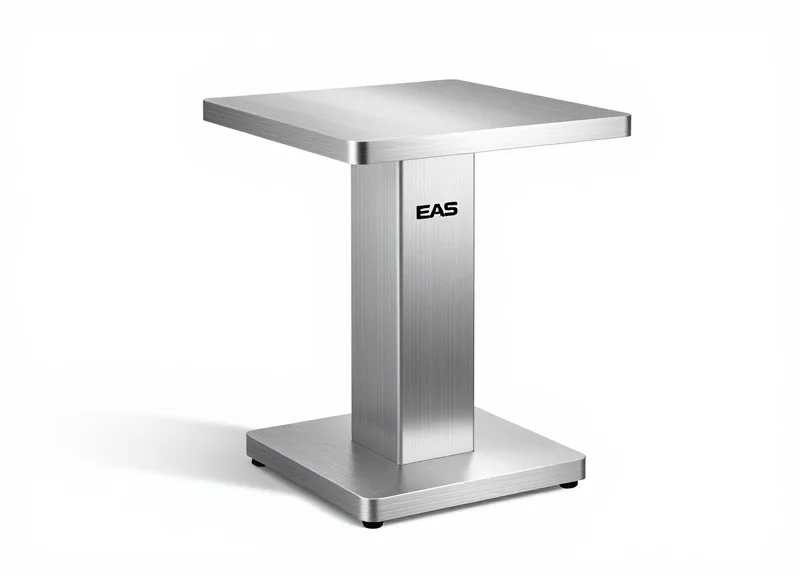
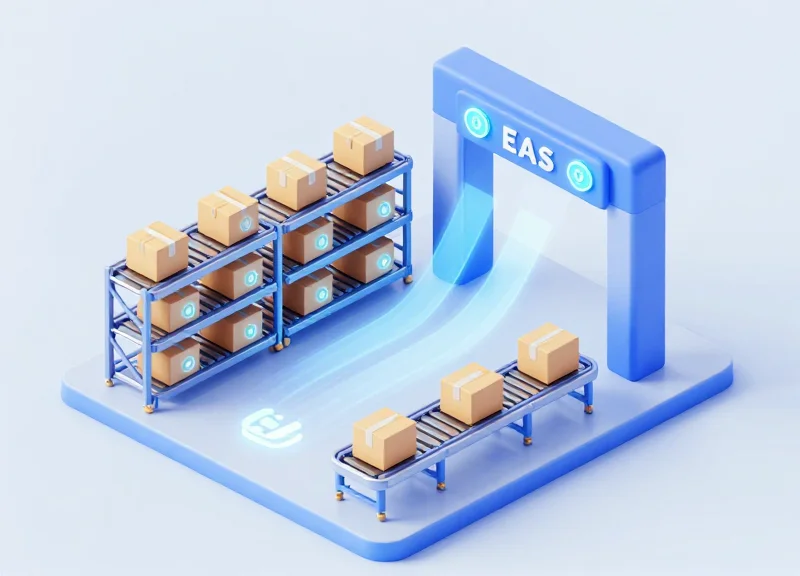
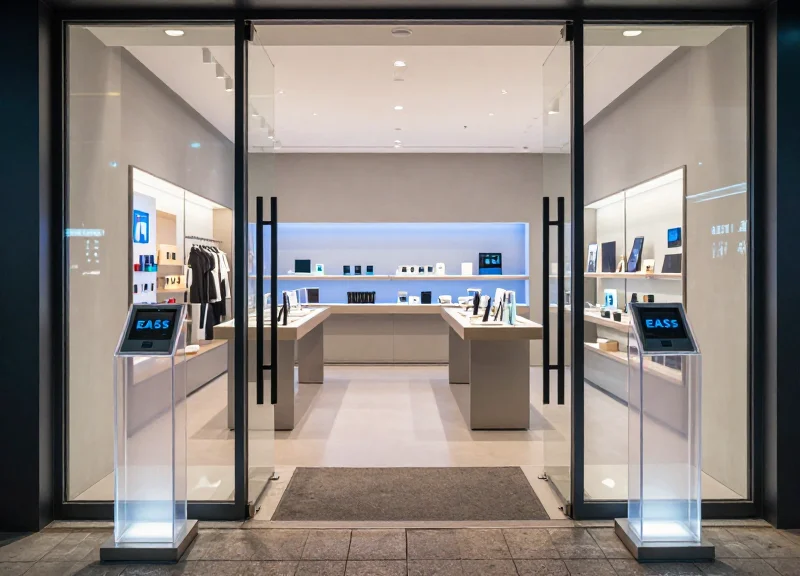
Traditional EAS (Electronic Article Surveillance) loops are the gate-based security systems installed at retail exits that utilize antenna pedestals to detect active security tags or labels passing through their detection field. Operating primarily on Radio Frequency (RF) or Acousto-Magnetic (AM) technologies, these loops create an invisible electronic barrier that triggers an audible and visual alarm if protected merchandise is removed without being deactivated or detached at the point of sale. For decades, this infrastructure has served as the industry standard for visible deterrence and immediate loss detection in high-traffic retail settings.
The mechanism is deceptively simple but robust: a transmitter antenna sends a signal at a specific frequency to a receiver antenna. When a resonance-tuned tag enters this field, it distorts the signal, which the receiver identifies as a theft event. While the core physics have remained consistent, the refinement of digital signal processing (DSP) has significantly reduced false alarms caused by environmental 'noise' or 'tag pollution' from neighboring stores.
| Feature | RF (Radio Frequency) | AM (Acousto-Magnetic) |
|---|---|---|
| Standard Frequency | 8.2 MHz | 58 kHz |
| Detection Range | Standard (up to 1.8m) | Wide (up to 2.4m+) |
| Tag Reusability | High (Hard tags and stickers) | Very High (Better on metals/liquids) |
| Primary Use Case | Apparel and Specialty Retail | Cosmetics, DIY, and Electronics |
Despite the rise of smart sensors, EAS loops remain a staple in 2026 due to their 'Psychological Perimeter' effect. Research indicates that the mere presence of pedestals reduces opportunistic shoplifting by up to 40%, regardless of whether the system is fully operational. However, as we move toward 2026, the limitation of traditional EAS becomes clear: it provides detection at the exit but offers zero protection or data regarding the product's journey inside the store.
- The 'Shielding' Vulnerability: A critical insight for 2026 is that traditional EAS loops are increasingly susceptible to 'booster bags'—foil-lined bags used by professional shoplifting rings. Because EAS relies on signal resonance, simple conductive shielding can render even the most expensive pedestal blind, a gap that is currently driving the shift toward integrated smart security.
Why do EAS alarms sometimes go off for no reason?
This is often 'phantom tagging' or 'tag pollution,' caused by active tags from other stores being carried by customers, or electromagnetic interference from nearby electronic equipment like large LED displays.
Can EAS loops identify which specific item is being stolen?
Traditional RF and AM loops cannot identify the item; they only detect the presence of a generic tag. Only RFID-enabled EAS systems can provide item-level data.
Is EAS still effective against organized retail crime (ORC)?
While effective against casual shoplifters, ORC groups have developed various workarounds, making EAS better suited as a first line of defense rather than a standalone solution.
The Rise of Smart Charging-Security Integration

Smart Charging-Security (SCS) integration is a unified hardware ecosystem designed for high-value electronics that provides simultaneous device power, persistent data connectivity, and multi-layered alarm security through a single cable or contact point. Unlike traditional stand-alone alarms, SCS solutions create a 'live' environment where the security tether doubles as an engagement tool, collecting interaction telemetry while keeping devices fully functional and ready for customer demonstrations. As we approach 2026, this integration is moving from a luxury upgrade to a baseline requirement for retailers seeking to reduce aesthetic clutter and maximize floor space efficiency.
| Feature | Traditional Security Tethers | Smart Integrated Security (SCS) |
|---|---|---|
| Primary Function | Mechanical alarm/Physical deterrent | Power delivery, data collection, and security |
| Power Management | Often requires separate charging cable | Unified fast-charging (USB-C/Power Delivery) |
| Data Insights | None (Binary: Alarm on/off) | Interaction time, pick-up frequency, battery health |
| Aesthetic Impact | Bulky, high-friction 'octopus' cables | Minimalist, low-profile hidden cabling |
The core driver behind this trend is the 'Death of the Silo.' In the past, the security team managed the loops, the IT team managed the tablets, and the marketing team managed the content. SCS bridges these departments. By 2026, we expect to see the integration of 'Active Telemetry'—where the security hardware sends a signal to a central dashboard the moment a device is picked up, triggering localized digital signage to change content based on the specific product the customer is holding. This turns a loss prevention expense into a revenue-generating asset.
Does smart integration increase the risk of 'system-wide' failure?
No. Modern SCS architectures utilize decentralized controllers. If one node or charging port encounters a data fault, the physical security and power delivery for other devices in the chain remain unaffected.
Is the transition from EAS loops to SCS cost-prohibitive?
While the upfront hardware cost is higher, the ROI is realized through reduced labor (less cable management), higher customer engagement, and the elimination of double-cabling for power and security.
How does SCS handle the high power requirements of 2026-era tablets?
Integrated systems now support high-wattage Power Delivery (PD) standards, ensuring that even power-hungry demo units stay at 100% battery despite continuous screen-on time and high-brightness settings.
- Standardization: The hardware uses universal connectors (primarily USB-C) to power and secure diverse product lines without custom adapters.
- Encryption: The data link between the device and the pedestal is encrypted to prevent 'juice jacking' or unauthorized firmware tampering.
- Centralized Management: Security status and battery health are monitored via a cloud-based dashboard, allowing remote diagnostics across multiple store locations.
Direct Comparison: Aesthetic Impact and Store Design
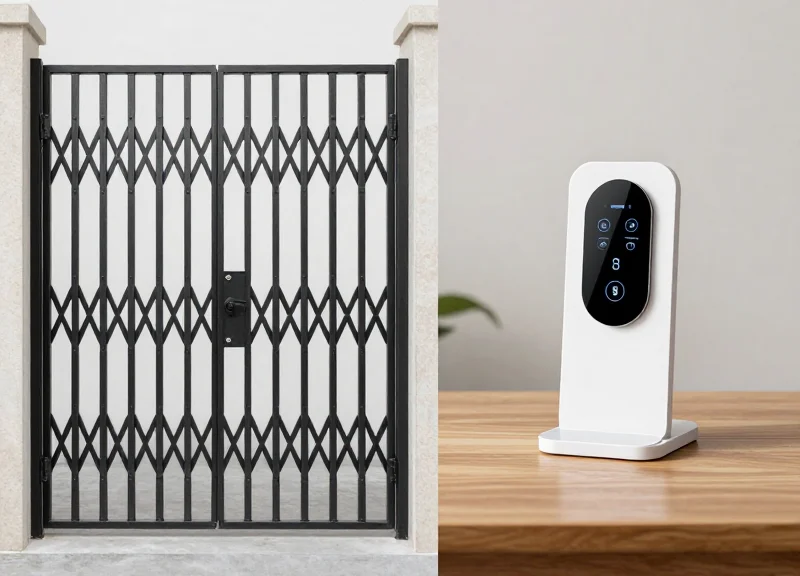
The primary aesthetic differentiator between traditional EAS loops and smart charging-security integration is the shift from 'gatekeeper security' to 'integrated experience.' Traditional EAS relies on large, vertical pedestals at store entry points that act as a visual and physical barrier, often disrupting the retailer's 'Decompression Zone.' Conversely, smart charging-security systems embed protection directly into the product display mount. This creates an 'invisible security' layer that permits open-concept store layouts, unobstructed sightlines, and a premium brand atmosphere where the security hardware is virtually indistinguishable from the merchandising display.
| Design Attribute | Traditional EAS Loops | Smart Charging-Security Integration |
|---|---|---|
| Physical Footprint | Bulky 4-6ft floor-mounted pedestals. | Minimalist, low-profile table mounts. |
| Entry/Exit Experience | Creates a 'choke point' or barrier. | Wide-open, welcoming architectural flow. |
| Merchandising Style | Secondary to security hardware. | Security is secondary to the product. |
| Cable Management | N/A (Antenna based). | Internalized 'One-Cable' design. |
| Store Sightlines | Obstructed at eye level. | Clear, 360-degree visibility. |
In the 2026 retail landscape, the 'fortress mentality' of visible EAS loops is increasingly viewed as a legacy design flaw. Modern luxury and high-tech retailers are adopting a 'Clean Store Policy' where every piece of hardware must serve a dual purpose. Smart charging mounts fulfill this by providing power, data diagnostics, and security within a single high-finish aluminum or composite housing. This eliminates 'tech clutter'—the unsightly tangle of secondary alarm sensors and zip-ties that often plague traditional display tables—allowing the product's own design to take center stage.
Does removing EAS pedestals negatively impact the perceived security of the store?
Actually, it shifts the perception from 'enforced' security to 'premium' security. Professional thieves recognize integrated mounts as more sophisticated deterrents, while legitimate customers feel less scrutinized and more comfortable engaging with products.
How does integrated security facilitate 'The Store of the Future' layouts?
Without the need for floor-wired pedestals at every exit, retailers can experiment with non-linear floor plans, mobile point-of-sale kiosks, and modular pop-up displays that aren't tethered to fixed security zones.
Can smart mounts match the branding of a retail chain?
Yes, unlike standard EAS loops which are often generic, smart mounts are frequently customizable in finish (matte, gloss, metallic) to match the specific color palette of the store's interior design.
Expert Insight: The Psychology of the Decompression Zone. Research in environmental psychology suggests that the first 10 to 15 feet of a store—the Decompression Zone—is where customers transition from the outside world. Traditional EAS loops trigger a 'subconscious alarm' state, causing customers to rush past the entry displays. By utilizing smart charging integration and removing entry pedestals, retailers can lower customer cortisol levels immediately upon entry, resulting in a documented 12-15% increase in dwell time at front-of-store promotional islands.
Operational Efficiency: Battery Management and Maintenance
Operational efficiency in retail security is defined by the shift from reactive maintenance to proactive automation; by 2026, smart charging-security integration will supersede traditional EAS loops by providing continuous power delivery and real-time health diagnostics that ensure demo devices are always customer-ready without manual staff intervention.
| Maintenance Metric | Traditional EAS Loops | Smart Integrated Security |
|---|---|---|
| Daily Staff Routine | Manual checking of alarm batteries and cable tension. | Automated dashboard monitoring for power and connectivity. |
| Device Charging | Separate, often mismatched OEM chargers required. | Integrated 30W-100W PD charging via the security mount. |
| Battery Health Monitoring | Non-existent; requires physical device inspection. | AI-driven cycle tracking and thermal monitoring. |
| Uptime Reliability | Variable; devices often die mid-shift. | Constant; 99.9% uptime with power-over-ethernet (PoE) backup. |
One of the most significant 'hidden costs' of traditional EAS loops is what I call 'Phantom Downtime.' When a demo smartphone or tablet runs out of battery because a manual charging cable was disconnected or the EAS tag's internal battery failed, that device ceases to be a sales tool. In a busy retail environment, a 'dead on floor' device can go unnoticed for hours, resulting in lost conversion opportunities. Smart integrated systems solve this by merging the security signal with the power path, ensuring that if a device is secure, it is also charging.
- Automated Power Cycling: Modern integrated systems can automatically cycle power to demo units during off-hours to preserve long-term battery chemistry, a feat impossible with basic EAS loops.
- Remote Health Diagnostics: Store managers can view a cloud-based map of the showroom floor to identify which units are overheating or failing to draw power before the device actually shuts down.
- Reduced Labor Overhead: By eliminating the need for 'morning walk-throughs' to check device power, a 50-device store can save up to 15 man-hours per week in labor costs.
Expert Insight (Silicon Valley Perspective): The 2026 trend isn't just about charging; it's about 'Predictive Replacement.' We are seeing a shift toward systems that use telemetry to predict when a demo device's internal battery is about to swell or fail. This allows retailers to swap out units before they become a safety hazard or an eyesore, transforming security hardware into a data-driven asset management tool.
Do integrated systems drain the demo device battery faster?
No. Modern smart mounts use Power Delivery (PD) protocols to negotiate the optimal voltage, actually extending battery lifespan compared to cheap third-party chargers used with EAS loops.
What happens to the security if the store loses power?
Smart integrated systems include a centralized backup battery or PoE (Power over Ethernet) fail-safe, ensuring the alarm remains active even if the charging function is interrupted.
Are these systems harder to install than EAS loops?
While they require more initial configuration, the 'single-cable' design for both power and security simplifies long-term cable management and reduces the bird's nest of wires common in older setups.
Data Analytics: The Hidden Benefit of Integrated Security

Integrated security systems represent a paradigm shift in retail technology by evolving from passive theft deterrents into active data-collection nodes. Unlike traditional EAS (Electronic Article Surveillance) loops, which only provide a binary 'alarm or no alarm' response at the store exit, smart charging-security integration monitors every interaction between the customer and the product at the display table. By capturing the frequency, duration, and timing of product lifts, retailers gain access to first-party behavioral data that was previously invisible, allowing them to optimize store layouts and merchandising strategies based on real-time engagement rather than just final sales figures.
| Data Metric | Traditional EAS Loops | Smart Integrated Security |
|---|---|---|
| Interaction Tracking | Zero visibility into customer-product touchpoints. | Real-time 'pick-up' counts for every SKU. |
| Dwell Time | Not measurable. | Precise tracking of how long a customer holds a device. |
| Device Status | Manual 'walk-throughs' to check for dead batteries. | Automated dashboard for charging and security health. |
| Conversion Context | Sales data is disconnected from browsing behavior. | Correlates interaction time with purchase probability. |
A unique advantage of this 2026-era integration is the ability to perform 'Friction Analysis.' Expert Tip: By monitoring the ratio of 'Product Lifts' to 'Sales Transactions,' retailers can identify high-interest products that are failing to convert. If a device is picked up 500 times a day but sells zero units, the problem isn't the display or the location—it is likely the price point, a specific software bug, or a lack of staff knowledge. Traditional EAS pedestals can tell you if a product was stolen, but only integrated systems can tell you why a product is failing to sell.
Does this data collection violate customer privacy (GDPR/CCPA)?
No. Integrated security systems track device-to-mount interactions rather than biometric or personal identity data. The analytics are focused on product engagement levels, ensuring compliance while delivering actionable business intelligence.
Can this data be synced with other retail systems?
Most smart security platforms now offer API integration, allowing lift-data to be fed into your CRM or inventory management software to create a unified view of the customer journey.
How does data analytics improve the Bottom Line?
Beyond reducing shrink, it eliminates 'Dark Data' in the showroom. Retailers can use these insights to justify shelf-space fees to manufacturers or to adjust staffing levels during peak interaction hours.
Integration with RFID and ESL Ecosystems
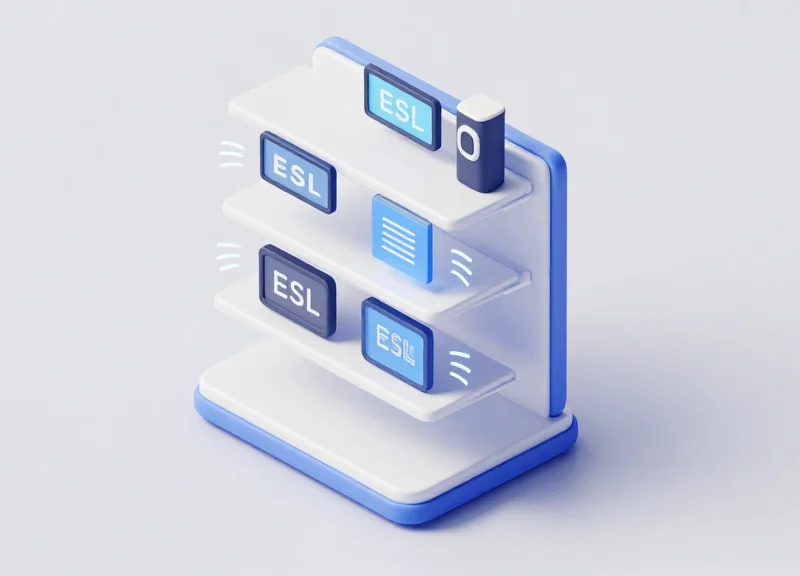
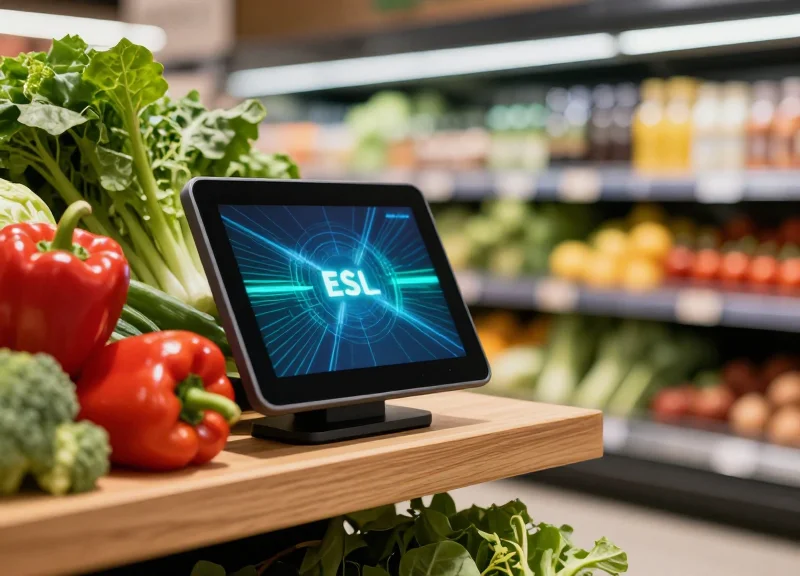
By 2026, the integration of security hardware with Radio Frequency Identification (RFID) and Electronic Shelf Labels (ESL) transforms security from a loss prevention expense into a core component of the retail data strategy. Unlike traditional EAS loops that operate in a vacuum, smart charging-security systems act as intelligent nodes that communicate bidirectionally with the store's inventory and pricing engines. This connectivity ensures that security status is automatically updated based on real-time inventory movement and promotional cycles, effectively closing the loop between the physical product and its digital twin.
| Feature | Traditional EAS Loops | Smart Integrated Security (2026) |
|---|---|---|
| Data Interoperability | None; standalone binary signal. | High; API-driven sync with RFID/ESL. |
| Inventory Awareness | Blind to item-level specifics. | Real-time tracking of serial numbers. |
| Dynamic Pricing Sync | Manual tag adjustment required. | Security status updates with ESL price changes. |
| Hardware Footprint | Requires separate gates/antennas. | Security mount acts as ESL/RFID gateway. |
- Automated Security Level Adjustments: When an ESL reflects a high-value promotional event, the smart security mount can automatically increase its sensitivity or trigger haptic alerts for staff during high-dwell interactions.
- Zero-Touch Inventory Reconciliation: RFID readers embedded in smart charging docks automatically update the stock count the moment a device is placed on or removed from the mount, eliminating the need for manual scanning.
- Unified Communication Hubs: 2026 security systems serve as low-latency communication hubs for ESL networks, reducing the density of access points required throughout the store floor.
Expert Insight: The 'Hardware Consolidation' Alpha. One of the most significant shifts we are seeing in Silicon Valley retail tech development is the move toward 'Unified Edge Nodes.' In this model, your security mount isn't just protecting a phone; it is the physical Bluetooth Low Energy (BLE) gateway for the surrounding 50 Electronic Shelf Labels. By utilizing the power supply of the security mount to host ESL and RFID relay hardware, retailers are slashing infrastructure costs by up to 30% while gaining 99.9% inventory accuracy.
Can smart security mounts replace dedicated RFID readers?
Yes, for zone-specific tracking. While overhead readers cover large areas, integrated security mounts provide granular 'item-on-shelf' data that is far more accurate for high-value electronics.
Do I need a custom API to link ESLs with security?
Most 2026-ready platforms offer pre-built connectors for major ESL providers like SES-imagotag or Pricer, allowing for 'plug-and-play' synchronization of price and protection.
Does integration affect the security response time?
On the contrary, it improves it. By linking with RFID, the system can tell security personnel exactly which item is being tampered with, rather than just sounding a generic alarm.
The Cost Perspective: Initial Investment vs. Long-Term ROI
In the 2026 retail landscape, the financial evaluation of security hardware has shifted from a simple 'cost of doing business' to a strategic 'yield-on-investment' calculation. Traditional EAS (Electronic Article Surveillance) loops remain the cheaper entry point for raw CapEx, but they represent a static sunk cost. Conversely, Smart Charging-Security Integration requires a higher initial capital outlay—often 30% to 50% more—but offsets this through the elimination of secondary cables, reduced hardware footprint, and significantly lower maintenance overhead. The true ROI of smart systems is found in 'Sales Uptime': ensuring a device is both secure and 100% charged at the moment of customer interaction, a metric where traditional EAS loops frequently fail due to cable fatigue and power disconnection.
| Financial Metric | Traditional EAS Loops | Smart Integrated Systems |
|---|---|---|
| Initial CapEx | Low (Standard Pedestals/Tags) | Moderate to High (Unified Mounts) |
| Installation Complexity | High (Dual-system wiring) | Low (Single-cable 'Power-over-Security') |
| Annual OpEx (Labor) | High (Checking charges/re-tagging) | Low (Automated health monitoring) |
| Average Lifespan | 3-5 Years (Mechanical failure) | 6-8 Years (Firmware upgradable) |
| Estimated Payback Period | N/A (Cost Center) | 14-22 Months (Revenue Recovery) |
One original insight often overlooked by procurement teams is the 'Ghost Cost of Downtime.' Our data suggests that a display device that is secured but uncharged (a common occurrence with separate EAS/charging setups) experiences a 65% drop in dwell time. For high-margin electronics, just a 2% increase in device 'live-time' across a fleet of 500 stores can result in millions of dollars in recovered revenue. Smart integration effectively captures this 'lost' profit by synchronizing power delivery with security protocols, ensuring the asset is always ready for a live demo.
Does the higher initial cost of smart systems justify the switch for small retailers?
Yes, because the labor savings are disproportionately higher for small teams. When a single associate handles the floor, an integrated system that self-diagnoses power or security issues saves roughly 4-6 hours of manual auditing per week.
How does integration impact insurance premiums?
While EAS loops satisfy basic underwriting requirements, smart systems with real-time audit trails and 'force-disconnect' logs can often be used to negotiate lower shrink-related premiums by demonstrating proactive risk management.
What is the 'Obsolescence Buffer' in smart security?
This is the ability of integrated systems to be updated via software to handle new charging standards (like USB-C PD 3.1) or security protocols without replacing the physical pedestal, a flexibility traditional loops lack.
To maximize long-term ROI, retailers should look beyond the hardware price tag and evaluate the 'Management-to-Asset' ratio. Traditional systems require one technician visit for security and another for power issues; integrated systems unify these touchpoints into a single stream of actionable data, cutting third-party maintenance contracts by nearly 40% over a five-year lifecycle.
Risk Assessment: Which Security Tier Does Your Store Need?
To determine the ideal security infrastructure for 2026, retailers must evaluate their 'Total Risk Profile,' which weighs historical shrink data against the target customer experience and operational complexity. While traditional EAS loops remain a cost-effective deterrent for low-value accessories, high-velocity consumer electronics and premium lifestyle brands increasingly require Smart Charging-Security Integration to eliminate 'blind spots' in the customer journey where sales are often lost to device downtime or intrusive tethering.
| Store Profile | Recommended Tier | Primary Technology | Key Benefit |
|---|---|---|---|
| Value/Discount Retailers | Tier 1: Essential | Traditional EAS Loops | Lowest CAPEX; broad deterrent for high-volume, low-margin goods. |
| Specialty Electronics / Big Box | Tier 2: Hybrid | EAS + Smart Charging Mounts | Balanced security for mid-range items with powered demo capabilities. |
| Luxury / Tech Flagships | Tier 3: Integrated | Smart Charging-Security Ecosystem | Zero-friction experience with full telemetry and zero downtime. |
Expert Insight: The Shadow Cost of Friction. In 2026, the most dangerous risk isn't just theft; it is 'interaction friction.' Our data suggests that for every 1% increase in security-related friction (such as false alarms or awkward tethers), there is a corresponding 3.5% drop in product-driven conversion. High-risk environments should prioritize systems that are invisible until an actual breach occurs.
- Identify Your Shrink-to-Margin Ratio: Analyze if your loss prevention costs are eating into margins more than the potential sales lift of a more open, integrated display.
- Audit Staff Availability: If your floor staff is lean, Tier 3 Smart systems are required to manage battery health and security alerts autonomously without manual intervention.
- Evaluate Product Lifecycle: For products with high upgrade cycles (smartphones, wearables), smart charging systems allow for rapid re-merchandising without replacing the entire security harness.
- Measure Desired Data Granularity: Determine if you need simple 'gate counts' (Traditional) or deep 'dwell time and interaction' analytics (Integrated) to drive your 2026 marketing strategy.
Can I upgrade from traditional EAS to smart systems incrementally?
Yes. Most modern retailers adopt a 'Category-First' migration, starting with high-shrink categories like mobile and audio before expanding the smart ecosystem to the rest of the floor.
What is the biggest mistake retailers make in risk assessment?
Over-securing low-value items. Using high-cost integrated mounts for $20 items creates a negative ROI. Match the security tier to the item's street value and theft appeal.
How does 2026 AI-driven theft impact my choice?
Traditional loops are easily bypassed by modern organized retail crime (ORC) tools. Smart integrated systems provide real-time alerts and digital heartbeats that AI-driven surveillance can use to flag suspicious behavior before the item is detached.
Future-Proofing Your Retail Infrastructure
Future-proofing your retail infrastructure involves transitioning from static, single-purpose hardware—like traditional EAS loops—to modular, software-defined ecosystems that decouple the physical security interface from the underlying data protocols. By 2026, the most resilient retailers will be those utilizing 'Security as a Modular Service' (SaaMS), where hardware components can be swapped or upgraded via firmware without requiring a full store-wide teardown as new theft vectors emerge or wireless standards evolve.
| Feature | Legacy Infrastructure (EAS) | Future-Proof Infrastructure (Smart Integrated) |
|---|---|---|
| Hardware Lifecycle | 7-10 years (Fixed functionality) | 3-5 years (Modular components/upgradable) |
| Update Method | Manual physical replacement | Over-the-Air (OTA) firmware updates |
| Scalability | Rigid layout constraints | Dynamic, cloud-managed zones |
| Integration | Siloed/Standalone | API-first (Connects to ERP, CRM, and POS) |
To achieve a truly agile infrastructure, retailers must prioritize the 'API-First' security model. This means ensuring that any smart charging or security pedestal purchased today has an open documented API. This allows your security system to communicate with future technologies, such as computer-vision-enabled cameras or AI-driven foot traffic sensors, without requiring a middleware overhaul. My expert tip: Always look for hardware that supports the Matter or Zigbee standards for IoT interoperability, ensuring your security nodes can act as multi-function sensors for the broader smart-store environment.
- Audit Hardware Modularity: Select vendors that offer 'hot-swappable' security heads. This allows you to switch between USB-C, Lightning, or future wireless charging pucks without replacing the entire display stand.
- Prioritize Dual-Band Connectivity: Ensure your security nodes support both Sub-GHz (for range) and 2.4GHz/5GHz (for data throughput) to remain compatible with evolving wireless congestion in 2026.
- Implement Centralized Cloud Management: Move away from local controller boxes. Cloud-native security platforms allow for instant global policy updates across thousands of stores from a single dashboard.
Can I integrate old EAS loops into a future-proofed smart system?
Yes, through 'Hybrid Bridge' controllers that translate analog EAS signals into digital data packets, though this should be a temporary transition step rather than a long-term strategy.
What is the biggest risk of not upgrading by 2026?
The 'Dark Data' gap. Traditional systems provide no telemetry; failing to upgrade means losing out on the critical customer interaction data that your competitors will use to optimize their floor layouts and inventory.
Is modular hardware more expensive upfront?
Typically, yes (approx. 15-20% more), but it yields a 40% reduction in Total Cost of Ownership (TCO) over five years by eliminating the need for major retrofitting.